Enzima
Gli inibitori enzimatici sono molecole che si legano agli enzimi e ne diminuiscono l'attività. Questi inibitori sono ampiamente utilizzati nella ricerca per studiare la cinetica enzimatica, la regolazione e il ruolo di specifici enzimi nelle vie metaboliche. Gli inibitori enzimatici sono anche fondamentali nello sviluppo di farmaci, poiché molti agenti terapeutici agiscono inibendo enzimi coinvolti in processi patologici. Mirando agli enzimi, questi inibitori possono modulare le vie biochimiche e offrire potenziali trattamenti per varie malattie. Presso CymitQuimica, offriamo una vasta selezione di inibitori enzimatici di alta qualità per supportare le tue ricerche in biochimica, farmacologia e scoperta di farmaci.
Sottocategorie di "Enzima"
- Anidrasi carbonica(192 prodotti)
- Idrossilasi(35 prodotti)
- MPO(2 prodotti)
- Riduttasi(50 prodotti)
- Tirosinasi(71 prodotti)
Trovati 3613 prodotti di "Enzima"
Ordinare per
Purezza (%)
0
100
|
0
|
50
|
90
|
95
|
100
DNase I
CAS:<p>DNase I (Deoxyribonuclease I, EC 3.1.21.1) is an endonuclease that cleaves DNA, yielding 5'-phosphate-terminated polynucleotides with a free hydroxyl group on position 3'. On average it produces tetranucleotides. One unit of the DNase I will increase the absorbance of 260nm light at a rate of 0.001/minute in 1 ml reaction volume at 25°C.</p>Choline oxidase
CAS:<p>Choline oxidase (EC 1.1.3.17) is an enzyme that catalyzes the following reaction: choline + O2 + H20 ⇌ betaine aldehyde + H2O2One unit of choline oxidase will form 1 μmole of H2O2 by oxidizing choline to betaine aldehyde per min at pH 8.0 and 37 °C. You can remove the build-up of hydrogen peroxide using catalase.</p>Purezza:Min. 95%Glucosidase from aspergillus niger
CAS:<p>Glucosidases are enzymes belonging to the family of oxidoreductases. They catalyse the hydrolysis of starches to simple sugars. Glucosidase is widely used in the food, carbohydrate and biofuels industries. In recent years, its applicability has expanded to biotechnology for its potential application in bioenzymatic fuel cells.</p>Purezza:Min. 95%Colore e forma:PowderSultiame
CAS:<p>Sultiame is an inhibitor of carbonic anhydrase. Sultiame can be used in antiepileptic research.</p>Formula:C10H14N2O4S2Purezza:99.91%Colore e forma:SolidPeso molecolare:290.36Proteinase K - from Tritirachium album
CAS:<p>Proteinase K is used for the general digestion of proteins and removal of protein contamination in nucleic acids. Addition of Protease K also stabilizes nucleic acids by degrading any nucleases present. Proteinase K is active in wide range of pH range, in the presence of SDS, urea and Guanidinium chloride at low to moderate concentrations. Proteinase K is also known under names of protease K and endopeptidase K.</p>Myokinase (from Yeast)
CAS:<p>Myokinase (Adenylate kinase, EC 2.7.4.3) catalyzes interconversion between ATP, ADP and AMP by catalyzing the following reaction:ATP + AMP ⇌ 2 ADPOne unit of Myokinase will convert 1.0 µmol ATP and 1.0 µmol AMP to 2.0 µmol ADP per min at 25°C and pH 7.5.</p>Glyceraldehyde-3-phosphate dehydrogenase
CAS:<p>75u/mg - Glyceraldehyde 3-phosphate dehydrogenase (GAPDH; EC 1.2.1.12) is an enzyme that catalyzes the following reaction: glyceraldehyde 3-phosphate + NAD+ + Pi ⇌ glycerate 1,3-bisphosphate + NADH + H+ One unit of GAPDH will convert 1.0 μmole of glyceraldehyde 3-phosphate into glycerate 1,3-bisphosphate per minute at pH 8.5 and 37 °C in the presence of NAD+ and phosphate. NAD+ is available here.</p>Formula:C3H7O6PPurezza:Min. 95%Peso molecolare:170.06 g/molβ-Galactosidase >100KU/g
CAS:beta-Galactosidase (EC 3.2.1.23, shortly beta-Gal, also know as lactase) catalyses the hydrolysis of beta-d-galactoside in the presence of water to galactose and alcohol, or lactose into glucose and galactose. beta-Gal has a molecular weight of 540,000 and is composed of four identical subunits of MW 135,000, each with an independent active site. The enzyme has divalent metals as cofactors, with chelated Mg2+ ions required to maintain active site conformation. The molecule contains numerous sulfhydryl groups and is glycosylated.Colore e forma:Powderα-Glucosidase from bacillus stearothermophilus, lyophilized powder, 250 Units
CAS:α-Glucosidase is a glycoside hydrolase enzyme that hydrolyzes α-1,4-linked D-glucose residues to produce α-D-glucose. This enzyme has been isolated from Bacillus stearothermophilus and is used as an industrial catalyst in the production of glucose syrups. One Unit of α-Glucosidase will release 1.0 µmole of p-nitrophenol from the chromogenic substrate mimic 4-nitrophenyl α-D-glucopyranoside per minute under optimum conditions.Colore e forma:PowderEndoproteinase Glu-C
CAS:<p>Endoproteinase Glu-C (Glutamyl endopeptidase, V8 protease, GluV8, EC 3.4.21.19) is a protease that hydrolyzes peptide bonds at the carboxylic side of either exclusively Glu, or Glu and Asp residues, depending on the buffer conditions. One unit of endoproteinase Glu-C will generate 1.0 μmole of p-nitroaniline from Z-Phe-Leu-Glu-pNA peptide mimic substrate per minute at pH 7.8 and 25 °C. Z-Phe-Leu-Glu-pNA substrate is available here.molecular weight ~ 27000.</p>Formula:C65H98N16O19Peso molecolare:1,407.56 g/molSuperoxide dismutase - >3000 units/mg
CAS:<p>Superoxide dismutase is an enzyme that catalyzes the conversion of harmful superoxide into hydrogen peroxide and oxygen.</p>Colore e forma:PowderPeso molecolare:203.16 g/molGlucose dehydrogenase
CAS:<p>Glucose Dehydrogenase is an enzyme, which is typically derived from microbial sources such as bacteria and fungi. It functions by catalyzing the oxidation of glucose to gluconolactone, concurrently reducing a cofactor such as NAD⁺ or PQQ. This biochemical reaction is critical in various analytical applications due to its specificity and efficiency in glucose detection.Glucose Dehydrogenase is widely employed in the development of biosensors and diagnostic assays. Its primary application is in blood glucose monitoring devices, where its ability to accurately quantify glucose levels is crucial for managing diabetes. Additionally, it is utilized in research and development settings for biochemical assays that require precise glucose measurements. The enzyme's rapid and specific action on glucose molecules makes it an indispensable tool in both clinical and laboratory environments, contributing to advancements in biosensing technologies and metabolic studies.</p>Tyrosinase-IN-2
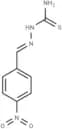
CAS:Tyrosinase-IN-2, a potent tyrosinase inhibitor, may help in skin lightening and food preservation research.Formula:C8H8N4O2SPurezza:99.78%Colore e forma:SolidPeso molecolare:224.24Lysozyme - Enzyme activity min 40000 FIP/mg
CAS:Lysozyme is a bacteriolytic enzyme, which is primarily derived from hen egg whites. It functions by hydrolyzing the β-1,4-glycosidic linkages in the peptidoglycan layer of bacterial cell walls, particularly in Gram-positive bacteria. This enzymatic activity results in the lysis and subsequent death of the bacterial cells, providing a potent antimicrobial effect.Colore e forma:PowderMaltose phosphorylase (from bacteria), ammonium sulphate suspension
CAS:Maltose phosphorylase (systematic name maltose:phosphate 1-beta-D-glucosyltransferase; EC 2.4.1.8) is an enzyme that catalyzes the following reaction: maltose + Pi ⇌ D-glucose + beta-D-glucose 1-phosphate One unit of maltose phosphorylase will produce 1.0 μmole of D-Glucose from maltose per minute at pH 7.0 and 30°C.Purezza:Min. 95%Peso molecolare:0 g/molAcetylcholinesterase, type VI-S, 200-1,000 units/mg protein
CAS:<p>Acetylcholinesterase is an enzyme that breaks down acetylcholine</p>Purezza:Min. 95%Colore e forma:PowderCarnitine acetyltransferase
CAS:<p>From pigeon breast muscle - Carnitine acetyltransferase (EC 2.3.1.7, also Carnitine O-acetyltransferase) is an enzyme that catalyzes the following chemical reaction: acetyl-CoA + carnitine ⇌ CoA + acetylcarnitine</p>Invertase
CAS:<p>Invertase is an enzyme that catalyzes the hydrolysis of sucrose to glucose and fructose and can be found in plants and microorganisms</p>Colore e forma:Beige PowderProtease - from bacillus licheniformis
CAS:<p>Protease enzymes break down proteins and are essential for many biological processes, including digestion, cellular regulation and blood clotting. They are also used in many industrial and biotechnological applications for example in food processing and in detergents.</p>Colore e forma:PowderCocarboxylase hydrochloride
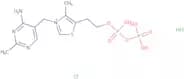
CAS:<p>Cocarboxylase hydrochloride is a coenzyme derivative, which is primarily sourced from thiamine (vitamin B1). It plays a crucial role in biochemical processes by facilitating the enzymatic decarboxylation of alpha-keto acids within the cellular environment. This action is fundamental in energy production as it aids in the conversion of pyruvate to acetyl-CoA, subsequently entering the citric acid cycle. Cocarboxylase hydrochloride’s involvement in carbohydrate metabolism is especially vital for tissues with high metabolic rates, such as the heart and brain.</p>Formula:C12H19N4O7P2S·ClHClPurezza:Min. 95%Peso molecolare:497.23 g/mol