Recettore dei cannabinoidi
I recettori dei cannabinoidi sono GPCR che mediano gli effetti dei cannabinoidi endogeni (endocannabinoidi) e fitocannabinoidi, come quelli presenti nella cannabis. I due principali tipi di recettori dei cannabinoidi, CB1 e CB2, sono coinvolti nella regolazione di una vasta gamma di processi fisiologici, tra cui la percezione del dolore, l'appetito, l'umore e la funzione immunitaria. I modulatori dei recettori dei cannabinoidi hanno un potenziale terapeutico nel trattamento di condizioni come il dolore cronico, l'epilessia e la sclerosi multipla. Presso CymitQuimica, offriamo una vasta gamma di modulatori di recettori dei cannabinoidi di alta qualità per supportare la tua ricerca in neurofarmacologia, gestione del dolore e immunologia.
Trovati 217 prodotti di "Recettore dei cannabinoidi"
Ordinare per
Purezza (%)
0
100
|
0
|
50
|
90
|
95
|
100
BNS808
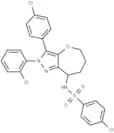
CAS:BNS808 is an orally active, selective CB1R antagonist with an IC50 of 0.8 nM, demonstrating significant selectivity for CB2R and minimal brain penetration. It is being studied for the treatment of obesity and related metabolic complications, such as metabolic dysfunction-associated steatotic liver disease (MASLD). BNS808 reduces drug exposure to the central nervous system, enhancing safety, and minimizes drug interactions through high plasma protein binding.Formula:C25H20Cl3N3O3SColore e forma:SolidPeso molecolare:548.869MDMB-FUBICA
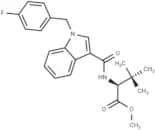
CAS:MDMB-FUBICA is a potent agonist of the cannabinoid receptors and exhibits psychoactive properties. It can be utilized in e-cigarettes.Formula:C23H25FN2O3Colore e forma:SolidPeso molecolare:396.455CB2 receptor antagonist 1
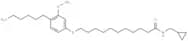
CAS:Compound 29 is a potent, CB2-selective antagonist/reverse agonist. Derivatives 23 & 24 offer antinociception; 24 activates cannabinoid/TRPV1 receptors.Formula:C28H47NO3Colore e forma:SolidPeso molecolare:445.68CB1/2 agonist 1
Potent CB1/2 agonist 1; crosses blood-brain barrier; anti-inflammatory, analgesic; for multiple sclerosis research.Formula:C21H24BrFN2O2Colore e forma:SolidPeso molecolare:435.33Taranabant
CAS:Taranabant: potent CB1 receptor inverse agonist; inhibits agonists with 0.13 nM Ki in vitro.Formula:C27H25ClF3N3O2Purezza:99.06% - 99.06%Colore e forma:SolidPeso molecolare:515.96AM11638
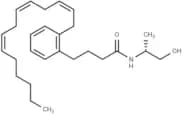
CAS:AM11638 is an endogenous cannabinoid analogue that targets cannabinoid receptors (CB1 and CB2 receptors), exhibiting analgesic properties. It shows potential for research in neurological disorders and inflammation-related diseases.Formula:C27H41NO2Colore e forma:SolidPeso molecolare:411.62MDA7
CAS:<p>MDA7 is a selective agonist of the cannabinoid receptor 2 (CB2), demonstrating an EC50 of 128 nM in human CB2 receptors and 67.4 nM in rat CB2 receptors. The compound exhibits good affinity for CB2 receptors, with Ki values of 422 nM for humans and 238 nM for rats. In rat models, MDA7 shows analgesic activity.</p>Formula:C22H25NO2Colore e forma:SolidPeso molecolare:335.439CB1/2 receptor-1
CAS:CB1/2 receptor-1 (compound 5.3) serves as an agonist for CB1/2 receptors and is utilized in angiogenesis research.Formula:C33H48O2Colore e forma:SolidPeso molecolare:476.73TM38837
CAS:<p>CB1 antagonist 4 is an inverse agonist of cannabinoid receptor 1 (CB1) with an IC50 of 0.4 nM. It can reduce body weight, improve plasma inflammatory markers, and enhance glucose homeostasis [1].</p>Formula:C27H20Cl2F3N7OColore e forma:SolidPeso molecolare:586.40HU 433
CAS:<p>HU 433, a synthetic cannabinoid, acts as a CB2 receptor agonist and is an enantiomer of HU 308. It provides anti-inflammatory and neuroprotective effects by binding to the CB2 receptor, primarily found on immune cells, thereby modulating immune responses and inflammation. Additionally, HU 433 influences microglial signaling pathways, particularly LPS and IFNγ-mediated routes, affecting the phosphorylation of MAPKs, including ERK1/2, JNK, p38, and Akt. This compound is valuable in researching neuroinflammation and retinal diseases.</p>Formula:C27H42O3Colore e forma:SolidPeso molecolare:414.62GAT564
GAT564, an allosteric CB1R modulator, shows EC50s of 87 nM (cAMP) & 320 nM (β-arrestin2) and lowers IOP effectively in glaucoma mice.Formula:C20H16N2O2SColore e forma:SolidPeso molecolare:348.42HU-308
CAS:<p>HU-308, a synthetic cannabinoid analogue, is a highly selective agonist of the CB2 receptor. It demonstrates an affinity for the CB2 receptor that is over 440 times greater than its affinity for the CB1 receptor, which are predominantly found in immune cells. This compound plays a crucial role in modulating the immunosuppressive effects of the endocannabinoid system (ECS). Additionally, HU-308 possesses anti-inflammatory and neuroprotective properties, and it regulates the function of microglia. Its potential applications include research into neuroinflammation and retinal diseases.</p>Formula:C27H42O3Colore e forma:SolidPeso molecolare:414.62AB-FUBINACA 3-fluorobenzyl isomer
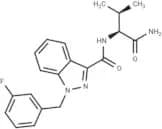
CAS:AB-FUBINACA 3-fluorobenzyl isomer is a synthetic cannabinoid and an indazole derivative, exhibiting high affinity for central CB1 receptors (Ki= 0.9 nM) and possessing anticonvulsant activity.Formula:C20H21FN4O2Colore e forma:SolidPeso molecolare:368.41MDA77
CAS:MDA77 is a CB2 agonist with an EC50 value of 5.82 nM and exhibits no activity towards CB1.Formula:C21H23N3O3Colore e forma:SolidPeso molecolare:365.431'-Naphthoyl-2-methylindole
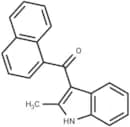
CAS:1'-Naphthoyl-2-methylindole (Compound 88) acts as a cannabinoid mimic and an inhibitor of Win 55212-2, displaying a 34% inhibition of [3H]Win 55212-2 binding to cannabinoid receptors at a concentration of 3 μM.Formula:C20H15NOColore e forma:SolidPeso molecolare:285.34(Rac)-Zevaquenabant
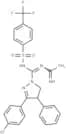
CAS:(Rac)-Zevaquenabant ((Rac)-MRI-1867, compound 6b) is a potent and selective antagonist of cannabinoid receptor type 1 (CB1R) and inducible nitric oxide synthase (iNOS), with a binding affinity (Ki) of 5.7 nM for CB1R. It holds promise as an investigative tool in liver fibrosis research due to these characteristics.Formula:C25H21ClF3N5O2SColore e forma:SolidPeso molecolare:547.98AEF0117
CAS:<p>AEF0117 is a signaling inhibitor of CB1-SSi that inhibits cannabinoid self-administration and can be used to study cannabis withdrawal.</p>Formula:C29H40O3Purezza:99.58%Colore e forma:SolidPeso molecolare:436.63