Composti policiclici
Sottocategorie di "Composti policiclici"
- Acridine(98 prodotti)
- Antrachinoni(533 prodotti)
- Acidi antrachinonici solfonici(16 prodotti)
- Azobenzeni(270 prodotti)
- Azonaftalene(98 prodotti)
- Azoxybenzeni(12 prodotti)
- Azuleni(11 prodotti)
- Benzimidazoli(1.476 prodotti)
- Benzodiossani(27 prodotti)
- Benzofurani(928 prodotti)
- Benzotiofeni(701 prodotti)
- Benzotriazoli(438 prodotti)
- Binaphthyl(133 prodotti)
- Carbazoli(464 prodotti)
- Cromani, cromeni(480 prodotti)
- Cumarine(1.124 prodotti)
- Ciclofani(11 prodotti)
- Fluorene e Fluorenoni(384 prodotti)
- Imidazopiridine(10 prodotti)
- Indan(118 prodotti)
- Indazoli(2.038 prodotti)
- Indeni(22 prodotti)
- Indoli(3.986 prodotti)
- Indoline(119 prodotti)
- Isatine(234 prodotti)
- Isobenzofurani(17 prodotti)
- Ftalimmidi N-sostituiti(153 prodotti)
- Naftaleni(2.438 prodotti)
- Naftiridina(17 prodotti)
- Naftochinone(2 prodotti)
- Perilene(36 prodotti)
- Fenazine(25 prodotti)
- Ftalazine(33 prodotti)
- Ftalimmide(153 prodotti)
- Idrocarburi policiclici aromatici (PAH)(289 prodotti)
- Polifenolo(270 prodotti)
- Pteridine(52 prodotti)
- Pireni(87 prodotti)
- Chinuclidina(1 prodotti)
- Tetraceni(7 prodotti)
Trovati 4575 prodotti di "Composti policiclici"
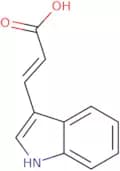
trans-3-Indoleacrylic acid
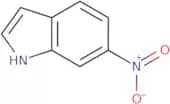
CAS:Trans-3-indoleacrylic acid (TIAA) is a metabolite that is produced by the degradation of tryptophan. TIAA has been shown to have a matrix effect on cells, which influences their energy production and regulation. TIAA has also been shown to be involved in the synthesis of proteins, such as the signal peptide and polymerase chain reaction (PCR). TIAA may also be involved in transcription activators and metabolic disorders. The effects of TIAA are most likely due to its ability to inhibit synthetase activity.Formula:C11H9NO2Colore e forma:PowderPeso molecolare:187.19 g/mol6-Nitroindole
CAS:6-Nitroindole is a heterocyclic compound that belongs to the group of nitro compounds. It is a methylating agent that can be used for the production of 6-nitropurines, which are used as anticancer agents. The reaction mechanism of this compound involves the attack of the electrophilic nitro group on an electron-deficient carbon atom in a molecule. This process creates an N-methylated product, which can then be oxidized to form a carboxylic acid. The kinetics of this reaction have been studied using kinetic data and anomers. 6-Nitroindole has also been shown to inhibit DNA synthesis by binding to oligodeoxynucleotides and inhibiting their catalytic activity.
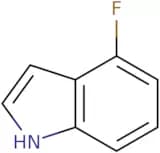
Formula:C8H6N2O2Purezza:Min. 95%Colore e forma:PowderPeso molecolare:162.15 g/mol4-Fluoroindole
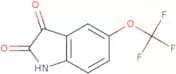
CAS:4-Fluoroindole is a compound that belongs to the class of 5-methoxyindoles, which are used as drugs in plant physiology. The analog of 4-fluoroindole is important for cell culture and transcriptomic analysis. It has been shown to reduce the growth of cryptococcus neoformans by inhibiting its ability to produce acid. 4-Fluoroindole also inhibits the growth of other opportunistic fungi, such as Aspergillus niger. This drug is addictive and can be toxic if it enters the environment. 4-Fluoroindole also inhibits the growth of plants when applied as a pesticide.Formula:C8H6FNColore e forma:PowderPeso molecolare:135.14 g/mol5-(Trifluoromethoxy)-1H-indole-2,3-dione
CAS:5-(Trifluoromethoxy)-1H-indole-2,3-dione is a potent anticancer agent that inhibits the growth of cancer cells by inducing apoptosis. It binds to DNA, forming hydrogen bonds with guanine and adenine residues. This binding prevents the formation of hydrogen bonds between DNA bases, which are essential for maintaining the stability of DNA. The disruption of these bonds leads to chromosomal degradation and eventually cell death. 5-(Trifluoromethoxy)-1H-indole-2,3-dione has shown antifungal activity against Cryptococcus neoformans in vitro and in vivo. This drug also has an allosteric modulator effect on HL60 cells.Formula:C9H4F3NO3Purezza:Min. 95%Colore e forma:Red PowderPeso molecolare:231.13 g/mol4',6-Diamidino-2-phenylindole 2HCl
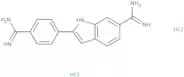
CAS:4',6-Diamidino-2-phenylindole 2HCl (DAB) is a chemical compound used as a histological stain to detect and identify different types of cancer cells. It has been shown to have cytotoxic activity against cancer cells in vitro, but not normal cells. DAB inhibits the growth of cancer cells by disrupting the mitochondrial membrane potential, leading to the release of cytochrome c and apoptosis. The use of this substance has shown that it is not toxic to maternal blood or embryonic tissues. DAB binds to nuclear DNA and polymerase chain reaction products, providing an accurate way to measure cancer cell proliferation.Formula:C16H17Cl2N5Purezza:Min. 97.5 Area-%Colore e forma:Yellow PowderPeso molecolare:350.25 g/mol3-Methylxanthine
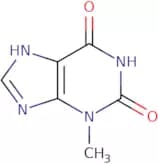
CAS:Prodotto controllatoDiuretic; cardiac stimulant; smooth muscle relaxant; bronchodilatorFormula:C6H6N4O2Purezza:Min. 98 Area-%Colore e forma:PowderPeso molecolare:166.14 g/molN-(4-Hydroxyphenyl)-5-methyl-2-1H-pyridone
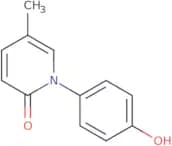
CAS:N-(4-Hydroxyphenyl)-5-methyl-2-1H-pyridone is a molecule that is found in plasma samples and has been shown to inhibit the growth of cells. It is a potent inhibitor of tubulointerstitial injury, which is the most common type of kidney disease. The mechanism of this drug has been shown to involve the inhibition of primary amino acid uptake. This compound also inhibits urea synthesis and decreases plasma concentrations by increasing the rate of elimination. In addition, it has been shown to have an inhibitory effect on growth factors such as EGF, bFGF, IGF-1, and PDGF. N-(4-Hydroxyphenyl)-5-methyl-2-1H-pyridone can be synthesized by heating at high temperatures (thermally activated).Formula:C12H11NO2Purezza:Min. 95%Colore e forma:Off-White PowderPeso molecolare:201.22 g/mol6-Bromo-1H-indole-3-carboxylic acid
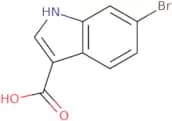
CAS:6-Bromo-1H-indole-3-carboxylic acid is a natural product that is isolated from the marine sponge Smenospongia purpurea. It was first reported in 1979 and has been used for the synthesis of other compounds. 6-Bromoindole, a precursor to 6-bromo-1H-indole-3-carboxylic acid, is biosynthesized from methyl ester and NMR spectra indicate that it has a dihedral angle of 173°. This compound has been shown to have antibacterial activity against staphylococcus.Formula:C9H6BrNO2Purezza:Min. 95%Colore e forma:PowderPeso molecolare:240.05 g/molDecursinol angelate
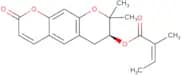
CAS:Decursinol angelate is a bioactive compound, which is derived from the roots of plants such as Angelica gigas, a species commonly used in traditional Asian medicine. This compound is a coumarin derivative, known for its potential pharmacological properties. Decursinol angelate’s mode of action involves the modulation of inflammatory pathways, particularly through the inhibition of key enzymes and cytokines involved in inflammatory responses, such as COX-2 and TNF-alpha. This modulation leads to a reduction in the synthesis of pro-inflammatory mediators, which can be beneficial in managing inflammation-related conditions.Formula:C19H20O5Purezza:Min. 95%Colore e forma:PowderPeso molecolare:328.36 g/mol1,10-Phenanthroline monohydrate
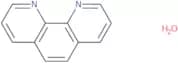
CAS:1,10-Phenanthroline monohydrate is a metal chelate that binds to DNA by hydrogen bonds. It has been shown to have an intramolecular hydrogen and a linear calibration curve with a coefficient of determination (r2) of 0.998. The rate constant for the reaction of 1,10-phenanthroline monohydrate with DNA is 5.00 x 10 M-1 s-1 at 25°C in water and pH 7.4 buffer. The coordination geometry for 1,10-phenanthroline monohydrate is octahedral with the axial ligands occupying the equatorial positions and the equatorial ligands occupying the axial positions. This compound has been shown to be active against HL-60 cells, which causes cancerous transformations in vitro. Fluorescence spectrometry data shows that 1,10-phenanthroline monohydrate can bind to DNA in vitro but not in vivo.Formula:C12H10N2OPurezza:Min. 95%Colore e forma:Off-White PowderPeso molecolare:198.22 g/mol8-Hydroxyquinoline-2-carboxylic acid
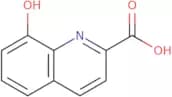
CAS:8-Hydroxyquinoline-2-carboxylic acid is a 3-hydroxyanthranilic acid derivative that is often used as a biomarker of urine. The 8OHQA can be synthesized from 3-hydroxyanthranilic acid by the action of xanthine oxidase and hydrogen peroxide, and it has been shown to be an inhibitor of protein synthesis. This inhibition may be due to its ability to form hydrogen bonds with the hydroxyl group on the ribose side chain and its ability to coordinate with metals. 8OHQA has been shown to have anti-inflammatory effects in bladder cancer cells, which may be due to its ability to inhibit prostaglandin synthesis.
Formula:C10H7NO3Purezza:Min. 95%Colore e forma:PowderPeso molecolare:189.17 g/mol2-Amino-8-hydroxyquinoline
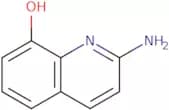
CAS:2-Amino-8-hydroxyquinoline is a molecule that has been shown to have optical properties. 2-Amino-8-hydroxyquinoline has also been shown to be reactive in vitro and inhibit the growth of cancer cells. It is thought that this inhibition may be due to its ability to bind to the active site of DNA polymerase, preventing DNA replication. 2-Amino-8-hydroxyquinoline has also been shown in vitro studies and vivo studies to have potent inhibition activity against human serum albumin (HSA). The molecules that are used as linkers to attach 2-amino 8 hydroxyquinoline to other molecules are thermodynamically stable. The isomers of 2 amino 8 hydroxyquinoline have also been studied by X-ray crystallography and nuclear magnetic resonance spectroscopy, which provides information about the structure of the molecule. Finally, 2 amino 8 hydroxyquinoline has been found to be an odorantFormula:C9H8N2OPurezza:Min. 98%Colore e forma:Off-White PowderPeso molecolare:160.17 g/mol(9-Phenanthryl)methyl methacrylate
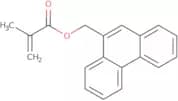
CAS:9-Phenanthryl)methyl methacrylate is a fluorescent pigment that is used as a nanomaterial. It is an acidic material and can be used in coatings to improve the properties of materials. 9-Phenanthryl)methyl methacrylate has been shown to have fluorescence resonance energy transfer (FRET) properties, which may be due to its monolayer structure and chromophore. The diameter of this particle ranges from 10-20 nm, with a water permeability of 20% at pH 7.0 and 0.1% at pH 2.0. This pigment has a high degree of surface roughness, which is due to its morphology and the microenvironment in which it exists.Formula:C19H16O2Purezza:Min. 95 Area-%Colore e forma:PowderPeso molecolare:276.33 g/mol5-Benzyloxyindole-3-acetic acid
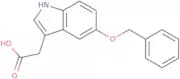
CAS:5-Benzyloxyindole-3-acetic acid is a synthetic chemical that is used as a plant growth regulator. It inhibits the uptake of other plant nutrients, such as nitrates and phosphate ions by roots, which leads to decreased plant growth. This compound also has an inhibitory effect on membranes and morphology. The inhibition of membrane transport can lead to cell death, which can be seen in the case of plants treated with this chemical. 5-Benzyloxyindole-3-acetic acid has been shown to affect the response pathway of plants at temperatures between c1-c3 degrees Celsius.Formula:C17H15NO3Purezza:Min. 95%Colore e forma:PowderPeso molecolare:281.31 g/mol3-(2-Aminoethyl)-5-methoxy-1H-indole-2-carboxylic acid
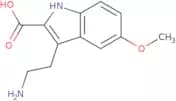
CAS:3-(2-Aminoethyl)-5-methoxy-1H-indole-2-carboxylic acid is a fine chemical that is used as a building block for research chemicals, reagents, and specialty chemicals. It has the CAS No. 52648-13-2. 3-(2-Aminoethyl)-5-methoxy-1H-indole-2-carboxylic acid is also a versatile building block for synthesis of complex compounds with high quality and is a reaction component in many reactions. This compound can serve as an intermediate or scaffold in chemical synthesis.Formula:C12H14N2O3Purezza:Min. 95%Colore e forma:White PowderPeso molecolare:234.25 g/mol2,9-Dimethyl-1,10-phenanthroline
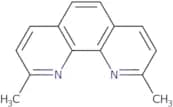
CAS:Chelating agent used to detect aqueous copper ions by electrochemiluminescenceFormula:C14H12N2Purezza:Min. 98 Area-%Colore e forma:Yellow PowderPeso molecolare:208.26 g/molPyridoxamine dihydrochloride
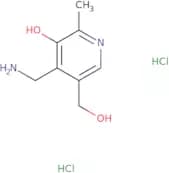
CAS:Pyridoxamine dihydrochloride is a dinucleotide phosphate that is used as an antimicrobial agent. It has been shown to be toxic to certain bacteria, such as Staphylococcus aureus and Bacillus subtilis. Pyridoxamine dihydrochloride also has been shown to have inhibitory effects on the growth of yeast and fungi. This compound binds to calcium in the body, which may account for its observed toxicity to organisms that use this element for cellular processes. Pyridoxamine dihydrochloride has also been shown to have effects on the kidney and heart.Formula:C8H14Cl2N2O2Colore e forma:White PowderPeso molecolare:241.11 g/mol2-(3,5-Dimethyl-1H-pyrazol-1-yl)quinolin-8-amine
CAS:2-(3,5-Dimethyl-1H-pyrazol-1-yl)quinolin-8-amine is a fine chemical that belongs to the group of versatile building blocks. It can be used as a reagent or as a speciality chemical in research and development. 2-(3,5-Dimethyl-1H-pyrazol-1-yl)quinolin-8-amine is also a useful scaffold for the synthesis of complex compounds and has been shown to be an effective inhibitor of protein tyrosine kinases.Formula:C14H14N4Purezza:Min. 95%Colore e forma:PowderPeso molecolare:238.29 g/mol5-Hydroxyisoquinoline
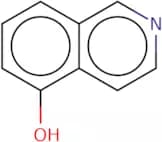
CAS:5-Hydroxyisoquinoline is a quinoline derivative that is synthesized from aziridine. It has been shown to be a potent insulin sensitizing agent in mice with type 2 diabetes mellitus. 5-Hydroxyisoquinoline has been shown to inhibit the activity of purified enzymes preparations and show high selectivity for chloride channels, which are responsible for the transport of chloride ions across cell membranes. This inhibition leads to an influx of protons into the cell, which may lead to a change in the redox potential and changes in the molecular structure of the molecule. The reaction mechanism involves substitution at position 5 of the isoquinoline ring by hydroxy groups (OH).Formula:C9H7NOPurezza:Min. 95%Colore e forma:Yellow PowderPeso molecolare:145.16 g/molN,N'-4,4'-Bis(benzyl-2-boronic acid)-bipyridinium dibromide
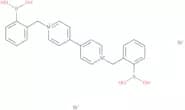
CAS:N,N'-4,4'-Bis(benzyl-2-boronic acid)-bipyridinium dibromide is a high quality reagent that can be used as an intermediate for the synthesis of complex organic compounds. It is a complex compound that contains boronic acid and bipyridinium moieties. N,N'-4,4'-Bis(benzyl-2-boronic acid)-bipyridinium dibromide is useful in the synthesis of fine chemicals and speciality chemicals. It has versatile building block properties and can be used as a reaction component in many chemical reactions.Formula:C24H24B2N2O4Br2Purezza:Min. 95%Colore e forma:PowderPeso molecolare:585.89 g/mol