Composti policiclici
Sottocategorie di "Composti policiclici"
- Acridine(98 prodotti)
- Antrachinoni(533 prodotti)
- Acidi antrachinonici solfonici(16 prodotti)
- Azobenzeni(270 prodotti)
- Azonaftalene(98 prodotti)
- Azoxybenzeni(12 prodotti)
- Azuleni(11 prodotti)
- Benzimidazoli(1.476 prodotti)
- Benzodiossani(27 prodotti)
- Benzofurani(926 prodotti)
- Benzotiofeni(700 prodotti)
- Benzotriazoli(438 prodotti)
- Binaphthyl(133 prodotti)
- Carbazoli(462 prodotti)
- Cromani, cromeni(480 prodotti)
- Cumarine(1.120 prodotti)
- Ciclofani(11 prodotti)
- Fluorene e Fluorenoni(383 prodotti)
- Imidazopiridine(10 prodotti)
- Indan(118 prodotti)
- Indazoli(2.039 prodotti)
- Indeni(22 prodotti)
- Indoli(3.984 prodotti)
- Indoline(119 prodotti)
- Isatine(234 prodotti)
- Isobenzofurani(17 prodotti)
- Ftalimmidi N-sostituiti(153 prodotti)
- Naftaleni(2.438 prodotti)
- Naftiridina(17 prodotti)
- Naftochinone(2 prodotti)
- Perilene(36 prodotti)
- Fenazine(25 prodotti)
- Ftalazine(33 prodotti)
- Ftalimmide(153 prodotti)
- Idrocarburi policiclici aromatici (PAH)(294 prodotti)
- Polifenolo(267 prodotti)
- Pteridine(52 prodotti)
- Pireni(87 prodotti)
- Chinuclidina(1 prodotti)
- Tetraceni(7 prodotti)
Trovati 4573 prodotti di "Composti policiclici"
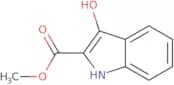
3-Hydroxyindole-2-carboxylic acid methyl ester
CAS:3-Hydroxyindole-2-carboxylic acid methyl ester, an organic compound with CAS number [31827-04-0], is classified as an indole derivative - a type of heterocyclic organic compound. It has potential applications as a building block in organic synthesis as well as other areas such as in pharmaceutical and agrochemical industries due to its biological activity.Formula:C10H9NO3Purezza:Min. 95%Colore e forma:PowderPeso molecolare:191.18 g/molN-Methyl-4-pyridone-3-carboxamide
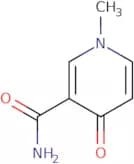
CAS:N-Methyl-4-pyridone-3-carboxamide is a nonnutritive sweetener that has been shown to have no effect on peroxisome proliferation. It also had no effect on the levels of fatty acids in rat cardiomyocytes and did not affect uv absorption. N-Methyl-4-pyridone-3-carboxamide binds to the receptor α subunit of the taste receptor and inhibits adenosine uptake, which may be responsible for its effects on depression. This compound also alters energy metabolism by inhibiting mitochondrial ATP production and glycolysis.Formula:C7H8N2O2Purezza:(%) Min. 95%Colore e forma:PowderPeso molecolare:152.15 g/mol2-Boc-6-Chloro-3,4-dihydro-1H-isoquinoline-1-carboxylic acid
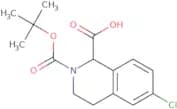
CAS:2-Boc-6-Chloro-3,4-dihydro-1H-isoquinoline-1-carboxylic acid is a useful scaffold for the production of various chemical compounds. It is a versatile building block that can be used as an intermediate in various chemical reactions or as a speciality chemical. 2-Boc-6-Chloro-3,4-dihydro-1H-isoquinoline-1 carboxylic acid has been shown to be a high quality and reliable reagent for use in research and development.Formula:C15H18ClNO4Purezza:Min. 95%Colore e forma:White PowderPeso molecolare:311.76 g/mol3-(9-((6-(2,5-Dioxopyrrolidin-1-yloxy)-6-oxohexyl)(tosyl)carbamoyl)acridinium-10-yl)propane-1-sulfonate
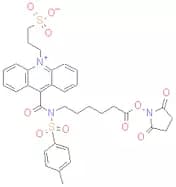
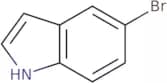
CAS:3-(9-((6-(2,5-Dioxopyrrolidin-1-yloxy)-6-oxohexyl)(tosyl)carbamoyl)acridinium-10-yl)propane-1-sulfonate is a fine chemical that is used as a versatile building block for complex compounds. It can be used in the synthesis of research chemicals or reagents, or as a speciality chemical. 3-(9-((6-(2,5-Dioxopyrrolidin-1-yloxy)-6-oxohexyl)(tosyl)carbamoyl)acridinium-10-yl)propane sulfonate can be reacted with other compounds to form useful scaffolds and reaction components. This compound has CAS number 866366–12–3.Formula:C34H35N3O10S2Purezza:Min. 95%Colore e forma:PowderPeso molecolare:709.79 g/mol5-Bromoindole
CAS:The optimal reaction conditions for the acylation of 5-bromoindole with 2,2,2-trichloroethyl chloroformate are a mixture of methanol and sodium hydroxide solution. Reaction products include 2-chloro-5-(trichloromethyl)quinoline and the quinoline derivative 1-(2,2,2-trichloroethyl)-1H-imidazole. UV absorption spectra of these products have been recorded in the range of 200 to 400 nm. The reaction is successfully monitored by following changes in the NMR spectrum. The liquid chromatography method is based on a reverse phase column and detection at 220 nm.
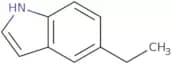
Formula:C8H6BrNColore e forma:Slightly Yellow PowderPeso molecolare:196.04 g/mol5-Ethylindole
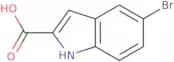
CAS:5-Ethylindole is a granulatimide that is synthesized by the cross-coupling of ethylene and copper chromite in the presence of solvents and magnesium. The chemical reactions are performed at temperatures between room temperature and 50°C, depending on the desired product. 5-Ethylindole is used as an intermediate for other chemicals such as pharmaceuticals, fungicides, dyes, and pesticides. It can be used to produce chloroethanol, which is used in the synthesis of numerous compounds including pharmaceuticals and plastics. Chromatographic techniques are often used to isolate 5-Ethylindole from mixtures with other chemicals.Formula:C10H11NPurezza:Min. 95%Peso molecolare:145.2 g/mol5-Bromoindole-2-carboxylic acid
CAS:5-Bromoindole-2-carboxylic acid is an indole derivative that has been shown to inhibit the expression of MMP-13, a matrix metalloproteinase that is involved in tumor invasion and metastasis. This compound also inhibits the transcriptional activity of RNA polymerases I and II, which is important for preventing cancer cell proliferation. 5-Bromoindole-2-carboxylic acid may be used as a treatment for cancer by inhibiting collagen synthesis. This would reduce the size of a tumor by preventing it from expanding in size.
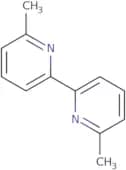
Formula:C9H6BrNO2Purezza:Min. 95%Colore e forma:PowderPeso molecolare:240.05 g/mol6,6'-Dimethyl-2,2'-bipyridine
CAS:6,6'-Dimethyl-2,2'-bipyridine (DMBP) is a bidentate ligand that is used in the functional theory of antibacterial activity. The bond cleavage of DMBP is believed to be due to its high oxidation potential and its ability to form hydrogen bonds with the bacteria cell wall. DMBP has been shown to have an antibacterial effect on both Gram-positive and Gram-negative bacteria. The mechanism of action may be due to its ability to release hydroxyl radicals when exposed to ultraviolet light. This compound also has a boronic acid group that can form a complex with 4-methoxyphenylboronic acid (MPA) which can inhibit bacterial growth.Formula:C12H12N2Purezza:Min. 98%Colore e forma:PowderPeso molecolare:184.24 g/molEsculetin
CAS:Esculetin is a naturally occurring coumarin compound, which is predominantly derived from various plant sources, such as the bark and leaves of certain trees and shrubs. As a member of the coumarin family, it is characterized by its benzopyrone structure and is often isolated from botanicals through organic solvent extraction methods.
Its mode of action primarily involves its ability to scavenge free radicals and chelate metal ions, contributing to its notable antioxidant capacity. Furthermore, Esculetin exerts anti-inflammatory effects by inhibiting the activity of enzymes such as cyclooxygenase and lipoxygenase, which are integral to the inflammatory pathway.
Common applications of Esculetin are found in scientific research where it is utilized for its potential therapeutic properties. Studies have investigated its role in modulating oxidative stress, its protective effects in neurodegenerative disorders, and its capability to inhibit the proliferation of certain cancer cell lines. Additionally, it serves as a useful biochemical tool in elucidating the pathways of inflammation and oxidative stress within cellular models. Scientists continue to explore its potential as a lead compound in drug discovery and development.Formula:C9H6O4Purezza:Min. 98.0 Area-%Peso molecolare:178.15 g/mol6-Methoxyindole-3-acetic acid
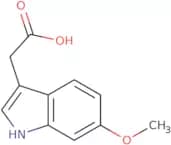
CAS:Please enquire for more information about 6-Methoxyindole-3-acetic acid including the price, delivery time and more detailed product information at the technical inquiry form on this pageFormula:C11H11NO3Purezza:Min. 95%Colore e forma:PowderPeso molecolare:205.21 g/mol2,9-Dimethyl-1,10-phenanthroline hydrochloride monohydrate
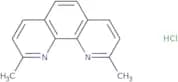
CAS:Chelating agent used to detect aqueous copper ions by electrochemiluminescenceFormula:C14H12N2·HCl·H2OColore e forma:White PowderPeso molecolare:262.73 g/mol6-Nitroindoline
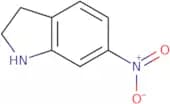
CAS:6-Nitroindoline is a nitro compound that inhibits the polymerization of nitrite. It is an acidic acceptor and has been used as an agrochemical to inhibit nitrification in soil. 6-Nitroindoline has been shown to be mutagenic, which may be due to its ability to form covalent bonds with DNA bases or alkylate DNA bases. 6-Nitroindoline can also undergo borohydride reduction, which is the conversion of a compound into a more reduced form by reaction with borohydride.Formula:C8H8N2O2Purezza:Min. 95%Colore e forma:PowderPeso molecolare:164.16 g/mol2,3-Dihydro-1H-isoindole-1-carboxylic acid
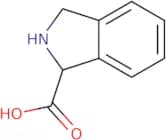
CAS:2,3-Dihydro-1H-isoindole-1-carboxylic acid is an acidic molecule that can be found in high concentrations in the blood. It is also a metabolite of isoindolines, which are an important class of drugs used to treat chronic hypertension. 2,3-Dihydro-1H-isoindole-1-carboxylic acid belongs to the group of structural formula categorized as an enolate; this group is a type of enzyme inhibitor that blocks enzymes involved in the production of cholesterol. 2,3-Dihydro-1H-isoindole-1-carboxylic acid has been shown to inhibit the activity of two enzymes: cytochrome P450 and sterol C5 reductase. The mechanism behind this inhibition is homologous with other known inhibitors such as 3-(2′,4′dichlorophenyl)acrylic acid (methazFormula:C9H9NO2Purezza:Min. 97 Area-%Colore e forma:PowderPeso molecolare:163.17 g/mol6-Chloro-9-(tetrahydro-2H-pyran-2-yl)purine
CAS:6-Chloro-9-(tetrahydro-2H-pyran-2-yl)purine is a nucleoside analog that is used to treat various types of cancer. It is a c–h bond regiospecific nucleophile that forms the 6-chloro 9-(tetrahydro-2H-pyran-2-yl)purine intermediate. The chloride ion acts as a nucleophile in the first step of this process, which results in the formation of an organocuprate and glyoxylate. 6CPP binds to DNA and inhibits RNA synthesis, leading to cell death by apoptosis or necrosis. This drug has been shown to be effective for treating human cell lines. 6CPP is also known for its antitumor effects, which may be due to its ability to inhibit phosphonates and cross-coupling reactions.Formula:C10H11ClN4OPurezza:Min. 95%Colore e forma:SolidPeso molecolare:238.67 g/mol2-Chloroquinoline-8-carboxylic acid
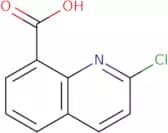
CAS:2-Chloroquinoline-8-carboxylic acid is a fine chemical that is useful as a scaffold for the synthesis of other compounds. It is a versatile building block and can be used in the production of the drug chloroquine. 2-Chloroquinoline-8-carboxylic acid has been used as an intermediate in research chemicals, reaction components in speciality chemical and complex compound. This compound has high quality and can be used as a reagent.Formula:C10H6ClNO2Purezza:Min. 95 Area-%Colore e forma:White Off-White PowderPeso molecolare:207.61 g/mol5-Benzyloxyindole
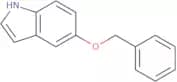
CAS:5-Benzyloxyindole is an inhibitor molecule that binds to the active site of cytochrome P450 and inhibits the enzyme's ability to catalyze reactions. This compound has potent inhibitory activity against a number of enzymes, including amide and hydroxyl groups, chloride ion channels, and electrochemical studies. 5-Benzyloxyindole also shows potential as a cancer treatment agent due to its ability to inhibit cell proliferation. It was shown in cell culture studies using human colon cancer cells that this molecule inhibited the growth of cancer cells by blocking DNA synthesis, leading to apoptosis or programmed cell death.
5-Benzyloxyindole is synthesized through an acylation reaction between benzoyl chloride and indole. The product can be purified through recrystallization or chromatography on silica gel.Formula:C15H13NOPurezza:Min. 95%Colore e forma:Brown PowderPeso molecolare:223.27 g/mol8-Methoxy-2-methylquinolin-5-amine monohydrochloride
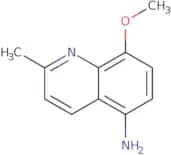
CAS:8-Methoxy-2-methylquinolin-5-amine monohydrochloride is a fine chemical that is used as a versatile building block in the synthesis of complex compounds. 8-Methoxy-2-methylquinolin-5-amine monohydrochloride is an intermediate for the production of research chemicals and pharmaceuticals. It can be used to synthesize speciality chemicals, useful scaffolds, and reagents. It also has a wide range of applications as a reaction component in synthetic organic chemistry. 8-Methoxy-2-methylquinolin-5-amine monohydrochloride has high purity and quality.Formula:C11H12N2O•HClPurezza:Min. 95 Area-%Colore e forma:PowderPeso molecolare:224.73 g/mol7-Benzyloxyindole
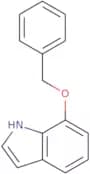
CAS:7-Benzyloxyindole is a regulatory compound that is used to study the interactions between transcription factors and chromatin. 7-Benzyloxyindole has been shown to induce caspase-independent cell death in human pathogens. 7-Benzyloxyindole induces reactive oxygen species and alters the expression of genes involved in the immune system and inflammation, suggesting an interaction with transcriptional regulation. 7-Benzyloxyindole's hemolytic activity may be due to its enantiomer, which binds to carotenoids such as β-carotene or retinol and forms a complex that is more reactive than the parent molecule. This reactive form of 7-benzyloxyindole has been shown to induce cell death in staphylococcus, suggesting a possible use for this drug as an antibacterial agent against opportunistic fungal infections.Formula:C15H13NOPurezza:90%Colore e forma:PowderPeso molecolare:223.27 g/mol7-Hydroxycoumarin
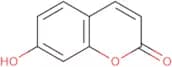
CAS:7-Hydroxycoumarin is a fluorescent compound, known as a coumarin derivative, which is a naturally occurring chemical found in many plants. Derived from the umbelliferone compound family, it exhibits strong blue fluorescence under UV light due to its unique structural properties. This fluorescence is a result of its molecular conjugation and the electron-donating nature of the hydroxyl group, allowing it to absorb and emit light efficiently.
Formula:C9H6O3Purezza:90%Colore e forma:Off-White PowderPeso molecolare:162.14 g/mol1-(Bromoacetyl)indoline
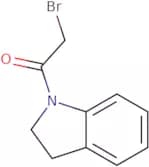
CAS:1-(Bromoacetyl)indoline is a chemical compound that can be used as a reaction component, reagent, or high-quality research chemical. It is a speciality chemical used in the production of fine chemicals and other organic compounds. 1-(Bromoacetyl)indoline is a versatile building block for synthesis of complex compounds with potential applications in pharmaceuticals, agrochemicals, and specialty chemicals.Formula:C10H10BrNOPurezza:Min. 95%Colore e forma:SolidPeso molecolare:240.1 g/mol