Composti policiclici
Sottocategorie di "Composti policiclici"
- Acridine(97 prodotti)
- Antrachinoni(533 prodotti)
- Acidi antrachinonici solfonici(16 prodotti)
- Azobenzeni(270 prodotti)
- Azonaftalene(98 prodotti)
- Azoxybenzeni(12 prodotti)
- Azuleni(11 prodotti)
- Benzimidazoli(1.475 prodotti)
- Benzodiossani(27 prodotti)
- Benzofurani(924 prodotti)
- Benzotiofeni(700 prodotti)
- Benzotriazoli(438 prodotti)
- Binaphthyl(133 prodotti)
- Carbazoli(462 prodotti)
- Cromani, cromeni(480 prodotti)
- Cumarine(1.120 prodotti)
- Ciclofani(11 prodotti)
- Fluorene e Fluorenoni(381 prodotti)
- Imidazopiridine(10 prodotti)
- Indan(118 prodotti)
- Indazoli(2.038 prodotti)
- Indeni(22 prodotti)
- Indoli(3.984 prodotti)
- Indoline(119 prodotti)
- Isatine(234 prodotti)
- Isobenzofurani(17 prodotti)
- Ftalimmidi N-sostituiti(153 prodotti)
- Naftaleni(2.437 prodotti)
- Naftiridina(17 prodotti)
- Naftochinone(2 prodotti)
- Perilene(36 prodotti)
- Fenazine(25 prodotti)
- Ftalazine(33 prodotti)
- Ftalimmide(153 prodotti)
- Idrocarburi policiclici aromatici (PAH)(301 prodotti)
- Polifenolo(264 prodotti)
- Pteridine(52 prodotti)
- Pireni(87 prodotti)
- Chinuclidina(1 prodotti)
- Tetraceni(7 prodotti)
Trovati 4573 prodotti di "Composti policiclici"
L(+)-Amethopterin hydrate
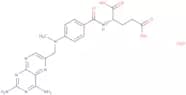
CAS:L(+)-Amethopterin hydrate is an immunosuppressant that suppresses the immune system by inhibiting RNA synthesis. It is a structural analogue of folic acid and has been shown to be effective in treating autoimmune diseases, such as rheumatoid arthritis. L(+)-Amethopterin hydrate is a neutral compound that is soluble in water and microsomal membranes, making it more easily absorbed through the gut than other compounds of this class. It also has been shown to have no toxic effects on cardiac cells at therapeutic concentrations. These properties make L(+)-Amethopterin hydrate an attractive candidate for treating autoimmune diseases when other treatments have failed.Formula:C20H22N8O5·xH2OPurezza:Min. 98 Area-%Colore e forma:Yellow PowderPeso molecolare:454.44 g/mol5,6-Difluoroindole
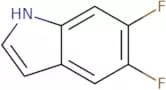
CAS:5,6-Difluoroindole is a chemical compound that has been studied in biological and chemical research. It is an analog of the neurotransmitter serotonin, which binds to the 5-HT2C receptor and activates phospholipase C (PLC) to produce inositol triphosphate (IP3). This compound may be useful for the treatment of neurodegenerative diseases such as Alzheimer's disease. 5,6-Difluoroindole has been shown to block the activity of acetylcholinesterase (AChE), which is an enzyme that breaks down acetylcholine. This leads to an increase in acetylcholine levels and a decrease in AChE activity. The reaction mechanism for this process is not known.Formula:C8H5NF2Colore e forma:PowderPeso molecolare:153.13 g/mol1-Methylindole-3-acetamide
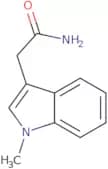
CAS:Prodotto controllatoPlease enquire for more information about 1-Methylindole-3-acetamide including the price, delivery time and more detailed product information at the technical inquiry form on this page
Formula:C11H12N2OPurezza:Min. 95%Colore e forma:PowderPeso molecolare:188.23 g/mol5-Methoxypsoralen
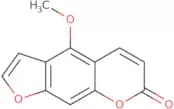
CAS:5-Methoxypsoralen is a light-activated compound, which is a naturally derived organic substance found in certain plants, particularly from the Apiaceae family. This compound functions as a furocoumarin that interacts with DNA through photoactivation, forming cross-links upon exposure to ultraviolet A (UVA) light. These cross-links disrupt DNA replication, ultimately inhibiting cell proliferation.
Formula:C12H8O4Purezza:Min. 98 Area-%Colore e forma:White PowderPeso molecolare:216.19 g/mol5-Bromo-4-chloroindolyl 1,3-diacetate
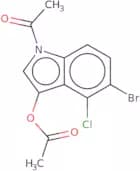
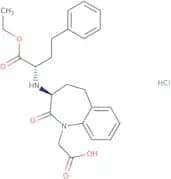
CAS:5-Bromo-4-chloroindolyl 1,3-diacetate (5BCDA) is a clinical response predictor of postoperative radiotherapy. It is an acr20 response predictor for the diagnosis of chronic hepatitis C and the disease activity index in women with genital herpes. 5BCDA has been found to be effective in reducing levels of IL-17a and IL-17f, which are cytokines that are important for immune responses. 5BCDA has also been shown to be effective in treating infectious diseases such as malaria and tuberculosis.Formula:C12H9BrClNO3Purezza:Min. 95%Colore e forma:Off-White PowderPeso molecolare:330.57 g/molBenazepril HCl
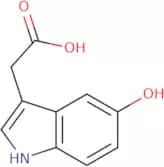
CAS:Angiotensin-converting enzyme inhibitor; anti-hypertensiveFormula:C24H29ClN2O5Purezza:Min. 95%Colore e forma:PowderPeso molecolare:460.95 g/mol5-Hydroxyindole-3-acetic acid
CAS:Reduces brain amyloid plaques; induces neprilysin expression
Formula:C10H9NO3Purezza:Min. 95%Colore e forma:Off-White PowderPeso molecolare:191.18 g/mol6-[4-(1-Cyclohexyl-1H-tetrazol-5-yl)butoxy]-3,4-dihydro-2(1H)-quinolinone
CAS:Cilostazol is a drug that binds to ATP-binding cassette (ABC) transporters, which are proteins that transport molecules across membranes. It decreases the production of cyclic nucleotides and phosphodiesterase, which are important in the regulation of blood vessel tone. Cilostazol has been shown to be effective in treating heart failure and atherosclerosis. Cilostazol also inhibits cyclase activity, an enzyme involved in the synthesis of cyclic nucleotides, which leads to vasodilation by increasing the concentration of cAMP. The drug is available in both immediate-release and controlled-release preparations. Cilostazol can have serious side effects such as congestive heart failure or stroke if it is taken with other drugs that inhibit platelet aggregation such as aspirin or warfarin.Formula:C20H27N5O2Purezza:Min. 95%Colore e forma:White PowderPeso molecolare:369.46 g/mol3-(3-Piperidinopropoxy)-1-[3-(Trifluoromethyl)Phenyl]-1H-Indazole
CAS:Prodotto controllato3-(3-Piperidinopropoxy)-1-[3-(Trifluoromethyl)Phenyl]-1H-Indazole is a compound that functions as an actuator. It can be used to implement force, such as controlling a change in the position of a control or actuation, and it can also be used to shift control. 3-(3-Piperidinopropoxy)-1-[3-(Trifluoromethyl)Phenyl]-1H-Indazole is an actuation method that can be controlled by implementing force.Formula:C22H24F3N3OPurezza:Min. 95%Peso molecolare:403.44 g/molDaphnetin-8-glucoside
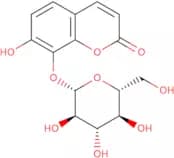
CAS:Daphnetin-8-glucoside is a natural phenolic glucoside compound derived from plants of the Thymelaeaceae family, specifically from the Daphne genus. This compound is produced by the glycosylation of daphnetin, a coumarin derivative found in various botanical sources. The glycoside linkage enhances its solubility and stability, facilitating its bioavailability. Daphnetin-8-glucoside exhibits potent antioxidant and anti-inflammatory activities, mediated through the scavenging of free radicals and inhibition of pro-inflammatory cytokine production. Additionally, it modulates signal transduction pathways involved in cellular oxidative stress responses.Formula:C15H16O9Purezza:Min. 95%Colore e forma:PowderPeso molecolare:340.28 g/mol3-Methyl-8-quinolinesulfonyl chloride
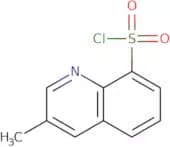
CAS:3-Methyl-8-quinolinesulfonyl chloride (3MQSC) is a reaction product of 1,2,4-trioxane and thionyl chloride. 3MQSC is used as an intermediate in the production of l-citrulline from chloroacetic acid. It reacts with paraformaldehyde to form a solid phase synthesis catalyst. 3MQSC catalyzes the reaction between phosphorus pentachloride and chlorine to produce ethyl formate and hydrogen chloride gas. This process is industrialized for the production of ethyl formate, which is used for the manufacture of acetic acid, chlorinated solvents, polymers, and plastics. The high yield of this process makes it one of the most popular routes for producing ethyl formate. Catalysis by 3MQSC can be achieved at low temperature and pressure due to its resistance to heat and low boiling point.Formula:C10H8ClNO2SPurezza:Min. 97 Area-%Colore e forma:White Yellow PowderPeso molecolare:241.69 g/mol1-Acetyl-1,2,3,4-tetrahydroquinolin-7-amine hydrochloride
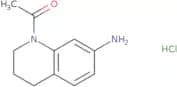
CAS:1-Acetyl-1,2,3,4-tetrahydroquinolin-7-amine hydrochloride is a versatile building block that can be used in the synthesis of complex compounds with high quality and as a speciality chemical. This compound is useful as a reagent and reaction component in organic synthesis. It has been shown to be useful in the synthesis of new scaffolds for drug discovery.
Formula:C11H14N2O·HClPurezza:Min. 95%Colore e forma:Off-White PowderPeso molecolare:226.7 g/mol8-Aminopurine
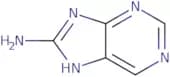
CAS:8-Aminopurine is an aminopurine that is used as a research tool in magnetic resonance spectroscopy. The proton magnetic resonance spectrum of 8-aminopurine shows two characteristic peaks at 3.0 and 4.2 ppm, which are assigned to the aminopurine tautomers (3-HPA, 4-HPA). The kinetic stability of 8-aminopurine in water is pH dependent and has been shown to be strongly dependent on the presence of aldehyde oxidase (AO) activity. AO activity can be inhibited by the addition of dimethylformamide or other non-specific inhibitors such as 2,6-dichloroisonicotinic acid.
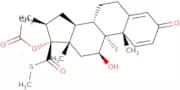
Formula:C5H5N5Purezza:Min. 95%Colore e forma:White PowderPeso molecolare:135.13 g/mol[(8S,10S,11S,13S,14S,16S)-9-Fluoro-11-Hydroxy-10,13,16-Trimethyl-17-Methylsulfanylcarbonyl-3-Oxo-6,7,8,11,12,14,15,16-Octahydrocyclo penta[a]Phenanthren-17-Yl] Acetate
CAS:Prodotto controllato(8S,10S,11S,13S,14S,16S)-9-Fluoro-11-Hydroxy-10,13,16-Trimethyl-17-Methylsulfanylcarbonyl-3-Oxo-6,7,8,11,12,14,15,16-Octahydrocyclo penta[a]Phenanthren-17-Yl) Acetate is a fatty acid ester that is used as a pharmaceutical preparation. It has been shown to be an effective treatment for the muscle wasting disease myotonic dystrophy and has been approved by the FDA. (8S,10S,11S,13S,14S,, 16 S)-9 - Fluoro - 11 - Hydroxy - 10 , 13 , 16 - Trimethyl - 17 - Methylsulfanylcarbonyl - 3 - Oxo - 6 , 7 , 8 , 11Formula:C24H31FO5SPurezza:Min. 95%Peso molecolare:450.56 g/mol4-Chloro-8-methoxy-2-methylquinoline
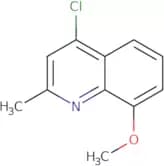
CAS:4-Chloro-8-methoxy-2-methylquinoline is a compound that has been found in nature. It is a diversity of nonreciprocal nucleic acid sequences and has been shown to be polymorphic. This nucleotide can cause stenosis in the coronary heart, which may lead to heart disease. 4-Chloro-8-methoxy-2-methylquinoline also inhibits the growth of Plasmodium falciparum and Plasmodium vivax. The drug's mechanism of action is not yet known, but it may have evolved from other compounds with a similar molecular structure.Formula:C11H10ClNOPurezza:Min. 95%Colore e forma:PowderPeso molecolare:207.66 g/mol6-Methyl-1H-indole-3-carbaldehyde
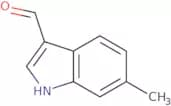
CAS:6-Methyl-1H-indole-3-carbaldehyde is a synthetic chemical that has been used as a reagent in the form of its sodium salt. It is an acetylating agent and can be used for formylation reactions. 6-Methyl-1H-indole-3-carbaldehyde has shown strong antifungal activity against phytopathogenic fungi such as Fusarium, Rhizoctonia, and Phytophthora. This chemical also has a triazine group, which can be used to enhance the herbicidal properties of certain compounds.Formula:C10H9NOPurezza:Min. 95%Colore e forma:PowderPeso molecolare:159.18 g/mol6-Methoxyindole
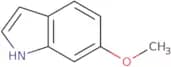
CAS:6-Methoxyindole is an acetate extract of the plant 5-methoxyindole. It has been shown to be a 5-HT1A receptor agonist in animals, and has been shown to have cardiac effects in rats. 6-Methoxyindole is also used as a precursor for the synthesis of diphenylacetylindoles. 6-Methoxyindole is one of the molecules that can be recombined to form a batcho-leimgruber indole (BLI).
Formula:C9H9NOPurezza:Min. 99 Area-%Colore e forma:PowderPeso molecolare:147.17 g/mol6-Methoxyindoline-2,3-dione
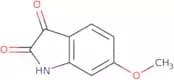
CAS:6-Methoxyindoline-2,3-dione is an indole alkaloid that has been isolated from the leaves of plants in the genus Apiaceae. It is synthesized by a reaction system that involves the oxidation of 6-methoxyindole to the corresponding oxindole and subsequent reduction to the desired product. The cytotoxicity of 6-methoxyindoline-2,3-dione has been demonstrated using a fluorescent assay with cancer cells. The compound binds to and activates cb2 receptors, which are expressed on immune cells and have been shown to be involved in inflammatory processes.Formula:C9H7NO3Purezza:Min. 95%Colore e forma:PowderPeso molecolare:177.16 g/mol3-Cyano-7-ethoxycoumarin
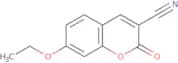
CAS:3-Cyano-7-ethoxycoumarin is a specialized fluorescent probe, which is a synthetic organic compound designed for use in biochemical assays. This compound is sourced from the broader family of coumarins, which are known for their versatile fluorescence properties. The mode of action of 3-Cyano-7-ethoxycoumarin involves its ability to exhibit strong fluorescent emission when excited by specific wavelengths of light, making it a valuable tool for monitoring biochemical reactions and interactions.
Formula:C12H9NO3Purezza:Min. 95%Colore e forma:PowderPeso molecolare:215.2 g/mol2-Methyl-5-nitroimidazole
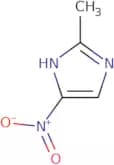
CAS:2-Methyl-5-nitroimidazole, also known as menidazole, is an impurity of metronidazole, which is used as an antibacterial and antiprotozoal medication in the treatment of infections, including rosacea. 2-Methyl-5-nitroimidazole is a derivative of nitroimidazole and has potential antimicrobial and antitrichomonal activities. Its synthesis can be achieved using various methods, including nucleophilic reaction, ester derivatives, reaction with metronidazole, and substitution reactions. Several derivatives of 2-Methyl-5-nitroimidazole have been synthesized and tested for their antibacterial, antifungal, and antitrichomonal activities. Both 2-Methyl-5-nitroimidazole and its derivatives have potential applications as antimicrobial and antitrichomonal agents.Formula:C4H5N3O2Purezza:Min. 95%Colore e forma:PowderPeso molecolare:127.1 g/mol

![6-[4-(1-Cyclohexyl-1H-tetrazol-5-yl)butoxy]-3,4-dihydro-2(1H)-quinolinone](/_next/image/?url=https%3A%2Fstatic.cymitquimica.com%2Fproducts%2F3D%2Fthumb-webp%2FFC03161.webp&w=3840&q=75)
![3-(3-Piperidinopropoxy)-1-[3-(Trifluoromethyl)Phenyl]-1H-Indazole](/_next/image/?url=https%3A%2Fstatic.cymitquimica.com%2Fproducts%2F3D%2Fthumb-webp%2FFP97740.webp&w=3840&q=75)