


Composti policiclici
Sottocategorie di "Composti policiclici"
- Acridine(97 prodotti)
- Antrachinoni(533 prodotti)
- Acidi antrachinonici solfonici(16 prodotti)
- Azobenzeni(270 prodotti)
- Azonaftalene(98 prodotti)
- Azoxybenzeni(12 prodotti)
- Azuleni(11 prodotti)
- Benzimidazoli(1.475 prodotti)
- Benzodiossani(27 prodotti)
- Benzofurani(924 prodotti)
- Benzotiofeni(700 prodotti)
- Benzotriazoli(438 prodotti)
- Binaphthyl(133 prodotti)
- Carbazoli(462 prodotti)
- Cromani, cromeni(480 prodotti)
- Cumarine(1.122 prodotti)
- Ciclofani(11 prodotti)
- Fluorene e Fluorenoni(381 prodotti)
- Imidazopiridine(10 prodotti)
- Indan(118 prodotti)
- Indazoli(2.037 prodotti)
- Indeni(22 prodotti)
- Indoli(3.988 prodotti)
- Indoline(119 prodotti)
- Isatine(234 prodotti)
- Isobenzofurani(17 prodotti)
- Ftalimmidi N-sostituiti(153 prodotti)
- Naftaleni(2.437 prodotti)
- Naftiridina(17 prodotti)
- Naftochinone(2 prodotti)
- Perilene(36 prodotti)
- Fenazine(25 prodotti)
- Ftalazine(33 prodotti)
- Ftalimmide(153 prodotti)
- Idrocarburi policiclici aromatici (PAH)(270 prodotti)
- Polifenolo(261 prodotti)
- Pteridine(52 prodotti)
- Pireni(87 prodotti)
- Chinuclidina(1 prodotti)
- Tetraceni(7 prodotti)
Trovati 4574 prodotti di "Composti policiclici"
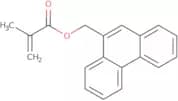
(9-Phenanthryl)methyl methacrylate
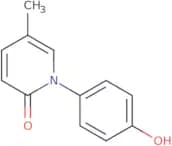
CAS:9-Phenanthryl)methyl methacrylate is a fluorescent pigment that is used as a nanomaterial. It is an acidic material and can be used in coatings to improve the properties of materials. 9-Phenanthryl)methyl methacrylate has been shown to have fluorescence resonance energy transfer (FRET) properties, which may be due to its monolayer structure and chromophore. The diameter of this particle ranges from 10-20 nm, with a water permeability of 20% at pH 7.0 and 0.1% at pH 2.0. This pigment has a high degree of surface roughness, which is due to its morphology and the microenvironment in which it exists.Formula:C19H16O2Purezza:Min. 95 Area-%Colore e forma:PowderPeso molecolare:276.33 g/molN-(4-Hydroxyphenyl)-5-methyl-2-1H-pyridone
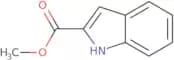
CAS:N-(4-Hydroxyphenyl)-5-methyl-2-1H-pyridone is a molecule that is found in plasma samples and has been shown to inhibit the growth of cells. It is a potent inhibitor of tubulointerstitial injury, which is the most common type of kidney disease. The mechanism of this drug has been shown to involve the inhibition of primary amino acid uptake. This compound also inhibits urea synthesis and decreases plasma concentrations by increasing the rate of elimination. In addition, it has been shown to have an inhibitory effect on growth factors such as EGF, bFGF, IGF-1, and PDGF. N-(4-Hydroxyphenyl)-5-methyl-2-1H-pyridone can be synthesized by heating at high temperatures (thermally activated).Formula:C12H11NO2Purezza:Min. 95%Colore e forma:Off-White PowderPeso molecolare:201.22 g/molIndole-2-carboxylic acid methyl ester
CAS:Indole-2-carboxylic acid methyl ester is a carbazole that can be synthesized from indole and hydrogen chloride. It has been shown to inhibit the production of β-amyloid, an important factor in the pathogenesis of Alzheimer’s disease. Indole-2-carboxylic acid methyl ester has also been shown to have inhibitory effects on ion-exchange, melatonin synthesis, and yields of aziridines. The affinity of indole-2-carboxylic acid methyl ester for aldehydes was found to be very high. It is also able to cross the blood brain barrier into the brain and has been shown to be effective against pancreatic cancer cells in vitro.Formula:C10H9NO2Purezza:Min. 95%Colore e forma:Slightly Brown PowderPeso molecolare:175.18 g/mol6-Trifluoromethylindole
CAS:6-Trifluoromethylindole is a carbamic acid that can be synthesized with the help of a sulfoxides. Carbamic acid reacts with an aryl halide to form an unsymmetrical biaryl. 6-Trifluoromethylindole has been shown to act as a modulator in Friedel-Crafts reactions, which may be used for the synthesis of heterocycles. This chemical has also been shown to react with alkyl chlorides and sulfonium salts to form carbamic acids and sulfoxides, respectively.
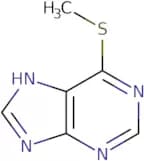
Formula:C9H6F3NPurezza:Min. 95%Colore e forma:PowderPeso molecolare:185.15 g/mol6-Methylmercaptopurine
CAS:6-Methylmercaptopurine is an important metabolite of 6-methylmercaptopurine, which is a vital component of the nucleotide synthesis pathway. It is used in analytical methods to determine levels of nucleotides, as well as in biological studies for its effect on autoimmune diseases. 6-Methylmercaptopurine can inhibit replication by inhibiting the methyltransferase enzyme.Formula:C6H6N4SPurezza:Min. 95%Colore e forma:Off-White Yellow PowderPeso molecolare:166.2 g/mol7-Methylcoumarin
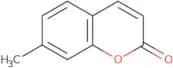
CAS:7-Methylcoumarin is an organic compound classified as a coumarin derivative, which is sourced from various plants and synthesized chemically. Its basic structure consists of a benzopyrone, with a methyl group at the seventh position on the coumarin core, distinguishing it from naturally occurring coumarins.Formula:C10H8O2Purezza:Min. 95%Colore e forma:White PowderPeso molecolare:160.17 g/mol2,6-Diaminopurine
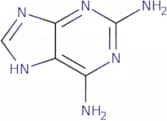
CAS:2,6-Diaminopurine is a nucleotide analogue that is synthesized from guanosine. It inhibits the enzyme ribonucleotide reductase and blocks the synthesis of DNA precursors, which are necessary for viral replication. 2,6-Diaminopurine has been shown to inhibit hiv infection in tissue culture and animal models by decreasing the levels of nucleotides in cells. This drug can be used as an anti-viral agent against HIV and other retroviruses. 2,6-Diaminopurine has also been shown to be effective against murine sarcoma virus. The compound binds to the enzyme ribonucleotide reductase, which is important for DNA synthesis, and prevents its activity by mimicking adenosine triphosphate (ATP). The binding of 2,6-diaminopurine to ATP results in a coordination geometry that causes a long hydrogen bond with one oxygen
Formula:C5H6N6Purezza:Min. 95%Colore e forma:PowderPeso molecolare:150.14 g/molUlifloxacin
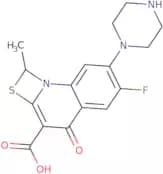
CAS:Extensive research has been conducted on the antimicrobial activity of 6-fluoro-1-methyl-4-oxo-7-(1-piperazinyl)-4H-(1,3)thiazeto(3,2a)quinoline-3-carboxylic acid (FPMT). FPMT is a levorotatory compound that is rapidly metabolized by esterases to 6FMT, which is also active against bacteria. FPMT inhibits bacterial growth, but does not inhibit mammalian cell growth. The main mechanism of action for FPMT is probably through its ability to inhibit the synthesis of bacterial DNA and RNA. This drug has been shown to be effective against sinusitis caused by bacterial rhinosinusitis and urinary tract infections caused by Escherichia coli and Pseudomonas aeruginosa. FPMT can be used as an alternative to prulifloxacin for the treatment of these types of infectionsFormula:C16H16FN3O3SPurezza:Min. 98 Area-%Peso molecolare:349.38 g/mol4-Hydroxyindole
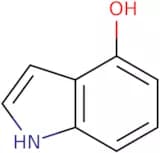
CAS:4-Hydroxyindole is an inorganic acid that is produced by the oxidation of 4-hydroxyphenylacetic acid. It is a metabolite of the synthetic cannabinoids, JWH-018 and JWH-073. The production of 4-hydroxyindole has been shown to be dependent on the presence of a nucleophilic attack on the diazonium salt, which leads to protonation. The fluorescence properties of this molecule are dependent on its hydroxyl group, which allows for detection using magnetic resonance spectroscopy. Hydrochloric acid can be used as an alternate solvent to produce 4-hydroxyindole from 4-hydroxyphenylacetic acid. 4-Hydroxyindole has been shown to have pharmacokinetic properties that are similar to those of THC, but it does not bind well to cannabinoid receptors or activate them.br> br> The structure of this molecule can be seen belowFormula:C8H7NOColore e forma:White PowderPeso molecolare:133.15 g/mol4,4'-Dipyridyl - 98%
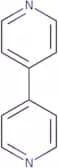
CAS:4,4'-Dipyridyl is a cyclic peptide with a basic structure. It has been found to have inhibitory effects against the growth of bacteria in human serum and group P2. The x-ray crystal structures reveal that it has strong intermolecular hydrogen bonding interactions. Experimental solubility data and coordination models show that 4,4'-dipyridyl is soluble in anhydrous sodium. Structural analysis and kinetic energy calculations indicate that the inhibitor binding site is located on the hydroxyl groups of the backbone of the molecule. This ligand also binds to metal ions such as copper or zinc.
Formula:C10H8N2Colore e forma:Off-White PowderPeso molecolare:156.19 g/mol[2-[(8S,10S,11S,13S,14S,16R,17S)-9-Fluoro-11,16,17-Trihydroxy-10,13-Dimethyl-3-Oxo-1,2,6,7,8,11,12,14,15,16-Decahydrocyclopenta[a]Ph enanthren-17-Yl]-2-Oxoethyl] Propanoate
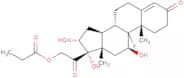
CAS:Prodotto controllato(8S,10S,11S,13S,14S,16R,17S)-9-fluoro-11,16,17-trihydroxy-10,13-dimethyl-3-oxo-1,2,6,7,8,11,12,14,-15,-16-decahydrocyclopenta[a]phenanthren-17-yl]-2-oxoethyl propanoate is a pesticide that is classified as a pyrethroid. It has been shown to be an insecticide that binds to cholinergic receptors in the nerve synapses of insects and disrupts transmission of nerve impulses. This allows the insect's nervous system to recover from the initial attack. The molecule has also been shown to bind to other proteins that have been identified as targets for pesticide interaction.Formula:C24H33FO7Purezza:Min. 95%Peso molecolare:452.51 g/mol4-Fluoro-1H-indole-3-carbaldehyde
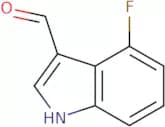
CAS:4-Fluoro-1H-indole-3-carbaldehyde is a chemical compound that can be used as a reagent, reaction component, or building block in the synthesis of more complex compounds. This chemical is also known as CAS No. 23073-31-6 and has high quality and purity. 4-Fluoro-1H-indole-3-carbaldehyde is useful for research purposes and can be used as a speciality chemical or a fine chemical.
Formula:C9H6FNOPurezza:Min. 95%Colore e forma:Yellow To Brown SolidPeso molecolare:163.15 g/mol4,4'-Dichloro-2,2'-bipyridine
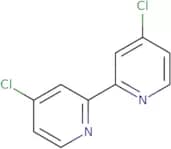
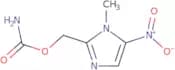
CAS:4,4'-Dichloro-2,2'-bipyridine (4,4'-DDBP) is a polydentate ligand that has been shown to be highly cytotoxic against cancer cells. 4,4'-DDBP binds to amines in the cancer cell and uses its nucleophilic character to activate the amine by displacement of chloride ions. This leads to the production of an excited state that can be used for photodynamic therapy or as a fluorescence probe. This compound has also been shown to have operational kinetic properties in the inhibition of bilirubin oxidase.Formula:C10H6Cl2N2Purezza:Min. 95%Colore e forma:White PowderPeso molecolare:225.07 g/mol1-Methyl-5-nitro-1H-imidazole-2-methanol 2-carbamate
CAS:1-Methyl-5-nitro-1H-imidazole-2-methanol 2-carbamate is an antimicrobial agent that has been shown to be active against a number of bacteria, including Gram negative and Gram positive bacteria. It was shown to have a matrix effect in vivo and its kinetic energy was found to be reactive. The 1NIMC has been shown to inhibit the growth of bacteria by interfering with DNA replication and RNA synthesis. This drug has also been shown to have an analytical method that is linear in calibrations curves, which makes it suitable for quantitative analysis. It also has chemical stability, as it decomposes slowly at room temperature.Formula:C6H8N4O4Purezza:Min. 98.5%Colore e forma:White PowderPeso molecolare:200.15 g/mol6-Bromo-2-oxindole
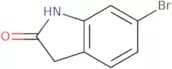
CAS:6-Bromo-2-oxindole is a crystalline compound with a molecular formula of C10H6BrO. It has been shown to have a high efficiency in the production of butyric acid and other organic acids. 6-Bromo-2-oxindole is also used in electron microscopy studies as an electron acceptor, and can be used for producing polymers with crystalline structures and dihedral angles. The compound has been shown to inhibit the growth of breast cancer cells by preventing the synthesis of mda-mb-231 breast cancer cells. It also has been shown to inhibit the production of isoindigo and morphology.
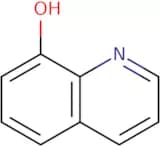
Formula:C8H6BrNOPurezza:Min. 98 Area-%Colore e forma:PowderPeso molecolare:212.04 g/mol8-Hydroxyquinoline
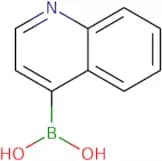
CAS:8-HQ, liberated by enzymatic activity, is a strong metal chelator and forms insoluble, grey precipitates with several metal cations such as Fe3+Formula:C9H7NOColore e forma:PowderPeso molecolare:145.16 g/molQuinolin-4-ylboronic acid
CAS:Quinolin-4-ylboronic acid is a heterocyclic compound with two nitrogen atoms that are attached to the ring by means of carbonyl groups. This compound is a precursor in the synthesis of the drug dorsomorphin, which is used for pain relief. It also has an important role in pharmacokinetics because it can be used as a marker for estimating blood levels of other drugs. Quinolin-4-ylboronic acid yields an active form, quinolin-4-yl boronic acid, when reacted with piperazine in basic conditions. The drug ldn-193189 is a derivative of this active form and has been evaluated as a potential drug for treating osteoporosis and cancer.
Formula:C9H8BNO2Purezza:Min. 95 Area-%Colore e forma:PowderPeso molecolare:172.98 g/mol5-Formylindole
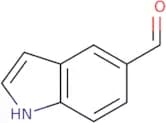
CAS:5-Formylindole is a non-selective and irreversible inhibitor of protein α, which is the catalytic subunit of the enzyme AMP-activated protein kinase. It binds to the hydroxyl group at position Cys177 in the ATP binding pocket of protein α, thereby inhibiting its activity. 5-Formylindole has been shown to inhibit tumor growth in xenografts and also inhibits fat accumulation in 3T3-L1 preadipocytes by inhibition of fatty acid synthesis. This compound has also been used to study molecular modeling in order to understand hydrogen bond interactions between aldehyde groups and intramolecular hydrogen. The genus that this compound belongs to is stilbene derivatives.Formula:C9H7NOPurezza:Min. 95%Colore e forma:PowderPeso molecolare:145.16 g/mol2-(3,5-Dimethyl-1H-pyrazol-1-yl)quinolin-8-amine
CAS:2-(3,5-Dimethyl-1H-pyrazol-1-yl)quinolin-8-amine is a fine chemical that belongs to the group of versatile building blocks. It can be used as a reagent or as a speciality chemical in research and development. 2-(3,5-Dimethyl-1H-pyrazol-1-yl)quinolin-8-amine is also a useful scaffold for the synthesis of complex compounds and has been shown to be an effective inhibitor of protein tyrosine kinases.Formula:C14H14N4Purezza:Min. 95%Colore e forma:PowderPeso molecolare:238.29 g/mol3-(3-Piperidinopropoxy)-1-[3-(Trifluoromethyl)Phenyl]-1H-Indazole
CAS:Prodotto controllato3-(3-Piperidinopropoxy)-1-[3-(Trifluoromethyl)Phenyl]-1H-Indazole is a compound that functions as an actuator. It can be used to implement force, such as controlling a change in the position of a control or actuation, and it can also be used to shift control. 3-(3-Piperidinopropoxy)-1-[3-(Trifluoromethyl)Phenyl]-1H-Indazole is an actuation method that can be controlled by implementing force.Formula:C22H24F3N3OPurezza:Min. 95%Peso molecolare:403.44 g/mol



![3-(3-Piperidinopropoxy)-1-[3-(Trifluoromethyl)Phenyl]-1H-Indazole](/_next/image/?url=https%3A%2Fstatic.cymitquimica.com%2Fproducts%2F3D%2Fthumb-webp%2FFP97740.webp&w=3840&q=75)