Composti policiclici
Sottocategorie di "Composti policiclici"
- Acridine(97 prodotti)
- Antrachinoni(533 prodotti)
- Acidi antrachinonici solfonici(16 prodotti)
- Azobenzeni(270 prodotti)
- Azonaftalene(98 prodotti)
- Azoxybenzeni(12 prodotti)
- Azuleni(11 prodotti)
- Benzimidazoli(1.475 prodotti)
- Benzodiossani(27 prodotti)
- Benzofurani(924 prodotti)
- Benzotiofeni(700 prodotti)
- Benzotriazoli(438 prodotti)
- Binaphthyl(133 prodotti)
- Carbazoli(462 prodotti)
- Cromani, cromeni(480 prodotti)
- Cumarine(1.122 prodotti)
- Ciclofani(11 prodotti)
- Fluorene e Fluorenoni(381 prodotti)
- Imidazopiridine(10 prodotti)
- Indan(118 prodotti)
- Indazoli(2.037 prodotti)
- Indeni(22 prodotti)
- Indoli(3.988 prodotti)
- Indoline(119 prodotti)
- Isatine(234 prodotti)
- Isobenzofurani(17 prodotti)
- Ftalimmidi N-sostituiti(153 prodotti)
- Naftaleni(2.436 prodotti)
- Naftiridina(17 prodotti)
- Naftochinone(2 prodotti)
- Perilene(36 prodotti)
- Fenazine(25 prodotti)
- Ftalazine(33 prodotti)
- Ftalimmide(153 prodotti)
- Idrocarburi policiclici aromatici (PAH)(270 prodotti)
- Polifenolo(261 prodotti)
- Pteridine(52 prodotti)
- Pireni(87 prodotti)
- Chinuclidina(1 prodotti)
- Tetraceni(7 prodotti)
Trovati 4574 prodotti di "Composti policiclici"
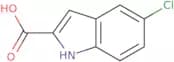
5-Chloroindole-2-carboxylic acid
CAS:5-Chloroindole-2-carboxylic acid is a fatty acid that is synthesized from glucose. It has been shown to have inhibitory properties against the enzyme cyclooxygenase-2 (COX-2), which may be due to its ability to suppress prostaglandin synthesis. 5-Chloroindole-2-carboxylic acid also has been shown to have anticancer properties and can inhibit cancer cell growth in vitro. The drug may also play a role in the central nervous system, as it has been shown to cause neuronal death. 5-Chloroindole-2-carboxylic acid is not water soluble, so it must be dissolved in organic solvents such as cyclohexane or chloroform before being used for chemical reactions. This drug can be used with other drugs that are coxib sensitive, such as aspirin, acetaminophen, and ibuprofen.
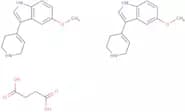
Formula:C9H6ClNO2Colore e forma:PowderPeso molecolare:195.6 g/mol5-Methoxy-3-(1,2,5,6-tetrahydro-4-pyridinyl)-1H-indole hemisuccinate
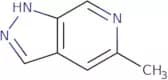
CAS:5-Methoxy-3-(1,2,5,6-tetrahydro-4-pyridinyl)-1H-indole hemisuccinate is a serotonin receptor agonist that has been shown to stimulate the 5HT1A receptor. It stimulates insulin secretion and glucose uptake in rats and inhibits feeding behavior in mice. It has also been shown to have antihypertensive effects on rats by blocking the 5HT2 receptors. In addition, it stimulates regeneration of injured nerve cells. This drug has potential uses as a treatment for neurological diseases such as Parkinson's disease and depression.Formula:C14H16N2O•(C4H6O4)0Purezza:Min. 95%Colore e forma:Yellow solid.Peso molecolare:287.33 g/mol6-Aza-5-methyl-1H-indazole
CAS:6-Aza-5-methyl-1H-indazole is a chemical compound that acts as a building block for the synthesis of pharmaceuticals and other compounds. It is used in research for the development of new drugs, such as antihypertensive agents, antibiotics, and immunosuppressants. 6-Aza-5-methyl-1H-indazole has been shown to be an effective intermediate in the synthesis of many complex compounds, including cephalosporins, penicillins, carbapenems, and aminoglycosides. This versatile reagent can be used to synthesize a wide variety of organic compounds.
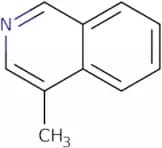
Formula:C7H7N3Purezza:Min. 95%Colore e forma:White To Beige SolidPeso molecolare:133.15 g/mol4-Methylisoquinoline
CAS:Isomeric 4-methylisoquinoline is a molecule that is structurally similar to protopine and berberine chloride. It has been shown to be an effective photosensitizer for the production of reactive oxygen species (ROS) in cells, which can lead to DNA damage and cell death. The functional groups on this molecule are the chloro group, which is a halogen, and the isoquinoline ring system with two methyl groups. The chemistry of this compound involves alkylation, yielding a new compound with one less methyl group than the original molecule. This process is called enamine formation.Formula:C10H9NPurezza:Min. 95%Colore e forma:Yellow PowderPeso molecolare:143.19 g/mol7-Aminoquinoline
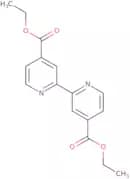
CAS:7-Aminoquinoline is a nucleophilic compound that is involved in the catalysis of bond cleavage. It has been shown to react with organic molecules and produce an oxygenative interaction. 7-Aminoquinoline has been shown to produce anti-inflammatory properties by inhibiting prostaglandin synthesis, which occurs through the inhibition of cyclooxygenase activity.Formula:C9H8N2Purezza:Min. 95%Colore e forma:Yellow PowderPeso molecolare:144.17 g/mol4,4'-Bis(ethoxycarbonyl)-2,2'-bipyridine
CAS:4,4'-Bis(ethoxycarbonyl)-2,2'-bipyridine (BEBCP) is a dithiolate chromophore. BEBCP has a redox potential of 1.3 volts and the electronic interaction of the carbonyl groups with the electron cloud of the bipyridine nucleus is responsible for this property. The photochemical properties of BEBCP can be systematically studied by using electrochemical data such as voltammetry and cyclic voltammetry. These methods are useful in determining the nature and constant of BEBCP as well as its interaction with ligands.Formula:C16H16N2O4Purezza:Min. 95%Colore e forma:PowderPeso molecolare:300.31 g/mol2-Nitroimidazole
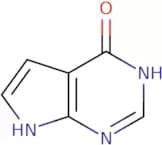
CAS:2-Nitroimidazole is a compound that has been shown to have significant cytotoxicity against tumor cells. It is also an anti-cancer drug with a matrix effect on solid tumours, and has been shown to inhibit the synthesis of DNA, RNA, and proteins in vitro. 2-Nitroimidazole is also active against infectious diseases such as HIV, herpes simplex virus type 1, and influenza A virus. The biological properties of this compound are currently being studied by analytical methods such as LC/MS and HPLC/UV.Formula:C3H3N3O2Purezza:Min. 95%Colore e forma:PowderPeso molecolare:113.07 g/mol7-Deaza-6-hydroxypurine
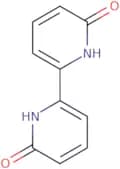
CAS:7-Deaza-6-hydroxypurine is a skeleton of nucleosides that inhibits enzymes. It has been shown to inhibit the activity of hydrochloric acid, a tumor metastasis promoter. The constant for this drug was determined using molecular modeling and inhibition constants. 7-Deaza-6-hydroxypurine has anticancer activity and can be used for the treatment of cancer. This drug is used as a noncompetitive inhibitor in which it binds to two different sites on the enzyme. It has also been shown to bind to subunits, which are parts of a protein that make up its structure, in biological studies.br> 7-Deaza-6-hydroxypurine is an inhibitor that binds to two different sites on an enzyme. It has been shown to have anticancer activity and can be used for the treatment of cancer. This drug is used as a noncompetitive inhibitor in which it binds to two different sites on the enzyme. ItFormula:C6H5N3OPurezza:Min. 95%Colore e forma:PowderPeso molecolare:135.12 g/mol2,2'-Bipyridine-6,6'-(1H,1'H)dione
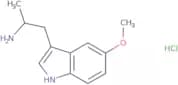
CAS:2,2'-Bipyridine-6,6'-(1H,1'H)dione is a high-quality compound that is used as a reagent to provide a variety of useful compounds. This compound can be used as a building block for various chemical syntheses or as a component in many reactions. It is also a versatile building block and can be used in the synthesis of other compounds. 2,2'-Bipyridine-6,6'-(1H,1'H)dione has been shown to be an effective intermediate for organic synthesis.Formula:C10H8N2O2Purezza:Min. 95%Colore e forma:Off-White To Light Brown SolidPeso molecolare:188.18 g/mol5-Methoxy-3(2-aminopropyl)indole hydrochloride
CAS:Prodotto controllato5-Methoxy-3(2-aminopropyl)indole hydrochloride is a useful reagent for the synthesis of complex compounds and a versatile building block for the preparation of speciality chemicals. It is used in the production of fine chemicals, such as reagents and intermediates. This compound also has potential use as a research chemical or as a reaction component in organic syntheses.Formula:C12H16N2O·HClPurezza:Min. 95%Peso molecolare:240.73 g/mol2-Methyl-5-nitroimidazole-1-propanol
CAS:2-Methyl-5-nitroimidazole-1-propanol (2MI) is a matrix effect correction reagent that can be used to reconstitute the original concentrations of drugs in plasma and urine samples. It is also used for sample preparation, validation and quality control. 2MI has been shown to bind with cervical cancer cells, which may be due to its ability to bind with drug receptors on the surface of these cells. A liquid chromatography-mass spectrometry (LC-MS/MS) method was developed to measure 2MI in plasma and urine samples. The method was validated using test samples and showed good agreement with the target concentration.Formula:C7H11N3O3Purezza:Min. 95%Colore e forma:PowderPeso molecolare:185.18 g/molMethyl 5-methoxy-2-methylindole-3-acetate
CAS:Methyl 5-methoxy-2-methylindole-3-acetate is a versatile building block that can be used as a research chemical, reagent, or speciality chemical. It is also an intermediate in the synthesis of other compounds and has been shown to be useful in reactions involving nucleophilic substitution and electrophilic addition. This compound can be used as a scaffold for complex organic molecules. CAS No. 7588-36-5Formula:C13H15NO3Purezza:Min. 95%Colore e forma:Beige SolidPeso molecolare:233.26 g/molBoc-(3S)-1,2,3,4-Tetrahydroisoquinoline-3-carboxylic acid
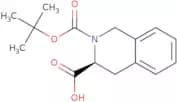
CAS:Boc-(3S)-1,2,3,4-Tetrahydroisoquinoline-3-carboxylic acid is an amino acid that has the δ-opioid receptor antagonist activity. It can be synthesized by a stepwise synthesis with an asymmetric center. The δ-opioid receptor antagonist activity of Boc-(3S)-1,2,3,4-Tetrahydroisoquinoline-3-carboxylic acid was found to be comparable to naloxone in terms of affinity constants and functional groups.Formula:C15H19NO4Purezza:Min. 95%Colore e forma:SolidPeso molecolare:277.32 g/molThiamine nitrate
CAS:Thiamine nitrate is a form of vitamin B1 that is used to treat thiamine deficiency. Thiamine nitrate is an oxidized form of thiamin, also known as vitamin B1. It can be synthesized by reacting thiamin hydrochloride with nitric acid. Thiamine nitrate has been shown to protect against neuronal death in the brain and restores cognitive function in patients with Wernicke-Korsakoff syndrome due to its ability to target enzymes involved in energy metabolism and calcium ion homeostasis. It also prevents acute alcohol intoxication and protects against neurotoxicity caused by nonsteroidal anti-inflammatory drugs.
Thiamine nitrate also has a fluorescence probe that can be used for detection and quantification of some proteins, such as DNA polymerase or ribonucleotide reductase, which are essential for cell growth or DNA synthesis.Formula:C12H17N4OS·NO3Purezza:Min. 95%Colore e forma:White Clear LiquidPeso molecolare:327.36 g/mol1-Methyl-1,2,3,4-tetrahydroquinolin-7-amine hydrochloride
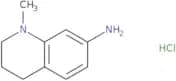
CAS:1-Methyl-1,2,3,4-tetrahydroquinolin-7-amine hydrochloride (MQ) is a fluorescent probe that has been used to study the photostability of cisplatin in real time. MQ was synthesized by reacting 3-(2'-bromoacetyl)-7-methoxy-1,2,3,4-tetrahydroquinolin with 7-aminoquinaldine. The emission spectrum of MQ peaks at 615 nm and has an extinction coefficient at 615 nm of 12.5 mM/cm. This probe has been shown to be photostable for long periods of time and can be used to visualize DNA polymerase activity in living cells.Formula:C10H15ClN2Purezza:Min. 95%Colore e forma:Off-White PowderPeso molecolare:198.69 g/mol3-Quinuclidinone hydrochloride
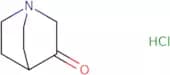
CAS:Prodotto controllato3-Quinuclidinone hydrochloride is an organic compound that is used as a reagent in organic synthesis. It is synthesized by the acylation of 3-quinuclidinol with ethyl bromoacetate in the presence of a base. This reaction occurs in an isolated yield, and the product can be purified by rotary evaporation. 3-Quinuclidinone hydrochloride has a high affinity for GABA receptors, which are found on nerve cells in the brain and inhibitory neurons throughout the body. The binding of 3-quinuclidinone hydrochloride to these receptors leads to a decrease in neuronal excitability. This drug also has been shown to have effects on motor function, including a positive effect on motor performance when tested using a rotarod test. The rate of this reaction can be increased by adding chloride or sodium carbonate as a catalyst and by increasing the reaction time. Substrate binding plays an importantFormula:C7H12CINOPurezza:Min. 95%Colore e forma:White PowderPeso molecolare:161.63 g/mol6'-Dehydromarmin
CAS:6'-Dehydromarmin is a natural product, classified as a coumarin derivative, which is primarily sourced from certain plant species, notably within the Rutaceae family. This compound arises through the biochemical transformation of secondary metabolites in plants, typically involving oxidation processes that occur under specific enzymatic conditions.Formula:C19H22O5Purezza:Min. 95%Peso molecolare:330.37 g/mol1-Methyl-1H-imidazole-4-carboxylic acid methyl ester
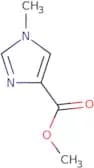
CAS:1-Methyl-1H-imidazole-4-carboxylic acid methyl ester is a carboxylic acid that is aniline derivative with the chemical formula C6H5NCH2COOH. It is soluble in water, ethanol and acetone. 1-Methyl-1H-imidazole-4-carboxylic acid methyl ester hydrolyzes to form aniline and methanol. The reflux of 1-methyl imidazole can produce the same products as well as formaldehyde and hydrogen cyanide.Formula:C6H8N2O2Purezza:Min. 95%Colore e forma:PowderPeso molecolare:140.14 g/mol4-Chloro-6-methoxyquinolin-7-ol
CAS:4-Chloro-6-methoxyquinolin-7-ol (CMQ) is an alkali metal that inhibits the sodium/potassium ATPase pump, which is responsible for maintaining the cell's intracellular ion balance. It was discovered in a search for compounds that inhibit this enzyme and show promise in the treatment of heart diseases. CMQ has been shown to inhibit the sodium concentration in rat hearts with no effect on potassium concentrations, which may be due to its ability to bind to sodium ions but not potassium ions. The long-term effects of CMQ on human populations are unknown, as well as its effects on genotype and parameters. CMQ also has been shown to cause drug resistance mutations in bacteria, such as methicillin resistant Staphylococcus aureus (MRSA), by increasing the mutation rate. This is due to the fact that it inhibits DNA replication and protein synthesis in bacteria cells.Formula:C10H8ClNO2Purezza:Min. 95%Colore e forma:Yellow PowderPeso molecolare:209.63 g/mol5-Bromo-6-chloroindolyl 1,3-diacetate
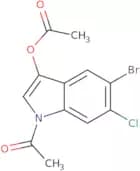
CAS:5-Bromo-6-chloroindolyl 1,3-diacetate is a versatile building block that can be used in the synthesis of complex compounds. It is a useful intermediate for the synthesis of speciality chemicals with high quality. 5-Bromo-6-chloroindolyl 1,3-diacetate is a reagent and reaction component for research chemicals with CAS No. 108847-96-7. It has a variety of applications in the manufacture of fine chemicals and pharmaceuticals, as well as being a useful scaffold for the production of new compounds.Formula:C12H9BrClNO3Purezza:Min. 95%Colore e forma:Off-White PowderPeso molecolare:330.57 g/mol