


Composti policiclici
I composti policiclici sono molecole organiche che contengono più anelli interconnessi. Questi composti includono idrocarburi aromatici policiclici e altri sistemi ad anello complessi. Sono significativi nella scienza dei materiali, nei prodotti farmaceutici e nell'elettronica organica. Da CymitQuimica, offriamo composti policiclici di alta qualità per supportare le tue ricerche e applicazioni industriali, garantendo risultati affidabili ed efficaci nei tuoi progetti.
Sottocategorie di "Composti policiclici"
- Acridine(97 prodotti)
- Antrachinoni(533 prodotti)
- Acidi antrachinonici solfonici(16 prodotti)
- Azobenzeni(270 prodotti)
- Azonaftalene(98 prodotti)
- Azoxybenzeni(12 prodotti)
- Azuleni(11 prodotti)
- Benzimidazoli(1.475 prodotti)
- Benzodiossani(27 prodotti)
- Benzofurani(924 prodotti)
- Benzotiofeni(700 prodotti)
- Benzotriazoli(438 prodotti)
- Binaphthyl(133 prodotti)
- Carbazoli(462 prodotti)
- Cromani, cromeni(480 prodotti)
- Cumarine(1.122 prodotti)
- Ciclofani(11 prodotti)
- Fluorene e Fluorenoni(381 prodotti)
- Imidazopiridine(10 prodotti)
- Indan(118 prodotti)
- Indazoli(2.037 prodotti)
- Indeni(22 prodotti)
- Indoli(3.988 prodotti)
- Indoline(119 prodotti)
- Isatine(234 prodotti)
- Isobenzofurani(17 prodotti)
- Ftalimmidi N-sostituiti(153 prodotti)
- Naftaleni(2.436 prodotti)
- Naftiridina(17 prodotti)
- Naftochinone(2 prodotti)
- Perilene(36 prodotti)
- Fenazine(25 prodotti)
- Ftalazine(33 prodotti)
- Ftalimmide(153 prodotti)
- Idrocarburi policiclici aromatici (PAH)(270 prodotti)
- Polifenolo(261 prodotti)
- Pteridine(52 prodotti)
- Pireni(87 prodotti)
- Chinuclidina(1 prodotti)
- Tetraceni(7 prodotti)
Mostrare 32 più sottocategorie
Trovati 4574 prodotti di "Composti policiclici"
Ordinare per
Purezza (%)
0
100
|
0
|
50
|
90
|
95
|
100
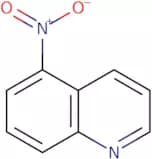
5-Nitroquinoline
CAS:5-Nitroquinoline is a nitrogen-containing heterocyclic organic compound. It is a white solid that has a melting point of 104 °C and a boiling point of 212 °C. 5-Nitroquinoline can be synthesized by the addition of sodium carbonate to 6-nitroquinoline in hydrochloric acid. The product is then purified by vacuum distillation and recrystallization from nitric acid and acetic acid. 5-Nitroquinoline can be used as an intermediate in the synthesis of other molecules, such as quinolones, which are used in pharmaceuticals. This compound has been shown to cause metastatic colorectal cancer in mice, but not in human liver cells or human lymphocytes.Formula:C9H6N2O2Purezza:Min. 95%Colore e forma:Light (Or Pale) Yellow To Dark Yellow SolidPeso molecolare:174.16 g/mol2-Bromo-1H-imidazole
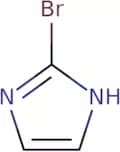
CAS:<p>2-Bromo-1H-imidazole is an environmental pollutant that has been detected in the atmosphere, water, and soil. It is used as a pesticide and has been found to be an impurity in biphenyl. 2-Bromo-1H-imidazole can be used as a substrate for the Suzuki coupling reaction or as a starting material for the synthesis of imidazole derivatives. The compound spontaneously fragments under acidic conditions to form nitric acid and hydrogen bromide. 2-Bromo-1H-imidazole has been shown to inhibit hepatitis C virus (HCV) replication and induce cancer cell apoptosis in vitro.<br>2-Bromo-1H-imidazole is also known to cause DNA fragmentation in cells through oxidation by reactive oxygen species or through spontaneous decomposition of the molecule into acid, bromine radicals, and ammonia.</p>Formula:C3H3BrN2Purezza:Min. 95%Colore e forma:PowderPeso molecolare:146.97 g/mol7-Azaindole-3-carboxaldehyde
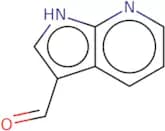
CAS:<p>7-Azaindole-3-carboxaldehyde is a molecule that belongs to the class of indoles. It has been shown to have cytotoxic activity in vitro against cancer cells and isomers have been identified. 7-Azaindole-3-carboxaldehyde has been investigated for its ability to bind to CB2 receptors, which are located on the surface of immune cells, and may be used as a lead compound for the development of novel anti-cancer drugs. 7-Azaindole-3-carboxaldehyde also binds to chloride ions, which may be important in understanding how it interacts with other compounds or proteins.</p>Formula:C8H6N2OPurezza:Min. 95%Colore e forma:PowderPeso molecolare:146.15 g/mol7-Bromo-2,3-dioxoindoline
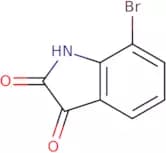
CAS:7-Bromo-2,3-dioxoindoline is a synthetic compound with a vibrational frequency of 249.2 cm−1. It is an inhibitor of the enzyme synthetase and has been shown to have an inhibitory effect on cancer cell viability in vitro. 7-Bromo-2,3-dioxoindoline inhibits the production of cancerous cells by interfering with their ability to synthesize DNA, which is necessary for cell division. This inhibition may be due to its ability to form intermolecular hydrogen bonding interactions with the amine group on the enzyme synthetase. 7-Bromo-2,3-dioxoindoline has also been shown to block the synthesis of 5-chloroisatin, one of its reaction products. The bioassay was carried out by measuring the amount of granulosa cells that were able to produce estrogen after treatment with this compound.Formula:C8H4BrNO2Purezza:Min. 98 Area-%Colore e forma:PowderPeso molecolare:226.03 g/molThiamine monophosphate chloride dihydrate
CAS:<p>Thiamine monophosphate chloride dihydrate is a form of the vitamin thiamine. It has been used in control analysis to measure the activity of enzymes that require thiamine as a cofactor, such as transketolase and pyruvate kinase. Thiamine monophosphate chloride dihydrate has also been studied in biochemical properties, where it was found that this compound can be cleaved by picolinic acid to form thiazole phosphate. The matrix effect is an important factor in polymerase chain reactions and has been shown to be dependent on the presence of dinucleotide phosphate. This compound is an essential component of energy metabolism and plays a role in protein synthesis. Thiamine monophosphate chloride dihydrate also has toxicological studies, including a model system using wild-type strains of yeast. These studies have shown that this compound leads to physiological effects such as inhibition of glycolysis and lactic acid production.</p>Formula:C12H18N4O4PS•Cl•(H2O)2Purezza:Min. 99 Area-%Colore e forma:PowderPeso molecolare:416.82 g/mol2-Methylimidazole
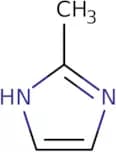
CAS:2-Methylimidazole is a crystalline solid that has been used in the preparation of coordination compounds. The compound is prepared by reacting 2-methylimidazole with an appropriate metal cyanide, such as copper cyanide or nickel cyanide. The crystal structure of 2-methylimidazole shows strong hydrogen bonding interaction between the nitrogen atoms and the carboxylate groups. This compound has been used in clinical pathology to detect increased levels of ammonia, uric acid, and lactic acid in the blood. 2-Methylimidazole is not toxic to humans but has shown some toxicity to mice when injected intravenously at high concentrations. It can be used as an analytical method for determining trace amounts of chlorine in chemical compounds by way of electrochemical impedance spectroscopy (EIS).Formula:C4H6N2Purezza:Min. 95%Colore e forma:White Clear LiquidPeso molecolare:82.1 g/mol2-Dimethylamino-6-hydroxypurine
CAS:<p>2-Dimethylamino-6-hydroxypurine is a biochemical that belongs to the group of purines. It is a methylated form of 2,6-diaminopurine and has been shown to be an antigenic product in wheat germ. 2,6-Diaminopurine is involved in the synthesis of protein and other biomolecules by transferring methyl groups from S-adenosyl methionine to amino acid side chains. This gene product is also involved in enzyme preparations and reactions that are related to the biochemical properties of mammalian cells. The methyltransferase enzyme catalyzes the reaction mechanism for 2,6-dimethylamino-purine. 2,6-Dimethylamino-purine has been shown to have anticancer effects on various types of cancer cells with modifications on their DNA.</p>Formula:C7H9N5OPurezza:Min. 95%Colore e forma:Off-white to yellow solid.Peso molecolare:179.18 g/mol2-Methyl-5-nitroimidazole-1-propanol
CAS:2-Methyl-5-nitroimidazole-1-propanol (2MI) is a matrix effect correction reagent that can be used to reconstitute the original concentrations of drugs in plasma and urine samples. It is also used for sample preparation, validation and quality control. 2MI has been shown to bind with cervical cancer cells, which may be due to its ability to bind with drug receptors on the surface of these cells. A liquid chromatography-mass spectrometry (LC-MS/MS) method was developed to measure 2MI in plasma and urine samples. The method was validated using test samples and showed good agreement with the target concentration.Formula:C7H11N3O3Purezza:Min. 95%Colore e forma:PowderPeso molecolare:185.18 g/mol5-Methoxy-1-methyl-1H-indole-3-carbaldehyde
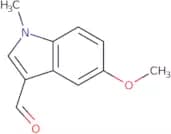
CAS:5-Methoxy-1-methyl-1H-indole-3-carbaldehyde is a synthetic compound that has been shown to inhibit the growth of human tumour cells in vitro. This compound is a regioisomeric mixture of two enantiomers, with the (S) isomer being the more potent inhibitor. The (R) isomer was found to be less active against human tumour cells and may have an antimicrobial activity. 5-Methoxy-1-methyl-1H-indole-3-carbaldehyde has been shown to be bioreductive towards electron donors such as NADPH and glutathione. It also inhibits dt diaphorase and aerobic metabolism in human tumour cells.Formula:C11H11NO2Purezza:Min. 95%Colore e forma:Off-White PowderPeso molecolare:189.21 g/mol5,6-Dimethyl-1,10-phenanthroline
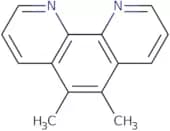
CAS:5,6-Dimethyl-1,10-phenanthroline (DMPA) is a molecule with the chemical formula H2C8N4O2. It has been shown to have antioxidant and anticancer properties. DMPA binds to DNA to form an adduct that denatures the DNA. This prevents DNA from being transcribed into RNA, which prevents gene expression and cell division. The anticancer activity of DMPA may be due to its ability to increase oxidative dna damage in cancer cells, leading to apoptosis. DMPA has also been shown to bind redox potentials of metals such as copper, iron and nickel that are found in the environment or in cancer cells. This binding alters the electron transfer reactions involving these metals and leads to a change in the viscosity of the solution. The molecular modeling studies have shown that DMPA binds with nitrogen atoms in coordination geometry with oxygen atoms on two sites on one molecule (see Figure 1). This binding is characterized byFormula:C14H12N2Purezza:Min. 95%Colore e forma:PowderPeso molecolare:208.26 g/molXanthene
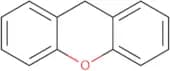
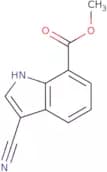
CAS:<p>Yellow dye used in food industry</p>Formula:C13H10OPurezza:Min. 95%Colore e forma:White PowderPeso molecolare:182.22 g/molMethyl 3-cyano-1H-indole-7-carboxylate
CAS:Methyl 3-cyano-1H-indole-7-carboxylate is a fine chemical that belongs to the class of useful scaffolds, versatile building blocks, and useful intermediates. It is used as a research chemical and a reaction component. Methyl 3-cyano-1H-indole-7-carboxylate is also a speciality chemical with high quality and can be used as a reagent in the production of other compounds.Formula:C11H8N2O2Purezza:Min. 95%Colore e forma:White PowderPeso molecolare:200.19 g/mol2,3-Dimethyl-1H-indole-5-carbaldehyde
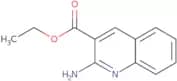
CAS:2,3-Dimethyl-1H-indole-5-carbaldehyde is a high quality reagent that is used as a complex compound. It has been shown to be a useful intermediate and building block in the production of fine chemicals. 2,3-Dimethyl-1H-indole-5-carbaldehyde is also useful as a research chemical. This compound is versatile and can be used in reactions as an intermediate or building block. As a speciality chemical, it has various applications and is not limited to any specific area of research.Formula:C11H11NOPurezza:Min. 95%Colore e forma:PowderPeso molecolare:173.21 g/molEthyl-2-aminoquinoline-3-carboxylate
CAS:<p>Ethyl-2-aminoquinoline-3-carboxylate is an intramolecular reductive coupling product. It was synthesized by the reductive coupling of nitrobenzene with triethylamine in the presence of a copper salt. The use of ethyl cyanoacetate as a starting material for this synthesis has been shown to produce regioselective products with high yields. Ethyl-2-aminoquinoline-3-carboxylate is used in the synthesis of quinoline derivatives and fluoroquinolone antibiotics. This compound has been shown to have optimum properties for GC/MS analysis, which makes it an advance in the field of chemistry.</p>Formula:C12H12N2O2Purezza:Min. 95%Colore e forma:PowderPeso molecolare:216.24 g/mol2-(3-Aminopropyl)isoindole-1,3(2H)-dione hydrochloride
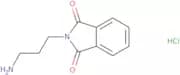
CAS:2-(3-Aminopropyl)isoindole-1,3(2H)-dione hydrochloride is a versatile building block and useful intermediate. It has been used as a reagent in organic synthesis, and also as a reaction component for the preparation of high quality research chemicals. 2-(3-Aminopropyl)isoindole-1,3(2H)-dione hydrochloride is an important building block for complex compounds with potential uses in medical research or as speciality chemicals. It can be used to prepare fine chemicals such as pharmaceuticals, agrochemicals, or dyes.Formula:C11H12N2O2·HClPurezza:Min. 95%Colore e forma:White PowderPeso molecolare:240.69 g/mol1-Methylindole-2-Carboxylic Acid
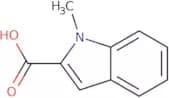
CAS:<p>1-Methylindole-2-Carboxylic Acid is a chemical that belongs to the group of phenylacetic acid compounds. It has been shown to inhibit lymphocyte activation and t-cell proliferation in vitro, which may be due to its ability to interfere with the production of interleukin. 1-Methylindole-2-Carboxylic Acid also has an antitumor effect on animals and can reduce the tumor burden by inhibiting DNA synthesis, protein synthesis, and mineralization. The molecular modeling studies have shown that 1-Methylindole-2-Carboxylic Acid binds in the active site of protein kinase C as a competitive inhibitor and prevents ATP from binding to the enzyme.</p>Formula:C10H9NO2Purezza:Min. 95%Colore e forma:PowderPeso molecolare:175.18 g/mol5-(1,3-Benzodioxol-5-yl)-4,5-dihydro-1,3-diphenylpyrazole
CAS:5-(1,3-Benzodioxol-5-yl)-4,5-dihydro-1,3-diphenylpyrazole is a chemical compound with the molecular formula C12H10O4. It is an aromatic compound that is used as a reagent and research chemical. This chemical is soluble in ethanol and ether, but insoluble in water. 5-(1,3-Benzodioxol-5-yl)-4,5-dihydro-1,3-diphenylpyrazole has been used as a building block for other organic compounds. It can be synthesized from benzaldehyde and phenylhydrazine by the method of condensation reaction.Formula:C17H14N2O2Purezza:Min. 95%Colore e forma:White to pale yellow solid.Peso molecolare:278.31 g/mol6-Bromo-4-chloro-1H-indazole
CAS:<p>6-Bromo-4-chloro-1H-indazole is an organic compound that has been reported as a reaction component, reagent, and useful scaffold in the synthesis of complex compounds. It is also a speciality chemical with versatile building block and useful intermediate properties. 6-Bromo-4-chloro-1H-indazole is a fine chemical with complex structure and high purity.</p>Formula:C7H4BrClN2Purezza:Min. 95%Colore e forma:Off-white to brown solid.Peso molecolare:231.48 g/mol1,2,3,4-Tetrahydrophenanthren-4-one
CAS:<p>1,2,3,4-Tetrahydrophenanthren-4-one is a synthetic quinone that is used as an intermediate in the Diels–Alder reaction. The compound has been shown to react with benzyne and amine molecules to form semicarbazones. 1,2,3,4-Tetrahydrophenanthren-4-one can be used as a reactive probe for studying intramolecular interactions. It can also be used to synthesize polycyclic compounds such as tetrafluoroborates. 1,2,3,4-Tetrahydrophenanthren-4-one can also serve as a reagent for the synthesis of frameworks such as zeolites.</p>Formula:C14H12OPurezza:Min. 95%Colore e forma:PowderPeso molecolare:196.24 g/mol1-Phenyl-3-oxabicyclo[3.1.0]hexan-2-one
CAS:<p>1-Phenyl-3-oxabicyclo[3.1.0]hexan-2-one (1POX) is a monomer that belongs to the class of cyclopropane compounds and can be used in the synthesis of polymers. It has been shown to react with benzene, irradiation, monoxide, oxiranyl, acetonitrile and trimeric dyes to form reactive intermediates such as ketones and carboxylic acids. These intermediates can undergo photolysis to produce products such as ketones and carboxylic acids. The wavelength of the light used for photolysis can influence the product formation. 1POX is also a substrate for cyclopropane ring formation reactions, which are known for their high reactivity due to the stability of this ring system. The carbonyl group on 1POX is electron withdrawing and stabilizes the planar geometry of 1POX.</p>Formula:C11H10O2Purezza:Min. 95%Colore e forma:PowderPeso molecolare:174.2 g/mol







![1-Phenyl-3-oxabicyclo[3.1.0]hexan-2-one](/_next/image/?url=https%3A%2Fstatic.cymitquimica.com%2Fproducts%2F3D%2Fthumb-webp%2FFP16068.webp&w=3840&q=75)