Composti policiclici
I composti policiclici sono molecole organiche che contengono più anelli interconnessi. Questi composti includono idrocarburi aromatici policiclici e altri sistemi ad anello complessi. Sono significativi nella scienza dei materiali, nei prodotti farmaceutici e nell'elettronica organica. Da CymitQuimica, offriamo composti policiclici di alta qualità per supportare le tue ricerche e applicazioni industriali, garantendo risultati affidabili ed efficaci nei tuoi progetti.
Sottocategorie di "Composti policiclici"
- Acridine(97 prodotti)
- Antrachinoni(533 prodotti)
- Acidi antrachinonici solfonici(16 prodotti)
- Azobenzeni(270 prodotti)
- Azonaftalene(98 prodotti)
- Azoxybenzeni(12 prodotti)
- Azuleni(11 prodotti)
- Benzimidazoli(1.475 prodotti)
- Benzodiossani(27 prodotti)
- Benzofurani(924 prodotti)
- Benzotiofeni(700 prodotti)
- Benzotriazoli(438 prodotti)
- Binaphthyl(133 prodotti)
- Carbazoli(462 prodotti)
- Cromani, cromeni(480 prodotti)
- Cumarine(1.122 prodotti)
- Ciclofani(11 prodotti)
- Fluorene e Fluorenoni(381 prodotti)
- Imidazopiridine(10 prodotti)
- Indan(118 prodotti)
- Indazoli(2.037 prodotti)
- Indeni(22 prodotti)
- Indoli(3.988 prodotti)
- Indoline(119 prodotti)
- Isatine(234 prodotti)
- Isobenzofurani(17 prodotti)
- Ftalimmidi N-sostituiti(153 prodotti)
- Naftaleni(2.436 prodotti)
- Naftiridina(17 prodotti)
- Naftochinone(2 prodotti)
- Perilene(36 prodotti)
- Fenazine(25 prodotti)
- Ftalazine(33 prodotti)
- Ftalimmide(153 prodotti)
- Idrocarburi policiclici aromatici (PAH)(270 prodotti)
- Polifenolo(261 prodotti)
- Pteridine(52 prodotti)
- Pireni(87 prodotti)
- Chinuclidina(1 prodotti)
- Tetraceni(7 prodotti)
Mostrare 32 più sottocategorie
Trovati 4574 prodotti di "Composti policiclici"
Ordinare per
Purezza (%)
0
100
|
0
|
50
|
90
|
95
|
100
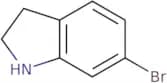
6-Bromo-2,3-dihydro-1H-indole
CAS:<p>6-Bromo-2,3-dihydro-1H-indole is a natural product that has been shown to inhibit cancer cell growth in vitro. In the presence of 6-bromoindole, cells are unable to proliferate and undergo apoptosis. This compound also shows anti-cancer activity against human leukemia cells. The mechanism of action for this molecule is not yet known but may be related to its ability to activate the caspase enzyme family or its ability to bind to DNA. 6-Bromoindole has been shown to have anti-inflammatory properties through inhibition of prostaglandin synthesis in animal models.</p>Formula:C8H8BrNPurezza:Min. 95%Colore e forma:Off-White PowderPeso molecolare:198.06 g/mol3-Aminoquinoline
CAS:<p>3-Aminoquinoline is a chemical compound that inhibits the activity of the epidermal growth factor receptor (EGFR). It is a potent inhibitor of cell proliferation and has been shown to have antitumour activity. 3-Aminoquinoline has been shown to inhibit the proliferation of carcinoma cell lines. This drug binds to the EGFR receptor, preventing it from activating downstream signalling pathways that control cell growth. 3-Aminoquinoline also has biological properties, including matrix-assisted laser desorption/ionization time-of-flight mass spectrometry, analytical chemistry, sample preparation, and Suzuki coupling reaction. The molecule is structurally analyzed using chemical structures and structural analysis techniques such as thermodynamic data or proton NMR spectroscopy. 3-Aminoquinoline also interacts with sugars through hydrogen bonding and oligosaccharides. These interactions are found to be high in value in some cases.</p>Formula:C9H8N2Purezza:Min. 95%Colore e forma:White PowderPeso molecolare:144.17 g/mol(1R,4R)-tert-Butyl 2,5-diazabicyclo[2.2.1]heptane-2-carboxylate hydrochloride
CAS:<p>Tert-Butyl 2,5-diazabicyclo[2.2.1]heptane-2-carboxylate hydrochloride (TBDAHC) is a fine chemical that is an intermediate for the synthesis of other compounds. TBDAHC is a versatile building block that can be used in research chemicals, reaction components, and specialty chemicals. It is also a useful scaffold for making complex compounds and useful building blocks. The compound has high quality and can be used as a reagent in organic chemistry.</p>Formula:C10H18N2O2·HClPurezza:Min. 95%Colore e forma:White PowderPeso molecolare:234.72 g/mol4-Bromoisatin
CAS:4-Bromoisatin is a synthetic compound that reversibly inhibits the activity of telomerase and has been shown to be effective against a broad range of bacterial species. It binds to the catalytic site on telomerase and prevents the synthesis of ribonucleotides, which are necessary for DNA replication. 4-Bromoisatin is synthesized by humans, but can also be found in plants such as coffee beans and black tea leaves. The antibacterial properties of 4-bromoisatin may be due to its ability to inhibit the biosynthesis of purine, an essential component in bacterial DNA synthesis.Formula:C8H4BrNO2Purezza:Min. 95%Colore e forma:Orange PowderPeso molecolare:226.03 g/molThiamine monophosphate chloride dihydrate
CAS:<p>Thiamine monophosphate chloride dihydrate is a form of the vitamin thiamine. It has been used in control analysis to measure the activity of enzymes that require thiamine as a cofactor, such as transketolase and pyruvate kinase. Thiamine monophosphate chloride dihydrate has also been studied in biochemical properties, where it was found that this compound can be cleaved by picolinic acid to form thiazole phosphate. The matrix effect is an important factor in polymerase chain reactions and has been shown to be dependent on the presence of dinucleotide phosphate. This compound is an essential component of energy metabolism and plays a role in protein synthesis. Thiamine monophosphate chloride dihydrate also has toxicological studies, including a model system using wild-type strains of yeast. These studies have shown that this compound leads to physiological effects such as inhibition of glycolysis and lactic acid production.</p>Formula:C12H18N4O4PS•Cl•(H2O)2Purezza:Min. 99 Area-%Colore e forma:PowderPeso molecolare:416.82 g/molEllagic Acid
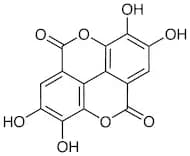
CAS:Formula:C14H6O8Purezza:>95.0%(T)(HPLC)Colore e forma:White to Light yellow powder to crystalPeso molecolare:302.197-Azaindole-3-carboxaldehyde
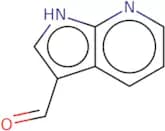
CAS:<p>7-Azaindole-3-carboxaldehyde is a molecule that belongs to the class of indoles. It has been shown to have cytotoxic activity in vitro against cancer cells and isomers have been identified. 7-Azaindole-3-carboxaldehyde has been investigated for its ability to bind to CB2 receptors, which are located on the surface of immune cells, and may be used as a lead compound for the development of novel anti-cancer drugs. 7-Azaindole-3-carboxaldehyde also binds to chloride ions, which may be important in understanding how it interacts with other compounds or proteins.</p>Formula:C8H6N2OPurezza:Min. 95%Colore e forma:PowderPeso molecolare:146.15 g/molBoc-L-indoline-2-carboxylic acid
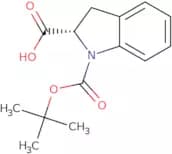
CAS:<p>Boc-L-indoline-2-carboxylic acid is a high quality, versatile building block that can be used as a reagent or intermediate in organic synthesis. It is used as a research chemical and has potential applications in the development of new drugs. Boc-L-indoline-2-carboxylic acid is a complex compound that reacts with nucleophiles to form valuable products. It also has the ability to bind to metal ions such as copper, zinc, and nickel. This product can be used in reactions involving amines, alcohols, amides, phenols, carboxylic acids, sulfonic acids, and other compounds.</p>Formula:C14H17NO4Purezza:Min. 95%Colore e forma:White PowderPeso molecolare:263.29 g/mol2,4-Dichloroquinoline
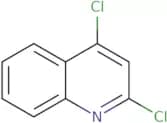
CAS:2,4-Dichloroquinoline is a chlorinated heterocyclic chemical compound. This drug is used as a monosubstituted palladium complex in organic synthesis. It can be obtained by refluxing 2,4-dichloroquinoline with hydrochloric acid, phosphorus oxychloride, and a terminal alkene in the presence of an excess of dichloromethane. The resulting chloroquine can be converted to the corresponding dichloroquinolines by treatment with acetonitrile in the presence of malonic acid. The final step is the demethylation of the quinoline ring using sodium methoxide in methanol. 2,4-Dichloroquinoline has been shown to exhibit antibacterial activity against gram-negative organisms such as Escherichia coli and Pseudomonas aeruginosa. Magnetic resonance analysis (NMR) has also been used to study its properties.Formula:C9H5Cl2NPurezza:Min. 95%Colore e forma:SolidPeso molecolare:198.05 g/mol4-Methylisoquinoline
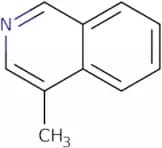
CAS:Isomeric 4-methylisoquinoline is a molecule that is structurally similar to protopine and berberine chloride. It has been shown to be an effective photosensitizer for the production of reactive oxygen species (ROS) in cells, which can lead to DNA damage and cell death. The functional groups on this molecule are the chloro group, which is a halogen, and the isoquinoline ring system with two methyl groups. The chemistry of this compound involves alkylation, yielding a new compound with one less methyl group than the original molecule. This process is called enamine formation.Formula:C10H9NPurezza:Min. 95%Colore e forma:Yellow PowderPeso molecolare:143.19 g/mol2,2'-Bipyridine-3,3'-dicarboxylic acid
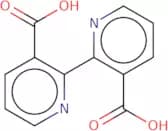
CAS:2,2'-Bipyridine-3,3'-dicarboxylic acid is a coordination compound that contains two carboxylic acid groups. It forms a dihydrate in water and is orthorhombic in crystal form. The molecule can be represented by the following chemical structure:Formula:C12H8N2O4Purezza:Min. 95%Colore e forma:SolidPeso molecolare:244.2 g/mol2-phenyl-quinoline
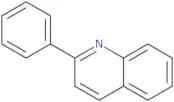
CAS:2-Phenyl-quinoline is a naturally occurring compound that exhibits antimicrobial activity. It has been shown to inhibit the growth of bacteria by interfering with the synthesis of ATP, which is necessary for bacterial cell division. 2-Phenyl-quinoline also possesses antioxidative properties and has been shown to have inhibitory effects on a number of bacterial strains. 2-Phenyl-quinoline has been shown to induce necrotic cell death in S. aureus strains, as well as anti-inflammatory and antinociceptive properties.Formula:C15H11NPurezza:Min. 98 Area-%Colore e forma:PowderPeso molecolare:205.25 g/molIsoquinoline
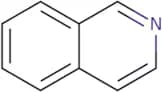
CAS:<p>Isoquinoline is a heterocyclic organic compound that can be synthesized by the asymmetric addition of hydrochloric acid to an isoquinol. It has been shown to inhibit the enzyme DPP-IV, which is involved in the degradation of glucagon-like peptide-1 (GLP-1). Isoquinoline is also a potent antagonist of the NMDA receptor, and has been shown to have anti-inflammatory properties in HLA-60 cells. This drug is soluble in organic solvents and forms crystalline polymorphs. Isoquinoline has been used in polymerase chain reactions as a hydrogen bond donor.</p>Formula:C9H7NPurezza:Min. 95%Colore e forma:PowderPeso molecolare:129.16 g/mol2,3-Dimethyl-1H-indole-5-carbaldehyde
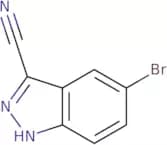
CAS:2,3-Dimethyl-1H-indole-5-carbaldehyde is a high quality reagent that is used as a complex compound. It has been shown to be a useful intermediate and building block in the production of fine chemicals. 2,3-Dimethyl-1H-indole-5-carbaldehyde is also useful as a research chemical. This compound is versatile and can be used in reactions as an intermediate or building block. As a speciality chemical, it has various applications and is not limited to any specific area of research.Formula:C11H11NOPurezza:Min. 95%Colore e forma:PowderPeso molecolare:173.21 g/mol5-Bromo-1H-indazole-3-carbonitrile
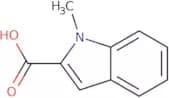
CAS:<p>5-Bromo-1H-indazole-3-carbonitrile is a high quality, versatile building block that can be used in the synthesis of complex compounds. It has been described as a "useful intermediate" and a "useful scaffold".</p>Formula:C8H4BrN3Purezza:Min. 95%Colore e forma:PowderPeso molecolare:222.04 g/mol1-Methylindole-2-Carboxylic Acid
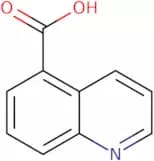
CAS:<p>1-Methylindole-2-Carboxylic Acid is a chemical that belongs to the group of phenylacetic acid compounds. It has been shown to inhibit lymphocyte activation and t-cell proliferation in vitro, which may be due to its ability to interfere with the production of interleukin. 1-Methylindole-2-Carboxylic Acid also has an antitumor effect on animals and can reduce the tumor burden by inhibiting DNA synthesis, protein synthesis, and mineralization. The molecular modeling studies have shown that 1-Methylindole-2-Carboxylic Acid binds in the active site of protein kinase C as a competitive inhibitor and prevents ATP from binding to the enzyme.</p>Formula:C10H9NO2Purezza:Min. 95%Colore e forma:PowderPeso molecolare:175.18 g/molQuinoline-5-carboxylic acid
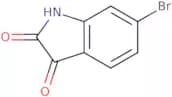
CAS:<p>Quinoline-5-carboxylic acid is a peroxide that is produced by the oxidation of quinoline derivatives. Quinoline-5-carboxylic acid has been shown to have antibacterial activity, and it also has affinity values for chloride ions. The chemical isomers of quinoline-5-carboxylic acid are called quninolines, which are produced by the hydrolysis of quinoline-5-carboxylic acid. Quinolines can be obtained by the oxidation of aniline. Quinolines have been shown to catalyze reactions with carbonyl groups in organic molecules, such as the reaction between an alkoxycarbonyl group and a hydroxyl group to form an aldehyde or ketone. Kinetic data for this reaction was obtained using titration calorimetry.</p>Formula:C10H7NO2Purezza:Min. 95%Colore e forma:White To Beige To Light Brown To Grey SolidPeso molecolare:173.17 g/mol6-Bromoisatin
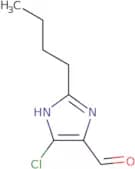
CAS:<p>6-Bromoisatin is an antimicrobial agent that belongs to the group of ethylene diamines. It has been shown to be a potent inhibitor of cancer cell viability in vivo and can be used as a potential chemotherapy agent. 6-Bromoisatin is active against human pathogens, such as Staphylococcus aureus and Streptococcus pyogenes. This compound has also been shown to inhibit the growth of LPS-stimulated RAW264.7 macrophages, which are used in vitro for studying innate immunity. The mechanism of action involves inhibition of cyclic AMP production, which leads to cell death in cancer cells. 6-Bromoisatin also inhibits the proliferation and viability of granulosa cells and carcinoma cells, with IC50 values in the range of 0.5 - 2 µM.END>></p>Formula:C8H4BrNO2Purezza:Min. 95%Colore e forma:Yellow PowderPeso molecolare:226.03 g/mol2-Butyl-4-chloro-1H-imidazole-5-carboxaldehyde
CAS:Glyoxal is a chemical compound that has shown to have bactericidal activity against human pathogens such as Mycobacterium tuberculosis, Helicobacter pylori, and Staphylococcus aureus. It is used in the synthesis of heterocyclic amines and can be found as an impurity in imidazole derivatives. Glyoxal is a broad-spectrum antimicrobial that has been shown to inhibit the growth of fungi and bacteria by reacting with functional groups on the microorganisms' cell walls. It reacts with bacterial cell walls by forming an intermediate molecule, which reacts with other molecules present in the microorganism's environment to form carbon dioxide, water, and glyoxal. The reaction time for glyoxal depends on temperature; higher temperatures will result in faster reactions. Techniques used to synthesize glyoxal include dehydration of oximes or by reaction with phosphorus oxychloride.Formula:C8H11ClN2OPurezza:Min. 95%Colore e forma:PowderPeso molecolare:186.64 g/mol2,9-Diphenyl-1,10-phenanthroline
CAS:<p>2,9-Diphenyl-1,10-phenanthroline is a yellow crystalline compound. This molecule has been shown to be an effective anticancer drug and is used in the study of ultrafast electron reduction. It exhibits photophysical properties that are dependent on its coordination geometry and the surrounding environment.<br>2,9-Diphenyl-1,10-phenanthroline is a coordination complex that can be synthesized by electropolymerization of copper complexes with phenanthrolines. The polymer film has been shown to have high stability constants and is resistant to water or organic solvents.</p>Formula:C24H16N2Purezza:Min. 95%Colore e forma:White PowderPeso molecolare:332.4 g/mol


![(1R,4R)-tert-Butyl 2,5-diazabicyclo[2.2.1]heptane-2-carboxylate hydrochloride](/_next/image/?url=https%3A%2Fstatic.cymitquimica.com%2Fproducts%2F3D%2Fthumb-webp%2FFB15223.webp&w=3840&q=75)