Composti policiclici
I composti policiclici sono molecole organiche che contengono più anelli interconnessi. Questi composti includono idrocarburi aromatici policiclici e altri sistemi ad anello complessi. Sono significativi nella scienza dei materiali, nei prodotti farmaceutici e nell'elettronica organica. Da CymitQuimica, offriamo composti policiclici di alta qualità per supportare le tue ricerche e applicazioni industriali, garantendo risultati affidabili ed efficaci nei tuoi progetti.
Sottocategorie di "Composti policiclici"
- Acridine(97 prodotti)
- Antrachinoni(533 prodotti)
- Acidi antrachinonici solfonici(16 prodotti)
- Azobenzeni(270 prodotti)
- Azonaftalene(98 prodotti)
- Azoxybenzeni(12 prodotti)
- Azuleni(11 prodotti)
- Benzimidazoli(1.475 prodotti)
- Benzodiossani(27 prodotti)
- Benzofurani(924 prodotti)
- Benzotiofeni(700 prodotti)
- Benzotriazoli(438 prodotti)
- Binaphthyl(133 prodotti)
- Carbazoli(462 prodotti)
- Cromani, cromeni(480 prodotti)
- Cumarine(1.122 prodotti)
- Ciclofani(11 prodotti)
- Fluorene e Fluorenoni(381 prodotti)
- Imidazopiridine(10 prodotti)
- Indan(118 prodotti)
- Indazoli(2.037 prodotti)
- Indeni(22 prodotti)
- Indoli(3.988 prodotti)
- Indoline(119 prodotti)
- Isatine(234 prodotti)
- Isobenzofurani(17 prodotti)
- Ftalimmidi N-sostituiti(153 prodotti)
- Naftaleni(2.436 prodotti)
- Naftiridina(17 prodotti)
- Naftochinone(2 prodotti)
- Perilene(36 prodotti)
- Fenazine(25 prodotti)
- Ftalazine(33 prodotti)
- Ftalimmide(153 prodotti)
- Idrocarburi policiclici aromatici (PAH)(270 prodotti)
- Polifenolo(261 prodotti)
- Pteridine(52 prodotti)
- Pireni(87 prodotti)
- Chinuclidina(1 prodotti)
- Tetraceni(7 prodotti)
Mostrare 32 più sottocategorie
Trovati 4574 prodotti di "Composti policiclici"
Ordinare per
Purezza (%)
0
100
|
0
|
50
|
90
|
95
|
100
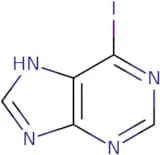
6-Iodopurine
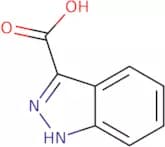
CAS:<p>6-Iodopurine is a biologically active substance that belongs to the group of carbinols. It is biosynthesized from 6-chloropurine and an iridoid glucoside, and has been shown to have biochemical properties. 6-Iodopurine can be converted into 6-iodoindoxyl by oxidation with halogens or transfer mechanism with palladium-catalyzed cross-coupling. A high efficiency method for the synthesis of this substance has been developed using a strain of bacteria. The reaction requires an activation energy of 150 kJ/mol.br><br>6-Iodopurine inhibits tumor growth by inhibiting DNA synthesis. It also possesses anti-inflammatory activity, which may be due to its inhibitory effects on prostaglandin synthesis.</p>Formula:C5H3IN4Purezza:Min. 95%Colore e forma:White PowderPeso molecolare:246.01 g/mol1H-Indazole-3-carboxylic acid
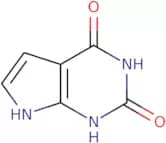
CAS:<p>1H-Indazole-3-carboxylic acid is an organic compound with a molecular formula of C9H6N2O2. It is a colorless solid, but appears yellow in solution. This compound has been shown to inhibit protein synthesis by binding to the apical site of the ribosome, preventing the peptide bond from forming between amino acids. It also inhibits carboxylate metabolism and cellular glycolysis by inhibiting ATP production. 1H-Indazole-3-carboxylic acid has been shown to be effective against cancer cells and can be used as a potential anti-cancer drug.</p>Formula:C8H6N2O2Purezza:Min. 98 Area-%Colore e forma:PowderPeso molecolare:162.15 g/mol7-Deazaxanthine
CAS:7-Deazaxanthine is a purine derivative that has been shown to have antiangiogenic properties. It inhibits the growth of cancer cells by inhibiting the synthesis of vascular endothelial growth factor (VEGF), which is a potent angiogenic factor. 7-Deazaxanthine also binds to the VEGF receptor, preventing it from binding to VEGF. The x-ray crystal structures and kinetic data for 7-deazaadenosine suggest that this compound may be an inhibitor of hydrogen bonding interactions between amino acids in protein molecules, leading to its antiangiogenic activity. 7-Deazaxanthine does not prevent the activation of tyrosine kinases or phosphatases. In addition, this compound has been shown to inhibit the proliferation of breast cancer cells in culture and in vivo studies using mouse models. This drug also has glycosidic bond, which can result in a variety of chemical structures due to different types of glycosFormula:C6H5N3O2Purezza:Min. 98 Area-%Colore e forma:PowderPeso molecolare:151.12 g/molo-Phenanthroline monohydrochloride monohydrate
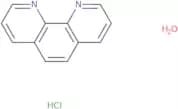
CAS:o-Phenanthroline monohydrochloride monohydrate is a ligand that is used in crystallography to study the crystal structure of metal ions. It has been shown to be an efficient catalyst for the ring-opening of chloroformates, and can also be used as an analytical reagent that is capable of detecting chlorine in organic compounds. The hydrate form of o-phenanthroline monohydrochloride has a molecular formula of C12H14ClN3O4·2H2O and a molecular weight of 392.7 g/mol.Formula:C12H8N2·HCl·H2OColore e forma:PowderPeso molecolare:234.68 g/mol6-Bromo-2H-pyrido[3,2-b][1,4]oxazin-3(4H)-one
CAS:6-Bromo-2H-pyrido[3,2-b][1,4]oxazin-3(4H)-one is a versatile building block that can be used in a variety of chemical reactions as an intermediate. It is also useful in the synthesis of a variety of compounds, such as pharmaceuticals and research chemicals. 6-Bromo-2H-pyrido[3,2-b][1,4]oxazin-3(4H)-one is an organic compound with a molecular formula of C8H5BrN4O. It has an mp of 152°C and decomposes to form nitrogen gas and carbon monoxide at higher temperatures.Formula:C7H5BrN2O2Purezza:Min. 95%Colore e forma:SolidPeso molecolare:229.03 g/mol2-Amino-8-hydroxyquinoline
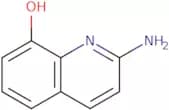
CAS:<p>2-Amino-8-hydroxyquinoline is a molecule that has been shown to have optical properties. 2-Amino-8-hydroxyquinoline has also been shown to be reactive in vitro and inhibit the growth of cancer cells. It is thought that this inhibition may be due to its ability to bind to the active site of DNA polymerase, preventing DNA replication. 2-Amino-8-hydroxyquinoline has also been shown in vitro studies and vivo studies to have potent inhibition activity against human serum albumin (HSA). The molecules that are used as linkers to attach 2-amino 8 hydroxyquinoline to other molecules are thermodynamically stable. The isomers of 2 amino 8 hydroxyquinoline have also been studied by X-ray crystallography and nuclear magnetic resonance spectroscopy, which provides information about the structure of the molecule. Finally, 2 amino 8 hydroxyquinoline has been found to be an odorant</p>Formula:C9H8N2OPurezza:Min. 98%Colore e forma:Off-White PowderPeso molecolare:160.17 g/mol2-Methyl-1,10-phenanthroline
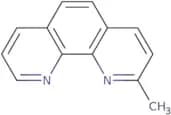
CAS:2-Methyl-1,10-phenanthroline is a bidentate ligand that can be used as a catalyst in some organic reactions. It has been shown to selectively inhibit the activity of the enzyme carbonic anhydrase. This drug is also able to bind to metal ions with nitrogen atoms, such as copper and zinc, which may be useful for cancer treatments. 2-Methyl-1,10-phenanthroline has also been shown to have anti-tumor activity in prostate carcinoma cells when used as a ternary complex with hypophosphorous acid and anhydrase.Formula:C13H10N2Purezza:Min. 95%Colore e forma:PowderPeso molecolare:194.23 g/mol5-Amino-1H-imidazole-4-carboxamide
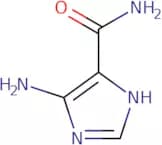
CAS:<p>5-Amino-1H-imidazole-4-carboxamide is a potent inhibitor of inosine monophosphate dehydrogenase (IMPDH). This enzyme converts inosine 5'-monophosphate (IMP) to xanthosine 5'-monophosphate (XMP) and is essential for the synthesis of purines. By inhibiting IMPDH, 5-amino-1H-imidazole-4-carboxamide prevents the formation of XMP, which leads to the depletion of purines, thereby inhibiting DNA synthesis. In addition to its role as an anti-inflammatory agent, this drug has been shown to reduce disease activity in bowel disease patients by reducing nitrate reductase activity. The molecule has also been shown to inhibit protein kinases such as PKC and MAPK/ERK kinases.</p>Formula:C4H6N4OPurezza:Min. 95%Colore e forma:PowderPeso molecolare:126.12 g/mol2-Mercapto-5-benzimidazole sulfonic acid sodium salt dihydrate
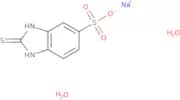
CAS:2-Mercapto-5-benzimidazole sulfonic acid sodium salt dihydrate is a molecule that can be used in devices. It has been shown to reversibly change the morphology of a monolayer and to generate asymmetric structures. 2-Mercapto-5-benzimidazole sulfonic acid sodium salt dihydrate can be used to generate fluorescent emulsions, which are systems where the magnetic particles are suspended in an oil droplet and illuminated by light of an appropriate wavelength. The molecules that make up 2-Mercapto-5-benzimidazole sulfonic acid sodium salt dihydrate have been shown to function as acceptors for molecular orbitals, which are wave functions that describe electron distribution around the atomic nucleus. These properties make it a promising candidate for use in microscopy techniques, such as scanning tunneling microscopy (STM) or atomic force microscopy (AFM).Formula:C7H5N2NaO3S2·2H2OPurezza:Min. 95%Colore e forma:PowderPeso molecolare:288.28 g/molMonomethyl triazeno imidazole carboxamide
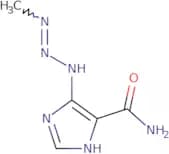
CAS:Monomethyl triazeno imidazole carboxamide (MTIC) is a drug that is used to treat cancer. It has been shown to inhibit the proliferation of tumor cells and induce apoptosis by inhibiting the expression of proteins, such as Bcl-2, which are involved in regulating mitochondrial membrane potential. MTIC has also been shown to inhibit protein synthesis and cell signaling pathways, such as the PI3K/Akt pathway. The use of MTIC for diagnosis purposes can be achieved using electrochemical impedance spectroscopy. A concentration–time curve can be obtained by incubating a biological sample with MTIC and measuring cell response using an impedance spectrophotometer. The clinical properties of MTIC include its ability to be administered orally or intravenously, have low toxicity, and inhibit the growth of tumor cells in vivo and in vitro.Formula:C5H8N6OPurezza:(¹H-Nmr) Min. 95 Area-%Colore e forma:White PowderPeso molecolare:168.16 g/mol6-Trifluoromethylindole
CAS:<p>6-Trifluoromethylindole is a carbamic acid that can be synthesized with the help of a sulfoxides. Carbamic acid reacts with an aryl halide to form an unsymmetrical biaryl. 6-Trifluoromethylindole has been shown to act as a modulator in Friedel-Crafts reactions, which may be used for the synthesis of heterocycles. This chemical has also been shown to react with alkyl chlorides and sulfonium salts to form carbamic acids and sulfoxides, respectively.</p>Formula:C9H6F3NPurezza:Min. 95%Colore e forma:PowderPeso molecolare:185.15 g/mol1,1,3,3,4,4,4a,5,5,6,6,7,7,8,8,8a-Hexadecafluoro-2-(trifluoromethyl)decahydroisoquinoline
CAS:Prodotto controllato1,1,3,3,4,4,4a,5,5,6,6,7,7,8,8,8a-Hexadecafluoro-2-(trifluoromethyl)decahydroisoquinoline is an organic solvent that has a very low boiling point and high volatility. It can be used in dry powder inhalers or as a component of hydrogel compositions for oxygen delivery to the lungs. The uptake of 1HF-2TFI into human colon carcinoma cells was found to be significantly higher than uptake by mammary carcinomas. This may be due to the difference in cell types and/or the phosphate group on the molecule. The binding constants of this molecule are also higher than those of other organic solvents such as acetone and ethanol. The results from a questionnaire study also indicated that 1HF-2TFI can be used for perfusion with oxygenated gas mixtures forFormula:C10F19NPurezza:Min. 95%Peso molecolare:495.08 g/mol2,6-Diaminopurine
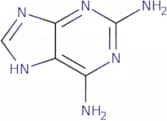
CAS:<p>2,6-Diaminopurine is a nucleotide analogue that is synthesized from guanosine. It inhibits the enzyme ribonucleotide reductase and blocks the synthesis of DNA precursors, which are necessary for viral replication. 2,6-Diaminopurine has been shown to inhibit hiv infection in tissue culture and animal models by decreasing the levels of nucleotides in cells. This drug can be used as an anti-viral agent against HIV and other retroviruses. 2,6-Diaminopurine has also been shown to be effective against murine sarcoma virus. The compound binds to the enzyme ribonucleotide reductase, which is important for DNA synthesis, and prevents its activity by mimicking adenosine triphosphate (ATP). The binding of 2,6-diaminopurine to ATP results in a coordination geometry that causes a long hydrogen bond with one oxygen</p>Formula:C5H6N6Purezza:Min. 95%Colore e forma:PowderPeso molecolare:150.14 g/molUlifloxacin
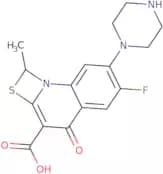
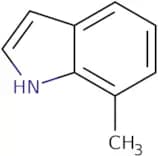
CAS:Extensive research has been conducted on the antimicrobial activity of 6-fluoro-1-methyl-4-oxo-7-(1-piperazinyl)-4H-(1,3)thiazeto(3,2a)quinoline-3-carboxylic acid (FPMT). FPMT is a levorotatory compound that is rapidly metabolized by esterases to 6FMT, which is also active against bacteria. FPMT inhibits bacterial growth, but does not inhibit mammalian cell growth. The main mechanism of action for FPMT is probably through its ability to inhibit the synthesis of bacterial DNA and RNA. This drug has been shown to be effective against sinusitis caused by bacterial rhinosinusitis and urinary tract infections caused by Escherichia coli and Pseudomonas aeruginosa. FPMT can be used as an alternative to prulifloxacin for the treatment of these types of infectionsFormula:C16H16FN3O3SPurezza:Min. 98 Area-%Peso molecolare:349.38 g/mol7-Methylindole
CAS:<p>7-Methylindole is a biochemical substance that is synthesized in the body. It is produced in the liver, and it can be found in the brain, heart, and kidney. 7-Methylindole has been shown to have cancer-fighting properties. 7-Methylindole binds to DNA by methylating nucleic acid bases, which causes a change in the genetic code. This leads to tumor cells being more sensitive to treatment with other substances that inhibit DNA synthesis or repair, such as anthranilate and 5-methoxyindole.</p>Formula:C9H9NPurezza:Min 98%Colore e forma:PowderPeso molecolare:131.17 g/mol5-Amino Isoquinoline
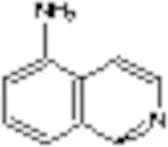
CAS:Prodotto controllato<p>Applications Used for synthesis of Rho kinase inhibitors.<br>References Biggadike, K., et al.: J. Med. Chem., 50, 6519 (2007), Cheng, Y., et al.: Bioorg. Med. Chem., 16, 4617 (2008),<br></p>Formula:C9H8N2Colore e forma:NeatPeso molecolare:144.173-Bromoquinoline
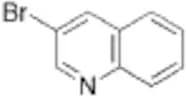
CAS:Prodotto controllato<p>Applications 3-Bromoquinoline (cas# 5332-24-1) is a compound useful in organic synthesis.<br></p>Formula:C9H6BrNColore e forma:NeatPeso molecolare:208.051,2-Diazabicyclo[2.2.2]octan-3-one
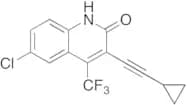
CAS:Prodotto controllato<p>Applications 1,2-Diazabicyclo[2.2.2]octan-3-one is an intermediate used in the synthesis of Bicyclo Risperidone (B382800), which is an impurity of Risperidone (R525000); a combined serotonin (5-HT2) and dopamine (D2) receptor antagonist.<br>References Jannssen, P.A.J., et al.: J. Pharmacol. Exp. Ther., 244, 685 (1988); Gelders, Y.G., et al.: Pharmacopsychiatry, 23, 206 (1990); Green, B.: Curr. Med. Res. Opin., 16, 57 (2000)<br></p>Formula:C6H10N2OColore e forma:NeatPeso molecolare:126.166-Chloro-3-(cyclopropylethynyl)-4-(trifluoromethyl)quinolin-2(1H)-one
CAS:Prodotto controllato<p>Applications 6-Chloro-3-(cyclopropylethynyl)-4-(trifluoromethyl)quinolin-2(1H)-one is an intermediate in the synthesis of novel quinolinones as HIV-1 reverse transcriptase inhibitors.<br>References Patel, M., et al.: Bioorg. Med. Chem. Lett., 11, 1943 (2001);<br></p>Formula:C15H9ClF3NOColore e forma:NeatPeso molecolare:311.696-Chloro-4-(2-cyclopropylethynyl)-3,4-dihydro-3-(phenylsulfonyl)-4-(trifluoromethyl)-2(1H)-quinolinone
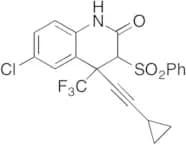
CAS:Prodotto controllato<p>Applications 6-Chloro-4-(2-cyclopropylethynyl)-3,4-dihydro-3-(phenylsulfonyl)-4-(trifluoromethyl)-2(1H)-quinolinone is an intermediate in the synthesis of novel quinolinones as HIV-1 reverse transcriptase inhibitors.<br>References Patel, M., et al.: Bioorg. Med. Chem. Lett., 11, 1943 (2001);<br></p>Formula:C21H15ClF3NO3SColore e forma:NeatPeso molecolare:453.862-Chloro-4-ethoxyquinoline
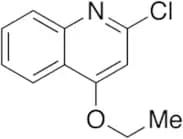
CAS:Prodotto controllato<p>Applications Quinoline derivative used in the preparation of compounds with anticonvulsant activity as well as compounds with potent antibacterial activity against gram-positive pathogens.<br>References Guo, L. et al.: Eur. J. Med. Chem., 44, 954 (2009); Jarvest, R.L. et al.: J. Med. Chem., 45, 1959 (2002);<br></p>Formula:C11H10ClNOColore e forma:NeatPeso molecolare:207.661,4-Dioxa-8-azaspiro[4.5]decane-8-carboxylic Acid 1,1-Dimethylethyl Ester
CAS:Prodotto controllato<p>Applications 1,4-Dioxa-8-azaspiro[4.5]decane-8-carboxylic Acid 1,1-Dimethylethyl Ester (cas# 123387-51-9) is a compound useful in organic synthesis.<br></p>Formula:C12H21NO4Colore e forma:NeatPeso molecolare:243.36-Chloropurine, Hydrochloride
CAS:Prodotto controllato<p>Applications 6-Chloropurine, Hydrochloride (cas# 88166-54-5 ) is a compound useful in organic synthesis.<br></p>Formula:C5H3ClN4·ClHColore e forma:NeatPeso molecolare:191.0181,3-Dihydro-N-nitro-1,3-dioxo-2H-isoindole-2-carboximidothioic acid Methyl Ester-13C
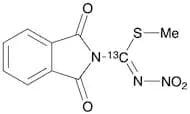
CAS:Prodotto controllato<p>Applications 1,3-Dihydro-N-nitro-1,3-dioxo-2H-isoindole-2-carboximidothioic acid Methyl Ester-13C is an intermediate used in the synthesis of Clothianidin-d3,13C1 (C588502), which is the isotope labelled analog of Clothianidin. Clothianidin is a neonicotinoid insecticide for use in food crops.<br>References Kamel, A., et al.: J. Agric. Food Chem., 58, 5926 (2010), Lynd, L., et al.: Energy Environ. Sci., 3, 1150 (2010), Cresswell, J., et al.: Ecotoxicology, 20, 149 (2011),<br></p>Formula:CC9H7N3O4SColore e forma:NeatPeso molecolare:266.2384,6,7,8-Tetrahydro-2,5(1H,3H)-quinolinedione
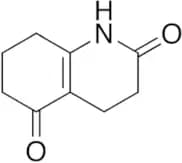
CAS:Prodotto controllato<p>Applications 4,6,7,8-Tetrahydro-2,5(1H,3H)-quinolinedione (cas# 5057-12-5) is a compound useful in organic synthesis.<br></p>Formula:C9H11NO2Colore e forma:NeatPeso molecolare:165.192-[(Diethylamino)methyl]indole Methiodide
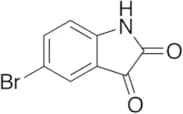
CAS:Prodotto controllato<p>Applications 2-[(Diethylamino)methyl]indole Methiodide is an intermediate in the preparation of carcinogenic indole derivatives.<br>References Eenkhoom, J.A., et al.: CND. J. Chem., 51, 792 (1973);<br></p>Formula:C14H21IN2Colore e forma:NeatPeso molecolare:344.235-Bromoisatin
CAS:Prodotto controllato<p>Applications Indole derivative<br></p>Formula:C8H4BrNO2Colore e forma:NeatPeso molecolare:226.031,1,2-Trimethyl-1H-benzo[e]indole-d6
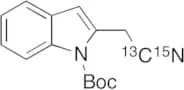
Prodotto controllato<p>Applications 1,1,2-Trimethyl-1H-benzo[e]indole-d6 is a labelled analogue of 1,1,2-Trimethyl-1H-benzo[e]indole (T896032). It is a useful research chemical.<br></p>Formula:C15D6H9NColore e forma:NeatPeso molecolare:215.3232-(Cyanomethyl)-1H-indole-1-carboxylic Acid tert-Butyl Ester-13C,15N
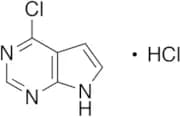
Prodotto controllato<p>Applications 2-(Cyanomethyl)-1H-indole-1-carboxylic Acid tert-Butyl Ester-13C,15N is an isotope labelled intermediate in the synthesis of endothelial lipase inhibitors.<br></p>Formula:CC14H1615NNO2Colore e forma:NeatPeso molecolare:258.2866-Chloro-7-deazapurine Hydrochloride
CAS:Prodotto controllato<p>Applications 6-Chloro-7-deazapurine Hydrochloride (cas# 1243346-92-0) is a compound useful in organic synthesis.<br></p>Formula:C6H5Cl2N3Colore e forma:NeatPeso molecolare:190.03[S-(R*,R*)]-2-[2-tert-Butyloxycarbonylamino-1-oxopropyl]-1,2,3,4-tetrahydro-3-isoquinolinecarboxylic Acid Phenylmethyl Ester
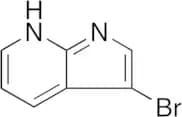
CAS:Prodotto controllato<p>Applications [S-(R*,R*)]-2-[2-tert-Butyloxycarbonylamino-1-oxopropyl]-1,2,3,4-tetrahydro-3-isoquinolinecarboxylic Acid Phenylmethyl Ester (cas# 92829-12-4) is a compound useful in organic synthesis.<br></p>Formula:C25H30N2O5Colore e forma:NeatPeso molecolare:438.523-Bromo-7-azaindole
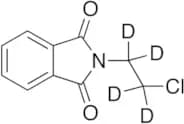
CAS:Prodotto controllato<p>Applications A reagent used in the preparation of biologically active Azaindoles.<br>References Minakata, S., et al.: J. Agric. Food Chem., 45, 2345 (1997),<br></p>Formula:C7H5BrN2Colore e forma:NeatPeso molecolare:197.032-(2-Chloroethyl-d4)-1H-isoindole-1,3-dione
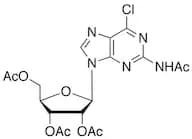
CAS:Prodotto controllato<p>Applications 2-(2-Chloroethyl-d4)-1H-isoindole-1,3-dione (cas# 1252995-10-0) is a compound useful in organic synthesis.<br></p>Formula:C10H4D4ClNO2Colore e forma:NeatPeso molecolare:213.652-Acetamido-6-chloro-9-(2’,3’,5’-tri-O-acetyl-β-D-ribofuranosyl)purine
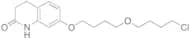
CAS:Prodotto controllato<p>Applications 2-Acetamido-6-chloro-9-(2’,3’,5’-tri-O-acetyl-β-D-ribofuranosyl)purine (cas# 137896-02-7) is a compound useful in organic synthesis.<br>References Matsuda, A., et al.: J. Med. Chem., 35, 241 (1992),<br></p>Formula:C18H20ClN5O8Colore e forma:NeatPeso molecolare:469.837-(4-(4-Chlorobutoxy)butoxy)-3,4-dihydroquinolin-2(1H)-one
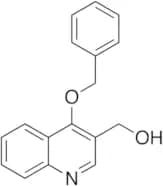
Prodotto controllato<p>Applications 7-(4-(4-Chlorobutoxy)butoxy)-3,4-dihydroquinolin-2(1H)-one is an internmediate in the synthesis of Aripiprazole (A771000) related compounds, a selective dopamine D2-receptor antagonist with dopamine autoreceptor agonist activity.<br>References Nagasaka, Y., et al.: Biopharma. Drug. Dispo., 33, 304 (2012); Chen, X., et al.: J. Med. Chem., 55, 7141 (2012);<br></p>Formula:C10H11IO2Colore e forma:NeatPeso molecolare:290.0984-Hydroxy-3-quinolinemethanol Benzyl Ether
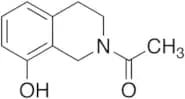
CAS:Prodotto controllato<p>Applications 4-Hydroxy-3-quinolinemethanol Benzyl Ether is a reactant used in the preparation of propanol and propylamine quinoline derivatives used as glucocorticoid ligands.<br></p>Formula:C17H15NO2Colore e forma:NeatPeso molecolare:265.312-Acetyl-1,2,3,4-tetrahydro-8-isoquinolinol
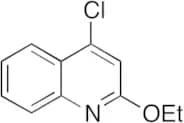
CAS:Prodotto controllato<p>Applications Used in the synthesis of tetrahydroisoquinoline derivatives.<br></p>Formula:C11H13NO2Colore e forma:NeatPeso molecolare:191.234-Chloro-2-ethoxyquinoline
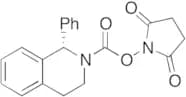
CAS:Prodotto controllato<p>Applications Quinoline derivative used in the preparation of compounds with anticonvulsant activity as well as compounds with potent antibacterial activity against gram-positive pathogens.<br>References Guo, L. et al.: Eur. J. Med. Chem., 44, 954 (2009); Jarvest, R.L. et al.: J. Med. Chem., 45, 1959 (2002);<br></p>Formula:C11H10ClNOColore e forma:NeatPeso molecolare:207.66(1S)-3,4-Dihydro-1-phenyl-2(1H)-isoquinolinecarboxylic Acid 2,5-Dioxo-1-pyrrolidinyl Ester
CAS:Prodotto controllato<p>Applications (1S)-3,4-Dihydro-1-phenyl-2(1H)-isoquinolinecarboxylic Acid 2,5-Dioxo-1-pyrrolidinyl Ester is an intermediate in the synthesis of ((R)-1-phenyl-3,4-dihydroisoquinolin-2(1H)-yl)((S)-1-phenyl-3,4-dihydroisoquinolin-2(1H)-yl)methanone (P309025). ((R)-1-phenyl-3,4-dihydroisoquinolin-2(1H)-yl)((S)-1-phenyl-3,4-dihydroisoquinolin-2(1H)-yl)methanone is a possible impurity of solifenacin (S676700) which is a muscarinic M3 receptor antagoinst. Solifenacin is used in treatment of urinary incontinence.<br>References Ikeda K., et al.: Arch. Pharmacol., 366, 97, (2002); Chapple, C.R., et al.: Br. J. Urol., 93, 303 (2004); Ohtake, A., et al.: Eur. J. Pharmacol., 492, 243 (2004); Brunton, S., et al.: Curr. Med. Res. Opin., 21, 71 (2005); Habb, F., et al.: Eur. Urol. 47, 376 (2005); Payne, C.K., et al.: Drugs, 66, 175 (2006)<br></p>Formula:C21H26O2Colore e forma:NeatPeso molecolare:310.431-Benzyl-5-bromoindole
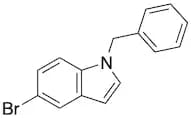
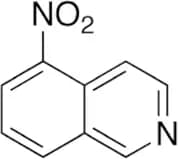
CAS:Prodotto controllato<p>Applications 1-Benzyl-5-bromoindole<br></p>Formula:C15H12BrNColore e forma:NeatPeso molecolare:286.1665-Nitroisoquinoline
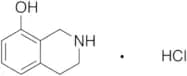
CAS:Prodotto controllato<p>Applications 5-Nitroisoquinoline (cas# 607-32-9) is a compound useful in organic synthesis.<br></p>Formula:C9H6N2O2Colore e forma:NeatPeso molecolare:174.161,2,3,4-Tetrahydro-8-isoquinolinol Hydrochloride
CAS:Prodotto controllato<p>Applications Used in the synthesis of tetrahydroisoquinoline derivatives.<br></p>Formula:C9H12ClNOColore e forma:NeatPeso molecolare:185.652-n-Butyl-d7-1,3-diazaspiro[4.4]non-1-en-4-one
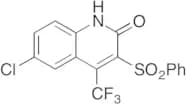
CAS:Prodotto controllato<p>Applications A labelled intermediate of Irbesartan (I751000).<br>References Gillis, J., et al.: Drugs, 54, 885 (1997), Chando, T., et al.: Drug Metab. Disps., 26, 408 (1998), Hines, J., et al.: Eur. J. Pharmacol., 384, 81 (1999)<br></p>Formula:C11H11D7N2OColore e forma:NeatPeso molecolare:201.326-Chloro-3-(phenylsulfonyl)-4-(trifluoromethyl)-2(1H)-quinolinone
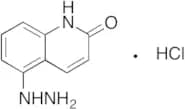
CAS:Prodotto controllato<p>Applications 6-Chloro-3-(phenylsulfonyl)-4-(trifluoromethyl)-2(1H)-quinolinone is an intermediate in the synthesis of novel quinolinones as HIV-1 reverse transcriptase inhibitors.<br>References Patel, M., et al.: Bioorg. Med. Chem. Lett., 11, 1943 (2001);<br></p>Formula:C16H9ClF3NO3SColore e forma:NeatPeso molecolare:387.765-Hydrazino-2(1H)-quinolinone Hydrochloride
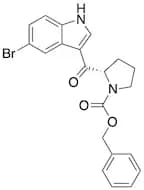
CAS:Prodotto controllato<p>Applications 5-Hydrazino-2(1H)-quinolinone Hydrochloride is an intermediate used in the synthesis of sodium-hydrogen exchanger type 1 inhibitor (NHE-1).<br></p>Formula:C9H10ClN3OColore e forma:NeatPeso molecolare:211.65(S)-Benzyl 2-(5-Bromo-1H-indole-3-carbonyl)pyrrolidine-1-carboxylate
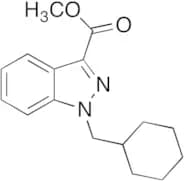
CAS:Prodotto controllato<p>Applications (S)-Benzyl 2-(5-Bromo-1H-indole-3-carbonyl)pyrrolidine-1-carboxylate is an intermediate in the synthesis of ent-Eletriptan (E505005), an enantiomeric impurity of the serotonin 5-HTIB/ID receptor agonist Eletriptan (E505000).<br>References Orita, A., et al.: Green Chem., 3, 13 (2001);<br></p>Formula:C21H19BrN2O3Colore e forma:NeatPeso molecolare:427.29Methyl 1-(Cyclohexylmethyl)-1H-indazole-3-carboxylate
CAS:Prodotto controllato<p>Applications Methyl 1-(Cyclohexylmethyl)-1H-indazole-3-carboxylate is an intermediate in the synthesis of MDMB-CHMINACA (M203515), a synthetic cannabinoid with potential neurochemical effects at the CB1 receptor.<br>References Banister, S. ET AL.: ACS Chem. Neurosci., 7, 1241 (2016);<br></p>Formula:C16H20N2O2Colore e forma:NeatPeso molecolare:272.343-Acetylindole
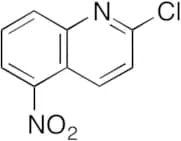
CAS:Prodotto controllato<p>Applications 3-acetylindole (cas# 703-80-0) is a useful research chemical.<br></p>Formula:C10H9NOColore e forma:NeatPeso molecolare:159.182-Chloro-5-nitroquinoline
CAS:Prodotto controllato<p>Applications 2-Chloro-5-nitroquinoline is used in the synthesis of potent, orally active corticotropin-releasing factor-1 receptor antagonists.<br>References Takeda, K., et al.: BIoorg. Med. Chem., 20, 6559 (2012); Verheij, M.H.P., et al.: J. Med. Chem., 55, 8603 (2012); Takeda, K., et al.: Bioorg. Med. Chem. Lett., 22, 5372 (2012);<br></p>Formula:C9H5ClN2O2Colore e forma:NeatPeso molecolare:208.63-Amino-4-bromo-5-phenylpyrazole
CAS:Prodotto controllato<p>Applications 3-Amino-4-bromo-5-phenylpyrazole (cas# 2845-78-5) is a compound useful in organic synthesis.<br></p>Formula:C9H8BrN3Colore e forma:NeatPeso molecolare:238.08

![6-Bromo-2H-pyrido[3,2-b][1,4]oxazin-3(4H)-one](/_next/image/?url=https%3A%2Fstatic.cymitquimica.com%2Fproducts%2F3D%2Fthumb-webp%2FFB144104.webp&w=3840&q=75)



![1,2-Diazabicyclo[2.2.2]octan-3-one](/_next/image/?url=https%3A%2Fstatic.cymitquimica.com%2Fproducts%2FTR%2Fthumb-webp%2FD417148.webp&w=3840&q=75)
![1,4-Dioxa-8-azaspiro[4.5]decane-8-carboxylic Acid 1,1-Dimethylethyl Ester](/_next/image/?url=https%3A%2Fstatic.cymitquimica.com%2Fproducts%2FTR%2Fthumb-webp%2FD485270.webp&w=3840&q=75)

![2-[(Diethylamino)methyl]indole Methiodide](/_next/image/?url=https%3A%2Fstatic.cymitquimica.com%2Fproducts%2FTR%2Fthumb-webp%2FD460995.webp&w=3840&q=75)
![1,1,2-Trimethyl-1H-benzo[e]indole-d6](/_next/image/?url=https%3A%2Fstatic.cymitquimica.com%2Fproducts%2FTR%2Fthumb-webp%2FT896032.webp&w=3840&q=75)
![[S-(R*,R*)]-2-[2-tert-Butyloxycarbonylamino-1-oxopropyl]-1,2,3,4-tetrahydro-3-isoquinolinecarboxyl…](/_next/image/?url=https%3A%2Fstatic.cymitquimica.com%2Fproducts%2FTR%2Fthumb-webp%2FB693505.webp&w=3840&q=75)
![2-n-Butyl-d7-1,3-diazaspiro[4.4]non-1-en-4-one](/_next/image/?url=https%3A%2Fstatic.cymitquimica.com%2Fproducts%2FTR%2Fthumb-webp%2FB691033.webp&w=3840&q=75)