


Composti policiclici
I composti policiclici sono molecole organiche che contengono più anelli interconnessi. Questi composti includono idrocarburi aromatici policiclici e altri sistemi ad anello complessi. Sono significativi nella scienza dei materiali, nei prodotti farmaceutici e nell'elettronica organica. Da CymitQuimica, offriamo composti policiclici di alta qualità per supportare le tue ricerche e applicazioni industriali, garantendo risultati affidabili ed efficaci nei tuoi progetti.
Sottocategorie di "Composti policiclici"
- Acridine(97 prodotti)
- Antrachinoni(533 prodotti)
- Acidi antrachinonici solfonici(16 prodotti)
- Azobenzeni(270 prodotti)
- Azonaftalene(98 prodotti)
- Azoxybenzeni(12 prodotti)
- Azuleni(11 prodotti)
- Benzimidazoli(1.475 prodotti)
- Benzodiossani(27 prodotti)
- Benzofurani(924 prodotti)
- Benzotiofeni(700 prodotti)
- Benzotriazoli(438 prodotti)
- Binaphthyl(133 prodotti)
- Carbazoli(462 prodotti)
- Cromani, cromeni(480 prodotti)
- Cumarine(1.122 prodotti)
- Ciclofani(11 prodotti)
- Fluorene e Fluorenoni(381 prodotti)
- Imidazopiridine(10 prodotti)
- Indan(118 prodotti)
- Indazoli(2.037 prodotti)
- Indeni(22 prodotti)
- Indoli(3.988 prodotti)
- Indoline(119 prodotti)
- Isatine(234 prodotti)
- Isobenzofurani(17 prodotti)
- Ftalimmidi N-sostituiti(153 prodotti)
- Naftaleni(2.436 prodotti)
- Naftiridina(17 prodotti)
- Naftochinone(2 prodotti)
- Perilene(36 prodotti)
- Fenazine(25 prodotti)
- Ftalazine(33 prodotti)
- Ftalimmide(153 prodotti)
- Idrocarburi policiclici aromatici (PAH)(270 prodotti)
- Polifenolo(261 prodotti)
- Pteridine(52 prodotti)
- Pireni(87 prodotti)
- Chinuclidina(1 prodotti)
- Tetraceni(7 prodotti)
Mostrare 32 più sottocategorie
Trovati 4574 prodotti di "Composti policiclici"
Ordinare per
Purezza (%)
0
100
|
0
|
50
|
90
|
95
|
100
5-Amino-8-hydroxyquinoline dihydrochloride
CAS:<p>5-Amino-8-hydroxyquinoline dihydrochloride (5-AQDH) is an anticancer drug that inhibits the activity of survivin, a protein that is overexpressed in cancer cells. It has been shown to be effective in vivo against melanoma tumor growth. 5-AQDH binds to the unpaired cysteine residues of the survivin molecule and inhibits its function by binding to the active site, blocking access to ATP and preventing DNA synthesis. The efficacy of 5-AQDH has been confirmed in vitro by studying the effect on cell viability and DNA synthesis, as well as by measuring plasma mass spectrometry data from melanoma patients. This drug is currently being investigated for its potential use as an anticancer agent.</p>Formula:C9H8N2O•(HCl)2Purezza:Min. 95%Peso molecolare:212.63 g/molBis(tricyclohexylphosphine)palladium(II) Dichloride
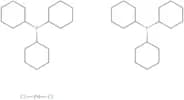
CAS:Prodotto controllato<p>Bis(tricyclohexylphosphine)palladium(II) Dichloride is a cross-coupling agent that is used for the synthesis of organic and organometallic compounds. It reacts with terminal alkynes to form a phosphine oxide, which can then be converted into an arylated product. The reaction proceeds by the formation of a palladium-carbon bond and subsequent cleavage of the carbon-palladium bond in the presence of ammonium formate. Bis(tricyclohexylphosphine)palladium(II) Dichloride is insoluble in water, but soluble in organic solvents such as dichloromethane, 1,2-dichloroethane, or chloroform. This reagent has been shown to enhance the rate of transfer reactions between monomers.</p>Formula:C36H66Cl2P2PdPurezza:Min. 95%Peso molecolare:738.18 g/mol7,8-Methylenedioxycoumarin
CAS:<p>7,8-Methylenedioxycoumarin is a furanocoumarin compound, which is a type of organic molecule characterized by a coumarin core with an additional methylenedioxy group. It is primarily sourced from various plant species, particularly those in the Rutaceae family, where it is found in essential oils and extracts. The mode of action of 7,8-Methylenedioxycoumarin involves its natural fluorescing properties, making it highly valuable for use in various biochemical assays where visualization is key. Due to its unique chemical structure, it efficiently absorbs ultraviolet light and emits visible fluorescence, which is exploited in photochemistry and as a biological marker. Its applications extend to the fields of pharmaceuticals and environmental sciences, where it serves in drug development studies and as a tool for tracking organic pollutants in ecosystems. Researchers continue to explore its potential uses due to its distinctive chemical behavior and natural origin.</p>Formula:C10H6O4Purezza:Min. 95%Peso molecolare:190.15 g/mol1-Azaspiro[4.4]nonane hydrochloride
CAS:1-Azaspiro[4.4]nonane hydrochloride is a versatile building block that is also used in research, as a reagent, and as a speciality chemical. It has been shown to be an excellent building block for complex compounds, with wide applications in the pharmaceutical industry. 1-Azaspiro[4.4]nonane hydrochloride has a CAS No. of 1417567-64-6 and can be found under the trade name Azapropynalene Hydrochloride (AP). It is soluble in water, alcohols, ethers and acetone but insoluble in most other solvents. 1-Azaspiro[4.4]nonane hydrochloride has been shown to have high quality and stability when stored under appropriate conditions; it is also resistant to degradation by light or air.Formula:C8H15N•HClPurezza:Min. 95%Colore e forma:PowderPeso molecolare:161.67 g/molMethyl 6-Bromo-1-Methyl-1H-Indole-2-Carboxylate
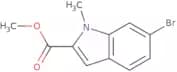
CAS:Prodotto controllato<p>Please enquire for more information about Methyl 6-Bromo-1-Methyl-1H-Indole-2-Carboxylate including the price, delivery time and more detailed product information at the technical inquiry form on this page</p>Formula:C11H10BrNO2Purezza:Min. 95%Peso molecolare:268.11 g/mol1-Allyl-3,7-dimethyl-8-phenylxanthine
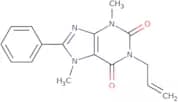
CAS:Prodotto controllatoPlease enquire for more information about 1-Allyl-3,7-dimethyl-8-phenylxanthine including the price, delivery time and more detailed product information at the technical inquiry form on this pageFormula:C16H16N4O2Purezza:Min. 95%Peso molecolare:296.32 g/molBenazeprilat
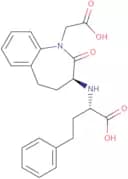
CAS:<p>Benazeprilat is a prodrug that is metabolized to enalaprilat, its active form. It is an inhibitor of angiotensin-converting enzyme (ACE) and has been shown to be effective in the treatment of heart failure. It has also been shown to inhibit ACE activity in vitro and in experimental models of congestive heart failure. Benazeprilat binds to the active site on the ACE molecule and inhibits the conversion of angiotensin I into angiotensin II, which causes vasoconstriction and stimulates aldosterone release from the adrenal cortex. This drug also has effects on energy metabolism by stimulating beta oxidation, which leads to increased levels of ketone bodies in blood plasma.</p>Formula:C22H24N2O5Purezza:Min. 98 Area-%Colore e forma:White Off-White PowderPeso molecolare:396.44 g/molcis-Khellactone
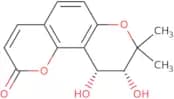
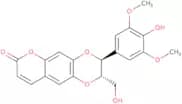
CAS:<p>cis-Khellactone is a naturally occurring organic compound, which is a type of coumarin derivative sourced predominantly from the roots of Peucedanum and Angelica species, plants native to various regions. These botanical sources are known for yielding secondary metabolites with diverse biological properties.</p>Formula:C14H14O5Purezza:Min. 95%Peso molecolare:262.26 g/moltrans-Decahydroquinoline
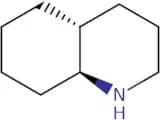
CAS:<p>Trans-decahydroquinoline is a chiral compound that can be synthesized by an asymmetric synthesis. It is an amide with a carbonyl group and a dialkylamino group. Trans-decahydroquinoline can be used to synthesize different compounds, such as enantiopure drugs, pharmaceuticals, and agrochemicals. The synthesis of trans-decahydroquinoline can be accomplished through the aldol cyclization or the addition of an acid to the carbonyl group. The magnetic resonance spectroscopy (NMR) and molecular modeling techniques have been used to study its structure and properties.</p>Formula:C9H17NPurezza:Min. 95%Peso molecolare:139.24 g/mol4-Hydroxy-3-nitro-2(1H)-quinolinone
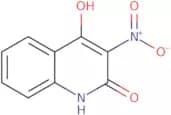
CAS:<p>4-Hydroxy-3-nitro-2(1H)-quinolinone is a quinoline derivative that has been shown to have anticancer activity against cancer cells. It can be used for the treatment of various types of cancer, including lung cancer, breast cancer, and colon cancer. This drug inhibits the growth of cancer cells by blocking the cycle at the G1 phase and inducing apoptosis. It also disrupts mitochondrial membrane potential, leading to an increase in reactive oxygen species and DNA damage. 4-Hydroxy-3-nitro-2(1H)-quinolinone is an epidermal growth factor receptor (EGFR) antagonist and blocks epidermal growth factor signaling through its inhibition of EGFR tyrosine kinase activity. It also downregulates TNFα expression in tumor cells by inhibiting NFκB activation.</p>Formula:C9H6N2O4Purezza:Min. 95%Peso molecolare:206.16 g/mol8-Hydroxyquinoline copper(II)
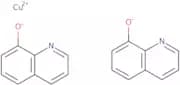
CAS:<p>8-Hydroxyquinoline copper(II) salt is a metal chelate that can be used as an analytical reagent. It is prepared by the reaction of ethylene diamine with 8-hydroxyquinoline and copper(II) chloride. The product has been found to emit light when irradiated with UV light. This product is also used as a substrate for methyl transferase, which is an enzyme involved in the metabolism of drugs. 8-Hydroxyquinoline copper(II) salt has been shown to inhibit the activity of P-glycoprotein (Pgp), which is a drug transporter protein found in mammalian cells that functions to pump xenobiotics from the inside of cells out into the bloodstream. When Pgp is inhibited, it causes cellular accumulation of certain drugs, such as cyclosporin A and tacrolimus.</p>Formula:C18H12CuN2O2Purezza:Min. 95%Colore e forma:PowderPeso molecolare:351.85 g/mol1-tert-Butyl 3-methyl 1H-indole-1,3-dicarboxylate
CAS:Prodotto controllatoPlease enquire for more information about 1-tert-Butyl 3-methyl 1H-indole-1,3-dicarboxylate including the price, delivery time and more detailed product information at the technical inquiry form on this pageFormula:C15H17NO4Purezza:Min. 95%Peso molecolare:275.3 g/molArnottinin
CAS:<p>Arnottinin is a bioactive compound, which is derived from natural plant sources. It functions primarily through modulation of specific cellular pathways, targeting key receptors that regulate physiological responses. This compound exhibits its mode of action by influencing signal transduction pathways, effectively altering cellular activities at the molecular level.</p>Formula:C14H14O4Purezza:Min. 95%Peso molecolare:246.26 g/molSuberosin epoxide
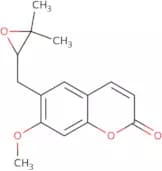
CAS:<p>Suberosin epoxide is a naturally occurring compound, classified as a type of sesquiterpene lactone, which is extracted from certain plant species, particularly those belonging to the Rutaceae family. This compound is of significant interest due to its biologically active properties. Its mode of action typically involves the modulation of enzymatic pathways within biological systems, often interacting with cellular proteins and potentially affecting signal transduction processes.</p>Purezza:Min. 95%7-Ethoxy-4-methylcoumarin
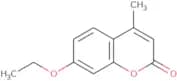
CAS:<p>7-Ethoxy-4-methylcoumarin is a fluorescent probe, which is a synthetic compound commonly sourced from organic chemical synthesis. With its distinct chromophore, this compound becomes highly fluorescent upon enzymatic cleavage, offering a reliable mechanism for the detection of specific enzymatic activities. The mode of action involves the enzymatic cleavage of the ethoxy group, leading to the release of 4-methylumbelliferone, a fluorescent product. This conversion provides a measurable signal that correlates with enzyme activity, making it an invaluable tool in studying enzyme kinetics.</p>Formula:C12H12O3Purezza:Min. 95%Colore e forma:PowderPeso molecolare:204.22 g/molMethyl 4-(benzyloxy)-1-methyl-1H-indole-2-carboxylate
CAS:Prodotto controllato<p>Please enquire for more information about Methyl 4-(benzyloxy)-1-methyl-1H-indole-2-carboxylate including the price, delivery time and more detailed product information at the technical inquiry form on this page</p>Formula:C18H17NO3Purezza:Min. 95%Peso molecolare:295.33 g/mol1-Methylindole-3-acetonitrile
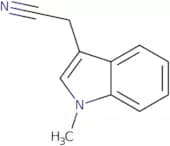
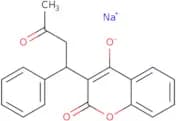
CAS:Prodotto controllato<p>Please enquire for more information about 1-Methylindole-3-acetonitrile including the price, delivery time and more detailed product information at the technical inquiry form on this page</p>Formula:C11H10N2Purezza:Min. 95%Peso molecolare:170.21 g/mol3-(α-Acetonylbenzyl)-4-hydroxycoumarin sodium
CAS:<p>3-(α-Acetonylbenzyl)-4-hydroxycoumarin sodium is an anticoagulant compound, which is a synthetic derivative of coumarin. It is primarily sourced via chemical synthesis in laboratory settings. Its mode of action involves inhibiting the synthesis of vitamin K-dependent clotting factors, specifically factors II, VII, IX, and X. This inhibition impairs blood coagulation, leading to uncontrolled bleeding.</p>Formula:C19H15NaO4Purezza:Min. 95%Colore e forma:White PowderPeso molecolare:330.31 g/molL-(2S,3aS,7aS)-Octahydro-1H-indole-2-carboxylic acid benzyl ester tosylate salt
CAS:Please enquire for more information about L-(2S,3aS,7aS)-Octahydro-1H-indole-2-carboxylic acid benzyl ester tosylate salt including the price, delivery time and more detailed product information at the technical inquiry form on this pageFormula:C23H29NO5SPurezza:Min. 95%Peso molecolare:431.55 g/molOstruthin
CAS:<p>Ostruthin is a naturally occurring coumarin derivative, which is isolated from plants such as *Peucedanum ostruthium* and other species within the Apiaceae family. It functions as an enzyme inhibitor, acting primarily through its interference with various cellular processes, including the inhibition of specific enzyme pathways that contribute to its bioactivity. Ostruthin exhibits a range of biological activities, making it of significant interest in pharmacological research.</p>Formula:C19H22O3Purezza:Min. 95%Peso molecolare:298.38 g/mol4-Aminobicyclo[2.2.2]octan-1-ol hydrochloride
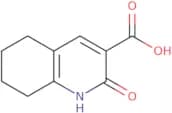
CAS:<p>Please enquire for more information about 4-Aminobicyclo[2.2.2]octan-1-ol hydrochloride including the price, delivery time and more detailed product information at the technical inquiry form on this page</p>Formula:C8H15NO•HClPurezza:Min. 95%Peso molecolare:177.67 g/mol2-Oxo-1,2,5,6,7,8-hexahydroquinoline-3-carboxylic acid
CAS:<p>Please enquire for more information about 2-Oxo-1,2,5,6,7,8-hexahydroquinoline-3-carboxylic acid including the price, delivery time and more detailed product information at the technical inquiry form on this page</p>Formula:C10H11NO3Purezza:Min. 95%Peso molecolare:193.2 g/mol7-Geranyloxycoumarin
CAS:<p>7-Geranyloxycoumarin is a naturally occurring coumarin derivative, which is primarily sourced from plant species in the Rutaceae family. It is a bioactive compound known for its presence in various essential oils and its contribution to the properties of these plant extracts. The mode of action of 7-Geranyloxycoumarin involves interactions at the cellular level, including enzyme inhibition and modulation of signal transduction pathways, which can lead to diverse pharmacological effects.</p>Formula:C19H22O3Purezza:Min. 95%Colore e forma:PowderPeso molecolare:298.38 g/molMoluccanin
CAS:<p>Please enquire for more information about Moluccanin including the price, delivery time and more detailed product information at the technical inquiry form on this page</p>Purezza:Min. 95%Selinidin
CAS:<p>Selinidin is a phytochemical compound, which is derived from the natural source of the Brunsvigia bosmaniae plant. As a bioactive constituent of this plant, it is characterized by its unique structure and chemical properties, enabling it to interact with a variety of cellular targets, primarily through modulation of inflammatory pathways. The mode of action of Selinidin involves the inhibition of pro-inflammatory cytokines and mediators, thereby reducing inflammation and oxidative stress at the cellular level.</p>Formula:C19H20O5Purezza:Min. 95%Peso molecolare:328.36 g/mol1-Benzyl-3-[3-(diethylamino)propoxy]-1H-indazole
CAS:Prodotto controllato<p>Please enquire for more information about 1-Benzyl-3-[3-(diethylamino)propoxy]-1H-indazole including the price, delivery time and more detailed product information at the technical inquiry form on this page</p>Formula:C21H27N3OPurezza:Min. 98 Area-%Colore e forma:Clear LiquidPeso molecolare:337.46 g/mol2,3,4,5-Tetrahydro-5-methyl-1H-pyrido[4,3-b]indol-1-one
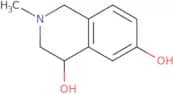
CAS:Prodotto controllato<p>Please enquire for more information about 2,3,4,5-Tetrahydro-5-methyl-1H-pyrido[4,3-b]indol-1-one including the price, delivery time and more detailed product information at the technical inquiry form on this page</p>Formula:C12H12N2OPurezza:Min. 95%Peso molecolare:200.24 g/mol1,2,3,4-Tetrahydro-4,6-dihydroxy-2-methyl-isoquinoline
CAS:<p>1,2,3,4-Tetrahydro-4,6-dihydroxy-2-methyl-isoquinoline is a useful building block in the synthesis of various compounds such as pharmaceuticals and pesticides. It is an intermediate for the preparation of other valuable chemicals such as the antihistamine diphenhydramine, which is used to treat allergies. Tetrahydroisoquinoline can also be used as a reagent to synthesize other chemical compounds. This compound has been used in research as well as commercial applications. Tetrahydroisoquinoline is also a versatile scaffold that can be modified to produce different derivatives with different properties.</p>Formula:C10H13NO2Purezza:Min. 95%Colore e forma:White PowderPeso molecolare:179.22 g/mol3-Azabicyclo[3,3,0]octane HCl
CAS:<p>3-Azabicyclo[3,3,0]octane HCl is an inorganic base that is used as a catalyst for organic reactions. It is often used to convert ester hydrochlorides into chiral esters. 3-Azabicyclo[3,3,0]octane HCl has been shown to be a suitable reducing agent for the reduction of various substances. The reaction proceeds via an intramolecular process and can be used with various parameters. 3-Azabicyclo[3,3,0]octane HCl is crystalline and has a melting point of 179 degrees Celsius. It also has optical activity due to its chirality.</p>Formula:C7H14ClNPurezza:Min. 98 Area-%Colore e forma:White Off-White PowderPeso molecolare:147.65 g/mol8-Bromo-2-methylquinoline
CAS:8-Bromo-2-methylquinoline is a naphthalene derivative that has an oxidant function. It can be used as a solvent for chlorobenzene and as a catalyst for the production of bipyridines and piperazine. 8-Bromo-2-methylquinoline is also used as a ligand in the preparation of metal complexes. This compound reacts with methyl groups, chlorine, and halides to form methyl quinolines and dichloromethanes. 8-Bromo-2-methylquinoline may react with fatty acids to form polyunsaturated acid esters or with polyunsaturated fatty acids to form polyethers.Formula:C10H8BrNPurezza:Min. 95%Peso molecolare:222.08 g/mol2-Amino-3-(1.2-dihydro-2-oxoquinoline-4-yl)propanoic acid
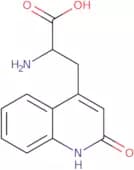
CAS:Please enquire for more information about 2-Amino-3-(1.2-dihydro-2-oxoquinoline-4-yl)propanoic acid including the price, delivery time and more detailed product information at the technical inquiry form on this pageFormula:C12H12N2O3Purezza:Min. 95%Peso molecolare:232.24 g/mol4,4'-Dithio-2,2'-bipyridine
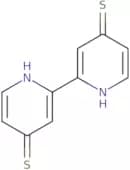
CAS:Please enquire for more information about 4,4'-Dithio-2,2'-bipyridine including the price, delivery time and more detailed product information at the technical inquiry form on this pageFormula:C10H8N2S2Purezza:Min. 95%Colore e forma:PowderPeso molecolare:220.32 g/mol5-Bromo-3-[2-(1-pyrrolidinyl)ethyl]-1H-indole
CAS:Prodotto controllato<p>Please enquire for more information about 5-Bromo-3-[2-(1-pyrrolidinyl)ethyl]-1H-indole including the price, delivery time and more detailed product information at the technical inquiry form on this page</p>Formula:C14H17BrN2Purezza:Min. 95%Peso molecolare:293.2 g/mol1-Methyl-2-(piperazin-1-ylcarbonyl)-1H-indole hydrochloride
CAS:Prodotto controllato<p>Please enquire for more information about 1-Methyl-2-(piperazin-1-ylcarbonyl)-1H-indole hydrochloride including the price, delivery time and more detailed product information at the technical inquiry form on this page</p>Formula:C14H17N3OPurezza:Min. 95%Peso molecolare:243.3 g/mol3-[2-(2,5-Dimethyl-1H-pyrrol-1-yl)ethyl]-1H-indole
CAS:Prodotto controllato<p>Please enquire for more information about 3-[2-(2,5-Dimethyl-1H-pyrrol-1-yl)ethyl]-1H-indole including the price, delivery time and more detailed product information at the technical inquiry form on this page</p>Formula:C16H18N2Purezza:Min. 95%Peso molecolare:238.33 g/molEthyl 6-bromo-5-hydroxy-1-methyl-2-(phenylsulfanylmethyl)indole-3-carboxylate
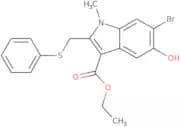
CAS:Prodotto controllato<p>Please enquire for more information about Ethyl 6-bromo-5-hydroxy-1-methyl-2-(phenylsulfanylmethyl)indole-3-carboxylate including the price, delivery time and more detailed product information at the technical inquiry form on this page</p>Purezza:Min. 95%4-Bromoisoquinoline
CAS:4-Bromoisoquinoline is an aryl halide that can be used in the cross-coupling reaction with other aryl halides. It has been shown to have anticancer activity and to inhibit the growth of tumour cell lines in vitro. This compound is also efficient for inhibiting leukemia cells. 4-Bromoisoquinoline has been shown to have an inhibitory effect on cancer cells through the inhibition of DNA synthesis and RNA transcription, as well as by inducing apoptosis. The mechanism of action may be due to its ability to bind to aromatic hydrocarbons and halides, which leads to thermodynamic changes and vibrational energy transfer.Formula:C9H6BrNPurezza:Min. 95%Peso molecolare:208.05 g/mol(2R)-1-[2-[(3-Hydroxytricyclo[3.3.1.1(3,7)]dec-1-yl)amino]acetyl]-2-pyrrolidinecarbonitrile
CAS:(2R)-1-[2-[(3-Hydroxytricyclo[3.3.1.1(3,7)]dec-1-yl)amino]acetyl]-2-pyrrolidinecarbonitrile is a drug that belongs to the class of DPP-IV inhibitors and is used for the treatment of type 2 diabetes mellitus. It has been shown to be effective in reducing postprandial blood glucose levels in patients with type 2 diabetes mellitus. The mechanism of action of this drug is not fully understood, but it may have an effect on insulin release from pancreatic beta cells and/or inhibition of gastric emptying or intestinal absorption of glucose. This drug has been shown to reduce tubulointerstitial injury in diabetic rats and can be used as a combination therapy for type 2 diabetes mellitus. There are no known clinically relevant interactions between (2R)-1-[2-[(3-HydroxytricycloFormula:C17H25N3O2Purezza:Min. 95%Peso molecolare:303.4 g/mol2-Iodo-1H-imidazole
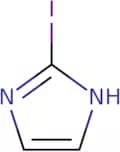
CAS:2-Iodo-1H-imidazole is an asymmetric molecule that is synthesized by a Suzuki coupling reaction between malonic acid and tautomers of 2-iodo-1H-imidazole. This molecule inhibits the activity of inhibitor molecules, such as nitrogen atoms, which are used in pesticide production. It also has pesticidal activity and can be used to treat cancer or autoimmune diseases. 2-Iodo-1H-imidazole is metabolized through a number of metabolic transformations, including hydrolysis by esterases or glucuronidases, oxidation by cytochrome P450 enzymes, reduction by glutathione reductase, or conjugation with glucuronic acid.Formula:C3H3IN2Purezza:Min. 95%Colore e forma:White PowderPeso molecolare:193.97 g/mol4-Chloroquinoline-6-carboxylicacid
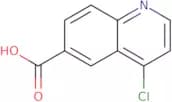
CAS:<p>Please enquire for more information about 4-Chloroquinoline-6-carboxylicacid including the price, delivery time and more detailed product information at the technical inquiry form on this page</p>Formula:C10H6ClNO2Purezza:Min. 95%Peso molecolare:207.61 g/mol5-Bromo-1-methyl-1H-indole-3-carboxylic acid
CAS:Prodotto controllato<p>Please enquire for more information about 5-Bromo-1-methyl-1H-indole-3-carboxylic acid including the price, delivery time and more detailed product information at the technical inquiry form on this page</p>Formula:C10H8BrNO2Purezza:Min. 95%Peso molecolare:254.08 g/molIndole-3-acetyl-L-glutamic acid
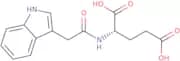
CAS:<p>Indole-3-acetyl-L-glutamic acid is an endogenous substance that is found in plants. It is the conjugated form of indole-3-acetaldehyde and L-glutamic acid. Indole-3-acetylglutamic acid has shown to have antioxidant potential and can be used to regulate plant growth, as well as protect against environmental stresses. Indole-3-acetylglutamic acid also has a role in regulating the production of other hormones, such as ethylene and auxin, which are involved in plant growth regulation.</p>Formula:C15H16N2O5Purezza:Min. 98 Area-%Colore e forma:PowderPeso molecolare:304.3 g/mol2-Methyl-1H-imidazole-5-carboxylic acid
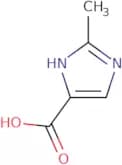
CAS:<p>2-Methyl-1H-imidazole-5-carboxylic acid is a molecule that belongs to the class of antibiotics. It has been shown to be an effective inhibitor of lipases and other enzymes, which is due to its carboxylate group. The immobilization of this molecule has been studied by X-ray crystallography. The oxygen atoms in the molecule are covalently immobilized on a silica surface via a linker chain, which prevents the loss of these atoms. Dichroism spectroscopy was used to study the effects of different solvents on this molecule's ability to rotate light. 2-Methyl-1H-imidazole-5-carboxylic acid was also successfully immobilized using an enzyme called lipase, with residue carboxylate groups positioned at the bottom of the binding cavity.</p>Formula:C5H6N2O2Purezza:Min. 95%Colore e forma:PowderPeso molecolare:126.11 g/molMethyl 4,5-dimethoxy-1-methyl-1H-indole-2-carboxylate
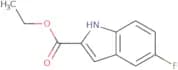
CAS:Prodotto controllato<p>Please enquire for more information about Methyl 4,5-dimethoxy-1-methyl-1H-indole-2-carboxylate including the price, delivery time and more detailed product information at the technical inquiry form on this page</p>Formula:C13H15NO4Purezza:Min. 95%Peso molecolare:249.26 g/molEthyl 5-fluoroindole-2-carboxylate
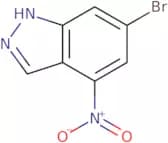
CAS:<p>Ethyl 5-fluoroindole-2-carboxylate is a cytotoxic compound that belongs to the class of organic compounds called aryl rings. It has been shown to inhibit tumor growth in vitro and in vivo through the inhibition of protein synthesis. The molecular docking studies have shown that this compound binds to the enzyme SMMC-7721 cell, which is involved in DNA transcription and replication. It also inhibits activity of other enzymes, such as kinases and phosphatases, which are involved in cellular processes such as proliferation and differentiation. Ethyl 5-fluoroindole-2-carboxylate may be used for the treatment of blood cancer or monosugar diseases, such as diabetes mellitus or hyperlipidemia.</p>Formula:C11H10FNO2Purezza:Min. 95%Peso molecolare:207.2 g/mol6-Bromo-4-nitro-1H-indazole
CAS:<p>Please enquire for more information about 6-Bromo-4-nitro-1H-indazole including the price, delivery time and more detailed product information at the technical inquiry form on this page</p>Formula:C7H4BrN3O2Purezza:Min. 95%Peso molecolare:242.03 g/mol(S)-1,2,3,4,5,6,7,8-Octahydro-1-[(4-methoxyphenyl)methyl]isoquinoline (acetate salt )
CAS:<p>(S)-1,2,3,4,5,6,7,8-Octahydro-1-[(4-methoxyphenyl)methyl]isoquinoline (acetate salt ) is a diphosphine that can be used as a catalyst to produce formic acid from methanol and carbon monoxide. This product is an enantiomer of picric acid and has been shown to be an effective additive in the crystallization of picric acid. The acetate salt is also optically pure.</p>Purezza:Min. 95%Murrangetin
<p>Murrangetin is a flavonoid compound, which is a natural phytochemical sourced from the peels of various citrus fruits. Its mode of action primarily involves the modulation of inflammatory pathways, potentially through the inhibition of specific enzymes like cyclooxygenases and lipoxygenases. This flavonoid is also known for its antioxidative properties, which contribute to its ability to scavenge free radicals, thereby reducing oxidative stress in biological systems.</p>Purezza:Min. 95%(3R)-1-Azabicyclo[2.2.2]oct-3-yl N-[2-(2-benzoylphenyl)ethyl]carbamate
CAS:<p>Please enquire for more information about (3R)-1-Azabicyclo[2.2.2]oct-3-yl N-[2-(2-benzoylphenyl)ethyl]carbamate including the price, delivery time and more detailed product information at the technical inquiry form on this page</p>Formula:C23H26N2O3Purezza:Min. 95%Peso molecolare:378.46 g/mol1H-Cyclopenta[l]phenanthrene
CAS:<p>1H-Cyclopenta[l]phenanthrene is a five-membered cyclic hydrocarbon that binds to phosphine and is used in the synthesis of ferrocenes. It is also unsymmetrical and anion-forming. 1H-Cyclopenta[l]phenanthrene can be protonated at carbon, which makes it a good ligand. 1H-Cyclopenta[l]phenanthrene has been shown to react with carbonyls, imines, and ethylene to form organometallic complexes.</p>Formula:C17H12Purezza:Min. 95%Colore e forma:PowderPeso molecolare:216.28 g/mol



![1-Azaspiro[4.4]nonane hydrochloride](/_next/image/?url=https%3A%2Fstatic.cymitquimica.com%2Fproducts%2F3D%2Fthumb-webp%2FFA130012.webp&w=3840&q=75)




![4-Aminobicyclo[2.2.2]octan-1-ol hydrochloride](/_next/image/?url=https%3A%2Fstatic.cymitquimica.com%2Fproducts%2F3D%2Fthumb-webp%2FFA63102.webp&w=3840&q=75)


![1-Benzyl-3-[3-(diethylamino)propoxy]-1H-indazole](/_next/image/?url=https%3A%2Fstatic.cymitquimica.com%2Fproducts%2F3D%2Fthumb-webp%2FFB162091.webp&w=3840&q=75)
![2,3,4,5-Tetrahydro-5-methyl-1H-pyrido[4,3-b]indol-1-one](/_next/image/?url=https%3A%2Fstatic.cymitquimica.com%2Fproducts%2F3D%2Fthumb-webp%2FFT55655.webp&w=3840&q=75)
![3-Azabicyclo[3,3,0]octane HCl](/_next/image/?url=https%3A%2Fstatic.cymitquimica.com%2Fproducts%2F3D%2Fthumb-webp%2FFA38235.webp&w=3840&q=75)

![5-Bromo-3-[2-(1-pyrrolidinyl)ethyl]-1H-indole](/_next/image/?url=https%3A%2Fstatic.cymitquimica.com%2Fproducts%2F3D%2Fthumb-webp%2FFB154288.webp&w=3840&q=75)
![3-[2-(2,5-Dimethyl-1H-pyrrol-1-yl)ethyl]-1H-indole](/_next/image/?url=https%3A%2Fstatic.cymitquimica.com%2Fproducts%2F3D%2Fthumb-webp%2FFD117662.webp&w=3840&q=75)

![(2R)-1-[2-[(3-Hydroxytricyclo[3.3.1.1(3,7)]dec-1-yl)amino]acetyl]-2-pyrrolidinecarbonitrile](/_next/image/?url=https%3A%2Fstatic.cymitquimica.com%2Fproducts%2F3D%2Fthumb-webp%2FFH46129.webp&w=3840&q=75)


![(S)-1,2,3,4,5,6,7,8-Octahydro-1-[(4-methoxyphenyl)methyl]isoquinoline (acetate salt )](/_next/image/?url=https%3A%2Fstatic.cymitquimica.com%2Fproducts%2F3D%2Fthumb-webp%2FFO29465.webp&w=3840&q=75)
![(3R)-1-Azabicyclo[2.2.2]oct-3-yl N-[2-(2-benzoylphenyl)ethyl]carbamate](/_next/image/?url=https%3A%2Fstatic.cymitquimica.com%2Fproducts%2F3D%2Fthumb-webp%2FFQ171047.webp&w=3840&q=75)
![1H-Cyclopenta[l]phenanthrene](/_next/image/?url=https%3A%2Fstatic.cymitquimica.com%2Fproducts%2F3D%2Fthumb-webp%2FFC60818.webp&w=3840&q=75)