Composti policiclici
Sottocategorie di "Composti policiclici"
- Acridine(98 prodotti)
- Antrachinoni(533 prodotti)
- Acidi antrachinonici solfonici(16 prodotti)
- Azobenzeni(270 prodotti)
- Azonaftalene(98 prodotti)
- Azoxybenzeni(12 prodotti)
- Azuleni(11 prodotti)
- Benzimidazoli(1.476 prodotti)
- Benzodiossani(27 prodotti)
- Benzofurani(928 prodotti)
- Benzotiofeni(701 prodotti)
- Benzotriazoli(438 prodotti)
- Binaphthyl(133 prodotti)
- Carbazoli(464 prodotti)
- Cromani, cromeni(480 prodotti)
- Cumarine(1.125 prodotti)
- Ciclofani(11 prodotti)
- Fluorene e Fluorenoni(384 prodotti)
- Imidazopiridine(10 prodotti)
- Indan(118 prodotti)
- Indazoli(2.038 prodotti)
- Indeni(22 prodotti)
- Indoli(3.986 prodotti)
- Indoline(119 prodotti)
- Isatine(234 prodotti)
- Isobenzofurani(17 prodotti)
- Ftalimmidi N-sostituiti(153 prodotti)
- Naftaleni(2.438 prodotti)
- Naftiridina(17 prodotti)
- Naftochinone(2 prodotti)
- Perilene(36 prodotti)
- Fenazine(25 prodotti)
- Ftalazine(33 prodotti)
- Ftalimmide(153 prodotti)
- Idrocarburi policiclici aromatici (PAH)(285 prodotti)
- Polifenolo(270 prodotti)
- Pteridine(52 prodotti)
- Pireni(87 prodotti)
- Chinuclidina(1 prodotti)
- Tetraceni(7 prodotti)
Trovati 4575 prodotti di "Composti policiclici"
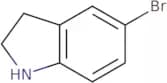
5-Bromo-2,3-dihydro-1H-indole
CAS:Please enquire for more information about 5-Bromo-2,3-dihydro-1H-indole including the price, delivery time and more detailed product information at the technical inquiry form on this page
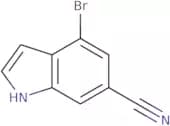
Formula:C8H8BrNPurezza:Min. 95%Colore e forma:PowderPeso molecolare:198.06 g/mol4-Bromo-1H-indole-6-carbonitrile
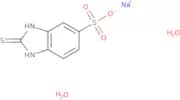
CAS:4-Bromo-1H-indole-6-carbonitrile is a versatile building block that can be used in the synthesis of complex compounds and research chemicals. 4-Bromo-1H-indole-6-carbonitrile is a reagent in the production of speciality chemicals, and is also used as an intermediate to produce other compounds. This compound is useful as a starting material for the synthesis of pharmaceuticals, agrochemicals, and perfumes. It has been shown to be an effective scaffold for the construction of heterocycles.Formula:C9H5BrN2Purezza:Min. 95 Area-%Colore e forma:White Off-White PowderPeso molecolare:221.05 g/mol2-Mercapto-5-benzimidazole sulfonic acid sodium salt dihydrate
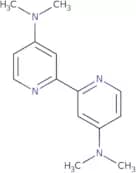
CAS:2-Mercapto-5-benzimidazole sulfonic acid sodium salt dihydrate is a molecule that can be used in devices. It has been shown to reversibly change the morphology of a monolayer and to generate asymmetric structures. 2-Mercapto-5-benzimidazole sulfonic acid sodium salt dihydrate can be used to generate fluorescent emulsions, which are systems where the magnetic particles are suspended in an oil droplet and illuminated by light of an appropriate wavelength. The molecules that make up 2-Mercapto-5-benzimidazole sulfonic acid sodium salt dihydrate have been shown to function as acceptors for molecular orbitals, which are wave functions that describe electron distribution around the atomic nucleus. These properties make it a promising candidate for use in microscopy techniques, such as scanning tunneling microscopy (STM) or atomic force microscopy (AFM).Formula:C7H5N2NaO3S2·2H2OPurezza:Min. 95%Colore e forma:PowderPeso molecolare:288.28 g/mol4,4' -Bis(N,N-dimethylamino)-2,2' -bipyridine
CAS:4,4' -Bis(N,N-dimethylamino)-2,2' -bipyridine (DMAB) is a ligand that is used in electrochemical studies. It has been shown to have ancillary properties, which means that it does not interact directly with the substrate but modifies its environment. DMAB can form a complex with the proton at the electrode surface and x-ray crystal structures have been obtained for this interaction. These structures demonstrate that DMAB binds to the tetrazole ring of pyridine and stabilizes the molecule by increasing its redox potentials.Formula:C14H18N4Purezza:Min. 95%Colore e forma:PowderPeso molecolare:242.32 g/mol6-Trifluoromethylindole
CAS:6-Trifluoromethylindole is a carbamic acid that can be synthesized with the help of a sulfoxides. Carbamic acid reacts with an aryl halide to form an unsymmetrical biaryl. 6-Trifluoromethylindole has been shown to act as a modulator in Friedel-Crafts reactions, which may be used for the synthesis of heterocycles. This chemical has also been shown to react with alkyl chlorides and sulfonium salts to form carbamic acids and sulfoxides, respectively.
Formula:C9H6F3NPurezza:Min. 95%Colore e forma:PowderPeso molecolare:185.15 g/mol3,3'-Diindolyl
CAS:3,3'-Diindolyl is a molecule that belongs to the class of oxindoles. Oxindoles are bioactive molecules that are formed by the reduction of 3,3'-dihydroxyindole (oxindole). The borohydride reduction of 3,3'-dihydroxyindole yields 3,3'-diindolyl. It has been shown to have anti-inflammatory properties and can be used for the treatment of inflammatory diseases such as congestive heart failure. 3,3'-Diindolyl is also an acidic compound and therefore can be used as an acidic buffer in pharmacopeia. It reacts with peroxide to form an aldehyde after oxidation. This reaction is catalyzed by sodium borohydride reduction or hydrogen peroxide. The borohydride reduction of 3,3'-diindolyl yields 2-hydroxy-1-(2-hydroxyethyl) indole (oxindole).Formula:C16H12N2Purezza:Min. 95%Colore e forma:PowderPeso molecolare:232.28 g/molAcetyl columbianetin
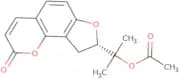
CAS:Acetyl columbianetin is a natural compound, which is a type of secondary metabolite derived primarily from plant sources. This compound is part of a broader category of phytochemicals known for their diverse bioactive properties. Acetyl columbianetin is specifically sourced from certain species within the Apiaceae family, commonly found in traditional medicine.Formula:C16H16O5Purezza:Min. 95%Colore e forma:PowderPeso molecolare:288.3 g/mol3-Methylindole
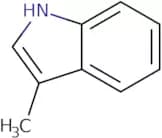
CAS:Also called Skatole. It occurs naturally in the feces of mammals and birds and is the primary contributor to fecal odour.Formula:C9H9NPurezza:Min. 97.5%Colore e forma:White PowderPeso molecolare:131.17 g/molEthyl 4,5-dichloro-1H-indole-2-carboxylate
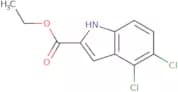
CAS:Ethyl 4,5-dichloro-1H-indole-2-carboxylate is an organic chemical compound that is a reaction component, reagent, and useful scaffold in the synthesis of pharmaceuticals. It has been shown to have high quality and be a versatile building block for the synthesis of complex compounds. This chemical can be used as a speciality chemical or research chemical.Formula:C11H9Cl2NO2Purezza:Min. 95%Colore e forma:White PowderPeso molecolare:258.1 g/mol5-Nitro-1,10-phenanthroline
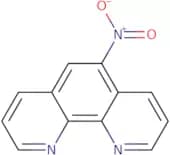
CAS:5-Nitro-1,10-phenanthroline is a coordination compound that belongs to the group of p2. It has been shown to have low toxicity and can be used as an ancillary ligand in coordination chemistry. 5-Nitro-1,10-phenanthroline has been used as a synchronous fluorescence probe for amines and is also useful for kinetic studies due to its high stability and sensitivity. FTIR spectroscopy has shown that this compound binds to glyoxal at neutral pH; it may also react with reactive oxygen species such as superoxide, hydrogen peroxide, or hydroxyl radicals.Formula:C12H7N3O2Purezza:Min. 97 Area-%Colore e forma:PowderPeso molecolare:225.2 g/mol5-Cyanoindole
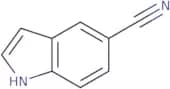
CAS:5-Cyanoindole is a hydrophobic molecule that has been shown to have an inhibitory effect on the trifluoroacetic acid-induced fluorescence in the presence of chloride ions. It is also able to bind peptides and has been used as an antimicrobial peptide. 5-Cyanoindole can be synthesized electrochemically or by electrochemical impedance spectroscopy. The synthesis of 5-cyanoindole can be achieved through a Friedel-Crafts reaction, followed by a hydrolysis with hydrogen peroxide and then a reduction with sodium borohydride.
!-- END OF PRODUCT DESCRIPTION -->Formula:C9H6N2Colore e forma:White PowderPeso molecolare:142.16 g/mol2-Phenylquinoline-4-carbohydrazide
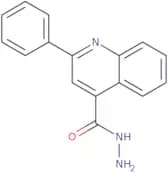
CAS:2-Phenylquinoline-4-carbohydrazide is an antibacterial agent that binds to bacterial DNA gyrase and topoisomerase, which are enzymes that maintain the integrity of bacterial DNA. It also has significant anti-inflammatory activity and can be used for the treatment of skin disorders, such as acne. 2-Phenylquinoline-4-carbohydrazide has been shown to induce apoptosis in human dermal fibroblast cells. This drug has been shown to have anticancer activity in vitro and in vivo. The anticancer activity of this drug may be due to its ability to inhibit cancer cell proliferation by binding to DNA gyrase and topoisomerase, which are enzymes that maintain the integrity of bacterial DNA.Formula:C16H13N3OPurezza:Min. 95%Peso molecolare:263.29 g/molMethyl indole-4-carboxylate
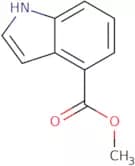
CAS:Methyl indole-4-carboxylate is a synthetic compound that is a potent agonist for cytochrome P450 enzymes. It can be used to study the human cytochrome system, which is responsible for metabolizing drugs and other chemicals. Methyl indole-4-carboxylate has been shown to react with aldehydes, such as formaldehyde, leading to fluorescence. This compound also has the ability to bind to x-ray structures of human cytochrome p450. The addition of methyl indole-4-carboxylate to tissue culture cells leads to an increase in activity of tuberculosis by inhibiting the growth of Mycobacterium tuberculosis and Mycobacterium avium complex.Formula:C10H9NO2Colore e forma:PowderPeso molecolare:175.18 g/mol10-(2,5-Dihydroxyphenyl)-10H-9-oxa-10-phospha-phenanthrene-10-oxide
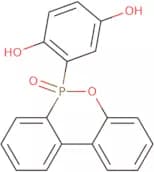
CAS:10-(2,5-Dihydroxyphenyl)-10H-9-oxa-10-phospha-phenanthrene-10-oxide is a synthetic compound that has an orange color and a molecular weight of 568. It is soluble in chloroform, ethanol, acetone, ether and benzene. The compound does not react with water or hydrochloric acid. It has been shown to have synergistic interactions with chloride and glycol ethers. 10-(2,5-Dihydroxyphenyl)-10H-9-oxa-10-phospha phenanthrene 10 oxide can be synthesized using a polymeric matrix as the reaction medium.Formula:C18H13O4PPurezza:Min. 95%Colore e forma:White Off-White PowderPeso molecolare:324.27 g/mol7-Nitroindole-2-carboxylic acid
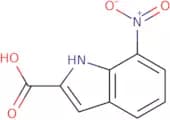
CAS:7-Nitroindole-2-carboxylic acid is a molecule that has been shown to inhibit the activity of cytidine deaminase, an enzyme involved in the synthesis of DNA. This drug also inhibits the replication of dna and can be used for the treatment of cancer. 7-Nitroindole-2-carboxylic acid binds to basic proteins and has a helical structure. The affinity constants for this compound have not been reported, but it is thought that hydrogen bonding interactions are involved in its binding.Formula:C9H6N2O4Purezza:Min. 95%Colore e forma:PowderPeso molecolare:206.16 g/molCoumarin
CAS:Coumarin is an organic chemical compound, which is a naturally occurring substance found in various plants, including tonka beans, sweet clover, and cinnamon. Structurally, it is a benzopyrone, characterized by a benzene ring fused to a lactone. Coumarin acts primarily as an anticoagulant by inhibiting the synthesis of vitamin K-dependent clotting factors in the liver. This mode of action disrupts the coagulation cascade, reducing the blood’s ability to clot effectively.Formula:C9H6O2Purezza:Min. 95%Colore e forma:White PowderPeso molecolare:146.14 g/mol4'-(4-Methylphenyl)-2,2':6',2''-terpyridine
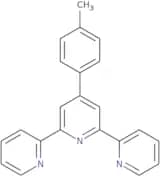
CAS:4'-(4-Methylphenyl)-2,2':6',2''-terpyridine (TPEN) is a chemical compound with anti-cancer properties that has been shown to induce apoptosis in cancer cells. TPEN also inhibits the growth of tumor cells by interacting with mitochondria and inducing mitochondrial dysfunction. TPEN synergistically induces death in neuronal cells when combined with other agents that are known to cause neuronal cell death. In vivo studies have shown that TPEN produces neuroprotective effects at normoxic temperatures, but can be toxic at hyperthermic temperatures.Formula:C22H17N3Purezza:Min. 95%Colore e forma:PowderPeso molecolare:323.39 g/mol5-Amino-1-phenylpyrazole-4-carboxamide
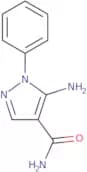
CAS:5-Amino-1-phenylpyrazole-4-carboxamide (APC) is a synthetic compound that has been shown to have potential as an antitumor agent. This compound has been shown to inhibit the growth of cancer cells in vitro, with cytometric analysis showing that it inhibits DNA synthesis and cell proliferation. It also has antibacterial activity, which may be due to its ability to inhibit bacterial DNA gyrase and topoisomerase IV. APC has been found in wastewater at concentrations of 2.6 μg/L, indicating that it is currently being produced and used for industrial purposes. APC can be synthesized by reacting 1-(3-aminopropyl)piperazine with 3-(2H)-furanone and triethylamine to form 5-amino-1-[(2H)-pyridin-2-yl]pyrazole-4-- carboxylic acid chloride, which can thenFormula:C10H10N4OPurezza:Min. 95%Colore e forma:PowderPeso molecolare:202.21 g/mol4-Chloroindole-3-acetic acid
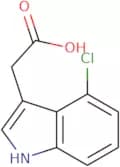
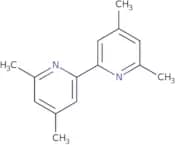
CAS:4-Chloroindole-3-acetic acid is a plant hormone that belongs to the group of auxins. It has been shown to stimulate root formation in plants by increasing the amount of auxin present in the plant's tissues. 4-Chloroindole-3-acetic acid is an intramolecular hydrogen donor and can form hydrogen bonds with other molecules. It also has a receptor binding site and cyclic peptide backbone, which allow it to act as a transcription factor or enzyme inhibitor. This molecule has been shown to be an optimum concentration for root formation in physiology experiments, and can be used as a model system for auxin research.Formula:C10H8ClNO2Purezza:Min. 95%Colore e forma:Off-White PowderPeso molecolare:209.63 g/mol4,4',6,6'-Tetramethyl-2,2'-bipyridine
CAS:4,4',6,6'-Tetramethyl-2,2'-bipyridine (TMTB) is a small molecule that can be used as an efficient and cost-effective catalyst for the production of hydrogen from water. TMTB is able to transform solar energy into chemical energy by converting light absorbed in a semiconductor material to an electric current. TMTB has been shown to improve the efficiency of solar cells by boosting the performance of the catalysts that drive chemical reactions in the devices. This effect was found to be synergistic with other materials such as graphene oxide and tungsten disulfide. In addition, TMTB nanoparticles were shown to have a normalizing effect on the charge density in photoelectrochemical cells, which may lead to improved stability and durability.Formula:C14H16N2Purezza:Min. 95 Area-%Colore e forma:PowderPeso molecolare:212.30 g/mol