Composti policiclici
Sottocategorie di "Composti policiclici"
- Acridine(98 prodotti)
- Antrachinoni(533 prodotti)
- Acidi antrachinonici solfonici(16 prodotti)
- Azobenzeni(270 prodotti)
- Azonaftalene(98 prodotti)
- Azoxybenzeni(12 prodotti)
- Azuleni(11 prodotti)
- Benzimidazoli(1.476 prodotti)
- Benzodiossani(27 prodotti)
- Benzofurani(928 prodotti)
- Benzotiofeni(701 prodotti)
- Benzotriazoli(438 prodotti)
- Binaphthyl(133 prodotti)
- Carbazoli(464 prodotti)
- Cromani, cromeni(480 prodotti)
- Cumarine(1.124 prodotti)
- Ciclofani(11 prodotti)
- Fluorene e Fluorenoni(384 prodotti)
- Imidazopiridine(10 prodotti)
- Indan(118 prodotti)
- Indazoli(2.038 prodotti)
- Indeni(22 prodotti)
- Indoli(3.986 prodotti)
- Indoline(119 prodotti)
- Isatine(234 prodotti)
- Isobenzofurani(17 prodotti)
- Ftalimmidi N-sostituiti(153 prodotti)
- Naftaleni(2.438 prodotti)
- Naftiridina(17 prodotti)
- Naftochinone(2 prodotti)
- Perilene(36 prodotti)
- Fenazine(25 prodotti)
- Ftalazine(33 prodotti)
- Ftalimmide(153 prodotti)
- Idrocarburi policiclici aromatici (PAH)(289 prodotti)
- Polifenolo(270 prodotti)
- Pteridine(52 prodotti)
- Pireni(87 prodotti)
- Chinuclidina(1 prodotti)
- Tetraceni(7 prodotti)
Trovati 4575 prodotti di "Composti policiclici"
3-Methylphenanthrene
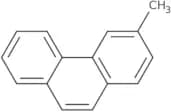
CAS:3-Methylphenanthrene is a compound that inhibits the reductase activity of aromatic hydrocarbons. 3-Methylphenanthrene has been shown to inhibit both bacterial and mammalian reductases, with interactive effects on the enzyme's substrate molecule. It also shows an inhibitory effect on axonal growth, which may be due to its ability to reduce fatty acid uptake, as well as its ability to interact with the aromatic hydrocarbon uptake system. 3-Methylphenanthrene is easily detected by spectrometry analyses and can be used as a substrate molecule for bacterial enzymes.Formula:C15H12Purezza:Min. 98%Colore e forma:White PowderPeso molecolare:192.26 g/molQuinoline 2,4-dicarboxylic acid
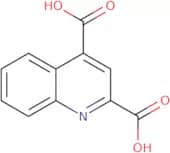
CAS:Quinoline 2,4-dicarboxylic acid (QDA) is a novel cytotoxic agent that targets cervical cancer cells. It inhibits the uptake of glucose and other nutrients by cervical cancer cells, leading to cell death through apoptosis. QDA also inhibits the expression of genes involved in cross-linking reactions, which are important for the structural integrity of proteins. This agent has been shown to inhibit the growth of aniline-induced breast cancer cells and glutamate-stimulated PC12 cells. QDA binds to DNA and forms covalent bonds with nucleotide bases, inhibiting DNA synthesis, as well as interfering with protein synthesis and cell division. The QDA mechanism is similar to that of benzoquinolines and estrone sulfate.
Formula:C11H7NO4Purezza:Min. 95%Colore e forma:White PowderPeso molecolare:217.18 g/mol2-Methylbenz[c,d]indole
CAS:2-Methylbenz[c,d]indole is an indole. It exhibits a number of spectroscopic properties including the presence of a strong absorption band at 290 nm and a weak one at 430 nm. 2-Methylbenz[c,d]indole is not active against bacteria.Formula:C12H9NPurezza:Min. 95 Area-%Colore e forma:PowderPeso molecolare:167.21 g/molIndole-3-acetyl-l-leucine
CAS:Indole-3-acetyl-l-leucine is a homologous auxin. It is a conjugated acid that is found in plants and has been shown to be involved in postharvest physiology, growth regulation, and plant tissue culture. Indole-3-acetyl-l-leucine has been used as a model system for the study of plant physiology and tissue culture. The physiological function of indole-3-acetyl-l-leucine is not currently known. However, it has been shown to be converted into butyric acid by certain bacteria, which can lead to the formation of conjugates with carboxylic acids.
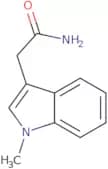
Formula:C16H20N2O3Purezza:Min. 95%Colore e forma:PowderPeso molecolare:288.34 g/mol1-Methylindole-3-acetamide
CAS:Prodotto controllatoPlease enquire for more information about 1-Methylindole-3-acetamide including the price, delivery time and more detailed product information at the technical inquiry form on this page
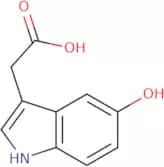
Formula:C11H12N2OPurezza:Min. 95%Colore e forma:PowderPeso molecolare:188.23 g/mol5-Hydroxyindole-3-acetic acid
CAS:Reduces brain amyloid plaques; induces neprilysin expression
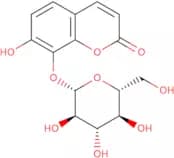
Formula:C10H9NO3Purezza:Min. 95%Colore e forma:Off-White PowderPeso molecolare:191.18 g/molDaphnetin-8-glucoside
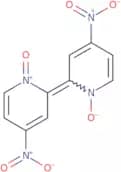
CAS:Daphnetin-8-glucoside is a natural phenolic glucoside compound derived from plants of the Thymelaeaceae family, specifically from the Daphne genus. This compound is produced by the glycosylation of daphnetin, a coumarin derivative found in various botanical sources. The glycoside linkage enhances its solubility and stability, facilitating its bioavailability. Daphnetin-8-glucoside exhibits potent antioxidant and anti-inflammatory activities, mediated through the scavenging of free radicals and inhibition of pro-inflammatory cytokine production. Additionally, it modulates signal transduction pathways involved in cellular oxidative stress responses.Formula:C15H16O9Purezza:Min. 95%Colore e forma:PowderPeso molecolare:340.28 g/mol4,4'-Dinitro-2,2'-bipyridine-N,N'-dioxide - crude
CAS:4,4'-Dinitro-2,2'-bipyridine-N,N'-dioxide is a fine chemical with a high quality. It is a versatile building block with a wide range of applications in research and as a reagent. The compound is used in the synthesis of organic compounds and many other products. This product can be used as an intermediate for the production of more complex compounds or scaffolds. 4,4'-Dinitro-2,2'-bipyridine-N,N'-dioxide has been shown to be useful in the synthesis of pharmaceuticals and agrochemicals.Formula:C10H6N4O6Purezza:Min. 95%Colore e forma:Yellow PowderPeso molecolare:278.18 g/mol8-Aminopurine
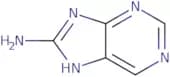
CAS:8-Aminopurine is an aminopurine that is used as a research tool in magnetic resonance spectroscopy. The proton magnetic resonance spectrum of 8-aminopurine shows two characteristic peaks at 3.0 and 4.2 ppm, which are assigned to the aminopurine tautomers (3-HPA, 4-HPA). The kinetic stability of 8-aminopurine in water is pH dependent and has been shown to be strongly dependent on the presence of aldehyde oxidase (AO) activity. AO activity can be inhibited by the addition of dimethylformamide or other non-specific inhibitors such as 2,6-dichloroisonicotinic acid.
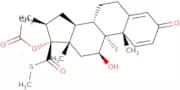
Formula:C5H5N5Purezza:Min. 95%Colore e forma:White PowderPeso molecolare:135.13 g/mol[(8S,10S,11S,13S,14S,16S)-9-Fluoro-11-Hydroxy-10,13,16-Trimethyl-17-Methylsulfanylcarbonyl-3-Oxo-6,7,8,11,12,14,15,16-Octahydrocyclo penta[a]Phenanthren-17-Yl] Acetate
CAS:Prodotto controllato(8S,10S,11S,13S,14S,16S)-9-Fluoro-11-Hydroxy-10,13,16-Trimethyl-17-Methylsulfanylcarbonyl-3-Oxo-6,7,8,11,12,14,15,16-Octahydrocyclo penta[a]Phenanthren-17-Yl) Acetate is a fatty acid ester that is used as a pharmaceutical preparation. It has been shown to be an effective treatment for the muscle wasting disease myotonic dystrophy and has been approved by the FDA. (8S,10S,11S,13S,14S,, 16 S)-9 - Fluoro - 11 - Hydroxy - 10 , 13 , 16 - Trimethyl - 17 - Methylsulfanylcarbonyl - 3 - Oxo - 6 , 7 , 8 , 11Formula:C24H31FO5SPurezza:Min. 95%Peso molecolare:450.56 g/mol6-Methoxyindole
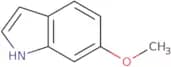
CAS:6-Methoxyindole is an acetate extract of the plant 5-methoxyindole. It has been shown to be a 5-HT1A receptor agonist in animals, and has been shown to have cardiac effects in rats. 6-Methoxyindole is also used as a precursor for the synthesis of diphenylacetylindoles. 6-Methoxyindole is one of the molecules that can be recombined to form a batcho-leimgruber indole (BLI).
Formula:C9H9NOPurezza:Min. 99 Area-%Colore e forma:PowderPeso molecolare:147.17 g/mol5-Methyl-4,5-dihydro-1,2,4-triazino[5,6-b]indole-3-thione
CAS:Please enquire for more information about 5-Methyl-4,5-dihydro-1,2,4-triazino[5,6-b]indole-3-thione including the price, delivery time and more detailed product information at the technical inquiry form on this pageFormula:C10H8N4SPurezza:Min. 95%Colore e forma:PowderPeso molecolare:216.26 g/mol3-Cyano-7-ethoxycoumarin
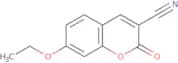
CAS:3-Cyano-7-ethoxycoumarin is a specialized fluorescent probe, which is a synthetic organic compound designed for use in biochemical assays. This compound is sourced from the broader family of coumarins, which are known for their versatile fluorescence properties. The mode of action of 3-Cyano-7-ethoxycoumarin involves its ability to exhibit strong fluorescent emission when excited by specific wavelengths of light, making it a valuable tool for monitoring biochemical reactions and interactions.
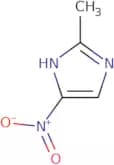
Formula:C12H9NO3Purezza:Min. 95%Colore e forma:PowderPeso molecolare:215.2 g/mol2-Methyl-5-nitroimidazole
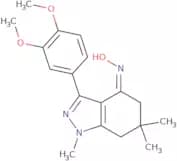
CAS:2-Methyl-5-nitroimidazole, also known as menidazole, is an impurity of metronidazole, which is used as an antibacterial and antiprotozoal medication in the treatment of infections, including rosacea. 2-Methyl-5-nitroimidazole is a derivative of nitroimidazole and has potential antimicrobial and antitrichomonal activities. Its synthesis can be achieved using various methods, including nucleophilic reaction, ester derivatives, reaction with metronidazole, and substitution reactions. Several derivatives of 2-Methyl-5-nitroimidazole have been synthesized and tested for their antibacterial, antifungal, and antitrichomonal activities. Both 2-Methyl-5-nitroimidazole and its derivatives have potential applications as antimicrobial and antitrichomonal agents.Formula:C4H5N3O2Purezza:Min. 95%Colore e forma:PowderPeso molecolare:127.1 g/mol3-(3,4-dimethoxyphenyl)-4-(hydroxyimino)-1,6,6-trimethyl-5,6,7-trihydro1H-indazole
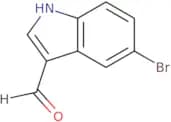
CAS:Please enquire for more information about 3-(3,4-dimethoxyphenyl)-4-(hydroxyimino)-1,6,6-trimethyl-5,6,7-trihydro1H-indazole including the price, delivery time and more detailed product information at the technical inquiry form on this pagePurezza:Min. 90%5-Bromoindole-3-carboxaldehyde
CAS:5-Bromoindole-3-carboxaldehyde is a water molecule that has been crystallized in the form of an amide. It is a chemical substance with asymmetric synthesis and significant antifungal activity. 5-Bromoindole-3-carboxaldehyde is active against some strains of the fungus Candida albicans and has been shown to inhibit the growth of kidney cells. This molecule also binds to the neurokinin 1 receptor and is used as a probe for fluorescence studies. The efficient method for synthesizing 5-Bromoindole-3-carboxaldehyde includes using silico analysis to confirm the structure on a computer, then performing an asymmetric synthesis with an acid catalyst to produce this compound.
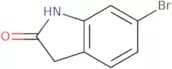
Formula:C9H6BrNOPurezza:Min. 98 Area-%Colore e forma:PowderPeso molecolare:224.05 g/mol6-Bromo-2-oxindole
CAS:6-Bromo-2-oxindole is a crystalline compound with a molecular formula of C10H6BrO. It has been shown to have a high efficiency in the production of butyric acid and other organic acids. 6-Bromo-2-oxindole is also used in electron microscopy studies as an electron acceptor, and can be used for producing polymers with crystalline structures and dihedral angles. The compound has been shown to inhibit the growth of breast cancer cells by preventing the synthesis of mda-mb-231 breast cancer cells. It also has been shown to inhibit the production of isoindigo and morphology.
Formula:C8H6BrNOPurezza:Min. 98 Area-%Colore e forma:PowderPeso molecolare:212.04 g/mol4-Nitrobenzyl (4R,5R,6S)-3-[(diphenylphosphono)oxy]-6-[(R)-1-hydroxyethyl]-4-methyl-7-oxo-1-azabicyclo[3.2.0]hept-2-ene-2-carboxylat e
CAS:4-Nitrobenzyl (4R,5R,6S)-3-[(diphenylphosphono)oxy]-6-[(R)-1-hydroxyethyl]-4-methyl-7-oxo-1-azabicyclo[3.2.0]hept-2-ene-2-carboxylat e is a synthetic compound that is used as an alkalizer and impurity scavenger in the manufacture of pesticides and other organic chemicals. It has been shown to be a stereoselective herbicide with acetonitrile as its primary degradation product. The compound has also been found to be a potent inhibitor of the enzyme carbapenemase, which may lead to increased resistance to antibiotics such as monosodium salt of ertapenem.Formula:C29H27N2O10PPurezza:Min. 98 Area-%Colore e forma:White PowderPeso molecolare:594.51 g/mol5-Amino-1-phenylpyrazole-4-carboxamide
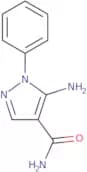
CAS:5-Amino-1-phenylpyrazole-4-carboxamide (APC) is a synthetic compound that has been shown to have potential as an antitumor agent. This compound has been shown to inhibit the growth of cancer cells in vitro, with cytometric analysis showing that it inhibits DNA synthesis and cell proliferation. It also has antibacterial activity, which may be due to its ability to inhibit bacterial DNA gyrase and topoisomerase IV. APC has been found in wastewater at concentrations of 2.6 μg/L, indicating that it is currently being produced and used for industrial purposes. APC can be synthesized by reacting 1-(3-aminopropyl)piperazine with 3-(2H)-furanone and triethylamine to form 5-amino-1-[(2H)-pyridin-2-yl]pyrazole-4-- carboxylic acid chloride, which can thenFormula:C10H10N4OPurezza:Min. 95%Colore e forma:PowderPeso molecolare:202.21 g/mol4-Chloroindole-3-acetic acid
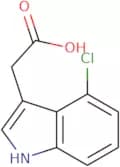
CAS:4-Chloroindole-3-acetic acid is a plant hormone that belongs to the group of auxins. It has been shown to stimulate root formation in plants by increasing the amount of auxin present in the plant's tissues. 4-Chloroindole-3-acetic acid is an intramolecular hydrogen donor and can form hydrogen bonds with other molecules. It also has a receptor binding site and cyclic peptide backbone, which allow it to act as a transcription factor or enzyme inhibitor. This molecule has been shown to be an optimum concentration for root formation in physiology experiments, and can be used as a model system for auxin research.Formula:C10H8ClNO2Purezza:Min. 95%Colore e forma:Off-White PowderPeso molecolare:209.63 g/mol

![2-Methylbenz[c,d]indole](/_next/image/?url=https%3A%2Fstatic.cymitquimica.com%2Fproducts%2F3D%2Fthumb-webp%2FFM148927.webp&w=3840&q=75)

![5-Methyl-4,5-dihydro-1,2,4-triazino[5,6-b]indole-3-thione](/_next/image/?url=https%3A%2Fstatic.cymitquimica.com%2Fproducts%2F3D%2Fthumb-webp%2FFM169526.webp&w=3840&q=75)
![4-Nitrobenzyl (4R,5R,6S)-3-[(diphenylphosphono)oxy]-6-[(R)-1-hydroxyethyl]-4-methyl-7-oxo-1-azabic…](/_next/image/?url=https%3A%2Fstatic.cymitquimica.com%2Fproducts%2F3D%2Fthumb-webp%2FFM140061.webp&w=3840&q=75)