Composti policiclici
Sottocategorie di "Composti policiclici"
- Acridine(97 prodotti)
- Antrachinoni(533 prodotti)
- Acidi antrachinonici solfonici(16 prodotti)
- Azobenzeni(270 prodotti)
- Azonaftalene(98 prodotti)
- Azoxybenzeni(12 prodotti)
- Azuleni(11 prodotti)
- Benzimidazoli(1.475 prodotti)
- Benzodiossani(27 prodotti)
- Benzofurani(924 prodotti)
- Benzotiofeni(700 prodotti)
- Benzotriazoli(438 prodotti)
- Binaphthyl(133 prodotti)
- Carbazoli(462 prodotti)
- Cromani, cromeni(480 prodotti)
- Cumarine(1.122 prodotti)
- Ciclofani(11 prodotti)
- Fluorene e Fluorenoni(381 prodotti)
- Imidazopiridine(10 prodotti)
- Indan(118 prodotti)
- Indazoli(2.037 prodotti)
- Indeni(22 prodotti)
- Indoli(3.988 prodotti)
- Indoline(119 prodotti)
- Isatine(234 prodotti)
- Isobenzofurani(17 prodotti)
- Ftalimmidi N-sostituiti(153 prodotti)
- Naftaleni(2.437 prodotti)
- Naftiridina(17 prodotti)
- Naftochinone(2 prodotti)
- Perilene(36 prodotti)
- Fenazine(25 prodotti)
- Ftalazine(33 prodotti)
- Ftalimmide(153 prodotti)
- Idrocarburi policiclici aromatici (PAH)(270 prodotti)
- Polifenolo(261 prodotti)
- Pteridine(52 prodotti)
- Pireni(87 prodotti)
- Chinuclidina(1 prodotti)
- Tetraceni(7 prodotti)
Trovati 4574 prodotti di "Composti policiclici"
3,4-Dihydro-2(1H)-Quinolinone
CAS:3,4-Dihydro-2(1H)-quinolinone is a potent inhibitor of dopamine β-hydroxylase and is used as a model system to study the pharmacokinetic properties of carbostyril. It has been shown that 3,4-dihydro-2(1H)-quinolinone binds to the chloride ion in the active site of dopamine β-hydroxylase. This binding prevents the formation of a complex with the enzyme's substrate, which is required for catalysis. 3,4-Dihydro-2(1H)-quinolinone also interacts with the alkynyl group on dopamine and competitively inhibits its metabolism by monoamine oxidase (MAO).Formula:C9H9NOPurezza:Min. 95%Colore e forma:PowderPeso molecolare:147.17 g/molIsoscopoletin
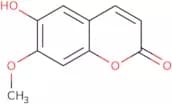
CAS:Isoscopoletin is a naturally occurring coumarin derivative, which is typically sourced from various plants, including some medicinal herbs. This compound is found in a variety of plant species, where it plays a role in the plant's defense mechanisms against pathogens. It is known for its characteristic chemical structure that belongs to the coumarin family, which is widespread in the plant kingdom.Formula:C10H8O4Purezza:Min. 95%Colore e forma:PowderPeso molecolare:192.17 g/molR-(-)-3-Quinuclidinyl chloroformate
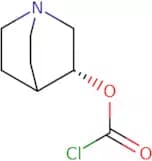
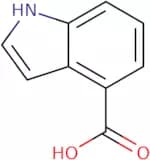
CAS:R-(-)-3-Quinuclidinyl chloroformate is a chemical intermediate that is used as a reagent in organic synthesis. It reacts with amines to form quaternary ammonium salts, which are often used as reaction components in the production of pharmaceuticals. R-(-)-3-Quinuclidinyl chloroformate has been shown to be useful for the preparation of various heterocycles. This compound has been found to have several biological activities, including the ability to inhibit protein synthesis and induce apoptosis.Formula:C8H12ClNO2Purezza:Min. 95%Colore e forma:White PowderPeso molecolare:189.64 g/molIndole-4-carboxylic acid
CAS:Indole-4-Carboxylic acid is a molecule that belongs to the group of indole carboxylic acids. It is an organic compound that has a dipole moment and isomers. Indole-4-carboxylic acid can be synthesized by the saponification of indole-7-carboxylic acid, which has two functional groups: a hydroxy group and an amide group. The molecule has a chemical structure with an amide bond between the carboxyl and amino groups at one end, which forms a protonated amide. This protonated amide also has two orientations: trans and cis. The trans orientation is found in human cytochrome P450 and other proteins, while the cis orientation is found in enzymes such as tryptophan synthase, indoleamine 2,3 dioxygenase, or tyrosine hydroxylase.
Formula:C9H7NO2Purezza:Min. 98 Area-%Colore e forma:PowderPeso molecolare:161.16 g/molGlycocoumarin - Glycyrrhiza uralensis (liquorice)
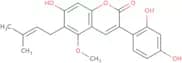
CAS:Glycocoumarin is a phytochemical compound that is primarily categorized as a bioactive flavonoid. It is derived from Glycyrrhiza uralensis, commonly known as liquorice, a plant renowned for its diverse pharmacological properties. The mode of action of glycocoumarin involves the modulation of various biological pathways, including its potential to influence inflammatory responses and antioxidant activity. This compound is known to interact with cellular signaling mechanisms, which could mediate its effects on immune modulation and cellular protection.Formula:C21H20O6Purezza:Min. 98 Area-%Colore e forma:PowderPeso molecolare:368.38 g/mol5-Hydroxyoxindole
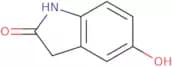
CAS:5-Hydroxyoxindole (5HO) is a naturally occurring molecule that is found in oxindole and other indoles. It has been shown to have regulatory effects on inflammatory diseases, notably in the treatment of colitis. 5HO possesses significant cytotoxicity against carcinoma cells and also has radical scavenging activity. This compound can be synthesized using a solid-phase synthesis method. The presence of 5HO in skin cells has been correlated with the production of skin pigment called melanin. In addition, this molecule has been shown to bind to picolinic acid, which may contribute to its anti-inflammatory properties. 5HO is also present in neurologic disorders such as Alzheimer's disease, Parkinson's disease, and amyotrophic lateral sclerosis.Formula:C8H7NO2Purezza:Min. 95%Colore e forma:Beige PowderPeso molecolare:149.15 g/molEsculin sesquihydrate
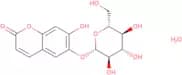
CAS:Fluorescent dye used in diagnostic culture mediaFormula:C15H16O9•(H2O)1Purezza:(Uv) Min. 97.5%Colore e forma:White Off-White PowderPeso molecolare:367.31 g/molNoreleagnine
CAS:Noreleagnine is a natural compound that is used to inhibit the replication of viruses. It has been shown to bind to dopamine receptors in the brain, which may be responsible for its cytotoxic effects on mouse tumor cells. Noreleagnine can also be used as a sample preparation agent because it can produce light emission and biological properties that are similar to those of dopamine. This drug is synthesized using an asymmetric synthesis and sodium carbonate. A number of methods have been developed for the synthesis of noreleagnine, including ester hydrochloride and electrochemical detector.Formula:C11H12N2Purezza:Min. 98 Area-%Colore e forma:PowderPeso molecolare:172.23 g/mol2-Methylindole
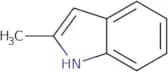
CAS:2-Methylindole is a reactive molecule that can undergo electrophilic substitution at the 2-position. It reacts with a variety of nitrogen nucleophiles, acylating them at the 2-position. These reactions are catalyzed by enzymes such as carbonyl reductase and methyl ketone reductase. The reaction mechanism is not yet fully understood, but it has been proposed that it proceeds through an acylation reaction between two molecules of 2-methylindole to form a linear product. The regiospecificity of this reaction has been demonstrated in vivo using a model system.Formula:C9H9NColore e forma:PowderPeso molecolare:131.17 g/mol7-Bromo-1,2,3,4-tetrahydroquinoline
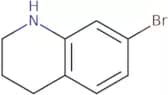
CAS:7-Bromo-1,2,3,4-tetrahydroquinoline is a high quality reagent that is an intermediate for the synthesis of heterocycles. It is useful as a building block for the synthesis of complex compounds. 7-Bromo-1,2,3,4-tetrahydroquinoline has been used as a useful scaffold in the synthesis of novel and versatile molecules with biological activity. This compound can be used as a reaction component in organic chemistry and can also be used to produce speciality chemicals and research chemicals. CAS No. 114744-51-3Formula:C9H10BrNPurezza:Min. 97 Area-%Colore e forma:PowderPeso molecolare:212.09 g/molL-(2S,3aS,7aS)-Octahydroindole-2-carboxylic acid
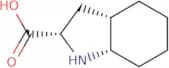
CAS:L-Octahydroindole-2-carboxylic acid is a basic structure that is used in the industrial preparation of a number of chemical compounds. It is also used for the synthesis of L-(2S,3aS,7aS)-octahydroindole-2-carboxylic acid (LOTSC) and its ester hydrochloride salt. The kinetic energy of this molecule has been studied by measuring it's rate of reaction with cyclohexane ring. The inhibition study was done on lung cells to study the effects of LOTSC on growth factors and showed that this molecule inhibited the release of bradykinin B2, which is a peptide secreted by lungs. The pharmacokinetic properties have been studied in rats and shows that it has higher bioavailability than other molecules in this class.Formula:C9H15NO2Purezza:Min. 95%Colore e forma:PowderPeso molecolare:169.22 g/mol4-Bromomethyl-2(1H)-quinolinone
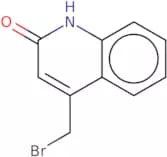
CAS:4-Bromomethyl-2(1H)-Quinolinone is a chemical compound that is used in the calibration of an HPLC system. It has been shown to be linear over a wide range of concentrations. The detection wavelength is at 230 nm, and the flow rate is 1 mL/min. The average response for 4-bromomethyl-2(1H)-quinolinone was found to be approximately 0.7 AUFS with a standard deviation of 0.3 AUFS.Formula:C10H8BrNOPurezza:Min. 95%Peso molecolare:238.08 g/mol2,9-Dimethyl-1,10-phenanthroline hydrate
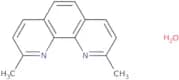
CAS:Chelating agent used to detect aqueous copper ions by electrochemiluminescenceFormula:C14H12N2•(H2O)xPurezza:Min. 95%Colore e forma:PowderPeso molecolare:208.26 g/mol2-Benzyl-1,2,3,4-tetrahydro-isoquinoline-3-carboxylic acid
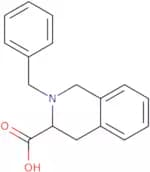
CAS:2-Benzyl-1,2,3,4-tetrahydroisoquinoline-3-carboxylic acid is a versatile building block that can be used in the synthesis of fine chemicals and pharmaceuticals. It is used as a precursor to other compounds such as 2-benzylisoquinoline and 2-(2'-benzyloxy)benzoic acid. It is also used as a reagent for various research purposes.Formula:C17H17NO2Purezza:Min. 95%Colore e forma:PowderPeso molecolare:267.32 g/mol7,7-Dimethyl-2,5-dioxo-1,2,5,6,7,8-hexahydroquinoline-3-carboxylic acid
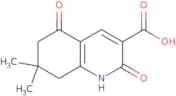
CAS:Please enquire for more information about 7,7-Dimethyl-2,5-dioxo-1,2,5,6,7,8-hexahydroquinoline-3-carboxylic acid including the price, delivery time and more detailed product information at the technical inquiry form on this pageFormula:C12H13NO4Purezza:Min. 95%Colore e forma:PowderPeso molecolare:235.24 g/mol6-Chloro-3-indolyl 1,3-diacetate
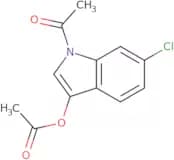
CAS:6-Chloro-3-indolyl 1,3-diacetate is an aglycone that is used as a chromogenic substrate for the detection of bacteria. It reacts with specific enzymes in the bacterial cell wall to produce a red or pink color. 6-Chloro-3-indolyl 1,3-diacetate is used as a diagnostic tool to identify bacteria and has been shown to be excreted in urine.
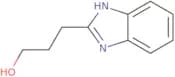
Formula:C12H10ClNO3Purezza:Min. 95%Colore e forma:Yellow To Light Brown SolidPeso molecolare:251.67 g/mol2-(3-Hydroxypropyl)benzimidazole
CAS:2-(3-Hydroxypropyl)benzimidazole is a chloroform extract of the bark of the tree, Pongamia pinnata. It has been shown to have antibacterial and antitumor activity. 2-(3-Hydroxypropyl)benzimidazole has been found to be active against methicillin-resistant Staphylococcus aureus (MRSA), showing strong inhibitory effects on bacterial cell growth in vitro. The mechanism of action may be due to its ability to bind to DNA and RNA, preventing transcription and replication. 2-(3-Hydroxypropyl)benzimidazole also inhibits protein synthesis by binding to ribosomes and interfering with the function of enzymes that are involved in this process such as cytochrome c reductase, glutathione reductase, and 3-ketoacyl coenzyme A thiolase.
Formula:C10H12N2OPurezza:Min. 95%Colore e forma:White PowderPeso molecolare:176.22 g/mol2-[1-(Methylamino)ethyl]indole
CAS:Please enquire for more information about 2-[1-(Methylamino)ethyl]indole including the price, delivery time and more detailed product information at the technical inquiry form on this page
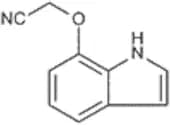
Formula:C11H14N2Purezza:Min. 95%Colore e forma:PowderPeso molecolare:174.24 g/mol7-(Cyanomethoxy)indole
CAS:7-(Cyanomethoxy)indole is a versatile building block that can be used as a scaffold for the synthesis of complex molecules. It has been used as an intermediate in organic synthesis and as a reaction component for the preparation of useful compounds. 7-(Cyanomethoxy)indole is also known to have high quality and is widely used in research laboratories.
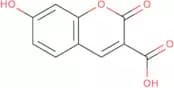
Formula:C10H8N2OPurezza:Min. 95%Peso molecolare:172.18 g/molUmbelliferone-3-carboxylic acid
CAS:Umbelliferone-3-carboxylic acid is a coumarin derivative, which is a type of natural or synthetic organic compound often utilized in biochemical research. It is sourced from modifications of natural coumarins, which are typically isolated from plants belonging to the Apiaceae family, such as parsley, celery, and carrots. This compound functions by interacting with cellular enzymes, providing a fluorescent probe that aids in the investigation of enzymatic activities and pathways.
Formula:C10H6O5Purezza:Min. 95%Colore e forma:PowderPeso molecolare:206.15 g/mol



![2-[1-(Methylamino)ethyl]indole](/_next/image/?url=https%3A%2Fstatic.cymitquimica.com%2Fproducts%2F3D%2Fthumb-webp%2FFM25773.webp&w=3840&q=75)