


Composti policiclici
I composti policiclici sono molecole organiche che contengono più anelli interconnessi. Questi composti includono idrocarburi aromatici policiclici e altri sistemi ad anello complessi. Sono significativi nella scienza dei materiali, nei prodotti farmaceutici e nell'elettronica organica. Da CymitQuimica, offriamo composti policiclici di alta qualità per supportare le tue ricerche e applicazioni industriali, garantendo risultati affidabili ed efficaci nei tuoi progetti.
Sottocategorie di "Composti policiclici"
- Acridine(97 prodotti)
- Antrachinoni(533 prodotti)
- Acidi antrachinonici solfonici(16 prodotti)
- Azobenzeni(270 prodotti)
- Azonaftalene(98 prodotti)
- Azoxybenzeni(12 prodotti)
- Azuleni(11 prodotti)
- Benzimidazoli(1.475 prodotti)
- Benzodiossani(27 prodotti)
- Benzofurani(924 prodotti)
- Benzotiofeni(700 prodotti)
- Benzotriazoli(438 prodotti)
- Binaphthyl(133 prodotti)
- Carbazoli(462 prodotti)
- Cromani, cromeni(480 prodotti)
- Cumarine(1.122 prodotti)
- Ciclofani(11 prodotti)
- Fluorene e Fluorenoni(381 prodotti)
- Imidazopiridine(10 prodotti)
- Indan(118 prodotti)
- Indazoli(2.037 prodotti)
- Indeni(22 prodotti)
- Indoli(3.988 prodotti)
- Indoline(119 prodotti)
- Isatine(234 prodotti)
- Isobenzofurani(17 prodotti)
- Ftalimmidi N-sostituiti(153 prodotti)
- Naftaleni(2.436 prodotti)
- Naftiridina(17 prodotti)
- Naftochinone(2 prodotti)
- Perilene(36 prodotti)
- Fenazine(25 prodotti)
- Ftalazine(33 prodotti)
- Ftalimmide(153 prodotti)
- Idrocarburi policiclici aromatici (PAH)(270 prodotti)
- Polifenolo(261 prodotti)
- Pteridine(52 prodotti)
- Pireni(87 prodotti)
- Chinuclidina(1 prodotti)
- Tetraceni(7 prodotti)
Mostrare 32 più sottocategorie
Trovati 4574 prodotti di "Composti policiclici"
Ordinare per
Purezza (%)
0
100
|
0
|
50
|
90
|
95
|
100
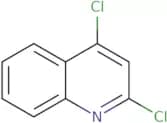
2,4-Dichloroquinoline
CAS:2,4-Dichloroquinoline is a chlorinated heterocyclic chemical compound. This drug is used as a monosubstituted palladium complex in organic synthesis. It can be obtained by refluxing 2,4-dichloroquinoline with hydrochloric acid, phosphorus oxychloride, and a terminal alkene in the presence of an excess of dichloromethane. The resulting chloroquine can be converted to the corresponding dichloroquinolines by treatment with acetonitrile in the presence of malonic acid. The final step is the demethylation of the quinoline ring using sodium methoxide in methanol. 2,4-Dichloroquinoline has been shown to exhibit antibacterial activity against gram-negative organisms such as Escherichia coli and Pseudomonas aeruginosa. Magnetic resonance analysis (NMR) has also been used to study its properties.Formula:C9H5Cl2NPurezza:Min. 95%Colore e forma:SolidPeso molecolare:198.05 g/mol4,7-Dichloroisatin
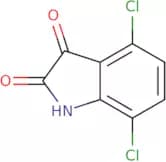
CAS:<p>4,7-Dichloroisatin is an organic compound that is synthesized by ring-opening of oxindole. It is a bifunctional molecule that can be used for the synthesis of other organic compounds. 4,7-Dichloroisatin has been found to be an efficient method for the synthesis of thiazolidinedione derivatives and can be used as a control experiment for this type of reaction. The mechanism for the reaction includes nitroaldol addition to the C=O group, followed by nucleophilic attack on the carbonyl group to form a tetrahedral intermediate. The intermediate then collapses to form a new C=N bond and release acetonitrile.</p>Formula:C8H3Cl2NO2Purezza:Min. 95%Colore e forma:SolidPeso molecolare:216.02 g/mol5-Nitroquinoline
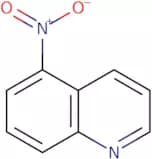
CAS:5-Nitroquinoline is a nitrogen-containing heterocyclic organic compound. It is a white solid that has a melting point of 104 °C and a boiling point of 212 °C. 5-Nitroquinoline can be synthesized by the addition of sodium carbonate to 6-nitroquinoline in hydrochloric acid. The product is then purified by vacuum distillation and recrystallization from nitric acid and acetic acid. 5-Nitroquinoline can be used as an intermediate in the synthesis of other molecules, such as quinolones, which are used in pharmaceuticals. This compound has been shown to cause metastatic colorectal cancer in mice, but not in human liver cells or human lymphocytes.Formula:C9H6N2O2Purezza:Min. 95%Colore e forma:Light (Or Pale) Yellow To Dark Yellow SolidPeso molecolare:174.16 g/mol5-Bromo-1H-indazole-3-carbonitrile
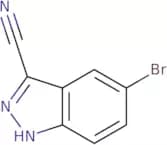
CAS:<p>5-Bromo-1H-indazole-3-carbonitrile is a high quality, versatile building block that can be used in the synthesis of complex compounds. It has been described as a "useful intermediate" and a "useful scaffold".</p>Formula:C8H4BrN3Purezza:Min. 95%Colore e forma:PowderPeso molecolare:222.04 g/moltert-Butyl 3-bromo-1H-indole-1-carboxylate
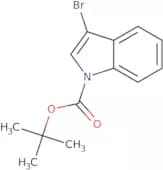
CAS:Tert-Butyl 3-bromo-1H-indole-1-carboxylate is a versatile building block that can be used in the synthesis of complex compounds. It is a useful reagent and speciality chemical, as well as a useful intermediate in the production of research chemicals. Tert-Butyl 3-bromo-1H-indole-1-carboxylate has been found to be a useful scaffold for drug design and development, with potential applications in cancer treatment.Formula:C13H14BrNO2Purezza:Min. 95%Colore e forma:White To Off-White SolidPeso molecolare:296.16 g/mol7-Aminoquinoline
CAS:7-Aminoquinoline is a nucleophilic compound that is involved in the catalysis of bond cleavage. It has been shown to react with organic molecules and produce an oxygenative interaction. 7-Aminoquinoline has been shown to produce anti-inflammatory properties by inhibiting prostaglandin synthesis, which occurs through the inhibition of cyclooxygenase activity.Formula:C9H8N2Purezza:Min. 95%Colore e forma:Yellow PowderPeso molecolare:144.17 g/mol2-(2-Aminophenyl)benzimidazole
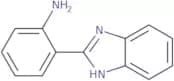
CAS:<p>2-(2-Aminophenyl)benzimidazole is a synthetic compound with the chemical formula C8H6N2. It has an intramolecular hydrogen bond and reacts with salicylaldehyde to form 2-aminobenzimidazole, which is a reaction product. 2-(2-Aminophenyl)benzimidazole may be used as an antimicrobial agent, but it also has other uses such as a reagent in organic synthesis. It is soluble in water and can be obtained through liquid chromatography.</p>Formula:C13H11N3Purezza:Min. 95%Colore e forma:Off-White PowderPeso molecolare:209.25 g/mol(1R,3S,5S)-3-(3-Isopropyl-5-methyl-4H-1,2,4-triazol-4-yl)-8-azabicyclo[3.2.1]octane
CAS:(1R,3S,5S)-3-(3-Isopropyl-5-methyl-4H-1,2,4-triazol-4-yl)-8-azabicyclo[3.2.1]octane is a versatile building block that can be used in the synthesis of complex compounds. It is a reagent and speciality chemical with applications in research or as a useful intermediate in the synthesis of other chemicals. (1R,3S,5S)-3-(3-Isopropyl-5-methyl-4H-1,2,4-triazol-4-yl)-8-azabicyclo[3.2.1]octane is also a useful scaffold for the synthesis of other compounds with specific properties such as high quality and usefulness as reaction components.Formula:C13H22N4Purezza:Min. 95%Colore e forma:White PowderPeso molecolare:234.34 g/mol5-Hydroxy-3,4-dihydro-2(1H)-quinolinone
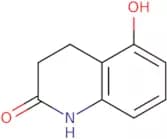
CAS:5-Hydroxy-3,4-dihydro-2(1H)-quinolinone is a high quality reagent with a CAS number of 30389-33-4. It has been shown to be a useful intermediate in the synthesis of complex compounds. This compound can also be used as an important building block for the synthesis of speciality chemicals and research chemicals. 5-Hydroxy-3,4-dihydro-2(1H)-quinolinone is versatile and can be used as a reaction component in many reactions that require the introduction of oxygen into molecules.Formula:C9H9NO2Purezza:Min. 95%Colore e forma:White PowderPeso molecolare:163.17 g/mol2-Hydroxyquinoline
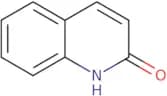
CAS:2-Hydroxyquinoline is a coumarin derivative that has inhibitory properties against a variety of human pathogens, including the causative agent of malaria. It binds to the active site of the enzyme xanthine oxidase, which catalyzes the oxidation of hypoxanthine to xanthine and then to uric acid. 2-Hydroxyquinoline inhibits this reaction, preventing the accumulation of uric acid in the blood and urine. This compound also has potential anticancer activity due to its ability to inhibit tumor cell proliferation in human prostate cancer cells. 2-Hydroxyquinoline is metabolized by cytochrome P450 enzymes and has pharmacokinetic properties that include an inhibitory dose (ID50) of 1mg/kg.Formula:C9H7NOPurezza:Min. 95%Colore e forma:White To Light (Or Pale) Yellow To Light (Or Pale) Green To Purple Brown SolidPeso molecolare:145.16 g/mol4-Bromoisatin
CAS:4-Bromoisatin is a synthetic compound that reversibly inhibits the activity of telomerase and has been shown to be effective against a broad range of bacterial species. It binds to the catalytic site on telomerase and prevents the synthesis of ribonucleotides, which are necessary for DNA replication. 4-Bromoisatin is synthesized by humans, but can also be found in plants such as coffee beans and black tea leaves. The antibacterial properties of 4-bromoisatin may be due to its ability to inhibit the biosynthesis of purine, an essential component in bacterial DNA synthesis.Formula:C8H4BrNO2Purezza:Min. 95%Colore e forma:Orange PowderPeso molecolare:226.03 g/mol1,2,3,4-Tetrahydrophenanthren-4-one
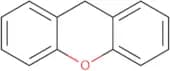
CAS:<p>1,2,3,4-Tetrahydrophenanthren-4-one is a synthetic quinone that is used as an intermediate in the Diels–Alder reaction. The compound has been shown to react with benzyne and amine molecules to form semicarbazones. 1,2,3,4-Tetrahydrophenanthren-4-one can be used as a reactive probe for studying intramolecular interactions. It can also be used to synthesize polycyclic compounds such as tetrafluoroborates. 1,2,3,4-Tetrahydrophenanthren-4-one can also serve as a reagent for the synthesis of frameworks such as zeolites.</p>Formula:C14H12OPurezza:Min. 95%Colore e forma:PowderPeso molecolare:196.24 g/molXanthene
CAS:<p>Yellow dye used in food industry</p>Formula:C13H10OPurezza:Min. 95%Colore e forma:White PowderPeso molecolare:182.22 g/mol2,9-Diphenyl-1,10-phenanthroline
CAS:<p>2,9-Diphenyl-1,10-phenanthroline is a yellow crystalline compound. This molecule has been shown to be an effective anticancer drug and is used in the study of ultrafast electron reduction. It exhibits photophysical properties that are dependent on its coordination geometry and the surrounding environment.<br>2,9-Diphenyl-1,10-phenanthroline is a coordination complex that can be synthesized by electropolymerization of copper complexes with phenanthrolines. The polymer film has been shown to have high stability constants and is resistant to water or organic solvents.</p>Formula:C24H16N2Purezza:Min. 95%Colore e forma:White PowderPeso molecolare:332.4 g/mol6-Iodoisatin
CAS:<p>6-Iodoisatin is a potential anticancer agent that has been shown to inhibit the growth of murine melanoma cells in vitro. The mechanism of action is not yet fully understood, but it seems that 6-iodoisatin may inhibit the synthesis of melanin and its cross-coupling reaction. This compound also exhibits affinity for tumour cells and can be radiolabeled with a radionuclide such as iodine-131 (I) or iodine-123 (I). 6-Iodoisatin has been shown to have a high biodistribution profile in mice. It accumulates in melanoma tumours at an amount that is ten times higher than that observed in other tissues.</p>Formula:C8H4INO2Purezza:Min. 95%Colore e forma:Orange PowderPeso molecolare:273.03 g/molDichloro[9,9-dimethyl-4,5-bis(diphenylphosphino)xanthene]palladium(II)
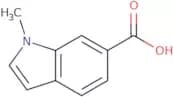
CAS:Prodotto controllatoDichloro[9,9-dimethyl-4,5-bis(diphenylphosphino)xanthene]palladium(II) is a fine chemical that can be used as a building block in the synthesis of compounds with diverse structures. It is a research chemical and reagent that has been found to be useful in the synthesis of complex organic compounds. This compound is also versatile enough to be used as an intermediate or scaffold in the synthesis of many different types of organic compounds.Formula:C39H32Cl2OP2PdPurezza:Min. 95%Colore e forma:Yellow PowderPeso molecolare:755.94 g/mol1-Methylindole-6-carboxylic acid
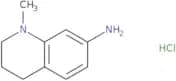
CAS:1-Methylindole-6-carboxylic acid is a versatile building block that is used in the synthesis of more complex compounds. It can be used as a reagent, speciality chemical, and useful building block for pharmaceuticals and other research chemicals. 1-Methylindole-6-carboxylic acid has been shown to be an effective intermediate for the production of a number of different compounds. The compound can also act as a reaction component or scaffold for chemical reactions.Formula:C10H9NO2Purezza:Min. 95%Colore e forma:PowderPeso molecolare:175.18 g/mol1-Methyl-1,2,3,4-tetrahydroquinolin-7-amine hydrochloride
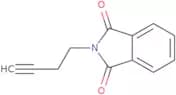
CAS:1-Methyl-1,2,3,4-tetrahydroquinolin-7-amine hydrochloride (MQ) is a fluorescent probe that has been used to study the photostability of cisplatin in real time. MQ was synthesized by reacting 3-(2'-bromoacetyl)-7-methoxy-1,2,3,4-tetrahydroquinolin with 7-aminoquinaldine. The emission spectrum of MQ peaks at 615 nm and has an extinction coefficient at 615 nm of 12.5 mM/cm. This probe has been shown to be photostable for long periods of time and can be used to visualize DNA polymerase activity in living cells.Formula:C10H15ClN2Purezza:Min. 95%Colore e forma:Off-White PowderPeso molecolare:198.69 g/mol2-But-3-yn-1-yl-1H-isoindole-1,3(2H)-dione
CAS:2-But-3-yn-1-yl-1H-isoindole-1,3(2H)-dione is a heterobicyclic compound that has antiviral properties. It is an inhibitor of the viral enzyme RNA polymerase and can be used to treat viral infections such as HIV, influenza, or herpes. 2-But-3-yn-1yl-1H-isoindole 1,3(2H)-dione has been shown to be effective in vitro against HIV and influenza viruses. It also inhibits the replication of other viruses by binding to their RNA polymerase enzymes. This drug is fluorescent and can emit light when excited with a laser or UV light. 2B3YNIDIO has been shown to fluoresce at 477 nm when irradiated with blue light.Formula:C12H9NO2Purezza:Min. 95%Colore e forma:White PowderPeso molecolare:199.21 g/mol(1S,6S)-2,8-Diazabicyclo[4.3.0]nonane
CAS:(1S,6S)-2,8-Diazabicyclo[4.3.0]nonane is a chiral compound that can be made from the reaction of an organic acid with an amino alcohol. The enantiomers of this compound have shown to be effective against methicillin-resistant Staphylococcus aureus (MRSA) and Mycobacterium tuberculosis. The synthetic process for this compound was originally developed in the 1980s by researchers at the University of Illinois. They were able to show that it was possible to make a carbonyl reduction product using imidodicarbonic acid and an organic solvent. This led to the synthesis of moxifloxacin hydrochloride, which is used as a treatment for bacterial infections such as tuberculosis or pneumonia.Formula:C7H14N2Purezza:Min. 95%Colore e forma:Colourless To Brown LiquidPeso molecolare:126.2 g/mol


![(1R,3S,5S)-3-(3-Isopropyl-5-methyl-4H-1,2,4-triazol-4-yl)-8-azabicyclo[3.2.1]octane](/_next/image/?url=https%3A%2Fstatic.cymitquimica.com%2Fproducts%2F3D%2Fthumb-webp%2FFI21099.webp&w=3840&q=75)




![Dichloro[9,9-dimethyl-4,5-bis(diphenylphosphino)xanthene]palladium(II)](/_next/image/?url=https%3A%2Fstatic.cymitquimica.com%2Fproducts%2F3D%2Fthumb-webp%2FFD60980.webp&w=3840&q=75)
![(1S,6S)-2,8-Diazabicyclo[4.3.0]nonane](/_next/image/?url=https%3A%2Fstatic.cymitquimica.com%2Fproducts%2F3D%2Fthumb-webp%2FFD14784.webp&w=3840&q=75)