


Composti policiclici
I composti policiclici sono molecole organiche che contengono più anelli interconnessi. Questi composti includono idrocarburi aromatici policiclici e altri sistemi ad anello complessi. Sono significativi nella scienza dei materiali, nei prodotti farmaceutici e nell'elettronica organica. Da CymitQuimica, offriamo composti policiclici di alta qualità per supportare le tue ricerche e applicazioni industriali, garantendo risultati affidabili ed efficaci nei tuoi progetti.
Sottocategorie di "Composti policiclici"
- Acridine(97 prodotti)
- Antrachinoni(533 prodotti)
- Acidi antrachinonici solfonici(16 prodotti)
- Azobenzeni(270 prodotti)
- Azonaftalene(98 prodotti)
- Azoxybenzeni(12 prodotti)
- Azuleni(11 prodotti)
- Benzimidazoli(1.475 prodotti)
- Benzodiossani(27 prodotti)
- Benzofurani(924 prodotti)
- Benzotiofeni(700 prodotti)
- Benzotriazoli(438 prodotti)
- Binaphthyl(133 prodotti)
- Carbazoli(462 prodotti)
- Cromani, cromeni(480 prodotti)
- Cumarine(1.122 prodotti)
- Ciclofani(11 prodotti)
- Fluorene e Fluorenoni(381 prodotti)
- Imidazopiridine(10 prodotti)
- Indan(118 prodotti)
- Indazoli(2.037 prodotti)
- Indeni(22 prodotti)
- Indoli(3.988 prodotti)
- Indoline(119 prodotti)
- Isatine(234 prodotti)
- Isobenzofurani(17 prodotti)
- Ftalimmidi N-sostituiti(153 prodotti)
- Naftaleni(2.436 prodotti)
- Naftiridina(17 prodotti)
- Naftochinone(2 prodotti)
- Perilene(36 prodotti)
- Fenazine(25 prodotti)
- Ftalazine(33 prodotti)
- Ftalimmide(153 prodotti)
- Idrocarburi policiclici aromatici (PAH)(270 prodotti)
- Polifenolo(261 prodotti)
- Pteridine(52 prodotti)
- Pireni(87 prodotti)
- Chinuclidina(1 prodotti)
- Tetraceni(7 prodotti)
Mostrare 32 più sottocategorie
Trovati 4574 prodotti di "Composti policiclici"
Ordinare per
Purezza (%)
0
100
|
0
|
50
|
90
|
95
|
100
cis-Bicyclo[3.3.0]octane-3,7-dione
CAS:cis-Bicyclo[3.3.0]octane-3,7-dione (1) is a diketone that belongs to the group of epoxides. It has two functional groups, an epoxy and a ketone, which are in the trans configuration. cis-Bicyclo[3.3.0]octane-3,7-dione (1) is a reactive molecule that can form glyoxal when heated at high temperatures. cis-Bicyclo[3.3.0]octane-3,7-dione (1) can be prepared synthetically by an asymmetric synthesis with L-(+)-tartaric acid as the chiral auxiliary and glyoxal as the substrate. The reaction has been shown to proceed through an aldol cyclization and subsequent amide formation with l-(+)-tartaric acid as the chiral auxiliary and glyoxal asFormula:C8H10O2Purezza:Min. 95%Colore e forma:White PowderPeso molecolare:138.16 g/mol3-Aminoquinuclidine dihydrochloride
CAS:<p>3-Aminoquinuclidine dihydrochloride (3-AQDH) is a chiral quinuclidine derivative that is an acetylcholine receptor agonist. It has been shown to bind to the α7 nicotinic acetylcholine receptor with high affinity and selectivity. 3-AQDH has also been shown to crosslink the cholinergic receptor, which may lead to increased sensitivity of the receptor. The binding constants between 3-AQDH and the α7 nicotinic acetylcholine receptors are very high and it has been shown to be enantiopure in its synthesis. 3-AQDH also has a hydrophilic interaction chromatography profile, which separates it from other compounds. This agent may have potential use as a drug for treating Alzheimer's disease and Parkinson's disease due to its ability to inhibit acetylcholinesterase activity.</p>Purezza:Min. 95%Colore e forma:PowderPeso molecolare:199.12 g/mol5-Methoxyindole-3-acetic acid
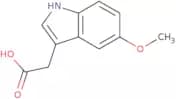
CAS:5-Methoxyindole-3-acetic acid (5MI) is an endogenous indole and metabolite of melatonin that is found in high concentrations in the human serum. 5MI has been shown to inhibit the activity of cyclase enzymes and may be a specific inhibitor of the type I form of estrone sulfate, which is involved in estrogen production. This agent also inhibits matrix metalloproteinases and aminotransferases, which are enzymes that play a role in oxidative injury. 5MI also has a fluorescent derivative that can be used as a probe for biological samples or to study the target enzyme.Formula:C11H11NO3Purezza:Min. 97.5 Area-%Colore e forma:PowderPeso molecolare:205.21 g/mol5-Hydroxy-3,4-dihydro-2(1H)-quinolinone
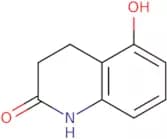
CAS:5-Hydroxy-3,4-dihydro-2(1H)-quinolinone is a high quality reagent with a CAS number of 30389-33-4. It has been shown to be a useful intermediate in the synthesis of complex compounds. This compound can also be used as an important building block for the synthesis of speciality chemicals and research chemicals. 5-Hydroxy-3,4-dihydro-2(1H)-quinolinone is versatile and can be used as a reaction component in many reactions that require the introduction of oxygen into molecules.Formula:C9H9NO2Purezza:Min. 95%Colore e forma:White PowderPeso molecolare:163.17 g/mol5-Bromo-1H-indazole-3-carbonitrile
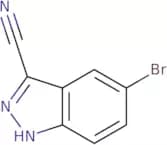
CAS:<p>5-Bromo-1H-indazole-3-carbonitrile is a high quality, versatile building block that can be used in the synthesis of complex compounds. It has been described as a "useful intermediate" and a "useful scaffold".</p>Formula:C8H4BrN3Purezza:Min. 95%Colore e forma:PowderPeso molecolare:222.04 g/mol(1S,2R,3S,5R)-2-((Benzyloxy)methyl)-6-oxabicyclo[3.1.0]hexan-3-ol
CAS:<p>(1S,2R,3S,5R)-2-((Benzyloxy)methyl)-6-oxabicyclo[3.1.0]hexan-3-ol is a fine chemical with a CAS No. of 117641-39-1. It has been used as a versatile building block in the synthesis of complex compounds, and has also been used as a useful intermediate in the production of specialty chemicals. This compound is useful for research purposes and can be used as a reaction component in the synthesis of new compounds.</p>Formula:C13H16O3Purezza:Min. 95%Colore e forma:Clear LiquidPeso molecolare:220.26 g/mol2-Hydroxyquinoline
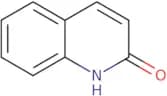
CAS:2-Hydroxyquinoline is a coumarin derivative that has inhibitory properties against a variety of human pathogens, including the causative agent of malaria. It binds to the active site of the enzyme xanthine oxidase, which catalyzes the oxidation of hypoxanthine to xanthine and then to uric acid. 2-Hydroxyquinoline inhibits this reaction, preventing the accumulation of uric acid in the blood and urine. This compound also has potential anticancer activity due to its ability to inhibit tumor cell proliferation in human prostate cancer cells. 2-Hydroxyquinoline is metabolized by cytochrome P450 enzymes and has pharmacokinetic properties that include an inhibitory dose (ID50) of 1mg/kg.Formula:C9H7NOPurezza:Min. 95%Colore e forma:White To Light (Or Pale) Yellow To Light (Or Pale) Green To Purple Brown SolidPeso molecolare:145.16 g/molAcridone
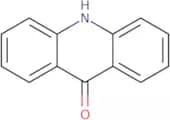
CAS:<p>Acridone is a potent antimicrobial agent that inhibits bacteria by binding to the duplex DNA. Acridone has been shown to have inhibitory properties against wastewater treatment, which may be due to its ability to bind with the bacterial dna and inhibit the replication of bacterial cells. Acridone also has genotoxic activity, as it has been shown to react with nuclei in carcinoma cell lines and cause DNA strand breakage. Acridone is a fluorescent probe that can be used for electrochemical impedance spectroscopy (EIS). It binds to the complementary sequence of double-stranded DNA and causes an increase in the impedance of a solution when exposed to an electric current. This property can be used for analytical methods such as gel electrophoresis or chromatography.</p>Formula:C13H9NOPurezza:Min. 95%Colore e forma:PowderPeso molecolare:195.22 g/mol2-(3-Aminopropyl)isoindole-1,3(2H)-dione hydrochloride
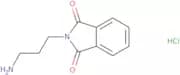
CAS:2-(3-Aminopropyl)isoindole-1,3(2H)-dione hydrochloride is a versatile building block and useful intermediate. It has been used as a reagent in organic synthesis, and also as a reaction component for the preparation of high quality research chemicals. 2-(3-Aminopropyl)isoindole-1,3(2H)-dione hydrochloride is an important building block for complex compounds with potential uses in medical research or as speciality chemicals. It can be used to prepare fine chemicals such as pharmaceuticals, agrochemicals, or dyes.Formula:C11H12N2O2·HClPurezza:Min. 95%Colore e forma:White PowderPeso molecolare:240.69 g/mol1-Methyl-1H-imidazole-4-carboxylic acid methyl ester
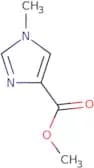
CAS:1-Methyl-1H-imidazole-4-carboxylic acid methyl ester is a carboxylic acid that is aniline derivative with the chemical formula C6H5NCH2COOH. It is soluble in water, ethanol and acetone. 1-Methyl-1H-imidazole-4-carboxylic acid methyl ester hydrolyzes to form aniline and methanol. The reflux of 1-methyl imidazole can produce the same products as well as formaldehyde and hydrogen cyanide.Formula:C6H8N2O2Purezza:Min. 95%Colore e forma:PowderPeso molecolare:140.14 g/mol2,2'-Bipyridine-3,3'-dicarboxylic acid
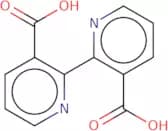
CAS:2,2'-Bipyridine-3,3'-dicarboxylic acid is a coordination compound that contains two carboxylic acid groups. It forms a dihydrate in water and is orthorhombic in crystal form. The molecule can be represented by the following chemical structure:Formula:C12H8N2O4Purezza:Min. 95%Colore e forma:SolidPeso molecolare:244.2 g/mol2-Amino-6-iodopurine
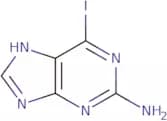
CAS:<p>2-Amino-6-iodopurine is an analog of the purine nucleoside guanine, which has been used to synthesize a variety of boronic acids. The most common use for 2-amino-6-iodopurine is in the synthesis of benzylboronic acid, which can be used as an organometallic reagent in organic synthesis. This compound also has dehydrogenase activity and has been shown to catalyze the conversion of benzoic acid to benzaldehyde, mediated by NADH. 2-Amino-6-iodopurine is found in the biosynthesis of ribonucleotides and deoxyribonucleotides, where it reacts with chloride ions and phosphate groups to form adenylate and xanthosine monophosphates.</p>Formula:C5H4IN5Purezza:Min. 95%Colore e forma:PowderPeso molecolare:261.02 g/mol5-Acetoxy-6-methoxyindole
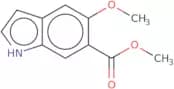
CAS:<p>5-Acetoxy-6-methoxyindole is a fine chemical, useful building block, and research chemical with CAS No. 112919-69-4. It is a versatile building block and reaction component that can be used as a reagent or speciality chemical in the synthesis of other complex compounds. 5-Acetoxy-6-methoxyindole is also used as an intermediate in the synthesis of drugs and pharmaceuticals. This compound has high purity, making it a high quality product with many uses.</p>Formula:C11H11NO3Purezza:Min. 95%Peso molecolare:205.21 g/mol4-Chloro-5-ethylisatin
CAS:<p>4-Chloro-5-ethylisatin is a fine chemical that can be used as a versatile building block in the synthesis of complex compounds. It has been shown to be a useful intermediate and reaction component for the preparation of high quality reagents. 4-Chloro-5-ethylisatin is commercially available from Sigma Aldrich, catalog number 1379340-45-0.</p>Formula:C10H8ClNO2Purezza:Min. 95%Peso molecolare:209.63 g/molEthyl indole-7-carboxylate
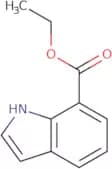
CAS:<p>Ethyl indole-7-carboxylate is a fine chemical that is used as a versatile building block for the synthesis of complex compounds. It can act as a research chemical, reagent, or specialty chemical. This compound has been used to prepare various useful intermediates and reaction components, such as 4-chloro-3-nitrobenzaldehyde and 3-(2,6-dimethoxyphenyl)acrylonitrile. The CAS number for ethyl indole-7-carboxylate is 205873-58-1.</p>Purezza:Min. 95%1-Benzyl-3-[3-(dimethylamino)propoxy]-1H-indazole hydrochloride
CAS:Prodotto controllato1-Benzyl-3-[3-(dimethylamino)propoxy]-1H-indazole hydrochloride is an intubation agent that belongs to the group of benzydamine. It has been shown to have anti-inflammatory properties and may be used for the treatment of throat inflammation, including sore throat caused by squamous cell carcinoma, as well as for other inflammatory conditions such as mucositis, which is a complication from radiation therapy or chemotherapy. This drug can also be used with nonsteroidal anti-inflammatory drugs (NSAIDs) to treat pain and inflammation associated with osteoarthritis. 1-Benzyl-3-[3-(dimethylamino)propoxy]-1H-indazole hydrochloride has been shown to inhibit polymerization reactions by intramolecular hydrogen transfer and may have analytical applications in polymer compositions.Formula:C19H24ClN3OPurezza:Min. 95%Colore e forma:White PowderPeso molecolare:345.87 g/mol6-Aza-5-methyl-1H-indazole
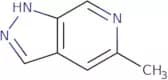
CAS:<p>6-Aza-5-methyl-1H-indazole is a chemical compound that acts as a building block for the synthesis of pharmaceuticals and other compounds. It is used in research for the development of new drugs, such as antihypertensive agents, antibiotics, and immunosuppressants. 6-Aza-5-methyl-1H-indazole has been shown to be an effective intermediate in the synthesis of many complex compounds, including cephalosporins, penicillins, carbapenems, and aminoglycosides. This versatile reagent can be used to synthesize a wide variety of organic compounds.</p>Formula:C7H7N3Purezza:Min. 95%Colore e forma:White To Beige SolidPeso molecolare:133.15 g/mol2-Azabicyclo[2.2.1]heptane
CAS:2-Azabicyclo[2.2.1]heptane is a lactam that has been synthesized in the laboratory. The compound exhibits significant antiproliferative activity and is shown to have a stereoselective, stereogenic, nucleophilic attack on amides. 2-Azabicyclo[2.2.1]heptane has been used to study the mechanisms of neurodegenerative diseases such as Parkinson's disease and Alzheimer's disease. The conformational properties of this compound can be determined by NMR spectra, which show that it has a skeleton with significant conformational flexibility.Formula:C6H11NPurezza:Min. 95%Colore e forma:Red PowderPeso molecolare:97.16 g/mol6-Methoxy-1-methyl-1H-indole-3-carbaldehyde
CAS:6-Methoxy-1-methyl-1H-indole-3-carbaldehyde is a high quality chemical that is used as a reagent, complex compound, useful intermediate, and speciality chemical. It is a fine chemical that has been shown to be useful as a building block in the synthesis of many other compounds. 6-Methoxy-1-methyl-1H-indole-3-carbaldehyde is also versatile and can be used in reactions involving nucleophilic substitution, reductive amination, and oxidative coupling.Formula:C11H11NO2Purezza:Min. 95%Colore e forma:White PowderPeso molecolare:189.21 g/mol1,2,3,4-Tetrahydrophenanthren-4-one
CAS:<p>1,2,3,4-Tetrahydrophenanthren-4-one is a synthetic quinone that is used as an intermediate in the Diels–Alder reaction. The compound has been shown to react with benzyne and amine molecules to form semicarbazones. 1,2,3,4-Tetrahydrophenanthren-4-one can be used as a reactive probe for studying intramolecular interactions. It can also be used to synthesize polycyclic compounds such as tetrafluoroborates. 1,2,3,4-Tetrahydrophenanthren-4-one can also serve as a reagent for the synthesis of frameworks such as zeolites.</p>Formula:C14H12OPurezza:Min. 95%Colore e forma:PowderPeso molecolare:196.24 g/mol
![cis-Bicyclo[3.3.0]octane-3,7-dione](/_next/image/?url=https%3A%2Fstatic.cymitquimica.com%2Fproducts%2F3D%2Fthumb-webp%2FFB153670.webp&w=3840&q=75)


![(1S,2R,3S,5R)-2-((Benzyloxy)methyl)-6-oxabicyclo[3.1.0]hexan-3-ol](/_next/image/?url=https%3A%2Fstatic.cymitquimica.com%2Fproducts%2F3D%2Fthumb-webp%2FFB167338.webp&w=3840&q=75)

![1-Benzyl-3-[3-(dimethylamino)propoxy]-1H-indazole hydrochloride](/_next/image/?url=https%3A%2Fstatic.cymitquimica.com%2Fproducts%2F3D%2Fthumb-webp%2FFB18262.webp&w=3840&q=75)
![2-Azabicyclo[2.2.1]heptane](/_next/image/?url=https%3A%2Fstatic.cymitquimica.com%2Fproducts%2F3D%2Fthumb-webp%2FFA116876.webp&w=3840&q=75)

