


Composti policiclici
I composti policiclici sono molecole organiche che contengono più anelli interconnessi. Questi composti includono idrocarburi aromatici policiclici e altri sistemi ad anello complessi. Sono significativi nella scienza dei materiali, nei prodotti farmaceutici e nell'elettronica organica. Da CymitQuimica, offriamo composti policiclici di alta qualità per supportare le tue ricerche e applicazioni industriali, garantendo risultati affidabili ed efficaci nei tuoi progetti.
Sottocategorie di "Composti policiclici"
- Acridine(97 prodotti)
- Antrachinoni(533 prodotti)
- Acidi antrachinonici solfonici(16 prodotti)
- Azobenzeni(270 prodotti)
- Azonaftalene(98 prodotti)
- Azoxybenzeni(12 prodotti)
- Azuleni(11 prodotti)
- Benzimidazoli(1.475 prodotti)
- Benzodiossani(27 prodotti)
- Benzofurani(924 prodotti)
- Benzotiofeni(700 prodotti)
- Benzotriazoli(438 prodotti)
- Binaphthyl(133 prodotti)
- Carbazoli(462 prodotti)
- Cromani, cromeni(480 prodotti)
- Cumarine(1.122 prodotti)
- Ciclofani(11 prodotti)
- Fluorene e Fluorenoni(381 prodotti)
- Imidazopiridine(10 prodotti)
- Indan(118 prodotti)
- Indazoli(2.037 prodotti)
- Indeni(22 prodotti)
- Indoli(3.988 prodotti)
- Indoline(119 prodotti)
- Isatine(234 prodotti)
- Isobenzofurani(17 prodotti)
- Ftalimmidi N-sostituiti(153 prodotti)
- Naftaleni(2.436 prodotti)
- Naftiridina(17 prodotti)
- Naftochinone(2 prodotti)
- Perilene(36 prodotti)
- Fenazine(25 prodotti)
- Ftalazine(33 prodotti)
- Ftalimmide(153 prodotti)
- Idrocarburi policiclici aromatici (PAH)(270 prodotti)
- Polifenolo(261 prodotti)
- Pteridine(52 prodotti)
- Pireni(87 prodotti)
- Chinuclidina(1 prodotti)
- Tetraceni(7 prodotti)
Mostrare 32 più sottocategorie
Trovati 4574 prodotti di "Composti policiclici"
Ordinare per
Purezza (%)
0
100
|
0
|
50
|
90
|
95
|
100
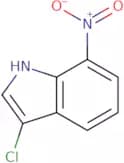
3-Chloro-7-nitro-1H-indole
CAS:3-Chloro-7-nitro-1H-indole is a chemical compound that has been shown to have antitumor activity in clinical trials. It is catalysed by the addition of chloride ions to the nitro group, yielding an aminocarbonyl intermediate. This intermediate reacts with hydrogen chloride to form a chlorinating agent that can react with DNA and protein bases. The chlorinating agent has been shown to be efficient in screening for anticancer drugs. 3-Chloro-7-nitro-1H-indole is currently being tested for efficacy against colon carcinoma cells and human colon carcinoma xenografts.Formula:C8H5ClN2O2Purezza:Min. 95%Peso molecolare:196.59 g/molPranferol
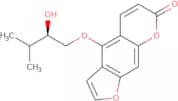
CAS:<p>Pranferol is a phytochemical compound, which is derived from natural plant sources. It possesses unique immunomodulatory properties, affecting cellular pathways that regulate immune responses. The bioactive components in Pranferol interact with specific receptors on immune cells, modulating signaling cascades and gene expression to enhance or suppress specific immune functions depending on the physiological context.</p>Formula:C16H16O5Purezza:Min. 95%Peso molecolare:288.3 g/molMethyl 4-methoxy-1-methyl-1H-indole-2-carboxylate
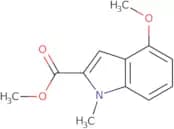
CAS:Prodotto controllato<p>Please enquire for more information about Methyl 4-methoxy-1-methyl-1H-indole-2-carboxylate including the price, delivery time and more detailed product information at the technical inquiry form on this page</p>Formula:C12H13NO3Purezza:Min. 95%Peso molecolare:219.24 g/molEthyl 5-chloro-1,3-dimethyl-1H-indole-2-carboxylate
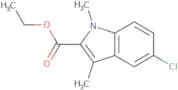
CAS:Prodotto controllato<p>Please enquire for more information about Ethyl 5-chloro-1,3-dimethyl-1H-indole-2-carboxylate including the price, delivery time and more detailed product information at the technical inquiry form on this page</p>Formula:C13H14ClNO2Purezza:Min. 95%Peso molecolare:251.71 g/mol4-Bromoisoquinoline
CAS:<p>4-Bromoisoquinoline is an aryl halide that can be used in the cross-coupling reaction with other aryl halides. It has been shown to have anticancer activity and to inhibit the growth of tumour cell lines in vitro. This compound is also efficient for inhibiting leukemia cells. 4-Bromoisoquinoline has been shown to have an inhibitory effect on cancer cells through the inhibition of DNA synthesis and RNA transcription, as well as by inducing apoptosis. The mechanism of action may be due to its ability to bind to aromatic hydrocarbons and halides, which leads to thermodynamic changes and vibrational energy transfer.</p>Formula:C9H6BrNPurezza:Min. 95%Peso molecolare:208.05 g/molBergapten
CAS:<p>Bergapten is a naturally occurring furanocoumarin, which is derived from the essential oils of citrus fruits, such as bergamot. It is recognized for its photosensitizing properties due to its ability to interact with DNA upon exposure to ultraviolet (UV) light. The mode of action involves the formation of monoadducts with pyrimidine bases in DNA, which can lead to cross-linking and ultimately disrupt DNA replication and transcription.</p>Formula:C12H8O4Peso molecolare:216.19 g/molRef: 3D-Q-100536
5gPrezzo su richiesta10gPrezzo su richiesta25gPrezzo su richiesta50gPrezzo su richiesta100gPrezzo su richiesta-Unit-ggPrezzo su richiesta2-Chloroquinolin-8-ol
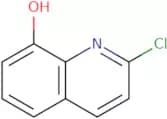
CAS:2-Chloroquinolin-8-ol is a chemical compound that binds to the human serum albumin and has cytotoxic effects on cancer cells. It has been shown to be an inhibitor of survivin, a protein that can promote cancer cell survival. 2-Chloroquinolin-8-ol has also been shown to inhibit the proliferation of human epidermoid carcinoma cells in vitro. This agent also inhibits the growth of Trichophyton mentagrophytes, a fungus that causes tinea versicolor, by binding to the ribosomal RNA. The binding constants for 2-chloroquinolin-8-ol were determined using atomic orbital calculations and vibrational spectroscopy. It has also been shown to bind with high affinity to hepg2 cells and cervical cancer cells.Formula:C9H6ClNOPurezza:Min. 95%Peso molecolare:179.6 g/mol6-Bromo-4-methoxy-1H-indazole
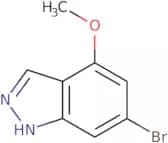
CAS:<p>Please enquire for more information about 6-Bromo-4-methoxy-1H-indazole including the price, delivery time and more detailed product information at the technical inquiry form on this page</p>Formula:C8H7BrN2OPurezza:Min. 95%Peso molecolare:227.06 g/mol2-Hydroxy-4-methylquinoline
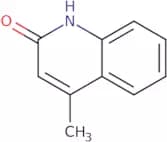
CAS:<p>2-Hydroxy-4-methylquinoline is an organic compound that has a chelate ring. It is soluble in deionized water and reacts with metal ions to form a fluorescent product. The molecule also has antibacterial activity, which may be due to its ability to inhibit the growth of bacteria by acting as a metal ion chelator. 2-Hydroxy-4-methylquinoline can react with halides and ammonium persulfate to form isomeric products, such as 4,5-dihydroxyquinoline, which have been shown to have antimicrobial properties. 2-Hydroxy-4-methylquinoline can also react with phosphorus oxychloride and alkylating agents such as chloroethane or chloroform to form substituted derivatives.</p>Formula:C10H9NOPurezza:Min. 95%Colore e forma:PowderPeso molecolare:159.18 g/mol4-Amino-3-bromoisoquinoline
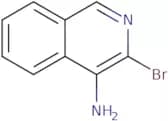
CAS:<p>4-Amino-3-bromoisoquinoline is an isocyanide that reacts with nucleophilic heteroatoms such as the amino group. It also reacts with bromine to form a bromopyridine. The nitrile group of 4-amino-3-bromoisoquinoline can be reduced with sodium borohydride to produce 4-aminoquinoline. This compound has shown potential for use in chemotherapy and treating bacterial infections.</p>Purezza:Min. 95%tert-Butyl 4-hydroxy-1-oxa-9-azaspiro[5.5]undecane-9-carboxylate
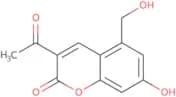
CAS:<p>Please enquire for more information about tert-Butyl 4-hydroxy-1-oxa-9-azaspiro[5.5]undecane-9-carboxylate including the price, delivery time and more detailed product information at the technical inquiry form on this page</p>Formula:C14H25NO4Purezza:Min. 95%Peso molecolare:271.35 g/mol3-Acetyl-5-hydroxymethyl-7-hydroxycoumarin
CAS:<p>3-Acetyl-5-hydroxymethyl-7-hydroxycoumarin is a synthetic coumarin derivative, which is a class of organic compounds often found in natural products. These compounds are derived from plant sources and are known for their significant biochemical effects and aromatic properties. The mode of action of 3-Acetyl-5-hydroxymethyl-7-hydroxycoumarin involves interactions at the molecular level, where it can exhibit various biological activities, such as antioxidant and antimicrobial effects. Due to the hydroxyl and acetyl functional groups present, it can participate in redox reactions and binding interactions, affecting biochemical pathways.</p>Formula:C12H10O5Purezza:Min. 95%Colore e forma:Light (Or Pale) Yellow To Orange Yellow SolidPeso molecolare:234.2 g/mol2,3-Dihydro-1-(3-hydroxypropyl)-5-[(2R)-2-[[2-[2-(2,2,2-trifluoroethoxy)phenoxy]ethyl]amino]propyl]-1H-indole-7-carbonitrile
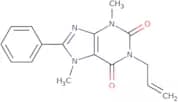
CAS:<p>Please enquire for more information about 2,3-Dihydro-1-(3-hydroxypropyl)-5-[(2R)-2-[[2-[2-(2,2,2-trifluoroethoxy)phenoxy]ethyl]amino]propyl]-1H-indole-7-carbonitrile including the price, delivery time and more detailed product information at the technical inquiry form on this page</p>Formula:C25H30F3N3O3Purezza:Min. 95%Peso molecolare:477.52 g/mol1-Allyl-3,7-dimethyl-8-phenylxanthine
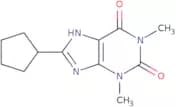
CAS:Prodotto controllatoPlease enquire for more information about 1-Allyl-3,7-dimethyl-8-phenylxanthine including the price, delivery time and more detailed product information at the technical inquiry form on this pageFormula:C16H16N4O2Purezza:Min. 95%Peso molecolare:296.32 g/mol8-Cyclopentyl-1,3-dimethylxanthine
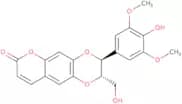
CAS:Prodotto controllato<p>8-Cyclopentyl-1,3-dimethylxanthine (CPT) is a xanthine derivative that binds to the adenosine receptor and inhibits the phosphodiesterase enzyme. CPT is used in vivo as a model for measuring locomotor activity, dopamine receptors, adenosine receptors, and glutamate receptors. The binding of CPT to these receptors can lead to bronchoconstriction by stimulating the release of vasoactive substances from airway cells and increasing the sensitivity of airway cells to bronchoconstrictor stimuli. This drug also has been shown to inhibit calcium ion influx into cytosol and increase intracellular levels of cAMP.</p>Formula:C12H16N4O2Purezza:Min. 95%Colore e forma:PowderPeso molecolare:248.28 g/molMoluccanin
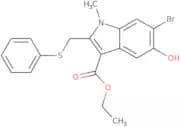
CAS:<p>Please enquire for more information about Moluccanin including the price, delivery time and more detailed product information at the technical inquiry form on this page</p>Purezza:Min. 95%Ethyl 6-bromo-5-hydroxy-1-methyl-2-(phenylsulfanylmethyl)indole-3-carboxylate
CAS:Prodotto controllato<p>Please enquire for more information about Ethyl 6-bromo-5-hydroxy-1-methyl-2-(phenylsulfanylmethyl)indole-3-carboxylate including the price, delivery time and more detailed product information at the technical inquiry form on this page</p>Purezza:Min. 95%5-Amino-8-hydroxyquinoline dihydrochloride
CAS:<p>5-Amino-8-hydroxyquinoline dihydrochloride (5-AQDH) is an anticancer drug that inhibits the activity of survivin, a protein that is overexpressed in cancer cells. It has been shown to be effective in vivo against melanoma tumor growth. 5-AQDH binds to the unpaired cysteine residues of the survivin molecule and inhibits its function by binding to the active site, blocking access to ATP and preventing DNA synthesis. The efficacy of 5-AQDH has been confirmed in vitro by studying the effect on cell viability and DNA synthesis, as well as by measuring plasma mass spectrometry data from melanoma patients. This drug is currently being investigated for its potential use as an anticancer agent.</p>Formula:C9H8N2O•(HCl)2Purezza:Min. 95%Peso molecolare:212.63 g/mol4',5'-Dihydrobergapten
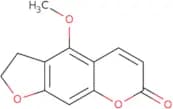
CAS:<p>4',5'-Dihydrobergapten is a naturally occurring furanocoumarin, which is sourced primarily from various plant species, including members of the Rutaceae family. This compound is a derivative of psoralen and structurally categorized as a linear furanocoumarin. Its mode of action primarily involves intercalation into DNA, leading to photoactivation upon UVA exposure, which induces DNA cross-linking and inhibition of nucleic acid synthesis. Such mechanisms are pivotal for its biological properties.</p>Formula:C12H10O4Purezza:Min. 95%Peso molecolare:218.21 g/mol1-Benzyl-3-[3-(diethylamino)propoxy]-1H-indazole
CAS:Prodotto controllato<p>Please enquire for more information about 1-Benzyl-3-[3-(diethylamino)propoxy]-1H-indazole including the price, delivery time and more detailed product information at the technical inquiry form on this page</p>Formula:C21H27N3OPurezza:Min. 98 Area-%Colore e forma:Clear LiquidPeso molecolare:337.46 g/mol



![tert-Butyl 4-hydroxy-1-oxa-9-azaspiro[5.5]undecane-9-carboxylate](/_next/image/?url=https%3A%2Fstatic.cymitquimica.com%2Fproducts%2F3D%2Fthumb-webp%2FFB125443.webp&w=3840&q=75)
![2,3-Dihydro-1-(3-hydroxypropyl)-5-[(2R)-2-[[2-[2-(2,2,2-trifluoroethoxy)phenoxy]ethyl]amino]propyl…](/_next/image/?url=https%3A%2Fstatic.cymitquimica.com%2Fproducts%2F3D%2Fthumb-webp%2FFD103483.webp&w=3840&q=75)

![1-Benzyl-3-[3-(diethylamino)propoxy]-1H-indazole](/_next/image/?url=https%3A%2Fstatic.cymitquimica.com%2Fproducts%2F3D%2Fthumb-webp%2FFB162091.webp&w=3840&q=75)