Composti di organosilicio
Sottocategorie di "Composti di organosilicio"
Trovati 4330 prodotti di "Composti di organosilicio"
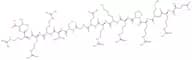
Biotinyl-epsilonAhx-omega-Conotoxin GVIA trifluoroacetate salt
CAS:Prodotto controllatoPlease enquire for more information about Biotinyl-epsilonAhx-omega-Conotoxin GVIA trifluoroacetate salt including the price, delivery time and more detailed product information at the technical inquiry form on this pageFormula:C136H207N41O46S7Purezza:Min. 95%Peso molecolare:3,376.81 g/molPeptide epsilon
CAS:Peptide epsilon is a diacylglycerol that inhibits protein synthesis. It binds to the cytosolic protein and inhibits the activity of the cytosolic protein, which is required for cell proliferation. Activated cells are then killed by apoptosis. Peptide epsilon has been shown to inhibit tubule cells by binding with the basic protein in the tubule cells and inhibiting cell proliferation. Peptide epsilon also binds with cytosolic protein and inhibits its activity, leading to inhibition of cell proliferation. This drug has been shown to be a potent inhibitor of cell proliferation in fetal bovine kidney cells and human lung cancer cells.
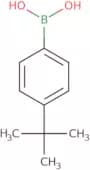
Formula:C83H155N39O21SPurezza:Min. 95%Peso molecolare:2,067.44 g/mol4-tert-Butylphenylboronic acid
CAS:4-tert-Butylphenylboronic acid is an aromatic hydrocarbon that belongs to the class of phenoxy. It is a molecule with nitrogen atoms and a molecular weight of 144.17 g/mol. 4-tert-Butylphenylboronic acid has been shown to form a copper complex in the presence of sodium trifluoroacetate, which is used for cross-coupling reactions. This compound also reacts with hydrochloric acid to form 4-methoxyphenylboronic acid and trimethyl boronate, which can be used as reaction products in organic synthesis. The stability of this compound has been studied using electrochemical impedance spectroscopy (EIS) on thin films.
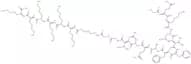
Formula:C10H15BO2Purezza:Min. 95%Colore e forma:White PowderPeso molecolare:178.04 g/molGly-Amyloid b-Protein (15-25)-Gly-epsilon-aminocaproyl(-Lys)6
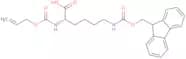
CAS:Please enquire for more information about Gly-Amyloid b-Protein (15-25)-Gly-epsilon-aminocaproyl(-Lys)6 including the price, delivery time and more detailed product information at the technical inquiry form on this pageFormula:C105H178N28O26Purezza:Min. 95%Peso molecolare:2,248.71 g/molN-alpha-Allyloxycarbonyl-N-epsilon-2-Fmoc-L-lysine
CAS:The synthesis of semaglutide is accomplished by a solid-phase synthetic route. The peptide is synthesized on a polymeric support. The side chains are assembled in the liquid phase and then condensed with the peptide chain. The condensation reaction between the side chains and peptide chain is catalyzed by an acid such as trifluoroacetic acid or ethyl chloroformate. Semaglutide was synthesized using this method to produce high purity, concentration, and yield.Formula:C25H28N2O6Purezza:Min. 95%Colore e forma:White/Off-White SolidPeso molecolare:452.5 g/molLithium bis(oxalato)borate
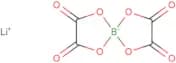
CAS:Lithium bis(oxalato)borate (LBBO), also known as Lithiumbis(oxalato)borate, is a lithium salt of the borate ester. The optimum concentration for LBBO is 1-2 mol/L. LBBO is soluble in water and reacts with glycol esters to form lithium glycolates. This reaction is reversible and the equilibrium can be shifted by changing the temperature or pressure. The NMR spectra of LBBO show a peak at 3.3 ppm which corresponds to the carbon atom attached to the carbonyl group, which is indicative of an organic solution. LBBO has been shown to be an electrolyte for lithium ion batteries but it has not been studied extensively because it decomposes at temperatures above 400°C and exhibits poor transport properties, limiting its application in electronic devices.Formula:C4BO8•LiPurezza:Min. 95%Peso molecolare:193.79 g/molH-Arg-epsilon-aminocaproyl-Arg-epsilon-aminocaproyl-Arg-epsilon-aminocaproyl-Arg-epsilon-aminocaproyl-Arg-epsilon-aminocaproyl-Arg-e psilon-aminocaproyl-Arg-OH trifluoroacetate salt
CAS:Please enquire for more information about H-Arg-epsilon-aminocaproyl-Arg-epsilon-aminocaproyl-Arg-epsilon-aminocaproyl-Arg-epsilon-aminocaproyl-Arg-epsilon-aminocaproyl-Arg-e psilon-aminocaproyl-Arg-OH trifluoroacetate salt including the price, delivery time and more detailed product information at the technical inquiry form on this pageFormula:C78H152N34O14Purezza:Min. 95%Peso molecolare:1,790.26 g/molBiphenyldiMethylsilane
CAS:BiphenyldiMethylsilane is a reactive compound that can be used for the surface modification of metals. It reacts with metal carbonyls, such as ZrO2, to form an oxide layer on the metal surface. This reaction can be monitored by magnetic resonance spectroscopy and chemical structures. The reactive site of this compound is a hydroxyl group, which will react with chloride ions to form a zirconium chloride complex. The chemical ionization technique can be used to determine the surface concentrations of this compound. BiphenyldiMethylsilane is often used in analytical chemistry to detect metal ions on surfaces or in films using infrared spectroscopy or mass spectrometry.Purezza:Min. 95%[2-fluoro-4-(trifluoromethyl)phenyl]boronic Acid
CAS:2-Fluoro-4-(trifluoromethyl)phenylboronic acid is a boron compound that can be used to synthesize a variety of target products. 2-Fluoro-4-(trifluoromethyl)phenylboronic acid occurs in the form of an oil and is an impurity in the target product, phenylboronic acid. This impurity can be removed by reacting with lithium benzotrifluoride. Lithiated 2-fluoro-4-(trifluoromethyl)phenylboronic acid is then reacted with phenylboronic acid to give lithiated phenylboronic ester in high yield. The lithiation reaction can be carried out under alkaline conditions or under a condition where the reactants are dissolved in water.Formula:C7H5BF4O2Purezza:Min. 95%Peso molecolare:207.92 g/mol(1-Methyl-1H-pyrazol-4-yl)boronic acid
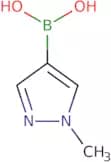
CAS:(1-Methyl-1H-pyrazol-4-yl)boronic acid is a boronic acid that has been used for the synthesis of a number of heterocyclic compounds. Boronic acids are commonly used to synthesize phosphine ligands, which are reactive and can be used in cross-coupling reactions with organic halides, triflates, and tosylates. The efficiency of the reaction depends on the functional group present on the boron atom. (1-Methyl-1H-pyrazol-4-yl)boronic acid can inhibit the activity of many types of enzymes, including those involved in bacterial DNA synthesis and protein synthesis. (1-Methyl-1H-pyrazol-4-yl)boronic acid has been shown to have pharmacokinetic properties that depend on its ionization state.Formula:C4H7BN2O2Purezza:Min. 95%Peso molecolare:125.92 g/mol[4-(1-Cyano-1-methylethyl)phenyl]boronic acid
CAS:Please enquire for more information about [4-(1-Cyano-1-methylethyl)phenyl]boronic acid including the price, delivery time and more detailed product information at the technical inquiry form on this page
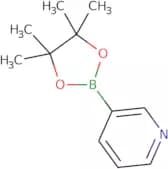
Formula:C10H12BNO2Purezza:Min. 95%Peso molecolare:189.02 g/mol3-Pyridylboronic acid pinacol ester
CAS:3-Pyridylboronic acid pinacol ester is a versatile reagent that can be used in the synthesis of polymers with reactive functionalities. This compound is a crosslinker, which means that it reacts with two or more other molecules to form a covalent bond. 3-Pyridylboronic acid pinacol ester has been shown to react with ring-opening methacrylate monomers and expand their polymer backbone, which leads to an increase in the number of reactive groups on the chain. The introduction of 3-pyridylboronic acid pinacol ester can also introduce fluorescent units into polymers for use as probes for biological systems. There are many possible applications for this versatile reagent, including its use in the synthesis of imidazopyridine ligands.
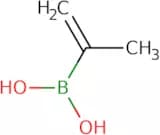
Formula:C11H16BNO2Purezza:Min. 95%Colore e forma:PowderPeso molecolare:205.06 g/molProp-1-en-2-ylboronic acid
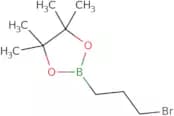
CAS:Prop-1-en-2-ylboronic acid is a chemical compound that belongs to the group of aromatic hydrocarbons. It is used in pharmaceutical preparations as a monomer and as a chiral building block for the synthesis of oxazolidinones, which are used in medicinal chemistry as protein inhibitors against cancers. Prop-1-en-2-ylboronic acid is also used as a reagent in preparative high performance liquid chromatography. This chemical has shown maximal response against colorectal carcinoma cells and has been shown to be an inhibitor of cholesterol ester transfer.Formula:C3H7BO2Purezza:90%MinPeso molecolare:85.9 g/mol3-Bromopropylboronic acid pinacol ester
CAS:Please enquire for more information about 3-Bromopropylboronic acid pinacol ester including the price, delivery time and more detailed product information at the technical inquiry form on this pageFormula:C9H18BBrO2Purezza:Min. 95%Peso molecolare:248.95 g/mol4-Fluoro-2-(trifluoromethyl)phenylboronic acid
CAS:The process development of 4-fluoro-2-(trifluoromethyl)phenylboronic acid (4FTFPBA) is a simplified procedure that can be scaled up and used for medicinal chemistry. This compound was synthesized by a boronic acid process using the Suzuki-Miyaura cross coupling reaction. The major factor to consider in this synthesis is the placement of the fluorine atom, which determines the relative reactivity and stability of the compound. In order to mimic these factors, an environment with low water content and a sequence that minimizes exposure to air are required.
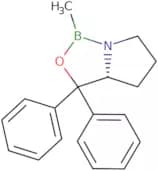
Formula:C7H5BF4O2Purezza:Min. 95%Colore e forma:PowderPeso molecolare:207.92 g/mol(R)-(+)-2-Methyl-CBS-oxazaborolidine
CAS:(R)-(+)-2-Methyl-CBS-oxazaborolidine is a dpp-iv inhibitor that is a β-unsaturated ketone. It has been shown to inhibit the enzyme histone lysine demethylase, which may be involved in the regulation of bone mass. This compound also has a pharmacokinetic profile that is characterized by high oral bioavailability, low plasma protein binding, and rapid metabolism by liver enzymes. The reaction mechanism for this compound is based on the formation of an enolate carbanion. (R)-(+)-2-Methyl-CBS-oxazaborolidine can be synthesized with high stereoselectivity and yields from reactions with simple starting materials. This synthetic route also has a number of advantages over other methods: it does not require any protecting groups, it does not use toxic solvents such as dichloromethane or chloroform, and it can be performed in anhydrous conditionsFormula:C18H20BNOPurezza:Min. 95%Colore e forma:SolidPeso molecolare:277.17 g/mol(3,4,5-Trifluorophenyl)boronic acid
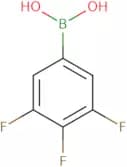
CAS:The trifluorophenylboronic acid is a boronic acid that has been used in the synthesis of vitamin B12. This compound is often used as a catalyst for the Suzuki coupling reaction. It can also be used to synthesize amides and synthons. The trifluorophenylboronic acid is soluble in water, ethanol, and acetone. The pH of the solution depends on the type of base added. For example, when an amine is added to the solution, it increases to approximately 8-9. When a p-hydroxybenzoic acid is added to the solution, it decreases to approximately 2-3.
Formula:C6H4BF3O2Purezza:Min. 95%Colore e forma:PowderPeso molecolare:175.9 g/mol3-Cyano-2-methylphenylboronic acid
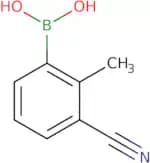
CAS:3-Cyano-2-methylphenylboronic acid is a high quality compound that can be used as a reagent, intermediate, or building block in the synthesis of complex compounds. This chemical is also useful as a speciality chemical and research chemical. 3-Cyano-2-methylphenylboronic acid has versatile uses in organic synthesis due to its versatility in reactions and building blocks.
Formula:C8H8BNO2Purezza:Min. 95%Colore e forma:PowderPeso molecolare:160.97 g/mol(Chlorodifluoromethyl)trimethylsilane
CAS:(Chlorodifluoromethyl)trimethylsilane is a chlorinating agent that is used for the transfer of chlorine to organic compounds. The activated chlorides are converted to aldehydes, which are then reacted with terminal alkynes in the presence of sodium carbonate to produce (chlorodifluoromethyl)trimethylsilanes. This reaction produces an organosilicon compound that has been shown to inhibit certain enzymes, such as lipases and proteases. Chlorodifluoromethyl)trimethylsilane also has bioisosteres, or structural analogs, with other halogens. It can be prepared by irradiation of chlorodichloromethane at room temperature in the presence of a catalyst.Formula:C4H9ClF2SiPurezza:Min. 95%Colore e forma:Colorless PowderPeso molecolare:158.65 g/molDiisopropylsilyl Bis(Trifluoromethanesulfonate)
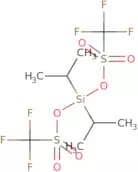
CAS:Diisopropylsilyl bis(trifluoromethanesulfonate) is a bifunctional reagent that can be used to prepare the trifluoromethanesulfonic acid. It reacts with an alcohol in the presence of base to generate an ester, and then hydrolyzes the ester in the presence of water to generate the desired acid. Diisopropylsilyl bis(trifluoromethanesulfonate) is pale yellow and soluble in argon, nitrogen, and solvents such as ethyl acetate.
Formula:C8H14F6O6S2SiPurezza:Min. 95%Peso molecolare:412.4 g/mol



![[2-fluoro-4-(trifluoromethyl)phenyl]boronic Acid](/_next/image/?url=https%3A%2Fstatic.cymitquimica.com%2Fproducts%2F3D%2Fthumb-webp%2FFF105416.webp&w=3840&q=75)
![[4-(1-Cyano-1-methylethyl)phenyl]boronic acid](/_next/image/?url=https%3A%2Fstatic.cymitquimica.com%2Fproducts%2F3D%2Fthumb-webp%2FFC121870.webp&w=3840&q=75)