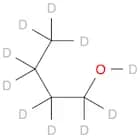
Composti deuterati
I composti deuterati sono molecole organiche in cui uno o più atomi di idrogeno sono sostituiti con deuterio, un isotopo stabile dell'idrogeno. Questi composti sono essenziali in vari campi scientifici, inclusi la spettroscopia NMR, la spettrometria di massa e gli studi cinetici sugli isotopi. I composti deuterati migliorano la chiarezza e la precisione del segnale nelle analisi riducendo il rumore di fondo e fornendo informazioni uniche sui meccanismi di reazione e le strutture molecolari. Presso CymitQuimica troverai un'ampia gamma di composti deuterati progettati specificamente per supportare la tua ricerca in chimica analitica e studi molecolari.
Trovati 4233 prodotti di "Composti deuterati"
Ordinare per
Purezza (%)
0
100
|
0
|
50
|
90
|
95
|
100
([15N]Gly)-Glutathione (reduced)
CAS:Please enquire for more information about ([15N]Gly)-Glutathione (reduced) including the price, delivery time and more detailed product information at the technical inquiry form on this pagePurezza:Min. 95%Cys-CD36 (139-155) trifluoroacetate salt
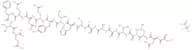
CAS:Please enquire for more information about Cys-CD36 (139-155) trifluoroacetate salt including the price, delivery time and more detailed product information at the technical inquiry form on this pageFormula:C87H133N25O26SPurezza:Min. 95%Peso molecolare:1,977.21 g/molProtein Kinase P34 (cd2) Substrate trifluoroacetate salt
CAS:H-ADAQHATPPKKKRKVEDPKDF-OH peptide, which can act as a substrate of Protein Kinase P34 (cd2). The peptide is supplied as a trifluoroacetate salt.Formula:C106H172N32O32Purezza:Min. 95%Peso molecolare:2,406.7 g/mol([ring-D5]Phe8)-Angiotensin II acetate salt
CAS:<p>Please enquire for more information about ([ring-D5]Phe8)-Angiotensin II acetate salt including the price, delivery time and more detailed product information at the technical inquiry form on this page</p>Formula:C50H66D5N13O12Purezza:Min. 95%Peso molecolare:1,051.21 g/molFmoc-[15N]Leu-OH
CAS:Fmoc-[15N]Leu-OH is a research chemical that has various applications in the field of biosynthesis and antibody production. It is commonly used in peptide synthesis and as a building block for the preparation of peptides and proteins. Fmoc-[15N]Leu-OH is known for its high purity and quality, making it an ideal choice for researchers and scientists working in the field of molecular biology. This compound can be easily dissolved in ethanol or other organic solvents, allowing for convenient use in laboratory experiments. With its unique characteristics and wide range of applications, Fmoc-[15N]Leu-OH is a valuable tool for those involved in biochemical research.Formula:C21H23NO4Purezza:Min. 95%Peso molecolare:354.41 g/molH-[15N]Tyr-OH
CAS:<p>H-[15N]Tyr-OH is a metabolite of tyrosine. It is the conjugate acid of propionic acid, and the conjugate base of 4-hydroxybenzyl. H-[15N]Tyr-OH is a phenylalanine and aromatic amino acid that has an aromatic ring with a phenyl substituent. This metabolite is hydroxy, which means it has one hydroxyl group on the phenyl ring. H-[15N]Tyr-OH binds to daphnia in vivo, causing death. The cause for this may be due to its ability to react with oxygen, forming reactive oxygen species (ROS).</p>Purezza:Min. 95%Fmoc-[ring-D5]Phe-OH
CAS:Prodotto controllatoPlease enquire for more information about Fmoc-[ring-D5]Phe-OH including the price, delivery time and more detailed product information at the technical inquiry form on this pageFormula:C24H16D5NO4Purezza:Min. 95%Peso molecolare:392.46 g/mol([13C6]Leu5)-Ghrelin (human) trifluoroacetate salt
CAS:<p>Please enquire for more information about ([13C6]Leu5)-Ghrelin (human) trifluoroacetate salt including the price, delivery time and more detailed product information at the technical inquiry form on this page</p>Purezza:Min. 95%Previtamin D2
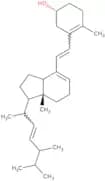
CAS:<p>Previtamin D2 is a chemical compound that is the natural form of vitamin D. It is found in human skin and can be converted to vitamin D3 by exposure to sunlight or artificial ultraviolet light. Previtamin D2 has been shown to have anti-cancer properties and may have potential as a dietary supplement. Previtamin D2 has been used for the treatment of dry skin, although it has not been approved for this use. The most common use of previtamin D2 is in wastewater treatment, where it is added to water as an anticancer agent. This process involves exposing the water to ultraviolet radiation and then adding previtamin D2. The previtamin D2 reacts with chlorine bleach, which releases hydrogen peroxide and creates disinfectant byproducts that are less toxic than those created by chlorine alone. Previtamin D2 can also be used in analytical chemistry as an intermediate in the production of vitamin D3 from cholesterol. It can be used as a sample preparation reagent when chromatographic science</p>Formula:C28H44OPurezza:90%MinColore e forma:White PowderPeso molecolare:396.65 g/molCromoglicic acid D5
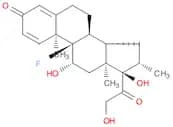
CAS:<p>Please enquire for more information about Cromoglicic acid D5 including the price, delivery time and more detailed product information at the technical inquiry form on this page</p>Formula:C6D5BrPurezza:Min. 95%Colore e forma:PowderPeso molecolare:473.40 g/mol9a-Fluoro-11b,17a,21-trihydroxy-16b-methylpregna-1,4-diene-3,20-dione
CAS:Formula:C22H29FO5Purezza:99%Colore e forma:SolidPeso molecolare:392.4611Ref: IN-DA0034IN
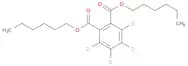
Prodotto fuori produzione1,2-Benzene-3,4,5,6-d4-dicarboxylic acid, 1,2-dihexyl ester
CAS:Formula:C20H26D4O4Purezza:98%Colore e forma:LiquidPeso molecolare:338.4744Ref: IN-DA00BY8J
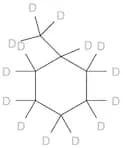
Prodotto fuori produzioneCyclohexane-1,1,2,2,3,3,4,4,5,5,6-d11, 6-(methyl-d3)-
CAS:Formula:C7D14Purezza:99.5%Colore e forma:LiquidPeso molecolare:112.2723Ref: IN-DA0002FK
Prodotto fuori produzionep-Xylene-d10, 99%(Isotopic)
CAS:Formula:C8D10Purezza:98%Colore e forma:LiquidPeso molecolare:116.2266O-Methyl dichlorothiophosphate
CAS:Formula:CH3Cl2OPSPurezza:95%+Colore e forma:SolidPeso molecolare:164.9787
![([15N]Gly)-Glutathione (reduced)](/_next/image/?url=https%3A%2Fstatic.cymitquimica.com%2Fproducts%2F3D%2Fthumb-webp%2FFG109306.webp&w=3840&q=75)

![([ring-D5]Phe8)-Angiotensin II acetate salt](/_next/image/?url=https%3A%2Fstatic.cymitquimica.com%2Fproducts%2F3D%2Fthumb-webp%2FFR110025.webp&w=3840&q=75)
![Fmoc-[15N]Leu-OH](/_next/image/?url=https%3A%2Fstatic.cymitquimica.com%2Fproducts%2F3D%2Fthumb-webp%2FFF111321.webp&w=3840&q=75)
![H-[15N]Tyr-OH](/_next/image/?url=https%3A%2Fstatic.cymitquimica.com%2Fproducts%2F3D%2Fthumb-webp%2FFT107850.webp&w=3840&q=75)
![Fmoc-[ring-D5]Phe-OH](/_next/image/?url=https%3A%2Fstatic.cymitquimica.com%2Fproducts%2F3D%2Fthumb-webp%2FFF111391.webp&w=3840&q=75)
![([13C6]Leu5)-Ghrelin (human) trifluoroacetate salt](/_next/image/?url=https%3A%2Fstatic.cymitquimica.com%2Fproducts%2F3D%2Fthumb-webp%2FFL110022.webp&w=3840&q=75)