Alogenuri organici
In questa categoria, troverete molecole organiche che contengono uno o più atomi di alogeno nella loro struttura. Questi alogenuri organici includono composti bromurati, iodurati, clorurati e alogenuri ciclici. Gli alogenuri organici sono ampiamente utilizzati nella sintesi organica, nei prodotti farmaceutici, negli agrochimici e nella scienza dei materiali grazie alla loro reattività e capacità di subire una varietà di trasformazioni chimiche. Presso CymitQuimica, offriamo una selezione completa di alogenuri organici di alta qualità per supportare le vostre applicazioni di ricerca e industriali, garantendo prestazioni affidabili ed efficaci nei vostri progetti sintetici e analitici.
Sottocategorie di "Alogenuri organici"
Trovati 20437 prodotti di "Alogenuri organici"
Ordinare per
Purezza (%)
0
100
|
0
|
50
|
90
|
95
|
100
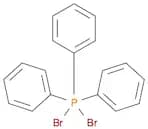
Triphenyldibromophosphorane
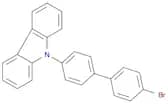
CAS:Formula:C18H15Br2PPurezza:97%Colore e forma:SolidPeso molecolare:422.09359-(4'-BroMo-4-biphenylyl)-9H-carbazole
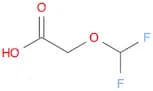
CAS:Formula:C24H16BrNPurezza:98%Colore e forma:SolidPeso molecolare:398.29452-(Difluoromethoxy)acetic acid
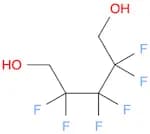
CAS:Formula:C3H4F2O3Purezza:95%Colore e forma:SolidPeso molecolare:126.05892,2,3,3,4,4-HEXAFLUORO-1,5-PENTANEDIOL
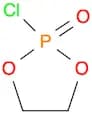
CAS:Formula:C5H6F6O2Purezza:98%Colore e forma:SolidPeso molecolare:212.09042-Chloro-1,3,2-dioxaphospholane-2-oxide
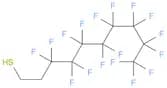
CAS:Formula:C2H4ClO3PPurezza:95%Colore e forma:LiquidPeso molecolare:142.47813,3,4,4,5,5,6,6,7,7,8,8,9,9,10,10,10-Heptadecafluoro-1-decanethiol
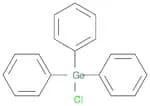
CAS:Formula:C10H5F17SPurezza:97%Colore e forma:LiquidPeso molecolare:480.1845543999997Germane, chlorotriphenyl-
CAS:Formula:C18H15ClGePurezza:98%Colore e forma:SolidPeso molecolare:339.4047(4'-Bromo-[1,1'-biphenyl]-4-yl)(phenyl)methanone
CAS:Formula:C19H13BrOPurezza:>98.0%(HPLC)Colore e forma:SolidPeso molecolare:337.2099Perchloric Acid (60%)
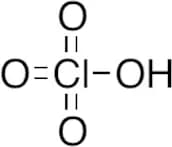
CAS:<p>Applications Perchloric Acid is a useful chemical reagent in the preparation of perchlorate salts. It is also known to be a strong oxidizer.<br> E0<br></p>Formula:ClHO4Purezza:60%Colore e forma:NeatPeso molecolare:100.45852-(Ethyl-Fluorophosphoryl)Oxypropane
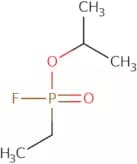
CAS:Prodotto controllato<p>2-(Ethyl-Fluorophosphoryl)Oxypropane (EFOP) is a chemical substance that is used as an analytical reagent in the detection of volatile and semi-volatile organic compounds in urine samples. EFOP has a high detection sensitivity, which allows it to be used for the analysis of low levels of chemicals in complex matrices. The matrix effect can be reduced by using human serum as the sample preparation medium. EFOP has been shown to be useful for determining sarin exposure in humans and mass analyzer data has shown that EFOP can detect high values of this chemical substance.</p>Formula:C5H12FO2PPurezza:Min. 95%Peso molecolare:154.12 g/molSodium fluorosilicate
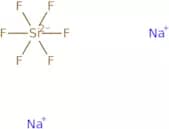
CAS:Prodotto controllato<p>Sodium fluorosilicate is an inorganic acid that can be prepared by dissolving sodium carbonate and hydrogen fluoride in water. It is used as a sample preparation agent for electrochemical impedance spectroscopy, as well as a reagent for the determination of acidic properties. Sodium fluorosilicate has been shown to inhibit the growth of epidermal cells, which may be due to its ability to cause an increase in the mitochondrial membrane potential. This compound also inhibits the synthesis of proteins from RNA, which may result from its coordination geometry or hydrogen-bonding interactions. Sodium fluorosilicate has been used in analytical methods involving x-ray diffraction data and plasma mass spectrometry.</p>Formula:Na2SiF6Purezza:Min. 95%Peso molecolare:188.06 g/molTetrafluorohydrazine
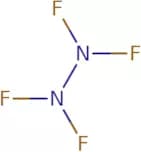
CAS:Prodotto controllato<p>Tetrafluorohydrazine is a reactive chemical compound that is used as a precursor to other nitrogen-containing compounds. It can be made by reacting hydrochloric acid with hydrogen fluoride and ammonia at high temperatures. The tetrafluorohydrazine molecule is thermodynamically unstable, so it decomposes into the trifluoride anion, dinitrogen gas, and hydrogen fluoride gas. Tetrafluorohydrazine reacts with the difluoride ion to form the difluoramine molecule. This reaction requires a catalyst, such as zinc. Tetrafluorohydrazine has been shown to react with alkenes in the presence of catalysts to produce alcohols or ketones.</p>Formula:F4N2Purezza:Min. 95%Peso molecolare:104.01 g/molDecafluorobis(Trifluoromethyl)Cyclohexane
CAS:Prodotto controllato<p>Decafluorobis(trifluoromethyl)cyclohexane is a film-forming polymer that can be used as a nutrient solution. It is synthesized by the thermal decomposition of hydrogen fluoride and caproic acid. Decafluorobis(trifluoromethyl)cyclohexane can be analyzed by combining it with fatty acids in an enzyme hydrolysis reaction. The product will then form a film on the surface of the container, which can be analyzed using ionization techniques such as mass spectrometry or nuclear magnetic resonance.</p>Formula:C8F16Purezza:Min. 95%Peso molecolare:400.06 g/mol3-Bromo-5-isopropyl-1,2,4-oxadiazole
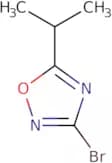
CAS:<p>3-Bromo-5-isopropyl-1,2,4-oxadiazole is a radiocarbon that was first detected in the atmosphere of Earth in the 1960s. It is produced by natural processes and is emitted into the atmosphere by human activities. 3-Bromo-5-isopropyl-1,2,4-oxadiazole has been found to be present in humans and other animals, as well as plants and soil. This compound has been detected in different parts of China and has been shown to be related to human activities. The evolution of 3-bromo-5-isopropyl-1,2,4 oxadiazole can be analysed using semantic approaches such as ideology sampling or repairing. Factors that may affect the production of 3-bromo 5 isopropyl 1 2 4 oxadiazole include climate change and technological development.</p>Formula:C5H7BrN2OPurezza:Min. 95%Colore e forma:Colorless PowderPeso molecolare:191.03 g/molRef: 3D-FB123862
Prodotto fuori produzioneBis(2,2,2-trichloroethyl)azodicarboxylate
CAS:<p>Bis(2,2,2-trichloroethyl)azodicarboxylate is a nucleophile that can be used as an alkylating agent in the industrial process. It is also used to prepare chiral amines by adding an amine to the enantiomerically pure bis(2,2,2-trichloroethyl)azodicarboxylate. The anticancer activity of Bis(2,2,2-trichloroethyl)azodicarboxylate is due to its ability to inhibit tumor cell proliferation. Bis(2,2,2-trichloroethyl)azodicarboxylate is not effective against cancerous cells that do not have functional groups such as amino acids.</p>Formula:C6H4Cl6N2O4Purezza:Min. 95%Colore e forma:Yellow SolidPeso molecolare:380.82 g/molRef: 3D-FB01254
Prodotto fuori produzioneTris(pentafluorophenyl)borane
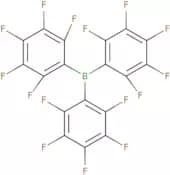
CAS:<p>Tris(pentafluorophenyl)borane is a cationic polymerization agent that can be used to form stable complexes with amines. These complexes are useful for the synthesis of polymers, which are used in a variety of applications such as coatings and adhesives. Tris(pentafluorophenyl)borane is also an important reagent in transfer reactions, electrochemical impedance spectroscopy, kinetic studies, and chemical stability. It has been shown to react with intramolecular hydrogen atoms to form polymeric matrixes that have high kinetic energy and transport properties. In coordination geometry, tris(pentafluorophenyl)borane has a planar geometry with a triangular arrangement around the boron atom.</p>Formula:C18BF15Purezza:Min. 95%Colore e forma:PowderPeso molecolare:511.98 g/mol

![(4'-Bromo-[1,1'-biphenyl]-4-yl)(phenyl)methanone](/_next/image/?url=https%3A%2Fstatic.cymitquimica.com%2Fproducts%2FIN%2Fthumb-webp%2FDA003KSK.webp&w=3840&q=75)