Alogenuri organici
In questa categoria, troverete molecole organiche che contengono uno o più atomi di alogeno nella loro struttura. Questi alogenuri organici includono composti bromurati, iodurati, clorurati e alogenuri ciclici. Gli alogenuri organici sono ampiamente utilizzati nella sintesi organica, nei prodotti farmaceutici, negli agrochimici e nella scienza dei materiali grazie alla loro reattività e capacità di subire una varietà di trasformazioni chimiche. Presso CymitQuimica, offriamo una selezione completa di alogenuri organici di alta qualità per supportare le vostre applicazioni di ricerca e industriali, garantendo prestazioni affidabili ed efficaci nei vostri progetti sintetici e analitici.
Sottocategorie di "Alogenuri organici"
Trovati 20437 prodotti di "Alogenuri organici"
Ordinare per
Purezza (%)
0
100
|
0
|
50
|
90
|
95
|
100
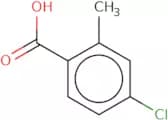
4-Chloro-2-methylbenzoic acid
CAS:<p>4-Chloro-2-methylbenzoic acid is a high quality chemical that is used as an intermediate in the preparation of other compounds. It belongs to the group of complex compounds and has CAS No. 7499-07-2. This reagent can be used to synthesize speciality chemicals, research chemicals, and versatile building blocks. 4-Chloro-2-methylbenzoic acid is also useful as a reaction component for the synthesis of fine chemicals, pharmaceuticals, and agrochemicals.</p>Formula:C8H7ClO2Purezza:Min. 95%Peso molecolare:170.59 g/molRef: 3D-FC55109
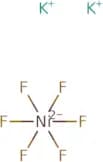
Prodotto fuori produzionePotassium hexafluoronickelate(IV)
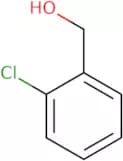
CAS:<p>Potassium hexafluoronickelate is a chemical compound that is a versatile building block and can be used as a reagent in organic synthesis. It is also an important intermediate for the preparation of other chemicals, such as potassium hexafluoroarsenate, which is used to make perfluorocarbons. Potassium hexafluoronickelate has many uses as a research chemical and as an intermediate in the production of other compounds. The compound has been shown to be useful in reactions involving carbon-carbon bond formation, such as the synthesis of heterocycles. Potassium hexafluoronickelate can also be used to produce metal complexes for use in catalysis or polymerization reactions.</p>Formula:F6K2NiPurezza:Min. 95%Colore e forma:PowderPeso molecolare:250.88 g/mol2-Chlorobenzyl alcohol
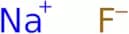
CAS:<p>2-Chlorobenzyl alcohol is a chemical compound that is used to synthesize other compounds. It is produced by the reaction of ethyl formate and hydrogen chloride in a reaction vessel. It reacts with benzoates to produce 2-chlorobenzoates, which are used as intermediates in the synthesis of pharmaceuticals. Hydroxyl groups can react with hydrogen fluoride to produce hydrofluoric acid, which is used as an industrial solvent. 2-Chlorobenzyl alcohol also reacts with hydroxide ions to produce ethylene glycol, which is used in making polyester fibers and plastics. This chemical compound has structural studies that show it has a proton and two hydroxyl groups that can react with hydrogen bond. Hydrogen bonds are important for the stability of DNA structures. The molecular structures of velvetleaf plants contain 2-chlorobenzyl alcohol, which may be due to its role in transferring oxygen from leaves to roots for respiration during</p>Formula:C7H7ClOPurezza:Min. 95%Colore e forma:PowderPeso molecolare:142.58 g/molSodium fluoride
CAS:Prodotto controllato<p>Sodium fluoride is a chemical that can be used to treat water and wastewater. It is an effective inhibitor of the growth of bacteria, fungi, and algae. The use of sodium fluoride improves the quality of drinking water by reducing levels of hydrogen ion and trihalomethanes (THMs). This chemical also has been shown to have beneficial effects in patients with inflammatory bowel disease. Sodium fluoride inhibits the activity of enzymes in mitochondria, which are responsible for converting food into energy. The inhibition leads to a decrease in the production of free radicals and reactive oxygen species, which may reduce oxidative stress in the body.</p>Formula:NaFPurezza:Min. 95%Colore e forma:White PowderPeso molecolare:41.99 g/molRef: 3D-FS29949
Prodotto fuori produzione2-(Chloromethyl)-1,2-epoxybutane
CAS:Formula:C5H9ClOPurezza:>95.0%(GC)Colore e forma:Colorless to Almost colorless clear liquidPeso molecolare:120.582-Chloro-N-cyclohexyl-N-phenylpropanamide
<p>Please enquire for more information about 2-Chloro-N-cyclohexyl-N-phenylpropanamide including the price, delivery time and more detailed product information at the technical inquiry form on this page</p>Purezza:Min. 95%Ref: 3D-FC169156
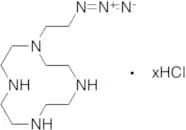
Prodotto fuori produzioneN-(2-Azidoethyl) Cyclen Hydrochloride
CAS:<p>Applications N-(2-Azidoethyl) Cyclen is used in the synthesis of lanthanide cyclen derivative complexes.<br>References Szijjarto, C., et al.: Dalton Trans., 41, 7660 (2012)<br></p>Formula:C10H23N7·xHClColore e forma:White to Off-White SolidPeso molecolare:241.34 + x(36.46)1-(4-Fluorobenzoyl)piperidin-4-one
CAS:Prodotto controllato<p>Please enquire for more information about 1-(4-Fluorobenzoyl)piperidin-4-one including the price, delivery time and more detailed product information at the technical inquiry form on this page</p>Formula:C12H12FNO2Purezza:Min. 95%Peso molecolare:221.23 g/molRef: 3D-FF51371
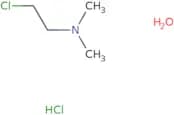
Prodotto fuori produzione2-Chloro-N,N-dimethylethanamine hydrochloride hydrate
Prodotto controllato<p>Please enquire for more information about 2-Chloro-N,N-dimethylethanamine hydrochloride hydrate including the price, delivery time and more detailed product information at the technical inquiry form on this page</p>Formula:C4H13Cl2NOPurezza:Min. 95%Peso molecolare:162.06 g/molRef: 3D-FC139987
Prodotto fuori produzioneHydrazine Monohydrobromide
CAS:Prodotto controllato<p>Hydrazine monohydrobromide is a reactive chemical that is soluble in water and organic solvents. It is a white crystalline solid that exists as polymorphic forms, and has a molecular weight of 121.06. Hydrazine monohydrobromide is an important precursor for the production of other compounds, such as hydrazine sulfate and hydrazine nitrate. It also acts as a pharmacological agent, used to treat heart disease. Hydrazine monohydrobromide reacts with an inorganic acid to produce hydrogen gas and an organic solution containing the reaction products of nitrogen atoms and hydrogen atoms. These particles can be found on metal surfaces such as copper or silver, where they form morphogenetic proteins due to their ability to catalyze reactions.</p>Formula:H4N2·HBrPurezza:Min. 95%Peso molecolare:112.96 g/molRef: 3D-FH61154
Prodotto fuori produzioneAmmonium Hexafluoroniobate
CAS:<p>Ammonium hexafluoroniobate is an organosilicon compound that does not react with water and is used as a solvent for other organics. It can be activated to form a reactive surface by treatment with a metal such as copper or aluminum, which can then be used in the treatment of metals. Ammonium hexafluoroniobate has been used as a diagnostic agent and diagnostic reagent in various reactions at different temperatures. It has also been used as the photoreceptor in electrophotographic printing processes, where it is exposed to light-sensitive material and then developed using organic solvents.</p>Formula:F6H4NNbPurezza:Min. 95%Peso molecolare:224.94 g/molRef: 3D-FA78203
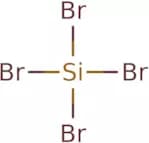
Prodotto fuori produzioneSilicon tetrabromide
CAS:<p>Silicon tetrabromide is a chemical compound that is reactive and has the chemical formula SiBr4. This compound is prepared by reacting ethylene diamine with water vapor over a solid catalyst such as phosphorus pentoxide. Silicon tetrabromide can be used as a catalyst in various organic reactions, such as the production of glycerin from the reaction of halides and glycerin. Silicon tetrabromide can also be used to produce low energy silicon radicals from aromatic hydrocarbons, which are useful for structural analysis.</p>Formula:Br4SiPurezza:Min. 95%Colore e forma:Clear LiquidPeso molecolare:347.7 g/molSilver hexafluorophosphate
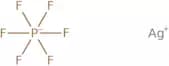
CAS:<p>Silver hexafluorophosphate (AgPF) is a silver salt of the inorganic acid hexafluoro-phosphoric acid. It has been shown to have a high reactivity with organic compounds and is insoluble in water. Silver hexafluorophosphate is used as an additive for certain polymers, such as PVC, to improve their insulating properties. In addition, AgPF has shown biological properties that may be due to its ability to act as a chelate ligand and bind metal ions. The reaction mechanism of AgPF involves the formation of hydrogen bonding interactions with nitrogen atoms, which are found in biological molecules such as proteins and nucleic acids.</p>Formula:AgPF6Purezza:Min. 95%Peso molecolare:252.83 g/molSilver fluoride
CAS:<p>Silver fluoride is a chemical compound that consists of silver and fluoride. It is used in the form of a powder or a solution to sterilize surfaces, and can be applied to skin as an antiseptic. The chemical stability of silver fluoride has been studied using thermodynamic data and biological properties. Silver fluoride is able to inhibit the metabolism of some microorganisms, such as the growth of Staphylococcus aureus and Escherichia coli. Silver fluoride also inhibits the synthesis of DNA and RNA, which are important for cell division.</p>Formula:AgFPurezza:Min. 95%Colore e forma:PowderPeso molecolare:126.87 g/molPotassium fluoride dihydrate
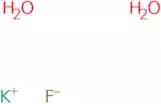
CAS:Prodotto controllato<p>Potassium fluoride is an inorganic chemical that is used in the water fluoridation process. It is also used as a source of fluoride ions for the synthesis of hydroxyapatite, a mineral found in teeth and bones. Fluoride ions are also used to treat certain infectious diseases, such as malaria. The asymmetric synthesis of potassium fluoride was first reported by M. S. Kharasch and J. A. Fink in 1943 using plasma mass spectrometry. This method has been widely adopted for commercial production of potassium fluoride because it can be scaled up easily and does not require specialized equipment.<br><br>Potassium fluoride has been shown to inhibit viral replication by hydrogen bonding with the guanine-cytosine base pairs on the viral dsDNA, which prevents the DNA from uncoiling and copying its genetic information into new viral particles. Potassium fluoride has also been shown to be effective against hepatitis B virus (HBV) and mammalian cells infected by HB</p>Formula:KF·2H2OPurezza:Min. 95%Peso molecolare:94.13 g/molRef: 3D-FP34794
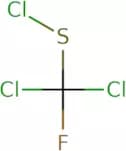
Prodotto fuori produzione1,1-Dichloro-1-fluoro-methanesulfenylchloride
CAS:<p>1,1-Dichloro-1-fluoro-methanesulfenylchloride is a hazardous chemical that belongs to the group of chlorine compounds. It has been used as an antibacterial agent in the past and has been shown to be effective against nematodes, helminths, and some microorganisms. It is also used as a solvent in the production of dyes and perfumes. 1,1-Dichloro-1-fluoro-methanesulfenylchloride is not active against bacteria that are resistant to sulfonic acids or amines.</p>Formula:CCl3FSPurezza:Min. 95%Colore e forma:Clear LiquidPeso molecolare:169.43 g/molRef: 3D-FD88966
Prodotto fuori produzioneBis-trifluoromethyl ethylphosphonate
CAS:Prodotto controllato<p>Bis-trifluoromethyl ethylphosphonate is a trivalent, cyclic, scientific device that has been used as an additive to graphene oxide. Voltammetric studies have shown that this compound has a high flammability limit and can be used as a rechargeable battery electrode. The chemical's pentavalent form exhibits densities of 1.65 g/cm3 and 2.25 g/cm3 at 20 °C and 0 °C respectively. Bis-trifluoromethyl ethylphosphonate is used in research for its ability to form tervalent bonds with many other elements, including carbon, nitrogen, oxygen and sulfur.</p>Formula:C6H9F6O3PPurezza:Min. 95%Peso molecolare:274.1 g/molRef: 3D-FB18837
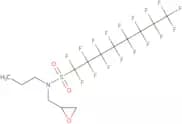
Prodotto fuori produzioneN-Propyl-N-(2,3-epoxypropyl)perfluoro-n-octylsulfonamide
CAS:Prodotto controllato<p>Please enquire for more information about N-Propyl-N-(2,3-epoxypropyl)perfluoro-n-octylsulfonamide including the price, delivery time and more detailed product information at the technical inquiry form on this page</p>Formula:C14H12F17NO3SPurezza:Min. 95%Peso molecolare:597.29 g/mol(Methoxymethyl) triphenylphosphonium chloride
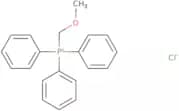
CAS:<p>Methoxymethyl triphenylphosphonium chloride (MMTPC) is a chemical compound that has been used in vitro as an inhibitor of microbial growth. MMTPC has been shown to be effective against a number of bacterial strains, including methicillin-resistant Staphylococcus aureus and Mycobacterium tuberculosis. This agent inhibits the synthesis of proteins and nucleic acids, which may lead to cell death by inhibiting protein synthesis or by preventing DNA synthesis. MMTPC has been shown to be effective for the treatment of congestive heart failure, coronary heart disease, and autoimmune diseases. It also binds to receptors on cells that are involved in the inflammatory response, such as cytokines and leukocytes.</p>Formula:C20H20ClOPPurezza:Min. 95%Colore e forma:White PowderPeso molecolare:342.8 g/molAmmonium tetrafluoroborate
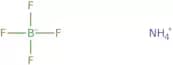
CAS:<p>Ammonium tetrafluoroborate is a salt of the organic compound tetrafluoroborate and ammonium. It is a colorless solid that can be used as a chemical reagent. Ammonium tetrafluoroborate has a higher chemical stability than other salts of tetrafluoroborate, such as ammonium hexafluorophosphate and ammonium hexafluoroarsenate. Ammonium tetrafluoroborate is used to make the dinucleotide phosphate, which is an important component in DNA synthesis. In a redox potential test, ammonium tetrafluoroborate showed no electrochemical activity in water vapor at pH 7. Ammonium tetrafluoroborate reacts with trifluoroacetic acid to produce hydrogen fluoride and ammonium chloride. This reaction is reversible, which means that it can be used for the synthesis of ammonia gas from hydrogen and nitrogen gases or for the</p>Formula:NH4BF4Purezza:Min. 98%Colore e forma:White PowderPeso molecolare:104.84 g/mol