Alogenuri organici
Sottocategorie di "Alogenuri organici"
Trovati 20442 prodotti di "Alogenuri organici"
(Nle 13,Glu14)-Motilin (human, porcine) trifluoroacetate salt
CAS:Please enquire for more information about (Nle 13,Glu14)-Motilin (human, porcine) trifluoroacetate salt including the price, delivery time and more detailed product information at the technical inquiry form on this pageFormula:C121H189N33O36Purezza:Min. 95%Peso molecolare:2,682 g/mol2-Amino-6-chloropyrimidin-4(3h)-one
CAS:2-Amino-6-chloropyrimidin-4(3H)-one (ACPP) is a betaine that has been shown to exhibit potent activity against clinical isolates of methicillin-resistant Staphylococcus aureus (MRSA). It is a mesomeric molecule, which means that it can exist as two different tautomers. The frequency of the absorption bands in the FTIR spectra for ACPP are characteristic of the carbenes and ethanolamine tautomers. The presence of these tautomers may be due to stabilization from the nucleophilic character of the nitrogen atom in betaines. Betaines are also able to form polymersized chains by reacting with themselves or other molecules, such as ethanolamine.
Formula:C4H4ClN3OPurezza:Min. 95%Colore e forma:PowderPeso molecolare:145.55 g/mol4-Bromoisoindoline hydrochloride
CAS:4-Bromoisoindoline hydrochloride (BII) is a chemical compound that can be used as a building block for making other chemicals. It can also be used to make research chemicals or as a reaction component in the synthesis of other compounds. It has been shown to be an effective reagent and is useful for the production of fine chemicals with high purity.
Formula:C8H9BrClNPurezza:Min. 95%Colore e forma:PowderPeso molecolare:234.52 g/molBuccalin trifluoroacetate salt
CAS:Buccalin is a cholinergic pharmaceutical drug that has been shown to have metabolic, growth factor, and chemotactic activities. It has been used in the treatment of various autoimmune diseases and infectious diseases. The mechanism of action for buccalin is unknown. Buccalin has been shown to have receptor activity in a variety of diagnostic agents such as monoclonal antibodies and fatty acids. It binds to acetylcholine receptors at the neuromuscular junction, leading to activation of muscle fibers by acetylcholine release from nerve endings.Formula:C45H72N12O15SPurezza:Min. 95%Peso molecolare:1,053.19 g/mol8-Desmethoxy-8-fluoro moxifloxacin
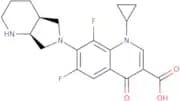
CAS:8-Desmethoxy-8-fluoro moxifloxacin is a photolytic drug that is used to treat bacterial infections. It has a high degree of antibacterial activity against methicillin-resistant staphylococcus aureus, including methicillin resistant strains of Staphylococcus epidermidis. 8-Desmethoxy-8-fluoro moxifloxacin hydrochloride is produced by the addition of hydrochloric acid to moxifloxacin, which is then purified by ion chromatography. The compound has been shown to have good stability in human plasma and urine. It also shows excellent recoveries in acetonitrile and quantification results in flow rates.
Formula:C20H21F2N3O3Purezza:Min. 95%Peso molecolare:389.4 g/molRef: 3D-FD21225
Prodotto fuori produzione5-(Difluoromethoxy)-2-mercaptobenzimidazole
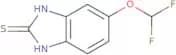
CAS:5-(Difluoromethoxy)-2-mercaptobenzimidazole is an organic solvent that is used in the crystallization process of pantoprazole, a benzimidazole derivative. It is also used as a corrosion inhibitor and pump inhibitor in analytical chemistry. The purity of 5-(difluoromethoxy)-2-mercaptobenzimidazole can be determined by chromatographic methods or by the use of analytical chemistry. Impurities may be genotoxic and include reactive impurities such as thiourea and 2-thiouracil. These impurities are removed during the synthetic process to produce 5-(difluoromethoxy)-2-mercaptobenzimidazole. This drug substance has been found to inhibit DNA polymerase activity in vitro, but its effects on human cells have not been studied.
Formula:C8H6F2N2OSPurezza:Min. 95%Colore e forma:Off-White PowderPeso molecolare:216.21 g/molTRAP-6 (2-6) trifluoroacetate salt
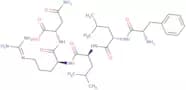
CAS:TRAP-6 (2-6) is a monoclonal antibody that binds to the enzyme collagenase, which is an important factor in tumor invasion and metastasis. The antibody binds to the active site of collagenase, thereby inhibiting its activity. TRAP-6 (2-6) has been shown to reduce the growth of cancer cells by inhibiting the production of β-amino acids and zymogens, which are required for tumor cell proliferation. It also inhibits serine proteases, such as thrombin receptor, which play an important role in tumor invasion and metastasis. TRAP-6 (2-6) also has anti-inflammatory properties and can be used for the treatment of basophilic leukemia.Formula:C31H51N9O7Purezza:Min. 95%Peso molecolare:661.79 g/molRef: 3D-FT110302
Prodotto fuori produzione(Pen 5)-Urotensin II (4-11) (human) trifluoroacetate salt
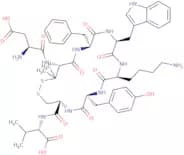
CAS:Please enquire for more information about (Pen 5)-Urotensin II (4-11) (human) trifluoroacetate salt including the price, delivery time and more detailed product information at the technical inquiry form on this page
Formula:C52H68N10O12S2Purezza:Min. 95%Peso molecolare:1,089.29 g/molRef: 3D-FP109652
Prodotto fuori produzioneTIP-39 trifluoroacetate salt
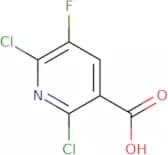
CAS:Please enquire for more information about TIP-39 trifluoroacetate salt including the price, delivery time and more detailed product information at the technical inquiry form on this pageFormula:C202H325N61O54SPurezza:Min. 95%Peso molecolare:4,504.19 g/mol2,6-Dichloro-5-fluoronicotinic acid
CAS:2,6-Dichloro-5-fluoronicotinic acid (2,6-DCFNA) is a chlorinating agent that is activated in acidic solutions. It is used to produce the disinfectant peracetic acid and in the industrial process of producing phenol. 2,6-DCFNA reacts with chloride to form hypochlorous acid (HOCl), which causes inflammation in cells by activating inflammatory cells such as neutrophils and macrophages. 2,6-DCFNA also inhibits tyrosine kinase activity, which may contribute to its anti-inflammatory properties. The toxic effects of 2,6-DCFNA have been studied on hematopoietic cells in vitro. Studies show that this compound can cause apoptosis or death of these cells and may be useful for the treatment of inflammatory diseases such as rheumatoid arthritis. 2,6-DCFNA has also been shown to inhibit tumor growth when
Formula:C6H2Cl2FNO2Purezza:Min. 95%Colore e forma:PowderPeso molecolare:209.99 g/molRef: 3D-FD70870
Prodotto fuori produzioneZ-Arg-AMC hydrochloride salt
CAS:Z-Arg-AMC hydrochloride salt is a proteolytic agent that inhibits serine proteases. It can be used to study the biological function of proteases and as a tool in the kinetic analysis of protease activity. Z-Arg-AMC hydrochloride salt has been shown to inhibit trypsin, chymotrypsin, and elastase enzymes at nanomolar concentrations. This compound also inhibits human pathogens such as enterovirus 71 and herpes simplex virus type 1, which are associated with severe disease symptoms. The structural analysis of Z-Arg-AMC hydrochloride salt has shown it to be a racemic mixture of L-Arginine and D-Arginine with an average molecular weight of 313.5 Da.
Formula:C24H27N5O5Purezza:Min. 95%Peso molecolare:465.5 g/mol5-Bromo-2-(methylthio)pyrimidine
CAS:5-Bromo-2-(methylthio)pyrimidine is a synthetic compound that has been used to synthesize palladium complexes. It can also be used in the synthesis of vitamin B1, which is an essential nutrient for humans and animals. 5-Bromo-2-(methylthio)pyrimidine binds with magnesium and reacts with sulfoxide, nucleophilic attack and electronegativity. 5-Bromo-2-(methylthio)pyrimidine is activated by 2-chlorobenzothiazole and hydrogen chloride, which leads to nucleophilic attack on the electrophilic carbon atom. This causes a displacement reaction with the elimination of chlorine gas and production of dihydro.
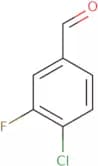
Formula:C5H5BrN2SPurezza:Min. 95%Peso molecolare:205.08 g/mol4-Chloro-3-fluorobenzaldehyde
CAS:4-Chloro-3-fluorobenzaldehyde is an atypical molecule that has a deuterium atom. It is classified as a group p2 functional theory reuptake inhibitor, which blocks the reuptake of noradrenaline at the synapse. The vibrational and spectroscopic properties of this molecule are similar to those of other molecules in its class. 4-Chloro-3-fluorobenzaldehyde was shown to inhibit the production of noradrenaline in rat brain tissue and is used as a model for studying genetic polymorphism. Techniques such as nuclear magnetic resonance spectroscopy, infrared spectroscopy, and X-ray crystallography have been used to investigate the structure and reactivity of 4-chloro-3-fluorobenzaldehyde.
Formula:C7H4ClFOPurezza:Min. 95%Peso molecolare:158.56 g/molH-Tyr-Ile-Gly-Ser-Arg-OH trifluoroacetate salt
CAS:The H-Tyr-Ile-Gly-Ser-Arg-OH trifluoroacetate salt is a synthetic peptide that has been shown to promote neuronal growth and axonal regeneration. This compound has been synthesized using a biocompatible polymer, collagen gel, and neurotrophic factors. The peptide is also able to stimulate the synthesis of collagen in mesenchymal cells cultured in tissue culture. The peptide can be used for treatment of subcutaneous tumors and neural injury.
Formula:C26H42N8O8Purezza:Min. 95%Peso molecolare:594.66 g/molAmyloid beta-Protein (33-42) trifluoroacetate salt
CAS:Please enquire for more information about Amyloid beta-Protein (33-42) trifluoroacetate salt including the price, delivery time and more detailed product information at the technical inquiry form on this pageFormula:C41H74N10O11SPurezza:Min. 95%Peso molecolare:915.15 g/molRef: 3D-FA109546
Prodotto fuori produzione3-Amino-4-fluorobenzoic acid
CAS:3-Amino-4-fluorobenzoic acid is a hydrocarbon that is used as an analgesic. It has been shown to be nontoxic and has analgesic effects in the intestinal tract. 3-Amino-4-fluorobenzoic acid also has radiopaque properties, which makes it useful for diagnosis and treatment of certain types of cancer and other tumors. The analgesic effect of 3-amino-4-fluorobenzoic acid may be due to its ability to act as a competitive antagonist at the N -methyl--aspartate (NMDA) receptor, which is important in pain perception.
Formula:C7H6FNO2Purezza:Min. 95%Peso molecolare:155.13 g/molRef: 3D-FA64177
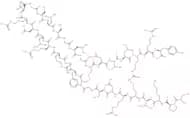
Prodotto fuori produzioneBNP-32 (porcine) trifluoroacetate salt
CAS:BNP-32 is a porcine-specific antibody that is used to detect the presence of BNP in human serum. It is biotinylated and can be coated on a plate. The antibody binds to BNP, which has been labeled with peroxidase, and produces a colored reaction product. This product can be visualized by adding 3,3'-diaminobenzidine (DAB) as a substrate. The sealer then prevents the unbound antibody from binding to the plate and interfering with the assay.Formula:C149H250N52O44S3Purezza:Min. 95%Peso molecolare:3,570.1 g/molRef: 3D-FB108820
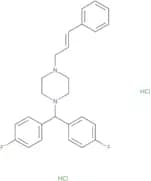
Prodotto fuori produzioneFlunarizine dihydrochloride
CAS:T-type calcium channel inhibitor
Formula:C26H28Cl2F2N2Purezza:Min. 95%Colore e forma:PowderPeso molecolare:477.42 g/molNeuropeptide W-30 (rat) trifluoroacetate salt
CAS:Please enquire for more information about Neuropeptide W-30 (rat) trifluoroacetate salt including the price, delivery time and more detailed product information at the technical inquiry form on this pageFormula:C165H249N49O38SPurezza:Min. 95%Peso molecolare:3,559.12 g/molRef: 3D-FN109735
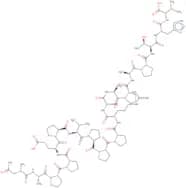
Prodotto fuori produzioneNeuroendocrine Regulatory Peptide-4 (human, mouse, rat) trifluoroacetate salt
CAS:Please enquire for more information about Neuroendocrine Regulatory Peptide-4 (human, mouse, rat) trifluoroacetate salt including the price, delivery time and more detailed product information at the technical inquiry form on this pageFormula:C87H135N25O24Purezza:Min. 95%Peso molecolare:1,915.16 g/mol