


Biologia vegetale
La Biologia Vegetale comprende una vasta gamma di regolatori di crescita, fitormoni e reagenti essenziali per la ricerca e le applicazioni nelle scienze delle piante e nell'industria alimentare. Questi prodotti svolgono un ruolo fondamentale nella regolazione della crescita, dello sviluppo e delle risposte delle piante agli stimoli ambientali. I regolatori di crescita e i fitormoni, come le auxine, le gibberelline, le citochinine e l'acido abscissico, sono vitali per studiare la fisiologia delle piante, migliorare le rese delle colture e sviluppare pratiche agricole sostenibili. Inoltre, vari reagenti supportano le procedure sperimentali e le tecniche analitiche nella ricerca in biologia vegetale. Da CymitQuimica, offriamo una vasta selezione di prodotti di alta qualità su misura per le esigenze di ricercatori e professionisti nelle scienze delle piante, agricoltura e industria alimentare, facilitando i progressi nella biologia vegetale e nella gestione delle colture.
Sottocategorie di "Biologia vegetale"
- Antibiotici per la biologia delle piante(1 prodotti)
- Mycosol(3 prodotti)
- Micotossine per la biologia vegetale(1 prodotti)
- Prodotti naturali e sostanze fitochimiche per origine botanica(5.997 prodotti)
- Regolatore di crescita vegetale(125 prodotti)
- Reagenti per la biologia vegetale(15 prodotti)
Trovati 740 prodotti di "Biologia vegetale"
Ordinare per
Purezza (%)
0
100
|
0
|
50
|
90
|
95
|
100
elf18
<p>Translation elongation factor thermo unstable (EF-Tu), is a highly conserved protein in bacteria which is essential for the synthesis of new proteins through translation in the ribosome. EF-Tu is also a pathogen-associated molecular pattern (PAMP) protein. PAMPs are elicitors of plant defences and are recognised by pattern recognition receptors in the plant. In Arabidopsis thaliana EF-Tu is recognised by EF-Tu Receptor (EFR), a leucine-rich repeat-receptor kinase XII family member.Elf18 represents the N-terminal of EF-Tu, the region specifically recognised by Arabidopsis. This N-acetylated peptide is a strong inducer of plant defence responses and results in the biosynthesis of ethylene in leaves which triggers resistance to subsequent infection by pathogenic bacteria.</p>Colore e forma:PowderPeso molecolare:2,068.1 g/molMART-1 (27-35) (human)
CAS:Tumour antigens recognised by cytotoxic T cells (CTLs) are a keen area of research to develop antigen-specific cancer therapies. However, hurdles are weak immunogenicity and high rates of degradation in vivo. In the search for a melanoma vaccine, the human tumour antigen Melan-A/MART-1 (27-35) has been used as a model to design peptides with improved characteristics for use in anti-tumour vaccines. The epitope can induce the production of melanoma-specific CD8+ T-cell responses. It has been included in melanoma antigen peptide vaccines, clinical trial data suggest that MART-1 (27-35) in human systems alongside other epitopes does affect the cellular and humoral responses, but much more work is required with this peptide to optimise it for clinical efficacy against melanoma.An alternate route that is possible but less studied is using MART-1 (27-35) to isolate CD8(+) T-cell clones with greater recognition for the epitope due to the contact with the T-cell receptor. This suggests melanomas could be targeted by optimising the T-cell receptor-peptide recognition of the T-cell repertoire by enhancing antigen targeting.Formula:C37H67N9O11Peso molecolare:813.98 g/molThifensulfuron-methyl
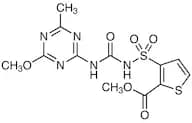
CAS:Formula:C12H13N5O6S2Purezza:>97.0%(HPLC)Colore e forma:White to Almost white powder to crystalPeso molecolare:387.39Azoic Diazo Component 24 (Salt) [for Biochemical Research]
CAS:Formula:C30H28Cl2N6O6·ZnCl2Purezza:>95.0%(T)Colore e forma:Yellow to Brown to Dark green powder to crystalPeso molecolare:775.77G418 Disulfate
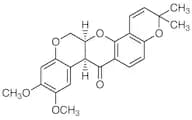
CAS:Formula:C20H40N4O10·2H2SO4Purezza:>90.0%(HPLC)(N)Colore e forma:White to Almost white powder to crystalPeso molecolare:692.70(-)-Deguelin
CAS:Formula:C23H22O6Purezza:>95.0%(HPLC)Colore e forma:White to Yellow to Green powder to crystalPeso molecolare:394.42Disodium 1-Naphthyl Phosphate Hydrate [Substrate for Phosphatase]
CAS:Formula:C10H7Na2O4P·xH2OPurezza:97.0 to 103.0 %(calcd.on anh.substance)Colore e forma:White to Light yellow to Light red powder to crystalPeso molecolare:268.12 (as Anhydrous)Cellulose synthase 7
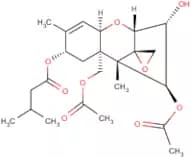
<p>Cellulose synthase is a crucial enzyme involved in the synthesis of cellulose. Cellulose is an aggregation of unbranched polymer chains made of β-(1-4)-linked glucose residues, and is a component of primary and secondary cell walls - functioning to primarily maintain strength and shape in cells.Cellulose is synthesised by large cellulose synthase complexes (CSCs), which consist of synthase protein isoforms (CesA) that are arranged into a unique hexagonal structure.Specifically the isoform cellulose synthase 7 takes part in secondary cell wall cellulose synthesis.</p>Peso molecolare:1,084.6 g/molT-2 Toxin
CAS:<p>T-2 Toxin</p>Formula:C24H34O9Purezza:By hplc: 98.24% (Typical Value in Batch COA)Colore e forma: white powderPeso molecolare:466.52g/molMethoxychlor
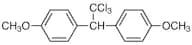
CAS:Formula:C16H15Cl3O2Purezza:>95.0%(GC)Colore e forma:White to Light yellow to Dark green powder to crystalPeso molecolare:345.64Murashige and Skoog modified basal medium (with Kinetin)
<p>Murashige and Skoog modified basal medium (with Kinetin)</p>Colore e forma:White To Off White PowderMurashige and Skoog modified basal medium, 1 pack = 10x1L
<p>Murashige and Skoog modified basal medium, 1 pack = 10x1L</p>Colore e forma:SolidMurashige and Skoog modified basal salts (macro-nutrient salt base-1x)
<p>Murashige and Skoog modified basal salts (macro-nutrient salt base-1x)</p>Peso molecolare:0.00g/molMurashige and Skoog modified basal salts (? micros and ? macros)
<p>Murashige and Skoog modified basal salts (? micros and ? macros)</p>Colore e forma:SolidRef: 54-PMM153
Prodotto fuori produzioneMurashige and Skoog modified basal salts (? Nitrogen)
<p>Murashige and Skoog modified basal salts (? Nitrogen)</p>Colore e forma:PowderRef: 54-PMM527
Prodotto fuori produzioneMurashige and Skoog modified basal medium (with?2iP)
<p>Murashige and Skoog modified basal medium (with?2iP)</p>Peso molecolare:0.00g/molo-Dianisidine Dihydrochloride [for Biochemical Research]
CAS:Formula:C14H16N2O2·2HClPurezza:>98.0%(HPLC)Colore e forma:White to Gray to Red powder to crystalPeso molecolare:317.21




![Azoic Diazo Component 24 (Salt) [for Biochemical Research]](/_next/image/?url=https%3A%2Fstatic.cymitquimica.com%2Fproducts%2F3B%2Fthumb-webp%2FB0785.webp&w=3840&q=75)

![Disodium 1-Naphthyl Phosphate Hydrate [Substrate for Phosphatase]](/_next/image/?url=https%3A%2Fstatic.cymitquimica.com%2Fproducts%2F3B%2Fthumb-webp%2FP0263.webp&w=3840&q=75)





![o-Dianisidine Dihydrochloride [for Biochemical Research]](/_next/image/?url=https%3A%2Fstatic.cymitquimica.com%2Fproducts%2F3B%2Fthumb-webp%2FD3893.webp&w=3840&q=75)