Elettroforesi
In questa sezione, puoi trovare tutti i reagenti e i materiali necessari per eseguire l'elettroforesi, una tecnica di laboratorio fondamentale utilizzata per separare le proteine in base alla loro massa molecolare e carica. Questa tecnica è essenziale per analizzare la composizione e la purezza dei campioni di proteine, nonché per studiare gli acidi nucleici e altre biomolecole. La nostra selezione include tamponi di elettroforesi, gel, coloranti e marcatori di alta qualità, insieme ad apparecchiature e accessori progettati per garantire una separazione accurata ed efficiente. Questi prodotti sono cruciali per la ricerca in biologia molecolare, biochimica e genetica, fornendo risultati affidabili per la caratterizzazione delle proteine, l'analisi dell'espressione genica e altre applicazioni. Da CymitQuimica, forniamo tutto il necessario per eseguire l'elettroforesi, supportando la tua ricerca con precisione e coerenza.
Sottocategorie di "Elettroforesi"
Trovati 298 prodotti per "Elettroforesi".
Ordinare per
Purezza (%)
0
100
|
0
|
50
|
90
|
95
|
100
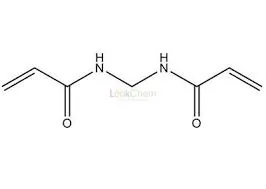
N,N-Methylene Bisacrylamide (bis-Acrylamide) 3x cryst. extrapure AR, 99.5%
CAS:Formula:C7H10N2O2Purezza:min. 99.5%Colore e forma:White, Crystalline powder, Clear, ColourlessPeso molecolare:154.1710X Tris-Glycine-SDS Buffer for molecular biology
SDS-PAGE is a method for separating proteins according to their movement in an electrical current and their molecular mass, which relates to the length of their polypeptide chains. A widely recognized system for this technique is the Laemmli system, introduced in 1970. It employs Tris-Glycine gels made up of a stacking gel and a resolving gel, utilizing varying acrylamide concentrations to achieve separation based on molecular weight. This traditional system incorporates a discontinuous buffer setup, with different pH levels and ionic strengths for the buffers: the running buffer (10X Tris-Glycine-SDS Gel Running Buffer) is set at pH 8.3, while the stacking gel operates at pH 6.8, and the resolving gel is at pH 8.8.Colore e forma:Clear, Colourless, Liquid10X Tris-Glycine pH-8.3 Tank Buffer for molecular biology
The 10X Tris-Glycine Buffer, with a pH of 8.3, is designed specifically for use in native PAGE gel electrophoresis. This buffer offers great convenience, as it can be diluted with distilled water or another suitable solvent according to the specific application prior to electrophoresis. Additionally, it is useful for the transfer of protein samples onto nitrocellulose membranes during western blotting. To prevent the gel from swelling during the transfer process and to enhance the binding of protein samples to nitrocellulose, the inclusion of methanol is essential.Colore e forma:Clear, Colourless, Liquid10X TE Buffer pH-8.0 for molecular biology
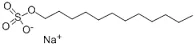
TE buffer, often called T10E1 buffer is formulated from two primary components: Tris and EDTA. Tris serves to stabilize the pH, while EDTA protects DNA and RNA by chelating metal ions that are necessary for the activity of degrading enzymes, such as nucleases. This combination effectively preserves the integrity of nucleic acids. For optimal RNA protection, the solution should be maintained at a pH of 7.5, while DNA is best stored at a pH of 8.0. Importantly, a pH of 8.0 is also suitable for storing both DNA and RNA T10E1 bufferColore e forma:Clear, Colourless, LiquidSodium Lauryl Sulphate (SDS, SLS) ACS, 99%
CAS:Formula:C12H25SO4NaPurezza:min.99%Colore e forma:White, Crystalline powder, Clear, ColourlessPeso molecolare:288.38Ref: SR-54468
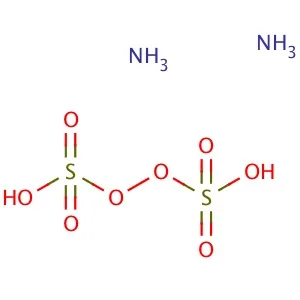
Prodotto fuori produzioneAmmonium Persulphate (APS) for electrophoresis, 99%
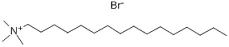
CAS:Formula:N2H8S2O8Purezza:min. 99%Colore e forma:White, Crystalline powder, Clear, ColourlessPeso molecolare:228.20Cetyltrimethyl Ammonium Bromide (CTAB) for molecular biology, 99%
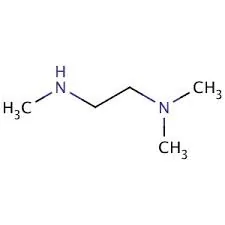
CAS:Formula:C19H42BrNPurezza:min. 99.5%Colore e forma:White, Crystalline powder, Clear, Colourless, Clear, ColourlessPeso molecolare:364.45N,N,N-Trimethylethylenediamine pure, 97%
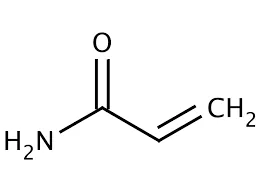
CAS:Formula:C5H14N2Purezza:min. 97%Colore e forma:Clear, Colourless, LiquidPeso molecolare:102.18Acrylamide 3x cryst. extrapure AR, 99.9%
CAS:Prodotto controllatoFormula:C3H5NOPurezza:min. 99.9%Colore e forma:White, Crystalline powder, Clear, ColourlessPeso molecolare:71.08Ref: SR-15657
Prodotto fuori produzioneCetyltrimethyl Ammonium Chloride (CTAC) for molecular biology, 99%
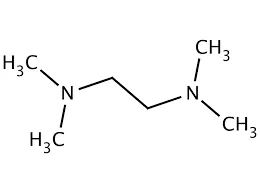
CAS:Formula:C19H42NClPurezza:min. 99%Colore e forma:White, Crystalline powder, Clear, ColourlessPeso molecolare:320.00N,N,N,N-Tetramethyl Ethylenediamine (TEMED) for molecular biology, 99.5%
CAS:Formula:C6H16N2Purezza:min. 99.5%Colore e forma:Clear, Colourless, LiquidPeso molecolare:116.21Ethidium Bromide Solution (10mg/ml)
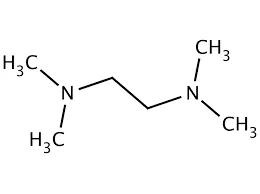
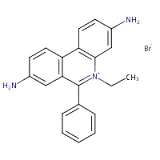
Formula:C21H20N3BrColore e forma:Dark red, Clear, LiquidPeso molecolare:394.32N,N,N,N-Tetramethyl Ethylenediamine (TEMED) extrapure AR, ExiPlus, Multi-Compendial, 99%
CAS:Formula:C6H16N2Purezza:min. 99%Colore e forma:Clear, Colourless, LiquidPeso molecolare:116.21Ethidium Bromide extrapure, 95%
CAS:Formula:C21H20N3BrPurezza:min.95%Colore e forma:Red, Crystalline Powder, Clear, RedPeso molecolare:394.3230% Acrylamide / Bis-acrylamide Mix Solution (Ratio 29:1)
SDS-PAGE is a method employed for separating proteins via electrophoresis, based on the principle that charged molecules migrate through a matrix in response to an applied electric field. The matrix utilized for this separation is polyacrylamide, which is derived from acrylamide, a compound that can be hazardous. Polyacrylamide is commonly used for the size-based separation of proteins and nucleic acids. The gel matrix forms through the free radical polymerization of acrylamide along with a crosslinking agent known as N, N-Methylenebisacrylamide. In this process, acrylamide monomers polymerize into long chains, initiated by a free radical-generating system, and these chains are linked by the cross-linker, resulting in a gel structure. This gel is crucial for effective electrophoretic separation, facilitating the analysis of biomolecules based on size.Colore e forma:Clear, Colourless, Liquid