Antibiotici
Gli antibiotici sono composti progettati per distruggere o inibire la crescita di vari microrganismi, svolgendo un ruolo cruciale nel trattamento delle infezioni e nella prevenzione della diffusione delle malattie. Questa categoria offre una gamma diversificata di ingredienti attivi specificamente per la ricerca nel campo biochimico. Questi composti sono strumenti essenziali nello studio dei meccanismi batterici, dei modelli di resistenza e nello sviluppo di nuovi agenti terapeutici. I ricercatori possono esplorare una vasta gamma di antibiotici per comprenderne gli effetti, ottimizzarne l'uso e sviluppare nuovi trattamenti per combattere le minacce microbiche emergenti. La disponibilità di uno spettro così ampio di antibiotici supporta la ricerca avanzata e l'innovazione in microbiologia e scienze farmaceutiche.
Sottocategorie di "Antibiotici"
- Antibiotici macrolidi(26 prodotti)
- Antibiotici steroidei(31 prodotti)
- Antibiotici tetraciclina(20 prodotti)
- antibiotici β-lattamici(11 prodotti)
Trovati 4100 prodotti di "Antibiotici"
Ordinare per
Purezza (%)
0
100
|
0
|
50
|
90
|
95
|
100
Dihydrostreptomycin sesquisulfate
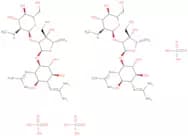
CAS:<p>Dihydrostreptomycin sesquisulfate is an aminoglycoside antibiotic, which is derived from the bacterium Streptomyces griseus. Its mode of action involves binding to the 30S subunit of the bacterial ribosome, leading to the disruption of protein synthesis. This binding interferes with the initiation complex formation, causing misreading of mRNA and ultimately inhibiting bacterial growth.</p>Formula:C21H41N7O12•(H2SO4)1Purezza:Min. 95%Peso molecolare:730.71 g/molLysostaphin, from staphylococcus staphylolyticus
CAS:<p>Lysostaphin, from Staphylococcus staphylolyticus is a zinc metalloenzyme with action on bacterial cell walls by cleaving polyglycine cross-links and is used for treating staphylococcal infections and in research applications.</p>Purezza:Min. 95%Colore e forma:PowderClindamycin sulfoxide
CAS:<p>Clindamycin sulfoxide is a potent metabolite of the lincosamide antibiotic clindamycin, which is derived from the fermentation product of *Streptomyces lincolnensis*. This compound acts by inhibiting bacterial protein synthesis through binding to the 50S ribosomal subunit, thereby interfering with the translocation steps in protein elongation. The mechanism effectively suppresses the growth of a broad range of Gram-positive bacteria, including *Staphylococcus aureus*, *Streptococcus pneumoniae*, and anaerobic microorganisms.</p>Formula:C18H33ClN2O6SPurezza:Min. 95%Peso molecolare:440.98 g/molBorrelidin
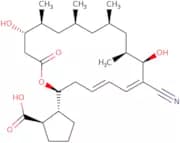
CAS:<p>Borrelidin is a potent antibiotic of the polyketide class, which is isolated from various Streptomyces species. Its mode of action is characterized by its inhibition of threonyl-tRNA synthetase, effectively disrupting protein synthesis within bacteria. Additionally, Borrelidin is known for its unique anti-angiogenic properties, which result from the inhibition of endothelial cell proliferation, making it a compound of interest in cancer research.</p>Purezza:Min. 95%Erythromycin F
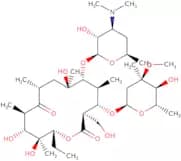
CAS:<p>Erythromycin F is an antibiotic, which is a naturally derived product obtained from the bacterium *Streptomyces erythreus*. It operates by inhibiting bacterial protein synthesis through binding to the 50S ribosomal subunit. This binding effectively blocks the translocation steps in protein elongation, thus preventing the growth and multiplication of susceptible bacteria.</p>Formula:C37H67NO14Purezza:Min. 95%Peso molecolare:749.93 g/molBoromycin
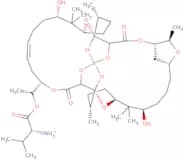
CAS:Boromycin is a macrolide antibiotic, which is derived from the fermentation of certain strains of Streptomyces bacteria. It operates as an ionophore with the ability to transport ions across lipid membranes, effectively disrupting ionic gradients. This mechanism of action compromises essential cellular processes in target organisms, thereby exerting its antimicrobial effects.Formula:C45H74BNO15Purezza:Min. 95%Peso molecolare:879.88 g/molStreptidine
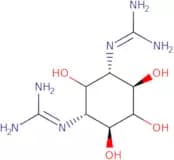
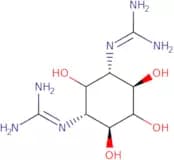
CAS:<p>Streptidine is an amino cyclitol, which is a component of certain aminoglycoside antibiotics. This compound originates from the actinomycete *Streptomyces griseus*, a soil bacterium known for its ability to produce a variety of antibiotics. Streptidine plays a crucial role in the mechanism of aminoglycosides by contributing to the binding affinity of these antibiotics to the bacterial ribosome.</p>Formula:C8H18N6O4Purezza:Min. 95%Peso molecolare:262.13895Cefodizime
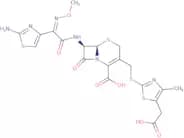
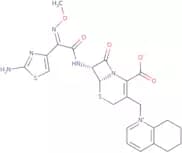
CAS:<p>Cefodizime is a third-generation cephalosporin antibiotic, which is derived from the fungus Acremonium. It exerts its bactericidal effects by inhibiting bacterial cell wall synthesis. This action is achieved through binding to penicillin-binding proteins (PBPs), leading to the interruption of peptidoglycan cross-linking essential for the bacterial cell wall integrity. The breakdown of cell wall synthesis results in the lysis and death of the bacterial cell.</p>Purezza:Min. 95%PC 190723
CAS:<p>PC 190723 is a synthetic chemical compound, which is derived through targeted chemical synthesis processes involving precise organic reactions. Its mode of action involves disrupting cellular division by inhibiting specific protein functions essential for the mitotic process. This molecular interaction results in potent effects on cell division, making it a valuable tool for studying cellular mechanics and developing therapeutic strategies.</p>Formula:C14H8ClF2N3O2SPurezza:Min. 95%Peso molecolare:355.75 g/molCefquinome
CAS:<p>Cefquinome is a broad-spectrum antibiotic, which is a fourth-generation cephalosporin. It is derived from the β-lactam class of antibiotics and is specifically designed for veterinary applications. Its mode of action involves the inhibition of bacterial cell wall synthesis, leading to cell lysis and death. This action is facilitated through the binding of cefquinome to penicillin-binding proteins, which undermines the structural integrity of bacterial cell walls, proving effective against both Gram-positive and Gram-negative bacteria.</p>Formula:C23H24N6O5S2Purezza:Min. 95%Peso molecolare:528.61 g/molStreptidine dihydrochloride
CAS:<p>Streptidine dihydrochloride is a biochemical compound, specifically a derivative of streptomycin, which is obtained through chemical modification of the aminoglycoside antibiotic streptomycin. It is composed of streptidine, a constituent sugar derivative, that is integral to the structure of streptomycin, rendered as a hydrochloride salt to enhance solubility and stability.</p>Formula:C8H18N6O4·2HClPurezza:Min. 95%Pirlimycin HCl
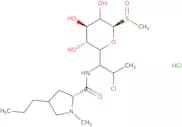
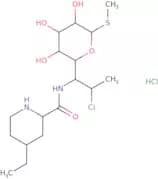
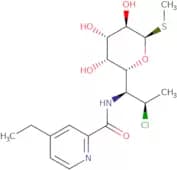
CAS:<p>Pirlimycin HCl is an antibacterial product, which is a semi-synthetic derivative of the natural antibiotic lincomycin produced by Streptomyces lincolnensis. Its mode of action involves the inhibition of bacterial protein synthesis by binding to the 50S ribosomal subunit, thereby preventing the elongation of peptide chains. This action is particularly effective against Gram-positive bacteria, including Staphylococcus and Streptococcus species.</p>Formula:C17H31ClN2O5S·HClPurezza:Min. 95%Colore e forma:White PowderPeso molecolare:447.42 g/mol11-Deoxyfusidic acid
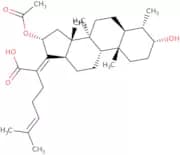
CAS:<p>11-Deoxyfusidic acid is a steroidal antibiotic, which is derived from the fermentation broth of certain strains of fungi, specifically within the Fusidium genus. Its mode of action involves inhibiting bacterial protein synthesis by interacting with elongation factor G (EF-G) on the ribosome, thus disrupting essential processes and impeding bacterial growth.</p>Formula:C31H48O5Purezza:Min. 95%Peso molecolare:500.71 g/molCefquinome sulfate
CAS:<p>Cefquinome sulfate is a cephalosporin antibiotic, which is a synthetic, broad-spectrum antimicrobial agent. It is derived from the beta-lactam family, specifically designed to combat Gram-positive and Gram-negative bacterial pathogens. The mode of action involves inhibiting bacterial cell wall synthesis. It achieves this by binding to penicillin-binding proteins (PBPs) within the bacterial cell wall, ultimately leading to cell lysis and death due to the interruption of necessary cell wall components.</p>Formula:C23H26N6O9S3Purezza:Min. 95%Colore e forma:White To Light (Or Pale) Yellow To Beige To Light Brown SolidPeso molecolare:626.69 g/molCefotaxime sodium - Sterile grade
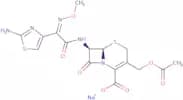
CAS:<p>Cefotaxime sodium - Sterile grade is a cephalosporin antibiotic, which is derived from the beta-lactam class of antibacterial agents. It effectively disrupts bacterial cell wall synthesis by binding to and inhibiting penicillin-binding proteins, leading to cell lysis and death. This mechanism of action is potent against a variety of Gram-positive and Gram-negative bacteria, making it a valuable tool in clinical settings.</p>Formula:C16H17N5O7S2·NaPurezza:Min. 95%Peso molecolare:478.46 g/molTridehydro pirlimycin
CAS:<p>Tridehydro pirlimycin is an antibiotic compound, which is a synthetic derivative with origins in the lincosamide family. It is characterized by its ability to inhibit bacterial protein synthesis by binding to the 50S ribosomal subunit, leading to a bacteriostatic effect. The compound is primarily developed for its use in veterinary medicine, particularly in the treatment and management of bacterial infections in animals.</p>Formula:C17H25ClN2O5SPurezza:Min. 95%Peso molecolare:404.91 g/mol14-Chloro daunorubicin
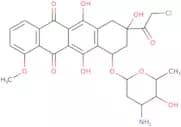
CAS:<p>14-Chloro daunorubicin is a chemotherapeutic agent, which is a synthetic derivative of the naturally occurring anthracycline antibiotic, daunorubicin. This compound is specifically modified to include a chlorine atom at the 14th position, which enhances its pharmacological effectiveness compared to its parent compound. The drug acts primarily by intercalating into DNA, disrupting the function of topoisomerase II, and generating free radicals. These mechanisms collectively inhibit DNA replication and transcription, leading to cell apoptosis, particularly in rapidly dividing cancer cells.</p>Formula:C27H28ClNO10Purezza:Min. 95%Peso molecolare:561.96 g/molCeftobiprole medocaril
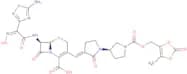
CAS:<p>Ceftobiprole medocaril is a prodrug of the cephalosporin class, which is a beta-lactam antibiotic. It is synthetically derived, designed to combat Gram-positive and Gram-negative bacteria. The mode of action involves binding to penicillin-binding proteins (PBPs), crucial for bacterial cell wall synthesis, ultimately leading to bacterial cell lysis and death.</p>Formula:C26H26N8O11S2Purezza:Min. 95%Peso molecolare:690.66 g/molCeftizoxime alapivoxil
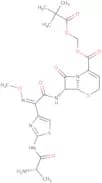
CAS:Ceftizoxime alapivoxil is a prodrug antibiotic, which is derived from ceftizoxime, a third-generation cephalosporin. This semi-synthetic source enables the compound to effectively combat a wide range of bacterial infections by improving oral bioavailability compared to its parent compound. Once administered, ceftizoxime alapivoxil is metabolized in the body to release ceftizoxime, which exerts its antibacterial activity by binding to penicillin-binding proteins (PBPs) on bacterial cell walls. This binding action inhibits the transpeptidation step critical for cell wall synthesis, leading to cell lysis and bacterial death.Purezza:Min. 95%Clindamycin-2,3-diphosphate
<p>Clindamycin-2,3-diphosphate is a biochemical compound, which is derived from the antibiotic clindamycin, sourced through chemical modification to include diphosphate groups. Its mode of action involves inhibiting bacterial protein synthesis by binding to the 50S ribosomal subunit, thus interfering with peptide chain initiation and elongation. This disruption effectively halts bacterial growth, particularly in Gram-positive bacteria, and is crucial in combatting infections resistant to other antibiotics.</p>Formula:C18H35ClN2O11P2SPurezza:Min. 95%Peso molecolare:584.94 g/mol