Building Blocks Idrocarburici
I building blocks idrocarburici sono composti organici costituiti esclusivamente da atomi di carbonio e idrogeno. Queste strutture fondamentali costituiscono la base per la sintesi di una vasta gamma di molecole complesse. I building blocks idrocarburici sono utilizzati nello sviluppo di prodotti farmaceutici, polimeri e altri composti organici. In CymitQuimica offriamo un'ampia gamma di building blocks idrocarburici di alta qualità per supportare i tuoi progetti di sintesi e ricerca.
Sottocategorie di "Building Blocks Idrocarburici"
Trovati 5575 prodotti di "Building Blocks Idrocarburici"
Ordinare per
Purezza (%)
0
100
|
0
|
50
|
90
|
95
|
100
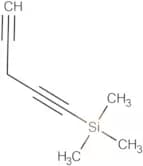
1-Trimethylsilyl-1,4-pentadiyne
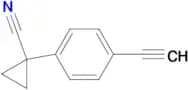
CAS:<p>S19940 - 1-Trimethylsilyl-1,4-pentadiyne</p>Formula:C8H12SiPurezza:95%Colore e forma:Clear dark orange liquidPeso molecolare:136.2691-(4-ETHYNYLPHENYL)CYCLOPROPANE-1-CARBONITRILE
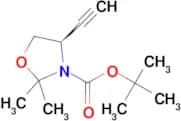
CAS:Formula:C12H9NPurezza:95.0%Peso molecolare:167.211(R)-tert-Butyl 4-ethynyl-2,2-dimethyloxazolidine-3-carboxylate
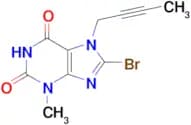
CAS:Formula:C12H19NO3Purezza:95.0%Peso molecolare:225.2888-Bromo-7-(but-2-yn-1-yl)-3-methyl-1H-purine-2,6(3H,7H)-dione
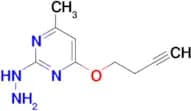
CAS:Formula:C10H9BrN4O2Purezza:98%Colore e forma:SolidPeso molecolare:297.1124-(but-3-yn-1-yloxy)-2-hydrazinyl-6-methylpyrimidine
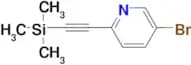
CAS:Formula:C9H12N4OPurezza:95.0%Peso molecolare:192.2225-BROMO-2-(2-(TRIMETHYLSILYL)ETHYNYL)PYRIDINE
CAS:Formula:C10H12BrNSiPurezza:95.0%Peso molecolare:254.202Ref: 10-F780196
1g572,00€5g2.621,00€10g5.241,00€25g12.304,00€100g43.025,00€2.5g1.312,00€100mg180,00€250mg273,00€500mg421,00€3-(2-naphthyl)prop-2-ynoic acid
CAS:Formula:C13H8O2Purezza:95.0%Colore e forma:SolidPeso molecolare:196.2052-[(4-aminobut-2-yn-1-yl)oxy]benzamide dihydrochloride
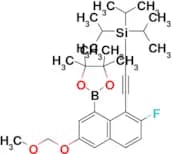
CAS:Formula:C11H14Cl2N2O2Purezza:95.0%Peso molecolare:277.15((2-Fluoro-6-(methoxymethoxy)-8-(4,4,5,5-tetramethyl-1,3,2-dioxaborolan-2-yl)naphthalen-1-yl)ethynyl)triisopropylsilane
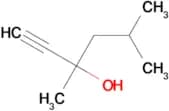
CAS:Purezza:96%Peso molecolare:512.5399783,5-Dimethylhex-1-yn-3-ol
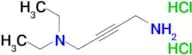
CAS:Formula:C8H14OPurezza:98%Colore e forma:Liquid, ClearPeso molecolare:126.199N,N-diethylbut-2-yne-1,4-diamine dihydrochloride
CAS:Formula:C8H18Cl2N2Purezza:95.0%Peso molecolare:213.15ETHYL 3-(4-CHLOROPHENYL)PROPIOLATE
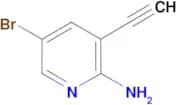
CAS:Formula:C11H9ClO2Purezza:97%Colore e forma:SolidPeso molecolare:208.645-Bromo-3-ethynylpyridin-2-ylamine
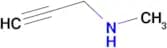
CAS:Formula:C7H5BrN2Purezza:95%Colore e forma:SolidPeso molecolare:197.035N-Methyl-N-prop-2-ynylamine
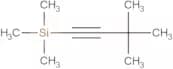
CAS:Formula:C4H7NPurezza:95.0%Colore e forma:Liquid, Colourless to pale yellow clear liquidPeso molecolare:69.1071-Trimethylsilyl-3,3-dimethyl-1-butyne
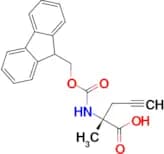
CAS:<p>S19270 - 1-Trimethylsilyl-3,3-dimethyl-1-butyne</p>Formula:C9H18SiPurezza:95Colore e forma:LiquidPeso molecolare:154.328(R)-2-((((9H-Fluoren-9-yl)methoxy)carbonyl)amino)-2-methylpent-4-ynoic acid
CAS:Formula:C21H19NO4Purezza:98%Peso molecolare:349.3869,10-Bis(phenylethynyl)anthracene
CAS:Formula:C30H18Purezza:97%Colore e forma:Liquid, No data available.Peso molecolare:378.4744,6-Decadiyn-1,10-diol
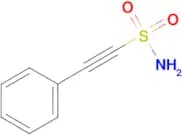
CAS:Formula:C10H14O2Purezza:97%Colore e forma:Liquid, GranulesPeso molecolare:166.222-phenylacetylenesulfonamide
CAS:Formula:C8H7NO2SPurezza:98%Colore e forma:SolidPeso molecolare:181.21TERT-BUTYLDIPHENYL(PROP-2-YN-1-YLOXY)SILANE
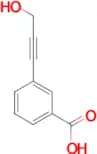
CAS:Formula:C19H22OSiPurezza:95.0%Peso molecolare:294.4693-(3-Hydroxy-prop-1-ynyl)-benzoic acid
CAS:Formula:C10H8O3Colore e forma:SolidPeso molecolare:176.1714-(4-Fluorophenylethynyl)phenol
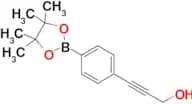
CAS:Formula:C14H9FOPurezza:98%Colore e forma:Solid, White to reddish grey powderPeso molecolare:212.2233-(4-(4,4,5,5-Tetramethyl-1,3,2-dioxaborolan-2-yl)phenyl)prop-2-yn-1-ol
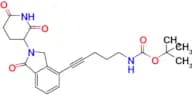
CAS:Purezza:98%Peso molecolare:258.1199951tert-Butyl (5-(2-(2,6-dioxopiperidin-3-yl)-1-oxoisoindolin-4-yl)pent-4-yn-1-yl)carbamate
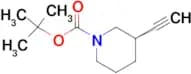
CAS:Purezza:98%Peso molecolare:425.48498541-PIPERIDINECARBOXYLIC ACID, 3-ETHYNYL-, 1,1-DIMETHYLETHYL ESTER, (3R)-
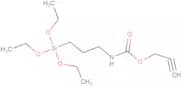
CAS:Formula:C12H19NO2Purezza:97%Peso molecolare:209.289O-(Propargyl)-N-(triethoxysilylpropyl)carbamate (inhibited with MEHQ)
CAS:<p>S25262 - O-(Propargyl)-N-(triethoxysilylpropyl)carbamate (inhibited with MEHQ)</p>Formula:C13H25NO5SiPurezza:≥95%(GC)Colore e forma:Liquid, Clear to straw liquidPeso molecolare:303.43Ref: 10-F649903
1g234,00€5g849,00€10g1.337,00€25g3.340,00€100g13.355,00€2.5g524,00€50mg49,00€100mg75,00€250mg112,00€500mg174,00€[S(R)]-N-[(R)-[6-(Diphenylphosphino)benzo[d][1,3]dioxol-5-yl]-1-naphthalenylmethyl]-2-methyl-2-propanesulfinamide
CAS:Purezza:95%Peso molecolare:565.67[S(R)]-N-[(R)-[3,5-Bis(1,1-dimethylethyl)-4-methoxyphenyl][2-(diphenylphosphino)phenyl]methyl]-2-methyl-2-propanesulfinamide
CAS:Purezza:95%Peso molecolare:613.847-Octyn-1-ol
CAS:Prodotto controllato<p>Applications 7-Octyn-1-ol is used in the synthesis of the sex pheromone of the citrus leafminer, Phyllocnistis citrella.<br>References Ando, T., et al.: Agric. Biol. Chem., 49, 3633 (1985), Beevor, P., et al.: J. Chem. Ecol., 12, 1 (1986), Kerr, D., et al.: J. Med. Chem., 33, 1958 (1990), McElfresh, J., et al.: Ecology, 82, 3505 (2002),<br></p>Formula:C8H14OColore e forma:NeatPeso molecolare:126.20Vinylcyclopropane
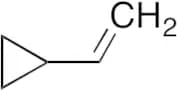
CAS:Prodotto controllato<p>Stability Highly Volatile<br>Applications Vinylcyclopropane is a useful synthetic intermediate. Vinylcyclopropane and its derivatives can participate in a variety of transition-metal-catalyzed multicomponent cycloadditions to produce five- to eight-membered carbocycles.<br>References Jiao, L., et al.: J. Org. Chem., 78, 6842 (2013); Pasto, D., et al.: Tetrahedron Lett., 9, 713 (1979); Larock, R., et al.: Tetrahedron, 52, 2743 (1996)<br></p>Formula:C5H8Colore e forma:NeatPeso molecolare:68.123-Methyl-1-butanol
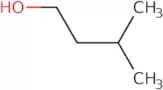
CAS:<p>Volatile compound with banana scent</p>Formula:C5H12OPurezza:Min. 95%Colore e forma:Clear LiquidPeso molecolare:88.15 g/molMethanesulfonic anhydride
CAS:<p>Methanesulfonic anhydride is a white crystalline solid that is soluble in water and ethanol. It has been shown to be a potent inhibitor of acetaminophen metabolism and the formation of reactive metabolites. Methanesulfonic anhydride inhibits the metabolic activity of cytochrome P450 enzymes, which are responsible for the oxidation of acetaminophen. This inhibition leads to lower levels of toxic metabolites and less tissue damage. Methanesulfonic anhydride also modulates other assays, such as those for nitric oxide synthase and prostaglandin E2 receptors. Methanesulfonic anhydride is used as a catalyst in chemical reactions, including those that produce hydrogen sulfide gas for use in gold mining. It has also been used to study the localization of various proteins by using probes labeled with methanesulfonic anhydride. Methanesulfonic anhydride may cause hypertension due to its ability to inhibit the degradation of norepinephrine, leading to increased</p>Formula:C2H6O5S2Purezza:Min. 95%Colore e forma:PowderPeso molecolare:174.2 g/moltert-Butyl 3-bromopropionate
CAS:<p>Tert-butyl 3-bromopropionate is a linker for the synthesis of pleuromutilin derivatives. It has been used as a model substrate for studying the effects of hypertrophy on cardiac muscle. Tert-butyl 3-bromopropionate has also been shown to inhibit the production of proinflammatory cytokines in response to bacterial infection, and can be used as an antibacterial agent. Tert-butyl 3-bromopropionate binds to RNA and inhibits protein synthesis, which leads to cell death by preventing the production of proteins vital for cell division. Tert-butyl 3-bromopropionate is also a potent inhibitor of chloride channels that are found in nerve cells and prevents the flow of chloride ions through these channels, leading to paralysis. This drug also inhibits hydrogen fluoride excretion in rats, which may be due to its ability to bind with chloride ions in the kidney tubules, preventing their</p>Formula:C7H13BrO2Purezza:Min. 95%Colore e forma:Colorless Clear LiquidPeso molecolare:209.08 g/moltert-Butylisocyanate
CAS:<p>Please enquire for more information about tert-Butylisocyanate including the price, delivery time and more detailed product information at the technical inquiry form on this page</p>Formula:C5H9NOPurezza:Min. 98.5 Area-%Peso molecolare:99.13 g/molRef: 3D-W-107973
1kgPrezzo su richiesta250gPrezzo su richiesta500gPrezzo su richiesta2500gPrezzo su richiestaHydroxypropanedial
CAS:<p>Hydroxypropanedial is a hydroxy group-containing compound that is not found in natural sources. It has antioxidative properties, which may be due to its ability to scavenge reactive oxygen species or donate hydrogen atoms to free radicals. The compound also has cyclohexane ring and carbonyl groups, which are responsible for the hydroxyl and carboxylic acid functionalities respectively. This substance is used as a chromatographic reagent to measure second-order rate constants of reactions involving hydroxyl radicals. Hydroxypropanedial absorbs light strongly at wavelengths shorter than 300 nm, which is the most effective wavelength range for uv absorption in biological systems.</p>Formula:C3H4O3Purezza:Min. 95%Colore e forma:Off-White To Light (Or Pale) Brown SolidPeso molecolare:88.06 g/molHexabromoethane
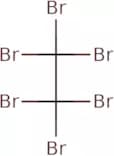
CAS:<p>Hexabromoethane is a metal chelate that has been shown to activate the polymerization of cyclohexane rings. It is often used as a light-sensitive initiator for the production of polymers, such as polyethylene. Hexabromoethane can also be found in some halogenated compounds and hydroxyl groups. The molecule is made up of six bromine atoms, an ethane chain, and one hydrogen atom. Hexabromoethane has significant interactions with other functional groups, including hydroxyls and monomers.</p>Formula:C2Br6Purezza:Min. 95%Colore e forma:PowderPeso molecolare:503.45 g/mol2,2,4,4,6,8,8-Heptamethylnonane
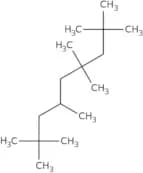
CAS:<p>2,2,4,4,6,8,8-Heptamethylnonane is a hydrogenated form of 2-methylnonane. It is used as a model system for fatty acids in order to study the kinetics of air entrainment and constant pressure distillation. The chemical stability of 2,2,4,4,6,8,8-heptamethylnonane has been shown to be excellent when heated at 200°C under nitrogen. This compound can also be used as an analytical method for ethylene diamine in pharmaceutical preparations of sodium salts and boron nitride. The use of 2-methylnonane as a starting material may lead to the production of chinese herb by reacting with acetic acid or formic acid.</p>Formula:C16H34Purezza:Min. 95%Colore e forma:PowderPeso molecolare:226.44 g/mol1,2-Ethanedithiol
CAS:<p>1,2-Ethanedithiol is a molecule that consists of a sulfur atom and two ethyl groups. It can form stable complexes with hydrogen fluoride and trifluoroacetic acid as well as hydrochloric acid. 1,2-Ethanedithiol is reactive with nucleophiles such as amines, thiols, and alcohols. The molecule has an electrochemical impedance spectroscopy (EIS) model system that has shown to react with the electron flow from the electrode to the solution of a compound. The EIS model system also showed that a conformational change in the molecule could result in light emission.</p>Formula:C2H6S2Purezza:Min. 95%Colore e forma:Colorless Clear LiquidPeso molecolare:94.2 g/molChlorobutanol
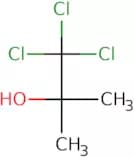
CAS:<p>Chlorobutanol is an antimicrobial agent that is used in the preservation of pharmaceuticals, cosmetics, and other products. It has been shown to be effective against a variety of bacterial and fungal organisms. Chlorobutanol is also used as a preservative in topical ophthalmic preparations. In addition, chlorobutanol has been found to be a potent inhibitor of histone deacetylase (HDAC) activity, which may be due to its ability to bind to the active site of HDACs. This binding prevents acetylation of lysine residues on histones, thereby preventing transcriptional activation.</p>Formula:C4H7OCl3Purezza:Min. 95%Colore e forma:White To Off-White SolidPeso molecolare:177.46 g/mol






![2-[(4-aminobut-2-yn-1-yl)oxy]benzamide dihydrochloride](/_next/image/?url=https%3A%2Fstatic.cymitquimica.com%2Fproducts%2F10%2Fthumb-webp%2FF541793.webp&w=3840&q=75)

















![[S(R)]-N-[(R)-[6-(Diphenylphosphino)benzo[d][1,3]dioxol-5-yl]-1-naphthalenylmethyl]-2-methyl-2-pro…](/_next/image/?url=https%3A%2Fstatic.cymitquimica.com%2Fproducts%2F10%2Fthumb-webp%2FF988117.webp&w=3840&q=75)
![[S(R)]-N-[(R)-[3,5-Bis(1,1-dimethylethyl)-4-methoxyphenyl][2-(diphenylphosphino)phenyl]methyl]-2-m…](/_next/image/?url=https%3A%2Fstatic.cymitquimica.com%2Fproducts%2F10%2Fthumb-webp%2FF988115.webp&w=3840&q=75)