Building Blocks Idrocarburici
I building blocks idrocarburici sono composti organici costituiti esclusivamente da atomi di carbonio e idrogeno. Queste strutture fondamentali costituiscono la base per la sintesi di una vasta gamma di molecole complesse. I building blocks idrocarburici sono utilizzati nello sviluppo di prodotti farmaceutici, polimeri e altri composti organici. In CymitQuimica offriamo un'ampia gamma di building blocks idrocarburici di alta qualità per supportare i tuoi progetti di sintesi e ricerca.
Sottocategorie di "Building Blocks Idrocarburici"
Trovati 5575 prodotti di "Building Blocks Idrocarburici"
Ordinare per
Purezza (%)
0
100
|
0
|
50
|
90
|
95
|
100
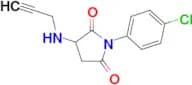
1-(4-chlorophenyl)-3-(prop-2-yn-1-ylamino)pyrrolidine-2,5-dione
CAS:Formula:C13H11ClN2O2Purezza:97%Peso molecolare:262.697-Octyn-1-ol
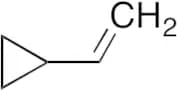
CAS:Prodotto controllato<p>Applications 7-Octyn-1-ol is used in the synthesis of the sex pheromone of the citrus leafminer, Phyllocnistis citrella.<br>References Ando, T., et al.: Agric. Biol. Chem., 49, 3633 (1985), Beevor, P., et al.: J. Chem. Ecol., 12, 1 (1986), Kerr, D., et al.: J. Med. Chem., 33, 1958 (1990), McElfresh, J., et al.: Ecology, 82, 3505 (2002),<br></p>Formula:C8H14OColore e forma:NeatPeso molecolare:126.20Vinylcyclopropane
CAS:Prodotto controllato<p>Stability Highly Volatile<br>Applications Vinylcyclopropane is a useful synthetic intermediate. Vinylcyclopropane and its derivatives can participate in a variety of transition-metal-catalyzed multicomponent cycloadditions to produce five- to eight-membered carbocycles.<br>References Jiao, L., et al.: J. Org. Chem., 78, 6842 (2013); Pasto, D., et al.: Tetrahedron Lett., 9, 713 (1979); Larock, R., et al.: Tetrahedron, 52, 2743 (1996)<br></p>Formula:C5H8Colore e forma:NeatPeso molecolare:68.12Hydroxypropanedial
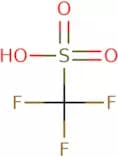
CAS:<p>Hydroxypropanedial is a hydroxy group-containing compound that is not found in natural sources. It has antioxidative properties, which may be due to its ability to scavenge reactive oxygen species or donate hydrogen atoms to free radicals. The compound also has cyclohexane ring and carbonyl groups, which are responsible for the hydroxyl and carboxylic acid functionalities respectively. This substance is used as a chromatographic reagent to measure second-order rate constants of reactions involving hydroxyl radicals. Hydroxypropanedial absorbs light strongly at wavelengths shorter than 300 nm, which is the most effective wavelength range for uv absorption in biological systems.</p>Formula:C3H4O3Purezza:Min. 95%Colore e forma:Off-White To Light (Or Pale) Brown SolidPeso molecolare:88.06 g/molTrifluoromethanesulfonic acid
CAS:<p>Trifluoromethanesulfonic acid is a strong oxidizing agent that is used as a catalyst for the synthesis of organic compounds. It is an excellent solvent for many types of reactions and has been shown to be an effective catalyst for the synthesis of triflate, which can be used in cationic polymerization. Trifluoromethanesulfonic acid also has potential applications in carbohydrate chemistry and asymmetric synthesis, due to its ability to reduce carboxylic acids and nitriles. Trifluoromethanesulfonic acid can be synthesized by reacting potassium hexafluorophosphate with amines or nitrogen atoms under activated conditions.</p>Formula:CHF3O3SPurezza:Min. 95%Colore e forma:Clear LiquidPeso molecolare:150.08 g/mol2-(2-Phenoxyethoxy)ethanol
CAS:<p>2-(2-Phenoxyethoxy)ethanol is a fine chemical and a useful building block. It is an important intermediate in the synthesis of other chemicals, such as pharmaceuticals, herbicides, and pesticides. 2-(2-Phenoxyethoxy)ethanol can be used as a research chemical or reagent. It can also be used to prepare complex compounds and versatile scaffolds. CAS No. 104-68-7</p>Formula:C10H14O3Purezza:Min. 95.0 Area-%Peso molecolare:182.24 g/molPerfluoroheptanoyl chloride
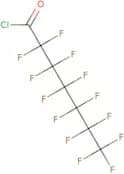
CAS:<p>Perfluoroheptanoyl chloride is a fluorinated hydrocarbon that is used as a surfactant in detergent compositions. It has been shown to be biostable, which means it does not react with other molecules in the environment. This compound also has low environmental toxicity because of its resistance to peroxidation and its ability to form stable complexes with metals. Perfluoroheptanoyl chloride has been shown to cause allergic reactions in some people and may cause adverse effects on animal health. Research on the effects of perfluoroheptanoyl chloride on Xenopus oocytes has demonstrated that this compound can affect gene expression and result in cell death.</p>Formula:C7CIF13OPurezza:Min. 95%Colore e forma:Colourless LiquidPeso molecolare:382.51 g/molBis[(pinacolato)boryl]methane
CAS:<p>Bis[(pinacolato)boryl]methane is a bifunctional organoboron reagent with an allyl group on one end and a cyclopropane on the other end. It is useful in organic synthesis as a nucleophile for allylation, as well as for the synthesis of unsymmetrical cyclopropanes. This compound can be used to catalyze asymmetric methods, such as the synthesis of alicyclic compounds. Bis[(pinacolato)boryl]methane can also be used to synthesize biomolecules.</p>Formula:C13H26B2O4Purezza:Min. 95%Colore e forma:White To Off-White SolidPeso molecolare:267.97 g/molEthanesulfonic acid, 70% aqueous solution
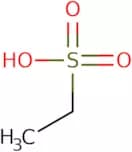
CAS:<p>Ethanesulfonic acid solution - 70 wt. % in H2O is a monosodium salt that is used as an enzymatic reagent for the determination of bacteria and fungi, as well as for the detection of infectious diseases. It has been shown to be effective against microdialysis probes with a high degree of sensitivity and specificity. Ethanesulfonic acid solution - 70 wt. % in H2O has been shown to have significant physiological effects on various regions of the body, including bowel disease, polymerase chain reaction (PCR), glycol ethers, antimicrobial agents, and radiation. Ethanesulfonic acid solution - 70 wt. % in H2O also inhibits the growth of bacteria by acting as a coumarin derivative that reacts with nucleotides to form dinucleotide phosphate, which blocks DNA synthesis and transcription from RNA templates.</p>Formula:C2H6O3SPurezza:(Titration) 68.0 To 72.0%Colore e forma:Clear LiquidPeso molecolare:110.13 g/molMethanesulfonic anhydride
CAS:<p>Methanesulfonic anhydride is a white crystalline solid that is soluble in water and ethanol. It has been shown to be a potent inhibitor of acetaminophen metabolism and the formation of reactive metabolites. Methanesulfonic anhydride inhibits the metabolic activity of cytochrome P450 enzymes, which are responsible for the oxidation of acetaminophen. This inhibition leads to lower levels of toxic metabolites and less tissue damage. Methanesulfonic anhydride also modulates other assays, such as those for nitric oxide synthase and prostaglandin E2 receptors. Methanesulfonic anhydride is used as a catalyst in chemical reactions, including those that produce hydrogen sulfide gas for use in gold mining. It has also been used to study the localization of various proteins by using probes labeled with methanesulfonic anhydride. Methanesulfonic anhydride may cause hypertension due to its ability to inhibit the degradation of norepinephrine, leading to increased</p>Formula:C2H6O5S2Purezza:Min. 95%Colore e forma:PowderPeso molecolare:174.2 g/molParaffin oil
CAS:<p>Paraffin oil is a mixture of hydrocarbons that is liquid at room temperature and pressure. It has been shown to inhibit the growth of human osteosarcoma cells in vitro, with a potency corresponding to that of delphinidin, a natural compound found in plants. Paraffin oil also has an inhibitory effect on the mitochondrial membrane potential and on the release of pro-inflammatory cytokines such as TNF-α and IL-6 by HL-60 cells. This inhibition may be due to the ability of paraffin oil to bind to Toll-like receptors (TLRs). The molecular mechanism underlying this inhibition remains unknown. Paraffin oil can be used as a model system for epigenetic modulators because it induces histone acetylation, which alters gene expression.</p>Purezza:Min. 95%Triisopropylsilyl trifluoromethanesulphonate
CAS:<p>Triisopropylsilyl trifluoromethanesulphonate (TIPS) is a naturally occurring compound that inhibits the enzyme dipeptidyl peptidase IV (DPP-IV). It has been shown to be active against alopecia areata in a mouse model and may have therapeutic potential for other autoimmune diseases. TIPS also has an inhibitory effect on sodium-dependent glucose transport, which may be useful in the treatment of hypertension. The reactive group of TIPS is hydroxyl, which can form a covalent bond with serine proteases and inhibit their activity. This reaction mechanism provides a new way to treat disorders such as metabolic diseases and infectious diseases. TIPS also has an inhibitory effect on ns3 protease, which is involved in the replication of human immunodeficiency virus type 1 (HIV-1) and other retroviruses.</p>Formula:C10H21F3O3SSiPurezza:Min. 95%Colore e forma:Colourless Clear LiquidPeso molecolare:306.42 g/mol










![Bis[(pinacolato)boryl]methane](/_next/image/?url=https%3A%2Fstatic.cymitquimica.com%2Fproducts%2F3D%2Fthumb-webp%2FFB18774.webp&w=3840&q=75)