Building Blocks Idrocarburici
I building blocks idrocarburici sono composti organici costituiti esclusivamente da atomi di carbonio e idrogeno. Queste strutture fondamentali costituiscono la base per la sintesi di una vasta gamma di molecole complesse. I building blocks idrocarburici sono utilizzati nello sviluppo di prodotti farmaceutici, polimeri e altri composti organici. In CymitQuimica offriamo un'ampia gamma di building blocks idrocarburici di alta qualità per supportare i tuoi progetti di sintesi e ricerca.
Sottocategorie di "Building Blocks Idrocarburici"
Trovati 5575 prodotti di "Building Blocks Idrocarburici"
Ordinare per
Purezza (%)
0
100
|
0
|
50
|
90
|
95
|
100
Iodopropynyl butylcarbamate
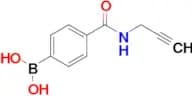
CAS:Formula:C8H12INO2Purezza:98%Colore e forma:SolidPeso molecolare:281.093(4-(Prop-2-yn-1-ylcarbamoyl)phenyl)boronic acid
CAS:Formula:C10H10BNO3Purezza:95.0%Colore e forma:SolidPeso molecolare:203[S(R)]-N-[(1S)-1-[5-(Diphenylphosphino)-9,9-dimethyl-9H-xanthen-4-yl]-2,2-dimethylpropyl]-2-methyl-2-propanesulfinamide
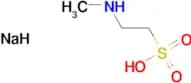
CAS:Purezza:97%Peso molecolare:583.77Sodium 2-(methylamino)ethanesulfonate
CAS:Purezza:64-66% in waterColore e forma:LiquidPeso molecolare:162.162-((3-Methoxyphenyl)ethynyl)-6-methylpyridine hydrochloride
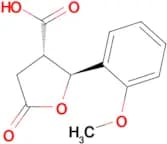
CAS:Purezza:98%Peso molecolare:259.730011trans-2-(2-Methoxyphenyl)-5-oxotetrahydrofuran-3-carboxylic acid
CAS:Purezza:98%Peso molecolare:236.2231,3,5-Tris(pyridin-4-ylethynyl)benzene
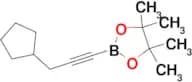
CAS:Purezza:98%Colore e forma:SolidPeso molecolare:381.43798832-(3-cyclopentyl-1-propyn-1-yl)-4,4,5,5-tetramethyl-1,3,2-dioxaborolane
CAS:Formula:C14H23BO2Purezza:95.0%Peso molecolare:234.15[S(R)]-N-[(1S)-1-(2′,6′-Diisopropyl)-(1,1′-biphenyl)-2-yl]-2-(diphenylphosphino)ethyl]-2-methyl-2-propanesulfinamide
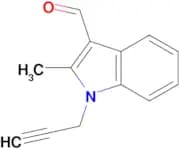
CAS:Purezza:95%Peso molecolare:569.792-Methyl-1-prop-2-ynyl-1H-indole-3-carbaldehyde
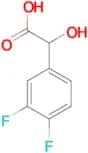
CAS:Formula:C13H11NOPurezza:95%Colore e forma:SolidPeso molecolare:197.2373,4-Difluoromandelic acid
CAS:Formula:C8H6F2O3Purezza:97.0%Colore e forma:SolidPeso molecolare:188.13Ref: 10-F649903
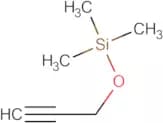
1g234,00€5g849,00€10g1.337,00€25g3.340,00€100g13.356,00€2.5g524,00€50mg49,00€100mg75,00€250mg112,00€500mg174,00€O-Trimethylsilylpropargyl alcohol
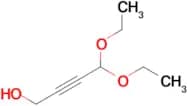
CAS:<p>S20125 - O-Trimethylsilylpropargyl alcohol</p>Formula:C6H12OSiPurezza:97%Colore e forma:Clear to straw liquidPeso molecolare:128.246[(1-ethynylcyclopropyl)methyl]benzene
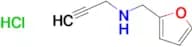
CAS:Formula:C12H12Purezza:97.0%Colore e forma:LiquidPeso molecolare:156.228(furan-2-ylmethyl)(prop-2-yn-1-yl)amine hydrochloride
CAS:Formula:C8H10ClNOPurezza:95+%Peso molecolare:171.624-MORPHOLINECARBOXYLIC ACID, 3-ETHYNYL-, 1,1-DIMETHYLETHYL ESTER
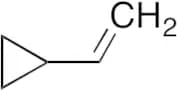
CAS:Formula:C11H17NO3Purezza:95%Colore e forma:SolidPeso molecolare:211.261Vinylcyclopropane
CAS:Prodotto controllato<p>Stability Highly Volatile<br>Applications Vinylcyclopropane is a useful synthetic intermediate. Vinylcyclopropane and its derivatives can participate in a variety of transition-metal-catalyzed multicomponent cycloadditions to produce five- to eight-membered carbocycles.<br>References Jiao, L., et al.: J. Org. Chem., 78, 6842 (2013); Pasto, D., et al.: Tetrahedron Lett., 9, 713 (1979); Larock, R., et al.: Tetrahedron, 52, 2743 (1996)<br></p>Formula:C5H8Colore e forma:NeatPeso molecolare:68.127-Octyn-1-ol
CAS:Prodotto controllato<p>Applications 7-Octyn-1-ol is used in the synthesis of the sex pheromone of the citrus leafminer, Phyllocnistis citrella.<br>References Ando, T., et al.: Agric. Biol. Chem., 49, 3633 (1985), Beevor, P., et al.: J. Chem. Ecol., 12, 1 (1986), Kerr, D., et al.: J. Med. Chem., 33, 1958 (1990), McElfresh, J., et al.: Ecology, 82, 3505 (2002),<br></p>Formula:C8H14OColore e forma:NeatPeso molecolare:126.202-(2-Phenoxyethoxy)ethanol
CAS:<p>2-(2-Phenoxyethoxy)ethanol (BPE) is a polycarboxylic acid that is used as an additive in the production of coatings, adhesives and plastics. It is a colorless liquid with a mild odor. BPE has synergic effect with cationic polymers and surfactants, which results in high resistance to water, oil and gas. This product can be used as an additive for cationic polymerization, which will increase the hydrophobicity of the material. BPE also has a high degree of resistance to biological treatment (e.g., potassium dichromate).</p>Formula:C10H14O3Purezza:Min. 95%Colore e forma:Clear LiquidPeso molecolare:182.22 g/mol1,2-Ethanedithiol
CAS:<p>1,2-Ethanedithiol is a molecule that consists of a sulfur atom and two ethyl groups. It can form stable complexes with hydrogen fluoride and trifluoroacetic acid as well as hydrochloric acid. 1,2-Ethanedithiol is reactive with nucleophiles such as amines, thiols, and alcohols. The molecule has an electrochemical impedance spectroscopy (EIS) model system that has shown to react with the electron flow from the electrode to the solution of a compound. The EIS model system also showed that a conformational change in the molecule could result in light emission.</p>Formula:C2H6S2Purezza:Min. 95%Colore e forma:Colorless Clear LiquidPeso molecolare:94.2 g/mol2-Nitropropane
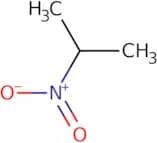
CAS:<p>2-Nitropropane is a pharmacological agent that is used for the treatment of bacterial infections. It is a nitroalkane, which are compounds with nitro groups in their molecular structure. 2-Nitropropane has been shown to inhibit DNA synthesis by binding to nuclear dna and inhibiting enzyme activities in vitro. Toxicological studies on 2-nitropropane have been conducted and show that it does not cause any adverse effects at low doses. The mechanism of action for 2-nitropropane has been investigated and found to inhibit the enzyme activity of nitrate reductase, which leads to an accumulation of the toxic nitrite ion (NO2-) in cells.</p>Formula:C3H7NO2Purezza:Min. 95%Colore e forma:Colorless PowderPeso molecolare:89.09 g/molDocosane
CAS:<p>Please enquire for more information about Docosane including the price, delivery time and more detailed product information at the technical inquiry form on this page</p>Formula:C22H46Purezza:Min. 95%Peso molecolare:310.6 g/molChlorobutanol
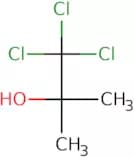
CAS:<p>Chlorobutanol is an antimicrobial agent that is used in the preservation of pharmaceuticals, cosmetics, and other products. It has been shown to be effective against a variety of bacterial and fungal organisms. Chlorobutanol is also used as a preservative in topical ophthalmic preparations. In addition, chlorobutanol has been found to be a potent inhibitor of histone deacetylase (HDAC) activity, which may be due to its ability to bind to the active site of HDACs. This binding prevents acetylation of lysine residues on histones, thereby preventing transcriptional activation.</p>Formula:C4H7OCl3Purezza:Min. 95%Colore e forma:White To Off-White SolidPeso molecolare:177.46 g/mol2-Bromo-2-nitro-1,3-propanediol
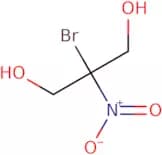
CAS:<p>2-Bromo-2-nitro-1,3-propanediol (BNP) is a preservative that is used in wastewater treatment. It is an antimicrobial agent that has synergistic effects with other antimicrobial agents such as triclosan, benzalkonium chloride and sesquiterpene lactones. 2-Bromo-2-nitro-1,3-propanediol has been shown to have a phase transition temperature of -28°C, which can be used to identify it in the laboratory. This compound also has a pK value of 4.4, which indicates that it is weakly acidic. 2-Bromo-2-nitro-1,3-propanediol can be used as an analytical method for the determination of p - hydroxybenzoic acid in aqueous samples by electrochemical impedance spectroscopy (EIS).</p>Formula:C3H6BrNO4Purezza:Min. 95%Colore e forma:PowderPeso molecolare:199.99 g/mol1-Docosanol
CAS:<p>Docosanol is a drug that is used for the treatment of various skin disorders, including psoriasis, eczema, and ichthyosis. It is also used as an adjuvant in the treatment of chronic obstructive pulmonary disease. Docosanol is a lipid molecule that has been shown to have antiviral, antibacterial, antifungal, and antiprotozoal properties. It can be used as a carrier for topical medications and has been shown to have anti-inflammatory effects. The mechanism of action for docosanol is not well understood but may involve its ability to bind to Toll-like receptors on macrophages and neutrophils in the skin. This binding inhibits the synthesis of inflammatory mediators such as prostaglandins and leukotrienes. Docosanol also has physiological effects on water balance by acting as a surfactant in the lungs and preventing water vapor from escaping through respiratory membranes in the nose or mouth. Docosanol</p>Formula:C22H46OPurezza:Min. 95%Colore e forma:PowderPeso molecolare:326.6 g/moltert-Butyl 3-bromopropionate
CAS:<p>Tert-butyl 3-bromopropionate is a linker for the synthesis of pleuromutilin derivatives. It has been used as a model substrate for studying the effects of hypertrophy on cardiac muscle. Tert-butyl 3-bromopropionate has also been shown to inhibit the production of proinflammatory cytokines in response to bacterial infection, and can be used as an antibacterial agent. Tert-butyl 3-bromopropionate binds to RNA and inhibits protein synthesis, which leads to cell death by preventing the production of proteins vital for cell division. Tert-butyl 3-bromopropionate is also a potent inhibitor of chloride channels that are found in nerve cells and prevents the flow of chloride ions through these channels, leading to paralysis. This drug also inhibits hydrogen fluoride excretion in rats, which may be due to its ability to bind with chloride ions in the kidney tubules, preventing their</p>Formula:C7H13BrO2Purezza:Min. 95%Colore e forma:Colorless Clear LiquidPeso molecolare:209.08 g/mol1,4,7-Triazacyclononane trihydrochloride
CAS:<p>1,4,7-Triazacyclononane trihydrochloride is a coordination compound that belongs to the class of ligands. It is a chelate ring with six phosphate groups and six nitrogen atoms. It has been shown to behave as an irreversible oxidation catalyst for carboxylate and amine molecules. This molecule also has redox potentials in the range of -0.35 to -0.5 volts and can reversibly oxidize inorganic acids with strong electron-donating properties such as phosphoric acid, nitric acid, and sulfuric acid. 1,4,7-Triazacyclononane trihydrochloride has been shown to be effective as a hydrogen bonding agent in x-ray crystal structures.</p>Formula:C6H15N3·3HClPurezza:Min. 95%Colore e forma:Off-White PowderPeso molecolare:238.59 g/mol


![[S(R)]-N-[(1S)-1-[5-(Diphenylphosphino)-9,9-dimethyl-9H-xanthen-4-yl]-2,2-dimethylpropyl]-2-methyl…](/_next/image/?url=https%3A%2Fstatic.cymitquimica.com%2Fproducts%2F10%2Fthumb-webp%2FF988066.webp&w=3840&q=75)


![[S(R)]-N-[(1S)-1-(2′,6′-Diisopropyl)-(1,1′-biphenyl)-2-yl]-2-(diphenylphosphino)ethyl]-2-methyl-2-…](/_next/image/?url=https%3A%2Fstatic.cymitquimica.com%2Fproducts%2F10%2Fthumb-webp%2FF988167.webp&w=3840&q=75)







![[(1-ethynylcyclopropyl)methyl]benzene](/_next/image/?url=https%3A%2Fstatic.cymitquimica.com%2Fproducts%2F10%2Fthumb-webp%2FF519170.webp&w=3840&q=75)