Building Blocks Idrocarburici
I building blocks idrocarburici sono composti organici costituiti esclusivamente da atomi di carbonio e idrogeno. Queste strutture fondamentali costituiscono la base per la sintesi di una vasta gamma di molecole complesse. I building blocks idrocarburici sono utilizzati nello sviluppo di prodotti farmaceutici, polimeri e altri composti organici. In CymitQuimica offriamo un'ampia gamma di building blocks idrocarburici di alta qualità per supportare i tuoi progetti di sintesi e ricerca.
Sottocategorie di "Building Blocks Idrocarburici"
Trovati 5577 prodotti di "Building Blocks Idrocarburici"
Ordinare per
Purezza (%)
0
100
|
0
|
50
|
90
|
95
|
100
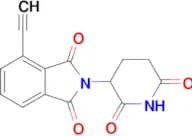
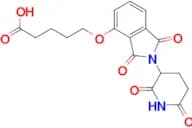
2-(2,6-Dioxo-3-piperidinyl)-4-ethynyl-1H-isoindole-1,3(2H)-dione
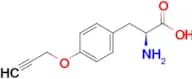
CAS:Purezza:98%Peso molecolare:282.255(S)-2-Amino-3-(4-(prop-2-yn-1-yloxy)phenyl)propanoic acid
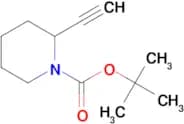
CAS:Formula:C12H13NO3Purezza:95%Peso molecolare:219.241-Boc-2-Ethynylpiperidine
CAS:Formula:C12H19NO2Purezza:97%Colore e forma:LiquidPeso molecolare:209.2897-Fluoro-8-((triisopropylsilyl)ethynyl)naphthalene-1,3-diol
CAS:Purezza:98%Peso molecolare:358.5280151Methyl (5-amino-2′-methyl-[1,1′-biphenyl]-2-carbonyl)-L-leucinate hydrochloride
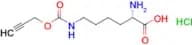
CAS:Purezza:98%Peso molecolare:390.91N-ε-propargyloxycarbonyl-L-lysine hydrochloride
CAS:Purezza:98%Colore e forma:SolidPeso molecolare:264.71c(R,S)-1-(2-Nitrophenyl)ethanol
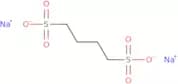
CAS:<p>1,2-Dichloroethane is an organic solvent that has a number of industrial uses. It is also used as an antigen for the detection of antibodies in biological studies. 1,2-Dichloroethane reacts with free amino groups on proteins to form antigen-binding sites. The cavity created by the reaction then binds to the antigen and induces a change in fluorescence. This process can be detected using fluorescence resonance energy transfer (FRET). Irradiation of 1,2-dichloroethane leads to the formation of reactive oxygen species (ROS) such as singlet oxygen, which can react with aspartyl groups in proteins to form diphosgene. This reaction can lead to protein denaturation and loss of function, which may be responsible for some of the toxic effects observed with this compound.</p>Formula:C8H9NO3Purezza:Min. 95%Colore e forma:PowderPeso molecolare:167.16 g/mol1,4-Butanedisulfonic acid disodium salt
CAS:1,4-Butanedisulfonic acid disodium salt is a calcium chelator that is used in the treatment of hypercalcemia and chronic renal failure. It binds to the calcium ion and prevents it from binding to bone, thus lowering the level of calcium in the blood. This drug has been shown to be effective against hepatitis when given orally and also has been shown to be safe for people with liver diseases. 1,4-Butanedisulfonic acid disodium salt also has transport properties and can be administered orally or intravenously.Formula:C4H10Na2O6S2Purezza:Min. 95%Colore e forma:PowderPeso molecolare:264.23 g/mol4-(Chloromethyl)styrene (stabilized with TBC + ONP + 2-Nitro-p-cresol)
CAS:Formula:C9H9ClPurezza:>90.0%(GC)Colore e forma:Light yellow to Yellow to Orange clear liquidPeso molecolare:152.62Sodium trifluoromethanesulfonate
CAS:<p>Sodium trifluoromethanesulfonate is an inorganic salt that is used as a reagent in organic synthesis. It is prepared by treating sodium metal with hydrogen fluoride and carbon disulfide. Sodium trifluoromethanesulfonate can be used to form stable complexes with copper(II) chloride, which are useful for the synthesis of organic compounds. This compound has been shown to undergo intermolecular hydrogen bonding interactions with glycol ethers, which are model systems for polymers. Sodium trifluoromethanesulfonate also has the ability to form hydrogen bonds with water molecules, which is important for its use in electrolytes. The structural analysis of sodium trifluoromethanesulfonate reveals that it contains one asymmetric center, which may be responsible for its ability to form hydrogen bonds.</p>Formula:CHF3O3S•NaPurezza:Min. 95%Colore e forma:White PowderPeso molecolare:173.07 g/mol4-Bromo-m-xylene
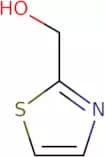
CAS:Formula:C8H9BrPurezza:>97.0%(GC)Colore e forma:Colorless to Light orange to Yellow clear liquidPeso molecolare:185.061,3-Thiazol-2-ylmethanol
CAS:<p>1,3-Thiazol-2-ylmethanol is a macrocyclic compound that has a structure similar to that of the natural product phenylbutazone. It is synthesized from 1,3-thiazol-2-amine and benzaldehyde by dehydrogenative condensation. The ligand binds with metal ions via its thionyl group. The metal ion coordinates with the chloride anion and the ligand to produce a planar geometry. This process also produces a distillate that contains phenylbutazone as a major product.</p>Formula:C4H5NOSPurezza:Min. 95%Colore e forma:White PowderPeso molecolare:115.15 g/molBromoform (stabilized with 2-Methyl-2-butene) [for Spectrophotometry]
CAS:Formula:CHBr3Purezza:>99.0%(GC)Colore e forma:Colorless clear liquidPeso molecolare:252.739-Bromo-10-[4-(2-naphthyl)phenyl]anthracene
CAS:Formula:C30H19BrPurezza:>98.0%(HPLC)Colore e forma:Light orange to Yellow to Green powder to crystalPeso molecolare:459.394-Iodotoluene
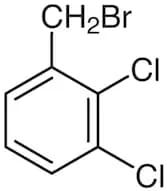
CAS:Formula:C7H7IPurezza:>99.0%(GC)Colore e forma:White or Colorless to Yellow powder to lump to clear liquidPeso molecolare:218.042,3-Dichlorobenzyl Bromide
CAS:Formula:C7H5BrCl2Purezza:>98.0%(GC)(T)Colore e forma:White or Colorless to Light yellow powder to lump to clear liquidPeso molecolare:239.923-Pyridyl trifluoromethanesulfonate
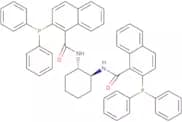
CAS:<p>3-Pyridyl trifluoromethanesulfonate is a synthetic chemical compound. It is used in the cross-coupling reaction with an alkyl halide to form a substituted enolate and can be used to synthesize chloroformates, nitro compounds, and other organic compounds. 3-Pyridyl trifluoromethanesulfonate reacts with hydroxyl groups to form trisubstituted ethers. This chemical is also used for the irradiation of activated alkene in order to convert it into an epoxide.</p>Formula:C6H4F3NO3SPurezza:Min. 95%Colore e forma:PowderPeso molecolare:227.16 g/mol(1S,2S)-(-)-1,2-Diaminocyclohexane-N,N'-bis(2-diphenylphosphino-1-naphthoyl)
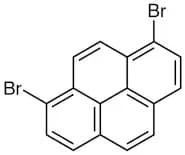
CAS:<p>(1S,2S)-(-)-1,2-Diaminocyclohexane-N,N'-bis(2-diphenylphosphino-1-naphthoyl) is an alkoxyallene that is synthesized from the reaction of allene and ethylene oxide. It has been shown to inhibit abnormal cell growth in vitro. (1S,2S)-(-)-1,2-Diaminocyclohexane-N,N'-bis(2-diphenylphosphino-1-naphthoyl) also inhibits cancer cell proliferation in vivo and shows a high degree of stereoselectivity and enantioselectivity. This compound can be used as an anticancer agent due to its ability to selectively kill cancer cells while leaving normal cells unharmed.</p>Formula:C52H44N2O2P2Purezza:Min. 94.5 Area-%Colore e forma:PowderPeso molecolare:790.87 g/mol1,8-Dibromopyrene
CAS:Formula:C16H8Br2Purezza:>90.0%(HPLC)Colore e forma:White to Light yellow powder to crystalPeso molecolare:360.05Piperidin-4-ylmethanol
CAS:<p>Piperidin-4-ylmethanol is a synthetic compound that has been used as a fluorescent probe. It has also been used in the synthesis of quinolinium, a medicinal preparation that is used to treat cancer. This chemical has optical properties and can be detected using fluorescence microscopy. Piperidin-4-ylmethanol is soluble in water and can form stable solutions with other compounds. The chemical's reactive site is the hydroxyl group and it reacts with gaseous chlorine to produce hydrochloric acid.</p>Formula:C6H13NOPurezza:Min. 95%Colore e forma:White PowderPeso molecolare:115.17 g/mol2-Iodo-2-methylpropane (stabilized with Copper chip)
CAS:Formula:C4H9IPurezza:>97.0%(GC)Colore e forma:Colorless to Yellow clear liquid to cloudy liquidPeso molecolare:184.021,4-Diazabicyclo[3.2.2]nonane
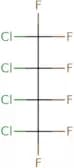
CAS:<p>Diazepam (also known as Valium) is a benzodiazepine drug used to treat anxiety disorders, muscle spasms, alcohol withdrawal symptoms, and other conditions. Diazepam is a tranquilizer that works by slowing down the activity of the central nervous system. It may also be used to control seizures, prevent certain types of muscle spasms, treat insomnia and relieve anxiety before surgery. Diazepam has been shown to have an affinity for nicotinic acetylcholine receptors in rat brains. This drug can work by blocking these receptors and preventing the transmission of impulses between neurons. Diazepam is marketed in many countries as an anxiolytic agent under trade names such as Valium and Librium. The clinical use of diazepam should be limited because it has been shown to cause birth defects in animal studies when given at high doses or during pregnancy.</p>Formula:C7H14N2Purezza:Min. 95%Colore e forma:White PowderPeso molecolare:126.2 g/mol1,2,3,4-Tetrachlorohexafluorobutane
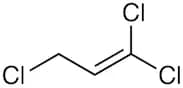
CAS:<p>1,2,3,4-Tetrachlorohexafluorobutane is a colorless liquid with an unpleasant odor. It is used as a solvent and as a chemical intermediate in the production of other chemicals. 1,2,3,4-Tetrachlorohexafluorobutane has been shown to react with hydrochloric acid to produce hydrogen chloride gas and hydrogen fluoride. The reaction vessel must be well-ventilated and the use of protective clothing is recommended due to the potential for exposure to hydrogen fluoride. This compound can also be chlorinated using chlorine gas or hypochlorite solution.</p>Formula:C4Cl4F6Purezza:Min. 95%Colore e forma:Colorless Clear LiquidPeso molecolare:303.84 g/mol1,1,3-Trichloro-1-propene
CAS:Formula:C3H3Cl3Purezza:>98.0%(GC)Colore e forma:Colorless to Light yellow clear liquidPeso molecolare:145.411-Hydroxymethyl-1-methylcyclohexane
CAS:<p>1-Hydroxymethyl-1-methylcyclohexane is a biodiesel that has been shown to be a good solvent for nonpolar compounds and can also be used as a reaction medium in organic synthesis. It has a relatively high boiling point and is soluble in both water and other nonpolar solvents. 1-Hydroxymethyl-1-methylcyclohexane is also known for its conformational properties and ability to bind to fatty acids, which are the main components of biodiesel.</p>Formula:C8H16OPurezza:Min. 95%Colore e forma:PowderPeso molecolare:128.21 g/molN-Butanesulfonyl-O-[4-(4-pyridinyl)-butyl]-(S)-tyrosine
CAS:<p>N-Butanesulfonyl-O-[4-(4-pyridinyl)-butyl]-(S)-tyrosine is a synthetic amino acid. It is soluble in water and forms hydrates. The yield of this reaction is 60%. The molecular weight of this compound is 233.3 g/mol. This compound has been shown to have proteolytic activity, which may be due to its ability to cleave peptide bonds in proteins. N-Butanesulfonyl-O-[4-(4-pyridinyl)-butyl]-(S)-tyrosine may also be used as an intermediate for the synthesis of other compounds, such as aminoglycosides and antibiotics. This chemical can be synthesized by reacting L-tyrosine with butanesulfonyl chloride in the presence of sodium hydroxide and an organic base, such as pyridine. The solvents used in this process are chloroform, dich</p>Formula:C22H30N2O5SPurezza:Min. 95%Colore e forma:PowderPeso molecolare:434.55 g/mol1-Hexadecanol
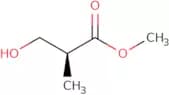
CAS:<p>1-Hexadecanol is a monohydroxy alcohol that is used as a surfactant in analytical chemistry. It can be found naturally in the secretions of some glands and has an optimum concentration of 0.2% to 1%. 1-Hexadecanol has been shown to inhibit bacterial growth by reducing the mitochondrial membrane potential, which leads to cell death. 1-Hexadecanol also reacts with benzalkonium chloride to form ester hydrochloride, which is a reagent for the detection of bacteria. The reaction mechanism for this process is not yet fully understood, but it may involve a metastable form of 1-hexadecanol reacting with benzalkonium chloride.</p>Formula:C16H34OPurezza:Min. 95%Colore e forma:PowderPeso molecolare:242.44 g/molMethyl L-(S)-b-Hydroxyisobutanoate
CAS:<p>Methyl L-(S)-b-hydroxyisobutanoate is a spiroketal that belongs to the class of methyl ketones. It has been found to inhibit the growth of cancer cells in vitro and in vivo. This effect is mediated by its ability to inhibit fatty acid synthesis and its ability to activate Bafilomycin A1, which inhibits ATP synthase. Methyl L-(S)-b-hydroxyisobutanoate also has an asymmetric carbon atom at position 4, which makes it possible to synthesize stereoisomers with different biological properties. The hydroxyl group on the side chain is important for its biological function because it facilitates the binding to biomolecules.</p>Formula:C5H10O3Purezza:Min. 95%Colore e forma:PowderPeso molecolare:118.13 g/mol




![Methyl (5-amino-2′-methyl-[1,1′-biphenyl]-2-carbonyl)-L-leucinate hydrochloride](/_next/image/?url=https%3A%2Fstatic.cymitquimica.com%2Fproducts%2F10%2Fthumb-webp%2FF988376.webp&w=3840&q=75)


![(3aR,4S,6R,6aS)-6-[7-[[(1R,2S)-2-(3,4-Difluorophenyl)cyclopropyl]amino]-5-(propylthio)-3H-1,2,3-tr…](/_next/image/?url=https%3A%2Fstatic.cymitquimica.com%2Fproducts%2F10%2Fthumb-webp%2FF986403.webp&w=3840&q=75)








![Bromoform (stabilized with 2-Methyl-2-butene) [for Spectrophotometry]](/_next/image/?url=https%3A%2Fstatic.cymitquimica.com%2Fproducts%2F3B%2Fthumb-webp%2FB0806.webp&w=3840&q=75)
![9-Bromo-10-[4-(2-naphthyl)phenyl]anthracene](/_next/image/?url=https%3A%2Fstatic.cymitquimica.com%2Fproducts%2F3B%2Fthumb-webp%2FB4571.webp&w=3840&q=75)




![1,4-Diazabicyclo[3.2.2]nonane](/_next/image/?url=https%3A%2Fstatic.cymitquimica.com%2Fproducts%2F3D%2Fthumb-webp%2FFD07111.webp&w=3840&q=75)

![N-Butanesulfonyl-O-[4-(4-pyridinyl)-butyl]-(S)-tyrosine](/_next/image/?url=https%3A%2Fstatic.cymitquimica.com%2Fproducts%2F3D%2Fthumb-webp%2FFB19373.webp&w=3840&q=75)