Idrazine
Le idrazine sono composti organici caratterizzati dalla presenza di un gruppo idrazina (N2H4). Questi composti vengono utilizzati in varie reazioni chimiche, compresi come intermediari in prodotti farmaceutici e agrochimici. Da CymitQuimica, offriamo un'ampia selezione di idrazine di alta qualità per supportare le vostre applicazioni di ricerca e industriali, garantendo risultati affidabili ed efficienti. La nostra selezione include idrazine adatte per una vasta gamma di sintesi chimiche e requisiti sperimentali.
Trovati 1360 prodotti di "Idrazine"
Ordinare per
Purezza (%)
0
100
|
0
|
50
|
90
|
95
|
100
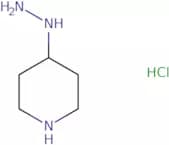
4-Hydrazinopiperidine dihydrochloride
CAS:<p>4-Hydrazinopiperidine dihydrochloride is a versatile chemical compound that can be used as a reagent and as a building block in organic synthesis. It is also an intermediate for the production of pharmaceuticals, dyes, and pesticides. 4-Hydrazinopiperidine dihydrochloride is a fine chemical that has been approved by the U.S. Food and Drug Administration (FDA) for use in food contact applications, such as polymers, coatings, adhesives and sealants.</p>Formula:C5H13N3·2ClHPurezza:Min. 95%Peso molecolare:188.1 g/molPhenylhydrazine-4-sulfonic acid
CAS:<p>Phenylhydrazine-4-sulfonic acid is a solid catalyst that is used in the formation of ternary complexes. It can be used to study mitochondrial membrane potential and reactive oxygen species production by diazonium salt. Phenylhydrazine-4-sulfonic acid has also been used as a model system for acylation reactions, with p-hydroxybenzoic acid as the acylating agent. This chemical is acidic and reacts with hydrochloric acid to produce phenylhydrazine and 4-chlorophenol. Phenylhydrazine-4-sulfonic acid is chemically stable in acidic solution.</p>Formula:C6H8N2O3SPurezza:Min. 95%Colore e forma:White PowderPeso molecolare:188.21 g/mol4-Trifluoromethylphenyl hydrazine hydrochloride
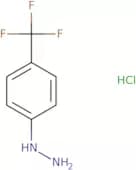
CAS:4-Trifluoromethylphenyl hydrazine hydrochloride is a fluorescent probe that can be used for the detection of hypoxia. It has been shown to be effective in detecting solid tumors, multiphase environments, and imaging. 4-Trifluoromethylphenyl hydrazine hydrochloride is an advanced probe that can be used to diagnose hypoxia. It binds to nitroreductase enzyme, which is found in tumor cells, and emits fluorescence when it reacts with oxygen. This reaction can be detected using a spectrophotometer or fluorimeter. The environment provides the necessary conditions for this reaction to take place, including low oxygen levels.Formula:C7H7F3N2HClPurezza:Min. 95.0%Colore e forma:PowderPeso molecolare:212.6 g/mol2,4,6-Trichlorophenylhydrazine
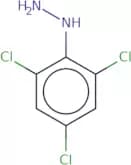
CAS:2,4,6-Trichlorophenylhydrazine is an industrial chemical that has been used as a precursor for the production of other chemicals. It is also a potential cancer therapeutic agent. 2,4,6-Trichlorophenylhydrazine inhibits tumor growth in human studies by inhibiting cellular proliferation and inducing apoptosis. It reacts with hydrochloric acid to form a reactive intermediate that reacts with free radicals to produce cytotoxic products that damage DNA and inhibit tumor growth. The efficiency of this process depends on the pH of the reaction mixture and the concentrations of 2,4,6-trichlorophenylhydrazine and hydrochloric acid. This compound has high cytotoxicity in cells in culture. Malondialdehyde levels have been shown to increase after exposure to this chemical. Analysis of acetylated fatty acids from 2,4,6-trichlorophenylhydrazine-treated cells showed significant changes in fatty acid compositionFormula:C6H5Cl3N2Purezza:Min. 95%Colore e forma:PowderPeso molecolare:211.48 g/mol1-(3-(Trifluoromethoxy)phenyl)hydrazine hydrochloride
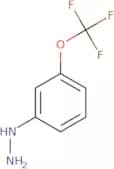
CAS:<p>1-(3-(Trifluoromethoxy)phenyl)hydrazine hydrochloride is a reagent that can be used as a reaction component in organic synthesis. It is also a useful scaffold for the preparation of high-quality research chemicals and other versatile building blocks. 1-(3-(Trifluoromethoxy)phenyl)hydrazine hydrochloride is an intermediate in the synthesis of complex compounds, such as fine chemicals.</p>Formula:C7H7F3N2OPurezza:Min. 95%Peso molecolare:192.14 g/mol4-Hydrazino-2,5,6-trimethylthieno[2,3-d]pyrimidine
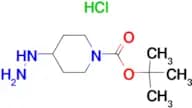
CAS:Formula:C9H12N4SPurezza:95.0%Peso molecolare:208.28tert-Butyl-4-hydrazinylpiperidine-1-carboxylate hydrochloride
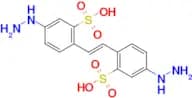
CAS:Formula:C10H22ClN3O2Purezza:90%Colore e forma:SolidPeso molecolare:251.76(E)-6,6′-(ethene-1,2-diyl)bis(3-hydrazinylbenzenesulfonic acid)
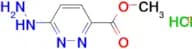
CAS:Purezza:98%Peso molecolare:400.4200134Methyl 6-hydrazinylpyridazine-3-carboxylate dihydrochloride
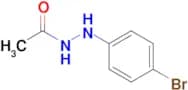
CAS:Formula:C6H10Cl2N4O2Purezza:97%Peso molecolare:241.07N’-(4-Bromophenyl)acetohydrazide
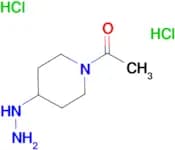
CAS:Formula:C8H9BrN2OPurezza:97%Colore e forma:SolidPeso molecolare:229.0771-(4-Hydrazinylpiperidin-1-yl)ethan-1-one dihydrochloride
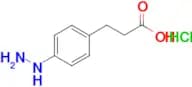
CAS:Formula:C7H17Cl2N3OColore e forma:Liquid, No data available.Peso molecolare:230.133-(4-hydrazinylphenyl)propanoic acid hydrochloride
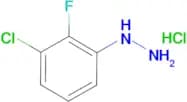
CAS:Formula:C9H13ClN2O2Purezza:95.0%Peso molecolare:216.672-Fluoro-3-chlorophenylhydrazine hydrochloride
CAS:Formula:C6H7Cl2FN2Purezza:97%Colore e forma:SolidPeso molecolare:197.03(4-Methoxy-2-methyl-phenyl)-hydrazine; hydrochloride
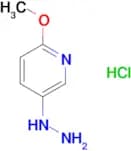
CAS:Formula:C8H13ClN2OPurezza:98%(HPLC);RGColore e forma:Liquid, No data available.Peso molecolare:188.665-Hydrazinyl-2-methoxypyridine hydrochloride
CAS:Formula:C6H10ClN3OPurezza:97%Colore e forma:SolidPeso molecolare:175.62


![4-Hydrazino-2,5,6-trimethylthieno[2,3-d]pyrimidine](/_next/image/?url=https%3A%2Fstatic.cymitquimica.com%2Fproducts%2F10%2Fthumb-webp%2FF061188.webp&w=3840&q=75)

![4-Hydrazinylthieno[2,3-d]pyrimidine](/_next/image/?url=https%3A%2Fstatic.cymitquimica.com%2Fproducts%2F10%2Fthumb-webp%2FF436225.webp&w=3840&q=75)