Idrazine
Trovati 1383 prodotti per "Idrazine".
4-hydrazinyl-7-methyl-5,6,7,8-tetrahydrobenzo[4,5]thieno[2,3-d]pyrimidine
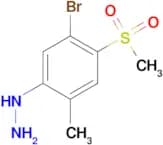
CAS:Purezza:95.0%Peso molecolare:234.320007324218755-Bromo-2-methyl-4-methylsulfonylphenylhydrazine
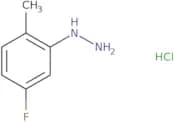
CAS:Formula:C8H11BrN2O2SPurezza:98%Colore e forma:SolidPeso molecolare:279.155-Fluoro-2-methylphenylhydrazine hydrochloride
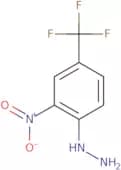
CAS:5-Fluoro-2-methylphenylhydrazine hydrochloride is a crystalline solid that is soluble in water. It is used as a reagent in organic synthesis, but it also has application as an intermediate in the production of calcium hydroxide and calcium fluoride. 5-Fluoro-2-methylphenylhydrazine hydrochloride reacts with methacrylate to produce an ultrafine powder, which can be difficult to hydrate because of its high molecular weight. The hydration reaction requires the addition of large amounts of water and heat. This process can be accelerated by adding a solution of calcium ions or calcium hydroxide to the reaction mixture. Hydrogen fluoride gas (HF) may also be generated during this process. Crystallization occurs when the solids are heated or placed in contact with a nonpolar solvent such as hexane.Formula:C7H9FN2•HClPurezza:Min. 95%Colore e forma:PowderPeso molecolare:176.62 g/mol4-Hydrazino-3-nitrobenzotrifluoride
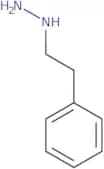
CAS:4-Hydrazino-3-nitrobenzotrifluoride (4HNBF) is a derivative of 4-hydrazinobenzoic acid that has been used as a precursor for the synthesis of vitamin D. The drug is detectable in blood plasma samples by mass spectrometry and can be quantified using linear calibration curves. 4HNBF has been detected in human urine samples after oral administration, but not in other biological fluids. It has also been used to measure the flow rate of urine. The drug's use for cancer treatment has been investigated, with results showing that it inhibits the growth of cancer cells and induces apoptosis. 4HNBF may act on GABA receptors to inhibit their activity and induce a reduction in the release of oxysterols.Formula:C7H6F3N3O2Purezza:Min. 95%Colore e forma:PowderPeso molecolare:221.14 g/mol2-Phenylethylhydrazine
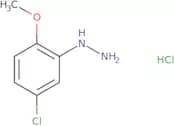
CAS:Prodotto controllato2-Phenylethylhydrazine (2PEH) is an experimental drug that is reactive. It has been shown to have anti-inflammatory properties in a model system of inflammation in animals. 2PEH also inhibits the enzyme monoamine oxidase, which prevents the breakdown of serotonin, resulting in increased levels of this neurotransmitter. The use of 2PEH as a pharmacological treatment for atherosclerotic lesions may be due to its inhibitory properties on 5HT2 receptors and 2 adrenergic receptors. It has also been shown to induce neuronal death in animal studies.Formula:C8H12N2Purezza:Min. 95%Colore e forma:Clear LiquidPeso molecolare:136.19 g/mol5-Chloro-2-methoxyphenylhydrazine hydrochloride
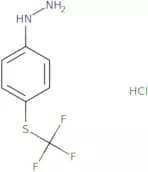
CAS:5-Chloro-2-methoxyphenylhydrazine hydrochloride is a reagent, complex compound with CAS No. 5446-16-2. It is useful as an intermediate in the manufacture of a variety of fine chemicals and research chemicals. This compound can be used as a versatile building block in the synthesis of new chemical compounds and is also a reaction component.Formula:C7H9ClN2O·ClHPurezza:Min. 95%Colore e forma:PowderPeso molecolare:209.07 g/mol4-(Trifluoromethyl)thiophenylhydrazine hydrochloride
CAS:4-(Trifluoromethyl)thiophenylhydrazine hydrochloride (TFTH) is a chemical compound that belongs to the group of useful scaffolds, versatile building blocks, and reaction components. It has been used as a research chemical in the synthesis of complex compounds with high quality and is an intermediate for speciality chemicals. TFTH can be used as a reagent in organic chemistry for the preparation of amines and amino alcohols. This compound has CAS No. 162258-86-8.br>br> 4-(Trifluoromethyl)thiophenylhydrazine hydrochloride has been shown to be an excellent building block in organic synthesis because it is stable under mild conditions, reacts rapidly with nucleophiles, and is readily available from commercial sources.Formula:C7H7F3N2S·ClHPurezza:Min. 95%Colore e forma:Orange PowderPeso molecolare:244.67 g/mol6-Hydrazinopurine
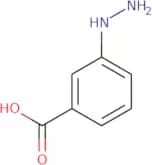
CAS:6-Hydrazinopurine is an anti-hepatitis drug that is a prodrug for 6-chloropurine. Its mechanism of action is not fully understood, but it has been shown to bind to the virus receptor and inhibit the replication of the virus. It also competitively inhibits amines in biochemical assays. This property may be due to its hydroxyl group, which can form a hydrogen bond with the amino group of amines. It has been shown to be active against prostate carcinoma cells. 6-Hydrazinopurine has been shown to inhibit the growth of cancer cells by inducing apoptosis and decreasing cell proliferation.Formula:C5H6N6Purezza:Min. 95%Colore e forma:PowderPeso molecolare:150.14 g/mol3-Hydrazinobenzoic acid
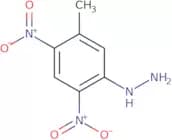
CAS:3-Hydrazinobenzoic acid is a covalent inhibitor that binds to lysine residues of proteins and inhibits their activity. It can be immobilized in different materials such as polymers, hydrogels, and zeolites. 3-Hydrazinobenzoic acid has been used to treat autoimmune diseases and cancer. In wastewater treatment, it has been shown to remove chloride ions, which are toxic to microorganisms. 3-Hydrazinobenzoic acid also reduces the pH of the environment by reacting with hydrochloric acid or other acidic compounds.Formula:C7H8N2O2Purezza:Min. 95%Colore e forma:PowderPeso molecolare:152.15 g/mol2,4-Dinitro-5-methylphenylhydrazine
CAS:2,4-Dinitro-5-methylphenylhydrazine (DMN) is a fine chemical that is used as a versatile building block in the synthesis of complex compounds. It can be used to synthesize high quality reagents and reaction components for research purposes. DMN has been shown to have a number of properties that make it useful in industrial processes, including its stability and resistance to heat and light.
Formula:C7H8N4O4Purezza:Min. 95%Colore e forma:PowderPeso molecolare:212.16 g/molHydrazine hydrochloride
CAS:Prodotto controllatoHydrazine hydrochloride is an antimicrobial agent that belongs to the group of hydrazines. It is a fatty acid that has been esterified with hydrochloric acid and hydrogen fluoride to form the corresponding ester hydrochloride. Hydrazine hydrochloride has shown to be effective against a variety of microorganisms. The antimicrobial activity of this drug may be due to its ability to inhibit fatty acid synthesis by binding to the active site of the enzyme, acyl-CoA:malonyl-CoA acyltransferase (MCT). Hydrazine hydrochloride also inhibits the production of pyrazoles, which are compounds that are known to induce autoimmune diseases in mice.Formula:N2H4·HClPurezza:min 98%Colore e forma:White PowderPeso molecolare:68.51 g/mol1,1-Diphenyl-2-picrylhydrazine
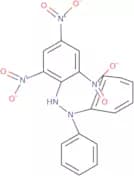
CAS:1,1-Diphenyl-2-picrylhydrazine is a hydrazine derivative that has been shown to have antioxidant properties. This drug has also been found to inhibit the growth of cancer cells in vitro and to reduce blood glucose levels in mice. It is not yet known how 1,1-Diphenyl-2-picrylhydrazine works to kill cancer cells, but it may be due to its ability to bind with other molecules, such as hydrogen peroxide or superoxide radicals. Hydrazines are also known for their antimicrobial properties and can be used against bacteria and fungi. The use of this drug for regenerative medicine is still being explored, but it has shown some pluripotent cell activity.
Formula:C18H13N5O6Purezza:Min. 95%Colore e forma:Red PowderPeso molecolare:395.33 g/mol4-Hydrazino-3-nitroacetanilide
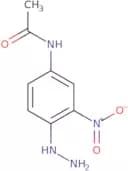
CAS:4-Hydrazino-3-nitroacetanilide is a high quality reagent that can be used as an intermediate in the preparation of complex compounds. It is also a useful building block for the synthesis of fine chemicals, providing a versatile scaffold for chemical reactions. 4-Hydrazino-3-nitroacetanilide has been shown to react with various amines to produce useful products. This product is a speciality chemical and research chemicals, which is useful in the production of other substances.Formula:C8H10N4O3Purezza:Min. 95%Colore e forma:PowderPeso molecolare:210.19 g/molN-[4-(2-Hydrazino-2-oxoethoxy)phenyl]acetamide
CAS:N-[4-(2-Hydrazino-2-oxoethoxy)phenyl]acetamide is a phenolic compound that has been shown to have an antimicrobial effect. It has been shown to have antitubercular activity against Mycobacterium tuberculosis and the ability to inhibit the growth of cancer cells in vitro. N-[4-(2-Hydrazino-2-oxoethoxy)phenyl]acetamide is also known as monastrol. The pharmacophore of this drug is based on the structure of paracetamol, which is a member of the class of drugs known as analgesics, antipyretics, and antiinflammatory agents. Paracetamol has been used for decades in humans and animals for relief from pain, fever, and inflammation. N-[4-(2-Hydrazino-2-oxoethoxy)phenyl]acetamide may be useful for treating diseases such as cancer or tuberculosis due to its anticFormula:C10H13N3O3Purezza:Min. 95%Colore e forma:PowderPeso molecolare:223.23 g/mol5-Bromo-2-hydrazinopyrimidine
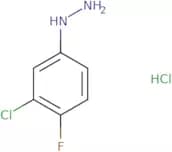
CAS:5-Bromo-2-hydrazinopyrimidine is a heterocyclic compound with the chemical formula C5H4N3Br. It is used as reagent, high quality, and complex intermediate in fine chemicals, research chemicals, and speciality chemicals. It is also a versatile building block for many reactions in synthesis of other compounds.Formula:C4H5BrN4Purezza:Min. 98 Area-%Peso molecolare:189.01 g/mol3-Chloro-4-fluorophenylhydrazine hydrochloride
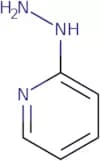
CAS:3-Chloro-4-fluorophenylhydrazine hydrochloride is a fine chemical that has been used in research as a reagent and building block. It is also used as an intermediate in the synthesis of other compounds with high commercial value, such as pharmaceuticals and agrochemicals. 3-Chloro-4-fluorophenylhydrazine hydrochloride can be used to synthesize complex molecules that are difficult to make, such as pharmaceuticals, agrochemicals, and speciality chemicals. This compound can be reacted with other compounds to form new compounds or reactants that are useful in a variety of reactions.Formula:C6H7Cl2FN2Purezza:Min. 95%Colore e forma:PowderPeso molecolare:197.04 g/mol2-Hydrazinylpyridine
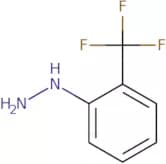
CAS:2-Hydrazinylpyridine (2HNP) is a compound that has been used to detect the presence of hydrogen bonds in biological samples. It reacts with the nitrogen atoms in a sample to form an adduct and then reacts with human serum to form a fluorescent product. This reaction has been shown to be sensitive enough for detection of hydrogen bonding interactions in biological samples. 2HNP has also been shown to react with proteins, such as cyclic peptides, which are targets for toxicological studies. 2HNP reacts with the nitrogen atoms of proteins to form an adduct, which can be detected by changes in fluorescence or by x-ray crystallography. The structures of 2HNP and its adducts have been determined using x-ray crystal structures and high performance liquid chromatography (HPLC).Formula:C5H7N3Purezza:Min. 95%Colore e forma:PowderPeso molecolare:109.13 g/mol2-(Trifluoromethyl)phenylhydrazine hydrochloride
CAS:2-(Trifluoromethyl)phenylhydrazine hydrochloride is a carbamic acid derivative that is used in the synthesis of other compounds. 2-(Trifluoromethyl)phenylhydrazine hydrochloride can be used to make carboxylic acids and their derivatives, such as esters, amides, and anhydrides. It also reacts with hydrogen fluoride to form trifluoroacetic acid and hydrogen gas. This compound is an isomerizing agent that converts alkyl halides into their corresponding carbonyls. Hydrogen fluoride reacts with 2-(trifluoromethyl)phenylhydrazine hydrochloride to form trifluoroacetic acid and hydrogen gas.Formula:C7H7F3N2•HClPurezza:Min. 95%Colore e forma:PowderPeso molecolare:212.6 g/mol

![4-hydrazinyl-7-methyl-5,6,7,8-tetrahydrobenzo[4,5]thieno[2,3-d]pyrimidine](/_next/image/?url=https%3A%2Fstatic.cymitquimica.com%2Fproducts%2F10%2Fthumb-webp%2FF496326.webp&w=3840&q=75)
![Hydrazine, [[4-(phenylmethoxy)phenyl]methyl]-, hydrochloride](/_next/image/?url=https%3A%2Fstatic.cymitquimica.com%2Fproducts%2F10%2Fthumb-webp%2FF695499.webp&w=3840&q=75)



![N-[4-(2-Hydrazino-2-oxoethoxy)phenyl]acetamide](/_next/image/?url=https%3A%2Fstatic.cymitquimica.com%2Fproducts%2F3D%2Fthumb-webp%2FFH131261.webp&w=3840&q=75)