Composti alifatici e derivati
I composti alifatici e i loro derivati sono composti organici caratterizzati da strutture a catena lineare o ramificata, a differenza delle strutture ad anello presenti nei composti aromatici. Questi composti includono alcani, alcheni, alchini e i loro derivati funzionalizzati, svolgendo un ruolo vitale in vari processi chimici e applicazioni industriali. Presso CymitQuimica, offriamo una selezione diversificata di composti alifatici di alta purezza e dei loro derivati, meticolosamente selezionati e testati per soddisfare i rigorosi requisiti delle esigenze di ricerca e industriali. Il nostro catalogo copre una vasta gamma di composti, inclusi idrocarburi, alcoli, aldeidi, chetoni e acidi, ciascuno noto per la sua reattività e versatilità nella sintesi organica, nella farmaceutica e nella scienza dei materiali. Fornendo composti alifatici e derivati di alta qualità, supportiamo i ricercatori e i professionisti nel raggiungimento di trasformazioni chimiche precise ed efficienti, favorendo l'innovazione e i progressi in molteplici campi scientifici e tecnologici.
Trovati 8720 prodotti di "Composti alifatici e derivati"
Ordinare per
Purezza (%)
0
100
|
0
|
50
|
90
|
95
|
100
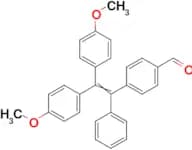
4-(2,2-Bis(4-methoxyphenyl)-1-phenylvinyl)benzaldehyde
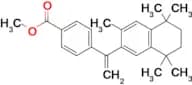
CAS:Purezza:98%Peso molecolare:420.50799560546875Methyl 4-(1-(3,5,5,8,8-pentamethyl-5,6,7,8-tetrahydronaphthalen-2-yl)vinyl)benzoate
CAS:Purezza:95.0%Peso molecolare:362.51300048828125Ref: 10-F862507
5mgPrezzo su richiesta10mgPrezzo su richiesta50mgPrezzo su richiesta100mgPrezzo su richiesta(2E)-3-(2H-1,3-benzodioxol-5-yl)-1-(2,5-dimethoxyphenyl)prop-2-en-1-one
CAS:Purezza:95.0%Peso molecolare:312.3210144042969Ref: 10-F863395
1gPrezzo su richiesta10mgPrezzo su richiesta50mgPrezzo su richiesta100mgPrezzo su richiesta250mgPrezzo su richiesta3-(2H-Benzo[d][1,2,3]triazol-2-yl)-4-hydroxyphenethyl methacrylate
CAS:Purezza:95.0%Colore e forma:SolidPeso molecolare:323.351989746093754-Cyclopropyl-2,4-dioxo-butyric acid methyl ester
CAS:Colore e forma:LiquidPeso molecolare:170.16400146484375(2E)-1-{[1,1'-biphenyl]-4-yl}-3-(3-methoxyphenyl)prop-2-en-1-one
CAS:Purezza:95.0%Peso molecolare:314.3840026855469Tert-butyl(4s)-4-[(E)-3-bromoprop-1-enyl]-2,2-dimethyl-oxazolidine-3-carboxylate
CAS:Purezza:97% mix TBC as stabilizerPeso molecolare:320.22698974609375(2E)-3-(2H-1,3-benzodioxol-5-yl)-1-(4-ethoxyphenyl)prop-2-en-1-one
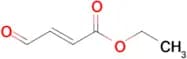
CAS:Purezza:95.0%Peso molecolare:296.3219909667969Ethyl 4-oxobut-2-enoate
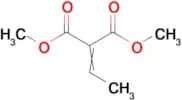
CAS:Formula:C6H8O3Purezza:95.0%Colore e forma:Liquid, Pale yellow liquidPeso molecolare:128.127Dimethyl 2-ethylidenemalonate
CAS:Purezza:95.0%Colore e forma:LiquidPeso molecolare:158.1529998779297(2E)-3-[4-(benzyloxy)phenyl]-1-(2,4-dimethylphenyl)prop-2-en-1-one
CAS:Purezza:95.0%Peso molecolare:342.43798828125(2E)-3-[4-(benzyloxy)phenyl]-1-(4-fluorophenyl)prop-2-en-1-one
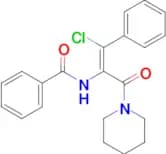
CAS:Purezza:95.0%Peso molecolare:332.3739929199219(Z)-N-(1-Chloro-3-oxo-1-phenyl-3-(piperidin-1-yl)prop-1-en-2-yl)benzamide
CAS:Purezza:95.0%Peso molecolare:368.8599853515625(2E)-3-[4-(benzyloxy)phenyl]-1-(4-ethylphenyl)prop-2-en-1-one
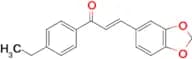
CAS:Purezza:95.0%Peso molecolare:342.43798828125(2E)-3-(2H-1,3-benzodioxol-5-yl)-1-(4-ethylphenyl)prop-2-en-1-one
CAS:Purezza:95.0%Peso molecolare:280.3229980468752-Methylamino-2-phenylbutanol hydrochloride
CAS:<p>2-Methylamino-2-phenylbutanol hydrochloride is a fine chemical that can be used in the production of research chemicals, pharmaceuticals, and other specialty chemicals. It is a versatile building block with many applications in organic synthesis. 2-Methylamino-2-phenylbutanol hydrochloride is an intermediate for the production of other useful compounds and has many reactions that are applicable to complex compounds. 2-Methylamino-2-phenylbutanol hydrochloride can also be used as a reagent and has high quality standards.</p>Formula:C11H17NO•HClPurezza:(%) Min. 95%Colore e forma:PowderPeso molecolare:215.72 g/mol(1S)-(-)-Camphanic acid
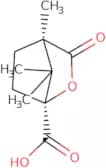
CAS:<p>A chiral auxiliary for the separation of racemates</p>Formula:C10H14O4Purezza:Min. 95%Colore e forma:White PowderPeso molecolare:198.22 g/mol3-Amino-adamantane-1-carboxylic hydrochloride
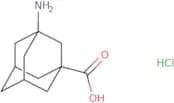
CAS:<p>3-Amino-adamantane-1-carboxylic hydrochloride is a versatile building block that can be used as a research chemical, reagent, speciality chemical, and useful scaffold in the synthesis of various complex compounds. It is a high quality intermediate and reaction component that can be used in the synthesis of fine chemicals. 3-Amino-adamantane-1-carboxylic hydrochloride has a variety of uses due to its versatility and can be used in the production of pharmaceuticals, agrochemicals, dyes, plastics, perfumes, pesticides, herbicides, explosives, and more.</p>Formula:C11H17NO2•HClPurezza:Min. 95%Colore e forma:PowderPeso molecolare:231.72 g/mol(+)-Diacetyl-D-tartaric acid
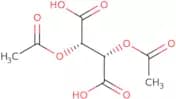
CAS:<p>(+)-Diacetyl-D-tartaric acid is a chiral organic compound that is soluble in organic solvents. It can be used as a catalyst for the asymmetric synthesis of organic compounds and has been shown to cleave bonds with high stereoselectivity. (+)-Diacetyl-D-tartaric acid also exhibits mesomorphic properties, meaning it changes from liquid to solid and vice versa at certain temperatures. The optical activity of this compound can be seen by its magnetic resonance spectrum, which displays two peaks at different wavelengths. This molecule has been shown to have potential uses in microscopy, as well as for the preparation of monomers for magnetic materials.</p>Formula:C8H10O8Purezza:Min. 95%Colore e forma:White PowderPeso molecolare:234.16 g/mol1,3-Dibromoadamantane
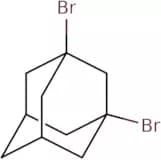
CAS:<p>1,3-Dibromoadamantane is an organic compound that belongs to the group of organobromides. It has a chemical structure with three bromine atoms and one carbon atom, which are bonded to each other in a triangle shape. 1,3-Dibromoadamantane is soluble in solvents such as water and methanol. The reaction yield of 1,3-dibromoadamantane is 100% when it reacts with hydrochloric acid as the catalyst under optimal conditions. The reaction also occurs at a high temperature (100 degrees Celsius) and releases energy efficiently. 1,3-Dibromoadamantane can be used as a substrate molecule for the Suzuki coupling reaction.<br>The coordination chemistry of 1,3-dibromoadamantane involves the formation of a square planar complex with copper ions and ammonia molecules to form copper(I) ammine complexes, which are then able to bind</p>Formula:C10H14Br2Purezza:Min. 95%Colore e forma:PowderPeso molecolare:294.03 g/mol(R)-(-)-1,3-Butanediol
CAS:<p>(R)-(-)-1,3-Butanediol is a chiral compound that belongs to the group of organic compounds called diols. It is used in the fermentation of Candida parapsilosis and other yeast species to produce enantiomerically pure (S)-(-)-1,3-butanediol. The racemate can be converted into the two enantiomers by chemical means or by enzymatic resolution. The process for large-scale production is similar to that for ethanol fermentation, but with 2-propanol as substrate instead of glucose. The fermentor has been shown to be effective at producing large quantities of 1,3-butanediol in a short time period.</p>Formula:C4H10O2Purezza:Min. 98%Colore e forma:Colorless Clear LiquidPeso molecolare:90.12 g/molGuaiazulene
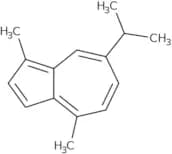
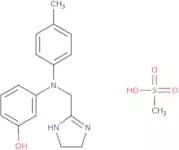
CAS:<p>愈创木菊烯或甘蓝酮是菊烯的衍生物,是用于药品和化妆品的活性成分。它是在愈创木精油中发现的一种天然化合物,由于其抗氧化特性,历史上一直用于药用。愈创木菊烯也是一种具有免疫抑制特性的抗炎药,已用于治疗慢性炎症和食管念珠菌病。已经证明,愈创木菊烯可以作为细胞毒性剂以及脂质过氧化和六氟磷酸盐诱导的 DNA 损伤的抑制剂。此外,它还能抑制肿瘤生长并对口腔病原体表现出抗菌活性。一些研究表明,愈创木菊烯可能用于治疗关节炎等慢性疾病和作为干细胞相关治疗,取得了有希望的结果。</p>Formula:C15H18Purezza:(Gc) Min. 99.00%Colore e forma:PowderPeso molecolare:198.3 g/molPhentolamine methanesulfonate
CAS:<p>Phentolamine is a synthetic mesylate that is used as an antihypertensive agent, and for the treatment of Raynaud's syndrome and pheochromocytoma. Phentolamine is also used to prevent frostbite and to treat various types of shock. Phentolamine blocks alpha-2-adrenergic receptors, thereby decreasing sympathetic nerve impulses to the heart, blood vessels, kidneys, and other organs. This drug also acts as a histamine antagonist by blocking H1-receptors on vascular smooth muscle cells. Phentolamine has been shown to have no significant effects on 5-hydroxytryptamine (5HT) release in vitro or in vivo.</p>Formula:C18H23N3O4SPurezza:Min. 95%Colore e forma:White PowderPeso molecolare:377.46 g/mol2-Methyl-3-biphenylmethanol
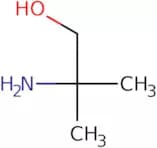
CAS:<p>2-Methyl-3-biphenylmethanol (2MBPM) is a low potency chemical that is used as a surrogate for 2,4,6-trinitrotoluene (TNT). It has been shown to bind to the same sites on the death protein as TNT and other nitroaromatic compounds. 2MBPM can be synthesized by coupling biphenyl with methylmagnesium bromide in the suzuki coupling reaction. 2MBPM inhibits the growth of cancer cells by inhibiting PD-L1 expression. This compound also has oxidative properties and can act as an oxidation catalyst.</p>Formula:C14H14OPurezza:Min. 95%Colore e forma:PowderPeso molecolare:198.26 g/molAMP
CAS:<p>AMP, also known as 2-Amino-2-methyl-1-propanol, is a buffering agent with an optimal pH range of 9.0-10.5 and a pKa of 9.7. It is used in biochemical assays, enzyme activity tests, and cosmetic formulations.</p>Formula:C4H11NOPurezza:Min. 95%Colore e forma:Colorless Clear LiquidPeso molecolare:89.14 g/mol1,8-Octanediol
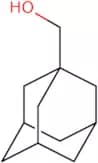
CAS:<p>1,8-Octanediol is a long-term efficacy drug that is used in the treatment of granulosa cell tumors. It has been shown to inhibit the proliferation of these cells by binding to them and inhibiting their metabolism. 1,8-Octanediol can be considered as an analog of progesterone and works by binding to progesterone receptors present in the tumor cells. This binding leads to a decrease in the production of estrogen and decreases the risk of cancer recurrence. 1,8-Octanediol has also been shown to increase body mass index (BMI) in women with polycystic ovary syndrome (PCOS). 1,8-Octanediol is soluble in water and has a phase transition temperature at around 37 degrees Celsius, which makes it biocompatible.</p>Formula:C8H18O2Purezza:Min. 98 Area-%Colore e forma:White PowderPeso molecolare:146.23 g/mol1-Adamantanemethanol
CAS:<p>Adamantanemethanol is a molecule used in the process of translation. It is structurally analyzed by trifluoromethanesulfonic acid, which is a cavity. The pharmacokinetic properties of adamantanemethanol are determined by its acyl chain. Adamantanemethanol has been studied in clinical trials, and the minimal inhibitory concentration for this drug is determined by chloride. This molecule also forms hydrogen bonds with hydroxyl groups and functional groups. Adamantanemethanol has been shown to be an effective antimicrobial agent against bacterial replication in cell culture and has optical properties that can be used to identify it.</p>Formula:C11H18OPurezza:Min. 95%Colore e forma:White PowderPeso molecolare:166.26 g/molN-(4-Aminobutyl)-1,4-butanediamine trihydrochloride
CAS:<p>N-(4-Aminobutyl)-1,4-butanediamine trihydrochloride (N(4)ABDAT) is a fine chemical and versatile building block. It can be used as an intermediate in the synthesis of pharmaceuticals and other organic chemicals. N(4)ABDAT is also a useful reagent for research purposes. The compound has a CAS number of 189340-78-1. It was originally synthesized by reacting 4-aminobutyric acid with 1,4-butanediamine, which yielded N(4)ABDAT as the major product. The chemical properties of N(4)ABDAT have been studied extensively including its reaction with potassium hydroxide, hydrochloric acid and sodium hydroxide to form different compounds.</p>Formula:C8H24Cl3N3Purezza:Min. 95%Colore e forma:White PowderPeso molecolare:268.65 g/moltrans-1,4-Dihydroxy-2-butene
CAS:<p>Extender in polyurethane synthesis</p>Formula:C4H8O2Purezza:Min. 95%Colore e forma:Colorless PowderPeso molecolare:88.11 g/mol1,4-Diisocyanatobutane
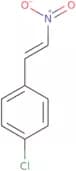
CAS:<p>Monomer for the preparation of biocompatible polyurethane polymers</p>Formula:C6H8N2O2Purezza:Min. 98 Area-%Colore e forma:Colorless Clear LiquidPeso molecolare:140.14 g/mol1-(4-Chlorophenyl)-2-nitroethene
CAS:<p>1-(4-Chlorophenyl)-2-nitroethene is a high yield, versatile reagent for the synthesis of nitro groups. It is prepared by the reaction of 1-(4-chlorophenyl)ethanone with nitric acid in an organic solvent at a temperature of 100 °C. The product can be used as a dehydrating agent, and also has functional groups such as carbonyl, hydroxyl, methoxy, azide, phenyliodonium. It has been shown to be effective in the conversion of diacetates to oximes and ketones.<br>The 1-(4-chlorophenyl)-2-nitroethene reagent is a yellowish liquid that can be handled magnetically, but should be stored under nitrogen gas to avoid oxidation.</p>Formula:C8H6ClNO2Purezza:Min. 95%Colore e forma:Yellow PowderPeso molecolare:183.59 g/mol4-Amino-1-adamantanecarboxylic acid
CAS:<p>4-Amino-1-adamantanecarboxylic acid is a useful building block for the synthesis of 4-aminopyridine and 4-aminopyrimidine derivatives. It is an important intermediate in the production of speciality chemicals and has been used as a reaction component in organic synthesis. This compound is also used as a reagent for chemical reactions.</p>Formula:C12H19NO2Purezza:Min. 95%Colore e forma:White PowderPeso molecolare:209.28 g/mol2-(4-Benzyloxyphenyl)ethanol
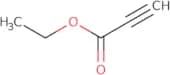
CAS:<p>2-(4-Benzyloxyphenyl)ethanol is an organic compound that has a particle size of less than 10 μm and is soluble in water. It is used as a reaction system for the production of tannins, which are polyphenolic compounds that have antioxidant properties. 2-(4-Benzyloxyphenyl)ethanol also inhibits maltase activity and metal ion-induced allylic oxidation. This compound can be used to inhibit fatty acid synthesis, which is important for the prevention of atherosclerosis and other cardiovascular diseases.</p>Formula:C15H16O2Purezza:Min. 95%Colore e forma:PowderPeso molecolare:228.29 g/molEthyl propiolate
CAS:<p>Ethyl propiolate is a halide that is structurally related to the alkylating agent trifluoroacetic acid. Ethyl propiolate inhibits the activity of several enzymes including phosphofructokinase and pyruvate kinase, which are important for energy metabolism in cells. It also has been shown to have beneficial effects on autoimmune diseases such as lupus erythematosus. The mechanism of action of ethyl propiolate is due to its ability to react with activated oxygen and form an intramolecular hydrogen bond with carbon atoms in the substrate molecule. The reaction between ethyl propiolate and diethyl ketomalonate results in the formation of diethyl 2-propiolate, which can then be hydrolyzed by water into acetaldehyde and diethyl ketomalonate.</p>Formula:C5H6O2Purezza:Min. 98 Area-%Colore e forma:Colorless Clear LiquidPeso molecolare:98.1 g/molAcrylamide
CAS:<p>Used for gel preparation for protein electrophoresis</p>Formula:C3H5NOPurezza:Min. 95%Colore e forma:PowderPeso molecolare:71.08 g/mol

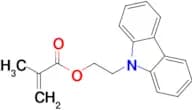
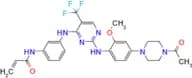


![3-(2H-Benzo[d][1,2,3]triazol-2-yl)-4-hydroxyphenethyl methacrylate](/_next/image/?url=https%3A%2Fstatic.cymitquimica.com%2Fproducts%2F10%2Fthumb-webp%2FF340086.webp&w=3840&q=75)
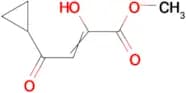
![(2E)-1-{[1,1'-biphenyl]-4-yl}-3-(3-methoxyphenyl)prop-2-en-1-one](/_next/image/?url=https%3A%2Fstatic.cymitquimica.com%2Fproducts%2F10%2Fthumb-webp%2FF524237.webp&w=3840&q=75)
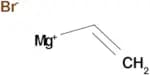
![Tert-butyl(4s)-4-[(E)-3-bromoprop-1-enyl]-2,2-dimethyl-oxazolidine-3-carboxylate](/_next/image/?url=https%3A%2Fstatic.cymitquimica.com%2Fproducts%2F10%2Fthumb-webp%2FF718958.webp&w=3840&q=75)


![(2E)-3-[4-(benzyloxy)phenyl]-1-(2,4-dimethylphenyl)prop-2-en-1-one](/_next/image/?url=https%3A%2Fstatic.cymitquimica.com%2Fproducts%2F10%2Fthumb-webp%2FF524087.webp&w=3840&q=75)
![(2E)-3-[4-(benzyloxy)phenyl]-1-(4-fluorophenyl)prop-2-en-1-one](/_next/image/?url=https%3A%2Fstatic.cymitquimica.com%2Fproducts%2F10%2Fthumb-webp%2FF523844.webp&w=3840&q=75)
![(2E)-3-[4-(benzyloxy)phenyl]-1-(4-ethylphenyl)prop-2-en-1-one](/_next/image/?url=https%3A%2Fstatic.cymitquimica.com%2Fproducts%2F10%2Fthumb-webp%2FF523536.webp&w=3840&q=75)