Composti alifatici e derivati
I composti alifatici e i loro derivati sono composti organici caratterizzati da strutture a catena lineare o ramificata, a differenza delle strutture ad anello presenti nei composti aromatici. Questi composti includono alcani, alcheni, alchini e i loro derivati funzionalizzati, svolgendo un ruolo vitale in vari processi chimici e applicazioni industriali. Presso CymitQuimica, offriamo una selezione diversificata di composti alifatici di alta purezza e dei loro derivati, meticolosamente selezionati e testati per soddisfare i rigorosi requisiti delle esigenze di ricerca e industriali. Il nostro catalogo copre una vasta gamma di composti, inclusi idrocarburi, alcoli, aldeidi, chetoni e acidi, ciascuno noto per la sua reattività e versatilità nella sintesi organica, nella farmaceutica e nella scienza dei materiali. Fornendo composti alifatici e derivati di alta qualità, supportiamo i ricercatori e i professionisti nel raggiungimento di trasformazioni chimiche precise ed efficienti, favorendo l'innovazione e i progressi in molteplici campi scientifici e tecnologici.
Trovati 8720 prodotti di "Composti alifatici e derivati"
Ordinare per
Purezza (%)
0
100
|
0
|
50
|
90
|
95
|
100
R-(-)-3-Chloro-1,2-propanediol
CAS:<p>R-(-)-3-Chloro-1,2-propanediol is a chiral epoxide that is used in the synthesis of other chemicals. It has been shown to be active against bacterial strains such as corynebacterium and coryneform bacteria. This chemical can be synthesized from hydrochloric acid and chlorinated propane with an asymmetric synthesis. The R-(-)-3-Chloro-1,2-propanediol can also be synthesized through electrochemical methods using chloride ion as the reducing agent. This compound is soluble in water and shows kinetic activity with carbon sources when used as an antibiotic.</p>Formula:C3H7ClO2Purezza:Min. 95%Colore e forma:Colorless Clear LiquidPeso molecolare:110.54 g/mol1H-Indol-2-ylmethanol
CAS:<p>1H-Indol-2-ylmethanol is a model compound for the synthesis of bioactive molecules. It is used in biological studies as an inhibitor of chronic lymphocytic leukemia, heart disease, and inflammatory pain. The nitro group on 1H-Indol-2-ylmethanol has been shown to activate various enzymes involved in the inflammatory response. The hydroxy group on 1H-Indol-2-ylmethanol has been shown to inhibit cyclooxygenase (COX) enzymes, which are responsible for the production of prostaglandins that cause inflammation.</p>Formula:C9H9NOPurezza:Min. 95%Colore e forma:PowderPeso molecolare:147.17 g/mol2-Benzyloxyethanol
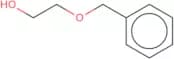
CAS:<p>Please enquire for more information about 2-Benzyloxyethanol including the price, delivery time and more detailed product information at the technical inquiry form on this page</p>Formula:C9H12O2Purezza:Min. 95%Colore e forma:Colorless Clear LiquidPeso molecolare:152.19 g/mol1H,1H,7H-Dodecafluoroheptanol
CAS:<p>1H,1H,7H-Dodecafluoroheptanol is a perfluorinated compound. It has been shown to be an efficient scavenger of reactive oxygen species (ROS) and to have a protective effect on collagen. The reaction mechanism of 1H,1H,7H-dodecafluoroheptanol is not fully understood. However, it has been shown that the chloride ion plays a key role in the formation of this product from 1H,1H,7F-dodecafluoroheptane. The reaction vessel used in this synthesis is critical because it must be anhydrous to prevent the formation of 1HF3OCl. Magnetic resonance spectroscopy has been used to study the chemical structures of this compound.</p>Formula:C7H4F12OPurezza:Min. 95%Colore e forma:Colorless PowderPeso molecolare:332.09 g/moltrans-1-Bromo-1-propene - stablised with Copper
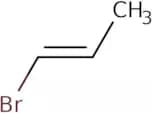
CAS:<p>Trans-1-bromo-1-propene is a compound that has been stabilized by copper. It is used in the synthesis of quinoline derivatives and alkanoic acids. Trans-1-bromo-1-propene is an antimicrobial agent, which kills bacteria by interfering with the fatty acid synthesis. This substance also has antioxidant properties.</p>Formula:C3H5BrPurezza:95%NmrColore e forma:Clear LiquidPeso molecolare:120.98 g/mol1,3-Bis(diphenylphosphino)propane
CAS:<p>1,3-Bis(diphenylphosphino)propane is a chelate ligand that forms complexes with a wide range of transition metal ions. It has been shown to be an effective catalyst for the conversion of aryl halides to acid derivatives. The compound has been found to have an excellent stability in aqueous solutions and does not hydrolyze readily in human serum or water. 1,3-Bis(diphenylphosphino)propane is also used as an additive in many industrial processes, such as the production of nylon and polyester fibers.</p>Formula:C27H26P2Purezza:Min 96.0%Colore e forma:White Off-White PowderPeso molecolare:412.44 g/moltrans,trans-1,4-Diphenyl-1,3-butadiene
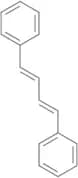
CAS:<p>Used in the preparation of metal-diene reagents (e.g. for carbocyclization)</p>Formula:C16H14Purezza:Min. 95%Peso molecolare:206.28 g/mol9-Anthracenemethanol
CAS:<p>9-Anthracenemethanol is a carcinogenic, mutagenic, and teratogenic compound. It is metabolized by a number of enzymatic reactions, including oxidation by cytochrome P450 enzymes and reduction by glutathione reductase. The compound has been shown to be activated in acid conditions, with an activation energy of 10 kcal/mol. It also forms an acid when heated, which can cause damage to cells. 9-Anthracenemethanol has been shown to have photochemical properties that may be used for the production of dyes or pigments.</p>Formula:C15H12OPurezza:Min. 95%Colore e forma:Yellow PowderPeso molecolare:208.26 g/molSodium ethanethiolate
CAS:<p>Sodium ethanethiolate is a detergent composition that is used in the manufacturing of other detergents. It has a receptor binding mechanism and binds to the fatty acid component of the lipid bilayer. The hydroxyl group on the ethanethiolate molecule reacts with the hydrophobic region of the lipid bilayer, leading to disruption of membrane function. Sodium-dependent glucose transport is inhibited by sodium ethanethiolate, which also has metabolic disorders as a side effect. It is a bicyclic heterocycle and can be synthesized from p-hydroxybenzoic acid and trifluoroacetic acid. The chemical stability of this compound is high, making it useful for industrial applications.</p>Formula:C2H5NaSPurezza:(¹H-Nmr) Min. 90 Area-%Colore e forma:White PowderPeso molecolare:84.12 g/molDiiodomethane
CAS:<p>Diiodomethane is a chemical compound with the molecular formula CHI. It is a colorless gas that can be obtained by reacting methyl ethyl and hydroxyl group in the presence of an oxidant such as boron nitride. Diiodomethane has been used as a substrate film for n-dimethyl formamide and reaction solution, which have been studied using spectroscopic data. The product of this reaction is water vapor that leaves the system due to its low boiling point. Reaction mechanism for this process is thought to be due to the kinetic energy of the particles that collide and produce diiodomethane molecules.</p>Formula:CH2I2Purezza:Min. 95%Colore e forma:Yellow Clear LiquidPeso molecolare:267.84 g/mol2,2-Paracyclophane
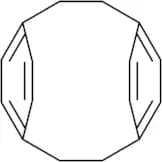
CAS:<p>2,2-Paracyclophane is a high-sensitivity c-reactive protein (hsCRP) that has been isolated from the fungus Cryptococcus neoformans. This compound has shown to have anti-cancer properties in animal studies. 2,2-Paracyclophane binds to fatty acids and is soluble in water, which may be due to its hydrogen bonding with the hydroxyl group at C1. The crystal structure of this compound reveals that it has a cyclohexane ring and two fatty acids. The thermal expansion coefficient of this molecule is also high, which suggests that it may be suitable for use as a solid lubricant.</p>Formula:C16H16Purezza:Min. 98.5 Area-%Colore e forma:White PowderPeso molecolare:208.3 g/mol6-Chlorohexanol
CAS:<p>6-Chlorohexanol is a fatty alcohol with a hydroxyl group. It is soluble in water and has a phase transition temperature of -114°C. 6-Chlorohexanol can be synthesized by reacting 2,6-dichlorophenol with hydrochloric acid and sodium hydroxide in the presence of azobenzene. The reaction solution is then heated to about 300°C for 3 hours. 6-Chlorohexanol is used as a model system for studying the photochemical reactions of fatty acids. Hydroxy groups are susceptible to light exposure, which leads to the formation of carbonyl compounds such as malonic acid and chloride monomers.</p>Formula:C6H13ClOPurezza:Min. 95%Colore e forma:PowderPeso molecolare:136.62 g/mol1,2-Bis(chlorodimethylsilyl)ethane
CAS:<p>1,2-Bis(chlorodimethylsilyl)ethane is a reactive chemical that is synthesized from hydroxychloroformates and hydrogen chloride. It reacts with silicon to form chlorosilanes, which are then used in the polymerization of siloxanes. 1,2-Bis(chlorodimethylsilyl)ethane has been shown to be an effective initiator for the polymerization of methyl methacrylate and ethylene glycol dimethacrylate. 1,2-Bis(chlorodimethylsilyl)ethane is also used as a hydroxyl group donor in organic reactions.</p>Formula:C6H16Cl2Si2Purezza:Min. 95 Area-%Colore e forma:PowderPeso molecolare:215.27 g/molIsostearic acid
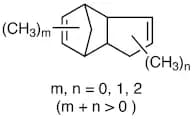
CAS:<p>Please enquire for more information about Isostearic acid including the price, delivery time and more detailed product information at the technical inquiry form on this page</p>Formula:C18H36O2Peso molecolare:284.48 g/molMethylcyclopentadiene Dimer (so called) (stabilized with TBC)
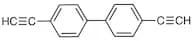
CAS:Colore e forma:Colorless to Light yellow clear liquid4,4'-Diethynylbiphenyl
CAS:Formula:C16H10Purezza:>98.0%(GC)Colore e forma:White to Light yellow to Light orange powder to crystalPeso molecolare:202.261-Eicosene
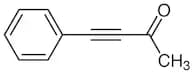
CAS:Formula:C20H40Purezza:>97.0%(GC)Colore e forma:White or Colorless to Almost white or Almost colorless powder to lump to clear liquidPeso molecolare:280.544-Phenyl-3-butyn-2-one
CAS:Formula:C10H8OPurezza:>97.0%(GC)Colore e forma:Colorless to Yellow to Green clear liquidPeso molecolare:144.17Nonafluorobutanesulfonic anhydride
CAS:Formula:C8F18O5S2Purezza:98%Colore e forma:LiquidPeso molecolare:582.1839Ref: IN-DA003TA1
Prodotto fuori produzione