Silani
I silani sono composti a base di silicio con uno o più gruppi organici legati a un atomo di silicio. Servono come building blocksi nella sintesi organica e inorganica, specialmente nella modifica delle superfici, nella promozione dell'adesione e nella produzione di rivestimenti e sigillanti. I silani sono ampiamente utilizzati nell'industria dei semiconduttori, nel trattamento del vetro e come agenti di reticolazione nella chimica dei polimeri. Presso CymitQuimica offriamo una vasta gamma di silani progettati per le tue applicazioni di ricerca e industriali.
Sottocategorie di "Silani"
Trovati 1235 prodotti di "Silani"
Ordinare per
Purezza (%)
0
100
|
0
|
50
|
90
|
95
|
100
SIVATE E610: ENHANCED AMINE FUNCTIONAL SILANE
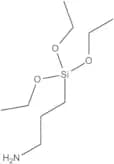
CAS:<p>SIVATE E610 (Enhanced AMEO)<br>Enhanced silane blend of aminopropyltriethoxysilane (SIA0610.0), 1,2-bis(triethoxysilyl)ethane (SIB1817.0) and bis(3-triethoxysilylpropyl)amine (SIB1824.5)Performance extended to non-siliceous surfacesImproved mechanical properties and corrosion resistance of metal substratesSuperior film forming properties in primer applicationsHigher bond strength in aggressive aqueous conditionsImparts composites and primers with long-term durability in a wide range of environmentsApplications include: adhesives for metallic and silicon-based substrates, coupling agent for thermoset and thermoplastic composites, functional micro-particles for adhesives and sealants<br>Enhanced Amine Functional Trialkoxy Silane<br>Silane coupling agents have the ability to form a durable bond between organic and inorganic materials to generate desired heterogeneous environments or to incorporate the bulk properties of different phases into a uniform composite structure. The general formula has two classes of functionality. The hydrolyzable group forms stable condensation products with siliceous surfaces and other oxides such as those of aluminum, zirconium, tin, titanium, and nickel. The organofunctional group alters the wetting or adhesion characteristics of the substrate, utilizes the substrate to catalyze chemical transformations at the heterogeneous interface, orders the interfacial region, or modifies its partition characteristics, and significantly effects the covalent bond between organic and inorganic materials.<br></p>Formula:C9H23NO3SiColore e forma:Colourless To Straw LiquidPeso molecolare:221.37(3,3,3-TRIFLUOROPROPYL)TRIMETHOXYSILANE, 98%
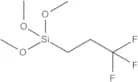
CAS:Formula:C6H13F3O3SiPurezza:98%Colore e forma:Straw LiquidPeso molecolare:218.253-ISOCYANATOPROPYLTRIETHOXYSILANE, 95%
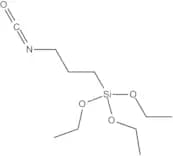
CAS:<p>3-Isocyanatopropyltriethoxysilane; triethoxysilylpropylisocyanate<br>Isocyanate functional trialkoxy silaneComponent in hybrid organic/inorganic urethanesCoupling agent for urethanes, polyols, and amines<br></p>Formula:C10H21NO4SiPurezza:94.50%Colore e forma:Straw LiquidPeso molecolare:247.37Ref: 3H-SII6455.0
2kgPrezzo su richiesta100gPrezzo su richiesta17kgPrezzo su richiesta900gPrezzo su richiesta180kgPrezzo su richiestaDIMETHYLETHOXYSILANE
CAS:<p>Tri-substituted Silane Reducing Agent<br>Organosilanes are hydrocarbon-like and possess the ability to serve as both ionic and free-radical reducing agents. These reagents and their reaction by-products are safer and more easily handled and disposed than many other reducing agents. The metallic nature of silicon and its low electronegativity relative to hydrogen lead to polarization of the Si-H bond yielding a hydridic hydrogen and a milder reducing agent compared to aluminum-, boron-, and other metal-based hydrides. A summary of some key silane reductions are presented in Table 1 of the Silicon-Based Reducing Agents brochure.<br>Alkyl Silane - Conventional Surface Bonding<br>Aliphatic, fluorinated aliphatic or substituted aromatic hydrocarbon substituents are the hydrophobic entities which enable silanes to induce surface hydrophobicity. The organic substitution of the silane must be non-polar. The hydrophobic effect of the organic substitution can be related to the free energy of transfer of hydrocarbon molecules from an aqueous phase to a homogeneous hydrocarbon phase. A successful hydrophobic coating must eliminate or mitigate hydrogen bonding and shield polar surfaces from interaction with water by creating a non-polar interphase. Although silane and silicone derived coatings are in general the most hydrophobic, they maintain a high degree of permeability to water vapor. This allows coatings to breathe and reduce deterioration at the coating interface associated with entrapped water. Since ions are not transported through non-polar silane and silicone coatings, they offer protection to composite structures ranging from pigmented coatings to rebar reinforced concrete. A selection guide for hydrophobic silanes can be found on pages 22-31 of the Hydrophobicity, Hydrophilicity and Silane Surface Modification brochure.<br>Dimethylethoxysilane; Ethoxydimethylsilane<br>Vapor pressure, 20 °C: 281 mmUndergoes hydrosilylation reactionsWaterproofing agent for space shuttle thermal tilesWill form high-boiling polymeric by-products with aqueous work-upExtensive review of silicon based reducing agents: Larson, G.; Fry, J. L. "Ionic and Organometallic-Catalyzed Organosilane Reductions", Wipf, P., Ed.; Wiley, 2007<br></p>Formula:C4H12OSiPurezza:97%Colore e forma:LiquidPeso molecolare:104.22TRIMETHYLCHLOROSILANE, 99+%
CAS:Formula:C3H9ClSiPurezza:99%Colore e forma:Straw LiquidPeso molecolare:108.64Ref: 3H-SIT8510.1
3kgPrezzo su richiesta15kgPrezzo su richiesta750gPrezzo su richiesta170kgPrezzo su richiesta1,3-BIS(3-AMINOPROPYL)TETRAMETHYLDISILOXANE
CAS:Formula:C10H28N2OSi2Purezza:97%Colore e forma:Straw LiquidPeso molecolare:248.52DODECYLMETHYLDICHLOROSILANE
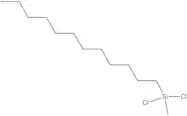
CAS:<p>Alkyl Silane - Conventional Surface Bonding<br>Aliphatic, fluorinated aliphatic or substituted aromatic hydrocarbon substituents are the hydrophobic entities which enable silanes to induce surface hydrophobicity. The organic substitution of the silane must be non-polar. The hydrophobic effect of the organic substitution can be related to the free energy of transfer of hydrocarbon molecules from an aqueous phase to a homogeneous hydrocarbon phase. A successful hydrophobic coating must eliminate or mitigate hydrogen bonding and shield polar surfaces from interaction with water by creating a non-polar interphase. Although silane and silicone derived coatings are in general the most hydrophobic, they maintain a high degree of permeability to water vapor. This allows coatings to breathe and reduce deterioration at the coating interface associated with entrapped water. Since ions are not transported through non-polar silane and silicone coatings, they offer protection to composite structures ranging from pigmented coatings to rebar reinforced concrete. A selection guide for hydrophobic silanes can be found on pages 22-31 of the Hydrophobicity, Hydrophilicity and Silane Surface Modification brochure.<br>Dodecylmethyldichlorosilane; Dichlorododecylmethylsilane; Methyldodecyldichlorosilane<br></p>Formula:C13H28Cl2SiPurezza:97%Colore e forma:Straw LiquidPeso molecolare:283.36BIS[(p-DIMETHYLSILYL)PHENYL]ETHER, 96%
CAS:Formula:C16H22OSi2Purezza:96%Colore e forma:LiquidPeso molecolare:286.52AMINOPROPYL/VINYLSILSESQUIOXANE IN AQUEOUS SOLUTION
CAS:<p>aminopropyl/vinyl/silsesquioxane, (60-65% aminopropylsilsesquioxane)-(35-40% vinyl-silsesquioxane) copolymer 25-28% in water; trihydroxysilylpropylamine-vinylsilanetriol condensate; aminopropylsilsesquioxane vinylsilsequioxane copolymer oligomer<br>Water-borne amino/vinyl alkyl silsesquioxane oligomersAdditives for acrylic latex sealantsLow VOC coupling agent for siliceous surfacesOrganic and silanol functionalityAmphotericPrimers for metalsViscosity: 3-10 cStMole % functional group: 60-65pH: 10-11Internal hydrogen bonding stabilizes solution<br></p>Colore e forma:Straw LiquidPeso molecolare:250-500PHENETHYLTRICHLOROSILANE
CAS:<p>Aromatic Silane - Conventional Surface Bonding<br>Aliphatic, fluorinated aliphatic or substituted aromatic hydrocarbon substituents are the hydrophobic entities which enable silanes to induce surface hydrophobicity. The organic substitution of the silane must be non-polar. The hydrophobic effect of the organic substitution can be related to the free energy of transfer of hydrocarbon molecules from an aqueous phase to a homogeneous hydrocarbon phase. A successful hydrophobic coating must eliminate or mitigate hydrogen bonding and shield polar surfaces from interaction with water by creating a non-polar interphase. Although silane and silicone derived coatings are in general the most hydrophobic, they maintain a high degree of permeability to water vapor. This allows coatings to breathe and reduce deterioration at the coating interface associated with entrapped water. Since ions are not transported through non-polar silane and silicone coatings, they offer protection to composite structures ranging from pigmented coatings to rebar reinforced concrete. A selection guide for hydrophobic silanes can be found on pages 22-31 of the Hydrophobicity, Hydrophilicity and Silane Surface Modification brochure.<br>Phenethyltrichlorosilane; 2-(Trichlorosilylethyl) benzene; Trichloro(2-phenylethyl)silane<br>Contains α-, β-isomersTreated surface contact angle, water: 88°<br></p>Formula:C8H9Cl3SiPurezza:97%Colore e forma:Pale Yellow LiquidPeso molecolare:239.6UREIDOPROPYLTRIMETHOXYSILANE
CAS:<p>Ureidopropyltrimethoxysilane, (3-trimethoxysilyl)propylurea<br>Specialty amine functional trialkoxy silaneComponent in primers for tin alloysAdhesion promoter for foundry resins<br></p>Formula:C7H18N2O4SiColore e forma:Straw Amber LiquidPeso molecolare:222.32Ref: 3H-SIU9058.0
2kgPrezzo su richiesta100gPrezzo su richiesta20kgPrezzo su richiesta225kgPrezzo su richiesta1,1,3,3-TETRAMETHYLDISILOXANE, 98%
CAS:<p>Alkenylsilane Cross-Coupling Agent<br>The cross-coupling reaction is a highly useful methodology for the formation of carbon-carbon bonds. It involves two reagents, with one typically being a suitable organometallic reagent - the nucleophile - and the other a suitable organic substrate, normally an unsaturated halide, tosylate or similar - the electrophile.<br>ALD Material<br>Atomic layer deposition (ALD) is a chemically self-limiting deposition technique that is based on the sequential use of a gaseous chemical process. A thin film (as fine as -0.1 Å per cycle) results from repeating the deposition sequence as many times as needed to reach a certain thickness. The major characteristic of the films is the resulting conformality and the controlled deposition manner. Precursor selection is key in ALD processes, namely finding molecules which will have enough reactivity to produce the desired films yet are stable enough to be handled and safely delivered to the reaction chamber.<br>Siloxane-Based Silane Reducing Agent<br>Organosilanes are hydrocarbon-like and possess the ability to serve as both ionic and free-radical reducing agents. These reagents and their reaction by-products are safer and more easily handled and disposed than many other reducing agents. The metallic nature of silicon and its low electronegativity relative to hydrogen lead to polarization of the Si-H bond yielding a hydridic hydrogen and a milder reducing agent compared to aluminum-, boron-, and other metal-based hydrides. A summary of some key silane reductions are presented in Table 1 of the Silicon-Based Reducing Agents brochure.<br>1,1,3,3-Tetramethyldisiloxane; 1,1-Dihydro-1,1,3,3-tetramethyldisiloxane; TMDO; TMDS<br>Viscosity, 20 °C: 0.56 cStΔHcomb: 4,383 kJ/molΔHvap: 30.3 kJ/molVapor pressure, 27 °C: 194.8 mmReduces aromatic aldehydes to benzyl halidesEmployed in reductive halogenation of aldehydes and epoxidesUsed to link ferrocenylsilane, polyolefin block copolymers into stable cylindrical formsEndcapper for polymerization of hydride terminated siliconesOrganic reducing agentEmployed in high-yield reduction of amides to amines in the presence of other reducible groupsReduces anisoles to arenesHydrosilylates terminal alkynes to form alkenylsilanes capable of cross-coupling with aryl and vinyl halidesExtensive review of silicon based reducing agents: Larson, G.; Fry, J. L. "Ionic and Organometallic-Catalyzed Organosilane Reductions", Wipf, P., Ed.; Wiley, 2007Extensive review of silicon based cross-coupling agents: Denmark, S. E. et al. "Organic Reactions, Volume 75" Denmark, S. E. ed., John Wiley and Sons, 233, 2011<br></p>Formula:C4H14OSi2Purezza:98%Colore e forma:LiquidPeso molecolare:134.22Ref: 3H-SIT7546.0
14kgPrezzo su richiesta250gPrezzo su richiesta1.5kgPrezzo su richiesta145kgPrezzo su richiestaVINYLTRIS(METHYLETHYLKETOXIMINO)SILANE, tech
CAS:<p>Olefin Functional Trialkoxy Silane<br>Silane coupling agents have the ability to form a durable bond between organic and inorganic materials to generate desired heterogeneous environments or to incorporate the bulk properties of different phases into a uniform composite structure. The general formula has two classes of functionality. The hydrolyzable group forms stable condensation products with siliceous surfaces and other oxides such as those of aluminum, zirconium, tin, titanium, and nickel. The organofunctional group alters the wetting or adhesion characteristics of the substrate, utilizes the substrate to catalyze chemical transformations at the heterogeneous interface, orders the interfacial region, or modifies its partition characteristics, and significantly effects the covalent bond between organic and inorganic materials.<br>Vinyltris(methylethylketoximino)silane; Tris(methylethylketoximino)vinylsilane; Tri(methylethylketoximino)silylethylene<br>Neutral cross-linker/coupling agent for condensation cure siliconesByproduct: methylethylketoximeCopolymerizes with ethylene to form moisture crosslinkable polyethylene<br></p>Formula:C14H27N3O3SiPurezza:92%Colore e forma:Straw LiquidPeso molecolare:313.47TRIS(DIMETHYLAMINO)METHYLSILANE
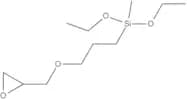
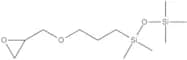
CAS:Formula:C7H21N3SiPurezza:97%Colore e forma:Straw LiquidPeso molecolare:175.35(3-GLYCIDOXYPROPYL)METHYLDIETHOXYSILANE
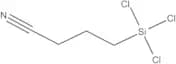
CAS:<p>(3-glycidoxypropyl)methyldiethoxysilane; 3-(2,3-epoxypropoxypropyl)methyldiethoxysilane; [3-(2,3- epoxypropoxy)propyl]diethoxymethylsilane; 3- (methyldiethoxysilyl)propyl glycidyl ether<br>Epoxy functional dialkoxy silaneViscosity: 3.0 cStEmployed in scratch resistant coatings for eye glassesCoupling agent for latex systems with reduced tendancy to gel compared to SIG5840.0Coupling agent for UV cure and epoxy systemsEpoxy silane treated surfaces convert to hydrophilic-diols when exposed to moisture<br></p>Formula:C11H24O4SiPurezza:97%Colore e forma:Straw LiquidPeso molecolare:248.393-CYANOPROPYLTRICHLOROSILANE
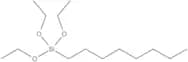
CAS:Formula:C4H6Cl3NSiPurezza:97%Colore e forma:Straw LiquidPeso molecolare:202.54n-OCTYLTRIETHOXYSILANE, 98%
CAS:<p>Alkyl Silane - Conventional Surface Bonding<br>Aliphatic, fluorinated aliphatic or substituted aromatic hydrocarbon substituents are the hydrophobic entities which enable silanes to induce surface hydrophobicity. The organic substitution of the silane must be non-polar. The hydrophobic effect of the organic substitution can be related to the free energy of transfer of hydrocarbon molecules from an aqueous phase to a homogeneous hydrocarbon phase. A successful hydrophobic coating must eliminate or mitigate hydrogen bonding and shield polar surfaces from interaction with water by creating a non-polar interphase. Although silane and silicone derived coatings are in general the most hydrophobic, they maintain a high degree of permeability to water vapor. This allows coatings to breathe and reduce deterioration at the coating interface associated with entrapped water. Since ions are not transported through non-polar silane and silicone coatings, they offer protection to composite structures ranging from pigmented coatings to rebar reinforced concrete. A selection guide for hydrophobic silanes can be found on pages 22-31 of the Hydrophobicity, Hydrophilicity and Silane Surface Modification brochure.<br>n-Octyltriethoxysilane; Triethoxysilyloctane<br>Viscosity: 1.9 cStVapor pressure, 75 °C: 1 mmWidely used in architectural hydrophobationSurface treatment for pigments in cosmetic vehicles and compositesMay be formulated to stable water emulsionsSuppresses nucleation behavior in ZnO-polylactic acid compositesTrialkoxy silane<br></p>Formula:C14H32O3SiPurezza:97.5%Colore e forma:Straw LiquidPeso molecolare:276.48Ref: 3H-SIO6715.0
2kgPrezzo su richiesta50gPrezzo su richiesta15kgPrezzo su richiesta175kgPrezzo su richiesta3-[METHOXY(POLYETHYLENEOXY)6-9]PROPYLTRIS(DIMETHYLAMINO)SILANE, tech
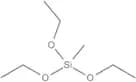
<p>Tipped PEG Silane (500-855 g/mol)<br>PEO, Tris(dimethylamino)silane termination utilized for hydrophilic surface modificationPEGylation reagentFor MOCVD of hydrophilic films<br></p>Formula:CH3O(CH2CH2O)6-9(CH2)3Si[N(CH3)2]3Colore e forma:Straw LiquidPeso molecolare:500-855METHYLTRIETHOXYSILANE
CAS:<p>Alkyl Silane - Conventional Surface Bonding<br>Aliphatic, fluorinated aliphatic or substituted aromatic hydrocarbon substituents are the hydrophobic entities which enable silanes to induce surface hydrophobicity. The organic substitution of the silane must be non-polar. The hydrophobic effect of the organic substitution can be related to the free energy of transfer of hydrocarbon molecules from an aqueous phase to a homogeneous hydrocarbon phase. A successful hydrophobic coating must eliminate or mitigate hydrogen bonding and shield polar surfaces from interaction with water by creating a non-polar interphase. Although silane and silicone derived coatings are in general the most hydrophobic, they maintain a high degree of permeability to water vapor. This allows coatings to breathe and reduce deterioration at the coating interface associated with entrapped water. Since ions are not transported through non-polar silane and silicone coatings, they offer protection to composite structures ranging from pigmented coatings to rebar reinforced concrete. A selection guide for hydrophobic silanes can be found on pages 22-31 of the Hydrophobicity, Hydrophilicity and Silane Surface Modification brochure.<br>Methyltriethoxysilane; Triethoxymethylsilane; Methyltriethyloxysilane<br>Viscosity: 0.6 cStDipole moment: 1.72 debyeVapor pressure, 25 °: 6 mmLow cost hydrophobic surface treatmentAlkoxy crosslinker for condensation cure siliconesTrialkoxy silane<br></p>Formula:C7H18O3SiPurezza:97%Colore e forma:LiquidPeso molecolare:178.3(3-GLYCIDOXYPROPYL)PENTAMETHYLDISILOXANE
CAS:Formula:C11H26O3Si2Purezza:97%Colore e forma:Straw LiquidPeso molecolare:262.5DIMETHYLDICHLOROSILANE, 99+%
CAS:<p>Bridging Silicon-Based Blocking Agent<br>Used as a protecting group for reactive hydrogens in alcohols, amines, thiols, and carboxylic acids. Organosilanes are hydrogen-like, can be introduced in high yield, and can be removed under selective conditions. They are stable over a wide range of reaction conditions and can be removed in the presence of other functional groups, including other protecting groups. The tolerance of silylated alcohols to chemical transformations summary is presented in Table 1 of the Silicon-Based Blocking Agents brochure.<br>Alkyl Silane - Conventional Surface Bonding<br>Aliphatic, fluorinated aliphatic or substituted aromatic hydrocarbon substituents are the hydrophobic entities which enable silanes to induce surface hydrophobicity. The organic substitution of the silane must be non-polar. The hydrophobic effect of the organic substitution can be related to the free energy of transfer of hydrocarbon molecules from an aqueous phase to a homogeneous hydrocarbon phase. A successful hydrophobic coating must eliminate or mitigate hydrogen bonding and shield polar surfaces from interaction with water by creating a non-polar interphase. Although silane and silicone derived coatings are in general the most hydrophobic, they maintain a high degree of permeability to water vapor. This allows coatings to breathe and reduce deterioration at the coating interface associated with entrapped water. Since ions are not transported through non-polar silane and silicone coatings, they offer protection to composite structures ranging from pigmented coatings to rebar reinforced concrete. A selection guide for hydrophobic silanes can be found on pages 22-31 of the Hydrophobicity, Hydrophilicity and Silane Surface Modification brochure.<br>Dimethyldichlorosilane; Dichlorodimethylsilane; DMS<br>AIR TRANSPORT FORBIDDENRedistilledViscosity: 0.47 cStVapor pressure, 17 °C: 100 mmSpecific heat: 0.92 J/g/°ΔHcomb: -2,055 kJ/molΔHvap: 33.5 kJ/molSurface tension: 20.1 mN/mCoefficient of thermal expansion: 1.3 x 10⁻³Critical temperature: 247.2 °CCritical pressure: 34.4 atmFundamental monomer for siliconesEmployed in the tethering of two olefins for the cross metathesis-coupling step in the synthesis of Attenol AAids in the intramolecular Pinacol reactionReacts with alcohols, diols, and hydroxy carboxylic acidsEmployed as a protecting group/template in C-glycoside synthesisAvailable in a lower purity as SID4120.0Summary of selective deprotection conditions is provided in Table 7 through Table 20 of the Silicon-Based Blocking Agents brochure<br></p>Formula:C2H6Cl2SiPurezza:99+%Colore e forma:Straw LiquidPeso molecolare:129.06(3,3,3-TRIFLUOROPROPYL)METHYLCYCLOTRISILOXANE
CAS:Formula:C12H21F9O3Si3Purezza:97%Colore e forma:White SolidPeso molecolare:468.55(3-PHENYLPROPYL)DIMETHYLCHLOROSILANE
CAS:<p>Aromatic Silane - Conventional Surface Bonding<br>Aliphatic, fluorinated aliphatic or substituted aromatic hydrocarbon substituents are the hydrophobic entities which enable silanes to induce surface hydrophobicity. The organic substitution of the silane must be non-polar. The hydrophobic effect of the organic substitution can be related to the free energy of transfer of hydrocarbon molecules from an aqueous phase to a homogeneous hydrocarbon phase. A successful hydrophobic coating must eliminate or mitigate hydrogen bonding and shield polar surfaces from interaction with water by creating a non-polar interphase. Although silane and silicone derived coatings are in general the most hydrophobic, they maintain a high degree of permeability to water vapor. This allows coatings to breathe and reduce deterioration at the coating interface associated with entrapped water. Since ions are not transported through non-polar silane and silicone coatings, they offer protection to composite structures ranging from pigmented coatings to rebar reinforced concrete. A selection guide for hydrophobic silanes can be found on pages 22-31 of the Hydrophobicity, Hydrophilicity and Silane Surface Modification brochure.<br>(3-Phenylpropyl)dimethylchlorosilane; 3-(Chlorodimethylsilylpropyl)benzene; Chlorodimethyl(3-phenylpropyl)silane<br></p>Formula:C11H17ClSiPurezza:97%Colore e forma:Pale Yellow LiquidPeso molecolare:212.78ISOOCTYLTRIETHOXYSILANE
CAS:<p>Alkyl Silane - Conventional Surface Bonding<br>Aliphatic, fluorinated aliphatic or substituted aromatic hydrocarbon substituents are the hydrophobic entities which enable silanes to induce surface hydrophobicity. The organic substitution of the silane must be non-polar. The hydrophobic effect of the organic substitution can be related to the free energy of transfer of hydrocarbon molecules from an aqueous phase to a homogeneous hydrocarbon phase. A successful hydrophobic coating must eliminate or mitigate hydrogen bonding and shield polar surfaces from interaction with water by creating a non-polar interphase. Although silane and silicone derived coatings are in general the most hydrophobic, they maintain a high degree of permeability to water vapor. This allows coatings to breathe and reduce deterioration at the coating interface associated with entrapped water. Since ions are not transported through non-polar silane and silicone coatings, they offer protection to composite structures ranging from pigmented coatings to rebar reinforced concrete. A selection guide for hydrophobic silanes can be found on pages 22-31 of the Hydrophobicity, Hydrophilicity and Silane Surface Modification brochure.<br>Isooctyltriethoxysilane; Triethoxysilyl-2,4,4-trimethypentane<br>Viscosity: 2.1 cStVapor pressure, 112 °C: 10mmArchitectural water-repellentWater scavenger for sealed lubricant systemsTrialkoxy silane<br></p>Formula:C14H32O3SiPurezza:97%Colore e forma:Straw LiquidPeso molecolare:276.48BIS[3-(TRIETHOXYSILYL)PROPYL]TETRASULFIDE, tech
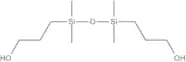
CAS:<p>bis[3-(triethoxysilyl)propyl]tetrasulfide; bis(triethoxysilylpropyl)tetrasulfane; TESPT<br>Sulfur functional dipodal silaneContains distribution of S2 - S10 species; average 3.8Viscosity: 11 cStAdhesion promoter for precious metalsCoupling agent/vulcanizing agent for "green" tiresAdhesion promoter for physical vapor deposition (PVD) copper on parylene<br></p>Formula:C18H42O6S4Si2Purezza:95%Colore e forma:Pale Yellow Amber LiquidPeso molecolare:538.941,3-BIS(HYDROXYPROPYL)TETRAMETHYLDISILOXANE, tech 95
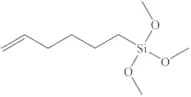
CAS:Formula:C10H26O3Si2Purezza:95%Colore e forma:Straw LiquidPeso molecolare:250.485-HEXENYLTRIMETHOXYSILANE, tech
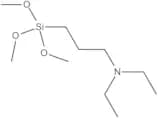
CAS:<p>Olefin Functional Trialkoxy Silane<br>Silane coupling agents have the ability to form a durable bond between organic and inorganic materials to generate desired heterogeneous environments or to incorporate the bulk properties of different phases into a uniform composite structure. The general formula has two classes of functionality. The hydrolyzable group forms stable condensation products with siliceous surfaces and other oxides such as those of aluminum, zirconium, tin, titanium, and nickel. The organofunctional group alters the wetting or adhesion characteristics of the substrate, utilizes the substrate to catalyze chemical transformations at the heterogeneous interface, orders the interfacial region, or modifies its partition characteristics, and significantly effects the covalent bond between organic and inorganic materials.<br>5-Hexenyltrimethoxysilane; Trimethoxysilylhexene<br>Adhesion promoter for Pt-cure siliconesUsed in microparticle surface modification<br></p>Formula:C9H20O3SiPurezza:techColore e forma:Straw LiquidPeso molecolare:204.34(N,N-DIETHYL-3-AMINOPROPYL)TRIMETHOXYSILANE
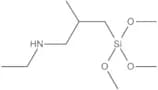
CAS:<p>(N,N-Diethyl-3-aminopropyl)trimethoxysilane; N-(3-trimethoxysilyl)propyl-N,N-diethylamine, N,N-diethyl-3-(trimethoxysilyl)propylamine<br>Tertiary amino functional silanesProvides silica-supported catalyst for 1,4-addition reactionsUsed together w/ SIA0591.0 to anchor PdCl2 catalyst to silica for acceleration of the Tsuji-Trost reaction in the allylation of nucleophiles<br></p>Formula:C10H25NO3SiPurezza:97%Colore e forma:Straw LiquidPeso molecolare:235.4(3-(N-ETHYLAMINO)ISOBUTYL)TRIMETHOXYSILANE
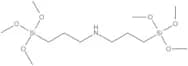
CAS:<p>(3-(N-Ethylamino)isobutyl)trimethoxysilane; 3-(trimethoxysilyl)-N-ethyl-2-methyl-1-propanamine<br>Secondary amino functional trialkoxy silaneReacts with isocyanate resins (urethanes) to form moisture cureable systemsPrimary amine coupling agent for UV cure and epoxy systemsUsed in microparticle surface modificationAdvanced cyclic analog available: SIE4891.0<br></p>Formula:C9H23NO3SiPurezza:97%Colore e forma:Straw LiquidPeso molecolare:221.37BIS(3-TRIMETHOXYSILYLPROPYL)AMINE, 96%
CAS:<p>Amine Functional Alkoxy Silane<br>Silane coupling agents have the ability to form a durable bond between organic and inorganic materials to generate desired heterogeneous environments or to incorporate the bulk properties of different phases into a uniform composite structure. The general formula has two classes of functionality. The hydrolyzable group forms stable condensation products with siliceous surfaces and other oxides such as those of aluminum, zirconium, tin, titanium, and nickel. The organofunctional group alters the wetting or adhesion characteristics of the substrate, utilizes the substrate to catalyze chemical transformations at the heterogeneous interface, orders the interfacial region, or modifies its partition characteristics, and significantly effects the covalent bond between organic and inorganic materials.<br>Dipodal Silane<br>Dipodal silanes are a series of adhesion promoters that have intrinsic hydrolytic stabilities up to ~10,000 times greater than conventional silanes and are used in applications such as plastic optics, multilayer printed circuit boards and as adhesive primers for ferrous and nonferrous metals. They have the ability to form up to six bonds to a substrate compared to conventional silanes with the ability to form only three bonds to a substrate. Many conventional coupling agents are frequently used in combination with 10-40% of a non-functional dipodal silane, where the conventional coupling agent provides the appropriate functionality for the application, and the non-functional dipodal silane provides increased durability. Also known as bis-silanes additives enhance hydrolytic stability, which impacts on increased product shelf life, ensures better substrate bonding and also leads to improved mechanical properties in coatings as well as composite applications.<br>Bis-(3-trimethoxysilylpropyl)amine<br>Secondary amine allows more control of reactivity with isocyanatesEmployed in optical fiber coatingsUsed in combination with silane, (3-Acryloxypropyl)trimethoxysilane, (SIA0200.0), to increase strength and hydrolytic stability of dental compositesDipodal analog of AMEO (SIA0611.0 )<br></p>Formula:C12H31NO6Si2Purezza:96%Colore e forma:Straw LiquidPeso molecolare:341.56Ref: 3H-SIB1833.0
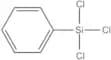
25gPrezzo su richiesta2kgPrezzo su richiesta18kgPrezzo su richiesta180kgPrezzo su richiestaPHENYLTRICHLOROSILANE
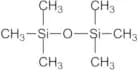
CAS:<p>Aromatic Silane - Conventional Surface Bonding<br>Aliphatic, fluorinated aliphatic or substituted aromatic hydrocarbon substituents are the hydrophobic entities which enable silanes to induce surface hydrophobicity. The organic substitution of the silane must be non-polar. The hydrophobic effect of the organic substitution can be related to the free energy of transfer of hydrocarbon molecules from an aqueous phase to a homogeneous hydrocarbon phase. A successful hydrophobic coating must eliminate or mitigate hydrogen bonding and shield polar surfaces from interaction with water by creating a non-polar interphase. Although silane and silicone derived coatings are in general the most hydrophobic, they maintain a high degree of permeability to water vapor. This allows coatings to breathe and reduce deterioration at the coating interface associated with entrapped water. Since ions are not transported through non-polar silane and silicone coatings, they offer protection to composite structures ranging from pigmented coatings to rebar reinforced concrete. A selection guide for hydrophobic silanes can be found on pages 22-31 of the Hydrophobicity, Hydrophilicity and Silane Surface Modification brochure.<br>Phenyltrichlorosilane; Trichlorophenylsilane; Trichlorosilylbenzene<br>Viscosity: 1.08 cStΔHvap: 47.7 kJ/molDipole moment: 2.41 debyeSurface tension: 27.9 mN/mVapor pressure, 75 °C: 10 mmCritical temperature: 438 °CSpecific heat: 1.00 J/g/°CCoefficient of thermal expansion: 1.2 x 10⁻³Intermediate for high refractive index resinsImmobilizes pentacene films<br></p>Formula:C6H5Cl3SiPurezza:97%Colore e forma:LiquidPeso molecolare:211.55HEXAMETHYLDISILOXANE, 98%
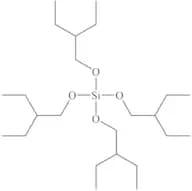
CAS:Formula:C6H18OSi2Purezza:98%Colore e forma:LiquidPeso molecolare:162.38TETRAKIS(2-ETHYLBUTOXY)SILANE
CAS:Formula:C24H52O4SiPurezza:95%Colore e forma:Light Amber LiquidPeso molecolare:432.73BIS(TRIMETHYLSILYL)SELENIDE
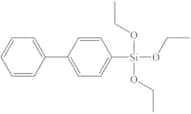
CAS:Formula:C6H18SeSi2Colore e forma:Colourless LiquidPeso molecolare:225.344-BIPHENYLYLTRIETHOXYSILANE
CAS:Formula:C18H24O3SiPurezza:95%Colore e forma:Straw LiquidPeso molecolare:316.47METHYLDICHLOROSILANE CYLINDER
CAS:<p>Tri-substituted Silane Reducing Agent<br>Organosilanes are hydrocarbon-like and possess the ability to serve as both ionic and free-radical reducing agents. These reagents and their reaction by-products are safer and more easily handled and disposed than many other reducing agents. The metallic nature of silicon and its low electronegativity relative to hydrogen lead to polarization of the Si-H bond yielding a hydridic hydrogen and a milder reducing agent compared to aluminum-, boron-, and other metal-based hydrides. A summary of some key silane reductions are presented in Table 1 of the Silicon-Based Reducing Agents brochure.<br>Methyldichlorosilane; Dichloromethylsilane<br>Viscosity: 0.60 cStΔHcomb: 163 kJ/molΔHvap: 29.3 kJ/molDipole moment: 1.91 debyeCoefficient of thermal expansion: 1.0 x 10⁻³Specific heat: 0.8 J/g/°CVapor pressure, 24 °C: 400 mmCritical temperature: 215-8 °CCritical pressure: 37.7 atmProvides better diastereoselective reductive aldol reaction between an aldehyde and an acrylate ester than other silanesForms high-boiling polymeric by-products upon aqueous work-upExtensive review of silicon based reducing agents: Larson, G.; Fry, J. L. "Ionic and Organometallic-Catalyzed Organosilane Reductions", Wipf, P., Ed.; Wiley, 2007<br></p>Formula:CH4Cl2SiPurezza:97%Colore e forma:Straw LiquidPeso molecolare:115.03Ref: 3H-SIM6504.0
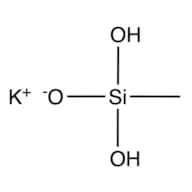
drPrezzo su richiesta2kgPrezzo su richiestacylPrezzo su richiesta20kgPrezzo su richiesta750gPrezzo su richiestaPOTASSIUM METHYLSILICONATE, 44-56% in water
CAS:Formula:CH5KO3SiColore e forma:LiquidPeso molecolare:132.23Ref: 3H-SIP6898.0
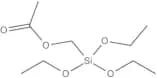
20kgPrezzo su richiesta500gPrezzo su richiesta2.5kgPrezzo su richiesta250kgPrezzo su richiestaACETOXYMETHYLTRIETHOXYSILANE
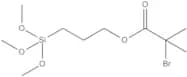
CAS:<p>Ester Functional Trialkoxy Silane<br>Silane coupling agents have the ability to form a durable bond between organic and inorganic materials to generate desired heterogeneous environments or to incorporate the bulk properties of different phases into a uniform composite structure. The general formula has two classes of functionality. The hydrolyzable group forms stable condensation products with siliceous surfaces and other oxides such as those of aluminum, zirconium, tin, titanium, and nickel. The organofunctional group alters the wetting or adhesion characteristics of the substrate, utilizes the substrate to catalyze chemical transformations at the heterogeneous interface, orders the interfacial region, or modifies its partition characteristics, and significantly effects the covalent bond between organic and inorganic materials.<br>Hydrophilic Silane - Polar - Hydrogen Bonding<br>Aliphatic, fluorinated aliphatic or substituted aromatic hydrocarbon substituents are the hydrophobic entities which enable silanes to induce surface hydrophobicity. The organic substitution of the silane must be non-polar. The hydrophobic effect of the organic substitution can be related to the free energy of transfer of hydrocarbon molecules from an aqueous phase to a homogeneous hydrocarbon phase. A successful hydrophobic coating must eliminate or mitigate hydrogen bonding and shield polar surfaces from interaction with water by creating a non-polar interphase. Although silane and silicone derived coatings are in general the most hydrophobic, they maintain a high degree of permeability to water vapor. This allows coatings to breathe and reduce deterioration at the coating interface associated with entrapped water. Since ions are not transported through non-polar silane and silicone coatings, they offer protection to composite structures ranging from pigmented coatings to rebar reinforced concrete. A selection guide for hydrophobic silanes can be found on pages 22-31 of the Hydrophobicity, Hydrophilicity and Silane Surface Modification brochure.<br>Acetoxymethyltriethoxysilane; (Triethoxysilylmethyl)acetate<br>Hydrolyzes to form stable silanol solutions in neutral water<br></p>Formula:C9H20O5SiPurezza:97%Colore e forma:LiquidPeso molecolare:236.34(3-TRIMETHOXYSILYL)PROPYL 2-BROMO-2-METHYLPROPIONATE
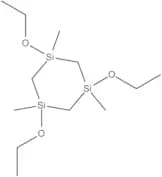
CAS:<p>(3-Trimethoxysilyl)propyl 2-bromo-2-methylpropionate<br>Halogen functional trialkoxy silaneUsed for surface initiated atom-transfer radical-polymerization, ATRPUsed in microparticle surface modification<br></p>Formula:C10H21BrO5SiPurezza:92%Colore e forma:Amber LiquidPeso molecolare:329.271,3,5-TRIMETHYL-1,3,5-TRIETHOXY-1,3,5-TRISILACYCLOHEXANE
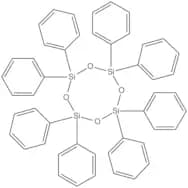
CAS:Formula:C12H30O3Si3Purezza:97%Colore e forma:LiquidPeso molecolare:306.63OCTAPHENYLCYCLOTETRASILOXANE, 98%
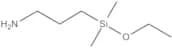
CAS:Formula:C48H40O4Si4Purezza:98%Colore e forma:White SolidPeso molecolare:793.183-AMINOPROPYLDIMETHYLETHOXYSILANE
CAS:<p>3-Aminopropyldimethylethoxysilane, 3-(dimethylethoxysilyl)propylamine<br>Monoamino functional trialkoxy silanePrimary amine coupling agent for UV cure and epoxy systemsUsed in DNA array technology and microparticle surface modificationΔHform: 147.6 kcal/mol<br></p>Formula:C7H19NOSiPurezza:97% including isomersColore e forma:Straw LiquidPeso molecolare:161.32Ref: 3H-SIA0603.0
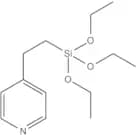
5gPrezzo su richiesta25gPrezzo su richiesta2kgPrezzo su richiesta100gPrezzo su richiesta2-(4-PYRIDYLETHYL)TRIETHOXYSILANE
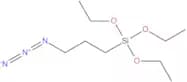
CAS:<p>2-(4-Pyridylethyl)triethoxysilane, 4-(triethoxysilyl)pyridine<br>Monoamino functional trialkoxy silaneAmber liquidForms self-assembled layers which can be “nano-shaved” by scanning AFMUsed in microparticle surface modification<br></p>Formula:C13H23NO3SiPurezza:97%Colore e forma:Straw Amber LiquidPeso molecolare:269.433-AZIDOPROPYLTRIETHOXYSILANE
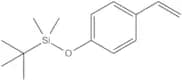
CAS:<p>Azide Functional Trialkoxy Silane<br>Silane coupling agents have the ability to form a durable bond between organic and inorganic materials to generate desired heterogeneous environments or to incorporate the bulk properties of different phases into a uniform composite structure. The general formula has two classes of functionality. The hydrolyzable group forms stable condensation products with siliceous surfaces and other oxides such as those of aluminum, zirconium, tin, titanium, and nickel. The organofunctional group alters the wetting or adhesion characteristics of the substrate, utilizes the substrate to catalyze chemical transformations at the heterogeneous interface, orders the interfacial region, or modifies its partition characteristics, and significantly effects the covalent bond between organic and inorganic materials.<br>3-Azidopropyltriethoxysilane; Trimethoxysilylpropylazide<br>Used with click chemistry to introduce and immobilize discrete complexes onto the SBA-15 surfaceUsed in the preparation of poly-L-lysine bound to silica nanoparticlesCoupling agent for surface modificationAVOID CONTACT WITH METALS<br></p>Formula:C9H21N3O3SiPurezza:97%Colore e forma:Straw Amber LiquidPeso molecolare:247.37p-(t-BUTYLDIMETHYLSILOXY)STYRENE
CAS:<p>Alkenylsilane Cross-Coupling Agent<br>The cross-coupling reaction is a highly useful methodology for the formation of carbon-carbon bonds. It involves two reagents, with one typically being a suitable organometallic reagent - the nucleophile - and the other a suitable organic substrate, normally an unsaturated halide, tosylate or similar - the electrophile.<br>p-(t-Butyldimethylsiloxy)styrene; p-Vinyl-t-Butyldimethylbenzene<br>Useful for Heck cross-coupling to substituted protectedhydroxy functional styrenesUndergoes radical and anionic polymerizationExtensive review of silicon based cross-coupling agents: Denmark, S. E. et al. "Organic Reactions, Volume 75" Denmark, S. E. ed., John Wiley and Sons, 233, 2011<br></p>Formula:C14H22OSiPurezza:97%Colore e forma:Straw LiquidPeso molecolare:234.41TETRACHLOROSILANE, 98%
CAS:<p>ALD Material<br>Atomic layer deposition (ALD) is a chemically self-limiting deposition technique that is based on the sequential use of a gaseous chemical process. A thin film (as fine as -0.1 Å per cycle) results from repeating the deposition sequence as many times as needed to reach a certain thickness. The major characteristic of the films is the resulting conformality and the controlled deposition manner. Precursor selection is key in ALD processes, namely finding molecules which will have enough reactivity to produce the desired films yet are stable enough to be handled and safely delivered to the reaction chamber.<br>Tetrachlorosilane; Silicon chloride; Silicon tetrachloride<br>Viscosity: 0.35 cStΔHform: -640 kJ/molΔHvap: 31.8 kJ/molΔHfus: 45.2 J/gSurface tension: 19.7 mN/mDielectric constant: 2.40Vapor pressure, 20 °C: 194 mmCritical pressure: 37.0 atmCritical temperature: 234 °CCoefficient of thermal expansion: 1.1 x 10⁻³Specific heat: 0.84 J/g/°Reaction with living alkali metal terminated polymers results in star polymersPrimary industrial use - combustion with hydrogen and air to give fumed silicaEnantioselectively opens stilbine epoxides to trichlorosilylated chlorohydrinsPromotes the reaction of aldehydes with isocyanides<br></p>Formula:Cl4SnPurezza:98%Colore e forma:Straw LiquidPeso molecolare:169.9Ref: 3H-SIT7085.0
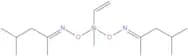
25kgPrezzo su richiesta2.5kgPrezzo su richiesta250kgPrezzo su richiesta600kgPrezzo su richiestaVINYLMETHYLBIS(METHYLISOBUTYLKETOXIMINO)SILANE, tech
CAS:Formula:C15H30N2O2SiPurezza:90%Colore e forma:LiquidPeso molecolare:298.5THEXYLDIMETHYLCHLOROSILANE
CAS:<p>Alkyl Silane - Conventional Surface Bonding<br>Aliphatic, fluorinated aliphatic or substituted aromatic hydrocarbon substituents are the hydrophobic entities which enable silanes to induce surface hydrophobicity. The organic substitution of the silane must be non-polar. The hydrophobic effect of the organic substitution can be related to the free energy of transfer of hydrocarbon molecules from an aqueous phase to a homogeneous hydrocarbon phase. A successful hydrophobic coating must eliminate or mitigate hydrogen bonding and shield polar surfaces from interaction with water by creating a non-polar interphase. Although silane and silicone derived coatings are in general the most hydrophobic, they maintain a high degree of permeability to water vapor. This allows coatings to breathe and reduce deterioration at the coating interface associated with entrapped water. Since ions are not transported through non-polar silane and silicone coatings, they offer protection to composite structures ranging from pigmented coatings to rebar reinforced concrete. A selection guide for hydrophobic silanes can be found on pages 22-31 of the Hydrophobicity, Hydrophilicity and Silane Surface Modification brochure.<br>Trialkylsilyl Blocking Agent<br>Used as a protecting group for reactive hydrogens in alcohols, amines, thiols, and carboxylic acids. Organosilanes are hydrogen-like, can be introduced in high yield, and can be removed under selective conditions. They are stable over a wide range of reaction conditions and can be removed in the presence of other functional groups, including other protecting groups. The tolerance of silylated alcohols to chemical transformations summary is presented in Table 1 of the Silicon-Based Blocking Agents brochure.<br>Thexyldimethylchlorosilane; t-Hexyldimethylchlorosilane; Dimethylthexylchlorosilane; TDS-Cl<br>Ethers show stability similar to or greater than the TBS ethers.Used for 1° and 2° aminesSelective for 1° alcoholsHighly stable protection of alcohols, amines, amides, mercaptans and acidsThe N-silylated β-lactam shows increased hydrolytic stability over that of the analogous N-TBS derivativeSummary of selective deprotection conditions is provided in Table 7 through Table 20 of the Silicon-Based Blocking Agents brochure<br></p>Formula:C8H19ClSiPurezza:97%Colore e forma:LiquidPeso molecolare:178.78




![BIS[(p-DIMETHYLSILYL)PHENYL]ETHER, 96%](/_next/image/?url=https%3A%2Fstatic.cymitquimica.com%2Fproducts%2F3H%2Fthumb-webp%2FSIB1090.0.webp&w=3840&q=75)


![3-[METHOXY(POLYETHYLENEOXY)6-9]PROPYLTRIS(DIMETHYLAMINO)SILANE, tech](/_next/image/?url=https%3A%2Fstatic.cymitquimica.com%2Fproducts%2F3H%2Fthumb-webp%2FSIM6492.77.webp&w=3840&q=75)


![BIS[3-(TRIETHOXYSILYL)PROPYL]TETRASULFIDE, tech](/_next/image/?url=https%3A%2Fstatic.cymitquimica.com%2Fproducts%2F3H%2Fthumb-webp%2FSIB1825.0.webp&w=3840&q=75)