Silani
Sottocategorie di "Silani"
Trovati 1234 prodotti di "Silani"
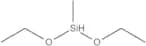
METHYLDIETHOXYSILANE
CAS:Tri-substituted Silane Reducing Agent
Organosilanes are hydrocarbon-like and possess the ability to serve as both ionic and free-radical reducing agents. These reagents and their reaction by-products are safer and more easily handled and disposed than many other reducing agents. The metallic nature of silicon and its low electronegativity relative to hydrogen lead to polarization of the Si-H bond yielding a hydridic hydrogen and a milder reducing agent compared to aluminum-, boron-, and other metal-based hydrides. A summary of some key silane reductions are presented in Table 1 of the Silicon-Based Reducing Agents brochure.
Methyldiethoxysilane; Diethoxymethylsilane
ΔHcomb: 3,713 kJ/molWill form high-boiling polymeric by-products with aqueous work-upExtensive review of silicon based reducing agents: Larson, G.; Fry, J. L. "Ionic and Organometallic-Catalyzed Organosilane Reductions", Wipf, P., Ed.; Wiley, 2007Formula:C5H14O2SiPurezza:97%Colore e forma:LiquidPeso molecolare:134.25Ref: 3H-SIM6506.0
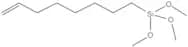
25gPrezzo su richiesta2kgPrezzo su richiesta100gPrezzo su richiesta13kgPrezzo su richiesta7-OCTENYLTRIMETHOXYSILANE, tech
CAS:Olefin Functional Trialkoxy Silane
Silane coupling agents have the ability to form a durable bond between organic and inorganic materials to generate desired heterogeneous environments or to incorporate the bulk properties of different phases into a uniform composite structure. The general formula has two classes of functionality. The hydrolyzable group forms stable condensation products with siliceous surfaces and other oxides such as those of aluminum, zirconium, tin, titanium, and nickel. The organofunctional group alters the wetting or adhesion characteristics of the substrate, utilizes the substrate to catalyze chemical transformations at the heterogeneous interface, orders the interfacial region, or modifies its partition characteristics, and significantly effects the covalent bond between organic and inorganic materials.
7-Octenyltrimethoxysilane; 8-(Trimethoxysilyl)octene
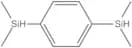
Contains 10-15% internal olefin isomersCoupling agent for "in situ" polymerization of acrylamide for capillary electrophoresisEmployed in stretched DNA fibers for fluorescent in situ hybridization (FISH)mappingSurface treatment for FISH and replication mapping on DNA fibersUsed in microparticle surface modificationFormula:C11H24O3SiPurezza:97%Colore e forma:Straw LiquidPeso molecolare:232.391,4-BIS(DIMETHYLSILYL)BENZENE
CAS:Formula:C10H18Si2Purezza:97%Colore e forma:LiquidPeso molecolare:194.42TRIMETHOXYSILYLPROPYL MODIFIED (POLYETHYLENIMINE), 50% in isopropanol
CAS:Trimethoxysilylpropyl modified (polyethylenimine)
Polyamino hydrophilic trialkoxysilaneViscosity: 125-175 cStEmployed as a coupling agent for polyamidesUsed in combination with glutaraldehyde immobilizes enzymes50% in isopropanol~20% of nitrogens substitutedColore e forma:Straw Yellow Amber LiquidPeso molecolare:1500-1800Ref: 3H-SSP-060
2kgPrezzo su richiesta100gPrezzo su richiesta16kgPrezzo su richiesta180kgPrezzo su richiestaN-(6-AMINOHEXYL)AMINOPROPYLTRIMETHOXYSILANE, 95%
CAS:N-(6-Aminohexyl)aminopropyltrimethoxysilane, N-[6-trimethoxysilyl)propyl]hexamethylethylenediamine, N-[3-(trimethoxysilyl)propyl]-1,6-hexanediamine
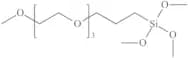
Diamino functional trialkoxy silanePrimary amine and an internal secondary amine coupling agent for UV cure and epoxy systemsUsed in microparticle surface modificationEmployed in immobilization of DNAEmployed for immobilization of PCR primers on beadsLong chain analog of SIA0590.5Formula:C12H30N2O3SiPurezza:95%Colore e forma:Straw LiquidPeso molecolare:278.47METHOXYTRIETHYLENEOXYPROPYLTRIMETHOXYSILANE
CAS:Tipped PEG Silane (326.46 g/mol)
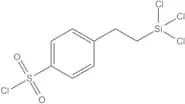
PEO, Trimethoxysilane termination utilized for hydrophilic surface modificationPEGylation reagentHydrogen bonding hydrophilic silaneForms polymeric proton-conducting electrolytesFormula:C13H30O7SiPurezza:92%Colore e forma:Straw LiquidPeso molecolare:326.462-(4-CHLOROSULFONYLPHENYL)ETHYLTRICHLOROSILANE, 50% in methylene chloride
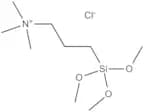
CAS:Formula:C8H8Cl4O2SSiColore e forma:Straw Amber LiquidPeso molecolare:338.11N-TRIMETHOXYSILYLPROPYL-N,N,N-TRIMETHYLAMMONIUM CHLORIDE, 50% in methanol
CAS:N-Trimethoxysilylpropyl-N,N,N-trimethylammonium chloride; N,N,N-trimethyl-3-(trimethoxysilyl)-1-propanammonium chloride; trimethyl-3-(trimethoxysilyl)propylammonium chloride
Quaternary amino functional trialkoxy silanePrevents contact electrificationUsed to treat glass substrates employed in electroblottingAnti-static agentEmployed for bonded chromatographic phases50% in methanolFormula:C9H24ClNO3SiColore e forma:Straw LiquidPeso molecolare:257.83Ref: 3H-SIT8415.0
25gPrezzo su richiesta2kgPrezzo su richiesta15kgPrezzo su richiesta180kgPrezzo su richiestaVINYLMETHYLDIMETHOXYSILANE
CAS:Olefin Functional Dialkoxy Silane
Silane coupling agents have the ability to form a durable bond between organic and inorganic materials to generate desired heterogeneous environments or to incorporate the bulk properties of different phases into a uniform composite structure. The general formula has two classes of functionality. The hydrolyzable group forms stable condensation products with siliceous surfaces and other oxides such as those of aluminum, zirconium, tin, titanium, and nickel. The organofunctional group alters the wetting or adhesion characteristics of the substrate, utilizes the substrate to catalyze chemical transformations at the heterogeneous interface, orders the interfacial region, or modifies its partition characteristics, and significantly effects the covalent bond between organic and inorganic materials.
Vinylmethyldimethoxysilane; Dimethoxymethylvinylsilane; (Dimethoxymethyl)silylethylene; Ethenylmethyldimethoxysilane
Viscosity: 0.7 cStVapor pressure, 20 °C: 38 mmAdditive to moisture-cure silane modified polyurethanes as a water scavenger to prevent premature cureUsed in microparticle surface modificationFormula:C5H12O2SiPurezza:97%Colore e forma:Colourless LiquidPeso molecolare:132.23TRIMETHYLIODOSILANE
CAS:Trimethylsilyl Blocking Agent
Used as a protecting group for reactive hydrogens in alcohols, amines, thiols, and carboxylic acids. Organosilanes are hydrogen-like, can be introduced in high yield, and can be removed under selective conditions. They are stable over a wide range of reaction conditions and can be removed in the presence of other functional groups, including other protecting groups. The tolerance of silylated alcohols to chemical transformations summary is presented in Table 1 of the Silicon-Based Blocking Agents brochure.
Trimethyliodosilane; Iodotrimethylsilane, Trimethylsilyl iodide; TMIS
Extremely reactive silylating agentUsed with HMDS for hindered alcoholsForms enol silyl ethers with ketones and SIT8620.0Nafion SAC-13 has been shown to be a recyclable catalyst for the trimethylsilylation of primary, secondary, and tertiary alcohols in excellent yields and short reaction timesSummary of selective deprotection conditions is provided in Table 7 through Table 20 of the Silicon-Based Blocking Agents brochureFormula:C3H9ISiPurezza:97%Colore e forma:Straw To Pale Pink-Purple LiquidPeso molecolare:200.1(TRIDECAFLUORO-1,1,2,2-TETRAHYDROOCTYL)TRIETHOXYSILANE
CAS:(Tridecafluoro-1,1,2,2-tetrahydrooctyl)triethoxysilane; 1H,1H,2H,2H-Perfluorooctyltriethoxysilane; POTS
Formula:C14H19F13O3SiPurezza:97%Colore e forma:Straw LiquidPeso molecolare:510.36Ref: 3H-SIT8175.0
10gPrezzo su richiesta3kgPrezzo su richiesta50gPrezzo su richiesta250gPrezzo su richiesta25kgPrezzo su richiestaHEXAMETHYLDISILOXANE, 99.9% CYLINDER
CAS:Formula:C6H18OSi2Purezza:99.90%Colore e forma:LiquidPeso molecolare:162.38Ref: 3H-SIH6115.1
drPrezzo su richiestacylPrezzo su richiesta14kgPrezzo su richiesta1.5kgPrezzo su richiesta150kgPrezzo su richiestaBIS(TRIMETHOXYSILYLETHYL)BENZENE
CAS:Alkyl Silane - Dipodal Surface Bonding
Aliphatic, fluorinated aliphatic or substituted aromatic hydrocarbon substituents are the hydrophobic entities which enable silanes to induce surface hydrophobicity. The organic substitution of the silane must be non-polar. The hydrophobic effect of the organic substitution can be related to the free energy of transfer of hydrocarbon molecules from an aqueous phase to a homogeneous hydrocarbon phase. A successful hydrophobic coating must eliminate or mitigate hydrogen bonding and shield polar surfaces from interaction with water by creating a non-polar interphase. Although silane and silicone derived coatings are in general the most hydrophobic, they maintain a high degree of permeability to water vapor. This allows coatings to breathe and reduce deterioration at the coating interface associated with entrapped water. Since ions are not transported through non-polar silane and silicone coatings, they offer protection to composite structures ranging from pigmented coatings to rebar reinforced concrete. A selection guide for hydrophobic silanes can be found on pages 22-31 of the Hydrophobicity, Hydrophilicity and Silane Surface Modification brochure.
Non Functional Alkoxy Silane
Silane coupling agents have the ability to form a durable bond between organic and inorganic materials to generate desired heterogeneous environments or to incorporate the bulk properties of different phases into a uniform composite structure. The general formula has two classes of functionality. The hydrolyzable group forms stable condensation products with siliceous surfaces and other oxides such as those of aluminum, zirconium, tin, titanium, and nickel. The organofunctional group alters the wetting or adhesion characteristics of the substrate, utilizes the substrate to catalyze chemical transformations at the heterogeneous interface, orders the interfacial region, or modifies its partition characteristics, and significantly effects the covalent bond between organic and inorganic materials.
Dipodal Silane
Dipodal silanes are a series of adhesion promoters that have intrinsic hydrolytic stabilities up to ~10,000 times greater than conventional silanes and are used in applications such as plastic optics, multilayer printed circuit boards and as adhesive primers for ferrous and nonferrous metals. They have the ability to form up to six bonds to a substrate compared to conventional silanes with the ability to form only three bonds to a substrate. Many conventional coupling agents are frequently used in combination with 10-40% of a non-functional dipodal silane, where the conventional coupling agent provides the appropriate functionality for the application, and the non-functional dipodal silane provides increased durability. Also known as bis-silanes additives enhance hydrolytic stability, which impacts on increased product shelf life, ensures better substrate bonding and also leads to improved mechanical properties in coatings as well as composite applications.
Bis(trimethoxysilylethyl)benzene
Mixed isomers Forms high refractive index coatingsForms resins that absorb organics from aqueous mediaFormula:C16H30O6Si2Purezza:97% (includes isomers)Colore e forma:LiquidPeso molecolare:374.58Ref: 3H-SIB1831.0
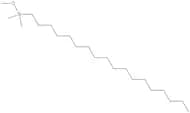
2kgPrezzo su richiesta50gPrezzo su richiesta16kgPrezzo su richiesta180kgPrezzo su richiestan-OCTADECYLDIMETHYLMETHOXYSILANE
CAS:Alkyl Silane - Conventional Surface Bonding
Aliphatic, fluorinated aliphatic or substituted aromatic hydrocarbon substituents are the hydrophobic entities which enable silanes to induce surface hydrophobicity. The organic substitution of the silane must be non-polar. The hydrophobic effect of the organic substitution can be related to the free energy of transfer of hydrocarbon molecules from an aqueous phase to a homogeneous hydrocarbon phase. A successful hydrophobic coating must eliminate or mitigate hydrogen bonding and shield polar surfaces from interaction with water by creating a non-polar interphase. Although silane and silicone derived coatings are in general the most hydrophobic, they maintain a high degree of permeability to water vapor. This allows coatings to breathe and reduce deterioration at the coating interface associated with entrapped water. Since ions are not transported through non-polar silane and silicone coatings, they offer protection to composite structures ranging from pigmented coatings to rebar reinforced concrete. A selection guide for hydrophobic silanes can be found on pages 22-31 of the Hydrophobicity, Hydrophilicity and Silane Surface Modification brochure.
n-Octadecyldimethylmethoxysilane; Methoxydimethyloctadecylsilane; Dimethylmethoxysilyloctadecane
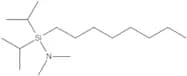
Contains 5-10% C18 isomersEmployed in SAM resistMonoalkoxy silaneFormula:C21H46OSiPurezza:97%Colore e forma:LiquidPeso molecolare:342.68n-OCTYLDIISOPROPYL(DIMETHYLAMINO)SILANE
CAS:Alkyl Silane - Conventional Surface Bonding
Aliphatic, fluorinated aliphatic or substituted aromatic hydrocarbon substituents are the hydrophobic entities which enable silanes to induce surface hydrophobicity. The organic substitution of the silane must be non-polar. The hydrophobic effect of the organic substitution can be related to the free energy of transfer of hydrocarbon molecules from an aqueous phase to a homogeneous hydrocarbon phase. A successful hydrophobic coating must eliminate or mitigate hydrogen bonding and shield polar surfaces from interaction with water by creating a non-polar interphase. Although silane and silicone derived coatings are in general the most hydrophobic, they maintain a high degree of permeability to water vapor. This allows coatings to breathe and reduce deterioration at the coating interface associated with entrapped water. Since ions are not transported through non-polar silane and silicone coatings, they offer protection to composite structures ranging from pigmented coatings to rebar reinforced concrete. A selection guide for hydrophobic silanes can be found on pages 22-31 of the Hydrophobicity, Hydrophilicity and Silane Surface Modification brochure.
n-Octyldiisopropyl(dimethylamino)silane; N,N-Dimethyl-1,1-bis(1-methylethyl)-1-octyl silanamine
Reagent for HPLC bonded phases without acidic byproductsFormula:C16H37NSiPurezza:97%Colore e forma:Straw LiquidPeso molecolare:271.571,1,1,3,3,3-HEXAMETHYLDISILAZANE, 98%
CAS:Alkyl Silane - Conventional Surface Bonding
Aliphatic, fluorinated aliphatic or substituted aromatic hydrocarbon substituents are the hydrophobic entities which enable silanes to induce surface hydrophobicity. The organic substitution of the silane must be non-polar. The hydrophobic effect of the organic substitution can be related to the free energy of transfer of hydrocarbon molecules from an aqueous phase to a homogeneous hydrocarbon phase. A successful hydrophobic coating must eliminate or mitigate hydrogen bonding and shield polar surfaces from interaction with water by creating a non-polar interphase. Although silane and silicone derived coatings are in general the most hydrophobic, they maintain a high degree of permeability to water vapor. This allows coatings to breathe and reduce deterioration at the coating interface associated with entrapped water. Since ions are not transported through non-polar silane and silicone coatings, they offer protection to composite structures ranging from pigmented coatings to rebar reinforced concrete. A selection guide for hydrophobic silanes can be found on pages 22-31 of the Hydrophobicity, Hydrophilicity and Silane Surface Modification brochure.
ALD Material
Atomic layer deposition (ALD) is a chemically self-limiting deposition technique that is based on the sequential use of a gaseous chemical process. A thin film (as fine as -0.1 Å per cycle) results from repeating the deposition sequence as many times as needed to reach a certain thickness. The major characteristic of the films is the resulting conformality and the controlled deposition manner. Precursor selection is key in ALD processes, namely finding molecules which will have enough reactivity to produce the desired films yet are stable enough to be handled and safely delivered to the reaction chamber.
Trimethylsilyl Blocking Agent
Used as a protecting group for reactive hydrogens in alcohols, amines, thiols, and carboxylic acids. Organosilanes are hydrogen-like, can be introduced in high yield, and can be removed under selective conditions. They are stable over a wide range of reaction conditions and can be removed in the presence of other functional groups, including other protecting groups. The tolerance of silylated alcohols to chemical transformations summary is presented in Table 1 of the Silicon-Based Blocking Agents brochure.
Silane Cross-Coupling Agent
The cross-coupling reaction is a highly useful methodology for the formation of carbon-carbon bonds. It involves two reagents, with one typically being a suitable organometallic reagent - the nucleophile - and the other a suitable organic substrate, normally an unsaturated halide, tosylate or similar - the electrophile.
Hexamethyldisilazane; HMDS; HMDZ; Bis(trimethylsilyl)amine
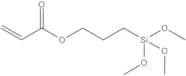
Viscosity: 0.90 cStLow chloride grade available, SIH6110.1ΔHcomb: 25,332 kJ/molΔHvap: 34.7 kJ/molDipole moment: 0.37 debyeSurface tension: 18.2 mN/mSpecific wetting surface: 485 m2/gVapor pressure, 50 °C: 50 mmpKa: 7.55Dielectric constant: 1000 Hz: 2.27Ea, reaction w/SiO2 surface: 73.7 kJ/moleReleases ammonia upon reactionVersatile silylation reagentTreatment of fumed silica renders it hydrophobicBoth trimethylsilyl groups usedConverts acid chlorides and alcohols to amines in a three-component reactionReacts with formamide and ketones to form pyrimidinesSilylations catalyzed by SIT8510.0 and other reagentsNafion SAC-13 has been shown to be a recyclable catalyst for the trimethylsilylation of primary, secondary, and tertiary alcohols in excellent yields and short reaction timesUsed to convert ketones to α-aminophosphonatesLithium reagent reacts with aryl chlorides or bromides to provide anilinesSummary of selective deprotection conditions is provided in Table 7 through Table 20 of the Silicon-Based Blocking Agents brochureExtensive review of silicon based cross-coupling agents: Denmark, S. E. et al. "Organic Reactions, Volume 75" Denmark, S. E. ed., John Wiley and Sons, 233, 2011Formula:C6H19NSi2Purezza:98%Colore e forma:Colourless LiquidPeso molecolare:161.39(3-ACRYLOXYPROPYL)TRIMETHOXYSILANE, 96%
CAS:Acrylate Functional Trialkoxy Silane
Silane coupling agents have the ability to form a durable bond between organic and inorganic materials to generate desired heterogeneous environments or to incorporate the bulk properties of different phases into a uniform composite structure. The general formula has two classes of functionality. The hydrolyzable group forms stable condensation products with siliceous surfaces and other oxides such as those of aluminum, zirconium, tin, titanium, and nickel. The organofunctional group alters the wetting or adhesion characteristics of the substrate, utilizes the substrate to catalyze chemical transformations at the heterogeneous interface, orders the interfacial region, or modifies its partition characteristics, and significantly effects the covalent bond between organic and inorganic materials.
3-Acryloxypropyltrimethoxysilane, 3-(trimethoxysilyl)propyl acrylate
Coupling agent for UV cure and epoxy systemsEmployed in optical fiber coatingsUsed in microparticle surface modification Comonomer for free-radical polymerizaitonAnalog of methacryloxypropyltrimethoxysilane (SIM6487.4)Used in combination with dipodal silane, Bis(3-trimethoxysilylproply)amine (SIB1833.0), to increase strength and hydrolytic stability of dental compositesInhibited with BHTBase silane in SIVATE™ A200Formula:C9H18O5SiPurezza:96%Colore e forma:Straw LiquidPeso molecolare:234.32Ref: 3H-SIA0200.0
25gPrezzo su richiesta2kgPrezzo su richiesta100gPrezzo su richiesta16kgPrezzo su richiesta180kgPrezzo su richiestaCHLOROMETHYLTRICHLOROSILANE
CAS:Halogen Functional Trichloro Silane
Silane coupling agents have the ability to form a durable bond between organic and inorganic materials to generate desired heterogeneous environments or to incorporate the bulk properties of different phases into a uniform composite structure. The general formula has two classes of functionality. The hydrolyzable group forms stable condensation products with siliceous surfaces and other oxides such as those of aluminum, zirconium, tin, titanium, and nickel. The organofunctional group alters the wetting or adhesion characteristics of the substrate, utilizes the substrate to catalyze chemical transformations at the heterogeneous interface, orders the interfacial region, or modifies its partition characteristics, and significantly effects the covalent bond between organic and inorganic materials.
(Trichlorosilyl)chloromethane; Chloromethyltrichlorosilane
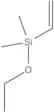
Viscosity, 20 °: 0.5 cStVapor pressure, 20 °C: 18 mmThermal conductivity, 27°C: 0.1420 W/m°CHeat capacity, 27°C: 0.912 kJ/kg°CΔHvap: 157.8 kJ/moleDipole moment: 1.61 debyeSurface tension, 27 °C: 26.5 mN/mCritical temperature: 310 °CAutoignition temperature: 380 °CBuilding block for carbosilanesDecomposes at temperatures >250 °CGrignard reagent behaves as nucleophilic hydroxymethylation agentForms stable Grignard reagent that after reaction and oxidation transfers a hydroxymethyl moietyGenerates HCl as a hydrolysis byproductFormula:CH2Cl4SiPurezza:97%Colore e forma:Straw LiquidPeso molecolare:183.92VINYLDIMETHYLETHOXYSILANE
CAS:Olefin Functional Monoalkoxy Silane
Silane coupling agents have the ability to form a durable bond between organic and inorganic materials to generate desired heterogeneous environments or to incorporate the bulk properties of different phases into a uniform composite structure. The general formula has two classes of functionality. The hydrolyzable group forms stable condensation products with siliceous surfaces and other oxides such as those of aluminum, zirconium, tin, titanium, and nickel. The organofunctional group alters the wetting or adhesion characteristics of the substrate, utilizes the substrate to catalyze chemical transformations at the heterogeneous interface, orders the interfacial region, or modifies its partition characteristics, and significantly effects the covalent bond between organic and inorganic materials.
Alkenylsilane Cross-Coupling Agent
The cross-coupling reaction is a highly useful methodology for the formation of carbon-carbon bonds. It involves two reagents, with one typically being a suitable organometallic reagent - the nucleophile - and the other a suitable organic substrate, normally an unsaturated halide, tosylate or similar - the electrophile.
Vinyldimethylethoxysilane; Dimethylvinylethoxysilane; Ethenyldimethylethoxysilane; Ethoxydimethylvinylsilane; Dimethylethoxyvinylsilane; (Ethoxydimethyl)silylethylene
Used in microparticle surface modificationDipole moment: 1.23 debyeVinylates aryl halidesExtensive review of silicon based cross-coupling agents: Denmark, S. E. et al. "Organic Reactions, Volume 75" Denmark, S. E. ed., John Wiley and Sons, 233, 2011Formula:C6H14OSiPurezza:97%Colore e forma:LiquidPeso molecolare:130.26BIS(DIMETHYLAMINO)VINYLMETHYLSILANE
CAS:Formula:C7H18N2SiPurezza:97%Colore e forma:Straw LiquidPeso molecolare:158.32