Silani
Sottocategorie di "Silani"
Trovati 1234 prodotti di "Silani"
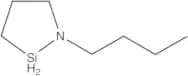
N-n-BUTYL-AZA-SILACYCLOPENTANE
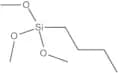
CAS:Formula:C7H17NSiPurezza:95%Colore e forma:Colourless Clear LiquidPeso molecolare:143.3n-BUTYLTRIMETHOXYSILANE
CAS:Alkyl Silane - Conventional Surface Bonding
Aliphatic, fluorinated aliphatic or substituted aromatic hydrocarbon substituents are the hydrophobic entities which enable silanes to induce surface hydrophobicity. The organic substitution of the silane must be non-polar. The hydrophobic effect of the organic substitution can be related to the free energy of transfer of hydrocarbon molecules from an aqueous phase to a homogeneous hydrocarbon phase. A successful hydrophobic coating must eliminate or mitigate hydrogen bonding and shield polar surfaces from interaction with water by creating a non-polar interphase. Although silane and silicone derived coatings are in general the most hydrophobic, they maintain a high degree of permeability to water vapor. This allows coatings to breathe and reduce deterioration at the coating interface associated with entrapped water. Since ions are not transported through non-polar silane and silicone coatings, they offer protection to composite structures ranging from pigmented coatings to rebar reinforced concrete. A selection guide for hydrophobic silanes can be found on pages 22-31 of the Hydrophobicity, Hydrophilicity and Silane Surface Modification brochure.
n-Butyltrimethoxysilane; TrimethoxysilylbutaneFormula:C7H18O3SiPurezza:97%Colore e forma:Straw LiquidPeso molecolare:178.3PHENYLTRIMETHOXYSILANE
CAS:Arylsilane Cross-Coupling Agent
The cross-coupling reaction is a highly useful methodology for the formation of carbon-carbon bonds. It involves two reagents, with one typically being a suitable organometallic reagent - the nucleophile - and the other a suitable organic substrate, normally an unsaturated halide, tosylate or similar - the electrophile.
Aromatic Silane - Conventional Surface Bonding
Aliphatic, fluorinated aliphatic or substituted aromatic hydrocarbon substituents are the hydrophobic entities which enable silanes to induce surface hydrophobicity. The organic substitution of the silane must be non-polar. The hydrophobic effect of the organic substitution can be related to the free energy of transfer of hydrocarbon molecules from an aqueous phase to a homogeneous hydrocarbon phase. A successful hydrophobic coating must eliminate or mitigate hydrogen bonding and shield polar surfaces from interaction with water by creating a non-polar interphase. Although silane and silicone derived coatings are in general the most hydrophobic, they maintain a high degree of permeability to water vapor. This allows coatings to breathe and reduce deterioration at the coating interface associated with entrapped water. Since ions are not transported through non-polar silane and silicone coatings, they offer protection to composite structures ranging from pigmented coatings to rebar reinforced concrete. A selection guide for hydrophobic silanes can be found on pages 22-31 of the Hydrophobicity, Hydrophilicity and Silane Surface Modification brochure.
Phenyltrimethoxysilane, Trimethoxysilylbenzene
Viscosity, 25 °C: 2.1 cStVapor pressure, 108 °: 20 mmDipole moment: 1.77Dielectric constant: 4.44Cross-couples w/ aryl bromides w/o fluoride and w/ NaOHHigh yields w/ Pd and carbene ligandsCross-coupled in presence of aryl aldehydeUndergoes 1,4-addition to enones 1,2- and 1,4-addition to aldehydeUndergoes coupling and asymmetric coupling w/ α-bromoestersReacts with 2° amines to give anilinesN-arylates nitrogen heterocyclesCross-coupled w/ alkynyl bromides and iodidesUsed with p-aminophenyltrimethoxysilane, SIA0599.1 , to increase the dispersibility of mesoporous silicaIntermediate for high temperature silicone resinsHydrophobic additive to other silanes with excellent thermal stabilityCross couples with aryl halidesPhenylates heteroaromatic carboxamidesDirectly couples with primary alkyl bromides and iodidesConverts carboxylic acids to phenyl esters and vinyl carboxylatesConverts arylselenyl bromides to arylphenylselenidesReacts with anhydrides to form the mixed diester, phenyl and methoxy transferUsed in nickel-catalyzed direct phenylation of C-H bonds in heteroaromatic systems, benzoxazolesImmobilization reagent for aligned metallic single wall nanotubes (SWNT)High purity grade available, SIP6822.1Extensive review of silicon based cross-coupling agents: Denmark, S. E. et al. "Organic Reactions, Volume 75" Denmark, S. E. ed., John Wiley and Sons, 233, 2011Formula:C9H14O3SiPurezza:97%Colore e forma:Straw LiquidPeso molecolare:198.29Ref: 3H-SIP6822.0
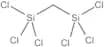
2kgPrezzo su richiesta100gPrezzo su richiesta18kgPrezzo su richiesta200kgPrezzo su richiestaBIS(TRICHLOROSILYL)METHANE
CAS:Formula:CH2Cl6Si2Purezza:97%Colore e forma:Straw LiquidPeso molecolare:282.9[HYDROXY(POLYETHYLENEOXY)PROPYL]TRIETHOXYSILANE, (8-12 EO), 50% in ethanol
CAS:Tipped PEG Silane (575-750 g/mol)
PEO, Hydroxyl, Triethoxysilane termination utilized for hydrophilic surface modificationDual functional PEGylation reagentHydroxylic silane
Related Products
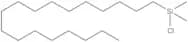
SIA0078.0: 2-[ACETOXY(POLYETHYLENEOXY)PROPYL] TRIETHOXYSILANE, 95%SIH6185.0: 3-[HYDROXY(POLYETHYLENEOXY)PROPYL] HEPTAMETHYLTRISILOXANE, 90%Formula:CH3O(C2H4O)6-9(CH2)3Si(OCH3)3Colore e forma:Straw LiquidPeso molecolare:575-750n-OCTADECYLDIMETHYLCHLOROSILANE, 97%
CAS:Alkyl Silane - Conventional Surface Bonding
Aliphatic, fluorinated aliphatic or substituted aromatic hydrocarbon substituents are the hydrophobic entities which enable silanes to induce surface hydrophobicity. The organic substitution of the silane must be non-polar. The hydrophobic effect of the organic substitution can be related to the free energy of transfer of hydrocarbon molecules from an aqueous phase to a homogeneous hydrocarbon phase. A successful hydrophobic coating must eliminate or mitigate hydrogen bonding and shield polar surfaces from interaction with water by creating a non-polar interphase. Although silane and silicone derived coatings are in general the most hydrophobic, they maintain a high degree of permeability to water vapor. This allows coatings to breathe and reduce deterioration at the coating interface associated with entrapped water. Since ions are not transported through non-polar silane and silicone coatings, they offer protection to composite structures ranging from pigmented coatings to rebar reinforced concrete. A selection guide for hydrophobic silanes can be found on pages 22-31 of the Hydrophobicity, Hydrophilicity and Silane Surface Modification brochure.
n-Octadecyldimethylchlorosilane; Dimethyl-n-octadecylchlorosilane; Chlorodimethyloctadecylsilane; Chlorodimethylsilyl-n-octadecane
Contains <5% C18 isomersEmployed in bonded HPLC reverse phasesFormula:C20H43ClSiPurezza:97% including isomersColore e forma:Off-White SolidPeso molecolare:347.1NONAFLUOROHEXYLTRIETHOXYSILANE
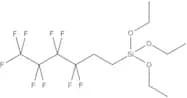
CAS:Fluoroalkyl Silane - Conventional Surface Bonding
Aliphatic, fluorinated aliphatic or substituted aromatic hydrocarbon substituents are the hydrophobic entities which enable silanes to induce surface hydrophobicity. The organic substitution of the silane must be non-polar. The hydrophobic effect of the organic substitution can be related to the free energy of transfer of hydrocarbon molecules from an aqueous phase to a homogeneous hydrocarbon phase. A successful hydrophobic coating must eliminate or mitigate hydrogen bonding and shield polar surfaces from interaction with water by creating a non-polar interphase. Although silane and silicone derived coatings are in general the most hydrophobic, they maintain a high degree of permeability to water vapor. This allows coatings to breathe and reduce deterioration at the coating interface associated with entrapped water. Since ions are not transported through non-polar silane and silicone coatings, they offer protection to composite structures ranging from pigmented coatings to rebar reinforced concrete. A selection guide for hydrophobic silanes can be found on pages 22-31 of the Hydrophobicity, Hydrophilicity and Silane Surface Modification brochure.
Nonafluorohexyltriethoxysilane; (Perfluorobutyl)ethyltriethoxysilane
Critical surface tension, treated surface: 23 mN/mOleophobic, hydrophobic surface treatmentTrialkoxy silaneFormula:C12H19F9O3SiPurezza:97%Colore e forma:Straw LiquidPeso molecolare:410.353-AMINOPROPYLMETHYLDIETHOXYSILANE
CAS:Monoamino Functional Dialkoxy Silane
Silane coupling agents have the ability to form a durable bond between organic and inorganic materials to generate desired heterogeneous environments or to incorporate the bulk properties of different phases into a uniform composite structure. The general formula has two classes of functionality. The hydrolyzable group forms stable condensation products with siliceous surfaces and other oxides such as those of aluminum, zirconium, tin, titanium, and nickel. The organofunctional group alters the wetting or adhesion characteristics of the substrate, utilizes the substrate to catalyze chemical transformations at the heterogeneous interface, orders the interfacial region, or modifies its partition characteristics, and significantly effects the covalent bond between organic and inorganic materials.
3-Aminopropylmethyldiethoxysilane, 3-(diethoxymethylsilyl)propylamine
Primary amine coupling agent for UV cure and epoxy systemsUsed in microparticle surface modificationUsed in foundry resins: phenolic novolaks and resolsVapor phase deposition >150 °C on silica yields high density amine functionalityFormula:C8H21NO2SiPurezza:97%Colore e forma:Straw LiquidPeso molecolare:191.34Ref: 3H-SIA0605.0
25gPrezzo su richiesta2kgPrezzo su richiesta15kgPrezzo su richiesta180kgPrezzo su richiesta3-AMINOPROPYLTRIMETHOXYSILANE, 99%
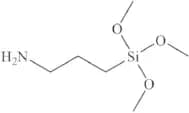
CAS:Monoamine Functional Trialkoxy Silane
Silane coupling agents have the ability to form a durable bond between organic and inorganic materials to generate desired heterogeneous environments or to incorporate the bulk properties of different phases into a uniform composite structure. The general formula has two classes of functionality. The hydrolyzable group forms stable condensation products with siliceous surfaces and other oxides such as those of aluminum, zirconium, tin, titanium, and nickel. The organofunctional group alters the wetting or adhesion characteristics of the substrate, utilizes the substrate to catalyze chemical transformations at the heterogeneous interface, orders the interfacial region, or modifies its partition characteristics, and significantly effects the covalent bond between organic and inorganic materials.
3-Aminopropyltrimethoxysilane, Trimethoxysilylpropylamine, APTES, AMEO, GAPS, A-1100, ?-Aminopropyltrimethoxysilane
Vapor pressure, 67 °: 5 mmSuperior reactivity in vapor phase and non-aqueous surface treatmentsSuperior reactivity in vapor phase and non-aqueous surface treatmentsHydrolysis rate vs SIA0610.0 : 6:1Used to immobilize Cu and Zn Schiff base precatalysts for formation of cyclic carbonatesUsed in microparticle surface modification Standard grade available as SIA0611.0Formula:C6H17NO3SiPurezza:99%Colore e forma:Straw LiquidPeso molecolare:179.29n-OCTADECYLDIMETHYL(DIMETHYLAMINO)SILANE
CAS:Alkyl Silane - Conventional Surface Bonding
Aliphatic, fluorinated aliphatic or substituted aromatic hydrocarbon substituents are the hydrophobic entities which enable silanes to induce surface hydrophobicity. The organic substitution of the silane must be non-polar. The hydrophobic effect of the organic substitution can be related to the free energy of transfer of hydrocarbon molecules from an aqueous phase to a homogeneous hydrocarbon phase. A successful hydrophobic coating must eliminate or mitigate hydrogen bonding and shield polar surfaces from interaction with water by creating a non-polar interphase. Although silane and silicone derived coatings are in general the most hydrophobic, they maintain a high degree of permeability to water vapor. This allows coatings to breathe and reduce deterioration at the coating interface associated with entrapped water. Since ions are not transported through non-polar silane and silicone coatings, they offer protection to composite structures ranging from pigmented coatings to rebar reinforced concrete. A selection guide for hydrophobic silanes can be found on pages 22-31 of the Hydrophobicity, Hydrophilicity and Silane Surface Modification brochure.
n-Octadecyldimethyl(dimethylamino)silane; (Dimethylamino)dimethyl(octadecyl)silane; N,N,1,1-Tetramethyl-1-octadecylsilanamine; N,N,1,1-Tetramethyl-1-octadecylsilanamine; (N,N-Dimethylamino)dimethyloctadecylsilane; (N,N-Dimethylamino)octadecyldimethylsilane
Contains 5-10% C18 isomersEmployed in bonded HPLC reverse phasesFormula:C22H49NSiPurezza:97% including isomersColore e forma:Straw LiquidPeso molecolare:355.72N-METHYL-AZA-2,2,4-TRIMETHYLSILACYCLOPENTANE
CAS:N-methyl-aza-2,2,4-trimethylsilacyclopentane
Amine functional silane coupling agentNon-cross-linking cyclic azasilaneEmployed in vapor phase modification of nanoparticlesFormula:C7H17NSiPurezza:97%Colore e forma:Straw LiquidPeso molecolare:143.3(TRIDECAFLUORO-1,1,2,2-TETRAHYDROOCTYL)METHYLDICHLOROSILANE
CAS:Formula:C9H7Cl2F13SiPurezza:97%Colore e forma:Straw LiquidPeso molecolare:461.12(HEPTADECAFLUORO-1,1,2,2-TETRAHYDRODECYL)METHYLDICHLOROSILANE
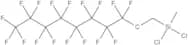
CAS:Fluorinated Alkyl Silane - Conventional Surface Bonding
Aliphatic, fluorinated aliphatic or substituted aromatic hydrocarbon substituents are the hydrophobic entities which enable silanes to induce surface hydrophobicity. The organic substitution of the silane must be non-polar. The hydrophobic effect of the organic substitution can be related to the free energy of transfer of hydrocarbon molecules from an aqueous phase to a homogeneous hydrocarbon phase. A successful hydrophobic coating must eliminate or mitigate hydrogen bonding and shield polar surfaces from interaction with water by creating a non-polar interphase. Although silane and silicone derived coatings are in general the most hydrophobic, they maintain a high degree of permeability to water vapor. This allows coatings to breathe and reduce deterioration at the coating interface associated with entrapped water. Since ions are not transported through non-polar silane and silicone coatings, they offer protection to composite structures ranging from pigmented coatings to rebar reinforced concrete. A selection guide for hydrophobic silanes can be found on pages 22-31 of the Hydrophobicity, Hydrophilicity and Silane Surface Modification brochure.
(Heptadecafluoro-1,1,2,2-tetrahydrodecyl)methyldichlorosilane; (1H,1H,2H,2H-Perfluorodecyl)methyldichlorosilane
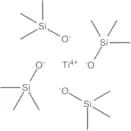
Packaged over copper powderFormula:C11H7Cl2F17SiPurezza:97%Colore e forma:Straw Off-White LiquidPeso molecolare:561.14TETRAKIS(TRIMETHYLSILOXY)TITANIUM
CAS:Formula:C12H36O4Si4TiPurezza:97%Colore e forma:Pale Yellow LiquidPeso molecolare:404.662-(3,4-EPOXYCYCLOHEXYL)ETHYLTRIMETHOXYSILANE
CAS:2-(3,4-Epoxycyclohexyl)ethyltrimethoxysilane; (2-trimethoxysilylethyl)cyclohexyloxirane
Epoxy functional trialkoxy silaneViscosity: 5.2 cStCoefficient of thermal expansion: 0.8 x 10⁻³Vapor pressure, 152 °C: 10 mmSpecific wetting surface: 317 m2/gγc of treated surfaces: 39.5 mN/mRing epoxide more reactive than glycidoxypropyl systemsUV initiated polymerization of epoxy group with weak acid donorsForms UV-curable coating resins by controlled hydrolysisUsed to make epoxy-organosilica particles w/ high positive Zeta potentialEpoxy silane treated surfaces convert to hydrophilic-diols when exposed to moistureFormula:C11H22O4SiPurezza:97%Colore e forma:Straw LiquidPeso molecolare:246.383-MERCAPTOPROPYLMETHYLDIMETHOXYSILANE, 96%
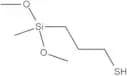
CAS:3-Mercaptopropylmethyldimethoxysilane; 3-(methyldimethoxysilyl)propylmercaptan; dimethoxy(3-mercaptopropyl)methylsilane; dimethoxymethyl(3-mercaptopropyl)silane
Sulfur functional dialkoxy silaneIntermediate for silicones in thiol-ene UV-cure systemsAdhesion promoter for polysulfide sealantsUsed to make thiol-organosilica nanoparticlesFormula:C6H16O2SSiPurezza:96%Colore e forma:Straw LiquidPeso molecolare:180.34n-OCTADECYLMETHYLDICHLOROSILANE
CAS:Alkyl Silane - Conventional Surface Bonding
Aliphatic, fluorinated aliphatic or substituted aromatic hydrocarbon substituents are the hydrophobic entities which enable silanes to induce surface hydrophobicity. The organic substitution of the silane must be non-polar. The hydrophobic effect of the organic substitution can be related to the free energy of transfer of hydrocarbon molecules from an aqueous phase to a homogeneous hydrocarbon phase. A successful hydrophobic coating must eliminate or mitigate hydrogen bonding and shield polar surfaces from interaction with water by creating a non-polar interphase. Although silane and silicone derived coatings are in general the most hydrophobic, they maintain a high degree of permeability to water vapor. This allows coatings to breathe and reduce deterioration at the coating interface associated with entrapped water. Since ions are not transported through non-polar silane and silicone coatings, they offer protection to composite structures ranging from pigmented coatings to rebar reinforced concrete. A selection guide for hydrophobic silanes can be found on pages 22-31 of the Hydrophobicity, Hydrophilicity and Silane Surface Modification brochure.
n-Octadecylmethyldichlorosilane; Dichloromethyl-n-octadecylsilane; Methyldichlorosilyloctadecane; Dichloromethylsilyloctadecane
Contains 5-10% C18 isomersViscosity: 7 cStFormula:C19H40Cl2SiPurezza:97% including isomersColore e forma:Straw LiquidPeso molecolare:367.52BIS(3-TRIETHOXYSILYLPROPYL)AMINE, 95%
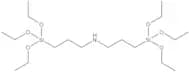
CAS:Bis(3-triethoxysilylpropyl)amine
Amine functional dipodal silaneViscosity: 5.5 cStCoupling agent for polyamides with improved hydrolytic stabilityAdhesion promoter, crosslinking agent for hot melt adhesivesAdhesion promoter for aluminum-polyester multilayer laminatesAdhesion promoter, crosslinker for 2-part condensation cure siliconesCyclic analog: SIT8187.2 Advanced silane in SIVATE A610 and SIVATE E610Formula:C18H43NO6Si2Purezza:95%Colore e forma:Straw LiquidPeso molecolare:425.713-CYANOPROPYLMETHYLDIMETHOXYSILANE
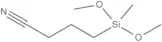
CAS:Formula:C7H15NO2SiPurezza:97%Colore e forma:Straw LiquidPeso molecolare:173.29


![[HYDROXY(POLYETHYLENEOXY)PROPYL]TRIETHOXYSILANE, (8-12 EO), 50% in ethanol](/_next/image/?url=https%3A%2Fstatic.cymitquimica.com%2Fproducts%2F3H%2Fthumb-webp%2FSIH6188.0.webp&w=3840&q=75)