Chimica organica sintetica
La chimica organica sintetica è un ramo della chimica focalizzato sul design e la costruzione di molecole organiche attraverso reazioni chimiche controllate. Questo campo svolge un ruolo cruciale nello sviluppo di prodotti farmaceutici, agrochimici, polimeri e materiali avanzati. Presso CymitQuimica, offriamo una gamma completa di reagenti, catalizzatori e building blocks di alta purezza, essenziali per la chimica organica sintetica. Il nostro catalogo include una varietà di composti funzionalizzati, gruppi protettivi, ausiliari chirali e reagenti di accoppiamento, tutti rigorosamente testati per qualità e consistenza. Fornendo materiali di alta qualità, supportiamo i ricercatori e i professionisti dell'industria nel raggiungimento di trasformazioni sintetiche precise ed efficienti, facilitando la scoperta e lo sviluppo di entità chimiche innovative e strutture organiche complesse. I nostri prodotti consentono progressi in chimica medicinale, scienza dei materiali e biologia chimica, promuovendo il progresso nelle applicazioni di ricerca e industriali.
Sottocategorie di "Chimica organica sintetica"
- Reagenti sintetici(19.119 prodotti)
- Building Blocks(257.412 prodotti)
- Reazioni di formazione del legame C-C(886 prodotti)
- Gruppi protettivi(2.688 prodotti)
- Reagenti per l'introduzione/modifica dei gruppi funzionali(1.030 prodotti)
Trovati 202 prodotti per "Chimica organica sintetica".
Ordinare per
Purezza (%)
0
100
|
0
|
50
|
90
|
95
|
100
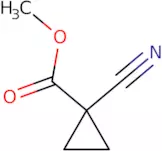
Methyl 1-cyanocyclopropanecarboxylate
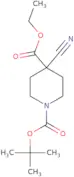
CAS:Versatile small molecule scaffoldFormula:C6H7NO2Purezza:Min. 95%Peso molecolare:125.13 g/mol1-tert-Butyl 4-ethyl 4-cyanopiperidine-1,4-dicarboxylate
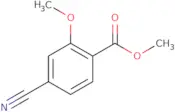
CAS:Versatile small molecule scaffoldFormula:C14H22N2O4Purezza:Min. 95%Peso molecolare:282.34 g/molMethyl 4-cyano-2-methoxybenzoate
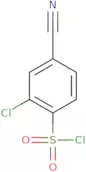
CAS:Versatile small molecule scaffoldFormula:C10H9NO3Purezza:Min. 95%Peso molecolare:191.18 g/mol2-Chloro-4-cyanobenzenesulfonyl chloride
CAS:Versatile small molecule scaffold
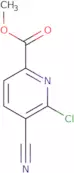
Formula:C7H3Cl2NO2SPurezza:Min. 95%Peso molecolare:236.08 g/molMethyl 6-chloro-5-cyanopicolinate
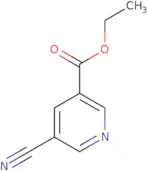
CAS:Versatile small molecule scaffoldFormula:C8H5ClN2O2Purezza:Min. 95%Peso molecolare:196.59 g/molEthyl 5-cyanonicotinate
CAS:Versatile small molecule scaffold
Formula:C9H8N2O2Purezza:Min. 95%Peso molecolare:176.17 g/mol5-cyano-2-methoxybenzoic acid
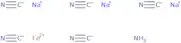
CAS:Versatile small molecule scaffoldFormula:C9H7NO3Purezza:Min. 95%Peso molecolare:177.16 g/molSodium Pentacyanoammineferroate(II) Hydrate
CAS:Prodotto controllatoPlease enquire for more information about Sodium Pentacyanoammineferroate(II) Hydrate including the price, delivery time and more detailed product information at the technical inquiry form on this page
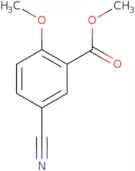
Formula:C5H3FeN6Na3·xH2OPurezza:Min. 95%Peso molecolare:271.94 g/molMethyl 5-cyano-2-methoxybenzoate
CAS:Versatile small molecule scaffold
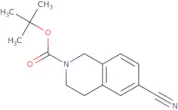
Formula:C10H9NO3Purezza:Min. 95%Peso molecolare:191.18 g/moltert-Butyl 6-cyano-3,4-dihydroisoquinoline-2(1H)-carboxylate
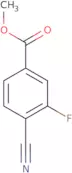
CAS:Versatile small molecule scaffoldFormula:C15H18N2O2Purezza:Min. 95%Peso molecolare:258.32 g/molMethyl 4-cyano-3-fluorobenzoate
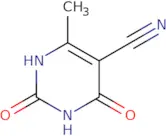
CAS:Please enquire for more information about Methyl 4-cyano-3-fluorobenzoate including the price, delivery time and more detailed product information at the technical inquiry form on this pageFormula:C9H6FNO2Purezza:Min. 95%Peso molecolare:179.15 g/mol6-Methyl-5-cyanouracil
CAS:Versatile small molecule scaffold
Formula:C6H5N3O2Purezza:Min. 95%Peso molecolare:151.12 g/mol1,9-Dicyanononane
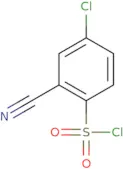
CAS:1,9-Dicyanonane is a reactive compound that is used in enzymatic reactions. It has an affinity for the carboxylate group of the enzyme and reacts with it to form products. 1,9-Dicyanonane can be used as an affinity label to identify enzymes in a reaction. This compound can also be labeled with stable isotopes of carbon, nitrogen, or hydrogen to make it more useful in NMR spectroscopy and mass spectrometry. The stable isotopes are usually 13C, 15N, or 2H. The use of these labels allows for calculation of the number of molecules in a sample by measuring the intensity of the peaks corresponding to the specific isotope.Formula:C11H18N2Purezza:Min. 95%Peso molecolare:178.27 g/mol4-Chloro-2-cyanophenylsulfonyl Chloride
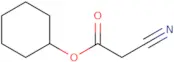
CAS:Versatile small molecule scaffoldFormula:C7H3NO2SCl2Purezza:Min. 95%Peso molecolare:236.07 g/molCyclohexyl cyanoacetate
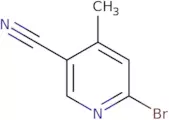
CAS:Cyclohexyl cyanoacetate is an amide derivative and a pyrimidine derivative. It is used in pharmaceutical formulations as an intermediate for the synthesis of pyrazoles, which are used in the treatment of hyperproliferative disorders. Cyclohexyl cyanoacetate inhibits bacterial growth by inhibiting protein synthesis, as it binds to ribosomes and blocks the binding site for amino acids. Cyclohexyl cyanoacetate also has antifungal properties and is an acid catalyst.Formula:C9H13NO2Purezza:Min. 95%Peso molecolare:167.21 g/mol2-Bromo-5-cyano-4-picoline
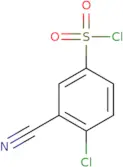
CAS:2-Bromo-5-cyano-4-picoline is a tyrosine kinase inhibitor that binds to the ATP binding site of the enzyme, inhibiting its activity. It has been shown to be effective in preclinical studies for the treatment of arthritis and cellular proliferation. 2-Bromo-5-cyano-4-picoline has been shown to be reversible and orally active.Formula:C7H5BrN2Purezza:Min. 95%Peso molecolare:197.04 g/mol4-chloro-3-cyanobenzenesulfonyl chloride
CAS:Versatile small molecule scaffoldFormula:C7H3Cl2NO2SPurezza:Min. 95%Peso molecolare:236.07 g/molN-Butyl cyanoacetate
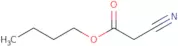
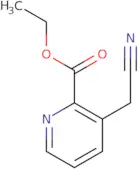
CAS:N-Butyl cyanoacetate is a colorless liquid that has a strong, unpleasant odor. It is used in the production of industrial chemicals and as an active methylene reagent in organic synthesis. It can be used to make diazonium salts and c1-c4 haloalkyl compounds. N-Butyl cyanoacetate is known to cause allergic reactions and has been shown to have an effect on the central nervous system, causing low energy levels and receptor activity.Formula:C7H11NO2Purezza:Min. 95%Peso molecolare:141.17 g/molethyl 3-(cyanomethyl)pyridine-2-carboxylate
CAS:Versatile small molecule scaffoldFormula:C10H10N2O2Purezza:Min. 95%Peso molecolare:190.2 g/molPotassium hexacyanoruthenate(II) trihydrate
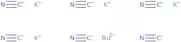
CAS:Prodotto controllatoPlease enquire for more information about Potassium hexacyanoruthenate(II) trihydrate including the price, delivery time and more detailed product information at the technical inquiry form on this page
Formula:C6H2K4N6ORuPurezza:Min. 95%Peso molecolare:431.58 g/mol