


Building Blocks
Questa sezione contiene prodotti fondamentali per la sintesi di composti organici e biologici. Building blocks sono i materiali di partenza essenziali utilizzati per costruire molecole complesse attraverso varie reazioni chimiche. Svolgono un ruolo critico nella scoperta di farmaci, nella scienza dei materiali e nella ricerca chimica. Presso CymitQuimica, offriamo una gamma diversificata di building blocks di alta qualità per supportare le tue ricerche innovative e progetti industriali, assicurandoti di avere i componenti essenziali per una sintesi di successo.
Sottocategorie di "Building Blocks"
- Acidi boronici e derivati dell'acido boronico(5.778 prodotti)
- Building Blocks Chirali(1.243 prodotti)
- Building Blocks Idrocarburici(6.098 prodotti)
- Building Blocks organici(61.057 prodotti)
Trovati 200710 prodotti di "Building Blocks"
Ordinare per
Purezza (%)
0
100
|
0
|
50
|
90
|
95
|
100
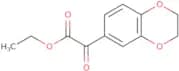
Ethyl 3,4-ethylenedioxybenzoylformate
CAS:<p>Versatile small molecule scaffold</p>Formula:C12H12O5Purezza:Min. 95%Peso molecolare:236.22 g/molMethyl 3-[(4-aminophenyl)sulfanyl]propanoate
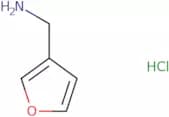
CAS:<p>Versatile small molecule scaffold</p>Formula:C10H13NO2SPurezza:Min. 95%Peso molecolare:211.28 g/mol1-(3-Furyl)methanamine hydrochloride
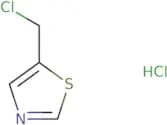
CAS:<p>1-(3-Furyl)methanamine hydrochloride is a halogen compound that causes severe contact dermatitis. It has been shown to cause ischemia injury in the rat heart by attacking selenides and chalcogenides. 1-(3-Furyl)methanamine hydrochloride also induces acute myocardial infarction in rats, which may be due to its ability to induce oxidative stress and inhibit the production of nitric oxide. This compound also increases the susceptibility of animals to heart attack induced by sulfide or halogen.</p>Formula:C5H7NO·HClPurezza:Min. 95%Peso molecolare:133.58 g/mol5-(Chloromethyl)thiazole hydrochloride
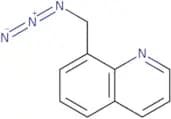
CAS:<p>5-(Chloromethyl)thiazole hydrochloride (5-CT) is a dopamine transporter inhibitor that is used in research of the dopamine system. This drug binds to the dopamine transporter, thereby blocking dopamine reuptake and prolonging the action of dopamine in synapses. 5-CT has been shown to increase motivation and impair cognitive function, which may be due to its ability to increase dopaminergic neurotransmission.<br>5-CT is also used as a probe for the study of other neurotransmitter systems such as serotonin, norepinephrine, and acetylcholine.</p>Formula:C4H5Cl2NSPurezza:Min. 95%Peso molecolare:170.06 g/mol8-(Azidomethyl)quinoline
CAS:<p>Versatile small molecule scaffold</p>Formula:C10H8N4Purezza:Min. 95%Peso molecolare:184.2 g/mol5-{[(tert-Butoxy)carbonyl](methyl)amino}thiophene-2-carboxylic acid
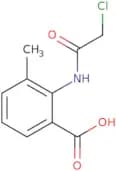
CAS:<p>Versatile small molecule scaffold</p>Formula:C11H15NO4SPurezza:Min. 95%Peso molecolare:257.31 g/mol2-(2-Chloroacetamido)-3-methylbenzoic acid
CAS:<p>Versatile small molecule scaffold</p>Formula:C10H10ClNO3Purezza:Min. 95%Peso molecolare:227.64 g/mol4-{1H-Pyrrolo[3,2-b]pyridin-3-yl}-1,2,3,6-tetrahydropyridine
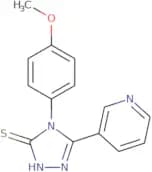
CAS:4-(1H-Pyrrolo[3,2-b]pyridin-3-yl)-1,2,3,6-tetrahydropyridine (4-PPT) is a serotonergic receptor agonist that belongs to the class of pyrrolopyridines. It has shown affinity for 5-HT1A and 5-HT1B receptors in biochemical and behavioral studies. 4-PPT has been found to produce hyperlocomotion in rats with a dose of 2mg/kg. 4-PPT also increases the affinity of serotonin for the 5HT1B receptor by inhibiting an unknown protein kinase C isoform. The binding of serotonin at this site is thought to be responsible for its antihypertensive effects.Formula:C12H13N3Purezza:Min. 95%Peso molecolare:199.25 g/mol4-(4-Methoxyphenyl)-5-(pyridin-3-yl)-4H-1,2,4-triazole-3-thiol
CAS:Versatile small molecule scaffoldFormula:C14H12N4OSPurezza:Min. 95%Peso molecolare:284.34 g/mol5-[(4-Nitrophenyl)methyl]-1H-1,2,3,4-tetrazole
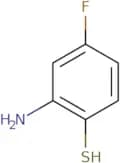
CAS:<p>5-[(4-Nitrophenyl)methyl]-1H-1,2,3,4-tetrazole is a transition metal complex that has been shown to be catalytic. The crystal x-ray diffraction pattern of the compound shows that it has a crystallographic space group of P2/c, with unit cell dimensions of a = 17.94 Å and c = 9.66 Å. The molecular geometry is trigonal planar with dihedral angles of 18.6° between the nitro group and the methylene group on one side and 16.5° between the methylene group on the other side. The crystal structure consists of two benzene molecules bridged by 2 nitro groups and 1 methylene group in an octahedral geometry.</p>Formula:C8H7N5O2Purezza:Min. 95%Peso molecolare:205.17 g/mol2-Amino-4-fluorobenzene-1-thiol
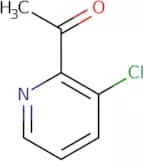
CAS:<p>Versatile small molecule scaffold</p>Formula:C6H6FNSPurezza:Min. 95%Peso molecolare:143.18 g/mol1-(3-Chloropyridin-2-yl)ethanone
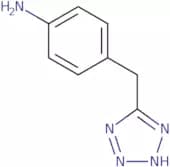
CAS:<p>1-(3-Chloropyridin-2-yl)ethanone is an antibacterial agent that belongs to the group of organochlorine compounds. It has a bactericidal and bacteriostatic effect on a number of microorganisms, including bacteria, fungi, protozoa, and viruses. 1-(3-Chloropyridin-2-yl)ethanone is used in preparations for the treatment of wounds and skin infections as well as for disinfecting the environment. The active substances in 1-(3-Chloropyridin-2-yl)ethanone are bactericidal and bacteriostatic against a broad spectrum of microorganisms. These substances are also effective against some strains that develop resistance to antibiotics.</p>Formula:C7H6ClNOPurezza:Min. 95%Peso molecolare:155.58 g/mol4-(1H-Tetrazol-5-ylmethyl)aniline
CAS:<p>Versatile small molecule scaffold</p>Formula:C8H9N5Purezza:Min. 95%Peso molecolare:175.19 g/molBenzyl N-[(oxiran-2-yl)methyl]carbamate
CAS:Versatile small molecule scaffoldFormula:C11H13NO3Purezza:Min. 95%Peso molecolare:207.23 g/mol2-{[5-(Phenoxymethyl)-4-phenyl-4H-1,2,4-triazol-3-yl]sulfanyl}acetic acid
CAS:Versatile small molecule scaffoldFormula:C17H15N3O3SPurezza:Min. 95%Peso molecolare:341.4 g/mol2-Chloro-N-[1-(naphthalen-1-yl)ethyl]acetamide
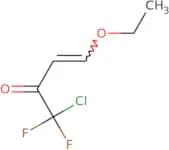
CAS:<p>Versatile small molecule scaffold</p>Formula:C14H14ClNOPurezza:Min. 95%Peso molecolare:247.72 g/mol(Z)-1-Chloro-4-ethoxy-1,1-difluoro-3-buten-2-one
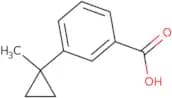
CAS:Versatile small molecule scaffoldFormula:C6H7ClF2O2Purezza:Min. 95%Peso molecolare:184.57 g/mol3-(1-Methylcyclopropyl)benzoic acid
CAS:<p>Versatile small molecule scaffold</p>Formula:C11H12O2Purezza:Min. 95%Peso molecolare:176.21 g/mol4-(1-Methylcyclopropyl)benzoic acid
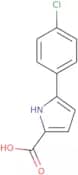
CAS:<p>Versatile small molecule scaffold</p>Formula:C11H12O2Purezza:Min. 95%Peso molecolare:176.21 g/mol5-(4-Chlorophenyl)-1H-pyrrole-2-carboxylic acid
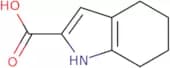
CAS:Versatile small molecule scaffoldFormula:C11H8ClNO2Purezza:Min. 95%Peso molecolare:221.64 g/mol4,5,6,7-Tetrahydro-1H-indole-2-carboxylic acid
CAS:<p>Versatile small molecule scaffold</p>Formula:C9H11NO2Purezza:Min. 95%Peso molecolare:165.19 g/mol2-({[(9H-Fluoren-9-yl)methoxy]carbonyl}amino)-4-methylpent-4-enoic acid
CAS:Versatile small molecule scaffoldFormula:C21H21NO4Purezza:Min. 95%Peso molecolare:351.4 g/mol2-Chloro-N-[4-(2,4-dimethoxyphenyl)-1,3-thiazol-2-yl]acetamide
CAS:Versatile small molecule scaffoldFormula:C13H13ClN2O3SPurezza:Min. 95%Peso molecolare:312.77 g/mol4-Chloro-3-methylbenzyl alcohol
CAS:<p>Versatile small molecule scaffold</p>Formula:C8H9ClOPurezza:Min. 95%Peso molecolare:156.61 g/molrac-(1R,2S,4S)-N-Methylbicyclo[2.2.1]heptan-2-amine hydrochloride
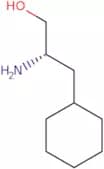
CAS:Versatile small molecule scaffoldFormula:C8H16ClNPurezza:Min. 95%Peso molecolare:161.7 g/mol(S)-b-Amino-cyclohexanepropanol
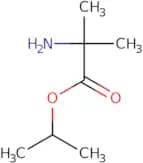
CAS:Versatile small molecule scaffoldFormula:C9H19NOPurezza:Min. 95%Peso molecolare:157.25 g/molPropan-2-yl 2-amino-2-methylpropanoate
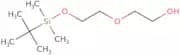
CAS:<p>Versatile small molecule scaffold</p>Formula:C7H15NO2Purezza:Min. 95%Peso molecolare:145.2 g/mol2-(2-((tert-butyldimethylsilyl)oxy)ethoxy)ethanol
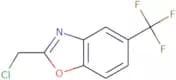
CAS:<p>Versatile small molecule scaffold</p>Formula:C10H24O3SiPurezza:Min. 95%Peso molecolare:220.38 g/mol2-(Chloromethyl)-5-(trifluoromethyl)-1,3-benzoxazole
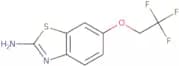
CAS:Versatile small molecule scaffoldFormula:C9H5ClF3NOPurezza:Min. 95%Peso molecolare:235.59 g/mol6-(2,2,2-Trifluoroethoxy)-1,3-benzothiazol-2-amine
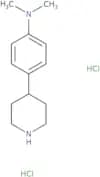
CAS:<p>Versatile small molecule scaffold</p>Formula:C9H7F3N2OSPurezza:Min. 95%Peso molecolare:248.23 g/molN,N-Dimethyl-4-(4-piperidinyl)anilinedihydrochloride
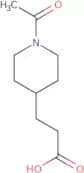
CAS:<p>Versatile small molecule scaffold</p>Formula:C13H22Cl2N2Purezza:Min. 95%Peso molecolare:277.23 g/mol3-(1-acetyl-piperidin-4-yl)-propionic acid
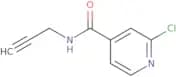
CAS:Versatile small molecule scaffoldFormula:C10H17NO3Purezza:Min. 95%Peso molecolare:199.25 g/mol2-Chloro-N-(prop-2-yn-1-yl)pyridine-4-carboxamide
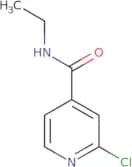
CAS:<p>Versatile small molecule scaffold</p>Formula:C9H7ClN2OPurezza:Min. 95%Peso molecolare:194.62 g/mol2-Chloro-N-ethylpyridine-4-carboxamide
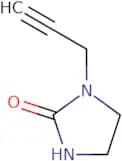
CAS:<p>Versatile small molecule scaffold</p>Formula:C8H9ClN2OPurezza:Min. 95%Peso molecolare:184.62 g/mol1-(Prop-2-yn-1-yl)imidazolidin-2-one
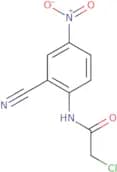
CAS:<p>Versatile small molecule scaffold</p>Formula:C6H8N2OPurezza:Min. 95%Peso molecolare:124.14 g/mol2-Chloro-N-(2-cyano-4-nitrophenyl)acetamide
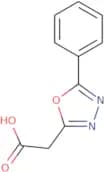
CAS:<p>Versatile small molecule scaffold</p>Formula:C9H6ClN3O3Purezza:Min. 95%Peso molecolare:239.61 g/mol2-(5-Phenyl-1,3,4-oxadiazol-2-yl)acetic acid
CAS:<p>Versatile small molecule scaffold</p>Formula:C10H8N2O3Purezza:Min. 95%Peso molecolare:204.18 g/mol3-Cyclopropyl-2,2-dimethylpropanoic acid
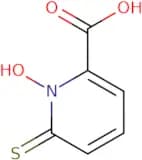
CAS:Versatile small molecule scaffoldFormula:C8H14O2Purezza:Min. 95%Peso molecolare:142.2 g/mol1-Hydroxy-6-Thioxo-1,6-Dihydropyridine-2-Carboxylic Acid
CAS:<p>1-Hydroxy-6-Thioxo-1,6-Dihydropyridine-2-Carboxylic Acid is a cellular modulator that acts as a regulator of gene expression. It is an inhibitor of the myotonica chloride channel and inhibits the activity of target enzymes by binding to their active site and blocking them from performing their function. 1-Hydroxy-6-Thioxo-1,6-Dihydropyridine-2-Carboxylic Acid has been shown to be effective in controlling cardiac hypertrophy and preventing heart failure. The molecule also targets ribosomes, which are involved in protein synthesis. This drug has low expression levels in cells and is not very cell culture labile. 1HTCA binds to the ribosome and prevents protein synthesis by inhibiting peptidyl transferase activity.</p>Formula:C6H5NO3SPurezza:Min. 95%Peso molecolare:171.18 g/mol2-{bicyclo[1.1.1]pentan-1-yl}acetic acid
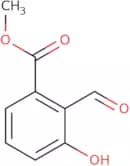
CAS:Versatile small molecule scaffoldFormula:C7H10O2Purezza:Min. 95%Peso molecolare:126.2 g/molMethyl 2-formyl-3-hydroxybenzoate
CAS:<p>Methyl 2-formyl-3-hydroxybenzoate is a formylating agent that reacts with the hydroxyl group of benzene to form a methyl ester. It has been used in the production of polyphosphoric acid, and is also used in the synthesis of salicylic acid and other organic compounds. Methyl 2-formyl-3-hydroxybenzoate reacts with hexamethylenetetramine to produce hexamethylenetricarboxylic acid, which can be reacted with an alcohol to produce an ester. This reagent has been shown to have antifungal activity against Rhizoglyphus sp.</p>Formula:C9H8O4Purezza:Min. 95%Peso molecolare:180.16 g/mol2-(2,3-Dihydro-1-benzofuran-3-yl)acetonitrile
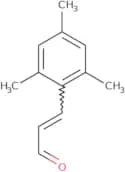
CAS:Versatile small molecule scaffoldFormula:C10H9NOPurezza:Min. 95%Peso molecolare:159.18 g/mol(2E)-3-(2,4,6-Trimethylphenyl)prop-2-enal
CAS:Versatile small molecule scaffoldFormula:C12H14OPurezza:Min. 95%Peso molecolare:174.24 g/mol3-(Piperazin-1-yl)-1,2-benzothiazole-1,1-dione
CAS:Versatile small molecule scaffoldFormula:C11H13N3O2SPurezza:Min. 95%Peso molecolare:251.31 g/mol2-(3-Oxo-3,4-dihydro-2H-1,4-benzoxazin-2-yl)acetohydrazide
CAS:Versatile small molecule scaffoldFormula:C10H11N3O3Purezza:Min. 95%Peso molecolare:221.21 g/mol5-Propyl-2,3-dihydro-1H-indole-2,3-dione
CAS:<p>Versatile small molecule scaffold</p>Formula:C11H11NO2Purezza:Min. 95%Peso molecolare:189.21 g/molMethyl 2-[(4-chloro-3-nitrophenyl)formamido]acetate
CAS:Versatile small molecule scaffoldFormula:C10H9ClN2O5Purezza:Min. 95%Peso molecolare:272.64 g/mol2-(1-Methyl-1H-imidazol-2-yl)acetic acid hydrochloride
CAS:Versatile small molecule scaffoldFormula:C6H9ClN2O2Purezza:Min. 95%Peso molecolare:176.6 g/mol2-(2-Bromoethyl)bicyclo[2.2.1]heptane
CAS:<p>Versatile small molecule scaffold</p>Formula:C9H15BrPurezza:Min. 95%Peso molecolare:203.12 g/mol(2-bromoethoxy)cyclohexane
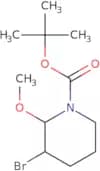
CAS:<p>Versatile small molecule scaffold</p>Formula:C8H15BrOPurezza:Min. 95%Peso molecolare:207.11 g/moltert-Butyl 3-bromo-2-methoxypiperidine-1-carboxylate
CAS:Versatile small molecule scaffoldFormula:C11H20BrNO3Purezza:Min. 95%Peso molecolare:294.19 g/mol1-(2-Methoxypyridin-3-yl)ethanone
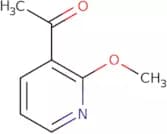
CAS:<p>1-(2-Methoxypyridin-3-yl)ethanone is a structural analog of 2-chloropyridine. It has the same stereochemistry as 2-chloropyridine and can be synthesized from it by metallation, oxidation, or acridone synthesis. 1-(2-Methoxypyridin-3-yl)ethanone can be used as an intermediate in the synthesis of coumarins and acridones. It is also used to produce enantiomerically pure (S)-1-(2-methoxypyridin-3-yl)propanol. The optical activity of this compound was determined using a polarimeter.</p>Formula:C8H9NO2Purezza:Min. 95%Peso molecolare:151.16 g/mol6-Bromo-1-nitronaphthalen-2-amine
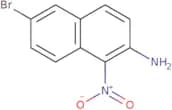
CAS:<p>Versatile small molecule scaffold</p>Formula:C10H7BrN2O2Purezza:Min. 95%Peso molecolare:267.08 g/mol2-(2-Ethyl-1H-1,3-benzodiazol-1-yl)acetohydrazide
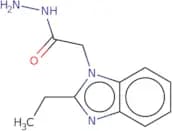
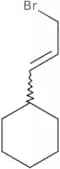
CAS:Prodotto controllato<p>Versatile small molecule scaffold</p>Formula:C11H14N4OPurezza:Min. 95%Peso molecolare:218.3 g/mol(3-Bromoprop-1-en-1-yl)cyclohexane
CAS:<p>Versatile small molecule scaffold</p>Formula:C9H15BrPurezza:Min. 95%Peso molecolare:203.12 g/mol2-(2-Bromoethyl)-2H-naphtho[1,8-cd]isothiazole 1,1-dioxide
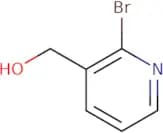
CAS:Versatile small molecule scaffoldFormula:C12H10BrNO2SPurezza:Min. 95%Peso molecolare:312.18 g/mol2-Bromo-3-pyridinemethanol
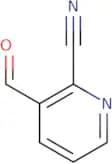
CAS:2-Bromo-3-pyridinemethanol is a heteroaryl compound that contains a pyridine ring. It is synthesized by the lithiation of 2-bromopyridine followed by intramolecular bromination with 3-bromopyridinemethanol. The methodologies for this synthesis are similar to those used in the synthesis of quinolines and pyridines. Lithiation of 2-bromopyridine at low temperature (0°C) led to the formation of 2,6-dibromopyridine, which was then reacted with 3-bromopyridinemethanol in a sequence similar to that described for the synthesis of quinoline and pyridine. This reaction yielded 2,6-dibromo-3-(2'-pyridinyl)-N,N'-dimethylethanamine. The desired product was obtained after cyclization with potassium tertFormula:C6H6BrNOPurezza:Min. 95%Peso molecolare:188.02 g/mol3-Formylpicolinonitrile
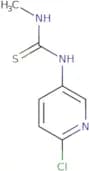
CAS:<p>Versatile small molecule scaffold</p>Formula:C7H4N2OPurezza:Min. 95%Peso molecolare:132.12 g/mol1-(6-Chloropyridin-3-yl)-3-methylthiourea
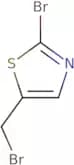
CAS:<p>Versatile small molecule scaffold</p>Formula:C7H8ClN3SPurezza:Min. 95%Peso molecolare:201.68 g/mol2-Bromo-5-(bromomethyl)thiazole
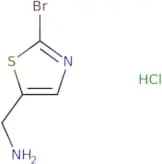
CAS:<p>2-Bromo-5-(bromomethyl)thiazole is an industrial chemical that belongs to the tribromide class of compounds. It is used as a solvent in organic reactions and can be prepared by reacting sodium borohydride with 2-bromothiazole. The preparation process includes recrystallization from acetonitrile and dihedral rotation with potassium carbonate and phthalimide.<br>2-Bromo-5-(bromomethyl)thiazole has been shown to react with fluoride ions to form a borohydride ion, which is then able to abstract a hydrogen atom from a molecule of water to produce hydrogen gas.</p>Formula:C4H3Br2NSPurezza:Min. 95%Peso molecolare:256.94 g/mol(2-bromo-1,3-thiazol-5-yl)methanamine
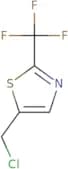
CAS:2-bromo-1,3-thiazol-5-yl)methanamine is a ring system that contains a phthalimide and thiazole. It has a planar molecular geometry. The methoxy group is located on the left side of the molecule, which creates a dihedral angle of about 60°. The two bromine atoms are on opposite sides of the molecule and are separated by 2.6 Å. This ring system reacts readily with nucleophiles to form covalent bonds.Formula:C4H5BrN2SPurezza:Min. 95%Peso molecolare:193.1 g/mol5-(Chloromethyl)-2-(trifluoromethyl)-1,3-thiazole
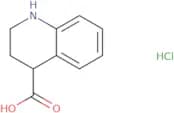
CAS:Versatile small molecule scaffoldFormula:C5H3ClF3NSPurezza:Min. 95%Peso molecolare:201.6 g/mol1,2,3,4-Tetrahydroquinoline-4-carboxylic acid hydrochloride
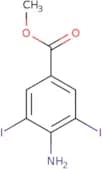
CAS:<p>Versatile small molecule scaffold</p>Formula:C10H12ClNO2Purezza:Min. 95%Peso molecolare:213.66 g/molMethyl 4-amino-3,5-diiodobenzoate
CAS:<p>Versatile small molecule scaffold</p>Formula:C8H7I2NO2Purezza:Min. 95%Peso molecolare:402.96 g/molN-(Propan-2-yl)-2-[({2-[(propan-2-yl)carbamoyl]phenyl}sulfamoyl)amino]benzamide
CAS:Versatile small molecule scaffoldFormula:C20H26N4O4SPurezza:Min. 95%Peso molecolare:418.5 g/mol2-Chloroimidazo[1,2-a]pyridine-3-carbonitrile
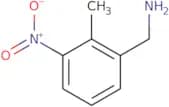
CAS:Versatile small molecule scaffoldFormula:C8H4ClN3Purezza:Min. 95%Peso molecolare:177.59 g/mol(2-Methyl-3-nitrophenyl)methanamine
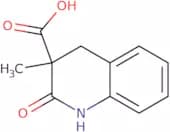
CAS:<p>Versatile small molecule scaffold</p>Formula:C8H10N2O2Purezza:Min. 95%Peso molecolare:166.18 g/mol3-Methyl-2-oxo-1,2,3,4-tetrahydroquinoline-3-carboxylic acid
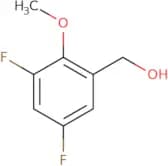
CAS:Versatile small molecule scaffoldFormula:C11H11NO3Purezza:Min. 95%Peso molecolare:205.21 g/mol3,5-Difluoro-2-methoxybenzyl alcohol
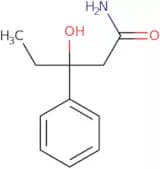
CAS:Versatile small molecule scaffoldFormula:C8H8F2O2Purezza:Min. 95%Peso molecolare:174.15 g/mol3-Hydroxy-3-phenylpentanamide
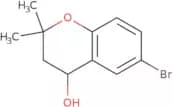
CAS:3-Hydroxy-3-phenylpentanamide is a chiral molecule that has been found to produce neurotoxic effects in rats. 3-Hydroxy-3-phenylpentanamide binds to the benzodiazepine binding site on the GABA receptor and produces a neurotoxic effect. The neurotoxicity of this drug was studied using x-ray crystallography and it was found that 3-hydroxy-3-phenylpentanamide binds with high affinity to the gamma amino butyric acid (GABA) receptor, which causes an increase in chloride ion flow into the neuron and can lead to death of the neuron. This compound also has a halogen substituent at C3, which may be responsible for its toxicity. 3-Hydroxy-3-phenylpentanamide is an enantiomer that is not present in nature and is produced synthetically by reacting phenylacetonitrile with hydroxylamine followed by chlorination. It hasFormula:C11H15NO2Purezza:Min. 95%Peso molecolare:193.24 g/mol6-Bromo-2,2-dimethyl-3,4-dihydro-2H-1-benzopyran-4-ol
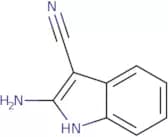
CAS:<p>Versatile small molecule scaffold</p>Formula:C11H13BrO2Purezza:Min. 95%Peso molecolare:257.12 g/mol2-Amino-1H-indole-3-carbonitrile
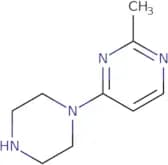
CAS:<p>2-Amino-1H-indole-3-carbonitrile is a nucleoside analog used as a precursor for the synthesis of other biologically active compounds. 2-Amino-1H-indole-3-carbonitrile has been shown to be capable of forming hydrogen bonds with nucleic acid bases, which can lead to changes in conformation and chain length. This leads to changes in the spectra of these compounds, allowing them to be identified.<br>2AICC is prepared from indolium salt and carbon tetrachloride by reaction with ammonia gas. The reaction takes place in an ice bath with stirring and produces a white solid that can be purified by recrystallization or column chromatography.</p>Formula:C9H7N3Purezza:Min. 95%Peso molecolare:157.17 g/mol2-Methyl-4-(piperazin-1-yl)pyrimidine
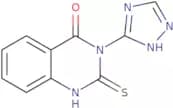
CAS:<p>Versatile small molecule scaffold</p>Formula:C9H14N4Purezza:Min. 95%Peso molecolare:178.23 g/mol2-Sulfanyl-3-(4H-1,2,4-triazol-3-yl)-3,4-dihydroquinazolin-4-one
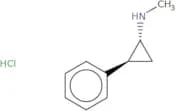
CAS:<p>Versatile small molecule scaffold</p>Formula:C10H7N5OSPurezza:Min. 95%Peso molecolare:245.26 g/molrac-(1R,2S)-N-Methyl-2-phenylcyclopropan-1-amine hydrochloride
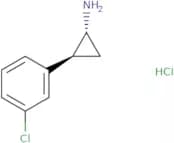
CAS:Versatile small molecule scaffoldFormula:C10H14ClNPurezza:Min. 95%Peso molecolare:183.7 g/moltrans-2-(3-Chlorophenyl)cyclopropanamine Hydrochloride
CAS:<p>Versatile small molecule scaffold</p>Formula:C9H11Cl2NPurezza:Min. 95%Peso molecolare:204.1 g/molBenzo[f]quinoline-5-carboxylic acid
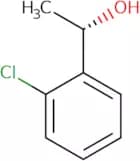
CAS:<p>Versatile small molecule scaffold</p>Formula:C14H9NO2Purezza:Min. 95%Peso molecolare:223.23 g/mol(S)-1-(2-Chlorophenyl)ethanol
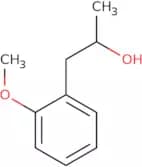
CAS:<p>(S)-1-(2-Chlorophenyl)ethanol is a substrate for the enzyme dehydrogenase, which catalyzes the conversion of (R)-1-(2-chlorophenyl)ethanol to (R)-1-(2-chlorophenyl)propanol. The reaction time for this reaction is dependent on the concentration of the substrate, with high concentrations of (S)-1-(2-chlorophenyl)ethanol requiring a longer reaction time. The product, (R)-1-(2-chlorophenyl)propanol, is an organic chemical that can be used as a model system for studying other reactions involving alcohols. This compound has been shown to be reactive in biological systems and has been found to have symptoms similar to those of Parkinson's disease in mice.</p>Formula:C8H9ClOPurezza:Min. 95%Peso molecolare:156.61 g/mol(2S)-1-(2-Methoxyphenyl)propan-2-ol
CAS:<p>Versatile small molecule scaffold</p>Formula:C10H14O2Purezza:Min. 95%Peso molecolare:166.22 g/molrac-(1R,2S)-2-(2-Methoxyphenyl)cyclopropan-1-amine hydrochloride
CAS:Versatile small molecule scaffoldFormula:C10H14ClNOPurezza:Min. 95%Peso molecolare:199.7 g/molrac-(1R,2S)-2-(3-Methoxyphenyl)cyclopropan-1-amine hydrochloride
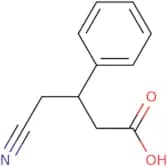
CAS:Versatile small molecule scaffoldFormula:C10H14ClNOPurezza:Min. 95%Peso molecolare:199.7 g/mol4-Cyano-3-phenylbutanoic acid
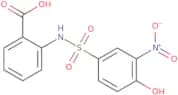
CAS:4-Cyano-3-phenylbutanoic acid is a chiral organic compound with two stereogenic centers. The molecule can be synthesized by the hydrolysis of racemic 4-cyano-3-phenylbutanoic acid or by the optically catalyzed desymmetrization of (S)-trans,trans-2,4,6-trimethylcyclohexanone. This compound has been used as an additive to produce homochiral products in chemical reactions and as a catalyst for enantioselective reactions.Formula:C11H11NO2Purezza:Min. 95%Peso molecolare:189.21 g/mol2-(4-hydroxy-3-nitrobenzenesulfonamido)benzoic acid
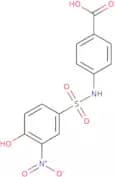
CAS:<p>Versatile small molecule scaffold</p>Formula:C13H10N2O7SPurezza:Min. 95%Peso molecolare:338.3 g/mol4-(4-Hydroxy-3-nitrobenzenesulfonamido)benzoic acid
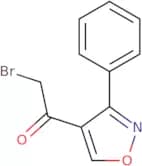
CAS:<p>Versatile small molecule scaffold</p>Formula:C13H10N2O7SPurezza:Min. 95%Peso molecolare:338.29 g/mol2-Bromo-1-(3-phenyl-1,2-oxazol-4-yl)ethan-1-one
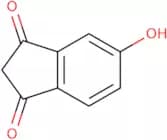
CAS:Versatile small molecule scaffoldFormula:C11H8BrNO2Purezza:Min. 95%Peso molecolare:266.09 g/mol5-Hydroxy-2,3-dihydro-1H-indene-1,3-dione
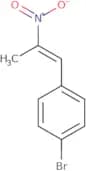
CAS:Versatile small molecule scaffoldFormula:C9H6O3Purezza:Min. 95%Peso molecolare:162.14 g/mol(E)-1-Bromo-4-(2-nitroprop-1-en-1-yl)benzene
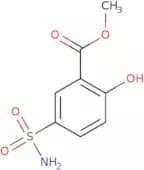
CAS:(E)-1-Bromo-4-(2-nitroprop-1-en-1-yl)benzene is an organic compound with a benzene ring. It is stabilized by the dihedral angle and has a crystal structure. The condensation reaction of ethyl nitrite and 1,2-dibromoethane was found to produce (E)-1-bromo-4-(2-nitroprop-1-en-1-yl)benzene. This compound is used in the synthesis of other chemicals, such as azo dyes.Formula:C9H8BrNO2Purezza:Min. 95%Peso molecolare:242.07 g/molMethyl 2-hydroxy-5-sulfamoylbenzoate
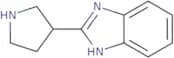
CAS:Versatile small molecule scaffoldFormula:C8H9NO5SPurezza:Min. 95%Peso molecolare:231.23 g/mol2-(Pyrrolidin-3-yl)-1H-1,3-benzodiazole
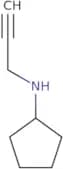
CAS:<p>Versatile small molecule scaffold</p>Formula:C11H13N3Purezza:Min. 95%Peso molecolare:187.24 g/molN-(Prop-2-yn-1-yl)cyclopentanamine
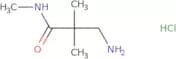
CAS:<p>Versatile small molecule scaffold</p>Formula:C8H13NPurezza:Min. 95%Peso molecolare:123.2 g/mol3-Amino-N,2,2-trimethylpropanamide
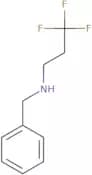
CAS:<p>Versatile small molecule scaffold</p>Formula:C6H15ClN2OPurezza:Min. 95%Peso molecolare:166.65 g/molBenzyl(3,3,3-trifluoropropyl)amine
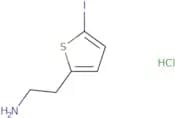
CAS:Versatile small molecule scaffoldFormula:C10H12F3NPurezza:Min. 95%Peso molecolare:203.2 g/mol2-(5-Iodothiophen-2-yl)ethan-1-amine hydrochloride
CAS:Versatile small molecule scaffoldFormula:C6H9ClINSPurezza:Min. 95%Peso molecolare:289.57 g/mol2-Bromothieno[2,3-c]pyridine
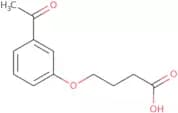
CAS:<p>Versatile small molecule scaffold</p>Formula:C7H4BrNSPurezza:Min. 95%Peso molecolare:214.08 g/mol4-(3-Acetylphenoxy)butanoic acid
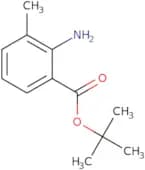
CAS:Prodotto controllatoVersatile small molecule scaffoldFormula:C12H14O4Purezza:Min. 95%Peso molecolare:222.24 g/moltert-Butyl 2-amino-3-methylbenzoate
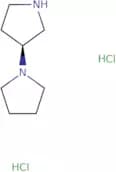
CAS:Versatile small molecule scaffoldFormula:C12H17NO2Purezza:Min. 95%Peso molecolare:207.27 g/mol(S)-1,3'-Bipyrrolidine 2HCl
CAS:<p>Versatile small molecule scaffold</p>Formula:C8H18Cl2N2Purezza:Min. 95%Peso molecolare:213.15 g/mol2-[4-(2-Chloroacetyl)piperazin-1-yl]-2-(1-phenyl-1H-pyrazol-4-yl)acetonitrile
CAS:Versatile small molecule scaffoldFormula:C17H18ClN5OPurezza:Min. 95%Peso molecolare:343.8 g/mol2-chloro-5,7-difluoroquinoline-3-carbaldehyde
CAS:<p>Versatile small molecule scaffold</p>Formula:C10H4ClF2NOPurezza:Min. 95%Peso molecolare:227.6 g/mol5-{2-[4-(Difluoromethoxy)phenyl]ethyl}-5-methylimidazolidine-2,4-dione
CAS:<p>Versatile small molecule scaffold</p>Formula:C13H14F2N2O3Purezza:Min. 95%Peso molecolare:284.26 g/mol

![Methyl 3-[(4-aminophenyl)sulfanyl]propanoate](/_next/image/?url=https%3A%2Fstatic.cymitquimica.com%2Fproducts%2F3D%2Fthumb-webp%2FGFA04240.webp&w=3840&q=75)
amino}thiophene-2-carboxylic acid](/_next/image/?url=https%3A%2Fstatic.cymitquimica.com%2Fproducts%2F3D%2Fthumb-webp%2FGFA05268.webp&w=3840&q=75)
![4-{1H-Pyrrolo[3,2-b]pyridin-3-yl}-1,2,3,6-tetrahydropyridine](/_next/image/?url=https%3A%2Fstatic.cymitquimica.com%2Fproducts%2F3D%2Fthumb-webp%2FGFA08432.webp&w=3840&q=75)
![5-[(4-Nitrophenyl)methyl]-1H-1,2,3,4-tetrazole](/_next/image/?url=https%3A%2Fstatic.cymitquimica.com%2Fproducts%2F3D%2Fthumb-webp%2FGFA09044.webp&w=3840&q=75)
![Benzyl N-[(oxiran-2-yl)methyl]carbamate](/_next/image/?url=https%3A%2Fstatic.cymitquimica.com%2Fproducts%2F3D%2Fthumb-webp%2FGFA11890.webp&w=3840&q=75)
![2-{[5-(Phenoxymethyl)-4-phenyl-4H-1,2,4-triazol-3-yl]sulfanyl}acetic acid](/_next/image/?url=https%3A%2Fstatic.cymitquimica.com%2Fproducts%2F3D%2Fthumb-webp%2FGFA14209.webp&w=3840&q=75)
![2-Chloro-N-[1-(naphthalen-1-yl)ethyl]acetamide](/_next/image/?url=https%3A%2Fstatic.cymitquimica.com%2Fproducts%2F3D%2Fthumb-webp%2FGFA14967.webp&w=3840&q=75)

![2-({[(9H-Fluoren-9-yl)methoxy]carbonyl}amino)-4-methylpent-4-enoic acid](/_next/image/?url=https%3A%2Fstatic.cymitquimica.com%2Fproducts%2F3D%2Fthumb-webp%2FGFA17758.webp&w=3840&q=75)
![2-Chloro-N-[4-(2,4-dimethoxyphenyl)-1,3-thiazol-2-yl]acetamide](/_next/image/?url=https%3A%2Fstatic.cymitquimica.com%2Fproducts%2F3D%2Fthumb-webp%2FGFA21348.webp&w=3840&q=75)

![rac-(1R,2S,4S)-N-Methylbicyclo[2.2.1]heptan-2-amine hydrochloride](/_next/image/?url=https%3A%2Fstatic.cymitquimica.com%2Fproducts%2F3D%2Fthumb-webp%2FGFA27498.webp&w=3840&q=75)

![2-{bicyclo[1.1.1]pentan-1-yl}acetic acid](/_next/image/?url=https%3A%2Fstatic.cymitquimica.com%2Fproducts%2F3D%2Fthumb-webp%2FGFA51531.webp&w=3840&q=75)


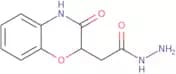
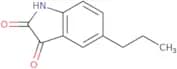
![Methyl 2-[(4-chloro-3-nitrophenyl)formamido]acetate](/_next/image/?url=https%3A%2Fstatic.cymitquimica.com%2Fproducts%2F3D%2Fthumb-webp%2FGFA64853.webp&w=3840&q=75)
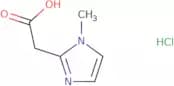
![2-(2-Bromoethyl)bicyclo[2.2.1]heptane](/_next/image/?url=https%3A%2Fstatic.cymitquimica.com%2Fproducts%2F3D%2Fthumb-webp%2FGFA66574.webp&w=3840&q=75)
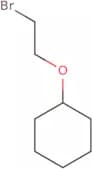
![2-(2-Bromoethyl)-2H-naphtho[1,8-cd]isothiazole 1,1-dioxide](/_next/image/?url=https%3A%2Fstatic.cymitquimica.com%2Fproducts%2F3D%2Fthumb-webp%2FGFA72917.webp&w=3840&q=75)
![N-(Propan-2-yl)-2-[({2-[(propan-2-yl)carbamoyl]phenyl}sulfamoyl)amino]benzamide](/_next/image/?url=https%3A%2Fstatic.cymitquimica.com%2Fproducts%2F3D%2Fthumb-webp%2FGFA76871.webp&w=3840&q=75)
![2-Chloroimidazo[1,2-a]pyridine-3-carbonitrile](/_next/image/?url=https%3A%2Fstatic.cymitquimica.com%2Fproducts%2F3D%2Fthumb-webp%2FGFA77348.webp&w=3840&q=75)
![Benzo[f]quinoline-5-carboxylic acid](/_next/image/?url=https%3A%2Fstatic.cymitquimica.com%2Fproducts%2F3D%2Fthumb-webp%2FGFA86230.webp&w=3840&q=75)
![2-Bromothieno[2,3-c]pyridine](/_next/image/?url=https%3A%2Fstatic.cymitquimica.com%2Fproducts%2F3D%2Fthumb-webp%2FGFB47736.webp&w=3840&q=75)
![2-[4-(2-Chloroacetyl)piperazin-1-yl]-2-(1-phenyl-1H-pyrazol-4-yl)acetonitrile](/_next/image/?url=https%3A%2Fstatic.cymitquimica.com%2Fproducts%2F3D%2Fthumb-webp%2FGNB63139.webp&w=3840&q=75)

![5-{2-[4-(Difluoromethoxy)phenyl]ethyl}-5-methylimidazolidine-2,4-dione](/_next/image/?url=https%3A%2Fstatic.cymitquimica.com%2Fproducts%2F3D%2Fthumb-webp%2FGNB68489.webp&w=3840&q=75)