Building Blocks
Sottocategorie di "Building Blocks"
- Acidi boronici e derivati dell'acido boronico(5.778 prodotti)
- Building Blocks Chirali(1.243 prodotti)
- Building Blocks Idrocarburici(6.099 prodotti)
- Building Blocks organici(61.038 prodotti)
Trovati 205376 prodotti di "Building Blocks"
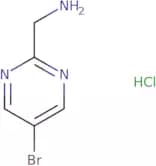
(5-bromopyrimidin-2-yl)methanamine hcl
CAS:Versatile small molecule scaffold
Formula:C5H7BrClN3Purezza:Min. 95%Peso molecolare:224.49 g/mol{4-[(3-Fluorophenyl)methoxy]phenyl}methanamine hydrochloride
CAS:Versatile small molecule scaffold
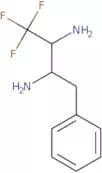
Formula:C14H15ClFNOPurezza:Min. 95%Peso molecolare:267.72 g/mol1,1,1-Trifluoro-4-phenylbutane-2,3-diamine
CAS:Versatile small molecule scaffold
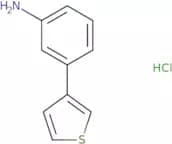
Formula:C10H13F3N2Purezza:Min. 95%Peso molecolare:218.22 g/mol3-(Thiophen-3-yl)aniline hydrochloride
CAS:Versatile small molecule scaffold
Formula:C10H10ClNSPurezza:Min. 95%Peso molecolare:211.71 g/mol4-(3-Cyclopropyl-1H-1,2,4-triazol-5-yl)aniline
CAS:Versatile small molecule scaffold
Formula:C11H12N4Purezza:Min. 95%Peso molecolare:200.24 g/mol{3-[3-(4-Fluorophenyl)-1,2-oxazol-5-yl]propyl}(methyl)amine
CAS:Versatile small molecule scaffoldFormula:C13H15FN2OPurezza:Min. 95%Peso molecolare:234.27 g/mol3-Amino-4-methyl-N-[3-(trifluoromethyl)phenyl]benzene-1-sulfonamide
CAS:Versatile small molecule scaffoldFormula:C14H13F3N2O2SPurezza:Min. 95%Peso molecolare:330.33 g/molMethyl 5,5,5-trifluoro-3-oxopentanoate
CAS:Versatile small molecule scaffold
Formula:C6H7F3O3Purezza:Min. 95%Peso molecolare:184.11 g/mol6-Chloro-1H-pyrrolo[2,3-b]pyridine-3-carboxylic acid
CAS:Versatile small molecule scaffold
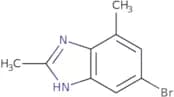
Formula:C8H5ClN2O2Purezza:Min. 95%Peso molecolare:196.59 g/mol5-Bromo-2,7-dimethyl-1H-1,3-benzodiazole
CAS:Versatile small molecule scaffoldFormula:C9H9BrN2Purezza:Min. 95%Peso molecolare:225.08 g/mol(5,6,7,8-Tetrahydro-4H-cyclohepta[D]isoxazol-3-yl)methanol
CAS:Versatile small molecule scaffold
Formula:C9H13NO2Purezza:Min. 95%Peso molecolare:167.2 g/mol2-Bromo-6-chloroimidazo[1,2-a]pyridine
CAS:Versatile small molecule scaffold
Formula:C7H4BrClN2Purezza:Min. 95%Peso molecolare:231.48 g/mol1-[2-(Propan-2-yloxy)ethyl]cyclopropan-1-amine hydrochloride
CAS:Versatile small molecule scaffoldFormula:C8H18ClNOPurezza:Min. 95%Peso molecolare:179.69 g/molN-(1-Benzyl-3-phenylpyrrolidin-3-yl)acetamide
CAS:Versatile small molecule scaffoldFormula:C19H22N2OPurezza:Min. 95%Peso molecolare:294.4 g/mol2-(Pyridin-3-yl)-3H,4H,5H,6H,7H-cyclopenta[D]pyrimidin-4-one
CAS:Versatile small molecule scaffold
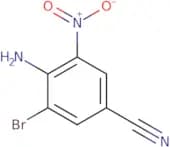
Formula:C12H11N3OPurezza:Min. 95%Peso molecolare:213.23 g/mol4-Amino-3-bromo-5-nitrobenzonitrile
CAS:Versatile small molecule scaffold
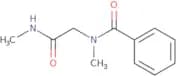
Formula:C7H4BrN3O2Purezza:Min. 95%Peso molecolare:242.03 g/molN-Methyl-2-(N-methyl-1-phenylformamido)acetamide
CAS:Versatile small molecule scaffold
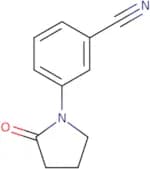
Formula:C11H14N2O2Purezza:Min. 95%Peso molecolare:206.2 g/mol3-(2-Oxopyrrolidin-1-yl)benzonitrile
CAS:Versatile small molecule scaffold
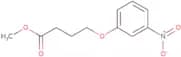
Formula:C11H10N2OPurezza:Min. 95%Peso molecolare:186.21 g/molMethyl 4-(3-nitrophenoxy)butanoate
CAS:Prodotto controllatoVersatile small molecule scaffold
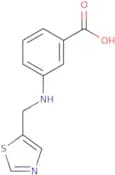
Formula:C11H13NO5Purezza:Min. 95%Peso molecolare:239.22 g/mol3-((Thiazol-5-ylmethyl)amino)benzoic acid
CAS:Versatile small molecule scaffold
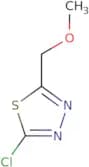
Formula:C11H10N2O2SPurezza:Min. 95%Peso molecolare:234.28 g/mol2-Chloro-5-(methoxymethyl)-1,3,4-thiadiazole
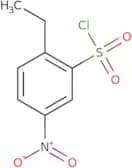
CAS:Versatile small molecule scaffoldFormula:C4H5ClN2OSPurezza:Min. 95%Peso molecolare:164.61 g/mol2-Ethyl-5-nitrobenzene-1-sulfonyl chloride
CAS:Versatile small molecule scaffold
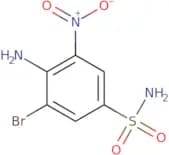
Formula:C8H8ClNO4SPurezza:Min. 95%Peso molecolare:249.67 g/mol4-Amino-3-bromo-5-nitro-benzenesulfonamide
CAS:Versatile small molecule scaffold
Formula:C6H6BrN3O4SPurezza:Min. 95%Peso molecolare:296.1 g/molEthyl 2-(3-nitrophenyl)acetate
CAS:Ethyl 2-(3-nitrophenyl)acetate is an organic compound. It is a chloride channel blocker that has been shown to inhibit the activity of multidrug-resistant proteins (e.g., p-glycoprotein and multidrug resistance protein). The uptake of this drug in cells is limited by its low oral bioavailability and its interaction with aluminium ions. This drug interacts with multidrug-resistance proteins, which are involved in the transport of drugs or toxins out of the cell, by competing for binding sites. Ethyl 2-(3-nitrophenyl)acetate inhibits the catalytic activity of these proteins, leading to a regression in multidrug resistance. It can also inhibit the activity of isoxazoles and alcohols.br>br>/p>
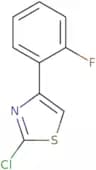
Formula:C10H11NO4Purezza:Min. 95%Peso molecolare:209.2 g/mol2-Chloro-4-(2-fluorophenyl)-1,3-thiazole
CAS:Versatile small molecule scaffold
Formula:C9H5ClFNSPurezza:Min. 95%Peso molecolare:213.66 g/mol2-({[(9H-Fluoren-9-yl)methoxy]carbonyl}(3-methoxyphenyl)amino)acetic acid
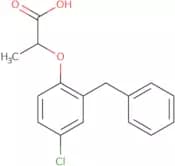
CAS:Versatile small molecule scaffoldFormula:C24H21NO5Purezza:Min. 95%Peso molecolare:403.4 g/mol2-(2-Benzyl-4-chlorophenoxy)propanoic acid
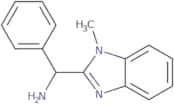
CAS:Versatile small molecule scaffoldFormula:C16H15ClO3Purezza:Min. 95%Peso molecolare:290.74 g/mol(1-Methyl-1H-1,3-benzodiazol-2-yl)(phenyl)methanamine
CAS:Versatile small molecule scaffold
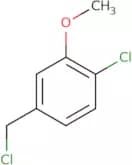
Formula:C15H15N3Purezza:Min. 95%Peso molecolare:237.31 g/mol1-Chloro-4-(chloromethyl)-2-methoxybenzene
CAS:Versatile small molecule scaffold
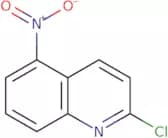
Formula:C8H8Cl2OPurezza:Min. 95%Peso molecolare:191.05 g/mol2-Chloro-5-nitroquinoline
CAS:2-Chloro-5-nitroquinoline is an oxidized aminoquinoline that is synthesized from nitric acid and benzene. It contains a nitro group, which makes it susceptible to oxidation. 2-Chloro-5-nitroquinoline is used as a solvent for rubber, plastics, and waxes. It can also be used as a solvent in the production of quinolines and other nitrogen compounds. Nitration of this compound produces 2-chloroquinoline, which can be transformed into 2-chloroquinolinium hydroxide by reaction with sodium hydroxide. The substituent on the ortho position can be determined by oleum or bromine water.
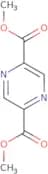
Formula:C9H5ClN2O2Purezza:Min. 95%Peso molecolare:208.6 g/molDimethyl Pyrazine-2,5-dicarboxylate
CAS:Versatile small molecule scaffold
Formula:C8H8N2O4Purezza:Min. 95%Peso molecolare:196.16 g/mol6-Ethyl-3-methyl-1-phenyl-1H-pyrazolo[3,4-b]pyridine-4-carboxylic acid
CAS:Versatile small molecule scaffold
Formula:C16H15N3O2Purezza:Min. 95%Peso molecolare:281.31 g/mol4-[(2-Amino-1,3-thiazol-5-yl)methyl]-3-(trifluoromethyl)benzonitrile
CAS:Versatile small molecule scaffold
Formula:C12H8F3N3SPurezza:Min. 95%Peso molecolare:283.27 g/mol2-[6-(Furan-2-yl)-3-methyl-4-(trifluoromethyl)-1H-pyrazolo[3,4-b]pyridin-1-yl]acetic acid
CAS:Versatile small molecule scaffoldFormula:C14H10F3N3O3Purezza:Min. 95%Peso molecolare:325.24 g/mol2-{3-Cyclopropyl-5-methyl-1H-pyrazolo[3,4-b]pyridin-1-yl}acetic acid
CAS:Versatile small molecule scaffoldFormula:C12H13N3O2Purezza:Min. 95%Peso molecolare:231.25 g/mol1-Benzenesulfonyl-piperidine-4-carboxylic acid ethyl ester
CAS:1-Benzenesulfonyl-piperidine-4-carboxylic acid ethyl ester is an inhibitor of acetylcholinesterase. It is a white solid that can be synthesized in two steps from commercially available starting materials. Inhibition of this enzyme leads to the accumulation of acetylcholine, which causes increased stimulation of nicotinic and muscarinic receptors. This drug has been shown to have IC50 values that are similar to those of the reference inhibitor donepezil. 1-Benzenesulfonyl-piperidine-4-carboxylic acid ethyl ester also interacts with sulfonyl chlorides, butyrylcholinesterase, and other proteins in a manner similar to donepezil. The molecular docking studies suggest that this compound binds competitively with the active site of acetylcholinesterase.
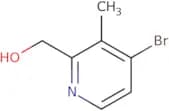
Formula:C14H19NO4SPurezza:Min. 95%Peso molecolare:297.37 g/mol(4-Bromo-3-methylpyridin-2-yl)methanol
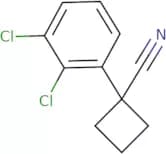
CAS:Versatile small molecule scaffoldFormula:C7H8BrNOPurezza:Min. 95%Peso molecolare:202.05 g/mol1-(2,3-Dichlorophenyl)cyclobutanecarbonitrile
CAS:Versatile small molecule scaffold
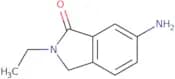
Formula:C11H9Cl2NPurezza:Min. 95%Peso molecolare:226.1 g/mol6-amino-2-ethyl-2,3-dihydro-1H-isoindol-1-one
CAS:Versatile small molecule scaffold
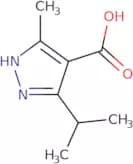
Formula:C10H12N2OPurezza:Min. 95%Peso molecolare:176.22 g/mol3-Methyl-5-(propan-2-yl)-1H-pyrazole-4-carboxylic acid
CAS:Versatile small molecule scaffold
Formula:C8H12N2O2Purezza:Min. 95%Peso molecolare:168.19 g/mol5-(1,3-Dioxolan-2-yl)furan-2-carbonitrile
CAS:Versatile small molecule scaffold
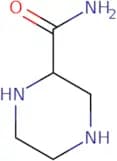
Formula:C8H7NO3Purezza:Min. 95%Peso molecolare:165.15 g/molPiperazine-2-carboxamide
CAS:Piperazine-2-carboxamide is a synthetic drug that is used to treat tuberculosis. It binds to the mycolic acid of the bacterial cell wall, preventing it from forming an outer layer and disrupting its function. Piperazine-2-carboxamide also inhibits the synthesis of fatty acids and amines in bacteria, which are necessary for their survival. This drug can be synthesized by reacting piperazine with formaldehyde and acetamide.
Formula:C5H11N3OPurezza:Min. 95%Peso molecolare:129.16 g/mol[2-(1H-Indol-4-yl)ethyl]dimethylamine
CAS:Prodotto controllatoVersatile small molecule scaffold
Formula:C12H16N2Purezza:Min. 95%Peso molecolare:188.27 g/mol5-Cyclopropyl-7-oxa-5-azaspiro[3.4]octane-6,8-dione
CAS:Versatile small molecule scaffold
Formula:C9H11NO3Purezza:Min. 95%Peso molecolare:181.19 g/mol2-Benzoyl-2-azabicyclo[2.1.1]hexane-1-carboxylic acid
CAS:Versatile small molecule scaffold
Formula:C13H13NO3Purezza:Min. 95%Peso molecolare:231.25 g/mol(2R,3S)-4-[(tert-Butoxy)carbonyl]-2-methylmorpholine-3-carboxylic acid
CAS:Versatile small molecule scaffold
Formula:C11H19NO5Purezza:Min. 95%Peso molecolare:245.27 g/mol(3R)-3-Amino-3-phenylpropanenitrile, trifluoroacetic acid
CAS:Versatile small molecule scaffold
Formula:C11H11F3N2O2Purezza:Min. 95%Peso molecolare:260.21 g/mol(1R)-1-(1H-Imidazol-2-yl)ethan-1-amine dihydrochloride
CAS:Versatile small molecule scaffold
Formula:C5H11Cl2N3Purezza:Min. 95%Peso molecolare:184.06 g/molrac-[(2R,5S)-5-Phenyloxolan-2-yl]methanamine hydrochloride
CAS:Versatile small molecule scaffold
Formula:C11H16ClNOPurezza:Min. 95%Peso molecolare:213.7 g/mol2-Azido-1-(piperidin-1-yl)ethan-1-one
CAS:Versatile small molecule scaffold
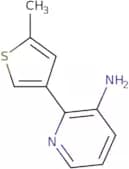
Formula:C7H12N4OPurezza:Min. 95%Peso molecolare:168.2 g/mol2-(5-Methylthiophen-3-yl)pyridin-3-amine
CAS:Versatile small molecule scaffold
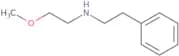
Formula:C10H10N2SPurezza:Min. 95%Peso molecolare:190.27 g/mol(2-Methoxyethyl)(2-phenylethyl)amine
CAS:Prodotto controllatoVersatile small molecule scaffold
Formula:C11H17NOPurezza:Min. 95%Peso molecolare:179.26 g/mol2-{4-[2-(Pyrrolidin-1-yl)ethoxy]phenyl}ethan-1-amine dihydrochloride
CAS:Versatile small molecule scaffold
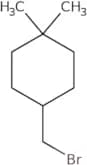
Formula:C14H24Cl2N2OPurezza:Min. 95%Peso molecolare:307.3 g/mol4-(Bromomethyl)-1,1-dimethylcyclohexane
CAS:Versatile small molecule scaffoldFormula:C9H17BrPurezza:Min. 95%Peso molecolare:205.13 g/mol1-Hydroxymethyl-2-Oxa-5-Aza-Bicyclo[2.2.1]Heptane-5-Carboxylic Acid Tert-Butyl Ester
CAS:Versatile small molecule scaffold
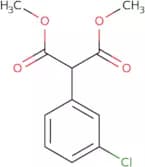
Formula:C11H19NO4Purezza:Min. 95%Peso molecolare:229.27 g/mol1,3-Dimethyl 2-(3-chlorophenyl)propanedioate
CAS:Versatile small molecule scaffold
Formula:C11H11ClO4Purezza:Min. 95%Peso molecolare:242.65 g/mol2-(Methylsulfonyl)-1H-benzo[d]imidazole
CAS:2-(Methylsulfonyl)-1H-benzo[d]imidazole (MSBI) is a relatively new class of catalysts that can be used to promote the oxidation of alcohols. The catalytic system consists of copper, iodides, and MSBI. The first step in the catalytic cycle is the formation of a complex between MSBI and copper. This complex reacts with an alcohol to give a more reactive species, which then oxidizes iodide to iodine. The iodide is reduced back to iodide by hydrogen peroxide generated from the reaction with water. The spectrum of MSBI shows peaks at 1706 cm-1 and 1684 cm-1 due to its methyl groups, while the peak at 1202 cm-1 corresponds to the stretching vibration in the imidazole ring. Experimental results show that MSBI has a low density and high theoretical activity.
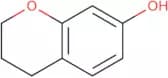
Formula:C8H8N2O2SPurezza:Min. 95%Peso molecolare:196.22 g/mol3,4-dihydro-2H-1-benzopyran-7-ol
CAS:3,4-Dihydro-2H-1-benzopyran-7-ol is a monomer that is used to synthesize medicines. It has the formula CH3COCH=CH(OH)CH3 and belongs to the group of flavonoids. 3,4-Dihydro-2H-1-benzopyran-7-ol has acidic properties, which are due to its isoflavones. It can be used as an acid catalyst in organic synthesis reactions and is a reaction product of chloropropane. 3,4-Dihydro-2H-1-benzopyran-7-ol also has high yield and can act as a bioisostere for other compounds such as chromene.
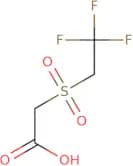
Formula:C9H10O2Purezza:Min. 95%Peso molecolare:150.18 g/mol2-(2,2,2-Trifluoroethanesulfonyl)acetic acid
CAS:Trifloxacin is a broad-spectrum antibacterial drug that belongs to the class of formyloxy compounds and the cephalosporin family. It has been shown to be active against both Gram-positive and Gram-negative bacteria, with activity against strains resistant to penicillin, ampicillin, erythromycin, and chloramphenicol. Trifloxacin binds to the bacterial ribosome by displacement of a pyridyl group in the ribosomal RNA, inhibiting protein synthesis. This binding inhibits cell growth by preventing the production of proteins that are vital for cell division.
br>
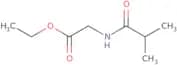
Trifloxacin has also been found to inhibit DNA gyrase and topoisomerase IV in vitro. Trifloxacin's mechanism of action is similar to that of other quinolones such as norfloxacin and ciprofloxacin.Formula:C4H5F3O4SPurezza:Min. 95%Peso molecolare:206.14 g/molEthyl 2-(2-methylpropanamido)acetate
CAS:Versatile small molecule scaffold
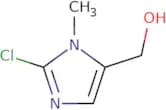
Formula:C8H15NO3Purezza:Min. 95%Peso molecolare:173.21 g/mol(2-Chloro-1-methyl-1H-imidazol-5-yl)methanol
CAS:Versatile small molecule scaffoldFormula:C5H7ClN2OPurezza:Min. 95%Peso molecolare:146.57 g/mol4-(2-Amino-4-methylpentanoyl)piperazin-2-one
CAS:Versatile small molecule scaffold
Formula:C10H19N3O2Purezza:Min. 95%Peso molecolare:213.28 g/mol1-(Butane-1-sulfonyl)piperidine-2-carboxylic acid
CAS:Versatile small molecule scaffoldFormula:C10H19NO4SPurezza:Min. 95%Peso molecolare:249.33 g/mol[3-(Propan-2-yl)phenyl]thiourea
CAS:Versatile small molecule scaffold
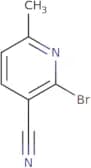
Formula:C10H14N2SPurezza:Min. 95%Peso molecolare:194.3 g/mol2-Bromo-6-methylnicotinonitrile
CAS:2-Bromo-6-methylnicotinonitrile is a reactive heterocyclic compound that has been used as a palladium catalyst. It undergoes substitution reactions with halides and polyhalogenated compounds. The yield of this reaction depends on the substituents and functional groups present. 2-Bromo-6-methylnicotinonitrile can also be used to form alkynes, alkynes, and heterocycles.
2-Bromo-6-methylnicotinonitrile is an alkyne that has two functional groups: a nitrile group and a bromine group. It reacts with nucleophiles such as ammonia or amines to form the corresponding amide or amine in good yields.Formula:C7H5BrN2Purezza:Min. 95%Peso molecolare:197.03 g/mol1,2-Benzoxazol-3-ylmethanamine
CAS:Versatile small molecule scaffold
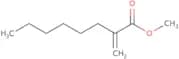
Formula:C8H8N2OPurezza:Min. 95%Peso molecolare:148.16 g/molMethyl 2-methylideneoctanoate
CAS:Versatile small molecule scaffold
Formula:C10H18O2Purezza:Min. 95%Peso molecolare:170.25 g/mol8-Bromo-2-methylimidazo[1,2-a]pyridine
CAS:Versatile small molecule scaffold
Formula:C8H7N2BrPurezza:Min. 95%Peso molecolare:211.05 g/mol3-Hydroxy-5-methylpyridine
CAS:3-Hydroxy-5-methylpyridine (3HMP) is a chemical substance that has been classified as an amine. It is a product of the metabolism of purines, which are nitrogenous bases found in DNA and RNA. 3HMP is produced by aerogenic bacteria (such as Enterobacter), and can be used to estimate the number of these bacteria present in water samples. 3HMP has been shown to have antiviral properties against influenza virus, and can be used as a biomarker for the presence of other viruses in animals. 3HMP also has mineralization properties, which have been studied extensively, particularly with regards to pancreatic disease.
Formula:C6H7NOPurezza:Min. 95%Colore e forma:PowderPeso molecolare:109.13 g/molRef: 3D-FH16174
Prodotto fuori produzione4-Chloro-2-hydroxy-6-methylphenylboronic acid
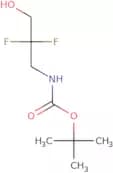
CAS:Versatile small molecule scaffoldFormula:C7H8BClO3Purezza:Min. 95%Peso molecolare:186.4 g/moltert-Butyl (2,2-difluoro-3-hydroxypropyl)carbamate
CAS:Versatile small molecule scaffoldFormula:C10H13NO4Purezza:Min. 95%Peso molecolare:211.21 g/mol2-Bromo-3,3,3-trifluoro-1-propene
CAS:Prodotto controllato2-Bromo-3,3,3-trifluoro-1-propene is a chemical compound that has been synthesized in an asymmetric reaction. The reactant is bromopropane and the product is 2,2,2-trifluoropropene. The methylene group on the propene molecule is activated by the nucleophilic attack of a fluoride ion from hydrogen fluoride to form a cavity with a highly strained bond. The kinetic study of this reaction revealed that the activation energy for the reaction is 42 kJ/mol. Palladium-catalyzed coupling reactions are catalyzed by palladium and require nonpolar solvents such as toluene or dichloromethane. This type of reaction has been shown to be exothermic with an isolated yield of 1%.
Formula:C3H2BrF3Purezza:Min. 95%Colore e forma:Colorless PowderPeso molecolare:174.95 g/mol1-Hydroxycyclopentane-1-carbonitrile
CAS:1-Hydroxycyclopentane-1-carbonitrile is a monomer that is hydrolyzed to form benzoin and cyanohydrins. It can be used in the production of scifinder as a monomer or dimerizer.
Formula:C6H9NOPurezza:Min. 95%Peso molecolare:111.14 g/mol4,5-Dihydro-1H-imidazol-2-amine hydrochloride
CAS:Please enquire for more information about 4,5-Dihydro-1H-imidazol-2-amine hydrochloride including the price, delivery time and more detailed product information at the technical inquiry form on this page
Formula:C3H7N3•HClPurezza:Min. 95%Peso molecolare:121.57 g/mol4,5-Dihydroxy-2,3-Pentanedione
CAS:4,5-Dihydroxy-2,3-pentanedione is a carbonyl compound that is the product of the oxidation of ascorbic acid. It is used in wastewater treatment and has antimicrobial properties against infectious diseases. This compound has been shown to inhibit protein synthesis by binding to the ribosome and preventing the formation of peptide bonds between amino acids. 4,5-Dihydroxy-2,3-pentanedione has also been shown to bind to plasma proteins, which may be due to its acyl chain structure. 4,5-Dihydroxy-2,3-pentanedione can be synthesized in a catalytic mechanism that involves dehydroascorbic acid and molecular oxygen.
Formula:C5H8O4Purezza:Min. 95%Colore e forma:PowderPeso molecolare:132.11 g/molRef: 3D-FD180770
Prodotto fuori produzionePiperyline
CAS:Piperyline is an alkanoic acid that has shown to be effective against skin cancer. It also has antimicrobial properties, which may be due to its ability to bind metal ions and form polymeric compounds. Piperyline inhibits microbial growth by inhibiting the synthesis of proteins and nucleic acids. The antimicrobial activity is related to its cationic polymerization with hydroxyl groups, which forms a structure that can inhibit microbial enzymes and disrupt microbial cell membranes. This compound also interacts with the skin's natural lipids, making it difficult for microorganisms to attach and grow on the skin. Piperyline is synthesized in organic chemistry laboratories as an amide precursor of other pharmaceuticals such as penicillin.
Formula:C16H17NO3Purezza:Min. 95%Peso molecolare:271.31 g/mol

![{4-[(3-Fluorophenyl)methoxy]phenyl}methanamine hydrochloride](/_next/image/?url=https%3A%2Fstatic.cymitquimica.com%2Fproducts%2F3D%2Fthumb-webp%2FQZB52951.webp&w=3840&q=75)

![{3-[3-(4-Fluorophenyl)-1,2-oxazol-5-yl]propyl}(methyl)amine](/_next/image/?url=https%3A%2Fstatic.cymitquimica.com%2Fproducts%2F3D%2Fthumb-webp%2FQZB52864.webp&w=3840&q=75)
![3-Amino-4-methyl-N-[3-(trifluoromethyl)phenyl]benzene-1-sulfonamide](/_next/image/?url=https%3A%2Fstatic.cymitquimica.com%2Fproducts%2F3D%2Fthumb-webp%2FQXA20922.webp&w=3840&q=75)

![6-Chloro-1H-pyrrolo[2,3-b]pyridine-3-carboxylic acid](/_next/image/?url=https%3A%2Fstatic.cymitquimica.com%2Fproducts%2F3D%2Fthumb-webp%2FQLB14096.webp&w=3840&q=75)
![(5,6,7,8-Tetrahydro-4H-cyclohepta[D]isoxazol-3-yl)methanol](/_next/image/?url=https%3A%2Fstatic.cymitquimica.com%2Fproducts%2F3D%2Fthumb-webp%2FQHC96192.webp&w=3840&q=75)
![2-Bromo-6-chloroimidazo[1,2-a]pyridine](/_next/image/?url=https%3A%2Fstatic.cymitquimica.com%2Fproducts%2F3D%2Fthumb-webp%2FQHA07448.webp&w=3840&q=75)
![1-[2-(Propan-2-yloxy)ethyl]cyclopropan-1-amine hydrochloride](/_next/image/?url=https%3A%2Fstatic.cymitquimica.com%2Fproducts%2F3D%2Fthumb-webp%2FPZC01648.webp&w=3840&q=75)

![2-(Pyridin-3-yl)-3H,4H,5H,6H,7H-cyclopenta[D]pyrimidin-4-one](/_next/image/?url=https%3A%2Fstatic.cymitquimica.com%2Fproducts%2F3D%2Fthumb-webp%2FPZB74791.webp&w=3840&q=75)

![2-({[(9H-Fluoren-9-yl)methoxy]carbonyl}(3-methoxyphenyl)amino)acetic acid](/_next/image/?url=https%3A%2Fstatic.cymitquimica.com%2Fproducts%2F3D%2Fthumb-webp%2FNKD54880.webp&w=3840&q=75)
![6-Ethyl-3-methyl-1-phenyl-1H-pyrazolo[3,4-b]pyridine-4-carboxylic acid](/_next/image/?url=https%3A%2Fstatic.cymitquimica.com%2Fproducts%2F3D%2Fthumb-webp%2FMMB69138.webp&w=3840&q=75)
![4-[(2-Amino-1,3-thiazol-5-yl)methyl]-3-(trifluoromethyl)benzonitrile](/_next/image/?url=https%3A%2Fstatic.cymitquimica.com%2Fproducts%2F3D%2Fthumb-webp%2FMMB62900.webp&w=3840&q=75)
![2-[6-(Furan-2-yl)-3-methyl-4-(trifluoromethyl)-1H-pyrazolo[3,4-b]pyridin-1-yl]acetic acid](/_next/image/?url=https%3A%2Fstatic.cymitquimica.com%2Fproducts%2F3D%2Fthumb-webp%2FMMB60578.webp&w=3840&q=75)
![2-{3-Cyclopropyl-5-methyl-1H-pyrazolo[3,4-b]pyridin-1-yl}acetic acid](/_next/image/?url=https%3A%2Fstatic.cymitquimica.com%2Fproducts%2F3D%2Fthumb-webp%2FMMB60570.webp&w=3840&q=75)


![[2-(1H-Indol-4-yl)ethyl]dimethylamine](/_next/image/?url=https%3A%2Fstatic.cymitquimica.com%2Fproducts%2F3D%2Fthumb-webp%2FJDA40101.webp&w=3840&q=75)
![5-Cyclopropyl-7-oxa-5-azaspiro[3.4]octane-6,8-dione](/_next/image/?url=https%3A%2Fstatic.cymitquimica.com%2Fproducts%2F3D%2Fthumb-webp%2FJBD33609.webp&w=3840&q=75)
![2-Benzoyl-2-azabicyclo[2.1.1]hexane-1-carboxylic acid](/_next/image/?url=https%3A%2Fstatic.cymitquimica.com%2Fproducts%2F3D%2Fthumb-webp%2FJBD33608.webp&w=3840&q=75)
![(2R,3S)-4-[(tert-Butoxy)carbonyl]-2-methylmorpholine-3-carboxylic acid](/_next/image/?url=https%3A%2Fstatic.cymitquimica.com%2Fproducts%2F3D%2Fthumb-webp%2FHXC93850.webp&w=3840&q=75)


![rac-[(2R,5S)-5-Phenyloxolan-2-yl]methanamine hydrochloride](/_next/image/?url=https%3A%2Fstatic.cymitquimica.com%2Fproducts%2F3D%2Fthumb-webp%2FHXC89108.webp&w=3840&q=75)

![2-{4-[2-(Pyrrolidin-1-yl)ethoxy]phenyl}ethan-1-amine dihydrochloride](/_next/image/?url=https%3A%2Fstatic.cymitquimica.com%2Fproducts%2F3D%2Fthumb-webp%2FHHC68177.webp&w=3840&q=75)
![1-Hydroxymethyl-2-Oxa-5-Aza-Bicyclo[2.2.1]Heptane-5-Carboxylic Acid Tert-Butyl Ester](/_next/image/?url=https%3A%2Fstatic.cymitquimica.com%2Fproducts%2F3D%2Fthumb-webp%2FHEC35186.webp&w=3840&q=75)
![2-(Methylsulfonyl)-1H-benzo[d]imidazole](/_next/image/?url=https%3A%2Fstatic.cymitquimica.com%2Fproducts%2F3D%2Fthumb-webp%2FHCA15981.webp&w=3840&q=75)


![[3-(Propan-2-yl)phenyl]thiourea](/_next/image/?url=https%3A%2Fstatic.cymitquimica.com%2Fproducts%2F3D%2Fthumb-webp%2FFMB39611.webp&w=3840&q=75)

![8-Bromo-2-methylimidazo[1,2-a]pyridine](/_next/image/?url=https%3A%2Fstatic.cymitquimica.com%2Fproducts%2F3D%2Fthumb-webp%2FUXB37475.webp&w=3840&q=75)