Building Blocks
Sottocategorie di "Building Blocks"
- Acidi boronici e derivati dell'acido boronico(5.778 prodotti)
- Building Blocks Chirali(1.243 prodotti)
- Building Blocks Idrocarburici(6.099 prodotti)
- Building Blocks organici(61.038 prodotti)
Trovati 205376 prodotti di "Building Blocks"
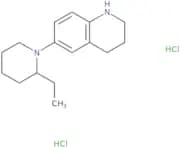
6-(2-Ethylpiperidin-1-yl)-1,2,3,4-tetrahydroquinoline dihydrochloride
CAS:Versatile small molecule scaffoldFormula:C16H26Cl2N2Purezza:Min. 95%Peso molecolare:317.3 g/molMethyl[1-(4-methylphenyl)butan-2-yl]amine
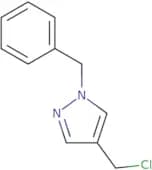
CAS:Prodotto controllatoVersatile small molecule scaffoldFormula:C12H19NPurezza:Min. 95%Peso molecolare:177.29 g/mol1-Benzyl-4-(chloromethyl)-1H-pyrazole
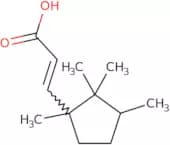
CAS:Prodotto controllatoVersatile small molecule scaffoldFormula:C11H11ClN2Purezza:Min. 95%Peso molecolare:206.67 g/mol3-(1,2,2,3-Tetramethylcyclopentyl)prop-2-enoic acid
CAS:Versatile small molecule scaffold
Formula:C12H20O2Purezza:Min. 95%Peso molecolare:196.29 g/mol4-[(4-Methylpyrimidin-2-yl)oxy]aniline
CAS:Versatile small molecule scaffold
Formula:C11H11N3OPurezza:Min. 95%Peso molecolare:201.22 g/mol1-(1-Methylpiperidin-4-yl)-1H-pyrazol-4-amine hydrochloride
CAS:Versatile small molecule scaffold
Formula:C9H17ClN4Purezza:Min. 95%Peso molecolare:216.71 g/mol1-(3-Methoxyphenyl)-2-methylpropan-2-amine
CAS:Prodotto controllatoVersatile small molecule scaffold
Formula:C11H17NOPurezza:Min. 95%Peso molecolare:179.26 g/mol5-Amino-1-methyl-1,2,3,4-tetrahydropyrimidine-2,4-dione
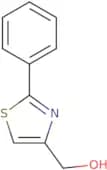
CAS:Versatile small molecule scaffoldFormula:C5H7N3O2Purezza:Min. 95%Peso molecolare:141.13 g/mol4-(Hydroxymethyl)-2-phenyl-1,3-thiazole
CAS:4-(Hydroxymethyl)-2-phenyl-1,3-thiazole is a versatile compound that has various applications in research and chemical synthesis. It is commonly used as a building block for the synthesis of organic compounds, including antibodies and research chemicals. This compound has been found to exhibit potent antiangiogenic properties, making it valuable in the field of cancer research. Additionally, 4-(Hydroxymethyl)-2-phenyl-1,3-thiazole can be used as a precursor in the synthesis of important pharmaceuticals such as cephalosporins and taxol. Its unique structure allows for diverse chemical reactions, making it an essential tool for chemists and researchers alike. Whether you're working on developing new drugs or exploring novel chemical reactions, 4-(Hydroxymethyl)-2-phenyl-1,3-thiazole is an indispensable compound that will help drive your scientific endeavors forward.
Formula:C10H9NOSPurezza:Min. 95%Peso molecolare:191.25 g/mol(2S)-2-Amino-4-(aminooxy)butanoic acid dihydrochloride
CAS:Versatile small molecule scaffold
Formula:C4H12Cl2N2O3Purezza:Min. 95%Peso molecolare:207.1 g/mol2-isopropyltetrahydro-4H-pyran-4-one
CAS:Versatile small molecule scaffoldFormula:C8H14O2Purezza:Min. 95%Peso molecolare:142.19 g/molEthyl 3-{bicyclo[2.2.1]heptan-2-yl}propanoate
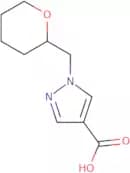
CAS:Versatile small molecule scaffoldFormula:C12H20O2Purezza:Min. 95%Peso molecolare:196.29 g/mol1-((Tetrahydro-2H-pyran-2-yl)methyl)-1H-pyrazole-4-carboxylic acid
CAS:Versatile small molecule scaffold
Formula:C10H14N2O3Purezza:Min. 95%Peso molecolare:210.23 g/mol2-(2-Methyl-1,3-thiazol-4-yl)-2-oxoacetic acid
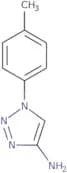
CAS:Versatile small molecule scaffoldFormula:C6H5NO3SPurezza:Min. 95%Peso molecolare:171.2 g/mol1-(4-Methylphenyl)-1H-1,2,3-triazol-4-amine
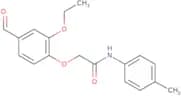
CAS:Versatile small molecule scaffoldFormula:C9H10N4Purezza:Min. 95%Peso molecolare:174.2 g/mol2-(2-Ethoxy-4-formylphenoxy)-N-(p-tolyl)acetamide
CAS:Versatile small molecule scaffold
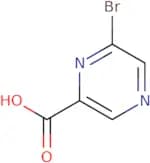
Formula:C18H19NO4Purezza:Min. 95%Peso molecolare:313.35 g/mol6-Bromopyrazine-2-carboxylic acid
CAS:Versatile small molecule scaffold
Formula:C5H3BrN2O2Purezza:Min. 95%Peso molecolare:202.99 g/mol5,5-Dimethylpyrrolidine-2-carboxylic acid hydrochloride
CAS:Versatile small molecule scaffold
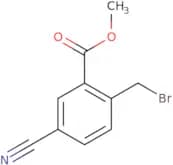
Formula:C7H14ClNO2Purezza:Min. 95%Peso molecolare:179.64 g/molMethyl 2-(bromomethyl)-5-cyanobenzoate
CAS:Versatile small molecule scaffold
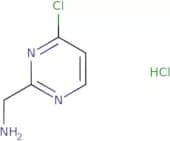
Formula:C10H8BrNO2Purezza:Min. 95%Peso molecolare:254.08 g/mol2-(Aminomethyl)-4-chloropyrimidine HCl
CAS:Versatile small molecule scaffold
Formula:C5H7Cl2N3Purezza:Min. 95%Peso molecolare:180.04 g/mol2-[(1H-Indazol-5-yl)formamido]propanoic acid
CAS:Versatile small molecule scaffoldFormula:C11H11N3O3Purezza:Min. 95%Peso molecolare:233.22 g/molrac-(3aR,6aS)-Hexahydropyrrolo[3,4-c]pyrrol-1(2H)-one hydrochloride
CAS:Versatile small molecule scaffoldFormula:C6H11ClN2OPurezza:Min. 95%Peso molecolare:162.62 g/mol2-Cyclopentyloxy-benzaldehyde
CAS:2-Cyclopentyloxy-benzaldehyde has potent inhibitory activity against inflammatory diseases. It is a chemical compound that contains an amido group and two cyclopentyloxy groups. 2-Cyclopentyloxy-benzaldehyde inhibits the activation of glycogen synthase kinase-3, which is a protein that regulates inflammation in the body. This substance can be used to inhibit the spread of HIV or viral infections by inhibiting protein synthesis in these viruses. 2-Cyclopentyloxy-benzaldehyde also has an inhibitory effect on cachexia, which is a condition characterized by weight loss, muscle wasting, and fatigue.
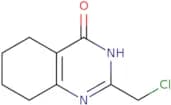
Formula:C12H14O2Purezza:Min. 95%Peso molecolare:190.24 g/mol2-(Chloromethyl)-5,6,7,8-tetrahydroquinazolin-4(3H)-one
CAS:Versatile small molecule scaffold
Formula:C9H11ClN2OPurezza:Min. 95%Peso molecolare:198.65 g/molEthyl 1-amino-1-cyclobutanecarboxylate monohydrochloride
CAS:Ethyl 1-amino-1-cyclobutanecarboxylate monohydrochloride is a cyclic carbonyl compound that is used as a building block in organic synthesis. It has been used to synthesize a number of natural products, such as piperarborenine and cyclobutanes. This compound can be synthesized by reacting ethyl chloroformate with cyclobutanecarbaldehyde in the presence of an acid or base catalyst. The steric and geometric properties of this molecule are highlighted below.
Formula:C2H5O2CC4H6NH2·HClPurezza:Min. 95%Peso molecolare:179.64 g/mol6-[3-(3-Chlorophenyl)-1,2,4-oxadiazol-5-yl]-2,3-dihydropyridazin-3-one
CAS:Versatile small molecule scaffold
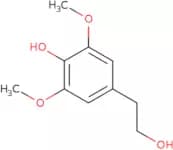
Formula:C12H7ClN4O2Purezza:Min. 95%Peso molecolare:274.66 g/mol4-(2-Hydroxyethyl)-2,6-dimethoxyphenol
CAS:Prodotto controllato4-(2-Hydroxyethyl)-2,6-dimethoxyphenol is a phenolic compound that can be extracted from the bark of the Indian tree Terminalia arjuna. The extract has been used in traditional medicine for centuries to treat diabetes and cancer. In vitro studies have shown that this extract inhibits the activity of viruses, including HIV, with a mechanism of action similar to that of indinavir. 4-(2-Hydroxyethyl)-2,6-dimethoxyphenol also has an antioxidant effect and stimulates the production of glutathione reductase and superoxide dismutase by cells in culture. 4-(2-Hydroxyethyl)-2,6-dimethoxyphenol is used as an herbal drug in India and research has found it to be hepatoprotective when administered orally to rats.
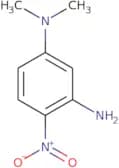
Formula:C10H14O4Purezza:Min. 95%Colore e forma:PowderPeso molecolare:198.22 g/mol3-Amino-N,N-dimethyl-4-nitroaniline
CAS:Versatile small molecule scaffold
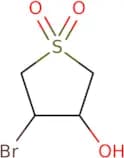
Formula:C8H11N3O2Purezza:Min. 95%Peso molecolare:181.19 g/mol(3R,4S)-rel-4-Bromotetrahydro-thiophene-3-ol 1,1-dioxide
CAS:Versatile small molecule scaffoldFormula:C4H7BrO3SPurezza:Min. 95%Peso molecolare:215.07 g/mol2-Methyl-3-[2-(morpholin-4-yl)ethoxy]phenol
CAS:Versatile small molecule scaffold
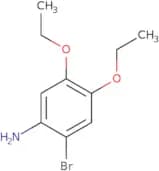
Formula:C13H19NO3Purezza:Min. 95%Peso molecolare:237.29 g/mol2-Bromo-4,5-diethoxyaniline
CAS:Versatile small molecule scaffold
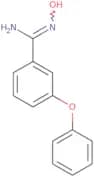
Formula:C10H14BrNO2Purezza:Min. 95%Peso molecolare:260.13 g/molN'-Hydroxy-3-phenoxybenzene-1-carboximidamide
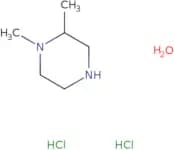
CAS:Versatile small molecule scaffoldFormula:C13H12N2O2Purezza:Min. 95%Peso molecolare:228.25 g/mol1,2-Dimethylpiperazine dihydrochloride
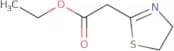
CAS:Versatile small molecule scaffoldFormula:C6H16Cl2N2Purezza:Min. 95%Peso molecolare:187.11 g/molEthyl 2-(4,5-dihydro-1,3-thiazol-2-yl)acetate
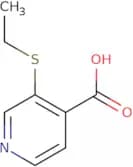
CAS:Versatile small molecule scaffoldFormula:C7H11NO2SPurezza:Min. 95%Peso molecolare:173.24 g/mol3-(Ethylsulfanyl)pyridine-4-carboxylic acid
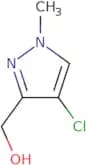
CAS:Versatile small molecule scaffoldFormula:C8H9NO2SPurezza:Min. 95%Peso molecolare:183.23 g/mol(4-Chloro-1-methyl-1H-pyrazol-3-yl)methanol
CAS:Versatile small molecule scaffold
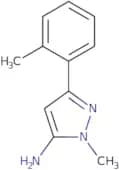
Formula:C5H7ClN2OPurezza:Min. 95%Peso molecolare:146.57 g/mol2-Methyl-5-(2-methylphenyl)pyrazol-3-amine
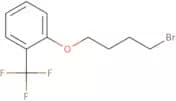
CAS:Versatile small molecule scaffoldFormula:C11H13N3Purezza:Min. 95%Peso molecolare:187.25 g/mol1-(4-Bromobutoxy)-2-(trifluoromethyl)benzene
CAS:Versatile small molecule scaffold
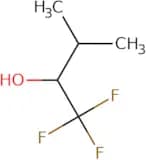
Formula:C11H12BrF3OPurezza:Min. 95%Peso molecolare:297.11 g/mol1,1,1-Trifluoro-3-methylbutan-2-ol
CAS:Versatile small molecule scaffold
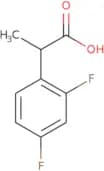
Formula:C5H9F3OPurezza:Min. 95%Peso molecolare:142.12 g/mol2-(2,4-Difluorophenyl)propanoic acid
CAS:Versatile small molecule scaffold
Formula:C9H8F2O2Purezza:Min. 95%Peso molecolare:186.15 g/mol4-[2-(4-Iodophenyl)ethyl]morpholine
CAS:Versatile small molecule scaffold
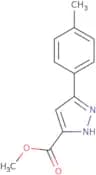
Formula:C12H16INOPurezza:Min. 95%Peso molecolare:317.17 g/molMethyl 3-p-tolyl-1H-pyrazole-5-carboxylate
CAS:Versatile small molecule scaffold
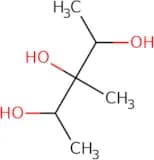
Formula:C12H12N2O2Purezza:Min. 95%Peso molecolare:216.24 g/mol3-Methylpentane-2,3,4-triol
CAS:Versatile small molecule scaffold
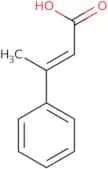
Formula:C6H14O3Purezza:Min. 95%Peso molecolare:134.17 g/mol3-Phenylbut-2-enoic acid
CAS:3-Phenylbut-2-enoic acid is a prochiral, carbonyl compound that can be used in the synthesis of chiral pharmaceuticals. Mechanistic studies have shown that 3-phenylbut-2-enoic acid is a catalytic hydrogenation reagent that converts prochiral substrates to their corresponding chiral products. When combined with binap and butenoic acid, 3-phenylbut-2-enoic acid can catalyze the asymmetric synthesis of butenoate. The reaction yields high enantiomeric excesses and good yields.
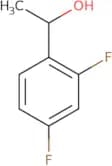
Formula:C10H10O2Purezza:Min. 95%Peso molecolare:162.19 g/mol(1R)-1-(2,4-Difluorophenyl)ethan-1-ol
CAS:Versatile small molecule scaffold
Formula:C8H8F2OPurezza:Min. 95%Peso molecolare:158.14 g/mol1-Benzothiophene-5-carbonitrile
CAS:1-Benzothiophene-5-carbonitrile is a heterocyclic compound that is formed by condensation of ethyl azidoacetate with indole under catalysis. It can be used in the synthesis of heterocycles. The yield of 1-benzothiophene-5-carbonitrile is about 56%.
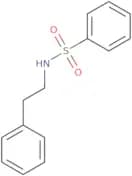
Formula:C9H5NSPurezza:Min. 95%Peso molecolare:159.21 g/molN-(2-Phenylethyl)benzenesulfonamide
CAS:N-(2-Phenylethyl)benzenesulfonamide is a biodegradable and aerobic catalyst that is used in the production of nitrates. It can be recycled and has a high solubility, which allows for efficient extraction from wastewater effluents. The reactor system can be operated at an aerobic or anaerobic conditions. N-(2-Phenylethyl)benzenesulfonamide is soluble in water and can be hydrolyzed by acids or bases to release ammonia gas. The process can also be sustainable due to the use of renewable energy sources such as solar, wind, tidal, or biomass power.
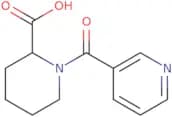
Formula:C14H15NO2SPurezza:Min. 95%Peso molecolare:261.34 g/mol1-(Pyridine-3-carbonyl)piperidine-2-carboxylic acid
CAS:Versatile small molecule scaffold
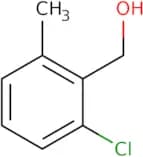
Formula:C12H14N2O3Purezza:Min. 95%Peso molecolare:234.25 g/mol(2-Chloro-6-methylphenyl)methanol
CAS:Versatile small molecule scaffold
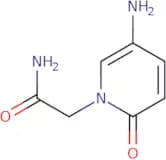
Formula:C8H9ClOPurezza:Min. 95%Peso molecolare:156.61 g/mol2-(5-Amino-2-oxo-1,2-dihydropyridin-1-yl)acetamide
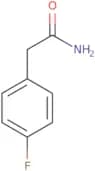
CAS:Versatile small molecule scaffoldFormula:C7H9N3O2Purezza:Min. 95%Peso molecolare:167.17 g/mol2-(4-Fluorophenyl)acetamide
CAS:2-(4-Fluorophenyl)acetamide (FFAA) is a broad-spectrum antiviral drug that has been evaluated against picornavirus, enterovirus, and rhinovirus. FFAA has been shown to be effective in the treatment of acute enterovirus infections in mice. This compound was also found to have a cytopathic effect on cells infected with enteroviruses in culture. It binds to the virus's RNA-dependent RNA polymerase and prevents viral replication. FFAA is not active against influenza A or B viruses, but it is active against influenza C virus. This compound has also been found to have medicinal properties, as it can inhibit the growth of human lung cancer cells in culture and may be useful for treating cancers such as leukemia.
Formula:C8H8FNOPurezza:Min. 95%Peso molecolare:153.15 g/mol3-Chloro-N-[2-(4-methyl-1,3-thiazol-5-yl)-2-oxoethyl]propanamide
CAS:Versatile small molecule scaffoldFormula:C9H11ClN2O2SPurezza:Min. 95%Peso molecolare:246.71 g/mol1-[(3-Aminophenyl)methyl]piperidin-4-ol
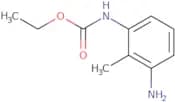
CAS:Versatile small molecule scaffoldFormula:C12H18N2OPurezza:Min. 95%Peso molecolare:206.28 g/molEthyl N-(3-amino-2-methylphenyl)carbamate
CAS:Versatile small molecule scaffold
Formula:C10H14N2O2Purezza:Min. 95%Peso molecolare:194.23 g/mol[2-(Propan-2-yloxy)pyridin-4-yl]methanamine
CAS:Versatile small molecule scaffold
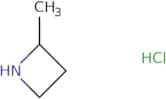
Formula:C9H14N2OPurezza:Min. 95%Peso molecolare:166.22 g/mol2-Methylazetidine hydrochloride
CAS:Versatile small molecule scaffold
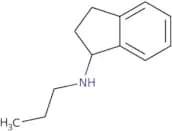
Formula:C4H10ClNPurezza:Min. 95%Peso molecolare:107.58 g/molN-Propyl-2,3-dihydro-1H-inden-1-amine
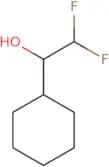
CAS:Prodotto controllatoVersatile small molecule scaffoldFormula:C12H17NPurezza:Min. 95%Peso molecolare:175.27 g/mol1-Cyclohexyl-2,2-difluoroethan-1-ol
CAS:Versatile small molecule scaffold
Formula:C8H14F2OPurezza:Min. 95%Peso molecolare:164.19 g/mol3-Bromo-5-chloro-1H-pyrrolo[2,3-b]pyridine
CAS:Versatile small molecule scaffoldFormula:C7H4BrClN2Purezza:Min. 95%Peso molecolare:231.48 g/molrac-(1S,3R)-3-Butylcyclobutan-1-ol
CAS:Versatile small molecule scaffold
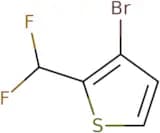
Formula:C8H16OPurezza:Min. 95%Peso molecolare:128.2 g/mol3-Bromo-2-(difluoromethyl)thiophene
CAS:Versatile small molecule scaffold
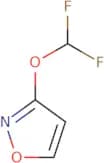
Formula:C5H3BrF2SPurezza:Min. 95%Peso molecolare:213.04 g/mol3-(Difluoromethoxy)-1,2-oxazole
CAS:Versatile small molecule scaffold
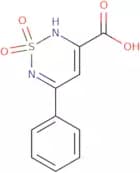
Formula:C4H3F2NO2Purezza:Min. 95%Peso molecolare:135.07 g/mol1,1-Dioxo-5-phenyl-2H-1,2,6-thiadiazine-3-carboxylic acid
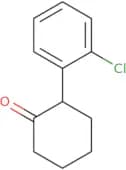
CAS:Versatile small molecule scaffoldFormula:C10H8N2O4SPurezza:Min. 95%Peso molecolare:252.25 g/mol2-(2-Chlorophenyl)cyclohexan-1-one
CAS:Versatile small molecule scaffold
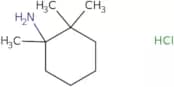
Formula:C12H13ClOPurezza:Min. 95%Peso molecolare:208.68 g/mol1,2,2-Trimethylcyclohexan-1-amine hydrochloride
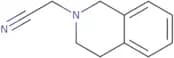
CAS:Versatile small molecule scaffoldFormula:C9H20ClNPurezza:Min. 95%Peso molecolare:177.71 g/mol2-(1,2,3,4-Tetrahydroisoquinolin-2-yl)acetonitrile
CAS:Versatile small molecule scaffoldFormula:C11H12N2Purezza:Min. 95%Peso molecolare:172.23 g/mol3-(4-Acetylphenoxy)propanoic acid
CAS:Versatile small molecule scaffold
Formula:C11H12O4Purezza:Min. 95%Peso molecolare:208.21 g/mol3-Hydroxy-5-methylpyridine
CAS:3-Hydroxy-5-methylpyridine (3HMP) is a chemical substance that has been classified as an amine. It is a product of the metabolism of purines, which are nitrogenous bases found in DNA and RNA. 3HMP is produced by aerogenic bacteria (such as Enterobacter), and can be used to estimate the number of these bacteria present in water samples. 3HMP has been shown to have antiviral properties against influenza virus, and can be used as a biomarker for the presence of other viruses in animals. 3HMP also has mineralization properties, which have been studied extensively, particularly with regards to pancreatic disease.
Formula:C6H7NOPurezza:Min. 95%Colore e forma:PowderPeso molecolare:109.13 g/molRef: 3D-FH16174
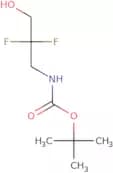
Prodotto fuori produzionetert-Butyl (2,2-difluoro-3-hydroxypropyl)carbamate
CAS:Versatile small molecule scaffoldFormula:C10H13NO4Purezza:Min. 95%Peso molecolare:211.21 g/mol2-Bromo-3,3,3-trifluoro-1-propene
CAS:Prodotto controllato2-Bromo-3,3,3-trifluoro-1-propene is a chemical compound that has been synthesized in an asymmetric reaction. The reactant is bromopropane and the product is 2,2,2-trifluoropropene. The methylene group on the propene molecule is activated by the nucleophilic attack of a fluoride ion from hydrogen fluoride to form a cavity with a highly strained bond. The kinetic study of this reaction revealed that the activation energy for the reaction is 42 kJ/mol. Palladium-catalyzed coupling reactions are catalyzed by palladium and require nonpolar solvents such as toluene or dichloromethane. This type of reaction has been shown to be exothermic with an isolated yield of 1%.
Formula:C3H2BrF3Purezza:Min. 95%Colore e forma:Colorless PowderPeso molecolare:174.95 g/mol1-Hydroxycyclopentane-1-carbonitrile
CAS:1-Hydroxycyclopentane-1-carbonitrile is a monomer that is hydrolyzed to form benzoin and cyanohydrins. It can be used in the production of scifinder as a monomer or dimerizer.
Formula:C6H9NOPurezza:Min. 95%Peso molecolare:111.14 g/mol8-Bromo-2-methylimidazo[1,2-a]pyridine
CAS:Versatile small molecule scaffold
Formula:C8H7N2BrPurezza:Min. 95%Peso molecolare:211.05 g/mol4,5-Dihydro-1H-imidazol-2-amine hydrochloride
CAS:Please enquire for more information about 4,5-Dihydro-1H-imidazol-2-amine hydrochloride including the price, delivery time and more detailed product information at the technical inquiry form on this page
Formula:C3H7N3•HClPurezza:Min. 95%Peso molecolare:121.57 g/mol4-Chloro-2-hydroxy-6-methylphenylboronic acid
CAS:Versatile small molecule scaffoldFormula:C7H8BClO3Purezza:Min. 95%Peso molecolare:186.4 g/mol4,5-Dihydroxy-2,3-Pentanedione
CAS:4,5-Dihydroxy-2,3-pentanedione is a carbonyl compound that is the product of the oxidation of ascorbic acid. It is used in wastewater treatment and has antimicrobial properties against infectious diseases. This compound has been shown to inhibit protein synthesis by binding to the ribosome and preventing the formation of peptide bonds between amino acids. 4,5-Dihydroxy-2,3-pentanedione has also been shown to bind to plasma proteins, which may be due to its acyl chain structure. 4,5-Dihydroxy-2,3-pentanedione can be synthesized in a catalytic mechanism that involves dehydroascorbic acid and molecular oxygen.
Formula:C5H8O4Purezza:Min. 95%Colore e forma:PowderPeso molecolare:132.11 g/molRef: 3D-FD180770
Prodotto fuori produzionePiperyline
CAS:Piperyline is an alkanoic acid that has shown to be effective against skin cancer. It also has antimicrobial properties, which may be due to its ability to bind metal ions and form polymeric compounds. Piperyline inhibits microbial growth by inhibiting the synthesis of proteins and nucleic acids. The antimicrobial activity is related to its cationic polymerization with hydroxyl groups, which forms a structure that can inhibit microbial enzymes and disrupt microbial cell membranes. This compound also interacts with the skin's natural lipids, making it difficult for microorganisms to attach and grow on the skin. Piperyline is synthesized in organic chemistry laboratories as an amide precursor of other pharmaceuticals such as penicillin.
Formula:C16H17NO3Purezza:Min. 95%Peso molecolare:271.31 g/mol

![Methyl[1-(4-methylphenyl)butan-2-yl]amine](/_next/image/?url=https%3A%2Fstatic.cymitquimica.com%2Fproducts%2F3D%2Fthumb-webp%2FLJB19921.webp&w=3840&q=75)
![4-[(4-Methylpyrimidin-2-yl)oxy]aniline](/_next/image/?url=https%3A%2Fstatic.cymitquimica.com%2Fproducts%2F3D%2Fthumb-webp%2FZAC86467.webp&w=3840&q=75)
![Ethyl 3-{bicyclo[2.2.1]heptan-2-yl}propanoate](/_next/image/?url=https%3A%2Fstatic.cymitquimica.com%2Fproducts%2F3D%2Fthumb-webp%2FXWC12157.webp&w=3840&q=75)

![2-[(1H-Indazol-5-yl)formamido]propanoic acid](/_next/image/?url=https%3A%2Fstatic.cymitquimica.com%2Fproducts%2F3D%2Fthumb-webp%2FWFC97336.webp&w=3840&q=75)
![rac-(3aR,6aS)-Hexahydropyrrolo[3,4-c]pyrrol-1(2H)-one hydrochloride](/_next/image/?url=https%3A%2Fstatic.cymitquimica.com%2Fproducts%2F3D%2Fthumb-webp%2FVXC58134.webp&w=3840&q=75)


![6-[3-(3-Chlorophenyl)-1,2,4-oxadiazol-5-yl]-2,3-dihydropyridazin-3-one](/_next/image/?url=https%3A%2Fstatic.cymitquimica.com%2Fproducts%2F3D%2Fthumb-webp%2FVEC59761.webp&w=3840&q=75)
![2-Methyl-3-[2-(morpholin-4-yl)ethoxy]phenol](/_next/image/?url=https%3A%2Fstatic.cymitquimica.com%2Fproducts%2F3D%2Fthumb-webp%2FUTB37022.webp&w=3840&q=75)
![4-[2-(4-Iodophenyl)ethyl]morpholine](/_next/image/?url=https%3A%2Fstatic.cymitquimica.com%2Fproducts%2F3D%2Fthumb-webp%2FAEA83946.webp&w=3840&q=75)

![3-Chloro-N-[2-(4-methyl-1,3-thiazol-5-yl)-2-oxoethyl]propanamide](/_next/image/?url=https%3A%2Fstatic.cymitquimica.com%2Fproducts%2F3D%2Fthumb-webp%2FCHC38015.webp&w=3840&q=75)
![1-[(3-Aminophenyl)methyl]piperidin-4-ol](/_next/image/?url=https%3A%2Fstatic.cymitquimica.com%2Fproducts%2F3D%2Fthumb-webp%2FRQB75784.webp&w=3840&q=75)
![[2-(Propan-2-yloxy)pyridin-4-yl]methanamine](/_next/image/?url=https%3A%2Fstatic.cymitquimica.com%2Fproducts%2F3D%2Fthumb-webp%2FRQB75274.webp&w=3840&q=75)
![3-Bromo-5-chloro-1H-pyrrolo[2,3-b]pyridine](/_next/image/?url=https%3A%2Fstatic.cymitquimica.com%2Fproducts%2F3D%2Fthumb-webp%2FRJB54609.webp&w=3840&q=75)




![8-Bromo-2-methylimidazo[1,2-a]pyridine](/_next/image/?url=https%3A%2Fstatic.cymitquimica.com%2Fproducts%2F3D%2Fthumb-webp%2FUXB37475.webp&w=3840&q=75)