


Building Blocks
Sottocategorie di "Building Blocks"
- Acidi boronici e derivati dell'acido boronico(5.778 prodotti)
- Building Blocks Chirali(1.243 prodotti)
- Building Blocks Idrocarburici(6.099 prodotti)
- Building Blocks organici(61.038 prodotti)
Trovati 205376 prodotti di "Building Blocks"
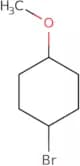
1-Bromo-4-methoxycyclohexane
CAS:Versatile small molecule scaffold
Formula:C7H13BrOPurezza:Min. 95%Peso molecolare:193.08 g/mol(1S)-1-(Oxan-4-yl)ethan-1-ol
CAS:Versatile small molecule scaffold
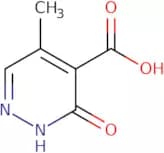
Formula:C7H14O2Purezza:Min. 95%Peso molecolare:130.18 g/mol2,3-Dihydro-5-methyl-3-oxopyridazine-4-carboxylic acid
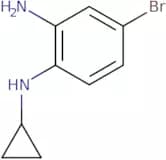
CAS:Versatile small molecule scaffoldFormula:C6H6N2O3Purezza:Min. 95%Peso molecolare:154.12 g/mol4-Bromo-1-N-cyclopropylbenzene-1,2-diamine
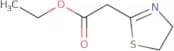
CAS:Versatile small molecule scaffoldFormula:C9H11BrN2Purezza:Min. 95%Peso molecolare:227.1 g/molEthyl 2-(4,5-dihydro-1,3-thiazol-2-yl)acetate
CAS:Versatile small molecule scaffoldFormula:C7H11NO2SPurezza:Min. 95%Peso molecolare:173.24 g/mol2-{Imidazo[1,2-a]pyridin-2-yl}-1H-imidazole
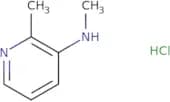
CAS:Versatile small molecule scaffoldFormula:C10H8N4Purezza:Min. 95%Peso molecolare:184.2 g/molN,2-Dimethylpyridin-3-amine hydrochloride
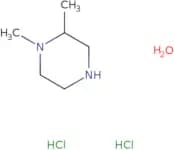
CAS:Versatile small molecule scaffoldFormula:C7H11ClN2Purezza:Min. 95%Peso molecolare:158.63 g/mol1,2-Dimethylpiperazine dihydrochloride
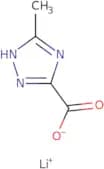
CAS:Versatile small molecule scaffoldFormula:C6H16Cl2N2Purezza:Min. 95%Peso molecolare:187.11 g/molLithium 5-methyl-1H-1,2,4-triazole-3-carboxylate
CAS:Versatile small molecule scaffold
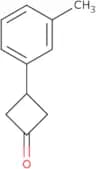
Formula:C4H4LiN3O2Purezza:Min. 95%Peso molecolare:133.1 g/mol3-(3-Methylphenyl)cyclobutan-1-one
CAS:Versatile small molecule scaffold
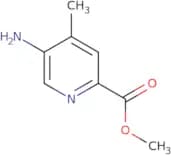
Formula:C11H12OPurezza:Min. 95%Peso molecolare:160.21 g/molmethyl 5-amino-4-methylpyridine-2-carboxylate
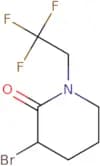
CAS:Versatile small molecule scaffoldFormula:C8H10N2O2Purezza:Min. 95%Peso molecolare:166.18 g/mol3-Bromo-1-(2,2,2-trifluoroethyl)piperidin-2-one
CAS:Versatile small molecule scaffold
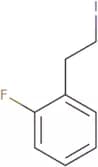
Formula:C7H9BrF3NOPurezza:Min. 95%Peso molecolare:260.05 g/mol1-Fluoro-2-(2-iodoethyl)benzene
CAS:Versatile small molecule scaffold
Formula:C8H8FIPurezza:Min. 95%Peso molecolare:250.05 g/mol7-Oxa-1-azaspiro[3.5]nonan-2-one
CAS:Versatile small molecule scaffold
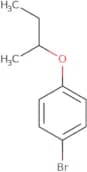
Formula:C7H11NO2Purezza:Min. 95%Peso molecolare:141.17 g/mol1-Bromo-4-(butan-2-yloxy)benzene
CAS:Versatile small molecule scaffold
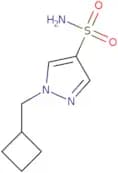
Formula:C10H13BrOPurezza:Min. 95%Peso molecolare:229.11 g/mol1-(Cyclobutylmethyl)-1H-pyrazole-4-sulfonamide
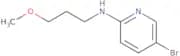
CAS:Versatile small molecule scaffoldFormula:C8H13N3O2SPurezza:Min. 95%Peso molecolare:215.28 g/mol5-Bromo-N-(3-methoxypropyl)pyridin-2-amine
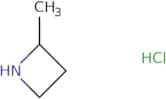
CAS:Versatile small molecule scaffoldFormula:C9H13BrN2OPurezza:Min. 95%Peso molecolare:245.12 g/mol2-Methylazetidine hydrochloride
CAS:Versatile small molecule scaffold
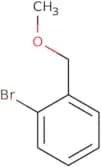
Formula:C4H10ClNPurezza:Min. 95%Peso molecolare:107.58 g/mol1-Bromo-2-(methoxymethyl)benzene
CAS:1-Bromo-2-(methoxymethyl)benzene is a boronic acid that is used in the synthesis of palladium complexes. It is synthesized by reacting 1-bromobenzene with methanol and methoxymethyl chloride. The 1-bromo-2-(methoxymethyl)benzene has been used as a ligand for palladium complexes, which are often used to catalyze organic reactions, such as the metathesis reaction. Synthetic methods have been developed to produce the compound and NMR spectra have been obtained to provide kinetic data on these reactions.
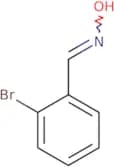
Formula:C8H9BrOPurezza:Min. 95%Peso molecolare:201.06 g/mol2-Bromobenzaldoxime
CAS:2-Bromobenzaldoxime is a biologically active molecule that has been shown to have significant physiological activities. It is an aldehyde, which is metabolized by the liver or kidneys into the corresponding alcohol, 2-bromoethanol. 2-Bromobenzaldoxime has been shown to be synthesized from diethyl ether and potassium phosphate in the presence of amino acids. The reaction proceeds with dehydration of the intermediate bromohydrin to form an aldoxime. This molecule can be used as a pharmaceutical drug for various diseases such as diabetes mellitus, hypertension, and inflammation.
Formula:C7H6BrNOPurezza:Min. 95%Peso molecolare:200.03 g/mol1-Benzothiophene-5-carbonitrile
CAS:1-Benzothiophene-5-carbonitrile is a heterocyclic compound that is formed by condensation of ethyl azidoacetate with indole under catalysis. It can be used in the synthesis of heterocycles. The yield of 1-benzothiophene-5-carbonitrile is about 56%.
Formula:C9H5NSPurezza:Min. 95%Peso molecolare:159.21 g/mol2-Cyclopropylbenzaldehyde
CAS:Versatile small molecule scaffold
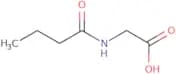
Formula:C10H10OPurezza:Min. 95%Peso molecolare:146.19 g/moln-Butyrylglycine
CAS:n-Butyrylglycine is a compound that was first identified in human urine as a metabolite of the amino acid glycine. It is an intermediate in the conversion of glycine to succinic acid, which is required for the production of energy in mitochondria. Deficiency of this enzyme causes mitochondrial dysfunction and leads to various metabolic disorders including fatty acid oxidation disorders and homocysteine metabolism defects. n-Butyrylglycine can be detected by gas chromatography or liquid chromatography with mass spectrometry detection.
Formula:C6H11NO3Purezza:Min. 95%Peso molecolare:145.16 g/mol6-[3-(3-Chlorophenyl)-1,2,4-oxadiazol-5-yl]-2,3-dihydropyridazin-3-one
CAS:Versatile small molecule scaffold
Formula:C12H7ClN4O2Purezza:Min. 95%Peso molecolare:274.66 g/mol6-Bromoimidazo[2,1-b][1,3]thiazole
CAS:Versatile small molecule scaffold
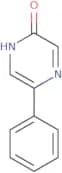
Formula:C5H3BrN2SPurezza:Min. 95%Peso molecolare:203.06 g/mol5-Phenyl-1H-pyrazin-2-one
CAS:5-Phenyl-1H-pyrazin-2-one is a potent inhibitor of tyrosine kinase, which is an enzyme that regulates the activity of cells by transferring phosphate groups from ATP to tyrosine residues. This drug binds to the ATP binding site, resulting in inhibition of the enzyme's activity and reduced cell proliferation. 5-Phenyl-1H-pyrazin-2-one has been shown to be effective in treating rheumatoid arthritis and other autoimmune diseases, with no adverse effects on bone metabolism or blood pressure. It also has no effect on platelet aggregation or erythrocytes.
Formula:C10H8N2OPurezza:Min. 95%Peso molecolare:172.18 g/molEthyl 1-amino-1-cyclobutanecarboxylate monohydrochloride
CAS:Ethyl 1-amino-1-cyclobutanecarboxylate monohydrochloride is a cyclic carbonyl compound that is used as a building block in organic synthesis. It has been used to synthesize a number of natural products, such as piperarborenine and cyclobutanes. This compound can be synthesized by reacting ethyl chloroformate with cyclobutanecarbaldehyde in the presence of an acid or base catalyst. The steric and geometric properties of this molecule are highlighted below.
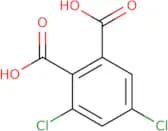
Formula:C2H5O2CC4H6NH2·HClPurezza:Min. 95%Peso molecolare:179.64 g/mol3,5-Dichlorophthalic acid
CAS:3,5-Dichlorophthalic acid is a divalent organic acid that is used as an intermediate in the production of other chemicals. 3,5-Dichlorophthalic acid is used as a regulator of plant growth and development. It can also be used to make different n-substituted compounds, such as naphthalene, phthalic anhydride, and 2,6-dichloro-pyridine.
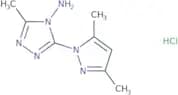
Formula:C8H4Cl2O4Purezza:Min. 95%Peso molecolare:235.02 g/mol3-(3,5-Dimethyl-1H-pyrazol-1-yl)-5-methyl-4H-1,2,4-triazol-4-amine hydrochloride
CAS:Versatile small molecule scaffold
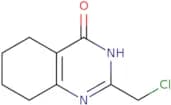
Formula:C8H13ClN6Purezza:Min. 95%Peso molecolare:228.68 g/mol2-(Chloromethyl)-5,6,7,8-tetrahydroquinazolin-4(3H)-one
CAS:Versatile small molecule scaffold
Formula:C9H11ClN2OPurezza:Min. 95%Peso molecolare:198.65 g/mol2-Cyclopentyloxy-benzaldehyde
CAS:2-Cyclopentyloxy-benzaldehyde has potent inhibitory activity against inflammatory diseases. It is a chemical compound that contains an amido group and two cyclopentyloxy groups. 2-Cyclopentyloxy-benzaldehyde inhibits the activation of glycogen synthase kinase-3, which is a protein that regulates inflammation in the body. This substance can be used to inhibit the spread of HIV or viral infections by inhibiting protein synthesis in these viruses. 2-Cyclopentyloxy-benzaldehyde also has an inhibitory effect on cachexia, which is a condition characterized by weight loss, muscle wasting, and fatigue.
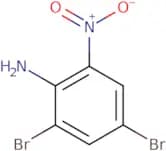
Formula:C12H14O2Purezza:Min. 95%Peso molecolare:190.24 g/mol2,4-Dibromo-6-nitroaniline
CAS:2,4-Dibromo-6-nitroaniline is a nitro compound that has been used in the production of dyes. It is also used as a component in the synthesis of other organic compounds. 2,4-Dibromo-6-nitroaniline can be produced by electrolysis of an acid solution containing radical cations and benzene. The radical cations are formed by proton transfer from the acid to the benzene, followed by electron transfer from benzene to the electrode. This process results in the formation of nitro groups on the benzene ring, which undergoes oxidation to form 2,4-dibromo-6-nitroaniline. The cyclic voltammetry shows that this process occurs via two pathways: one with a fast rate and one with a slow rate. The mechanism for this reaction is not yet known.
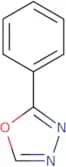
Formula:C6H4Br2N2O2Purezza:Min. 95%Peso molecolare:295.92 g/mol2-Phenyl-1,3,4-oxadiazole
CAS:2-Phenyl-1,3,4-oxadiazole is a 2-phenyloxazole with an oxygen atom at the 1 position. It is a white crystalline solid that is soluble in water and has antibacterial properties. This chemical can be used as a catalyst for the synthesis of organic compounds. 2-Phenyl-1,3,4-oxadiazole reacts with nitro groups to form oxime derivatives and has been shown to inhibit the growth of fungi such as Candida albicans and Aspergillus niger. 2-Phenyl-1,3,4-oxadiazole can also be used as an antifungal agent against Trichophyton rubrum.
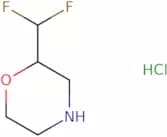
2-Phenyl-1,3,4-oxadiazole may be synthesized by reacting phenol with acetone in the presence of nitric acid or sulfuric acid. The structural formula for this compound isFormula:C8H6N2OPurezza:Min. 95%Peso molecolare:146.15 g/mol2-(Difluoromethyl)morpholine hydrochloride
CAS:Versatile small molecule scaffoldFormula:C5H10ClF2NOPurezza:Min. 95%Peso molecolare:173.59 g/molMethyl 2-Octynoate
CAS:Methyl 2-octynoate is a chemical that has been shown to bind to the nicotinic acetylcholine receptor. Methyl 2-octynoate has been shown to have antitumor activity in various types of cancer cells, including breast, prostate, and lung cancer cells. This chemical is not known to be chemically stable or film-forming. It also disrupts mitochondrial membrane potential and reduces the endpoints of oxidative phosphorylation. Methyl 2-octynoate was found to have low potency against cancer cells in vitro and in vivo.
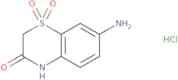
Formula:C9H14O2Purezza:Min. 95%Peso molecolare:154.21 g/mol7-amino-2H-1,4-benzothiazin-3(4H)-one 1,1-dioxide hydrochloride
CAS:Versatile small molecule scaffold
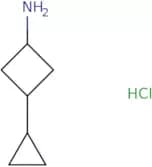
Formula:C8H9ClN2O3SPurezza:Min. 95%Peso molecolare:248.69 g/mol3-Cyclopropylcyclobutan-1-amine hydrochloride, somers
CAS:Versatile small molecule scaffold
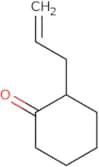
Formula:C7H14ClNPurezza:Min. 95%Peso molecolare:147.64 g/mol2-Allylcyclohexanone
CAS:2-Allylcyclohexanone is an unsaturated ketone that is synthesized by the ring-opening of allyl cyclohexane carboxylate with sodium hydroxide. It can be used as a chemical intermediate for the synthesis of other compounds. 2-Allylcyclohexanone can also be used to react with hydroxide solution to produce a salt and an alcohol. The hydroxide solution can act as a base, reducing the carbonyl group in the presence of an acid to form the corresponding alcohol. This reaction is stereoselective because it only occurs when there are two different groups on adjacent carbons.
2-Allylcyclohexanone has been shown to inhibit non-nucleoside reverse transcriptase inhibitors (NNRTIs) such as nevirapine, efavirenz, and delavirdine. In addition, it has been found to have functional groups that are capable of reactingFormula:C9H14OPurezza:Min. 95%Peso molecolare:138.21 g/mol(4-Hydroxy-5-methoxypent-1-yn-1-yl)trimethylsilane
CAS:Versatile small molecule scaffoldFormula:C9H18O2SiPurezza:Min. 95%Peso molecolare:186.32 g/mol(1,2-Thiazol-5-yl)methanamine hydrochloride
CAS:Versatile small molecule scaffold
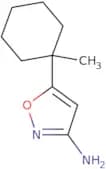
Formula:C4H7ClN2SPurezza:Min. 95%Peso molecolare:150.63 g/mol5-(1-Methylcyclohexyl)-1,2-oxazol-3-amine
CAS:Versatile small molecule scaffoldFormula:C10H16N2OPurezza:Min. 95%Peso molecolare:180.2 g/mol5-Methyl-2-[(2,2,2-trifluoroethyl)sulfanyl]aniline
CAS:Versatile small molecule scaffold
Formula:C9H10F3NSPurezza:Min. 95%Peso molecolare:221.24 g/moltert-Butyl 8-oxa-4-azabicyclo[5.1.0]octane-4-carboxylate
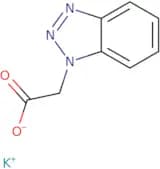
CAS:Versatile small molecule scaffoldFormula:C11H19NO3Purezza:Min. 95%Peso molecolare:213.27 g/molPotassium 2-(1H-1,2,3-benzotriazol-1-yl)acetate
CAS:Versatile small molecule scaffold
Formula:C8H6KN3O2Purezza:Min. 95%Peso molecolare:215.25 g/mol2'-[(tert-Butoxy)carbonyl]-2',3'-dihydro-1'H-spiro[cyclopropane-1,4'-isoquinoline]-1'-carboxylic acid
CAS:Versatile small molecule scaffoldFormula:C17H21NO4Purezza:Min. 95%Peso molecolare:303.4 g/mol4-(Aminomethyl)-N-(2-methoxyethyl)aniline
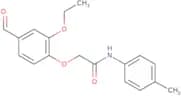
CAS:Versatile small molecule scaffoldFormula:C10H16N2OPurezza:Min. 95%Peso molecolare:180.25 g/mol2-(2-Ethoxy-4-formylphenoxy)-N-(p-tolyl)acetamide
CAS:Versatile small molecule scaffold
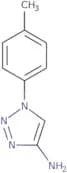
Formula:C18H19NO4Purezza:Min. 95%Peso molecolare:313.35 g/mol1-(4-Methylphenyl)-1H-1,2,3-triazol-4-amine
CAS:Versatile small molecule scaffoldFormula:C9H10N4Purezza:Min. 95%Peso molecolare:174.2 g/mol2-(2-Methyl-1,3-thiazol-4-yl)-2-oxoacetic acid
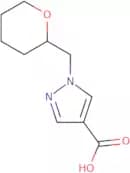
CAS:Versatile small molecule scaffoldFormula:C6H5NO3SPurezza:Min. 95%Peso molecolare:171.2 g/mol1-((Tetrahydro-2H-pyran-2-yl)methyl)-1H-pyrazole-4-carboxylic acid
CAS:Versatile small molecule scaffold
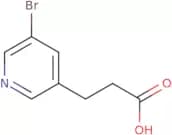
Formula:C10H14N2O3Purezza:Min. 95%Peso molecolare:210.23 g/mol3-(5-Bromopyridin-3-yl)propanoic acid
CAS:Versatile small molecule scaffold
Formula:C8H8BrNO2Purezza:Min. 95%Peso molecolare:230.06 g/molEthyl 3-{bicyclo[2.2.1]heptan-2-yl}propanoate
CAS:Versatile small molecule scaffoldFormula:C12H20O2Purezza:Min. 95%Peso molecolare:196.29 g/mol2-[(3,5-Dimethylphenyl)formamido]acetic acid
CAS:2-[(3,5-Dimethylphenyl)formamido]acetic acid is a compound with diverse applications and characteristics. It is a diphenyl ether that can be used as an electrode material in various electronic devices. Additionally, it has cholinergic properties, meaning it affects the neurotransmitter acetylcholine in the nervous system.
Formula:C11H13NO3Purezza:Min. 95%Peso molecolare:207.23 g/mol1-(4-{[4-(Ethylamino)pyridin-2-yl]methyl}piperazin-1-yl)ethan-1-one
CAS:Versatile small molecule scaffold
Formula:C14H22N4OPurezza:Min. 95%Peso molecolare:262.35 g/mol4-(4H-1,2,4-Triazol-3-ylmethyl)benzoic acid
CAS:Versatile small molecule scaffold
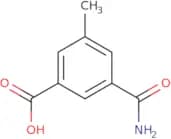
Formula:C10H9N3O2Purezza:Min. 95%Peso molecolare:203.2 g/mol3-Carbamoyl-5-methylbenzoic acid
CAS:Versatile small molecule scaffold
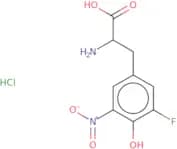
Formula:C9H9NO3Purezza:Min. 95%Peso molecolare:179.17 g/mol2-Amino-3-(3-fluoro-4-hydroxy-5-nitrophenyl)propanoic acid hydrochloride
CAS:Versatile small molecule scaffold
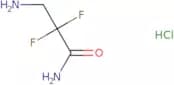
Formula:C9H10ClFN2O5Purezza:Min. 95%Peso molecolare:280.6 g/mol3-Amino-2,2-difluoropropanamide hydrochloride
CAS:Versatile small molecule scaffold
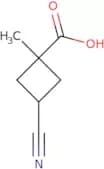
Formula:C3H7ClF2N2OPurezza:Min. 95%Peso molecolare:160.55 g/mol3-Cyano-1-methylcyclobutane-1-carboxylic acid
CAS:Versatile small molecule scaffoldFormula:C7H9NO2Purezza:Min. 95%Peso molecolare:139.15 g/mol2-{[(9H-Fluoren-9-yl)methoxy]carbonyl}-2-azabicyclo[2.2.2]oct-7-ene-6-carboxylic acid
CAS:Versatile small molecule scaffold
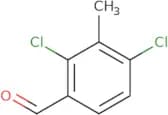
Formula:C23H21NO4Purezza:Min. 95%Peso molecolare:375.4 g/mol2,4-Dichloro-3-methylbenzaldehyde
CAS:Versatile small molecule scaffold
Formula:C8H6Cl2OPurezza:Min. 95%Peso molecolare:189.04 g/mol1-Methyl-1,7-diazaspiro[4.5]decane dihydrochloride
CAS:Versatile small molecule scaffold
Formula:C9H20Cl2N2Purezza:Min. 95%Peso molecolare:227.17 g/mol(5R)-5-(Aminomethyl)-1,3-oxazolidin-2-one HCl ee
CAS:Versatile small molecule scaffold
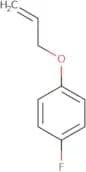
Formula:C4H9ClN2O2Purezza:Min. 95%Peso molecolare:152.58 g/mol1-Fluoro-4-(prop-2-en-1-yloxy)benzene
CAS:Versatile small molecule scaffold
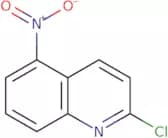
Formula:C9H9FOPurezza:Min. 95%Peso molecolare:152.16 g/mol2-Chloro-5-nitroquinoline
CAS:2-Chloro-5-nitroquinoline is an oxidized aminoquinoline that is synthesized from nitric acid and benzene. It contains a nitro group, which makes it susceptible to oxidation. 2-Chloro-5-nitroquinoline is used as a solvent for rubber, plastics, and waxes. It can also be used as a solvent in the production of quinolines and other nitrogen compounds. Nitration of this compound produces 2-chloroquinoline, which can be transformed into 2-chloroquinolinium hydroxide by reaction with sodium hydroxide. The substituent on the ortho position can be determined by oleum or bromine water.
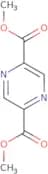
Formula:C9H5ClN2O2Purezza:Min. 95%Peso molecolare:208.6 g/molDimethyl Pyrazine-2,5-dicarboxylate
CAS:Versatile small molecule scaffold
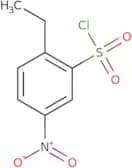
Formula:C8H8N2O4Purezza:Min. 95%Peso molecolare:196.16 g/mol2-Ethyl-5-nitrobenzene-1-sulfonyl chloride
CAS:Versatile small molecule scaffold
Formula:C8H8ClNO4SPurezza:Min. 95%Peso molecolare:249.67 g/mol4,5-Dihydro-1H-imidazol-2-amine hydrochloride
CAS:Please enquire for more information about 4,5-Dihydro-1H-imidazol-2-amine hydrochloride including the price, delivery time and more detailed product information at the technical inquiry form on this page
Formula:C3H7N3•HClPurezza:Min. 95%Peso molecolare:121.57 g/mol8-Bromo-2-methylimidazo[1,2-a]pyridine
CAS:Versatile small molecule scaffold
Formula:C8H7N2BrPurezza:Min. 95%Peso molecolare:211.05 g/mol3-Hydroxy-5-methylpyridine
CAS:3-Hydroxy-5-methylpyridine (3HMP) is a chemical substance that has been classified as an amine. It is a product of the metabolism of purines, which are nitrogenous bases found in DNA and RNA. 3HMP is produced by aerogenic bacteria (such as Enterobacter), and can be used to estimate the number of these bacteria present in water samples. 3HMP has been shown to have antiviral properties against influenza virus, and can be used as a biomarker for the presence of other viruses in animals. 3HMP also has mineralization properties, which have been studied extensively, particularly with regards to pancreatic disease.
Formula:C6H7NOPurezza:Min. 95%Colore e forma:PowderPeso molecolare:109.13 g/molRef: 3D-FH16174
Prodotto fuori produzione1-Hydroxycyclopentane-1-carbonitrile
CAS:1-Hydroxycyclopentane-1-carbonitrile is a monomer that is hydrolyzed to form benzoin and cyanohydrins. It can be used in the production of scifinder as a monomer or dimerizer.
Formula:C6H9NOPurezza:Min. 95%Peso molecolare:111.14 g/mol2-Bromo-3,3,3-trifluoro-1-propene
CAS:Prodotto controllato2-Bromo-3,3,3-trifluoro-1-propene is a chemical compound that has been synthesized in an asymmetric reaction. The reactant is bromopropane and the product is 2,2,2-trifluoropropene. The methylene group on the propene molecule is activated by the nucleophilic attack of a fluoride ion from hydrogen fluoride to form a cavity with a highly strained bond. The kinetic study of this reaction revealed that the activation energy for the reaction is 42 kJ/mol. Palladium-catalyzed coupling reactions are catalyzed by palladium and require nonpolar solvents such as toluene or dichloromethane. This type of reaction has been shown to be exothermic with an isolated yield of 1%.
Formula:C3H2BrF3Purezza:Min. 95%Colore e forma:Colorless PowderPeso molecolare:174.95 g/mol4-Chloro-2-hydroxy-6-methylphenylboronic acid
CAS:Versatile small molecule scaffoldFormula:C7H8BClO3Purezza:Min. 95%Peso molecolare:186.4 g/moltert-Butyl (2,2-difluoro-3-hydroxypropyl)carbamate
CAS:Versatile small molecule scaffoldFormula:C10H13NO4Purezza:Min. 95%Peso molecolare:211.21 g/mol4,5-Dihydroxy-2,3-Pentanedione
CAS:4,5-Dihydroxy-2,3-pentanedione is a carbonyl compound that is the product of the oxidation of ascorbic acid. It is used in wastewater treatment and has antimicrobial properties against infectious diseases. This compound has been shown to inhibit protein synthesis by binding to the ribosome and preventing the formation of peptide bonds between amino acids. 4,5-Dihydroxy-2,3-pentanedione has also been shown to bind to plasma proteins, which may be due to its acyl chain structure. 4,5-Dihydroxy-2,3-pentanedione can be synthesized in a catalytic mechanism that involves dehydroascorbic acid and molecular oxygen.
Formula:C5H8O4Purezza:Min. 95%Colore e forma:PowderPeso molecolare:132.11 g/molRef: 3D-FD180770
Prodotto fuori produzionePiperyline
CAS:Piperyline is an alkanoic acid that has shown to be effective against skin cancer. It also has antimicrobial properties, which may be due to its ability to bind metal ions and form polymeric compounds. Piperyline inhibits microbial growth by inhibiting the synthesis of proteins and nucleic acids. The antimicrobial activity is related to its cationic polymerization with hydroxyl groups, which forms a structure that can inhibit microbial enzymes and disrupt microbial cell membranes. This compound also interacts with the skin's natural lipids, making it difficult for microorganisms to attach and grow on the skin. Piperyline is synthesized in organic chemistry laboratories as an amide precursor of other pharmaceuticals such as penicillin.
Formula:C16H17NO3Purezza:Min. 95%Peso molecolare:271.31 g/mol


![2-{Imidazo[1,2-a]pyridin-2-yl}-1H-imidazole](/_next/image/?url=https%3A%2Fstatic.cymitquimica.com%2Fproducts%2F3D%2Fthumb-webp%2FFDD52429.webp&w=3840&q=75)
![7-Oxa-1-azaspiro[3.5]nonan-2-one](/_next/image/?url=https%3A%2Fstatic.cymitquimica.com%2Fproducts%2F3D%2Fthumb-webp%2FDHA24292.webp&w=3840&q=75)


![6-[3-(3-Chlorophenyl)-1,2,4-oxadiazol-5-yl]-2,3-dihydropyridazin-3-one](/_next/image/?url=https%3A%2Fstatic.cymitquimica.com%2Fproducts%2F3D%2Fthumb-webp%2FVEC59761.webp&w=3840&q=75)
![6-Bromoimidazo[2,1-b][1,3]thiazole](/_next/image/?url=https%3A%2Fstatic.cymitquimica.com%2Fproducts%2F3D%2Fthumb-webp%2FADA00130.webp&w=3840&q=75)




![5-Methyl-2-[(2,2,2-trifluoroethyl)sulfanyl]aniline](/_next/image/?url=https%3A%2Fstatic.cymitquimica.com%2Fproducts%2F3D%2Fthumb-webp%2FVTB62431.webp&w=3840&q=75)
![tert-Butyl 8-oxa-4-azabicyclo[5.1.0]octane-4-carboxylate](/_next/image/?url=https%3A%2Fstatic.cymitquimica.com%2Fproducts%2F3D%2Fthumb-webp%2FWGB06215.webp&w=3840&q=75)
![2'-[(tert-Butoxy)carbonyl]-2',3'-dihydro-1'H-spiro[cyclopropane-1,4'-isoquinoline]-1'-carboxylic a…](/_next/image/?url=https%3A%2Fstatic.cymitquimica.com%2Fproducts%2F3D%2Fthumb-webp%2FWLD79997.webp&w=3840&q=75)

![Ethyl 3-{bicyclo[2.2.1]heptan-2-yl}propanoate](/_next/image/?url=https%3A%2Fstatic.cymitquimica.com%2Fproducts%2F3D%2Fthumb-webp%2FXWC12157.webp&w=3840&q=75)
![2-[(3,5-Dimethylphenyl)formamido]acetic acid](/_next/image/?url=https%3A%2Fstatic.cymitquimica.com%2Fproducts%2F3D%2Fthumb-webp%2FYAA08214.webp&w=3840&q=75)
![1-(4-{[4-(Ethylamino)pyridin-2-yl]methyl}piperazin-1-yl)ethan-1-one](/_next/image/?url=https%3A%2Fstatic.cymitquimica.com%2Fproducts%2F3D%2Fthumb-webp%2FYGC03202.webp&w=3840&q=75)

![2-{[(9H-Fluoren-9-yl)methoxy]carbonyl}-2-azabicyclo[2.2.2]oct-7-ene-6-carboxylic acid](/_next/image/?url=https%3A%2Fstatic.cymitquimica.com%2Fproducts%2F3D%2Fthumb-webp%2FNKD00993.webp&w=3840&q=75)
![1-Methyl-1,7-diazaspiro[4.5]decane dihydrochloride](/_next/image/?url=https%3A%2Fstatic.cymitquimica.com%2Fproducts%2F3D%2Fthumb-webp%2FNKD10054.webp&w=3840&q=75)


![8-Bromo-2-methylimidazo[1,2-a]pyridine](/_next/image/?url=https%3A%2Fstatic.cymitquimica.com%2Fproducts%2F3D%2Fthumb-webp%2FUXB37475.webp&w=3840&q=75)





