


Building Blocks
Sottocategorie di "Building Blocks"
- Acidi boronici e derivati dell'acido boronico(5.778 prodotti)
- Building Blocks Chirali(1.243 prodotti)
- Building Blocks Idrocarburici(6.099 prodotti)
- Building Blocks organici(61.038 prodotti)
Trovati 205376 prodotti di "Building Blocks"
5-(Dimethylamino)-2-fluorobenzoic acid
CAS:Versatile small molecule scaffold
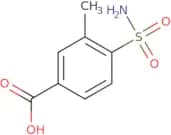
Formula:C9H10FNO2Purezza:Min. 95%Peso molecolare:183.18 g/mol3-Methyl-4-sulfamoylbenzoic acid
CAS:Versatile small molecule scaffold
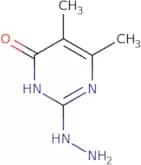
Formula:C8H9NO4SPurezza:Min. 95%Peso molecolare:215.23 g/mol2-Hydrazinyl-5,6-dimethyl-3,4-dihydropyrimidin-4-one
CAS:Versatile small molecule scaffold
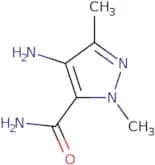
Formula:C6H10N4OPurezza:Min. 95%Peso molecolare:154.17 g/mol4-Amino-1,3-dimethyl-1H-pyrazole-5-carboxamide
CAS:Versatile small molecule scaffold
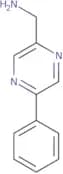
Formula:C6H10N4OPurezza:Min. 95%Peso molecolare:154.17 g/mol(5-Phenylpyrazin-2-yl)methanamine
CAS:Versatile small molecule scaffold
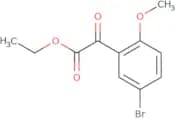
Formula:C11H11N3Purezza:Min. 95%Peso molecolare:185.22 g/molEthyl 2-(5-bromo-2-methoxyphenyl)-2-oxoacetate
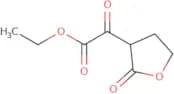
CAS:Versatile small molecule scaffoldFormula:C11H11BrO4Purezza:Min. 95%Peso molecolare:287.11 g/molEthyl 2-Oxo-2-(2-oxotetrahydrofuran-3-yl)acetate
CAS:Versatile small molecule scaffold
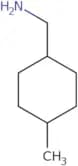
Formula:C8H10O5Purezza:Min. 95%Peso molecolare:186.16 g/mol4-Methyl-cyclohexanemethanamine
CAS:Versatile small molecule scaffold
Formula:C8H17NPurezza:Min. 95%Peso molecolare:127.23 g/mol4-Bromomethyl-4'-methyl-2,2'-bipyridine
CAS:Please enquire for more information about 4-Bromomethyl-4'-methyl-2,2'-bipyridine including the price, delivery time and more detailed product information at the technical inquiry form on this page
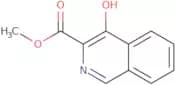
Formula:C12H11BrN2Purezza:Min. 91.0 Area-%Peso molecolare:263.14 g/molMethyl 4-hydroxyisoquinoline-3-carboxylate
CAS:Versatile small molecule scaffold
Formula:C11H9NO3Purezza:Min. 95%Peso molecolare:203.19 g/mol(4-Chlorophenyl)({8-methyl-8-azabicyclo[3.2.1]octan-3-yl})methanamine
CAS:Versatile small molecule scaffold
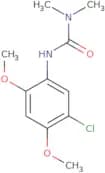
Formula:C15H21ClN2Purezza:Min. 95%Peso molecolare:264.79 g/mol1-(5-Chloro-2,4-dimethoxyphenyl)-3,3-dimethylurea
CAS:Versatile small molecule scaffold
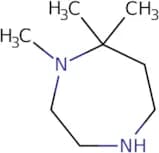
Formula:C11H15ClN2O3Purezza:Min. 95%Peso molecolare:258.7 g/mol1,7,7-Trimethyl-1,4-diazepane
CAS:Versatile small molecule scaffold
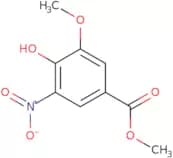
Formula:C8H18N2Purezza:Min. 95%Peso molecolare:142.24 g/molMethyl 4-hydroxy-3-methoxy-5-nitrobenzenecarboxylate
CAS:Versatile small molecule scaffold
Formula:C9H9NO6Purezza:Min. 95%Peso molecolare:227.17 g/mol4-(Piperazin-1-yl)isoquinoline dihydrochloride
CAS:Versatile small molecule scaffold
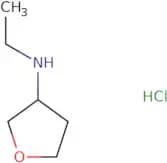
Formula:C13H17Cl2N3Purezza:Min. 95%Peso molecolare:286.2 g/molN-ethyloxolan-3-amine hydrochloride
CAS:Versatile small molecule scaffold
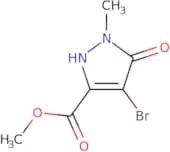
Formula:C6H14ClNOPurezza:Min. 95%Peso molecolare:151.63 g/molMethyl 4-bromo-5-hydroxy-1-methyl-1H-pyrazole-3-carboxylate
CAS:Versatile small molecule scaffold
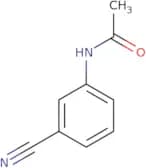
Formula:C6H7BrN2O3Purezza:Min. 95%Peso molecolare:235.04 g/molN-(3-Cyanophenyl)acetamide
CAS:N-(3-Cyanophenyl)acetamide is a hydrogen-bonding molecule that has been detected in the gas phase. It has also been observed to interact with water, forming hydrogen bonding interactions and solvatochromism. The equilibrium of N-(3-cyanophenyl)acetamide can be shifted by changing the solvent conditions and pH. This molecule has three conformations when it is in the gaseous phase, including a planar conformation. In addition, N-(3-cyanophenyl)acetamide can be used as a probe for determining hydrogen bonding interactions and conformations due to its ability to form hydrogen bonds with other molecules.
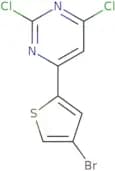
Formula:C9H8N2OPurezza:Min. 95%Peso molecolare:160.18 g/mol4-(4-Bromothiophen-2-yl)-2,6-dichloropyrimidine
CAS:Versatile small molecule scaffold
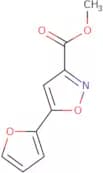
Formula:C8H3BrCl2N2SPurezza:Min. 95%Peso molecolare:310 g/molMethyl 5-(2-furyl)isoxazole-3-carboxylate
CAS:Versatile small molecule scaffold
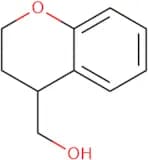
Formula:C9H7NO4Purezza:Min. 95%Peso molecolare:193.16 g/mol3,4-Dihydro-2H-1-benzopyran-4-ylmethanol
CAS:Versatile small molecule scaffold
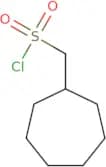
Formula:C10H12O2Purezza:Min. 95%Peso molecolare:164.2 g/molCycloheptylmethanesulfonyl chloride
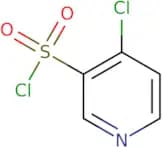
CAS:Cycloheptylmethanesulfonyl chloride is a heterocyclic compound that has been shown to cause neurotoxicity, or nerve damage. It inhibits the activity of two enzymes, acetylcholinesterase and butyrylcholinesterase, which are responsible for regulating the production of the neurotransmitter acetylcholine in the brain. Cycloheptylmethanesulfonyl chloride also inhibits other enzymes involved in the synthesis of proteins in neurons, leading to neuronal damage. Cycloheptylmethanesulfonyl chloride has been shown to be effective against neurological disorders such as neurodegenerative diseases and nerve damage.Formula:C8H15ClO2SPurezza:Min. 95%Peso molecolare:210.72 g/mol4-chloropyridine-3-sulfonyl chloride
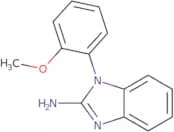
CAS:4-Chloropyridine-3-sulfonyl chloride is a thrombin inhibitor that has been discovered through the use of in vitro screening methods. It is a small molecule with lipophilic properties and oral bioavailability. This compound inhibits thrombin by binding to the active site of the enzyme, which prevents the formation of an enzyme-thrombin complex. The discovery was made using a pharmacophore-based approach and further modifications were made to improve its potency and increase its lipophilicity. This compound also exhibits an acceptable level of bioavailability in vivo, which may be due to its high solubility in water.Formula:C5H3Cl2NO2SPurezza:Min. 95%Peso molecolare:212.1 g/mol1-(2-Methoxyphenyl)-1H-1,3-benzodiazol-2-amine
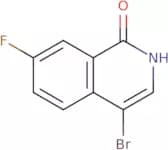
CAS:Versatile small molecule scaffoldFormula:C14H13N3OPurezza:Min. 95%Peso molecolare:239.27 g/mol4-Bromo-7-fluoroisoquinolin-1-ol
CAS:Versatile small molecule scaffold
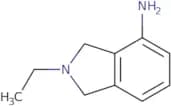
Formula:C9H5BrFNOPurezza:Min. 95%Peso molecolare:242.04 g/mol2-Ethyl-2,3-dihydro-1H-isoindol-4-amine
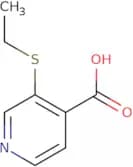
CAS:Versatile small molecule scaffoldFormula:C10H14N2Purezza:Min. 95%Peso molecolare:162.23 g/mol3-(Ethylsulfanyl)pyridine-4-carboxylic acid
CAS:Versatile small molecule scaffoldFormula:C8H9NO2SPurezza:Min. 95%Peso molecolare:183.23 g/mol7-Bromo-3H-imidazo[4,5-b]pyridine
CAS:Versatile small molecule scaffold
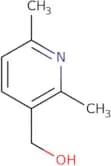
Formula:C6H4BrN3Purezza:Min. 95%Peso molecolare:198.02 g/mol(2,6-Dimethylpyridin-3-yl)methanol
CAS:Versatile small molecule scaffold
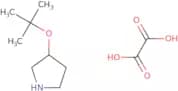
Formula:C8H11NOPurezza:Min. 95%Peso molecolare:137.18 g/mol(3S)-3-(tert-Butoxy)pyrrolidine, oxalic acid
CAS:Versatile small molecule scaffold
Formula:C10H19NO5Purezza:Min. 95%Peso molecolare:233.26 g/mol(7S,8aS)-7-Fluoro-octahydropyrrolo[1,2-a]pyrazine dihydrochloride
CAS:Versatile small molecule scaffold
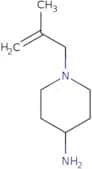
Formula:C7H15Cl2FN2Purezza:Min. 95%Peso molecolare:217.11 g/mol1-(2-Methylprop-2-en-1-yl)piperidin-4-amine
CAS:1-(2-Methylprop-2-en-1-yl)piperidin-4-amine is an inhibitor that blocks the activity of ion channels. It is a competitive antagonist at the NMDA receptor and has been shown to inhibit the binding of glutamate, which is a neurotransmitter involved in synaptic transmission. 1-(2-Methylprop-2-en-1-yl)piperidin-4-amine also inhibits β 2 -adrenergic receptors and has been shown to be a potent activator of G protein coupled receptors. This chemical may also be used as a research tool for studying the effects of ligands on cell biology, peptides, pharmacology, or life science. It has high purity and CAS No. 1082454-34-9.
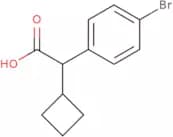
Formula:C9H18N2Purezza:Min. 95%Peso molecolare:154.25 g/mol(4-Bromo-phenyl)-cyclobutyl-acetic acid
CAS:Versatile small molecule scaffoldFormula:C12H13BrO2Purezza:Min. 95%Peso molecolare:269.13 g/molOpn4 Antagonist
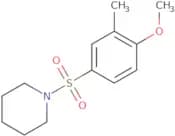
CAS:The Opn4 antagonist is a chemical that blocks the activity of the protein melanopsin, which is involved in regulating circadian rhythms. It has been shown to inhibit melatonin synthesis and muscle fiber contraction when applied intravitreally. These effects may be mediated by membrane channels that are activated by chloride ions. The effect of the Opn4 antagonist on photoreceptor cells is not yet known.
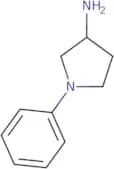
Formula:C13H19NO3SPurezza:Min. 95%Peso molecolare:269.36 g/mol3-Pyrrolidinamine, 1-phenyl-
CAS:Versatile small molecule scaffold
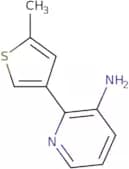
Formula:C10H14N2Purezza:Min. 95%Peso molecolare:162.23 g/mol2-(5-Methylthiophen-3-yl)pyridin-3-amine
CAS:Versatile small molecule scaffold
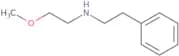
Formula:C10H10N2SPurezza:Min. 95%Peso molecolare:190.27 g/mol(2-Methoxyethyl)(2-phenylethyl)amine
CAS:Prodotto controllatoVersatile small molecule scaffold
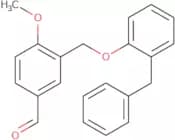
Formula:C11H17NOPurezza:Min. 95%Peso molecolare:179.26 g/mol3-(2-Benzyl-phenoxymethyl)-4-methoxy-benzaldehyde
CAS:Versatile small molecule scaffold
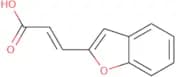
Formula:C22H20O3Purezza:Min. 95%Peso molecolare:332.4 g/mol(2E)-3-(1-benzofuran-2-yl)prop-2-enoic acid
CAS:(2E)-3-(1-benzofuran-2-yl)prop-2-enoic acid is a white solid that has the chemical formula CHClO. It is soluble in chloroform, ether, and benzene. When heated to 105°C in the presence of air, it decomposes to release oxygen and carbon dioxide. (2E)-3-(1-benzofuran-2-yl)prop-2-enoic acid is used as an intermediate for organic synthesis reactions such as alkylation reactions and Friedel - Crafts reactions. Thermal analysis of this compound indicates that it has a high thermal stability with respect to thermal decomposition. (2E)-3-(1-benzofuran-2-yl)prop-2-enoic acid can be reacted with azide or diphenyl ether to form a coordination complex. This compound also reacts with potassium or phosphorus oxychloride to form oxychlorides.Formula:C11H8O3Purezza:Min. 95%Peso molecolare:188.18 g/mol3'-Methyl-[1,1'-biphenyl]-2-carboxylic acid
CAS:Versatile small molecule scaffold
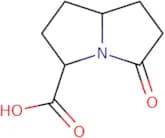
Formula:C14H12O2Purezza:Min. 95%Peso molecolare:212.24 g/mol5-Oxo-hexahydro-1H-pyrrolizine-3-carboxylic acid
CAS:Versatile small molecule scaffold
Formula:C8H11NO3Purezza:Min. 95%Peso molecolare:169.18 g/mol2-(Methylsulfonyl)-1H-benzo[d]imidazole
CAS:2-(Methylsulfonyl)-1H-benzo[d]imidazole (MSBI) is a relatively new class of catalysts that can be used to promote the oxidation of alcohols. The catalytic system consists of copper, iodides, and MSBI. The first step in the catalytic cycle is the formation of a complex between MSBI and copper. This complex reacts with an alcohol to give a more reactive species, which then oxidizes iodide to iodine. The iodide is reduced back to iodide by hydrogen peroxide generated from the reaction with water. The spectrum of MSBI shows peaks at 1706 cm-1 and 1684 cm-1 due to its methyl groups, while the peak at 1202 cm-1 corresponds to the stretching vibration in the imidazole ring. Experimental results show that MSBI has a low density and high theoretical activity.
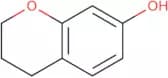
Formula:C8H8N2O2SPurezza:Min. 95%Peso molecolare:196.22 g/mol3,4-dihydro-2H-1-benzopyran-7-ol
CAS:3,4-Dihydro-2H-1-benzopyran-7-ol is a monomer that is used to synthesize medicines. It has the formula CH3COCH=CH(OH)CH3 and belongs to the group of flavonoids. 3,4-Dihydro-2H-1-benzopyran-7-ol has acidic properties, which are due to its isoflavones. It can be used as an acid catalyst in organic synthesis reactions and is a reaction product of chloropropane. 3,4-Dihydro-2H-1-benzopyran-7-ol also has high yield and can act as a bioisostere for other compounds such as chromene.
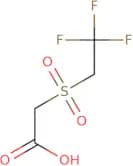
Formula:C9H10O2Purezza:Min. 95%Peso molecolare:150.18 g/mol2-(2,2,2-Trifluoroethanesulfonyl)acetic acid
CAS:Trifloxacin is a broad-spectrum antibacterial drug that belongs to the class of formyloxy compounds and the cephalosporin family. It has been shown to be active against both Gram-positive and Gram-negative bacteria, with activity against strains resistant to penicillin, ampicillin, erythromycin, and chloramphenicol. Trifloxacin binds to the bacterial ribosome by displacement of a pyridyl group in the ribosomal RNA, inhibiting protein synthesis. This binding inhibits cell growth by preventing the production of proteins that are vital for cell division.
br>
Trifloxacin has also been found to inhibit DNA gyrase and topoisomerase IV in vitro. Trifloxacin's mechanism of action is similar to that of other quinolones such as norfloxacin and ciprofloxacin.Formula:C4H5F3O4SPurezza:Min. 95%Peso molecolare:206.14 g/mol2-[(4-Bromophenyl)sulfanyl]-2-methylpropanoic acid
CAS:Versatile small molecule scaffold
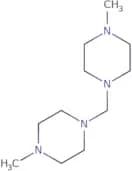
Formula:C10H11BrO2SPurezza:Min. 95%Peso molecolare:275.16 g/molBis(4-methylpiperazin-1-yl)methane
CAS:Versatile small molecule scaffold
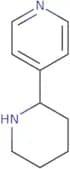
Formula:C11H24N4Purezza:Min. 95%Peso molecolare:212.34 g/mol4-(Piperidin-2-yl)pyridine
CAS:Versatile small molecule scaffold
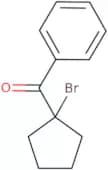
Formula:C10H14N2Purezza:Min. 95%Peso molecolare:162.23 g/mol(1-Bromocyclopentyl)(phenyl)methanone
CAS:Versatile small molecule scaffold
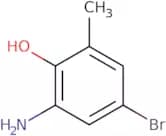
Formula:C12H13BrOPurezza:Min. 95%Peso molecolare:253.13 g/mol2-Amino-4-bromo-6-methylphenol
CAS:Versatile small molecule scaffold
Formula:C7H8BrNOPurezza:Min. 95%Colore e forma:PowderPeso molecolare:202.05 g/mol2-[(2S)-Oxiran-2-yl]-1-benzofuran
CAS:Versatile small molecule scaffold
Formula:C10H8O2Purezza:Min. 95%Peso molecolare:160.17 g/mol4H,5H-Pyrazolo[1,5-a]quinazolin-5-one
CAS:4H,5H-Pyrazolo[1,5-a]quinazolin-5-one is a class of heterocyclic compounds that inhibit the parp-1 and parp proteins. These inhibitors are low nanomolar to nanomolar in potency and have been synthesized from chloride and amides. They have been shown to be potent inhibitors of the growth of cancer cells.
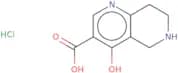
Formula:C10H7N3OPurezza:Min. 95%Peso molecolare:185.18 g/mol4-Hydroxy-5,6,7,8-tetrahydro-1,6-naphthyridine-3-carboxylic acid hydrochloride
CAS:Versatile small molecule scaffold
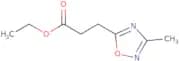
Formula:C9H11ClN2O3Purezza:Min. 95%Peso molecolare:230.6 g/molEthyl 3-(3-methyl-1,2,4-oxadiazol-5-yl)propanoate
CAS:Versatile small molecule scaffold
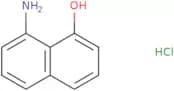
Formula:C8H12N2O3Purezza:Min. 95%Peso molecolare:184.19 g/mol8-Aminonaphthalen-1-ol hydrochloride
CAS:Versatile small molecule scaffold
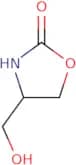
Formula:C10H10ClNOPurezza:Min. 95%Peso molecolare:195.64 g/mol4-(Hydroxymethyl)oxazolidin-2-one
CAS:4-(Hydroxymethyl)oxazolidin-2-one is an activated form of oxazolidinones that can react with potassium ions to form a stable, water soluble salt. This reaction is catalyzed by lanthanum ion and the reaction mechanism involves the formation of fatty acid esters. It has been found to be effective in the synthesis of methyl palmitate, which is a fatty acid that can be used as a raw material for biodiesel production. The reaction intermediates are dehydrating and constant, and the metal ion is lanthanum. 4-(Hydroxymethyl)oxazolidin-2-one has impurities such as adiponitrile, acidic impurities, and stereoselective impurities.
Formula:C4H7NO3Purezza:Min. 95%Peso molecolare:117.1 g/mol4-Cyclopropylphenylacetic acid
CAS:Versatile small molecule scaffold
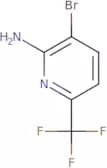
Formula:C11H12O2Purezza:Min. 95%Peso molecolare:176.22 g/mol2-Amino-3-Bromo-6-trifluoromethylpyridine
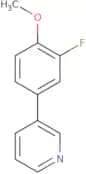
CAS:Versatile small molecule scaffoldFormula:C6H4BrF3N2Purezza:Min. 95%Peso molecolare:241.01 g/mol3-(3-Fluoro-4-methoxyphenyl)pyridine
CAS:Versatile small molecule scaffold
Formula:C12H10FNOPurezza:Min. 95%Peso molecolare:203.21 g/mol9-Oxo-6,7,8,9-tetrahydro-5H-benzo[7]annulene-2-carboxylic acid
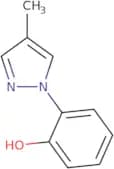
CAS:Versatile small molecule scaffoldFormula:C12H12O3Purezza:Min. 95%Peso molecolare:204.22 g/mol2-(4-Methyl-1H-pyrazol-1-yl)phenol
CAS:Versatile small molecule scaffold
Formula:C10H10N2OPurezza:Min. 95%Peso molecolare:174.2 g/molN-{[2-(Trifluoromethyl)phenyl]methyl}oxetan-3-amine
CAS:Versatile small molecule scaffoldFormula:C11H12F3NOPurezza:Min. 95%Peso molecolare:231.21 g/mol[1-(Fluoromethyl)cyclopropyl]methanesulfonyl chloride
CAS:Versatile small molecule scaffold
Formula:C5H8ClFO2SPurezza:Min. 95%Peso molecolare:186.63 g/mol3-(3-Fluorophenoxymethyl)-5H,6H,7H,8H,9H-[1,2,4]triazolo[4,3-a]azepine
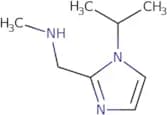
CAS:Versatile small molecule scaffoldFormula:C14H16FN3OPurezza:Min. 95%Peso molecolare:261.29 g/mol1-(1-Isopropyl-1H-imidazol-2-yl)-N-methylmethanamine
CAS:Versatile small molecule scaffold
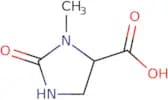
Formula:C8H15N3Purezza:Min. 95%Peso molecolare:153.22 g/mol3-Methyl-2-oxoimidazolidine-4-carboxylic acid
CAS:Versatile small molecule scaffold
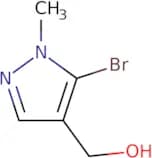
Formula:C5H8N2O3Purezza:Min. 95%Peso molecolare:144.13 g/mol(5-Bromo-1-methyl-1H-pyrazol-4-yl)methanol
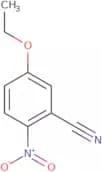
CAS:Versatile small molecule scaffoldFormula:C5H7BrN2OPurezza:Min. 95%Peso molecolare:191.03 g/mol5-Ethoxy-2-nitrobenzonitrile
CAS:Versatile small molecule scaffold
Formula:C9H8N2O3Purezza:Min. 95%Peso molecolare:192.17 g/mol2-Bromo-3,3,3-trifluoro-1-propene
CAS:Prodotto controllato2-Bromo-3,3,3-trifluoro-1-propene is a chemical compound that has been synthesized in an asymmetric reaction. The reactant is bromopropane and the product is 2,2,2-trifluoropropene. The methylene group on the propene molecule is activated by the nucleophilic attack of a fluoride ion from hydrogen fluoride to form a cavity with a highly strained bond. The kinetic study of this reaction revealed that the activation energy for the reaction is 42 kJ/mol. Palladium-catalyzed coupling reactions are catalyzed by palladium and require nonpolar solvents such as toluene or dichloromethane. This type of reaction has been shown to be exothermic with an isolated yield of 1%.
Formula:C3H2BrF3Purezza:Min. 95%Colore e forma:Colorless PowderPeso molecolare:174.95 g/mol4,5-Dihydro-1H-imidazol-2-amine hydrochloride
CAS:Please enquire for more information about 4,5-Dihydro-1H-imidazol-2-amine hydrochloride including the price, delivery time and more detailed product information at the technical inquiry form on this page
Formula:C3H7N3•HClPurezza:Min. 95%Peso molecolare:121.57 g/mol1-Hydroxycyclopentane-1-carbonitrile
CAS:1-Hydroxycyclopentane-1-carbonitrile is a monomer that is hydrolyzed to form benzoin and cyanohydrins. It can be used in the production of scifinder as a monomer or dimerizer.
Formula:C6H9NOPurezza:Min. 95%Peso molecolare:111.14 g/mol3-Hydroxy-5-methylpyridine
CAS:3-Hydroxy-5-methylpyridine (3HMP) is a chemical substance that has been classified as an amine. It is a product of the metabolism of purines, which are nitrogenous bases found in DNA and RNA. 3HMP is produced by aerogenic bacteria (such as Enterobacter), and can be used to estimate the number of these bacteria present in water samples. 3HMP has been shown to have antiviral properties against influenza virus, and can be used as a biomarker for the presence of other viruses in animals. 3HMP also has mineralization properties, which have been studied extensively, particularly with regards to pancreatic disease.
Formula:C6H7NOPurezza:Min. 95%Colore e forma:PowderPeso molecolare:109.13 g/molRef: 3D-FH16174
Prodotto fuori produzione8-Bromo-2-methylimidazo[1,2-a]pyridine
CAS:Versatile small molecule scaffold
Formula:C8H7N2BrPurezza:Min. 95%Peso molecolare:211.05 g/moltert-Butyl (2,2-difluoro-3-hydroxypropyl)carbamate
CAS:Versatile small molecule scaffoldFormula:C10H13NO4Purezza:Min. 95%Peso molecolare:211.21 g/mol4-Chloro-2-hydroxy-6-methylphenylboronic acid
CAS:Versatile small molecule scaffoldFormula:C7H8BClO3Purezza:Min. 95%Peso molecolare:186.4 g/mol4,5-Dihydroxy-2,3-Pentanedione
CAS:4,5-Dihydroxy-2,3-pentanedione is a carbonyl compound that is the product of the oxidation of ascorbic acid. It is used in wastewater treatment and has antimicrobial properties against infectious diseases. This compound has been shown to inhibit protein synthesis by binding to the ribosome and preventing the formation of peptide bonds between amino acids. 4,5-Dihydroxy-2,3-pentanedione has also been shown to bind to plasma proteins, which may be due to its acyl chain structure. 4,5-Dihydroxy-2,3-pentanedione can be synthesized in a catalytic mechanism that involves dehydroascorbic acid and molecular oxygen.
Formula:C5H8O4Purezza:Min. 95%Colore e forma:PowderPeso molecolare:132.11 g/molRef: 3D-FD180770
Prodotto fuori produzionePiperyline
CAS:Piperyline is an alkanoic acid that has shown to be effective against skin cancer. It also has antimicrobial properties, which may be due to its ability to bind metal ions and form polymeric compounds. Piperyline inhibits microbial growth by inhibiting the synthesis of proteins and nucleic acids. The antimicrobial activity is related to its cationic polymerization with hydroxyl groups, which forms a structure that can inhibit microbial enzymes and disrupt microbial cell membranes. This compound also interacts with the skin's natural lipids, making it difficult for microorganisms to attach and grow on the skin. Piperyline is synthesized in organic chemistry laboratories as an amide precursor of other pharmaceuticals such as penicillin.
Formula:C16H17NO3Purezza:Min. 95%Peso molecolare:271.31 g/mol



![(4-Chlorophenyl)({8-methyl-8-azabicyclo[3.2.1]octan-3-yl})methanamine](/_next/image/?url=https%3A%2Fstatic.cymitquimica.com%2Fproducts%2F3D%2Fthumb-webp%2FITC29319.webp&w=3840&q=75)

![7-Bromo-3H-imidazo[4,5-b]pyridine](/_next/image/?url=https%3A%2Fstatic.cymitquimica.com%2Fproducts%2F3D%2Fthumb-webp%2FHYB17485.webp&w=3840&q=75)
![(7S,8aS)-7-Fluoro-octahydropyrrolo[1,2-a]pyrazine dihydrochloride](/_next/image/?url=https%3A%2Fstatic.cymitquimica.com%2Fproducts%2F3D%2Fthumb-webp%2FHXC93968.webp&w=3840&q=75)
![3'-Methyl-[1,1'-biphenyl]-2-carboxylic acid](/_next/image/?url=https%3A%2Fstatic.cymitquimica.com%2Fproducts%2F3D%2Fthumb-webp%2FHEA41271.webp&w=3840&q=75)
![2-(Methylsulfonyl)-1H-benzo[d]imidazole](/_next/image/?url=https%3A%2Fstatic.cymitquimica.com%2Fproducts%2F3D%2Fthumb-webp%2FHCA15981.webp&w=3840&q=75)
![2-[(4-Bromophenyl)sulfanyl]-2-methylpropanoic acid](/_next/image/?url=https%3A%2Fstatic.cymitquimica.com%2Fproducts%2F3D%2Fthumb-webp%2FTAA52716.webp&w=3840&q=75)
![2-[(2S)-Oxiran-2-yl]-1-benzofuran](/_next/image/?url=https%3A%2Fstatic.cymitquimica.com%2Fproducts%2F3D%2Fthumb-webp%2FTNA61408.webp&w=3840&q=75)
![4H,5H-Pyrazolo[1,5-a]quinazolin-5-one](/_next/image/?url=https%3A%2Fstatic.cymitquimica.com%2Fproducts%2F3D%2Fthumb-webp%2FUJC66912.webp&w=3840&q=75)

![9-Oxo-6,7,8,9-tetrahydro-5H-benzo[7]annulene-2-carboxylic acid](/_next/image/?url=https%3A%2Fstatic.cymitquimica.com%2Fproducts%2F3D%2Fthumb-webp%2FPKB95830.webp&w=3840&q=75)
![N-{[2-(Trifluoromethyl)phenyl]methyl}oxetan-3-amine](/_next/image/?url=https%3A%2Fstatic.cymitquimica.com%2Fproducts%2F3D%2Fthumb-webp%2FPDC89412.webp&w=3840&q=75)
![[1-(Fluoromethyl)cyclopropyl]methanesulfonyl chloride](/_next/image/?url=https%3A%2Fstatic.cymitquimica.com%2Fproducts%2F3D%2Fthumb-webp%2FPCC96395.webp&w=3840&q=75)
![3-(3-Fluorophenoxymethyl)-5H,6H,7H,8H,9H-[1,2,4]triazolo[4,3-a]azepine](/_next/image/?url=https%3A%2Fstatic.cymitquimica.com%2Fproducts%2F3D%2Fthumb-webp%2FQGB27246.webp&w=3840&q=75)




![8-Bromo-2-methylimidazo[1,2-a]pyridine](/_next/image/?url=https%3A%2Fstatic.cymitquimica.com%2Fproducts%2F3D%2Fthumb-webp%2FUXB37475.webp&w=3840&q=75)



