Building Blocks
Sottocategorie di "Building Blocks"
- Acidi boronici e derivati dell'acido boronico(5.778 prodotti)
- Building Blocks Chirali(1.243 prodotti)
- Building Blocks Idrocarburici(6.099 prodotti)
- Building Blocks organici(61.038 prodotti)
Trovati 205376 prodotti di "Building Blocks"
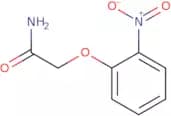
2-(2-Nitrophenoxy)acetamide
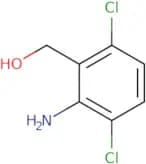
CAS:2-(2-Nitrophenoxy)acetamide (NPA) is a nitro-substituted nitroaromatic compound that has been shown to inhibit the activity of the P-glycoprotein efflux pump. This inhibitory effect may be due to its ability to bind to the ATP binding site on the P-glycoprotein, which prevents ATP hydrolysis and energy transfer. 2-(2-Nitrophenoxy)acetamide also inhibits cancer cells, as it utilizes adenosine triphosphate (ATP) as an energy source. NPA also displays an inhibitory effect on other cellular functions, including transport of substances across membranes and inhibition of DNA synthesis in human cells.Formula:C8H8N2O4Purezza:Min. 95%Peso molecolare:196.16 g/mol(2-Amino-3,6-dichlorophenyl)methanol
CAS:Versatile small molecule scaffold
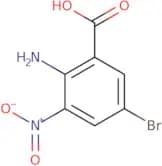
Formula:C7H7Cl2NOPurezza:Min. 95%Peso molecolare:192.04 g/mol2-Amino-5-bromo-3-nitrobenzoic acid
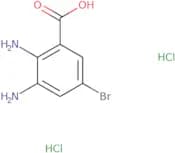
CAS:Versatile small molecule scaffoldFormula:C7H5BrN2O4Purezza:Min. 95%Peso molecolare:261.03 g/mol2,3-Diamino-5-bromobenzoic acid dihydrochloride
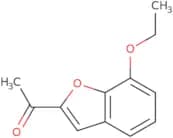
CAS:Versatile small molecule scaffoldFormula:C7H9BrCl2N2O2Purezza:Min. 95%Peso molecolare:303.97 g/mol1-(7-Ethoxy-1-benzofuran-2-yl)ethan-1-one
CAS:Versatile small molecule scaffold
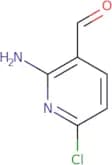
Formula:C12H12O3Purezza:Min. 95%Peso molecolare:204.22 g/mol2-Amino-6-chloronicotinaldehyde
CAS:Versatile small molecule scaffoldFormula:C6H5ClN2OPurezza:Min. 95%Peso molecolare:156.57 g/mol2,6-Difluoro-3-methyl-pyridine
CAS:Versatile small molecule scaffold
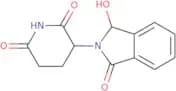
Formula:C6H5F2NPurezza:Min. 95%Peso molecolare:129.11 g/mol3-(1-Hydroxy-3-oxo-2,3-dihydro-1H-isoindol-2-yl)piperidine-2,6-dione
CAS:Versatile small molecule scaffoldFormula:C13H12N2O4Purezza:Min. 95%Peso molecolare:260.2 g/mol3-chloro-4-formylbenzoic acid
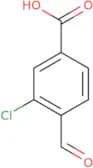
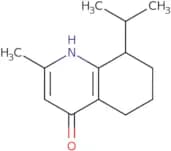
CAS:3-chloro-4-formylbenzoic acid is an aldehyde that can be used as a synthetic intermediate in the production of other molecules. It can be synthesized from 3-chlorobenzoic acid and formaldehyde in one step by heating the two together. This reaction produces the desired product in high yield, with a stereochemical purity of about 98%. The substituent on the chloro group has no effect on this reaction. The diastereoselectivity of this synthesis is also high, with nearly all products being racemic mixtures.Formula:C8H5ClO3Purezza:Min. 95%Peso molecolare:184.6 g/mol2-Methyl-8-(propan-2-yl)-1,4,5,6,7,8-hexahydroquinolin-4-one
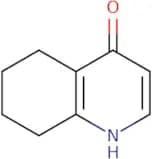
CAS:Versatile small molecule scaffoldFormula:C13H19NOPurezza:Min. 95%Peso molecolare:205.3 g/mol1,4,5,6,7,8-Hexahydroquinolin-4-one
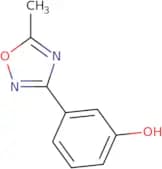
CAS:Versatile small molecule scaffoldFormula:C9H11NOPurezza:Min. 95%Peso molecolare:149.19 g/mol3-(5-Methyl-1,2,4-oxadiazol-3-yl)phenol
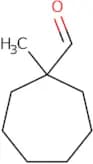
CAS:Versatile small molecule scaffoldFormula:C9H8N2O2Purezza:Min. 95%Peso molecolare:176.17 g/mol1-Methylcycloheptane-1-carbaldehyde
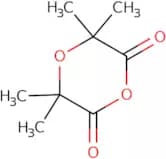
CAS:Versatile small molecule scaffoldFormula:C9H16OPurezza:Min. 95%Peso molecolare:140.22 g/molTetramethyl-1,4-dioxane-2,6-dione
CAS:Versatile small molecule scaffold
Formula:C8H12O4Purezza:Min. 95%Peso molecolare:172.18 g/mol4-(Imidazo[1,2-a]pyrimidin-2-yl)aniline
CAS:Versatile small molecule scaffold
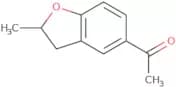
Formula:C12H10N4Purezza:Min. 95%Peso molecolare:210.24 g/mol1-(2-Methyl-2,3-dihydro-1-benzofuran-5-yl)ethan-1-one
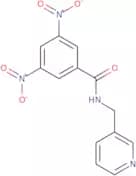
CAS:Versatile small molecule scaffoldFormula:C11H12O2Purezza:Min. 95%Peso molecolare:176.21 g/mol3,5-Dinitro-N-(pyridin-3-ylmethyl)benzamide
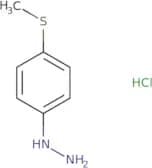
CAS:Versatile small molecule scaffoldFormula:C13H10N4O5Purezza:Min. 95%Peso molecolare:302.24 g/mol(4-Methylsulfanylphenyl)hydrazine hydrochloride
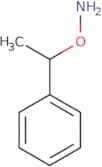
CAS:Versatile small molecule scaffoldFormula:C7H11ClN2SPurezza:Min. 95%Peso molecolare:190.69 g/molo-(1-Phenylethyl)hydroxylamine
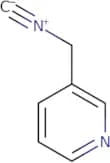
CAS:Versatile small molecule scaffoldFormula:C8H11NOPurezza:Min. 95%Peso molecolare:137.18 g/mol3-(Isocyanomethyl)pyridine
CAS:3-(Isocyanomethyl)pyridine is a nucleophilic amine that is used in organic chemistry as a reagent. It can be used either as a primary amine or as an isocyanide, depending on the desired functionality. 3-(Isocyanomethyl)pyridine reacts with electrophiles such as phenols, alcohols, and carboxylic acids to form reactive intermediates. These intermediates are often useful for generating new molecules. 3-(Isocyanomethyl)pyridine is also capable of reacting with primary and secondary amines to yield multigram quantities of products.
3-(Isocyanomethyl)pyridine has been shown to be an innovative chemical that can be used in many different applications.Formula:C7H6N2Purezza:Min. 95%Peso molecolare:118.14 g/mol3-Methyl-4H,5H-[1,2]thiazolo[5,4-d]pyrimidin-4-one
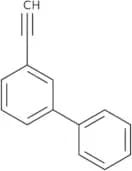
CAS:Versatile small molecule scaffoldFormula:C6H5N3OSPurezza:Min. 95%Peso molecolare:167.19 g/mol1-ethynyl-3-phenylbenzene
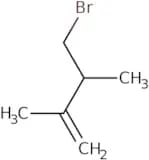
CAS:Versatile small molecule scaffoldFormula:C14H10Purezza:Min. 95%Peso molecolare:178.22 g/mol4-Bromo-2,3-dimethylbut-1-ene
CAS:Versatile small molecule scaffoldFormula:C6H11BrPurezza:Min. 95%Peso molecolare:163.06 g/mol2-(1-Methyl-2,3-dihydro-1H-indol-3-yl)acetic acid hydrochloride
CAS:Versatile small molecule scaffoldFormula:C11H14ClNO2Purezza:Min. 95%Peso molecolare:227.7 g/molIsopropyl-pyridin-2-ylmethyl-amine
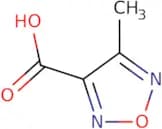
CAS:Isopropyl-pyridin-2-ylmethyl-amine is a carboxylate group that is structurally mediated by an interaction with oxygen. It has a magnetic property, which is due to the presence of ferromagnetic isotopes in the molecule. Isopropyl-pyridin-2-ylmethyl-amine can be coordinated as ligands with metal ions such as Cu(II), Co(II), and Fe(III). This compound also has tetranuclear ligands, which are ligands that bind to one central atom via four atoms or groups.Formula:C9H14N2Purezza:Min. 95%Peso molecolare:150.23 g/mol4-Methylfurazan-3-carboxylic acid
CAS:4-Methylfurazan-3-carboxylic acid is a cyanogen compound that has been shown to cause vasodilatation of the sinusoid and hepatic steatosis. It is also reactive with lesion sites and can be used as a histological reagent. 4-Methylfurazan-3-carboxylic acid reacts with hydrazide to produce an acid hydrazide, which is also reactive. This compound has been shown to have therapeutic effects on hepatic steatosis in rats, but it does not exhibit any inhibitory effects on intestinal steatosis.Formula:C4H4N2O3Purezza:Min. 95%Peso molecolare:128.09 g/mol4-Bromo-1,7-naphthyridine
CAS:Versatile small molecule scaffold
Formula:C8H5BrN2Purezza:Min. 95%Peso molecolare:209.04 g/mol1,7-Naphthyridin-4-amine
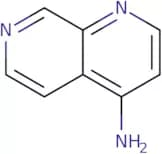
CAS:Versatile small molecule scaffold
Formula:C8H7N3Purezza:Min. 95%Peso molecolare:145.16 g/mol2-(Dimethylamino)-2-phenylacetic acid hydrochloride
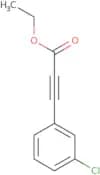
CAS:Versatile small molecule scaffoldFormula:C10H14ClNO2Purezza:Min. 95%Peso molecolare:215.67 g/molEthyl 3-(3-chlorophenyl)prop-2-ynoate
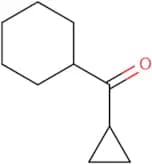
CAS:Versatile small molecule scaffoldFormula:C11H9ClO2Purezza:Min. 95%Peso molecolare:208.64 g/molCyclohexyl(cyclopropyl)methanone
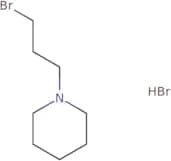
CAS:Versatile small molecule scaffoldFormula:C10H16OPurezza:Min. 95%Peso molecolare:152.23 g/mol1-(3-Bromopropyl)piperidine hydrobromide
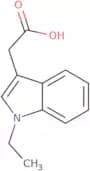
CAS:Versatile small molecule scaffoldFormula:C8H16BrN·HBrPurezza:Min. 95%Peso molecolare:287.04 g/mol2-(1-Ethyl-1H-indol-3-yl)acetic acid
CAS:Prodotto controllatoVersatile small molecule scaffold
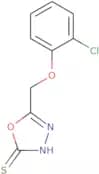
Formula:C12H13NO2Purezza:Min. 95%Peso molecolare:203.24 g/mol5-(2-Chlorophenoxymethyl)-1,3,4-oxadiazole-2-thiol
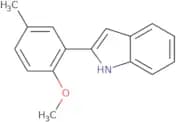
CAS:Versatile small molecule scaffoldFormula:C9H7ClN2O2SPurezza:Min. 95%Peso molecolare:242.68 g/mol2-(2-Methoxy-5-methylphenyl)-1H-indole
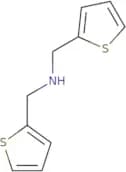
CAS:Versatile small molecule scaffoldFormula:C16H15NOPurezza:Min. 95%Peso molecolare:237.3 g/molBis-thiophen-2-ylmethyl-amine
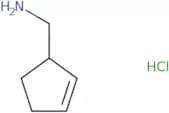
CAS:Versatile small molecule scaffoldFormula:C10H11NS2Purezza:Min. 95%Peso molecolare:209.3 g/mol1-(Cyclopent-2-en-1-yl)methanamine hydrochloride
CAS:Versatile small molecule scaffold
Formula:C6H12ClNPurezza:Min. 95%Peso molecolare:133.62 g/mol1-[4-(Pyrrolidine-1-sulfonyl)phenyl]ethan-1-one
CAS:Versatile small molecule scaffoldFormula:C12H15NO3SPurezza:Min. 95%Peso molecolare:253.32 g/mol1-[4-(Piperidine-1-sulfonyl)phenyl]ethan-1-one
CAS:Versatile small molecule scaffoldFormula:C13H17NO3SPurezza:Min. 95%Peso molecolare:267.35 g/mol1-[4-(Morpholine-4-sulfonyl)phenyl]ethan-1-one
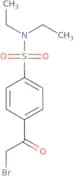
CAS:Versatile small molecule scaffoldFormula:C12H15NO4SPurezza:Min. 95%Peso molecolare:269.32 g/mol4-(2-Bromoacetyl)-N,N-diethylbenzene-1-sulfonamide
CAS:Versatile small molecule scaffold
Formula:C12H16BrNO3SPurezza:Min. 95%Peso molecolare:334.23 g/mol2-Bromo-1-[4-(piperidine-1-sulfonyl)phenyl]ethan-1-one
CAS:Versatile small molecule scaffold
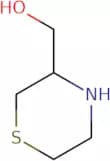
Formula:C13H16BrNO3SPurezza:Min. 95%Peso molecolare:346.24 g/molThiomorpholin-3-ylmethanol
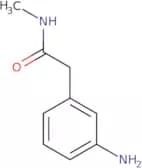
CAS:Versatile small molecule scaffoldFormula:C5H11NOSPurezza:Min. 95%Peso molecolare:133.21 g/mol2-(3-aminophenyl)-N-methylacetamide
CAS:Versatile small molecule scaffold
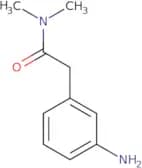
Formula:C9H12N2OPurezza:Min. 95%Peso molecolare:164.2 g/mol2-(3-aminophenyl)-N,N-dimethylacetamide
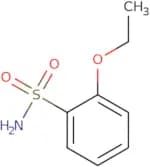
CAS:Versatile small molecule scaffoldFormula:C10H14N2OPurezza:Min. 95%Peso molecolare:178.24 g/mol2-Ethoxybenzene-1-sulfonamide
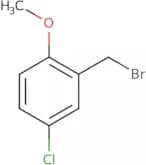
CAS:Versatile small molecule scaffoldFormula:C8H11NO3SPurezza:Min. 95%Peso molecolare:201.25 g/mol2-(Bromomethyl)-4-chloro-1-methoxybenzene
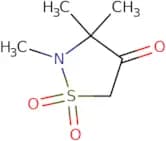
CAS:Versatile small molecule scaffoldFormula:C8H8BrClOPurezza:Min. 95%Peso molecolare:235.51 g/mol2,3,3-Trimethyl-1λ⁶,2-thiazolidine-1,1,4-trione
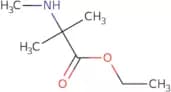
CAS:Versatile small molecule scaffoldFormula:C6H11NO3SPurezza:Min. 95%Peso molecolare:177.22 g/molEthyl 2-methyl-2-(methylamino)propanoate
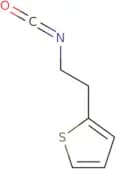
CAS:Versatile small molecule scaffoldFormula:C7H15NO2Purezza:Min. 95%Peso molecolare:145.2 g/mol2-(2-Isocyanatoethyl)thiophene
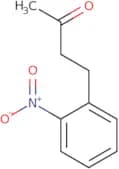
CAS:Versatile small molecule scaffoldFormula:C7H7NOSPurezza:Min. 95%Peso molecolare:153.2 g/mol4-(2-Nitrophenyl)butan-2-one
CAS:Versatile small molecule scaffoldFormula:C10H11NO3Purezza:Min. 95%Peso molecolare:193.2 g/mol1-(3-Methyl-1,2-oxazol-4-yl)ethan-1-one
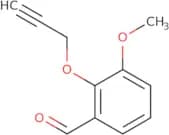
CAS:Versatile small molecule scaffoldFormula:C6H7NO2Purezza:Min. 95%Peso molecolare:125.13 g/mol3-Methoxy-2-(prop-2-yn-1-yloxy)benzaldehyde
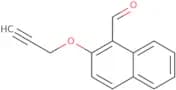
CAS:Versatile small molecule scaffoldFormula:C11H10O3Purezza:Min. 95%Peso molecolare:190.19 g/mol2-(2-Propynyloxy)-1-naphthaldehyde
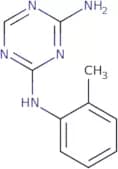
CAS:2-(2-Propynyloxy)-1-naphthaldehyde is a chemical compound with the molecular formula C10H14O. The compound exists in the form of an ellipsoidal crystal shape with a triclinic system, space group P1 and lattice parameters a=8.038(2) Å, b=4.906(2) Å, c=7.076(3) Å. The unit cell contains 8 molecules of 2-(2-propynyloxy)-1-naphthaldehyde per unit cell and the structure is described as being isotropic and homogeneous. Bruker radiation was used to determine the crystal structure of 2-(2-propynyloxy)-1-naphthaldehyde.Formula:C14H10O2Purezza:Min. 95%Peso molecolare:210.23 g/mol2-N-(2-Methylphenyl)-1,3,5-triazine-2,4-diamine
CAS:Versatile small molecule scaffoldFormula:C10H11N5Purezza:Min. 95%Peso molecolare:201.23 g/mol2-Bromo-1-[4-(morpholine-4-sulfonyl)phenyl]ethan-1-one
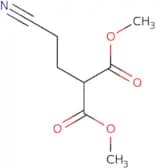
CAS:Versatile small molecule scaffoldFormula:C12H14BrNO4SPurezza:Min. 95%Peso molecolare:348.21 g/mol1,3-Dimethyl 2-(2-cyanoethyl)propanedioate
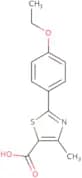
CAS:Versatile small molecule scaffoldFormula:C8H11NO4Purezza:Min. 95%Peso molecolare:185.18 g/mol2-(4-Ethoxyphenyl)-4-methyl-1,3-thiazole-5-carboxylic acid
CAS:Versatile small molecule scaffoldFormula:C13H13NO3SPurezza:Min. 95%Peso molecolare:263.31 g/molN-Methyl-1H-imidazole-4-sulfonamide
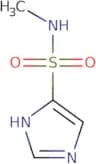
CAS:Versatile small molecule scaffold
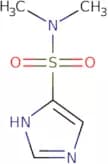
Formula:C4H7N3O2SPurezza:Min. 95%Peso molecolare:161.19 g/molN,N-Dimethyl-1H-imidazole-4-sulfonamide
CAS:Versatile small molecule scaffold
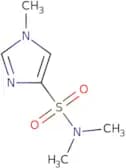
Formula:C5H9N3O2SPurezza:Min. 95%Peso molecolare:175.21 g/molN,N,1-Trimethyl-1H-imidazole-4-sulfonamide
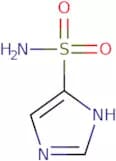
CAS:Versatile small molecule scaffoldFormula:C6H11N3O2SPurezza:Min. 95%Peso molecolare:189.24 g/mol1H-Imidazole-4-sulfonamide
CAS:Versatile small molecule scaffoldFormula:C3H5N3O2SPurezza:Min. 95%Peso molecolare:147.16 g/mol3-Methylquinoxaline-2-thiol
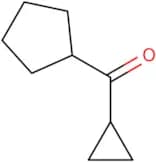
CAS:3-Methylquinoxaline-2-thiol (3MQT) is a compound that has been shown to have antimicrobial properties. It is an activator of caspase-9 and apoptosis, which are both important steps in the process of cancer cell death. 3MQT has been shown to be toxic to human cells at high concentrations, but not at lower concentrations. At low concentrations, 3MQT causes apoptotic effects in cancer cells by activating caspase-9 and inducing mitochondrial membrane depolarization. The compound also has anticancer activity against P. aeruginosa.Formula:C9H8N2SPurezza:Min. 95%Peso molecolare:176.24 g/molCyclopentyl(cyclopropyl)methanone
CAS:Versatile small molecule scaffoldFormula:C9H14OPurezza:Min. 95%Peso molecolare:138.21 g/mol4-(Ethylsulfanyl)butanenitrile
CAS:Versatile small molecule scaffoldFormula:C6H11NSPurezza:Min. 95%Peso molecolare:129.23 g/mol2-Bromo-1-(4-bromophenyl)ethan-1-ol
CAS:Versatile small molecule scaffoldFormula:C8H8Br2OPurezza:Min. 95%Peso molecolare:279.96 g/mol1-(3-Bromophenyl)-2-(methylamino)ethan-1-ol
CAS:Versatile small molecule scaffoldFormula:C9H12BrNOPurezza:Min. 95%Peso molecolare:230.1 g/mol1-(4-Methoxyphenyl)-2-(methylamino)ethanol
CAS:Versatile small molecule scaffoldFormula:C10H15NO2Purezza:Min. 95%Peso molecolare:181.23 g/molPyridine, 1,2,3,6-tetrahydro-4-[4-(trifluoromethyl)phenyl]-, hydrochloride
CAS:Versatile small molecule scaffoldFormula:C12H13ClF3NPurezza:Min. 95%Peso molecolare:263.69 g/mol(3,5-Dimethyl-1-phenyl-1H-pyrazol-4-yl)methanol
CAS:Versatile small molecule scaffold
Formula:C12H14N2OPurezza:Min. 95%Peso molecolare:202.25 g/mol5-Amino-1-(2,4-dichlorophenyl)-1H-pyrazole-4-carbonitrile
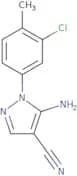
CAS:Versatile small molecule scaffoldFormula:C10H6Cl2N4Purezza:Min. 95%Peso molecolare:253.08 g/mol5-Amino-1-(3-chloro-4-methylphenyl)-1H-pyrazole-4-carbonitrile
CAS:Versatile small molecule scaffoldFormula:C11H9ClN4Purezza:Min. 95%Peso molecolare:232.67 g/mol(4-Chloro-2-methylphenyl)hydrazine
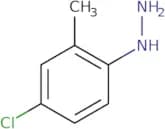
CAS:4-Chloro-2-methylphenyl)hydrazine is a nitrogenous organic chemical that has the molecular formula CHClN. It is a basic compound with a pKb of 16.1 and an elemental analysis of C, 72.63%; H, 6.25%; N, 17.76%. 4-Chloro-2-methylphenyl)hydrazine is soluble in chloroform and insoluble in water. This chemical forms adducts and chelate complexes with metal ions such as nickel and cobalt, but does not form complexes with copper or zinc ions.Formula:C7H9ClN2Purezza:Min. 95%Peso molecolare:156.61 g/mol5-Phenyl-1,2,3-thiadiazole-4-carboxylic acid
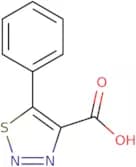
CAS:Versatile small molecule scaffoldFormula:C9H6N2O2SPurezza:Min. 95%Peso molecolare:206.22 g/mol2-(Chloromethyl)-3,6-dichloropyridine
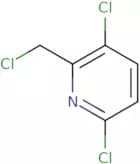
CAS:Versatile small molecule scaffold
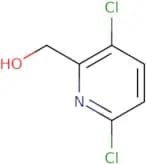
Formula:C6H4Cl3NPurezza:Min. 95%Peso molecolare:196.46 g/mol3,6-Dichloropyridine-2-methanol
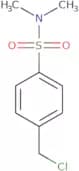
CAS:Versatile small molecule scaffoldFormula:C6H5Cl2NOPurezza:Min. 95%Peso molecolare:178.02 g/mol4-(Chloromethyl)-N,N-dimethylbenzene-1-sulfonamide
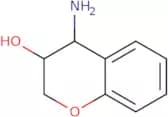
CAS:Versatile small molecule scaffoldFormula:C9H12ClNO2SPurezza:Min. 95%Peso molecolare:233.72 g/molrac-(3R,4R)-4-Amino-3,4-dihydro-2H-1-benzopyran-3-ol
CAS:Versatile small molecule scaffold
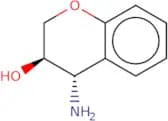
Formula:C9H11NO2Purezza:Min. 95%Peso molecolare:165.19 g/molrac-(3R,4S)-4-Amino-3,4-dihydro-2H-1-benzopyran-3-ol
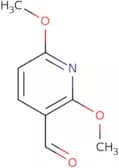
CAS:Versatile small molecule scaffoldFormula:C9H11NO2Purezza:Min. 95%Peso molecolare:165.2 g/mol2,6-Dimethoxypyridine-3-carbaldehyde
CAS:2,6-Dimethoxypyridine-3-carbaldehyde is a chemical that is used in the production of other chemicals. It is also used as an antifungal agent in vitro. 2,6-Dimethoxypyridine-3-carbaldehyde is activated by irradiation with ultraviolet light. The yield and reactivity are increased when it is used in the presence of catalysts such as thiosemicarbazide. Candida albicans and Aspergillus parasiticus can be inhibited by this compound at low concentrations. 2,6-Dimethoxypyridine-3-carbaldehyde has been shown to inhibit growth of Aspergillus on a petri dish, but not Candida albicans cells. This may be due to its inability to cross the cell membrane or because Candida albicans cells are able to synthesize their own pyridoxine (vitamin B6).Formula:C8H9NO3Purezza:Min. 95%Peso molecolare:167.16 g/mol6-(2-Bromoacetyl)-3,4-dihydro-2H-1,4-benzoxazin-3-one
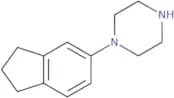
CAS:Versatile small molecule scaffoldFormula:C10H8BrNO3Purezza:Min. 95%Peso molecolare:270.08 g/mol1-(2,3-Dihydro-1H-inden-5-yl)piperazine
CAS:Prodotto controllatoVersatile small molecule scaffold
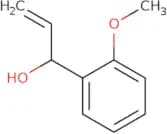
Formula:C13H18N2Purezza:Min. 95%Peso molecolare:202.3 g/mol1-(2-Methoxyphenyl)prop-2-en-1-ol
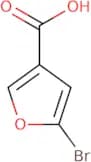
CAS:Versatile small molecule scaffoldFormula:C10H12O2Purezza:Min. 95%Peso molecolare:164.2 g/mol2-Bromofuran-4-carboxylic acid
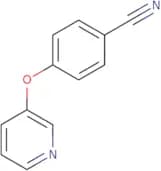
CAS:2-Bromofuran-4-carboxylic acid is a heterocyclic compound that has been reported in the synthesis of dioxaspiro[5.5]undecane frameworks. It is also found in the synthesis of butenolides and intramolecular reactions. The synthetic studies on 2-bromofuran-4-carboxylic acid have shown that it can be used as a building block for heterocycles with novel structures.Formula:C5H3BrO3Purezza:Min. 95%Peso molecolare:190.98 g/mol4-(Pyridin-3-yloxy)benzonitrile
CAS:Versatile small molecule scaffoldFormula:C12H8N2OPurezza:Min. 95%Peso molecolare:196.2 g/mol4-[(5-Bromopyridin-2-yl)oxy]benzoic acid
CAS:Versatile small molecule scaffoldFormula:C12H8BrNO3Purezza:Min. 95%Peso molecolare:294.1 g/mol4-[(4-Methylpyridin-2-yl)oxy]benzoic acid
CAS:Versatile small molecule scaffold
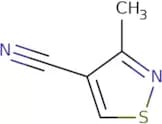
Formula:C13H11NO3Purezza:Min. 95%Peso molecolare:229.2 g/mol3-Methylisothiazole-4-carbonitrile
CAS:Versatile small molecule scaffoldFormula:C5H4N2SPurezza:Min. 95%Peso molecolare:124.16 g/mol3-Bromo-2-methylbenzofuran
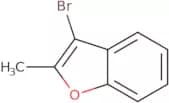
CAS:3-Bromo-2-methylbenzofuran is a chiral compound that has been shown to stabilize the DNA of irradiated, homochiral DNA. It is also used as an intermediate in the synthesis of other compounds. 3-Bromo-2-methylbenzofuran has a high melting point, which makes it difficult to purify. The compound crystallizes unsymmetrically and fluoresces. It can undergo photochromism and isomerization under ultraviolet light. 3-Bromo-2-methylbenzofuran has a low solubility in water and can be toxic if inhaled or ingested. This compound exhibits fluorescence properties, which may be due to its ability to absorb light at wavelengths longer than 400 nm and emit light at wavelengths shorter than 400 nm.
Formula:C9H7BrOPurezza:Min. 95%Peso molecolare:211.06 g/mol5,8-dimethoxyquinoline
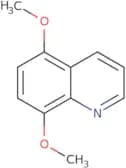
CAS:5,8-dimethoxyquinoline is a nitrate that is used in the synthesis of heterocyclic compounds. It can be prepared by alkylation of 5,8-dimethoxybenzaldehyde with methyl iodide and sodium nitrite in the presence of ethanol or by the reaction of 2-nitropropane with benzaldehyde. The n-oxide of this compound has been shown to have activity against solid tumours and human lung carcinoma cell lines. 5,8-Dimethoxyquinoline reacts with dimethylhydrazone to form an unstable carbonyl intermediate which undergoes a 1,2-shift in nmr chemical shift.Formula:C11H11NO2Purezza:Min. 95%Peso molecolare:189.21 g/mol3-(3-Amino-1H-pyrazol-1-yl)propanenitrile
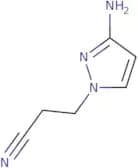
CAS:Versatile small molecule scaffold
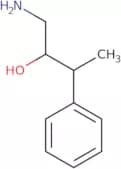
Formula:C6H8N4Purezza:Min. 95%Peso molecolare:136.15 g/mol1-Amino-3-phenylbutan-2-ol
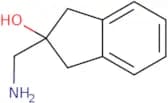
CAS:Versatile small molecule scaffoldFormula:C10H15NOPurezza:Min. 95%Peso molecolare:165.23 g/mol2-(Aminomethyl)-2,3-dihydro-1H-inden-2-ol
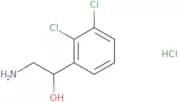
CAS:Versatile small molecule scaffoldFormula:C10H13NOPurezza:Min. 95%Peso molecolare:163.22 g/mol2-Amino-1-(2,3-dichloro-phenyl)-ethanol
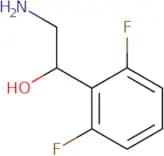
CAS:Versatile small molecule scaffoldFormula:C8H10Cl3NOPurezza:Min. 95%Peso molecolare:242.5 g/mol2-Amino-1-(2,6-difluorophenyl)ethan-1-ol
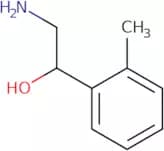
CAS:Versatile small molecule scaffoldFormula:C8H9F2NOPurezza:Min. 95%Peso molecolare:173.16 g/mol2-Amino-1-(2-methylphenyl)ethan-1-ol
CAS:Versatile small molecule scaffold
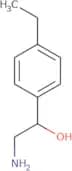
Formula:C9H13NOPurezza:Min. 95%Peso molecolare:151.21 g/mol2-Amino-1-(4-ethylphenyl)ethan-1-ol
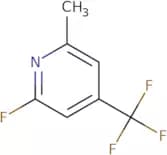
CAS:Versatile small molecule scaffoldFormula:C10H15NOPurezza:Min. 95%Peso molecolare:165.23 g/mol2-Fluoro-6-methyl-4-(trifluoromethyl)pyridine
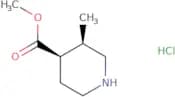
CAS:Versatile small molecule scaffoldFormula:C7H5F4NPurezza:Min. 95%Peso molecolare:179.11 g/molrac-methyl (3R,4R)-3-methylpiperidine-4-carboxylate hydrochloride, cis
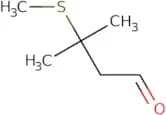
CAS:Versatile small molecule scaffoldFormula:C8H16ClNO2Purezza:Min. 95%Peso molecolare:193.7 g/mol3-Methyl-3-(methylsulfanyl)butanal
CAS:Versatile small molecule scaffoldFormula:C6H12OSPurezza:Min. 95%Peso molecolare:132.23 g/mol

![4-(Imidazo[1,2-a]pyrimidin-2-yl)aniline](/_next/image/?url=https%3A%2Fstatic.cymitquimica.com%2Fproducts%2F3D%2Fthumb-webp%2FICA60993.webp&w=3840&q=75)
![3-Methyl-4H,5H-[1,2]thiazolo[5,4-d]pyrimidin-4-one](/_next/image/?url=https%3A%2Fstatic.cymitquimica.com%2Fproducts%2F3D%2Fthumb-webp%2FICA64895.webp&w=3840&q=75)




![1-[4-(Pyrrolidine-1-sulfonyl)phenyl]ethan-1-one](/_next/image/?url=https%3A%2Fstatic.cymitquimica.com%2Fproducts%2F3D%2Fthumb-webp%2FICA72233.webp&w=3840&q=75)
![1-[4-(Piperidine-1-sulfonyl)phenyl]ethan-1-one](/_next/image/?url=https%3A%2Fstatic.cymitquimica.com%2Fproducts%2F3D%2Fthumb-webp%2FICA72234.webp&w=3840&q=75)
![1-[4-(Morpholine-4-sulfonyl)phenyl]ethan-1-one](/_next/image/?url=https%3A%2Fstatic.cymitquimica.com%2Fproducts%2F3D%2Fthumb-webp%2FICA72235.webp&w=3840&q=75)
![2-Bromo-1-[4-(piperidine-1-sulfonyl)phenyl]ethan-1-one](/_next/image/?url=https%3A%2Fstatic.cymitquimica.com%2Fproducts%2F3D%2Fthumb-webp%2FICA72239.webp&w=3840&q=75)

![2-Bromo-1-[4-(morpholine-4-sulfonyl)phenyl]ethan-1-one](/_next/image/?url=https%3A%2Fstatic.cymitquimica.com%2Fproducts%2F3D%2Fthumb-webp%2FICA76059.webp&w=3840&q=75)


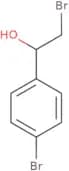
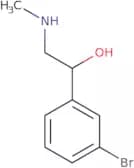
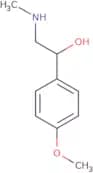
![Pyridine, 1,2,3,6-tetrahydro-4-[4-(trifluoromethyl)phenyl]-, hydrochloride](/_next/image/?url=https%3A%2Fstatic.cymitquimica.com%2Fproducts%2F3D%2Fthumb-webp%2FICA77852.webp&w=3840&q=75)

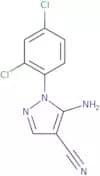
![4-[(5-Bromopyridin-2-yl)oxy]benzoic acid](/_next/image/?url=https%3A%2Fstatic.cymitquimica.com%2Fproducts%2F3D%2Fthumb-webp%2FICA83585.webp&w=3840&q=75)
![4-[(4-Methylpyridin-2-yl)oxy]benzoic acid](/_next/image/?url=https%3A%2Fstatic.cymitquimica.com%2Fproducts%2F3D%2Fthumb-webp%2FICA83587.webp&w=3840&q=75)