


Building Blocks
Sottocategorie di "Building Blocks"
- Acidi boronici e derivati dell'acido boronico(5.778 prodotti)
- Building Blocks Chirali(1.243 prodotti)
- Building Blocks Idrocarburici(6.099 prodotti)
- Building Blocks organici(61.038 prodotti)
Trovati 205376 prodotti di "Building Blocks"
2-[(tert-Butoxy)carbonyl]-2-azaspiro[4.4]nonane-1-carboxylic acid
CAS:Versatile small molecule scaffold
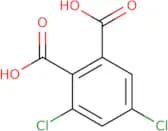
Formula:C14H23NO4Purezza:Min. 95%Peso molecolare:269.3 g/mol3,5-Dichlorophthalic acid
CAS:3,5-Dichlorophthalic acid is a divalent organic acid that is used as an intermediate in the production of other chemicals. 3,5-Dichlorophthalic acid is used as a regulator of plant growth and development. It can also be used to make different n-substituted compounds, such as naphthalene, phthalic anhydride, and 2,6-dichloro-pyridine.
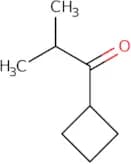
Formula:C8H4Cl2O4Purezza:Min. 95%Peso molecolare:235.02 g/mol1-Cyclobutyl-2-methylpropan-1-one
CAS:Versatile small molecule scaffold
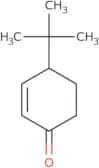
Formula:C8H14OPurezza:Min. 95%Peso molecolare:126.2 g/mol4-tert-Butylcyclohex-2-en-1-one
CAS:Versatile small molecule scaffold
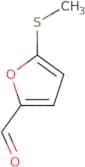
Formula:C10H16OPurezza:Min. 95%Peso molecolare:152.23 g/mol5-(Methylsulfanyl)furan-2-carbaldehyde
CAS:Versatile small molecule scaffold
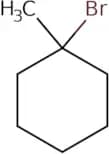
Formula:C6H6O2SPurezza:Min. 95%Peso molecolare:142.18 g/mol1-Bromo-1-methylcyclohexane
CAS:1-Bromo-1-methylcyclohexane is a monomolecular gas that is used as an intermediate in organic synthesis. It reacts with halides to form cyclopentyl derivatives. This reaction has been shown to be faster than the corresponding reaction of 1-bromocyclohexane with chlorides or bromides. The rate of this reaction may be due to the polarizability and conformational changes of the molecule upon substitution by a methyl group. 1-Bromo-1-methylcyclohexane is also an ionizing reagent, which means it can cause electrophilic reactions to occur on other molecules. It has been found that the solvent effect on this product can affect its reactivity, with solvents such as water having more of an effect than solvents such as benzene. 1-Bromo-1-methylcyclohexane has been shown to interact with other compounds in both transfer and complex
Formula:C7H13BrPurezza:Min. 95%Peso molecolare:177.08 g/mol6-Methyl-4-azaspiro[2.5]octane hydrochloride
CAS:Versatile small molecule scaffoldFormula:C8H16ClNPurezza:Min. 95%Peso molecolare:161.7 g/molN-[Carbamothioyl(phenyl)methyl]benzamide
CAS:Versatile small molecule scaffold
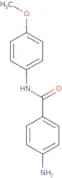
Formula:C15H14N2OSPurezza:Min. 95%Peso molecolare:270.3 g/mol4-Amino-n-(4-methoxyphenyl)benzamide
CAS:4-Amino-N-(4-methoxyphenyl)benzamide is a catalytic sulfamate that has been optimized for use in the synthesis of benzimidazole derivatives. 4-Amino-N-(4-methoxyphenyl)benzamide is used as a reagent for the preparation of aldehydes from sulfamic acid and various types of carboxylic acids. The reaction mechanism involves nucleophilic attack by the hydroxyl group from the sulfamate on the carbonyl carbon atom to form an intermediate, which then reacts with water to release hydrogen sulfate and form a new double bond.
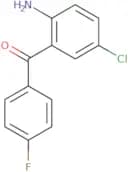
Formula:C14H14N2O2Purezza:Min. 95%Peso molecolare:242.27 g/mol4-Chloro-2-(4-fluorobenzoyl)aniline
CAS:Versatile small molecule scaffold
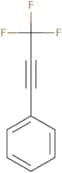
Formula:C13H9ClFNOPurezza:Min. 95%Peso molecolare:249.67 g/mol(3,3,3-Trifluoroprop-1-yn-1-yl)benzene
CAS:(3,3,3-Trifluoroprop-1-yn-1-yl)benzene is a reaction product that can be used to inhibit the activity of metalloprotease and as an anti-cancer agent. This compound inhibits the enzyme that causes chronic kidney disease and degenerative diseases. It is a potent inhibitor of metalloprotease, which is involved in cancer progression, fatty acid synthesis and bone formation. The effective dose for this drug is between 1 and 10mg/kg body weight. It has been shown to have an asymmetric synthesis with the use of amido groups. (3,3,3-Trifluoroprop-1-yn-1-yl)benzene also has antirheumatic properties due to its ability to inhibit proteases such as matrix metalloproteinases and cathepsins.
Formula:C9H5F3Purezza:Min. 95%Peso molecolare:170.13 g/mol1,1-Bis(bromomethyl)cyclobutane
CAS:Versatile small molecule scaffold
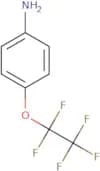
Formula:C6H10Br2Purezza:Min. 95%Peso molecolare:241.95 g/mol4-(Perfluoroethoxy)aniline
CAS:Versatile small molecule scaffold
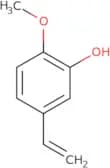
Formula:C8H6F5NOPurezza:Min. 95%Peso molecolare:227.13 g/mol5-Ethenyl-2-methoxyphenol
CAS:5-Ethenyl-2-methoxyphenol is a volatile compound that has been isolated from the bark of the cinnamon tree. It has shown anticancer activities "in vitro" and "in vivo". 5-Ethenyl-2-methoxyphenol has been shown to be demethylated by cytochrome P450 enzymes, which may result in its antitumor activity. This active compound can also be detected in postharvested fruit and vegetables as well as processed foods such as apple juice, tomato sauce, and dried fruits. 5-Ethenyl-2-methoxyphenol is responsible for the characteristic flavor of cinnamon, so it is often used as a flavoring agent in food processing.
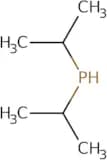
Formula:C9H10O2Purezza:Min. 95%Colore e forma:PowderPeso molecolare:150.17 g/molDiisopropylphosphine, 10wt.% in hexane
CAS:Please enquire for more information about Diisopropylphosphine, 10wt.% in hexane including the price, delivery time and more detailed product information at the technical inquiry form on this page
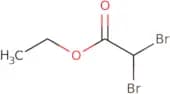
Formula:C6H15PPurezza:Min. 95%Peso molecolare:118.16 g/molAcetic acid, dibromo-, ethyl ester
CAS:Acetic acid, dibromo-, ethyl ester is a reactive molecule that can be used as a nucleophilic substituent. It has hydroxyl group and ruthenium complex. It is a particle that can be used in the production of monoclonal antibodies. Acetic acid, dibromo-, ethyl ester also has viscosity and polycarboxylic acid. This chemical reacts with β-unsaturated ketones to form polymerization initiator. Acetic acid, dibromo-, ethyl ester also has carbonyl group and monoclonal antibodies. Acetic acid, dibromo-, ethyl ester can be conjugated with ethyl bromoacetate to produce conjugates.
Formula:C4H6Br2O2Purezza:Min. 95%Peso molecolare:245.9 g/mol2-[(3-Nitrophenyl)formamido]acetic acid
CAS:2-[(3-Nitrophenyl)formamido]acetic acid (2NPA) is a modifying agent that has been used in the modification of carboxyl groups. It can react with nucleophiles to form adducts and with carbodiimides to form ureas. 2NPA reacts with amino acids, peptides, and other nitrogenous compounds at their carboxyl groups to form ester or amide bonds. The nature of the residues after modification varies depending on the nature of the carboxyl group that was modified.
Formula:C9H8N2O5Purezza:Min. 95%Peso molecolare:224.17 g/mol6-Methyl-3,4-dihydro-2H-pyrido[3,2-b][1,4]oxazine
CAS:Versatile small molecule scaffold
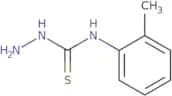
Formula:C8H10N2OPurezza:Min. 95%Peso molecolare:150.18 g/mol4-(2-Methylphenyl)-3-thiosemicarbazide
CAS:4-(2-Methylphenyl)-3-thiosemicarbazide is a crystalline solid that belongs to the group of benzoic acid derivatives. It has an orthorhombic crystal structure, with a yellow color. The crystals are measured at room temperature, and it has an atomic weight of 197.11 g/mol. 4-(2-Methylphenyl)-3-thiosemicarbazide is stable in air and in solution, but decomposes at temperatures above 250°C. This compound has been studied by using X-ray diffraction measurements and Bruker parameters. Its isotropic radiation is recorded at the following wavelength: 1.5418 Å (1).
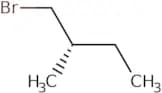
Formula:C8H11N3SPurezza:Min. 95%Peso molecolare:181.26 g/mol(S)-(+)-1-Bromo-2-methylbutane
CAS:(S)-(+)-1-Bromo-2-methylbutane is a chiral molecule with two stereoisomers, the cis and trans forms. The cis form has been observed to be the more stable of the two. It is a functional theory that these two forms are not mirror images of each other because they have different conformations. (S)-(+)-1-Bromo-2-methylbutane has been used in the synthesis of a number of important molecules. The stereoisomers can be distinguished by conformational analysis and optical microscopy. (S)-(+)-1-Bromo-2-methylbutane also has an application in biotechnology for use as a precursor for hydrazones, which are important in organic chemistry and molecular biology, such as DNA sequencing.
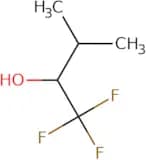
Formula:C5H11BrPurezza:Min. 95%Peso molecolare:151.04 g/mol1,1,1-Trifluoro-3-methylbutan-2-ol
CAS:Versatile small molecule scaffold
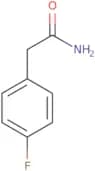
Formula:C5H9F3OPurezza:Min. 95%Peso molecolare:142.12 g/mol2-(4-Fluorophenyl)acetamide
CAS:2-(4-Fluorophenyl)acetamide (FFAA) is a broad-spectrum antiviral drug that has been evaluated against picornavirus, enterovirus, and rhinovirus. FFAA has been shown to be effective in the treatment of acute enterovirus infections in mice. This compound was also found to have a cytopathic effect on cells infected with enteroviruses in culture. It binds to the virus's RNA-dependent RNA polymerase and prevents viral replication. FFAA is not active against influenza A or B viruses, but it is active against influenza C virus. This compound has also been found to have medicinal properties, as it can inhibit the growth of human lung cancer cells in culture and may be useful for treating cancers such as leukemia.
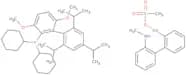
Formula:C8H8FNOPurezza:Min. 95%Peso molecolare:153.15 g/molBrettPhos Pd G4
CAS:BrettPhos Pd G4 is a versatile polymer used in various research applications. It is commonly used in the field of organic chemistry as a catalyst for reactions involving epoxy chloropropane, clofarabine, iminostilbene, glycine, kavalactone, phenylboronic acid, carbamazepine, and other compounds. This polymer acts as a powerful catalyst and facilitates the synthesis of complex molecules by promoting efficient chemical transformations. Additionally, BrettPhos Pd G4 is known for its inhibitory effects on certain enzymes and can be used as an inhibitor in biochemical studies. Its unique properties make it an essential tool for researchers in the field of organic chemistry and beyond.
Formula:C49H68NO5PPdSPurezza:Min. 95%Peso molecolare:920.53 g/molBenzo[d][1,2,3]thiadiazole
CAS:Benzo[d][1,2,3]thiadiazole is a benzothiadiazole with a redox potential of -0.25 V that is stable in the absence of oxygen and light. It can be used to synthesize chemical pesticides by reacting with hydrochloric acid. The reaction mechanism of benzo[d][1,2,3]thiadiazole has been determined using nuclear magnetic resonance spectroscopy and quantum chemical calculations. This compound reacts with hydrogen bond acceptors on the enzyme active site to form covalent bonds. It also interacts with the enzyme's steric environment by forming hydrogen bonds and van der Waals forces. Benzo[d][1,2,3]thiadiazole also emits light when it reacts with nitric oxide in solution.
Formula:C6H4N2SPurezza:Min. 95%Peso molecolare:136.17 g/mol2-Phenylbutan-1-amine HCl
CAS:Versatile small molecule scaffold
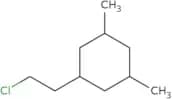
Formula:C10H15N·HClPurezza:Min. 95%Peso molecolare:185.7 g/mol1-(2-Chloroethyl)-3,5-dimethylcyclohexane
CAS:Versatile small molecule scaffold
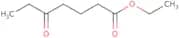
Formula:C10H19ClPurezza:Min. 95%Peso molecolare:174.71 g/molEthyl 5-oxoheptanoate
CAS:Ethyl 5-oxoheptanoate is a clear, colorless liquid that can be synthesized by reacting benzene with acetone. The synthesis of ethyl 5-oxoheptanoate is an example of a Friedel-Crafts reaction. This chemical is soluble in organic solvents such as acetone and cyclohexane and has low toxicity. It can be used as a reagent for the preparation of esters from alcohols, phenols, or carboxylic acids. Ethyl 5-oxoheptanoate can also be used to prepare resorcinol, which is a precursor to polymers and dyes, by hydrogenation of the molecule. Preparative methods are often used to produce this product because it has limited solubility in water.
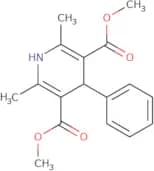
Formula:C9H16O3Purezza:Min. 95%Peso molecolare:172.22 g/molDimethyl 2,6-dimethyl-4-phenyl-1,4-dihydropyridine-3,5-dicarboxylate
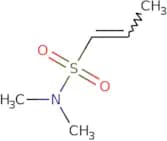
CAS:Dimethyl 2,6-dimethyl-4-phenyl-1,4-dihydropyridine-3,5-dicarboxylate is a radioligand that binds to calcium channels. It is used as a radioligand in binding studies to determine the affinity of various drugs for specific types of calcium channels. Dimethyl 2,6-dimethyl-4-phenyl-1,4-dihydropyridine 3,5 dicarboxylate has been shown to bind specifically to a particular class of calcium channel antagonists (i.e., monosubstituted) and can be used as a pharmacological probe for the study of these compounds.Formula:C17H19NO4Purezza:Min. 95%Peso molecolare:301.34 g/molN,N-Dimethylprop-1-ene-1-sulfonamide
CAS:Versatile small molecule scaffold
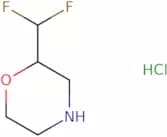
Formula:C5H11NO2SPurezza:Min. 95%Peso molecolare:149.2 g/mol2-(Difluoromethyl)morpholine hydrochloride
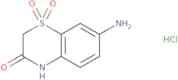
CAS:Versatile small molecule scaffoldFormula:C5H10ClF2NOPurezza:Min. 95%Peso molecolare:173.59 g/mol7-amino-2H-1,4-benzothiazin-3(4H)-one 1,1-dioxide hydrochloride
CAS:Versatile small molecule scaffold
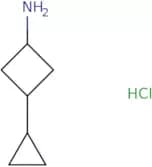
Formula:C8H9ClN2O3SPurezza:Min. 95%Peso molecolare:248.69 g/mol3-Cyclopropylcyclobutan-1-amine hydrochloride, somers
CAS:Versatile small molecule scaffold
Formula:C7H14ClNPurezza:Min. 95%Peso molecolare:147.64 g/mol(4-Hydroxy-5-methoxypent-1-yn-1-yl)trimethylsilane
CAS:Versatile small molecule scaffoldFormula:C9H18O2SiPurezza:Min. 95%Peso molecolare:186.32 g/mol(1,2-Thiazol-5-yl)methanamine hydrochloride
CAS:Versatile small molecule scaffold
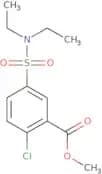
Formula:C4H7ClN2SPurezza:Min. 95%Peso molecolare:150.63 g/molMethyl 2-chloro-5-(diethylsulfamoyl)benzoate
CAS:Versatile small molecule scaffold
Formula:C12H16ClNO4SPurezza:Min. 95%Peso molecolare:305.78 g/mol4-[(Benzylamino)methyl]thian-4-ol
CAS:Versatile small molecule scaffold
Formula:C13H19NOSPurezza:Min. 95%Peso molecolare:237.4 g/mol[2-(3-Methoxyphenyl)ethyl][(trimethyl-1H-pyrazol-4-yl)methyl]amine
CAS:Versatile small molecule scaffold
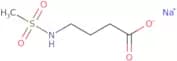
Formula:C16H23N3OPurezza:Min. 95%Peso molecolare:273.37 g/molSodium 4-methanesulfonamidobutanoate
CAS:Versatile small molecule scaffold
Formula:C5H10NNaO4SPurezza:Min. 95%Peso molecolare:203.19 g/molrac-(3aR,6aS)-Hexahydropyrrolo[3,4-c]pyrrol-1(2H)-one hydrochloride
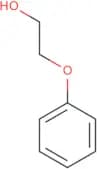
CAS:Versatile small molecule scaffoldFormula:C6H11ClN2OPurezza:Min. 95%Peso molecolare:162.62 g/mol2-Phenoxyethanol-1,1-d2
CAS:Versatile small molecule scaffold
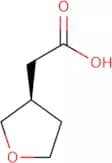
Formula:C8H10O2Purezza:Min. 95%Peso molecolare:140.18 g/mol(R)-2-(Tetrahydrofuran-3-yl)acetic Acid
CAS:Versatile small molecule scaffold
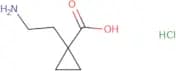
Formula:C6H10O3Purezza:Min. 95%Peso molecolare:130.14 g/mol1-(2-aminoethyl)cyclopropane-1-carboxylic acid hydrochloride
CAS:Versatile small molecule scaffold
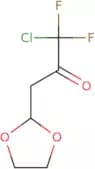
Formula:C6H12ClNO2Purezza:Min. 95%Peso molecolare:165.62 g/mol1-Chloro-3-(1,3-dioxolan-2-yl)-1,1-difluoropropan-2-one
CAS:Versatile small molecule scaffold
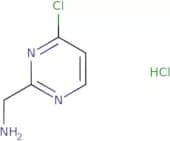
Formula:C6H7ClF2O3Purezza:Min. 95%Peso molecolare:200.57 g/mol2-(Aminomethyl)-4-chloropyrimidine HCl
CAS:Versatile small molecule scaffold
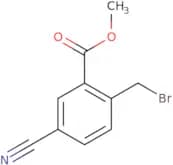
Formula:C5H7Cl2N3Purezza:Min. 95%Peso molecolare:180.04 g/molMethyl 2-(bromomethyl)-5-cyanobenzoate
CAS:Versatile small molecule scaffold
Formula:C10H8BrNO2Purezza:Min. 95%Peso molecolare:254.08 g/mol2-[1-(Difluoromethyl)-3,5-dimethyl-1H-pyrazol-4-yl]acetic acid
CAS:Prodotto controllato2-[1-(Difluoromethyl)-3,5-dimethyl-1H-pyrazol-4-yl]acetic acid is a potent inhibitor of peptide binding to the receptor. It has a Kd value of 0.2 μM and a Ki value of 1.6 μM in the inhibition of insulin binding to its receptor. 2-[1-(Difluoromethyl)-3,5-dimethyl-1H-pyrazol-4-yl]acetic acid is also an activator of protein interactions and ligand for research tools used for studying ion channels and other receptors. This chemical can be used as high purity reagent for life sciences, including cell biology and pharmacology.
Formula:C8H10F2N2O2Purezza:Min. 95%Peso molecolare:204.17 g/mol1-[(3-Bromothiophen-2-yl)methyl]piperazine
CAS:Versatile small molecule scaffold
Formula:C9H13BrN2SPurezza:Min. 95%Peso molecolare:261.18 g/moltert-Butyl 4-[(aminocarbamothioyl)amino]piperidine-1-carboxylate
CAS:Versatile small molecule scaffold
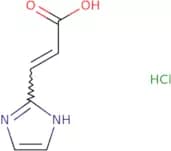
Formula:C11H22N4O2SPurezza:Min. 95%Peso molecolare:274.4 g/mol(2E)-3-(1H-Imidazol-2-yl)prop-2-enoic acid hydrochloride
CAS:Versatile small molecule scaffold
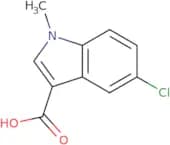
Formula:C6H7ClN2O2Purezza:Min. 95%Peso molecolare:174.58 g/mol5-Chloro-1-methyl-1H-indole-3-carboxylic acid
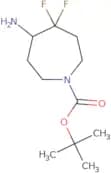
CAS:Prodotto controllatoVersatile small molecule scaffoldFormula:C10H8ClNO2Purezza:Min. 95%Peso molecolare:209.63 g/moltert-Butyl 5-amino-4,4-difluoroazepane-1-carboxylate
CAS:Versatile small molecule scaffold
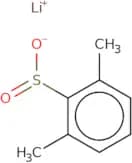
Formula:C11H20F2N2O2Purezza:Min. 95%Peso molecolare:250.29 g/mol2,6-dimethylbenzene-1-sulfinate lithium
CAS:Versatile small molecule scaffoldFormula:C8H9LiO2SPurezza:Min. 95%Peso molecolare:176.2 g/molMethyl 3-tert-butyl-1,2,3,4-tetrahydroquinoline-6-carboxylate hydrochloride
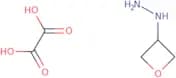
CAS:Versatile small molecule scaffoldFormula:C15H22ClNO2Purezza:Min. 95%Peso molecolare:283.8 g/mol(Oxetan-3-yl)hydrazine, oxalic acid
CAS:Versatile small molecule scaffold
Formula:C5H10N2O5Purezza:Min. 95%Peso molecolare:178.1 g/mol3-([(tert-Butoxy)carbonyl]amino)-2-(cyclopentylmethyl)propanoic acid
CAS:Versatile small molecule scaffold
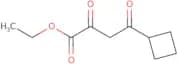
Formula:C14H25NO4Purezza:Min. 95%Peso molecolare:271.35 g/molEthyl 4-cyclobutyl-2,4-dioxobutanoate
CAS:Versatile small molecule scaffoldFormula:C10H14O4Purezza:Min. 95%Peso molecolare:198.22 g/mol2-[(3,5-Dimethylphenyl)formamido]acetic acid
CAS:2-[(3,5-Dimethylphenyl)formamido]acetic acid is a compound with diverse applications and characteristics. It is a diphenyl ether that can be used as an electrode material in various electronic devices. Additionally, it has cholinergic properties, meaning it affects the neurotransmitter acetylcholine in the nervous system.
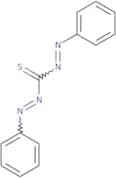
Formula:C11H13NO3Purezza:Min. 95%Peso molecolare:207.23 g/mol1,3-Bis(phenylimino)thiourea
CAS:Versatile small molecule scaffold
Formula:C13H10N4SPurezza:Min. 95%Peso molecolare:254.31 g/molMethyl 5-bromo-3-(bromomethyl)furan-2-carboxylate
CAS:Versatile small molecule scaffold
Formula:C7H6Br2O3Purezza:Min. 95%Peso molecolare:297.93 g/mol5-(Chloromethyl)-3-methyl-1-phenyl-1H-pyrazole-4-carbonitrile
CAS:Versatile small molecule scaffold
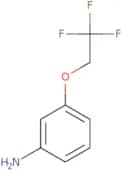
Formula:C12H10ClN3Purezza:Min. 95%Peso molecolare:231.68 g/mol3-(2,2,2-Trifluoroethoxy)aniline
CAS:Versatile small molecule scaffold
Formula:C8H8F3NOPurezza:Min. 95%Peso molecolare:191.15 g/molrac-(2R,4S)-1-[(tert-Butoxy)carbonyl]-4-ethylpiperidine-2-carboxylic acid
CAS:Versatile small molecule scaffoldFormula:C13H23NO4Purezza:Min. 95%Peso molecolare:257.33 g/mol2-(5-Chloro-1-methyl-1H-imidazol-2-yl)-2,2-difluoroacetic acid hydrochloride
CAS:Versatile small molecule scaffoldFormula:C6H6Cl2F2N2O2Purezza:Min. 95%Peso molecolare:247 g/mol4-Acetyl-5-methyl-3-(propan-2-yl)-1H-pyrrole-2-carboxylic acid
CAS:Versatile small molecule scaffold
Formula:C11H15NO3Purezza:Min. 95%Peso molecolare:209.24 g/molN-{4-[(Carbamimidoylmethyl)sulfanyl]phenyl}-2,2-dimethylpropanamide hydrochloride
CAS:Versatile small molecule scaffoldFormula:C13H20ClN3OSPurezza:Min. 95%Peso molecolare:301.84 g/mol1-{[1-(Bromomethyl)cyclopropyl]methoxy}-3-(methoxymethyl)benzene
CAS:Versatile small molecule scaffold
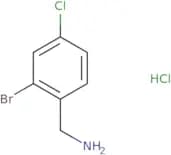
Formula:C13H17BrO2Purezza:Min. 95%Peso molecolare:285.18 g/mol(2-Bromo-4-chlorophenyl)methanamine hydrochloride
CAS:Versatile small molecule scaffold
Formula:C7H8BrCl2NPurezza:Min. 95%Peso molecolare:256.95 g/mol4-Chloro-2-hydroxy-6-methylphenylboronic acid
CAS:Versatile small molecule scaffoldFormula:C7H8BClO3Purezza:Min. 95%Peso molecolare:186.4 g/moltert-Butyl (2,2-difluoro-3-hydroxypropyl)carbamate
CAS:Versatile small molecule scaffoldFormula:C10H13NO4Purezza:Min. 95%Peso molecolare:211.21 g/mol1-Hydroxycyclopentane-1-carbonitrile
CAS:1-Hydroxycyclopentane-1-carbonitrile is a monomer that is hydrolyzed to form benzoin and cyanohydrins. It can be used in the production of scifinder as a monomer or dimerizer.
Formula:C6H9NOPurezza:Min. 95%Peso molecolare:111.14 g/mol4,5-Dihydro-1H-imidazol-2-amine hydrochloride
CAS:Please enquire for more information about 4,5-Dihydro-1H-imidazol-2-amine hydrochloride including the price, delivery time and more detailed product information at the technical inquiry form on this page
Formula:C3H7N3•HClPurezza:Min. 95%Peso molecolare:121.57 g/mol3-Hydroxy-5-methylpyridine
CAS:3-Hydroxy-5-methylpyridine (3HMP) is a chemical substance that has been classified as an amine. It is a product of the metabolism of purines, which are nitrogenous bases found in DNA and RNA. 3HMP is produced by aerogenic bacteria (such as Enterobacter), and can be used to estimate the number of these bacteria present in water samples. 3HMP has been shown to have antiviral properties against influenza virus, and can be used as a biomarker for the presence of other viruses in animals. 3HMP also has mineralization properties, which have been studied extensively, particularly with regards to pancreatic disease.
Formula:C6H7NOPurezza:Min. 95%Colore e forma:PowderPeso molecolare:109.13 g/molRef: 3D-FH16174
Prodotto fuori produzione8-Bromo-2-methylimidazo[1,2-a]pyridine
CAS:Versatile small molecule scaffold
Formula:C8H7N2BrPurezza:Min. 95%Peso molecolare:211.05 g/mol2-Bromo-3,3,3-trifluoro-1-propene
CAS:Prodotto controllato2-Bromo-3,3,3-trifluoro-1-propene is a chemical compound that has been synthesized in an asymmetric reaction. The reactant is bromopropane and the product is 2,2,2-trifluoropropene. The methylene group on the propene molecule is activated by the nucleophilic attack of a fluoride ion from hydrogen fluoride to form a cavity with a highly strained bond. The kinetic study of this reaction revealed that the activation energy for the reaction is 42 kJ/mol. Palladium-catalyzed coupling reactions are catalyzed by palladium and require nonpolar solvents such as toluene or dichloromethane. This type of reaction has been shown to be exothermic with an isolated yield of 1%.
Formula:C3H2BrF3Purezza:Min. 95%Colore e forma:Colorless PowderPeso molecolare:174.95 g/mol4,5-Dihydroxy-2,3-Pentanedione
CAS:4,5-Dihydroxy-2,3-pentanedione is a carbonyl compound that is the product of the oxidation of ascorbic acid. It is used in wastewater treatment and has antimicrobial properties against infectious diseases. This compound has been shown to inhibit protein synthesis by binding to the ribosome and preventing the formation of peptide bonds between amino acids. 4,5-Dihydroxy-2,3-pentanedione has also been shown to bind to plasma proteins, which may be due to its acyl chain structure. 4,5-Dihydroxy-2,3-pentanedione can be synthesized in a catalytic mechanism that involves dehydroascorbic acid and molecular oxygen.
Formula:C5H8O4Purezza:Min. 95%Colore e forma:PowderPeso molecolare:132.11 g/molRef: 3D-FD180770
Prodotto fuori produzionePiperyline
CAS:Piperyline is an alkanoic acid that has shown to be effective against skin cancer. It also has antimicrobial properties, which may be due to its ability to bind metal ions and form polymeric compounds. Piperyline inhibits microbial growth by inhibiting the synthesis of proteins and nucleic acids. The antimicrobial activity is related to its cationic polymerization with hydroxyl groups, which forms a structure that can inhibit microbial enzymes and disrupt microbial cell membranes. This compound also interacts with the skin's natural lipids, making it difficult for microorganisms to attach and grow on the skin. Piperyline is synthesized in organic chemistry laboratories as an amide precursor of other pharmaceuticals such as penicillin.
Formula:C16H17NO3Purezza:Min. 95%Peso molecolare:271.31 g/mol
![2-[(tert-Butoxy)carbonyl]-2-azaspiro[4.4]nonane-1-carboxylic acid](/_next/image/?url=https%3A%2Fstatic.cymitquimica.com%2Fproducts%2F3D%2Fthumb-webp%2FUTD67923.webp&w=3840&q=75)

![6-Methyl-4-azaspiro[2.5]octane hydrochloride](/_next/image/?url=https%3A%2Fstatic.cymitquimica.com%2Fproducts%2F3D%2Fthumb-webp%2FUTD67939.webp&w=3840&q=75)
![N-[Carbamothioyl(phenyl)methyl]benzamide](/_next/image/?url=https%3A%2Fstatic.cymitquimica.com%2Fproducts%2F3D%2Fthumb-webp%2FAAA89278.webp&w=3840&q=75)

![2-[(3-Nitrophenyl)formamido]acetic acid](/_next/image/?url=https%3A%2Fstatic.cymitquimica.com%2Fproducts%2F3D%2Fthumb-webp%2FAAA61710.webp&w=3840&q=75)
![6-Methyl-3,4-dihydro-2H-pyrido[3,2-b][1,4]oxazine](/_next/image/?url=https%3A%2Fstatic.cymitquimica.com%2Fproducts%2F3D%2Fthumb-webp%2FVAA56767.webp&w=3840&q=75)
![Benzo[d][1,2,3]thiadiazole](/_next/image/?url=https%3A%2Fstatic.cymitquimica.com%2Fproducts%2F3D%2Fthumb-webp%2FAAA27377.webp&w=3840&q=75)

![4-[(Benzylamino)methyl]thian-4-ol](/_next/image/?url=https%3A%2Fstatic.cymitquimica.com%2Fproducts%2F3D%2Fthumb-webp%2FVNC88729.webp&w=3840&q=75)
![[2-(3-Methoxyphenyl)ethyl][(trimethyl-1H-pyrazol-4-yl)methyl]amine](/_next/image/?url=https%3A%2Fstatic.cymitquimica.com%2Fproducts%2F3D%2Fthumb-webp%2FVWB92946.webp&w=3840&q=75)
![rac-(3aR,6aS)-Hexahydropyrrolo[3,4-c]pyrrol-1(2H)-one hydrochloride](/_next/image/?url=https%3A%2Fstatic.cymitquimica.com%2Fproducts%2F3D%2Fthumb-webp%2FVXC58134.webp&w=3840&q=75)
![2-[1-(Difluoromethyl)-3,5-dimethyl-1H-pyrazol-4-yl]acetic acid](/_next/image/?url=https%3A%2Fstatic.cymitquimica.com%2Fproducts%2F3D%2Fthumb-webp%2FWYB72452.webp&w=3840&q=75)
![1-[(3-Bromothiophen-2-yl)methyl]piperazine](/_next/image/?url=https%3A%2Fstatic.cymitquimica.com%2Fproducts%2F3D%2Fthumb-webp%2FWYB72635.webp&w=3840&q=75)
![tert-Butyl 4-[(aminocarbamothioyl)amino]piperidine-1-carboxylate](/_next/image/?url=https%3A%2Fstatic.cymitquimica.com%2Fproducts%2F3D%2Fthumb-webp%2FXAD88015.webp&w=3840&q=75)

![3-([(tert-Butoxy)carbonyl]amino)-2-(cyclopentylmethyl)propanoic acid](/_next/image/?url=https%3A%2Fstatic.cymitquimica.com%2Fproducts%2F3D%2Fthumb-webp%2FXXC61525.webp&w=3840&q=75)
![2-[(3,5-Dimethylphenyl)formamido]acetic acid](/_next/image/?url=https%3A%2Fstatic.cymitquimica.com%2Fproducts%2F3D%2Fthumb-webp%2FYAA08214.webp&w=3840&q=75)

![rac-(2R,4S)-1-[(tert-Butoxy)carbonyl]-4-ethylpiperidine-2-carboxylic acid](/_next/image/?url=https%3A%2Fstatic.cymitquimica.com%2Fproducts%2F3D%2Fthumb-webp%2FYEA81184.webp&w=3840&q=75)

![N-{4-[(Carbamimidoylmethyl)sulfanyl]phenyl}-2,2-dimethylpropanamide hydrochloride](/_next/image/?url=https%3A%2Fstatic.cymitquimica.com%2Fproducts%2F3D%2Fthumb-webp%2FYGC03402.webp&w=3840&q=75)
![1-{[1-(Bromomethyl)cyclopropyl]methoxy}-3-(methoxymethyl)benzene](/_next/image/?url=https%3A%2Fstatic.cymitquimica.com%2Fproducts%2F3D%2Fthumb-webp%2FYGC03501.webp&w=3840&q=75)





![8-Bromo-2-methylimidazo[1,2-a]pyridine](/_next/image/?url=https%3A%2Fstatic.cymitquimica.com%2Fproducts%2F3D%2Fthumb-webp%2FUXB37475.webp&w=3840&q=75)


