Building Blocks
Sottocategorie di "Building Blocks"
- Acidi boronici e derivati dell'acido boronico(5.778 prodotti)
- Building Blocks Chirali(1.243 prodotti)
- Building Blocks Idrocarburici(6.099 prodotti)
- Building Blocks organici(61.038 prodotti)
Trovati 205376 prodotti di "Building Blocks"
3-(Morpholin-4-yl)pyridin-2-amine
CAS:3-(Morpholin-4-yl)pyridin-2-amine is a heterocycle that has been shown to be an efficient, regioselective, and nitrogen-containing aliphatic amine. It is a synlett that can be used as an aliphatic amine in the synthesis of nitrogen-containing compounds. 3-(Morpholin-4-yl)pyridin-2-amine has been shown to have efficient methods for the preparation of carbonyl compounds.
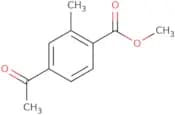
Formula:C9H13N3OPurezza:Min. 95%Peso molecolare:179.22 g/molMethyl 4-acetyl-2-methylbenzoate
CAS:Versatile small molecule scaffold
Formula:C11H12O3Purezza:Min. 95%Peso molecolare:192.21 g/mol({2-[(5-Methylisoxazol-3-yl)amino]-2-oxoethyl}thio)acetic acid
CAS:The peptide is a research tool that can be used to activate certain antibodies and ion channels. It has also been shown to inhibit protein interactions. The peptide is soluble in DMSO, ethanol, and acetonitrile. It has a molecular weight of 438.4 g/mol and an empirical formula of C14H20N2O3S. The CAS number for the peptide is 436091-57-5. The chemical name of the peptide is ({2-[(5-methylisoxazol-3-yl)amino]-2-oxoethyl}thio)acetic acid.
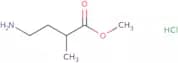
Formula:C8H10N2O4SPurezza:Min. 95%Peso molecolare:230.24 g/molMethyl 4-amino-2-methylbutanoate hydrochloride
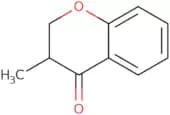
CAS:Versatile small molecule scaffoldFormula:C6H14ClNO2Purezza:Min. 95%Peso molecolare:167.63 g/mol3-Methyl-3,4-dihydro-2H-1-benzopyran-4-one
CAS:Versatile small molecule scaffoldFormula:C10H10O2Purezza:Min. 95%Peso molecolare:162.18 g/molN-[3-Oxo-3-(pyrrolidin-1-yl)propyl]-4H,5H,6H,7H,8H-cyclohepta[b]thiophene-2-carboxamide
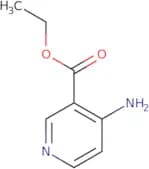
CAS:Versatile small molecule scaffoldFormula:C17H24N2O2SPurezza:Min. 95%Peso molecolare:320.5 g/molEthyl 4-aminonicotinate
CAS:Ethyl 4-aminonicotinate is a cyclic amine with a chemical formula of C6H11NO2. It has a molecular weight of 117.07 g/mol, and its molecular structure consists of an ethyl group attached to the amino group. The molecule has three resonance peaks in the infrared spectrum at 2,617cm-1 (ν(C=O)), 1,906cm-1 ((C=N)), and 1,723 cm-1 (ν(NH)). In addition to these peaks, the molecule also has two magnetic resonance peaks at 2.24ppm (δ) and 3.38ppm (δ). This compound is soluble in water and can be used as an intermediate in organic synthesis or pharmaceuticals.
Formula:C8H10N2O2Purezza:Min. 95%Peso molecolare:166.18 g/mol5-Bromo-1-benzofuran-3-carboxylic acid
CAS:Versatile small molecule scaffold
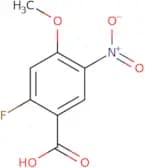
Formula:C9H5BrO3Purezza:Min. 95%Peso molecolare:241.04 g/mol2-Fluoro-4-methoxy-5-nitrobenzoic acid
CAS:Versatile small molecule scaffoldFormula:C8H6FNO5Purezza:Min. 95%Peso molecolare:215.13 g/molRef: 3D-QMC49479
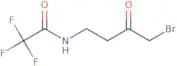
Prodotto fuori produzioneN-(4-Bromo-3-oxobutyl)-2,2,2-trifluoroacetamide
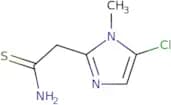
CAS:Versatile small molecule scaffoldFormula:C6H7BrF3NO2Purezza:Min. 95%Peso molecolare:262.02 g/mol2-(5-Chloro-1-methyl-1H-imidazol-2-yl)ethanethioamide
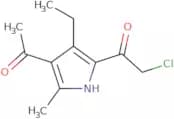
CAS:Versatile small molecule scaffoldFormula:C6H8ClN3SPurezza:Min. 95%Peso molecolare:189.67 g/mol1-(4-Acetyl-3-ethyl-5-methyl-1H-pyrrol-2-yl)-2-chloroethan-1-one
CAS:Versatile small molecule scaffold
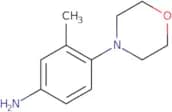
Formula:C11H14ClNO2Purezza:Min. 95%Peso molecolare:227.69 g/mol3-Methyl-4-(4-morpholinyl)aniline
CAS:Versatile small molecule scaffold
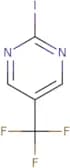
Formula:C11H16N2OPurezza:Min. 95%Peso molecolare:192.26 g/mol2-Iodo-5-(trifluoromethyl)pyrimidine
CAS:Versatile small molecule scaffold
Formula:C5H2F3IN2Purezza:Min. 95%Peso molecolare:273.98 g/mol2-{Imidazo[1,2-a]pyridin-2-yl}-1H-imidazole
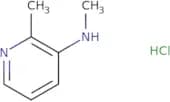
CAS:Versatile small molecule scaffoldFormula:C10H8N4Purezza:Min. 95%Peso molecolare:184.2 g/molN,2-Dimethylpyridin-3-amine hydrochloride
CAS:Versatile small molecule scaffoldFormula:C7H11ClN2Purezza:Min. 95%Peso molecolare:158.63 g/mol2-Mercaptobenzo[d]thiazole-6-carbonitrile
CAS:Versatile small molecule scaffoldFormula:C8H4N2S2Purezza:Min. 95%Peso molecolare:192.25 g/mol4,5,6,7-Tetrahydropyrazolo[1,5-a]pyrazine dihydrochloride
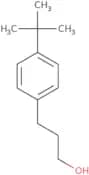
CAS:Versatile small molecule scaffoldFormula:C6H11Cl2N3Purezza:Min. 95%Peso molecolare:196.08 g/mol3-(4-tert-Butylphenyl)propan-1-ol
CAS:Versatile small molecule scaffold
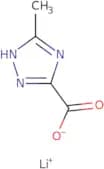
Formula:C13H20OPurezza:Min. 95%Peso molecolare:192.3 g/molLithium 5-methyl-1H-1,2,4-triazole-3-carboxylate
CAS:Versatile small molecule scaffold
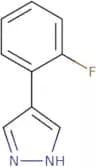
Formula:C4H4LiN3O2Purezza:Min. 95%Peso molecolare:133.1 g/mol4-(2-Fluorophenyl)-1H-pyrazole
CAS:Versatile small molecule scaffold
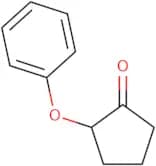
Formula:C9H7FN2Purezza:Min. 95%Peso molecolare:162.16 g/mol2-Phenoxycyclopentan-1-one
CAS:Versatile small molecule scaffold
Formula:C11H12O2Purezza:Min. 95%Peso molecolare:176.21 g/molN-Methyl-7h-pyrrolo[2,3-d]pyrimidin-4-amine
CAS:Versatile small molecule scaffold
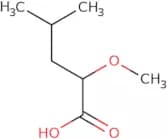
Formula:C7H8N4Purezza:Min. 95%Peso molecolare:148.17 g/mol2-Methoxy-4-methylpentanoic acid
CAS:Versatile small molecule scaffold
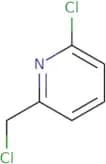
Formula:C7H14O3Purezza:Min. 95%Peso molecolare:146.18 g/mol2-Chloro-6-(chloromethyl)pyridine
CAS:2-Chloro-6-(chloromethyl)pyridine (2C6CP) is a chloride precursor that can be used for the synthesis of metal chlorides, such as copper chlorides. 2C6CP is synthesized by reacting thionyl chloride with the substituted pyridine under anhydrous conditions at -78°C. The resultant 2C6CP is then hydrolyzed to produce the desired chloride.
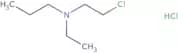
2C6CP has been shown to act as a ligand in coordination chemistry. It was first synthesized by reacting 3-chloropyridine with thionyl chloride and then hydrolyzing it to 2-chloropyridine. This method was later modified to use 4-chlorobenzoyl chloride instead of 3-chloropyridine, producing 2,4-dichloropyridine.Formula:C6H5Cl2NPurezza:Min. 95%Peso molecolare:162.02 g/molN-(2-Chloroethyl)-N-ethylpropan-1-amine hydrochloride
CAS:Prodotto controllatoVersatile small molecule scaffold
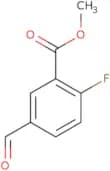
Formula:C7H17Cl2NPurezza:Min. 95%Peso molecolare:186.12 g/molMethyl 2-fluoro-5-formylbenzoate
CAS:Versatile small molecule scaffold
Formula:C9H7FO3Purezza:Min. 95%Peso molecolare:182.15 g/mol[1-(2-Methylphenyl)ethyl](2-methylpropyl)amine
CAS:Versatile small molecule scaffold
Formula:C13H21NPurezza:Min. 95%Peso molecolare:191.31 g/mol3-Amino-3-[3-(trifluoromethoxy)phenyl]propan-1-ol
CAS:Versatile small molecule scaffold
Formula:C10H12F3NO2Purezza:Min. 95%Peso molecolare:235.2 g/mol1-(Pyridin-3-yl)-1H-pyrazole-4-carboxylic acid hydrochloride
CAS:Versatile small molecule scaffold
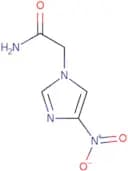
Formula:C9H8ClN3O2Purezza:Min. 95%Peso molecolare:225.63 g/mol2-(4-Nitro-1H-imidazol-1-yl)acetamide
CAS:Versatile small molecule scaffold
Formula:C5H6N4O3Purezza:Min. 95%Peso molecolare:170.13 g/mol1-[2-Fluoro-6-(1-phenylethoxy)phenyl]ethan-1-one
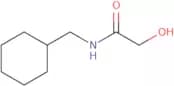
CAS:Versatile small molecule scaffoldFormula:C16H15FO2Purezza:Min. 95%Peso molecolare:258.29 g/molN-(Cyclohexylmethyl)-2-hydroxyacetamide
CAS:Versatile small molecule scaffoldFormula:C9H17NO2Purezza:Min. 95%Peso molecolare:171.24 g/mol4-(5-{[(3-Phenyl-1,2,4-oxadiazol-5-yl)methyl]sulfanyl}-1,3,4-oxadiazol-2-yl)pyridine
CAS:Versatile small molecule scaffoldFormula:C16H11N5O2SPurezza:Min. 95%Peso molecolare:337.4 g/mol8-chloro-3-(propan-2-yl)-[1,2,4]triazolo[4,3-a]pyrazine
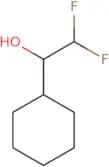
CAS:Versatile small molecule scaffoldFormula:C8H9ClN4Purezza:Min. 95%Peso molecolare:196.64 g/mol1-Cyclohexyl-2,2-difluoroethan-1-ol
CAS:Versatile small molecule scaffold
Formula:C8H14F2OPurezza:Min. 95%Peso molecolare:164.19 g/mol2-[2-({[(9H-Fluoren-9-yl)methoxy]carbonyl}amino)-1,2,3,4-tetrahydronaphthalen-2-yl]acetic acid
CAS:Versatile small molecule scaffold
Formula:C27H25NO4Purezza:Min. 95%Peso molecolare:427.5 g/molrac-(1S,3R)-3-Butylcyclobutan-1-ol
CAS:Versatile small molecule scaffold
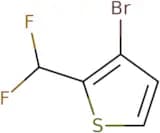
Formula:C8H16OPurezza:Min. 95%Peso molecolare:128.2 g/mol3-Bromo-2-(difluoromethyl)thiophene
CAS:Versatile small molecule scaffold
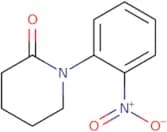
Formula:C5H3BrF2SPurezza:Min. 95%Peso molecolare:213.04 g/mol2-Piperidinone, 1-(2-nitrophenyl)-
CAS:Versatile small molecule scaffold
Formula:C11H12N2O3Purezza:Min. 95%Peso molecolare:220.22 g/mol3-(3-Amino-1H-pyrazol-1-yl)pyrrolidin-2-one
CAS:Versatile small molecule scaffold
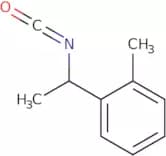
Formula:C7H10N4OPurezza:Min. 95%Peso molecolare:166.18 g/mol1-(1-Isocyanatoethyl)-2-methylbenzene
CAS:Versatile small molecule scaffold
Formula:C10H11NOPurezza:Min. 95%Peso molecolare:161.2 g/mol2-(1-Methylazetidin-3-yl)ethan-1-amine dihydrochloride
CAS:Versatile small molecule scaffold
Formula:C6H16Cl2N2Purezza:Min. 95%Peso molecolare:187.11 g/mol2,6-Dichloropyridine-3-sulfonamide
CAS:Versatile small molecule scaffold
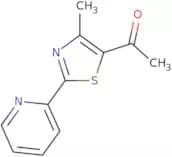
Formula:C5H4Cl2N2O2SPurezza:Min. 95%Peso molecolare:227.07 g/mol1-(4-Methyl-2-pyridin-2-yl-1,3-thiazol-5-yl)ethanone
CAS:Versatile small molecule scaffold
Formula:C11H10N2OSPurezza:Min. 95%Peso molecolare:218.28 g/molBis(N-[2-(pyridin-3-yl)ethyl]guanidine), sulfuric acid
CAS:Versatile small molecule scaffold
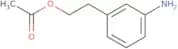
Formula:C16H26N8O4SPurezza:Min. 95%Peso molecolare:426.5 g/mol2-(3-Aminophenyl)ethyl acetate
CAS:Versatile small molecule scaffold
Formula:C10H13NO2Purezza:Min. 95%Peso molecolare:179.22 g/moltert-Butyl 3-amino-2-(oxan-4-yl)propanoate
CAS:Versatile small molecule scaffoldFormula:C12H23NO3Purezza:Min. 95%Peso molecolare:229.3 g/mol2,4-dichloro-7H-pyrrolo[2,3-d]pyrimidine-5-carbaldehyde
CAS:Versatile small molecule scaffold
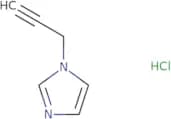
Formula:C7H3Cl2N3OPurezza:Min. 95%Peso molecolare:216.02 g/mol1-(Prop-2-yn-1-yl)-1H-imidazole hydrochloride
CAS:Versatile small molecule scaffoldFormula:C6H7ClN2Purezza:Min. 95%Peso molecolare:142.58 g/molEthyl 2-(3-nitrophenyl)acetate
CAS:Ethyl 2-(3-nitrophenyl)acetate is an organic compound. It is a chloride channel blocker that has been shown to inhibit the activity of multidrug-resistant proteins (e.g., p-glycoprotein and multidrug resistance protein). The uptake of this drug in cells is limited by its low oral bioavailability and its interaction with aluminium ions. This drug interacts with multidrug-resistance proteins, which are involved in the transport of drugs or toxins out of the cell, by competing for binding sites. Ethyl 2-(3-nitrophenyl)acetate inhibits the catalytic activity of these proteins, leading to a regression in multidrug resistance. It can also inhibit the activity of isoxazoles and alcohols.br>br>/p>
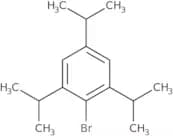
Formula:C10H11NO4Purezza:Min. 95%Peso molecolare:209.2 g/mol2-Bromo-1,3,5-triisopropylbenzene
CAS:2-Bromo-1,3,5-triisopropylbenzene is an ethylene acetal that is prepared by the catalyzed reaction of aryl chlorides and anhydrous zinc bromide in the presence of triethylamine. The selectivities of this method are high because it can produce mainly a single isomer. The stereoselectivity is also high because the reaction proceeds with the formation of only one stereoisomer. The mechanism for this reaction involves a nucleophilic substitution of the halogenated aryl chloride with the trialkylborane, which generates two different products. This product has been used in the synthesis of biphenyls and nitro compounds.
Formula:C15H23BrPurezza:Min. 95%Colore e forma:Colorless Clear LiquidPeso molecolare:283.25 g/molRef: 3D-FB33867
Prodotto fuori produzione1-[2-(Propan-2-yloxy)ethyl]cyclopropan-1-amine hydrochloride
CAS:Versatile small molecule scaffoldFormula:C8H18ClNOPurezza:Min. 95%Peso molecolare:179.69 g/molN-(1-Benzyl-3-phenylpyrrolidin-3-yl)acetamide
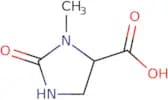
CAS:Versatile small molecule scaffoldFormula:C19H22N2OPurezza:Min. 95%Peso molecolare:294.4 g/mol3-Methyl-2-oxoimidazolidine-4-carboxylic acid
CAS:Versatile small molecule scaffold
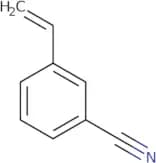
Formula:C5H8N2O3Purezza:Min. 95%Peso molecolare:144.13 g/mol3-Ethenylbenzonitrile
CAS:3-Ethenylbenzonitrile is an organic compound that can be prepared by photolysis of 2-bromobenzonitrile in the presence of a nonpolar solvent. It is also synthesized by laser induced exciplex reaction between benzene and ethylene. 3-Ethenylbenzonitrile has a conformation that is dependent on the polarity of the solvent. In polar solvents, it adopts a bent structure while in nonpolar solvents, it adopts a linear structure. The molecule undergoes cyclobutane formation and then reacts with electron acceptors such as cations to form intermediates. These intermediates react with other molecules to form products.
Formula:C9H7NPurezza:Min. 95%Peso molecolare:129.16 g/mol2-(Pyridin-3-yl)-3H,4H,5H,6H,7H-cyclopenta[D]pyrimidin-4-one
CAS:Versatile small molecule scaffold
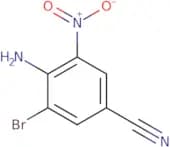
Formula:C12H11N3OPurezza:Min. 95%Peso molecolare:213.23 g/mol4-Amino-3-bromo-5-nitrobenzonitrile
CAS:Versatile small molecule scaffold
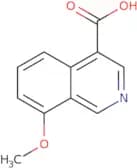
Formula:C7H4BrN3O2Purezza:Min. 95%Peso molecolare:242.03 g/mol8-Methoxyisoquinoline-4-carboxylic acid
CAS:Versatile small molecule scaffold
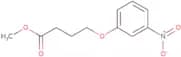
Formula:C11H9NO3Purezza:Min. 95%Peso molecolare:203.19 g/molMethyl 4-(3-nitrophenoxy)butanoate
CAS:Prodotto controllatoVersatile small molecule scaffold
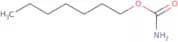
Formula:C11H13NO5Purezza:Min. 95%Peso molecolare:239.22 g/molHeptyl carbamate
CAS:Heptyl carbamate is a cholinergic antagonist of the blood disorders. It has been shown to inhibit hydroxy and hiv infection. In vitro assays have shown that heptyl carbamate inhibits the synthesis of fatty acid, thereby reducing cholesterol levels and inhibiting the production of insulin resistance in cells. Heptyl carbamate also binds to the same site on acetylcholinesterase as donepezil, which blocks the breakdown of acetylcholine and leads to an accumulation of this neurotransmitter in nerve cells. This increased concentration of acetylcholine in nerve cells can lead to a reduced incidence of Alzheimer's disease-related symptoms.
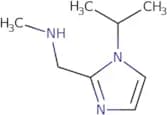
Formula:C8H17NO2Purezza:Min. 95%Peso molecolare:159.23 g/mol1-(1-Isopropyl-1H-imidazol-2-yl)-N-methylmethanamine
CAS:Versatile small molecule scaffold
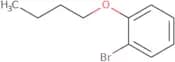
Formula:C8H15N3Purezza:Min. 95%Peso molecolare:153.22 g/mol1-Bromo-2-butoxybenzene
CAS:1-Bromo-2-butoxybenzene is a chemical compound that is used in the manufacture of zinc oxide. It is also used as an electrolyte in dye-sensitized solar cells. In these cells, 1-bromo-2-butoxybenzene acts as an electron donor, which provides electrons to the redox dye on the surface of the semiconductor. This process leads to recombination, where electrons and holes recombine to produce electricity. The introduction of alkoxy groups into 1-bromo-2-butoxybenzene molecules allows for increased stability and efficiency in dye-sensitized solar cells.
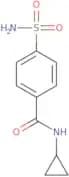
Formula:C10H13BrOPurezza:Min. 95%Peso molecolare:229.11 g/molN-Cyclopropyl-4-sulfamoylbenzamide
CAS:N-Cyclopropyl-4-sulfamoylbenzamide is a sulfonamide antibiotic that inhibits the growth of bacteria by blocking the synthesis of folic acid. It has been shown to be effective against Escherichia coli, Salmonella enterica, and Staphylococcus aureus. N-Cyclopropyl-4-sulfamoylbenzamide is metabolized in the liver by cytochrome P450 enzymes and excreted in the urine. The rate of metabolism is determined by mutant enzyme activity. This drug has been shown to inhibit detoxification enzymes such as Triticum aestivum desmethylase and acetolactate synthase, which may be responsible for its toxic effects on plants.Formula:C10H12N2O3SPurezza:Min. 95%Peso molecolare:240.28 g/mol2-[(4-Fluorophenyl)sulfanyl]cyclohexan-1-one
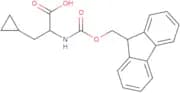
CAS:Versatile small molecule scaffoldFormula:C12H13FOSPurezza:Min. 95%Peso molecolare:224.3 g/molN-FMOC-Cyclopropyl alanine
CAS:Versatile small molecule scaffold
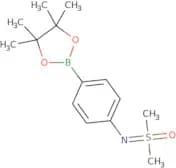
Formula:C21H21NO4Purezza:Min. 95%Peso molecolare:351.4 g/molN-(dimethyloxido-λ4-sulfanylidene)-4-(4,4,5,5-tetramethyl-1,3,2-dioxaborolan-2-yl)-benzenamine
CAS:Versatile small molecule scaffold
Formula:C14H22BNO3SPurezza:Min. 95%Peso molecolare:295.2 g/mol2-Bromo-3,3,3-trifluoro-1-propene
CAS:Prodotto controllato2-Bromo-3,3,3-trifluoro-1-propene is a chemical compound that has been synthesized in an asymmetric reaction. The reactant is bromopropane and the product is 2,2,2-trifluoropropene. The methylene group on the propene molecule is activated by the nucleophilic attack of a fluoride ion from hydrogen fluoride to form a cavity with a highly strained bond. The kinetic study of this reaction revealed that the activation energy for the reaction is 42 kJ/mol. Palladium-catalyzed coupling reactions are catalyzed by palladium and require nonpolar solvents such as toluene or dichloromethane. This type of reaction has been shown to be exothermic with an isolated yield of 1%.
Formula:C3H2BrF3Purezza:Min. 95%Colore e forma:Colorless PowderPeso molecolare:174.95 g/mol8-Bromo-2-methylimidazo[1,2-a]pyridine
CAS:Versatile small molecule scaffold
Formula:C8H7N2BrPurezza:Min. 95%Peso molecolare:211.05 g/mol4-Chloro-2-hydroxy-6-methylphenylboronic acid
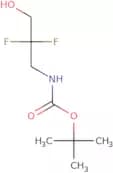
CAS:Versatile small molecule scaffoldFormula:C7H8BClO3Purezza:Min. 95%Peso molecolare:186.4 g/moltert-Butyl (2,2-difluoro-3-hydroxypropyl)carbamate
CAS:Versatile small molecule scaffoldFormula:C10H13NO4Purezza:Min. 95%Peso molecolare:211.21 g/mol4,5-Dihydro-1H-imidazol-2-amine hydrochloride
CAS:Please enquire for more information about 4,5-Dihydro-1H-imidazol-2-amine hydrochloride including the price, delivery time and more detailed product information at the technical inquiry form on this page
Formula:C3H7N3•HClPurezza:Min. 95%Peso molecolare:121.57 g/mol1-Hydroxycyclopentane-1-carbonitrile
CAS:1-Hydroxycyclopentane-1-carbonitrile is a monomer that is hydrolyzed to form benzoin and cyanohydrins. It can be used in the production of scifinder as a monomer or dimerizer.
Formula:C6H9NOPurezza:Min. 95%Peso molecolare:111.14 g/mol3-Hydroxy-5-methylpyridine
CAS:3-Hydroxy-5-methylpyridine (3HMP) is a chemical substance that has been classified as an amine. It is a product of the metabolism of purines, which are nitrogenous bases found in DNA and RNA. 3HMP is produced by aerogenic bacteria (such as Enterobacter), and can be used to estimate the number of these bacteria present in water samples. 3HMP has been shown to have antiviral properties against influenza virus, and can be used as a biomarker for the presence of other viruses in animals. 3HMP also has mineralization properties, which have been studied extensively, particularly with regards to pancreatic disease.
Formula:C6H7NOPurezza:Min. 95%Colore e forma:PowderPeso molecolare:109.13 g/molRef: 3D-FH16174
Prodotto fuori produzione4,5-Dihydroxy-2,3-Pentanedione
CAS:4,5-Dihydroxy-2,3-pentanedione is a carbonyl compound that is the product of the oxidation of ascorbic acid. It is used in wastewater treatment and has antimicrobial properties against infectious diseases. This compound has been shown to inhibit protein synthesis by binding to the ribosome and preventing the formation of peptide bonds between amino acids. 4,5-Dihydroxy-2,3-pentanedione has also been shown to bind to plasma proteins, which may be due to its acyl chain structure. 4,5-Dihydroxy-2,3-pentanedione can be synthesized in a catalytic mechanism that involves dehydroascorbic acid and molecular oxygen.
Formula:C5H8O4Purezza:Min. 95%Colore e forma:PowderPeso molecolare:132.11 g/molRef: 3D-FD180770
Prodotto fuori produzionePiperyline
CAS:Piperyline is an alkanoic acid that has shown to be effective against skin cancer. It also has antimicrobial properties, which may be due to its ability to bind metal ions and form polymeric compounds. Piperyline inhibits microbial growth by inhibiting the synthesis of proteins and nucleic acids. The antimicrobial activity is related to its cationic polymerization with hydroxyl groups, which forms a structure that can inhibit microbial enzymes and disrupt microbial cell membranes. This compound also interacts with the skin's natural lipids, making it difficult for microorganisms to attach and grow on the skin. Piperyline is synthesized in organic chemistry laboratories as an amide precursor of other pharmaceuticals such as penicillin.
Formula:C16H17NO3Purezza:Min. 95%Peso molecolare:271.31 g/mol


![({2-[(5-Methylisoxazol-3-yl)amino]-2-oxoethyl}thio)acetic acid](/_next/image/?url=https%3A%2Fstatic.cymitquimica.com%2Fproducts%2F3D%2Fthumb-webp%2FLSA09157.webp&w=3840&q=75)
![N-[3-Oxo-3-(pyrrolidin-1-yl)propyl]-4H,5H,6H,7H,8H-cyclohepta[b]thiophene-2-carboxamide](/_next/image/?url=https%3A%2Fstatic.cymitquimica.com%2Fproducts%2F3D%2Fthumb-webp%2FLSB50378.webp&w=3840&q=75)

![2-{Imidazo[1,2-a]pyridin-2-yl}-1H-imidazole](/_next/image/?url=https%3A%2Fstatic.cymitquimica.com%2Fproducts%2F3D%2Fthumb-webp%2FFDD52429.webp&w=3840&q=75)
![2-Mercaptobenzo[d]thiazole-6-carbonitrile](/_next/image/?url=https%3A%2Fstatic.cymitquimica.com%2Fproducts%2F3D%2Fthumb-webp%2FQMA22879.webp&w=3840&q=75)
![4,5,6,7-Tetrahydropyrazolo[1,5-a]pyrazine dihydrochloride](/_next/image/?url=https%3A%2Fstatic.cymitquimica.com%2Fproducts%2F3D%2Fthumb-webp%2FQGA89407.webp&w=3840&q=75)
![N-Methyl-7h-pyrrolo[2,3-d]pyrimidin-4-amine](/_next/image/?url=https%3A%2Fstatic.cymitquimica.com%2Fproducts%2F3D%2Fthumb-webp%2FDDA72716.webp&w=3840&q=75)
amine](/_next/image/?url=https%3A%2Fstatic.cymitquimica.com%2Fproducts%2F3D%2Fthumb-webp%2FUQB57925.webp&w=3840&q=75)
![3-Amino-3-[3-(trifluoromethoxy)phenyl]propan-1-ol](/_next/image/?url=https%3A%2Fstatic.cymitquimica.com%2Fproducts%2F3D%2Fthumb-webp%2FVAC40236.webp&w=3840&q=75)

![1-[2-Fluoro-6-(1-phenylethoxy)phenyl]ethan-1-one](/_next/image/?url=https%3A%2Fstatic.cymitquimica.com%2Fproducts%2F3D%2Fthumb-webp%2FUQB62498.webp&w=3840&q=75)
![4-(5-{[(3-Phenyl-1,2,4-oxadiazol-5-yl)methyl]sulfanyl}-1,3,4-oxadiazol-2-yl)pyridine](/_next/image/?url=https%3A%2Fstatic.cymitquimica.com%2Fproducts%2F3D%2Fthumb-webp%2FULB93670.webp&w=3840&q=75)
![8-chloro-3-(propan-2-yl)-[1,2,4]triazolo[4,3-a]pyrazine](/_next/image/?url=https%3A%2Fstatic.cymitquimica.com%2Fproducts%2F3D%2Fthumb-webp%2FQFA91091.webp&w=3840&q=75)
![2-[2-({[(9H-Fluoren-9-yl)methoxy]carbonyl}amino)-1,2,3,4-tetrahydronaphthalen-2-yl]acetic acid](/_next/image/?url=https%3A%2Fstatic.cymitquimica.com%2Fproducts%2F3D%2Fthumb-webp%2FNKD27275.webp&w=3840&q=75)



![Bis(N-[2-(pyridin-3-yl)ethyl]guanidine), sulfuric acid](/_next/image/?url=https%3A%2Fstatic.cymitquimica.com%2Fproducts%2F3D%2Fthumb-webp%2FNKD38418.webp&w=3840&q=75)

![2,4-dichloro-7H-pyrrolo[2,3-d]pyrimidine-5-carbaldehyde](/_next/image/?url=https%3A%2Fstatic.cymitquimica.com%2Fproducts%2F3D%2Fthumb-webp%2FNQC76757.webp&w=3840&q=75)

![1-[2-(Propan-2-yloxy)ethyl]cyclopropan-1-amine hydrochloride](/_next/image/?url=https%3A%2Fstatic.cymitquimica.com%2Fproducts%2F3D%2Fthumb-webp%2FPZC01648.webp&w=3840&q=75)

![2-(Pyridin-3-yl)-3H,4H,5H,6H,7H-cyclopenta[D]pyrimidin-4-one](/_next/image/?url=https%3A%2Fstatic.cymitquimica.com%2Fproducts%2F3D%2Fthumb-webp%2FPZB74791.webp&w=3840&q=75)
![2-[(4-Fluorophenyl)sulfanyl]cyclohexan-1-one](/_next/image/?url=https%3A%2Fstatic.cymitquimica.com%2Fproducts%2F3D%2Fthumb-webp%2FURB04941.webp&w=3840&q=75)

![8-Bromo-2-methylimidazo[1,2-a]pyridine](/_next/image/?url=https%3A%2Fstatic.cymitquimica.com%2Fproducts%2F3D%2Fthumb-webp%2FUXB37475.webp&w=3840&q=75)