


Building Blocks
Questa sezione contiene prodotti fondamentali per la sintesi di composti organici e biologici. Building blocks sono i materiali di partenza essenziali utilizzati per costruire molecole complesse attraverso varie reazioni chimiche. Svolgono un ruolo critico nella scoperta di farmaci, nella scienza dei materiali e nella ricerca chimica. Presso CymitQuimica, offriamo una gamma diversificata di building blocks di alta qualità per supportare le tue ricerche innovative e progetti industriali, assicurandoti di avere i componenti essenziali per una sintesi di successo.
Sottocategorie di "Building Blocks"
- Acidi boronici e derivati dell'acido boronico(5.778 prodotti)
- Building Blocks Chirali(1.243 prodotti)
- Building Blocks Idrocarburici(6.098 prodotti)
- Building Blocks organici(61.046 prodotti)
Trovati 203857 prodotti di "Building Blocks"
Ordinare per
Purezza (%)
0
100
|
0
|
50
|
90
|
95
|
100
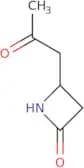
4-(2-Oxopropyl)azetidin-2-one
CAS:Versatile small molecule scaffoldFormula:C6H9NO2Purezza:Min. 95%Peso molecolare:127.14 g/mol(2-Aminoethyl)(benzyloxy)amine dihydrochloride
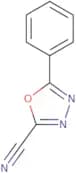
CAS:<p>Versatile small molecule scaffold</p>Formula:C9H16Cl2N2OPurezza:Min. 95%Peso molecolare:239.14 g/mol5-Phenyl-1,3,4-oxadiazole-2-carbonitrile
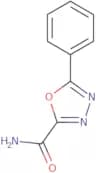
CAS:Versatile small molecule scaffoldFormula:C9H5N3OPurezza:Min. 95%Peso molecolare:171.16 g/mol5-Phenyl-1,3,4-oxadiazole-2-carboxamide
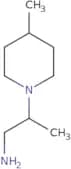
CAS:<p>5-Phenyl-1,3,4-oxadiazole-2-carboxamide (PDC) is a quaternary ammonium salt that has been shown to inhibit the growth of methicillin-resistant Staphylococcus aureus and other gram-negative bacteria. PDC inhibits the synthesis of proteins by binding to ribosomes in the bacterial cell wall. This binding prevents the formation of an antibiotic-inhibitor complex with the enzyme ribosome that is required for protein synthesis and cell division. PDC also has antimicrobial properties and can be used as an antibacterial agent.</p>Formula:C9H7N3O2Purezza:Min. 95%Peso molecolare:189.17 g/mol2-(4-Methylpiperidin-1-yl)propan-1-amine
CAS:Versatile small molecule scaffoldFormula:C9H20N2Purezza:Min. 95%Peso molecolare:156.27 g/mol8-Chloro-3-methyl-1H-pyrrolo[3,2-c]quinoline
CAS:Versatile small molecule scaffoldFormula:C12H9ClN2Purezza:Min. 95%Peso molecolare:216.66 g/mol4-Hydrazinoquinoline hydrochloride
CAS:<p>4-Hydrazinoquinoline hydrochloride is a cation with a molecular weight of 176.2. It is cytotoxic and inhibits cancer cell growth. 4-Hydrazinoquinoline hydrochloride has been shown to be effective against lymphoid, breast, colon, and prostate cancer cells in vitro with IC50 values of 0.5 to 2 μM. This drug has been shown to bind to DNA by forming a Schiff base with the amine group of guanine residues in the DNA backbone. This binding leads to changes in DNA conformation that inhibit transcription and replication as well as protein synthesis and cell division.</p>Formula:C9H10ClN3Purezza:Min. 95%Peso molecolare:195.65 g/mol4-(5-Formylfuran-2-yl)-N-methylbenzene-1-sulfonamide
CAS:<p>4-(5-Formylfuran-2-yl)-N-methylbenzene-1-sulfonamide is a synthetic, antiparasitic and antibiotic drug that has been shown to possess antiviral and antifungal properties. It is an inhibitor of DNA synthesis and RNA transcription by blocking the enzyme RNA polymerase II, and also inhibits protein synthesis by inhibiting the enzyme ribosomal protein S12. 4-(5-Formylfuran-2-yl)-N-methylbenzene-1-sulfonamide is effective against both Gram positive and Gram negative bacteria, as well as yeast. The compound has been shown to be active against bacteria such as Escherichia coli, Pseudomonas aeruginosa, Salmonella enterica serovar Typhi, Staphylococcus aureus (MRSA), Mycobacterium tuberculosis, Mycobacterium avium complex, Candida alb</p>Formula:C12H11NO4SPurezza:Min. 95%Peso molecolare:265.29 g/mol4-(Benzylamino)-3-nitrobenzoic acid
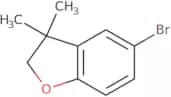
CAS:<p>Versatile small molecule scaffold</p>Formula:C14H12N2O4Purezza:Min. 95%Peso molecolare:272.26 g/mol5-Bromo-3,3-dimethyl-2,3-dihydro-1-benzofuran
CAS:Versatile small molecule scaffoldFormula:C10H11BrOPurezza:Min. 95%Peso molecolare:227.1 g/mol5-(4-Ethoxyphenyl)-5-methylimidazolidine-2,4-dione
CAS:Versatile small molecule scaffoldFormula:C12H14N2O3Purezza:Min. 95%Peso molecolare:234.25 g/mol5-Methyl-5-[4-(3-methylbutoxy)phenyl]imidazolidine-2,4-dione
CAS:Versatile small molecule scaffoldFormula:C15H20N2O3Purezza:Min. 95%Peso molecolare:276.33 g/mol6-chloro-8-nitroquinoline
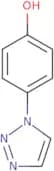
CAS:<p>6-Chloro-8-nitroquinoline is an indian nitro compound that yields a greenish yellow liquid when reacted with quinaldine, which is an aromatic amino compound. The 8-nitroquinoline group in this compound has an amino group and reacts with the fungitoxicant guanidine. This class of compounds is used to control fungi such as Aspergillus and Myrothecium verrucaria. 6-Chloro-8-nitroquinoline can be hydrolyzed by strong acids or bases, yielding chloro formates.</p>Formula:C9H5ClN2O2Purezza:Min. 95%Peso molecolare:208.6 g/mol4-(1H-1,2,3-Triazol-1-yl)phenol
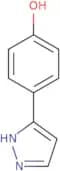
CAS:<p>4-(1H-1,2,3-Triazol-1-yl)phenol is a small molecule that has been shown to enhance the efficiency of diagnosing certain conditions. It can be used in microwells as a sensor for measuring the concentration of analytes such as antibodies, enzymes, proteins, and other compounds. This compound is immobilized on a solid surface and reacts with light to produce chemiluminescence. 4-(1H-1,2,3-Triazol-1-yl)phenol can be used as an immobilization agent for magnetic beads and also has fluorescent properties. It has been shown to inhibit hepatitis B virus replication by binding to the viral antigen. 4-(1H-1,2,3-Triazol-1-yl)phenol is also able to detect peroxide in biological fluids or luminol in animal tissue.</p>Formula:C8H7N3OPurezza:Min. 95%Peso molecolare:161.16 g/mol4-(1H-Pyrazol-3-yl)phenol
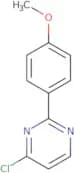
CAS:<p>Versatile small molecule scaffold</p>Formula:C9H8N2OPurezza:Min. 95%Peso molecolare:160.17 g/mol4-Chloro-2-(4-methoxyphenyl)pyrimidine
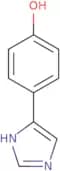
CAS:<p>Versatile small molecule scaffold</p>Formula:C11H9ClN2OPurezza:Min. 95%Peso molecolare:220.65 g/mol4-(1H-Imidazol-4-yl)phenol
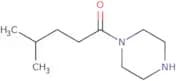
CAS:<p>Versatile small molecule scaffold</p>Formula:C9H8N2OPurezza:Min. 95%Peso molecolare:160.17 g/mol4-Methyl-1-(piperazin-1-yl)pentan-1-one
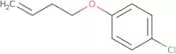
CAS:<p>Versatile small molecule scaffold</p>Formula:C10H20N2OPurezza:Min. 95%Peso molecolare:184.28 g/mol1-(But-3-en-1-yloxy)-4-chlorobenzene
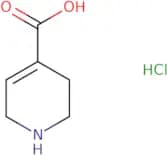
CAS:<p>Versatile small molecule scaffold</p>Formula:C10H11ClOPurezza:Min. 95%Peso molecolare:182.64 g/molIsoguvacine hydrochloride
CAS:<p>Isoguvacine is an alkaloid that belongs to the group of pharmacological agents. It has been shown to have a synergic effect with other drugs, such as 5-HT2 receptor antagonists and 5-HT3 receptor antagonists, at the level of the plate test. Isoguvacine inhibits the cyclase enzyme, which catalyzes the conversion of ATP into cAMP. The inhibition leads to a decrease in cAMP levels and consequently a decrease in intracellular calcium levels. This drug also blocks glutamate receptors on neurons, preventing their activation by glutamate.</p>Formula:C6H9NO2•HClPurezza:Min. 95%Colore e forma:PowderPeso molecolare:163.6 g/mol3-Methyl-1-phenyl-1H-1,2,4-triazol-5-amine
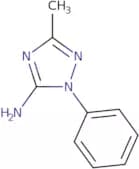
CAS:Versatile small molecule scaffoldFormula:C9H10N4Purezza:Min. 95%Peso molecolare:174.2 g/molTiclopidine Related Compound A
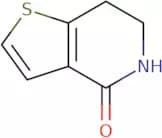
CAS:<p>Versatile small molecule scaffold</p>Formula:C7H7NOSPurezza:Min. 95%Peso molecolare:153.2 g/mol[4-(2-Amino-ethyl)-phenyl]-methanol hydrochloride
CAS:Versatile small molecule scaffoldFormula:C9H13NO·HClPurezza:Min. 95%Peso molecolare:187.67 g/mol6-(Methylthio)benzo[D][1,3]dioxol-5-amine
CAS:<p>Versatile small molecule scaffold</p>Formula:C8H9NO2SPurezza:Min. 95%Peso molecolare:183.23 g/molIsoxazolo[5,4-d]pyrimidin-4(5H)-one, 3-methyl-
CAS:Versatile small molecule scaffoldFormula:C6H5N3O2Purezza:Min. 95%Peso molecolare:151.12 g/mol2-(3,5-Dichlorophenyl)propene
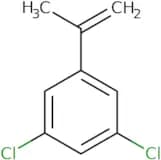
CAS:2-(3,5-Dichlorophenyl)propene is a dehydrating agent that is used in the production of pharmaceuticals, dyestuffs, and other chemicals. It can be used to produce chloride by the reaction with hydrogen chloride. 2-(3,5-Dichlorophenyl)propene can also be used to prepare oxalyl or tetrahydrofuran through dehydration reactions. This chemical is a reaction product of silicon and particle and can be used as a reaction system for the synthesis of thionyl chloride, which is an important reagent in organic chemistry.Formula:C9H8Cl2Purezza:Min. 95%Peso molecolare:187.06 g/mol5-Chloro-2-methyl-2,3-dihydro-1H-indole
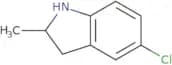
CAS:Versatile small molecule scaffoldFormula:C9H10ClNPurezza:Min. 95%Peso molecolare:167.63 g/molMethyl(nonyl)amine hydrochloride
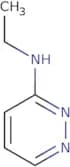
CAS:Versatile small molecule scaffoldFormula:C10H24ClNPurezza:Min. 95%Peso molecolare:193.76 g/molN-Ethylpyridazin-3-amine
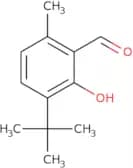
CAS:<p>Versatile small molecule scaffold</p>Formula:C6H9N3Purezza:Min. 95%Peso molecolare:123.16 g/mol3-(tert-Butyl)-2-hydroxy-6-methylbenzaldehyde
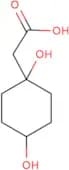
CAS:Versatile small molecule scaffoldFormula:C12H16O2Purezza:Min. 95%Peso molecolare:192.25 g/mol2-(1,4-Dihydroxycyclohexyl)acetic acid
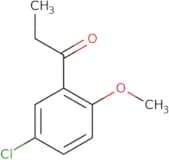
CAS:<p>2-(1,4-dihydroxycyclohexyl)acetic acid is a natural compound that has been shown to have neuroprotective and anti-cancer properties. It is used in clinical studies for the treatment of Alzheimer's disease and Parkinson's disease. This compound also has antioxidant properties that may be due to its ability to scavenge reactive oxygen species. 2-(1,4-Dihydroxycyclohexyl)acetic acid also has antibacterial activity against various bacteria including Escherichia coli, Staphylococcus aureus, Salmonella enterica serovar Typhimurium, and Listeria monocytogenes. The chemical composition of this compound includes two acetate groups and one cyclohexane ring. It is found in the fruit of Fructus Forsythiae and Forsythiae Herba.</p>Formula:C8H14O4Purezza:Min. 95%Peso molecolare:174.19 g/mol1-(5-Chloro-2-methoxyphenyl)propan-1-one
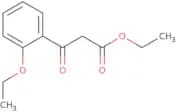
CAS:Versatile small molecule scaffoldFormula:C10H11ClO2Purezza:Min. 95%Peso molecolare:198.64 g/molEthyl 3-(2-ethoxyphenyl)-3-oxopropanoate
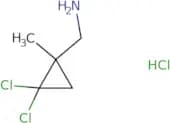
CAS:Versatile small molecule scaffoldFormula:C13H16O4Purezza:Min. 95%Peso molecolare:236.26 g/mol(2,2-Dichloro-1-methylcyclopropyl)methanamine hydrochloride
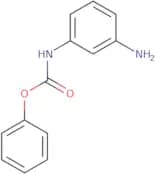
CAS:Versatile small molecule scaffoldFormula:C5H10Cl3NPurezza:Min. 95%Peso molecolare:190.49 g/molPhenyl N-(3-aminophenyl)carbamate
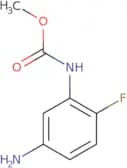
CAS:<p>Phenyl N-(3-aminophenyl)carbamate is a botanical drug that can be used to treat flu and fever. It has been shown to have a strong inhibitory effect on the influenza virus in vitro. Phenyl N-(3-aminophenyl)carbamate inhibits the replication of RNA and DNA, which may be due to its ability to bind with metal ions. Phenyl N-(3-aminophenyl)carbamate also has anti-inflammatory properties, which are due to its inhibition of prostaglandin synthesis. This drug is an effective corrosion inhibitor for steel pipes and other metal surfaces.</p>Formula:C13H12N2O2Purezza:Min. 95%Peso molecolare:228.25 g/molMethyl N-(5-amino-2-fluorophenyl)carbamate
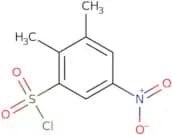
CAS:Versatile small molecule scaffoldFormula:C8H9FN2O2Purezza:Min. 95%Peso molecolare:184.17 g/mol2,3-Dimethyl-5-nitrobenzene-1-sulfonyl chloride
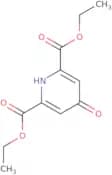
CAS:<p>Versatile small molecule scaffold</p>Formula:C8H8ClNO4SPurezza:Min. 95%Peso molecolare:249.67 g/mol4-Hydroxy-pyridine-2,6-dicarboxylic acid diethyl ester
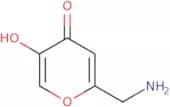
CAS:4-Hydroxy-pyridine-2,6-dicarboxylic acid diethyl ester is a multifunctional compound that can be used as an intermediate for the synthesis of a wide variety of organic compounds. It has been shown to be able to hydrolyze under acidic conditions to give ethoxycarbonyl groups, which are useful in organic chemistry. This compound also shows reactivity with dendrimers and other polymers, which can be used in various techniques. 4-Hydroxy-pyridine-2,6-dicarboxylic acid diethyl ester is also trifunctional and can be used as a coupling agent in reactions involving three different reagents. The multifunctionality of this compound makes it useful for many different applications.Formula:C11H13NO5Purezza:Min. 95%Peso molecolare:239.22 g/mol2-(Aminomethyl)-5-hydroxy-4H-pyran-4-one
CAS:2-(Aminomethyl)-5-hydroxy-4H-pyran-4-one is an amide that inhibits the uptake of dopamine and gamma-aminobutyric acid (GABA) by nerve cells in the brain. It has antinociceptive properties and has been shown to have antinociceptive effects in vivo. 2-(Aminomethyl)-5-hydroxy-4H-pyran-4-one binds to receptors for neurotransmitters, including GABA, dopamine, and acetylcholine. The amide also binds to fatty acids such as oleic acid and palmitic acid, which are important for cell membrane function. This drug can be used in conjunction with other drugs that act on GABA receptors, such as benzodiazepines or barbiturates.Formula:C6H7NO3Purezza:Min. 95%Peso molecolare:141.12 g/mol2-Ethyl-6-(hydroxymethyl)phenol
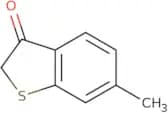
CAS:<p>Versatile small molecule scaffold</p>Formula:C9H12O2Purezza:Min. 95%Peso molecolare:152.2 g/mol6-Methyl-2,3-dihydro-1-benzothiophen-3-one
CAS:<p>Versatile small molecule scaffold</p>Formula:C9H8OSPurezza:Min. 95%Peso molecolare:164.23 g/mol{[4-Amino-3-(trifluoromethyl)phenyl]sulfanyl}formonitrile
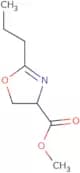
CAS:Versatile small molecule scaffoldFormula:C8H5F3N2SPurezza:Min. 95%Peso molecolare:218.2 g/molMethyl 2-propyl-4,5-dihydro-1,3-oxazole-4-carboxylate
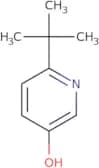
CAS:Versatile small molecule scaffoldFormula:C8H13NO3Purezza:Min. 95%Peso molecolare:171.19 g/mol6-(tert-Butyl)pyridin-3-ol
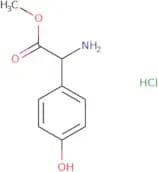
CAS:<p>Versatile small molecule scaffold</p>Formula:C9H13NOPurezza:Min. 95%Peso molecolare:151.2 g/molMethyl DL-4-hydroxyphenylglycine HCl
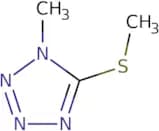
CAS:Versatile small molecule scaffoldFormula:C9H12ClNO3Purezza:Min. 95%Peso molecolare:217.65 g/mol1-Methyl-5-(methylsulfanyl)-1H-1,2,3,4-tetrazole
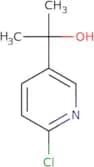
CAS:Versatile small molecule scaffoldFormula:C3H6N4SPurezza:Min. 95%Peso molecolare:130.17 g/mol2-(6-Chloropyridin-3-yl)propan-2-ol
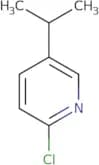
CAS:<p>Versatile small molecule scaffold</p>Formula:C8H10ClNOPurezza:Min. 95%Peso molecolare:161.63 g/mol2-Chloro-5-(propan-2-yl)pyridine
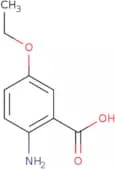
CAS:Versatile small molecule scaffoldFormula:C8H10ClNPurezza:Min. 95%Peso molecolare:155.62 g/mol2-Amino-5-ethoxybenzoic acid
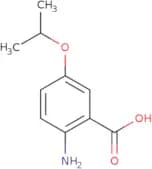
CAS:<p>Versatile small molecule scaffold</p>Formula:C9H11NO3Purezza:Min. 95%Peso molecolare:181.19 g/mol2-Amino-5-(propan-2-yloxy)benzoic acid
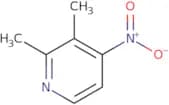
CAS:<p>Versatile small molecule scaffold</p>Formula:C10H13NO3Purezza:Min. 95%Peso molecolare:195.21 g/mol2,3-Dimethyl-4-nitropyridine
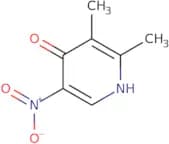
CAS:2,3-Dimethyl-4-nitropyridine is a nucleophilic compound that reacts with amines to form the corresponding nitrosoamines. It has been shown that the reaction yield depends on the concentration of thiosemicarbazide and the pH of the solution. 2,3-Dimethyl-4-nitropyridine has been used as a model system to study coordination chemistry and its effect on mutation frequency in mice. The n-oxide derivative of this molecule is an environmental pollutant found in soil samples in Europe and China. This molecule has been shown to cause mutations in cancer cells and can be used for research into cancer treatment.Formula:C7H8N2O2Purezza:Min. 95%Peso molecolare:152.15 g/mol2,3-Dimethyl-5-nitropyridin-4-ol
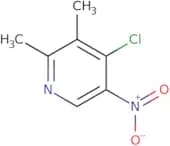
CAS:<p>Versatile small molecule scaffold</p>Formula:C7H8N2O3Purezza:Min. 95%Peso molecolare:168.15 g/mol4-Chloro-2,3-dimethyl-5-nitropyridine
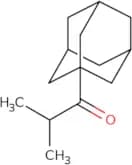
CAS:<p>Versatile small molecule scaffold</p>Formula:C7H7ClN2O2Purezza:Min. 95%Peso molecolare:186.59 g/mol1-(Adamantan-1-yl)-2-methylpropan-1-one
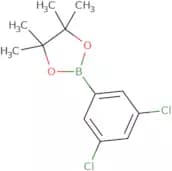
CAS:Versatile small molecule scaffoldFormula:C14H22OPurezza:Min. 95%Peso molecolare:206.3 g/mol3,5-Dichlorophenylboronic acid, pinacol ester
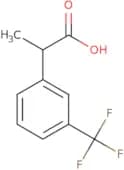
CAS:Versatile small molecule scaffoldFormula:C12H15BCl2O2Purezza:Min. 95%Peso molecolare:272.96 g/mol2-(3-(Trifluoromethyl)phenyl)propanoic acid
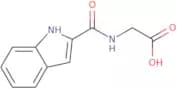
CAS:Versatile small molecule scaffoldFormula:C10H9F3O2Purezza:Min. 95%Peso molecolare:218.17 g/mol2-(1H-Indol-2-ylformamido)acetic acid
CAS:<p>Versatile small molecule scaffold</p>Formula:C11H10N2O3Purezza:Min. 95%Peso molecolare:218.21 g/molN-{1-[(4-Chlorophenyl)methyl]piperidin-4-ylidene}hydroxylamine
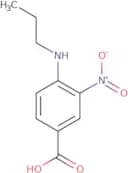
CAS:Versatile small molecule scaffoldFormula:C12H15ClN2OPurezza:Min. 95%Peso molecolare:238.71 g/mol3-Nitro-4-(propylamino)benzoic acid
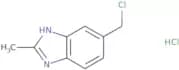
CAS:Versatile small molecule scaffoldFormula:C10H12N2O4Purezza:Min. 95%Peso molecolare:224.21 g/mol5-(Chloromethyl)-2-methyl-1H-1,3-benzodiazole hydrochloride
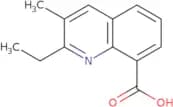
CAS:Versatile small molecule scaffoldFormula:C9H10Cl2N2Purezza:Min. 95%Peso molecolare:217.09 g/mol2-Ethyl-3-methylquinoline-8-carboxylic acid
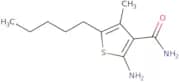
CAS:Versatile small molecule scaffoldFormula:C13H13NO2Purezza:Min. 95%Peso molecolare:215.25 g/mol2-Amino-4-methyl-5-pentylthiophene-3-carboxamide
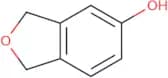
CAS:Versatile small molecule scaffoldFormula:C11H18N2OSPurezza:Min. 95%Peso molecolare:226.34 g/mol1,3-Dihydro-2-benzofuran-5-ol
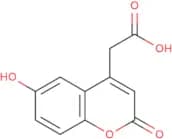
CAS:Versatile small molecule scaffoldFormula:C8H8O2Purezza:Min. 95%Peso molecolare:136.15 g/mol2-(6-Hydroxy-2-oxo-2H-chromen-4-yl)acetic acid
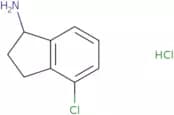
CAS:Versatile small molecule scaffoldFormula:C11H8O5Purezza:Min. 95%Peso molecolare:220.18 g/mol4-Chloro-2,3-dihydro-1H-inden-1-amine hydrochloride
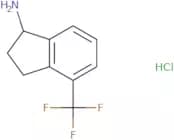
CAS:Prodotto controllatoVersatile small molecule scaffoldFormula:C9H11Cl2NPurezza:Min. 95%Peso molecolare:204.09 g/mol4-(trifluoromethyl)-2,3-dihydro-1H-inden-1-amine hydrochloride
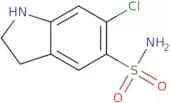
CAS:Prodotto controllatoVersatile small molecule scaffoldFormula:C10H11ClF3NPurezza:Min. 95%Peso molecolare:237.65 g/mol6-Chloro-2,3-dihydro-1H-indole-5-sulfonamide
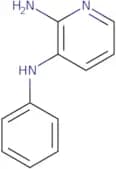
CAS:<p>Versatile small molecule scaffold</p>Formula:C8H9ClN2O2SPurezza:Min. 95%Peso molecolare:232.69 g/molN3-Phenylpyridine-2,3-diamine
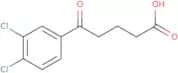
CAS:Versatile small molecule scaffoldFormula:C11H11N3Purezza:Min. 95%Peso molecolare:185.22 g/mol5-(3,4-Dichlorophenyl)-5-oxopentanoic acid
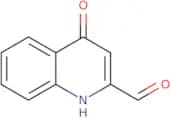
CAS:Versatile small molecule scaffoldFormula:C11H10Cl2O3Purezza:Min. 95%Peso molecolare:261.1 g/mol4-Hydroxyquinoline-2-carbaldehyde
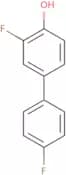
CAS:<p>Versatile small molecule scaffold</p>Formula:C10H7NO2Purezza:Min. 95%Peso molecolare:173.17 g/mol2-Fluoro-4-(4-fluorophenyl)phenol
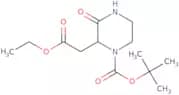
CAS:Versatile small molecule scaffoldFormula:C12H8F2OPurezza:Min. 95%Peso molecolare:206.19 g/mol2-Ethoxycarbonylmethyl-3-oxo-piperazine-1-carboxylic acid tert-butyl ester
CAS:Versatile small molecule scaffoldFormula:C13H22N2O5Purezza:Min. 95%Peso molecolare:286.32 g/mol3-{[(tert-butoxy)carbonyl](methyl)amino}benzoic acid
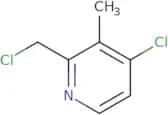
CAS:Versatile small molecule scaffoldFormula:C13H17NO4Purezza:Min. 95%Peso molecolare:251.3 g/mol4-Chloro-2-(chloromethyl)-3-methylpyridine
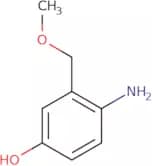
CAS:4-Chloro-2-(chloromethyl)-3-methylpyridine is a sulfonyl chloride that is used as an intermediate in the synthesis of other organic compounds. It can be converted to a sulfonyl n-oxide by reacting with aqueous sodium nitrite and hydrochloric acid. This reaction liberates sulfur dioxide gas, which must be scrubbed from the reaction mixture. 4-Chloro-2-(chloromethyl)-3-methylpyridine is also used as an intermediate for the synthesis of various pesticides and pharmaceuticals.Formula:C7H7Cl2NPurezza:Min. 95%Peso molecolare:176.04 g/mol4-Amino-3-(methoxymethyl)phenol
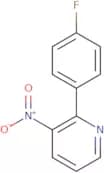
CAS:<p>Versatile small molecule scaffold</p>Formula:C8H11NO2Purezza:Min. 95%Peso molecolare:153.18 g/mol2-(4-Fluorophenyl)-3-nitropyridine
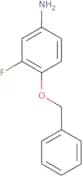
CAS:<p>Versatile small molecule scaffold</p>Formula:C11H7FN2O2Purezza:Min. 95%Peso molecolare:218.18 g/mol4-(benzyloxy)-3-fluoroaniline
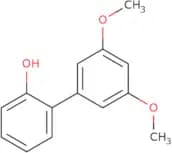
CAS:<p>4-(Benzyloxy)-3-fluoroaniline is a substance that is used as an intermediate in organic synthesis. It can be synthesized by reacting 2-chloro-4-nitrobenzaldehyde with 3-fluoroaniline in the presence of hydrazine and a catalyst. The reaction time is typically between 1 hour and 24 hours. The product has been shown to have antimicrobial activity against a wide range of bacteria, including methicillin resistant Staphylococcus aureus (MRSA). Cadazolid is an antibiotic that belongs to the oxazolidinone class and exhibits potent antibacterial activity against Gram-positive bacteria, such as methicillin resistant Staphylococcus aureus (MRSA), by inhibiting cell wall biosynthesis. Cadazolid is a hexahydrate salt, which means it dissolves in water to form a crystalline solid with 6 molecules of water for each molecule of cadazolid</p>Formula:C13H12FNOPurezza:Min. 95%Peso molecolare:217.24 g/mol2-(3,5-Dimethoxyphenyl)phenol
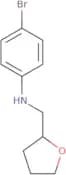
CAS:<p>2-(3,5-Dimethoxyphenyl)phenol is a phytoalexin that belongs to the family of benzyl phytoalexins. It is a molecule that has potentiating effects on the host defense system and can be used as an antifungal agent. 2-(3,5-Dimethoxyphenyl)phenol has been found to have high activity against microbial infection by inhibiting protein synthesis. This molecule binds to microbial ribosomes and prevents translocation of aminoacyl-tRNA.</p>Formula:C14H14O3Purezza:Min. 95%Peso molecolare:230.26 g/mol4-Bromo-N-(oxolan-2-ylmethyl)aniline
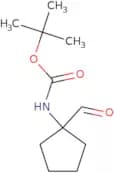
CAS:<p>Versatile small molecule scaffold</p>Formula:C11H14BrNOPurezza:Min. 95%Peso molecolare:256.14 g/moltert-butyl N-(1-formylcyclopentyl)carbamate
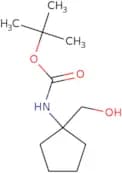
CAS:Versatile small molecule scaffoldFormula:C11H19NO3Purezza:Min. 95%Peso molecolare:213.3 g/molN-Boc-1-amino-1-cyclopentanemethanol
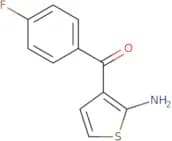
CAS:Versatile small molecule scaffoldFormula:C11H21NO3Purezza:Min. 95%Peso molecolare:215.29 g/mol3-(4-Fluorobenzoyl)thiophen-2-amine
CAS:<p>Versatile small molecule scaffold</p>Formula:C11H8FNOSPurezza:Min. 95%Peso molecolare:221.25 g/molrac-tert-butyl N-[(3R,4S)-4-(trifluoromethyl)pyrrolidin-3-yl]carbamate, trans
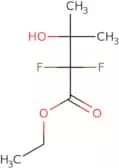
CAS:Versatile small molecule scaffoldFormula:C10H17F3N2O2Purezza:Min. 95%Peso molecolare:254.2 g/molEthyl 2,2-difluoro-3-hydroxy-3-methylbutanoate
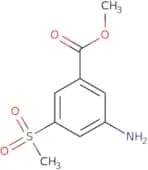
CAS:<p>Versatile small molecule scaffold</p>Formula:C7H12F2O3Purezza:Min. 95%Peso molecolare:182.16 g/molMethyl 3-amino-5-methanesulfonylbenzoate
CAS:Versatile small molecule scaffoldFormula:C9H11NO4SPurezza:Min. 95%Peso molecolare:229.26 g/molMethyl 3-(1H-pyrazol-3-yl)benzoate
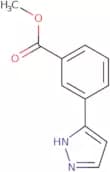
CAS:<p>Versatile small molecule scaffold</p>Formula:C11H10N2O2Purezza:Min. 95%Peso molecolare:202.21 g/mol2'-Chlorobiphenyl-3-carboxylic acid
CAS:Versatile small molecule scaffoldFormula:C13H9ClO2Purezza:Min. 95%Peso molecolare:232.66 g/mol3-(Furan-3-yl)benzoic acid
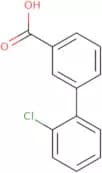
CAS:<p>Versatile small molecule scaffold</p>Formula:C11H8O3Purezza:Min. 95%Peso molecolare:188.2 g/molMethyl 3'-amino-[1,1'-biphenyl]-3-carboxylate
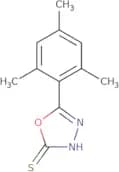
CAS:Versatile small molecule scaffoldFormula:C14H13NO2Purezza:Min. 95%Peso molecolare:227.26 g/mol5-(2,4,6-Trimethylphenyl)-1,3,4-oxadiazole-2-thiol
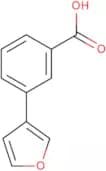
CAS:Versatile small molecule scaffoldFormula:C11H12N2OSPurezza:Min. 95%Peso molecolare:220.29 g/mol7-Aminoheptan-1-ol hydrochloride
CAS:Versatile small molecule scaffoldFormula:C7H18ClNOPurezza:Min. 95%Peso molecolare:167.68 g/mol5-Butyl-4H,7H-[1,2,4]triazolo[1,5-a]pyrimidin-7-one
CAS:Versatile small molecule scaffoldFormula:C9H12N4OPurezza:Min. 95%Peso molecolare:192.22 g/molMethyl 4-[(hydroxyimino)methyl]benzoate
CAS:Versatile small molecule scaffoldFormula:C9H9NO3Purezza:Min. 95%Peso molecolare:179.17 g/molN-[(1,3-Dioxaindan-5-yl)methyl]-N-methylacetamide
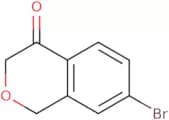
CAS:Versatile small molecule scaffoldFormula:C11H13NO3Purezza:Min. 95%Peso molecolare:207.23 g/mol7-Bromoisochroman-4-one
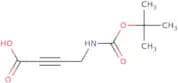
CAS:<p>Versatile small molecule scaffold</p>Formula:C9H7BrO2Purezza:Min. 95%Peso molecolare:227.06 g/mol4-(tert-Butoxycarbonylamino)but-2-ynoic Acid
CAS:Versatile small molecule scaffoldFormula:C9H13NO4Purezza:Min. 95%Peso molecolare:199.2 g/moltert-Butyl 3,4-dihydro-1H-pyrido[3,4-b]indole-2(9H)-carboxylate
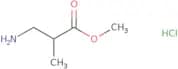
CAS:Versatile small molecule scaffoldFormula:C16H20N2O2Purezza:Min. 95%Peso molecolare:272.34 g/molMethyl (2S)-3-amino-2-methylpropanoate hydrochloride
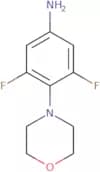
CAS:Versatile small molecule scaffoldFormula:C5H12ClNO2Purezza:Min. 95%Peso molecolare:153.61 g/mol3,5-Difluoro-4-(morpholin-4-yl)aniline
CAS:Versatile small molecule scaffoldFormula:C10H12F2N2OPurezza:Min. 95%Peso molecolare:214.21 g/mol2-Methyl-3-[3-(trifluoromethyl)phenyl]propanoic acid
CAS:Versatile small molecule scaffoldFormula:C11H11F3O2Purezza:Min. 95%Peso molecolare:232.2 g/mol


![8-Chloro-3-methyl-1H-pyrrolo[3,2-c]quinoline](/_next/image/?url=https%3A%2Fstatic.cymitquimica.com%2Fproducts%2F3D%2Fthumb-webp%2FTCA49997.webp&w=3840&q=75)



![5-Methyl-5-[4-(3-methylbutoxy)phenyl]imidazolidine-2,4-dione](/_next/image/?url=https%3A%2Fstatic.cymitquimica.com%2Fproducts%2F3D%2Fthumb-webp%2FTCA52421.webp&w=3840&q=75)

![[4-(2-Amino-ethyl)-phenyl]-methanol hydrochloride](/_next/image/?url=https%3A%2Fstatic.cymitquimica.com%2Fproducts%2F3D%2Fthumb-webp%2FTCA55971.webp&w=3840&q=75)
![6-(Methylthio)benzo[D][1,3]dioxol-5-amine](/_next/image/?url=https%3A%2Fstatic.cymitquimica.com%2Fproducts%2F3D%2Fthumb-webp%2FTCA56013.webp&w=3840&q=75)
![Isoxazolo[5,4-d]pyrimidin-4(5H)-one, 3-methyl-](/_next/image/?url=https%3A%2Fstatic.cymitquimica.com%2Fproducts%2F3D%2Fthumb-webp%2FTCA57174.webp&w=3840&q=75)

![{[4-Amino-3-(trifluoromethyl)phenyl]sulfanyl}formonitrile](/_next/image/?url=https%3A%2Fstatic.cymitquimica.com%2Fproducts%2F3D%2Fthumb-webp%2FTCA67237.webp&w=3840&q=75)
![N-{1-[(4-Chlorophenyl)methyl]piperidin-4-ylidene}hydroxylamine](/_next/image/?url=https%3A%2Fstatic.cymitquimica.com%2Fproducts%2F3D%2Fthumb-webp%2FTCA72676.webp&w=3840&q=75)
amino}benzoic acid](/_next/image/?url=https%3A%2Fstatic.cymitquimica.com%2Fproducts%2F3D%2Fthumb-webp%2FTGA16230.webp&w=3840&q=75)
![rac-tert-butyl N-[(3R,4S)-4-(trifluoromethyl)pyrrolidin-3-yl]carbamate, trans](/_next/image/?url=https%3A%2Fstatic.cymitquimica.com%2Fproducts%2F3D%2Fthumb-webp%2FTGA54495.webp&w=3840&q=75)
![Methyl 3'-amino-[1,1'-biphenyl]-3-carboxylate](/_next/image/?url=https%3A%2Fstatic.cymitquimica.com%2Fproducts%2F3D%2Fthumb-webp%2FTGA61925.webp&w=3840&q=75)

![5-Butyl-4H,7H-[1,2,4]triazolo[1,5-a]pyrimidin-7-one](/_next/image/?url=https%3A%2Fstatic.cymitquimica.com%2Fproducts%2F3D%2Fthumb-webp%2FTGA68647.webp&w=3840&q=75)
![Methyl 4-[(hydroxyimino)methyl]benzoate](/_next/image/?url=https%3A%2Fstatic.cymitquimica.com%2Fproducts%2F3D%2Fthumb-webp%2FTGA69941.webp&w=3840&q=75)
![N-[(1,3-Dioxaindan-5-yl)methyl]-N-methylacetamide](/_next/image/?url=https%3A%2Fstatic.cymitquimica.com%2Fproducts%2F3D%2Fthumb-webp%2FTGA70570.webp&w=3840&q=75)
![tert-Butyl 3,4-dihydro-1H-pyrido[3,4-b]indole-2(9H)-carboxylate](/_next/image/?url=https%3A%2Fstatic.cymitquimica.com%2Fproducts%2F3D%2Fthumb-webp%2FTGA82494.webp&w=3840&q=75)
![2-Methyl-3-[3-(trifluoromethyl)phenyl]propanoic acid](/_next/image/?url=https%3A%2Fstatic.cymitquimica.com%2Fproducts%2F3D%2Fthumb-webp%2FTGA83379.webp&w=3840&q=75)