Building Blocks
Questa sezione contiene prodotti fondamentali per la sintesi di composti organici e biologici. Building blocks sono i materiali di partenza essenziali utilizzati per costruire molecole complesse attraverso varie reazioni chimiche. Svolgono un ruolo critico nella scoperta di farmaci, nella scienza dei materiali e nella ricerca chimica. Presso CymitQuimica, offriamo una gamma diversificata di building blocks di alta qualità per supportare le tue ricerche innovative e progetti industriali, assicurandoti di avere i componenti essenziali per una sintesi di successo.
Sottocategorie di "Building Blocks"
- Acidi boronici e derivati dell'acido boronico(5.778 prodotti)
- Building Blocks Chirali(1.243 prodotti)
- Building Blocks Idrocarburici(6.097 prodotti)
- Building Blocks organici(61.052 prodotti)
Trovati 201390 prodotti di "Building Blocks"
Ordinare per
Purezza (%)
0
100
|
0
|
50
|
90
|
95
|
100
N,N-Dimethyl-N'-[(5-methyl-2-thienyl)methyl]-1,2-ethanediamine dihydrochloride
CAS:<p>Versatile small molecule scaffold</p>Formula:C10H20Cl2N2SPurezza:Min. 95%Peso molecolare:271.2 g/molMethyl 2-bromo-3-(4-chlorophenyl)propanoate
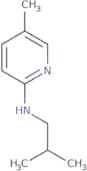
CAS:<p>Versatile small molecule scaffold</p>Formula:C10H10BrClO2Purezza:Min. 95%Peso molecolare:277.54 g/mol5-Methyl-N-(2-methylpropyl)pyridin-2-amine
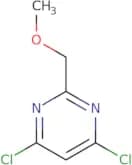
CAS:<p>Versatile small molecule scaffold</p>Formula:C10H16N2Purezza:Min. 95%Peso molecolare:164.25 g/mol4,6-dichloro-2-(methoxymethyl)pyrimidine
CAS:<p>Versatile small molecule scaffold</p>Formula:C6H6Cl2N2OPurezza:Min. 95%Peso molecolare:193 g/mol6-Chloro-1-methyl-1H-pyrazolo[3,4-b]pyridine-5-carbonitrile
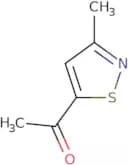
CAS:<p>Versatile small molecule scaffold</p>Formula:C8H5ClN4Purezza:Min. 95%Peso molecolare:192.6 g/mol1-(3-Methyl-isothiazol-5-yl)-ethanone
CAS:<p>Versatile small molecule scaffold</p>Formula:C6H7NOSPurezza:Min. 95%Peso molecolare:141.19 g/mol2-({5,6-Dimethylthieno[2,3-d]pyrimidin-4-yl}sulfanyl)benzoic acid
CAS:Prodotto controllato<p>2-({5,6-Dimethylthieno[2,3-d]pyrimidin-4-yl}sulfanyl)benzoic acid is a synthetic nonpeptide compound that belongs to the group of ligands. This inhibitor binds to nicotinic acetylcholine receptors and inhibits their activity. 2-({5,6-Dimethylthieno[2,3-d]pyrimidin-4-yl}sulfanyl)benzoic acid has been shown to be a potent activator of these receptors. This compound also inhibits voltage dependent potassium channels and calcium channels.</p>Formula:C15H12N2O2S2Purezza:Min. 95%Peso molecolare:316.4 g/molN-[(5-Methyl-2-thienyl)methyl]cyclopropanamine hydrochloride
CAS:<p>Versatile small molecule scaffold</p>Formula:C9H14ClNSPurezza:Min. 95%Peso molecolare:203.73 g/molN-Benzyl-N'-boc-ethylenediamine
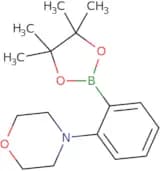
CAS:<p>Versatile small molecule scaffold</p>Formula:C14H22N2O2Purezza:Min. 95%Peso molecolare:250.34 g/mol2-(Morpholino)phenylboronic acid pinacolate
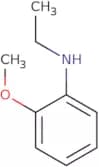
CAS:<p>Versatile small molecule scaffold</p>Formula:C16H24BNO3Purezza:Min. 95%Peso molecolare:289.2 g/molN-Ethyl-2-methoxyaniline
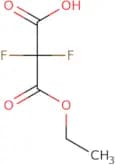
CAS:<p>Versatile small molecule scaffold</p>Formula:C9H13NOPurezza:Min. 95%Peso molecolare:151.21 g/mol3-Ethoxy-2,2-difluoro-3-oxopropanoic acid
CAS:<p>Versatile small molecule scaffold</p>Formula:C5H6F2O4Purezza:Min. 95%Peso molecolare:168.1 g/molImidazo[1,2-c]pyrimidin-5(1H)-one
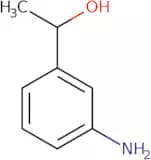
CAS:<p>Imidazo[1,2-c]pyrimidin-5(1H)-one is a compound that exhibits various characteristics and functions. It acts as a glycosylase, which is an enzyme involved in DNA repair processes. Additionally, it interacts with melatonin receptors and racemase enzymes. Imidazo[1,2-c]pyrimidin-5(1H)-one has been found to have reactive properties towards diclofenac and amino groups. It can also form complexes with zeolite and glycosylases.</p>Formula:C6H5N3OPurezza:Min. 95%Peso molecolare:135.1 g/mol(1R)-1-(3-Aminophenyl)ethan-1-ol
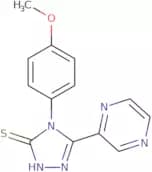
CAS:<p>Versatile small molecule scaffold</p>Formula:C8H11NOPurezza:Min. 95%Peso molecolare:137.18 g/mol4-(4-Methoxyphenyl)-5-(pyrazin-2-yl)-4H-1,2,4-triazole-3-thiol
CAS:<p>Versatile small molecule scaffold</p>Formula:C13H11N5OSPurezza:Min. 95%Peso molecolare:285.33 g/mol5-Methanesulfonylfuran-2-carbaldehyde
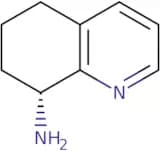
CAS:<p>Versatile small molecule scaffold</p>Formula:C6H6O4SPurezza:Min. 95%Peso molecolare:174.18 g/mol(R)-5,6,7,8-Tetrahydroquinolin-8-amine
CAS:<p>Versatile small molecule scaffold</p>Formula:C9H12N2Purezza:Min. 95%Peso molecolare:148.2 g/mol6-Amino-1-(phenylsulfanyl)hexan-1-one hydrochloride
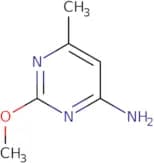
CAS:<p>Versatile small molecule scaffold</p>Formula:C12H18ClNOSPurezza:Min. 95%Peso molecolare:259.8 g/mol2-Methoxy-6-methylpyrimidine-4-yl-amine
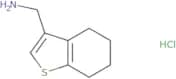
CAS:<p>Versatile small molecule scaffold</p>Formula:C6H9N3OPurezza:Min. 95%Peso molecolare:139.15 g/mol1-(4,5,6,7-Tetrahydro-1-benzothiophen-3-yl)methanamine hydrochloride
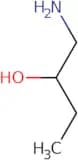
CAS:<p>Versatile small molecule scaffold</p>Formula:C9H14ClNSPurezza:Min. 95%Peso molecolare:203.73 g/mol(S)-1-Aminobutan-2-ol
CAS:<p>Versatile small molecule scaffold</p>Formula:C4H11NOPurezza:Min. 95%Peso molecolare:89.14 g/mol1-Iodo-3-methylbicyclo[1.1.1]pentane
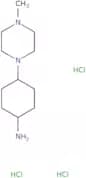
CAS:<p>Versatile small molecule scaffold</p>Formula:C6H9IPurezza:Min. 95%Peso molecolare:208.04 g/mol4-(4-Methylpiperazin-1-yl)cyclohexan-1-amine trihydrochloride
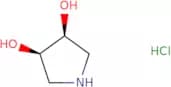
CAS:<p>Versatile small molecule scaffold</p>Formula:C11H26Cl3N3Purezza:Min. 95%Peso molecolare:306.7 g/molcis-3,4-Pyrrolidinediol hydrochloride
CAS:<p>Versatile small molecule scaffold</p>Formula:C4H10ClNO2Purezza:Min. 95%Peso molecolare:139.6 g/mol3-[5-(2,2-Dimethylpropyl)-1,2,4-oxadiazol-3-yl]benzoic acid
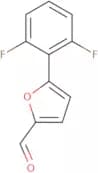
CAS:<p>Versatile small molecule scaffold</p>Formula:C14H16N2O3Purezza:Min. 95%Peso molecolare:260.29 g/mol5-(2,6-Difluorophenyl)furan-2-carbaldehyde
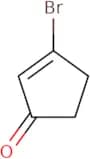
CAS:<p>Versatile small molecule scaffold</p>Formula:C11H6F2O2Purezza:Min. 95%Peso molecolare:208.16 g/mol3-Bromocyclopent-2-en-1-one
CAS:<p>3-Bromocyclopent-2-en-1-one is an organic compound that belongs to the group of cycloalkenones. It is a methyl ester with a cyclopentane backbone and a ketone group at the end of the molecule. 3-Bromocyclopent-2-en-1-one is synthesized by a cross-coupling reaction between zinc chloride and 3,4,5,6,7,8,9,10,11 bromodecane. The product can be isolated in crystalline form as well as in yields up to 90%. The product has been shown to act as an analog for prostaglandin E2.</p>Formula:C5H5BrOPurezza:Min. 95%Peso molecolare:161 g/molDecahydronaphthalene-4a-carboxylic acid
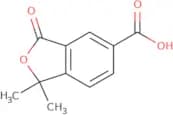
CAS:<p>Versatile small molecule scaffold</p>Formula:C11H18O2Purezza:Min. 95%Peso molecolare:182.3 g/mol1,1-Dimethyl-3-oxo-1,3-dihydro-2-benzofuran-5-carboxylic acid
CAS:<p>Versatile small molecule scaffold</p>Formula:C11H10O4Purezza:Min. 95%Peso molecolare:206.19 g/moltert-Butyl 4-[(1,3-thiazol-2-yl)amino]piperidine-1-carboxylate
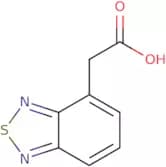
CAS:<p>Versatile small molecule scaffold</p>Formula:C13H21N3O2SPurezza:Min. 95%Peso molecolare:283.39 g/mol2-(2,1,3-Benzothiadiazol-4-yl)acetic acid
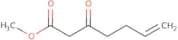
CAS:<p>Versatile small molecule scaffold</p>Formula:C8H6N2O2SPurezza:Min. 95%Peso molecolare:194.21 g/molMethyl 3-oxohept-6-enoate
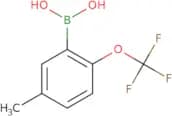
CAS:<p>Methyl 3-oxohept-6-enoate is a cyclopropane, which is a type of organic compound that contains one or more rings of carbon atoms. This compound can be synthesized by the chemoenzymatic process using hydrogen chloride and activated methylene chloride. The synthesis starts with an acidic condensation process, followed by the hydroalkylation of methyl 3-oxoheptanoate. The resulting product is then isolated through a chiral synthetic process and has an isolated yield of 51%.</p>Formula:C8H12O3Purezza:Min. 95%Peso molecolare:156.18 g/mol5-Methyl-2-(trifluoromethoxy)phenylboronic acid
CAS:<p>Versatile small molecule scaffold</p>Formula:C8H8BF3O3Purezza:Min. 95%Peso molecolare:219.95 g/mol4-[4-(3-Methylphenyl)-5-({[3-(2-methylphenyl)-1,2,4-oxadiazol-5-yl]methyl}sulfanyl)-4H-1,2,4-triazol-3-yl]morpholine 2-hydroxypropan e-1,2,3-tricarboxylate
CAS:<p>4-[4-(3-Methylphenyl)-5-({[3-(2-methylphenyl)-1,2,4-oxadiazol-5-yl]methyl}sulfanyl)-4H-1,2,4-triazol-3-yl]morpholine 2-hydroxypropan e is a synthetic compound that belongs to the class of xanthine derivatives. It is an inhibitor of calcium carbonate crystallization in the form of calcium citrate or calcium oxalate. It has been shown to be effective against radiation and other types of cancerous cells with a mechanism of action that is not yet fully understood. 4-[4-(3-Methylphenyl)-5-({[3-(2-methylphenyl)-1,2,4-oxadiazol-5-yl]methyl}sulfanyl)-4H-1,2,4-- triazol-- 3 -yl]morpholine 2</p>Formula:C29H32N6O9SPurezza:Min. 95%Peso molecolare:640.7 g/mol2-[(tert-Butoxy)carbonyl]-7,7-difluoro-2-azabicyclo[4.1.0]heptane-3-carboxylic acid
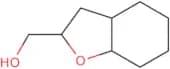
CAS:<p>Versatile small molecule scaffold</p>Formula:C12H17F2NO4Purezza:Min. 95%Peso molecolare:277.26 g/mol(Octahydro-1-benzofuran-2-yl)methanols
CAS:<p>Versatile small molecule scaffold</p>Formula:C9H16O2Purezza:Min. 95%Peso molecolare:156.2 g/mol2,5-Dimethylpiperazine dihydrochloride
CAS:<p>Versatile small molecule scaffold</p>Formula:C6H16Cl2N2Purezza:Min. 95%Peso molecolare:187.11 g/mol4-{7-Methyl-[1,2,4]triazolo[4,3-a]pyridin-3-yl}piperidine
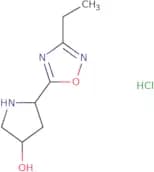
CAS:<p>Versatile small molecule scaffold</p>Formula:C12H16N4Purezza:Min. 95%Peso molecolare:216.28 g/mol(3S,5R)-5-(3-Ethyl-1,2,4-oxadiazol-5-yl)pyrrolidin-3-ol hydrochloride
CAS:<p>Versatile small molecule scaffold</p>Formula:C8H14ClN3O2Purezza:Min. 95%Peso molecolare:219.67 g/molN-{[4-(4-Bromophenoxy)phenyl]methyl}cyclopropanamine
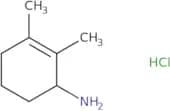
CAS:<p>Versatile small molecule scaffold</p>Formula:C16H16BrNOPurezza:Min. 95%Peso molecolare:318.21 g/mol2,3-Dimethylcyclohex-2-en-1-amine hydrochloride
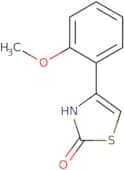
CAS:<p>Versatile small molecule scaffold</p>Formula:C8H16ClNPurezza:Min. 95%Peso molecolare:161.7 g/mol4-(2-Methoxyphenyl)-2,3-dihydro-1,3-thiazol-2-one
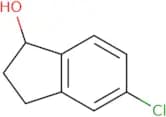
CAS:<p>Versatile small molecule scaffold</p>Formula:C10H9NO2SPurezza:Min. 95%Peso molecolare:207.25 g/mol(1R)-5-Chloro-2,3-dihydro-1H-inden-1-ol
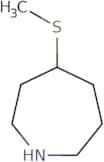
CAS:<p>Versatile small molecule scaffold</p>Formula:C9H9ClOPurezza:Min. 95%Peso molecolare:168.62 g/mol4-(Methylsulfanyl)azepane
CAS:<p>Versatile small molecule scaffold</p>Formula:C7H15NSPurezza:Min. 95%Peso molecolare:145.27 g/mol4-(2-Bromophenyl)-1,3-thiazole
CAS:<p>Versatile small molecule scaffold</p>Formula:C9H6BrNSPurezza:Min. 95%Peso molecolare:240.12 g/mol4-Chloro-3-cyclopropyl-1H-pyrrolo[2,3-b]pyridine hydrochloride
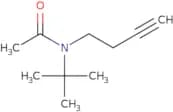
CAS:<p>Versatile small molecule scaffold</p>Formula:C10H10Cl2N2Purezza:Min. 95%Peso molecolare:229.1 g/molN-(But-3-yn-1-yl)-N-tert-butylacetamide
CAS:<p>Versatile small molecule scaffold</p>Formula:C10H17NOPurezza:Min. 95%Peso molecolare:167.2 g/mol1-tert-Butyl-5-iodo-1H-pyrazole-4-carboxylic acid
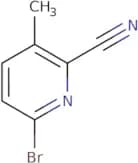
CAS:<p>Versatile small molecule scaffold</p>Formula:C8H11IN2O2Purezza:Min. 95%Peso molecolare:294.09 g/mol6-bromo-3-methylpicolinonitrile
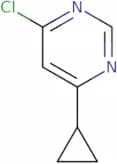
CAS:<p>Versatile small molecule scaffold</p>Formula:C7H5BrN2Purezza:Min. 95%Peso molecolare:197.04 g/mol4-chloro-6-cyclopropylpyrimidine
CAS:<p>Versatile small molecule scaffold</p>Formula:C7H7ClN2Purezza:Min. 95%Peso molecolare:154.6 g/mol3-Methoxyazetidine-3-carboxamide hydrochloride
CAS:Versatile small molecule scaffoldFormula:C5H11ClN2O2Purezza:Min. 95%Peso molecolare:166.6 g/mol4-(3-bromophenoxy)butanoic acid
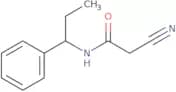
CAS:Prodotto controllato<p>Versatile small molecule scaffold</p>Formula:C10H11BrO3Purezza:Min. 95%Peso molecolare:259.1 g/mol2-Cyano-N-(1-phenylpropyl)acetamide
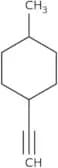
CAS:<p>Versatile small molecule scaffold</p>Formula:C12H14N2OPurezza:Min. 95%Peso molecolare:202.25 g/mol1-Ethynyl-4-methylcyclohexane
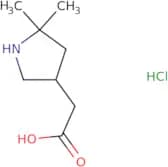
CAS:<p>Versatile small molecule scaffold</p>Formula:C9H14Purezza:Min. 95%Peso molecolare:122.21 g/mol2-(5,5-Dimethylpyrrolidin-3-yl)acetic acid hydrochloride
CAS:<p>Versatile small molecule scaffold</p>Formula:C8H16ClNO2Purezza:Min. 95%Peso molecolare:193.7 g/mol[5-(2-Fluorophenyl)-1,2-oxazol-3-yl]methanamine hydrochloride
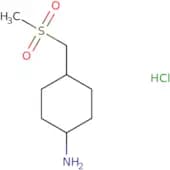
CAS:<p>Versatile small molecule scaffold</p>Formula:C10H10ClFN2OPurezza:Min. 95%Peso molecolare:228.65 g/mol4-(Methanesulfonylmethyl)cyclohexan-1-amine hydrochloride
CAS:<p>Versatile small molecule scaffold</p>Formula:C8H18ClNO2SPurezza:Min. 95%Peso molecolare:227.75 g/mol1-[(3-Methoxyphenyl)methyl]-3,5-dimethyl-1H-pyrazol-4-amine hydrochloride
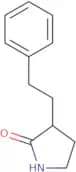
CAS:<p>Versatile small molecule scaffold</p>Formula:C13H18ClN3OPurezza:Min. 95%Peso molecolare:267.75 g/mol3-(2-Phenylethyl)pyrrolidin-2-one
CAS:<p>Versatile small molecule scaffold</p>Formula:C12H15NOPurezza:Min. 95%Peso molecolare:189.25 g/mol4-Chloro-3-methyl-[1,2]oxazolo[5,4-d]pyrimidine
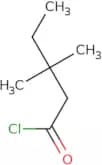
CAS:<p>Versatile small molecule scaffold</p>Formula:C6H4ClN3OPurezza:Min. 95%Peso molecolare:169.57 g/mol3,3-Dimethylpentanoyl chloride
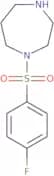
CAS:<p>Versatile small molecule scaffold</p>Formula:C7H13ClOPurezza:Min. 95%Peso molecolare:148.63 g/mol1-(4-Fluorobenzenesulfonyl)-1,4-diazepane
CAS:<p>Versatile small molecule scaffold</p>Formula:C11H15FN2O2SPurezza:Min. 95%Peso molecolare:258.31 g/mol[1-(Pyrimidin-2-yl)piperidin-4-yl]methanamine dihydrochloride
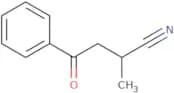
CAS:<p>Versatile small molecule scaffold</p>Formula:C10H18Cl2N4Purezza:Min. 95%Peso molecolare:265.18 g/mol2-Methyl-4-oxo-4-phenylbutanenitrile
CAS:<p>2-Methyl-4-oxo-4-phenylbutanenitrile is a chemical compound that is used in the synthesis of pharmaceuticals. It can be obtained by reacting an organic base with an organic acid. This reaction takes place in a reaction vessel and requires an inorganic base and inorganic reagents. The process also requires ethyl cyanoacetate as the starting material and produces 2-methyl-4-oxo-4-phenylbutanenitrile as the product. The use of this chemical has been linked to environmental pollution, so it should never be released into the environment or come into contact with water.</p>Formula:C11H11NOPurezza:Min. 95%Peso molecolare:173.21 g/mol2,3,3-Trimethylbicyclo[2.2.1]heptane-2-carboxylic acid
CAS:<p>Versatile small molecule scaffold</p>Formula:C11H18O2Purezza:Min. 95%Peso molecolare:182.3 g/mol2-Methoxy-1-(1H-1,2,3,4-tetrazol-5-yl)ethan-1-amine
CAS:<p>Versatile small molecule scaffold</p>Formula:C4H9N5OPurezza:Min. 95%Peso molecolare:143.1 g/mol6-Methoxy-1-(naphthalen-1-yl)-1H,2H,3H,4H,9H-pyrido[3,4-b]indole
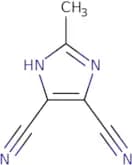
CAS:<p>Versatile small molecule scaffold</p>Formula:C22H20N2OPurezza:Min. 95%Peso molecolare:328.4 g/mol2-Methyl-1H-imidazole-4,5-dicarbonitrile
CAS:<p>Versatile small molecule scaffold</p>Formula:C6H4N4Purezza:Min. 95%Peso molecolare:132.12 g/mol3-Cyclobutyl-[1,2,4]triazolo[4,3-a]pyridin-6-amine
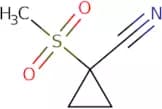
CAS:<p>Versatile small molecule scaffold</p>Formula:C10H12N4Purezza:Min. 95%Peso molecolare:188.23 g/mol1-Methanesulfonylcyclopropane-1-carbonitrile
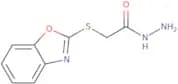
CAS:<p>Versatile small molecule scaffold</p>Formula:C5H7NO2SPurezza:Min. 95%Peso molecolare:145.18 g/mol2-(1,3-Benzoxazol-2-ylsulfanyl)acetohydrazide
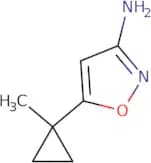
CAS:<p>Versatile small molecule scaffold</p>Formula:C9H9N3O2SPurezza:Min. 95%Peso molecolare:223.25 g/mol5-(1-Methylcyclopropyl)-1,2-oxazol-3-amine
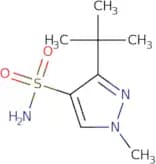
CAS:<p>Versatile small molecule scaffold</p>Formula:C7H10N2OPurezza:Min. 95%Peso molecolare:138.17 g/mol3-(tert-Butyl)-1-methyl-1H-pyrazole-4-sulfonamide
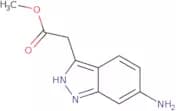
CAS:<p>Versatile small molecule scaffold</p>Formula:C8H15N3O2SPurezza:Min. 95%Peso molecolare:217.29 g/molmethyl 6-amino-1H-indazole-3-carboxylate
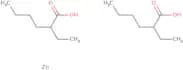
CAS:<p>Versatile small molecule scaffold</p>Formula:C9H9N3O2Purezza:Min. 95%Peso molecolare:191.19 g/molEthylhexanoic acid zinc
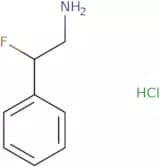
CAS:<p>Ethylhexanoic acid zinc salt is a viscosity-increasing agent that is used in the production of high-viscosity polymers. It is a carboxylate salt of ethyl hexanoic acid and zinc. The reaction of ethylhexane with zirconium oxide produces a viscous liquid with a strong cationic polymerization activity. This product reacts with diphenyl ether and aromatic hydrocarbons to form solid products. The reaction with calcium stearate, an ester of glycerol, results in the formation of particles that are insoluble in water but soluble in organic solvents. Ethylhexane also reacts with ethylene diamine to form methyl myristate, which has kinetic data available for it.</p>Formula:C16H30O4ZnPurezza:Min. 95%Peso molecolare:351.8 g/mol(2S)-2-Fluoro-2-phenylethan-1-amine hydrochloride
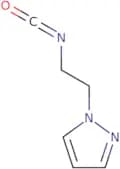
CAS:<p>Versatile small molecule scaffold</p>Formula:C8H11ClFNPurezza:Min. 95%Peso molecolare:175.63 g/mol1-(2-Isocyanatoethyl)-1H-pyrazole
CAS:<p>Versatile small molecule scaffold</p>Formula:C6H7N3OPurezza:Min. 95%Peso molecolare:137.14 g/mol2-Acetylbenzoic acid
CAS:<p>2-Acetylbenzoic acid is a functional molecule that contains an acetyl group. It can form hydrogen bonds with other molecules and has been shown to induce apoptosis in cells. The reaction products of 2-acetylbenzoic acid are malonic acid, acetylsalicylic acid, and 2-benzoylbenzoic acid. These three compounds are made by the addition of hydrogen or hydroxide to the molecule 2-acetylbenzoic acid. The molecule has two functional groups: a carbonyl group and an acetyl group. The chemical structure of this molecule can be seen in the figure below.<br>2-Acetylbenzoic Acid</p>Formula:C9H8O3Purezza:Min. 95%Colore e forma:PowderPeso molecolare:164.16 g/molRef: 3D-FA05086
Prodotto fuori produzione4-(Methylamino)benzene-1-sulfonamide
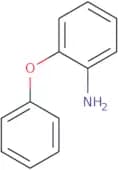
CAS:<p>Versatile small molecule scaffold</p>Formula:C7H10N2O2SPurezza:Min. 95%Peso molecolare:186.23 g/mol2-Phenoxyaniline
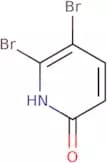
CAS:<p>2-Phenoxyaniline is a nitro compound that can be converted to the corresponding palladium complexes. It is an inhibitor of the acylation reaction, which is a type of chemical reaction in which an organic molecule reacts with an acid. The inhibition of this reaction has been shown to have an effect on heart disease, specifically by lowering cholesterol levels and reducing atherosclerosis. 2-Phenoxyaniline has also been shown to inhibit the activation energy for electron transfer reactions, making it useful as a catalyst in analytical methods. 2-Phenoxyaniline also undergoes vibrational spectroscopy when exposed to liquid chromatography and other analytical methods.</p>Formula:C12H11NOPurezza:Min. 95%Colore e forma:Brown PowderPeso molecolare:185.22 g/mol5,6-Dibromopyridin-2-ol
CAS:<p>Versatile small molecule scaffold</p>Formula:C5H3Br2NOPurezza:Min. 95%Peso molecolare:252.89 g/moltert-Butyl 5-bromo-3,4-dihydro-2,7-naphthyridine-2(1H)-carboxylate
CAS:<p>Versatile small molecule scaffold</p>Formula:C13H17BrN2O2Purezza:Min. 95%Peso molecolare:313.19 g/mol2-Bromo-3,3,3-trifluoro-1-propene
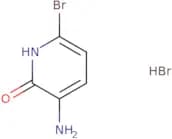
CAS:Prodotto controllato<p>2-Bromo-3,3,3-trifluoro-1-propene is a chemical compound that has been synthesized in an asymmetric reaction. The reactant is bromopropane and the product is 2,2,2-trifluoropropene. The methylene group on the propene molecule is activated by the nucleophilic attack of a fluoride ion from hydrogen fluoride to form a cavity with a highly strained bond. The kinetic study of this reaction revealed that the activation energy for the reaction is 42 kJ/mol. Palladium-catalyzed coupling reactions are catalyzed by palladium and require nonpolar solvents such as toluene or dichloromethane. This type of reaction has been shown to be exothermic with an isolated yield of 1%.</p>Formula:C3H2BrF3Purezza:Min. 95%Colore e forma:Colorless PowderPeso molecolare:174.95 g/mol3-amino-6-bromopyridin-2-ol hydrobromide
CAS:<p>Versatile small molecule scaffold</p>Formula:C5H6Br2N2OPurezza:Min. 95%Peso molecolare:269.9 g/mol1-[3-(Dimethylamino)propyl]-1-(4-fluorophenyl)-1,3-dihydro-3-oxo-5-isobenzofurancarbonitrile
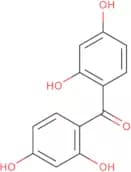
CAS:<p>Please enquire for more information about 1-[3-(Dimethylamino)propyl]-1-(4-fluorophenyl)-1,3-dihydro-3-oxo-5-isobenzofurancarbonitrile including the price, delivery time and more detailed product information at the technical inquiry form on this page</p>Formula:C20H19FN2O2Purezza:Min. 95%Peso molecolare:338.38 g/mol2,2',4,4'-tetrahydroxybenzophenone
CAS:<p>2,2',4,4'-tetrahydroxybenzophenone is a hydroxylated benzophenone that has immunomodulatory effects. It binds to the receptor in the immune system and can cause an increase in cytokine production. 2,2',4,4'-tetrahydroxybenzophenone is cytotoxic and has significant toxicity in vitro. The molecule has been shown to disrupt mitochondrial membrane potential. This may be due to its ability to form hydrogen bonds with molecules on the mitochondrial membrane. 2,2',4,4'-tetrahydroxybenzophenone also modulates transcriptional regulation of genes involved in cell proliferation and apoptosis. The drug is detectable at low levels by mass spectrometry and is not known to have any toxicological effects.END>></p>Formula:C13H10O5Purezza:Min. 95%Colore e forma:Green PowderPeso molecolare:246.22 g/molRef: 3D-FT55663
Prodotto fuori produzione3-Methylbenzo[b]thiophene-2-carboxylic acid
CAS:<p>3-Methylbenzo[b]thiophene-2-carboxylic acid (MBTCA) is a heterocyclic compound that is an intermediate in the synthesis of 3-methylthiophene-2-carboxylic acid, a precursor to other drugs. MBTCA is an aerobic, nonpolar compound that has shown antimicrobial activity against some bacteria and fungi. It also has been shown to have practicality as a biomolecular probe for methyl groups in organic solvents. MBTCA can be synthesized by nitration of benzene in the presence of sulfur and sulfoxides. This reaction produces nitrobenzene, which can then be oxidized by potassium permanganate or hydrogen peroxide to produce MBTCA. The most common isomer of MBTCA is 2-(3,5-dimethoxybenzylidene)tetrahydrofuran, with three methyl groups on the</p>Formula:C10H8O2SPurezza:Min. 95%Peso molecolare:192.23 g/mol3-(Methoxycarbonyl)pyridine-4-carboxylic acid
CAS:<p>Versatile small molecule scaffold</p>Formula:C8H7NO4Purezza:Min. 95%Peso molecolare:181.15 g/molH-Ser-Ala-Glu-Glu-Tyr-Glu-Tyr-Pro-Ser OH trifluoroacetate
CAS:<p>Please enquire for more information about H-Ser-Ala-Glu-Glu-Tyr-Glu-Tyr-Pro-Ser OH trifluoroacetate including the price, delivery time and more detailed product information at the technical inquiry form on this page</p>Formula:C47H63N9O20•(C2HF3O2)xPurezza:Min. 95%Ref: 3D-FS183525
Prodotto fuori produzioneGivinostat hydrochloride
CAS:<p>Givinostat hydrochloride is a research chemical that has shown potential in various fields. It is a molybdenum-based compound that has been studied for its effects on dopamine release and hydrogen evolution. Givinostat hydrochloride has also been investigated as an osteoclast inhibitor, which may be beneficial in the treatment of bone-related disorders such as osteoporosis. Additionally, it has shown promise as a retinoid and calpain inhibitor, suggesting its potential use in dermatological conditions and neurodegenerative diseases. The compound contains fluorine atoms, making it suitable for imaging studies using fluorine MRI techniques. Givinostat hydrochloride has been tested on MDA-MB-231 cells and has shown inhibitory effects on their growth, indicating its potential as an anticancer agent.</p>Formula:C24H27N3O4·HClPurezza:Min. 95%Peso molecolare:457.95 g/mol
![N,N-Dimethyl-N'-[(5-methyl-2-thienyl)methyl]-1,2-ethanediamine dihydrochloride](/_next/image/?url=https%3A%2Fstatic.cymitquimica.com%2Fproducts%2F3D%2Fthumb-webp%2FASB21396.webp&w=3840&q=75)


![6-Chloro-1-methyl-1H-pyrazolo[3,4-b]pyridine-5-carbonitrile](/_next/image/?url=https%3A%2Fstatic.cymitquimica.com%2Fproducts%2F3D%2Fthumb-webp%2FRYB26991.webp&w=3840&q=75)
![2-({5,6-Dimethylthieno[2,3-d]pyrimidin-4-yl}sulfanyl)benzoic acid](/_next/image/?url=https%3A%2Fstatic.cymitquimica.com%2Fproducts%2F3D%2Fthumb-webp%2FBEB15117.webp&w=3840&q=75)
![N-[(5-Methyl-2-thienyl)methyl]cyclopropanamine hydrochloride](/_next/image/?url=https%3A%2Fstatic.cymitquimica.com%2Fproducts%2F3D%2Fthumb-webp%2FASB21404.webp&w=3840&q=75)
![Imidazo[1,2-c]pyrimidin-5(1H)-one](/_next/image/?url=https%3A%2Fstatic.cymitquimica.com%2Fproducts%2F3D%2Fthumb-webp%2FZIB03592.webp&w=3840&q=75)


![1-Iodo-3-methylbicyclo[1.1.1]pentane](/_next/image/?url=https%3A%2Fstatic.cymitquimica.com%2Fproducts%2F3D%2Fthumb-webp%2FLFA39910.webp&w=3840&q=75)
![3-[5-(2,2-Dimethylpropyl)-1,2,4-oxadiazol-3-yl]benzoic acid](/_next/image/?url=https%3A%2Fstatic.cymitquimica.com%2Fproducts%2F3D%2Fthumb-webp%2FSBC01836.webp&w=3840&q=75)

![tert-Butyl 4-[(1,3-thiazol-2-yl)amino]piperidine-1-carboxylate](/_next/image/?url=https%3A%2Fstatic.cymitquimica.com%2Fproducts%2F3D%2Fthumb-webp%2FZIB54665.webp&w=3840&q=75)
![4-[4-(3-Methylphenyl)-5-({[3-(2-methylphenyl)-1,2,4-oxadiazol-5-yl]methyl}sulfanyl)-4H-1,2,4-triaz…](/_next/image/?url=https%3A%2Fstatic.cymitquimica.com%2Fproducts%2F3D%2Fthumb-webp%2FAVD26023.webp&w=3840&q=75)
![2-[(tert-Butoxy)carbonyl]-7,7-difluoro-2-azabicyclo[4.1.0]heptane-3-carboxylic acid](/_next/image/?url=https%3A%2Fstatic.cymitquimica.com%2Fproducts%2F3D%2Fthumb-webp%2FMKD51443.webp&w=3840&q=75)

![4-{7-Methyl-[1,2,4]triazolo[4,3-a]pyridin-3-yl}piperidine](/_next/image/?url=https%3A%2Fstatic.cymitquimica.com%2Fproducts%2F3D%2Fthumb-webp%2FRYB29874.webp&w=3840&q=75)
![N-{[4-(4-Bromophenoxy)phenyl]methyl}cyclopropanamine](/_next/image/?url=https%3A%2Fstatic.cymitquimica.com%2Fproducts%2F3D%2Fthumb-webp%2FVTB25583.webp&w=3840&q=75)

![4-Chloro-3-cyclopropyl-1H-pyrrolo[2,3-b]pyridine hydrochloride](/_next/image/?url=https%3A%2Fstatic.cymitquimica.com%2Fproducts%2F3D%2Fthumb-webp%2FAVD25936.webp&w=3840&q=75)


![[5-(2-Fluorophenyl)-1,2-oxazol-3-yl]methanamine hydrochloride](/_next/image/?url=https%3A%2Fstatic.cymitquimica.com%2Fproducts%2F3D%2Fthumb-webp%2FBEC59563.webp&w=3840&q=75)
![1-[(3-Methoxyphenyl)methyl]-3,5-dimethyl-1H-pyrazol-4-amine hydrochloride](/_next/image/?url=https%3A%2Fstatic.cymitquimica.com%2Fproducts%2F3D%2Fthumb-webp%2FVXC63920.webp&w=3840&q=75)
![4-Chloro-3-methyl-[1,2]oxazolo[5,4-d]pyrimidine](/_next/image/?url=https%3A%2Fstatic.cymitquimica.com%2Fproducts%2F3D%2Fthumb-webp%2FBCA85060.webp&w=3840&q=75)
![[1-(Pyrimidin-2-yl)piperidin-4-yl]methanamine dihydrochloride](/_next/image/?url=https%3A%2Fstatic.cymitquimica.com%2Fproducts%2F3D%2Fthumb-webp%2FVGA35331.webp&w=3840&q=75)
![2,3,3-Trimethylbicyclo[2.2.1]heptane-2-carboxylic acid](/_next/image/?url=https%3A%2Fstatic.cymitquimica.com%2Fproducts%2F3D%2Fthumb-webp%2FNEA49250.webp&w=3840&q=75)
![6-Methoxy-1-(naphthalen-1-yl)-1H,2H,3H,4H,9H-pyrido[3,4-b]indole](/_next/image/?url=https%3A%2Fstatic.cymitquimica.com%2Fproducts%2F3D%2Fthumb-webp%2FEWA47644.webp&w=3840&q=75)
![3-Cyclobutyl-[1,2,4]triazolo[4,3-a]pyridin-6-amine](/_next/image/?url=https%3A%2Fstatic.cymitquimica.com%2Fproducts%2F3D%2Fthumb-webp%2FZZB00172.webp&w=3840&q=75)




![1-[3-(Dimethylamino)propyl]-1-(4-fluorophenyl)-1,3-dihydro-3-oxo-5-isobenzofurancarbonitrile](/_next/image/?url=https%3A%2Fstatic.cymitquimica.com%2Fproducts%2F3D%2Fthumb-webp%2FFD184085.webp&w=3840&q=75)
![3-Methylbenzo[b]thiophene-2-carboxylic acid](/_next/image/?url=https%3A%2Fstatic.cymitquimica.com%2Fproducts%2F3D%2Fthumb-webp%2FDAA13378.webp&w=3840&q=75)