Building Blocks
Sottocategorie di "Building Blocks"
- Acidi boronici e derivati dell'acido boronico(5.778 prodotti)
- Building Blocks Chirali(1.243 prodotti)
- Building Blocks Idrocarburici(6.099 prodotti)
- Building Blocks organici(61.038 prodotti)
Trovati 205376 prodotti di "Building Blocks"
5-[(Phenylthio)methyl]-2-furoic acid
CAS:Versatile small molecule scaffold
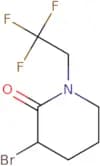
Formula:C12H10O3SPurezza:Min. 95%Peso molecolare:234.27 g/mol3-Bromo-1-(2,2,2-trifluoroethyl)piperidin-2-one
CAS:Versatile small molecule scaffold
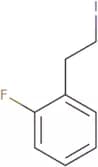
Formula:C7H9BrF3NOPurezza:Min. 95%Peso molecolare:260.05 g/mol1-Fluoro-2-(2-iodoethyl)benzene
CAS:Versatile small molecule scaffold
Formula:C8H8FIPurezza:Min. 95%Peso molecolare:250.05 g/mol7-Oxa-1-azaspiro[3.5]nonan-2-one
CAS:Versatile small molecule scaffold
Formula:C7H11NO2Purezza:Min. 95%Peso molecolare:141.17 g/mol2-(5-Methyl-1H-pyrazol-1-yl)aniline
CAS:Versatile small molecule scaffold
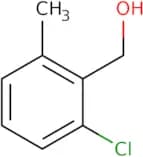
Formula:C10H11N3Purezza:Min. 95%Peso molecolare:173.21 g/mol(2-Chloro-6-methylphenyl)methanol
CAS:Versatile small molecule scaffold
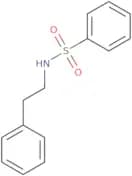
Formula:C8H9ClOPurezza:Min. 95%Peso molecolare:156.61 g/molN-(2-Phenylethyl)benzenesulfonamide
CAS:N-(2-Phenylethyl)benzenesulfonamide is a biodegradable and aerobic catalyst that is used in the production of nitrates. It can be recycled and has a high solubility, which allows for efficient extraction from wastewater effluents. The reactor system can be operated at an aerobic or anaerobic conditions. N-(2-Phenylethyl)benzenesulfonamide is soluble in water and can be hydrolyzed by acids or bases to release ammonia gas. The process can also be sustainable due to the use of renewable energy sources such as solar, wind, tidal, or biomass power.
Formula:C14H15NO2SPurezza:Min. 95%Peso molecolare:261.34 g/mol2-[Ethyl(propan-2-yl)amino]ethan-1-ol
CAS:Prodotto controllatoVersatile small molecule scaffold
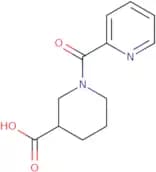
Formula:C7H17NOPurezza:Min. 95%Peso molecolare:131.22 g/mol1-(Pyridine-2-carbonyl)piperidine-3-carboxylic acid
CAS:Versatile small molecule scaffold
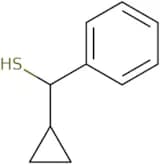
Formula:C12H14N2O3Purezza:Min. 95%Peso molecolare:234.25 g/molCyclopropyl(phenyl)methanethiol
CAS:Versatile small molecule scaffold
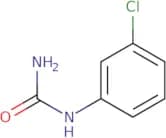
Formula:C10H12SPurezza:Min. 95%Peso molecolare:164.27 g/mol3-Chlorophenylurea
CAS:3-Chlorophenylurea is a quinazolinone that inhibits the growth of candida glabrata. This compound has been shown to inhibit efflux pumps, which are proteins that pump out drugs from the cell. 3-Chlorophenylurea has been shown to inhibit the efflux of fluconazole, a drug used to treat fungal infections, and thiourea, a compound that is known for its cytotoxicity. The inhibition of these two compounds suggests that 3-chlorophenylurea could be an efflux pump inhibitor.
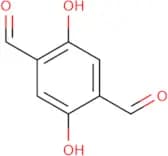
Formula:C7H7ClN2OPurezza:Min. 95%Peso molecolare:170.6 g/mol2,5-Dihydroxyterephthalaldehyde
CAS:2,5-Dihydroxyterephthalaldehyde (2,5-DTPA) is a sugar alcohol that is used in the production of polyester. It can be synthesized by electrochemical methods and is produced as an intermediate in the synthesis of 2,5-dihydroxypentane-1,5-diyldimethanol. The optical properties and chemical stability of 2,5-DTPA are determined by its protonation state. The protonation state depends on the pH of the solution or solvent. 2,5-DTPA has two isomers: one with an intramolecular hydrogen bond and one without. 2,5-DTPA also exists as an enol form at high pH values and as a keto form at low pH values. This compound has been shown to have liver protective effects against cell death induced by oxidative stress in animal models.
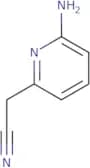
Formula:C8H6O4Purezza:Min. 95%Peso molecolare:166.13 g/mol2-(6-Aminopyridin-2-yl)acetonitrile
CAS:Versatile small molecule scaffold
Formula:C7H7N3Purezza:Min. 95%Peso molecolare:133.15 g/mol1-[3-(Hydroxymethyl)phenyl]ethan-1-one
CAS:Versatile small molecule scaffold
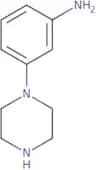
Formula:C9H10O2Purezza:Min. 95%Peso molecolare:150.17 g/mol3-(Piperazin-1-yl)aniline
CAS:Versatile small molecule scaffold
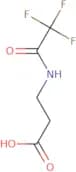
Formula:C10H15N3Purezza:Min. 95%Peso molecolare:177.25 g/mol3-(Trifluoroacetamido)propanoic acid
CAS:Versatile small molecule scaffold
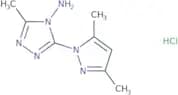
Formula:C5H6F3NO3Purezza:Min. 95%Peso molecolare:185.1 g/mol3-(3,5-Dimethyl-1H-pyrazol-1-yl)-5-methyl-4H-1,2,4-triazol-4-amine hydrochloride
CAS:Versatile small molecule scaffold
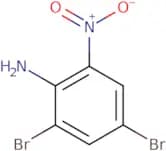
Formula:C8H13ClN6Purezza:Min. 95%Peso molecolare:228.68 g/mol2,4-Dibromo-6-nitroaniline
CAS:2,4-Dibromo-6-nitroaniline is a nitro compound that has been used in the production of dyes. It is also used as a component in the synthesis of other organic compounds. 2,4-Dibromo-6-nitroaniline can be produced by electrolysis of an acid solution containing radical cations and benzene. The radical cations are formed by proton transfer from the acid to the benzene, followed by electron transfer from benzene to the electrode. This process results in the formation of nitro groups on the benzene ring, which undergoes oxidation to form 2,4-dibromo-6-nitroaniline. The cyclic voltammetry shows that this process occurs via two pathways: one with a fast rate and one with a slow rate. The mechanism for this reaction is not yet known.
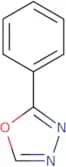
Formula:C6H4Br2N2O2Purezza:Min. 95%Peso molecolare:295.92 g/mol2-Phenyl-1,3,4-oxadiazole
CAS:2-Phenyl-1,3,4-oxadiazole is a 2-phenyloxazole with an oxygen atom at the 1 position. It is a white crystalline solid that is soluble in water and has antibacterial properties. This chemical can be used as a catalyst for the synthesis of organic compounds. 2-Phenyl-1,3,4-oxadiazole reacts with nitro groups to form oxime derivatives and has been shown to inhibit the growth of fungi such as Candida albicans and Aspergillus niger. 2-Phenyl-1,3,4-oxadiazole can also be used as an antifungal agent against Trichophyton rubrum.
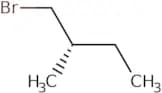
2-Phenyl-1,3,4-oxadiazole may be synthesized by reacting phenol with acetone in the presence of nitric acid or sulfuric acid. The structural formula for this compound isFormula:C8H6N2OPurezza:Min. 95%Peso molecolare:146.15 g/mol(S)-(+)-1-Bromo-2-methylbutane
CAS:(S)-(+)-1-Bromo-2-methylbutane is a chiral molecule with two stereoisomers, the cis and trans forms. The cis form has been observed to be the more stable of the two. It is a functional theory that these two forms are not mirror images of each other because they have different conformations. (S)-(+)-1-Bromo-2-methylbutane has been used in the synthesis of a number of important molecules. The stereoisomers can be distinguished by conformational analysis and optical microscopy. (S)-(+)-1-Bromo-2-methylbutane also has an application in biotechnology for use as a precursor for hydrazones, which are important in organic chemistry and molecular biology, such as DNA sequencing.
Formula:C5H11BrPurezza:Min. 95%Peso molecolare:151.04 g/mol2-Amino-4-chloro-3-methoxybenzoic acid
CAS:Versatile small molecule scaffold
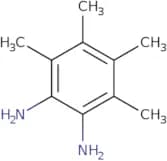
Formula:C8H8ClNO3Purezza:Min. 95%Peso molecolare:201.61 g/molTetramethylbenzene-1,2-diamine
CAS:Versatile small molecule scaffold
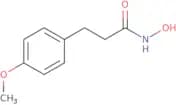
Formula:C10H16N2Purezza:Min. 95%Peso molecolare:164.25 g/molN-Hydroxy-3-(4-methoxyphenyl)propanamide
CAS:Versatile small molecule scaffold
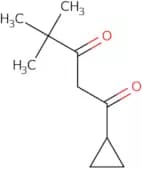
Formula:C10H13NO3Purezza:Min. 95%Peso molecolare:195.21 g/mol1-Cyclopropyl-4,4-dimethylpentane-1,3-dione
CAS:Versatile small molecule scaffold
Formula:C10H16O2Purezza:Min. 95%Peso molecolare:168.23 g/mol4-[(Methylsulfanyl)methyl]benzoic acid
CAS:4-[(Methylsulfanyl)methyl]benzoic acid is a chiral compound with a sulfur atom. It can be prepared by the reaction between methylsulfonyl chloride and benzoyl chloride in chloroform or by the reaction of methoxysulfur trifluoride with benzoic acid. 4-[(Methylsulfanyl)methyl]benzoic acid can also be synthesized by the reaction of sulfone and carboxylic acid derivatives, such as benzyl or cyano. 4-[(Methylsulfanyl)methyl]benzoic acid is used as a fungicide, insecticide, and herbicide. The substituents on this molecule are able to form bonds with other molecules to create an array of different structures. The most common substitution is for methoxy, which has a hydroxy group attached to it. This substitution is found in many different types of molecules including some drugs, hormones, vitamins,
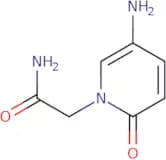
Formula:C9H10O2SPurezza:Min. 95%Peso molecolare:182.24 g/mol2-(5-Amino-2-oxo-1,2-dihydropyridin-1-yl)acetamide
CAS:Versatile small molecule scaffoldFormula:C7H9N3O2Purezza:Min. 95%Peso molecolare:167.17 g/mol1-[(3-Aminophenyl)methyl]piperidin-4-ol
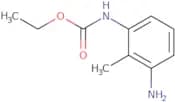
CAS:Versatile small molecule scaffoldFormula:C12H18N2OPurezza:Min. 95%Peso molecolare:206.28 g/molEthyl N-(3-amino-2-methylphenyl)carbamate
CAS:Versatile small molecule scaffold
Formula:C10H14N2O2Purezza:Min. 95%Peso molecolare:194.23 g/mol[2-(Propan-2-yloxy)pyridin-4-yl]methanamine
CAS:Versatile small molecule scaffold
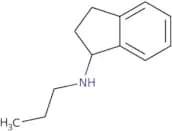
Formula:C9H14N2OPurezza:Min. 95%Peso molecolare:166.22 g/molN-Propyl-2,3-dihydro-1H-inden-1-amine
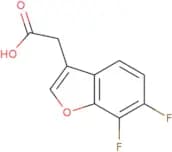
CAS:Prodotto controllatoVersatile small molecule scaffoldFormula:C12H17NPurezza:Min. 95%Peso molecolare:175.27 g/mol2-(6,7-Difluoro-1-benzofuran-3-yl)acetic acid
CAS:Versatile small molecule scaffold
Formula:C10H6F2O3Purezza:Min. 95%Peso molecolare:212.15 g/mol4-(1,3-Dioxaindan-5-yloxy)-5-bromopyrimidine
CAS:Versatile small molecule scaffold
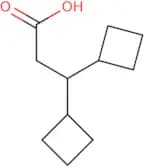
Formula:C11H7BrN2O3Purezza:Min. 95%Peso molecolare:295.09 g/mol3,3-Dicyclobutylpropanoic acid
CAS:Versatile small molecule scaffold
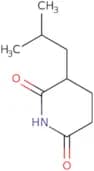
Formula:C11H18O2Purezza:Min. 95%Peso molecolare:182.26 g/molPregabalin Impurity 13 (4-Isobutyl-2,6-piperidinedione)
CAS:Pregabalin Impurity 13 is a stereoselective, synthetic compound that has been shown to be an inhibitor of gamma-aminobutyric acid (GABA) receptors. It can be synthesized by reacting 4-isobutyl-2,6-piperidinedione with hydrochloric acid and xylene. Pregabalin Impurity 13 binds to the amino acid sequence of GABA receptors in such a way as to prevent them from opening. This prevents the binding of GABA molecules to the receptor and reduces the duration of inhibition of these receptors. Pregabalin Impurity 13 has been shown to have antimicrobial activity against faecalis, which is found in human intestines and can cause infection. The environmental pollution caused by this impurity is due to its xylene content.
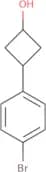
Formula:C9H15NO2Purezza:Min. 95%Peso molecolare:169.22 g/mol3-(4-Bromophenyl)cyclobutan-1-ol
CAS:Versatile small molecule scaffold
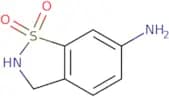
Formula:C10H11BrOPurezza:Min. 95%Peso molecolare:227.1 g/mol1,1-Dioxo-2,3-dihydro-1,2-benzothiazol-6-amine
CAS:Versatile small molecule scaffold
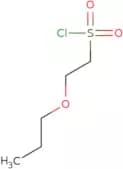
Formula:C7H8N2O2SPurezza:Min. 95%Peso molecolare:184.22 g/mol2-Propoxyethane-1-sulfonyl chloride
CAS:Versatile small molecule scaffoldFormula:C5H11ClO3SPurezza:Min. 95%Peso molecolare:186.66 g/mol5-{[(9H-Fluoren-9-ylmethoxy)carbonyl]amino}-2-fluorobenzoic acid
CAS:Versatile small molecule scaffold
Formula:C22H16FNO4Purezza:Min. 95%Peso molecolare:377.4 g/mol3-[(Trimethylsilyl)oxy]oxane-3-carbonitrile
CAS:Versatile small molecule scaffold
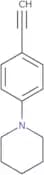
Formula:C9H17NO2SiPurezza:Min. 95%Peso molecolare:199.32 g/mol4'-N-Piperidinophenyl acetylene
CAS:Versatile small molecule scaffold
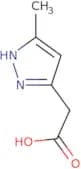
Formula:C13H15NPurezza:Min. 95%Peso molecolare:185.27 g/mol2-(5-Methyl-1H-pyrazol-3-yl)acetic acid
CAS:Versatile small molecule scaffoldFormula:C6H8N2O2Purezza:Min. 95%Peso molecolare:140.14 g/mol5,6,7,8-Tetrahydroindolizine-1-carbonitrile
CAS:Versatile small molecule scaffold
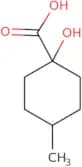
Formula:C9H10N2Purezza:Min. 95%Peso molecolare:146.19 g/mol1-Hydroxy-4-methylcyclohexane-1-carboxylic acid
CAS:Versatile small molecule scaffold
Formula:C8H14O3Purezza:Min. 95%Peso molecolare:158.19 g/mol1,3-Dioxo-2,3-dihydro-1H-isoindol-2-yl 2-[4-(2-methylpropyl)phenyl]propanoate
CAS:Versatile small molecule scaffold
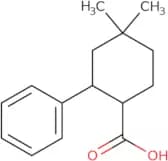
Formula:C21H21NO4Purezza:Min. 95%Peso molecolare:351.4 g/mol4,4-Dimethyl-2-phenylcyclohexane-1-carboxylic acid
CAS:Versatile small molecule scaffold
Formula:C15H20O2Purezza:Min. 95%Peso molecolare:232.32 g/mol6-Chloro-3-methyl-[1,2,4]triazolo[3,4-a]-phthalazine
CAS:Versatile small molecule scaffold
Formula:C10H7ClN4Purezza:Min. 95%Peso molecolare:218.65 g/mol2-Ethyl-5-nitrobenzoic acid
CAS:Versatile small molecule scaffold
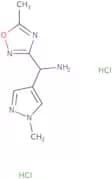
Formula:C9H9NO4Purezza:Min. 95%Peso molecolare:195.17 g/mol(5-Methyl-1,2,4-oxadiazol-3-yl)(1-methyl-1H-pyrazol-4-yl)methanamine dihydrochloride
CAS:Versatile small molecule scaffold
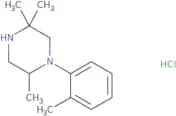
Formula:C8H13Cl2N5OPurezza:Min. 95%Peso molecolare:266.13 g/mol2,5,5-Trimethyl-1-(2-methylphenyl)piperazine hydrochloride
CAS:Versatile small molecule scaffold
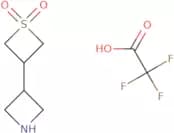
Formula:C14H23ClN2Purezza:Min. 95%Peso molecolare:254.8 g/mol3-(1,1-dioxido-3-thietanyl)-azetidine 2,2,2-trifluoroacetate
CAS:Versatile small molecule scaffold
Formula:C8H12F3NO4SPurezza:Min. 95%Peso molecolare:275.25 g/mol{4-[(2-Methylpropyl)amino]piperidin-4-yl}methanol dihydrochloride
CAS:Versatile small molecule scaffold
Formula:C10H24Cl2N2OPurezza:Min. 95%Peso molecolare:259.21 g/moltert-Butyl N-({8-oxa-2-azaspiro[4.5]decan-4-yl}methyl)carbamate
CAS:Versatile small molecule scaffoldFormula:C14H26N2O3Purezza:Min. 95%Peso molecolare:270.37 g/moltert-Butyl N-{4-[1-(4-bromophenoxy)ethyl]phenyl}carbamate
CAS:Versatile small molecule scaffold
Formula:C19H22BrNO3Purezza:Min. 95%Peso molecolare:392.3 g/mol(2-Cyanopyrimidin-5-yl)boronic acid
CAS:Versatile small molecule scaffold
Formula:C5H4BN3O2Purezza:Min. 95%Peso molecolare:148.92 g/molN'-(3-Hydroxyphenyl)-N,N-dimethylsulfamide
CAS:Versatile small molecule scaffold
Formula:C8H12N2O3SPurezza:Min. 95%Peso molecolare:216.26 g/mol1-Methyl-3-[(propan-2-yl)carbamoyl]-1H-pyrazole-5-carboxylic acid
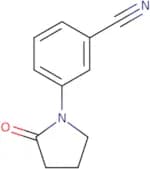
CAS:Versatile small molecule scaffoldFormula:C9H13N3O3Purezza:Min. 95%Peso molecolare:211.22 g/mol3-(2-Oxopyrrolidin-1-yl)benzonitrile
CAS:Versatile small molecule scaffold
Formula:C11H10N2OPurezza:Min. 95%Peso molecolare:186.21 g/mol8-Oxa-1-azaspiro[5.5]undecane
CAS:Versatile small molecule scaffold
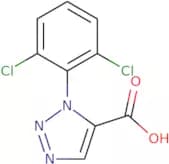
Formula:C9H17NOPurezza:Min. 95%Peso molecolare:155.24 g/mol1-(2,6-Dichlorophenyl)-1H-1,2,3-triazole-5-carboxylic acid
CAS:Versatile small molecule scaffoldFormula:C9H5Cl2N3O2Purezza:Min. 95%Peso molecolare:258.06 g/molN-(2-{[(2,4-Dichlorophenyl)methyl]amino}ethyl)acetamide
CAS:Versatile small molecule scaffold
Formula:C11H14Cl2N2OPurezza:Min. 95%Peso molecolare:261.14 g/mol1-Methyl-1,7-diazaspiro[4.5]decane dihydrochloride
CAS:Versatile small molecule scaffold
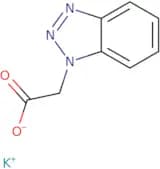
Formula:C9H20Cl2N2Purezza:Min. 95%Peso molecolare:227.17 g/molPotassium 2-(1H-1,2,3-benzotriazol-1-yl)acetate
CAS:Versatile small molecule scaffold
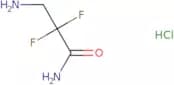
Formula:C8H6KN3O2Purezza:Min. 95%Peso molecolare:215.25 g/mol3-Amino-2,2-difluoropropanamide hydrochloride
CAS:Versatile small molecule scaffold
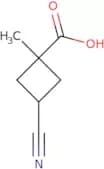
Formula:C3H7ClF2N2OPurezza:Min. 95%Peso molecolare:160.55 g/mol3-Cyano-1-methylcyclobutane-1-carboxylic acid
CAS:Versatile small molecule scaffoldFormula:C7H9NO2Purezza:Min. 95%Peso molecolare:139.15 g/mol2-{[(9H-Fluoren-9-yl)methoxy]carbonyl}-2-azabicyclo[2.2.2]oct-7-ene-6-carboxylic acid
CAS:Versatile small molecule scaffold
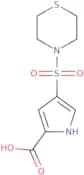
Formula:C23H21NO4Purezza:Min. 95%Peso molecolare:375.4 g/mol4-(Thiomorpholine-4-sulfonyl)-1H-pyrrole-2-carboxylic acid
CAS:Prodotto controllato4-(Thiomorpholine-4-sulfonyl)-1H-pyrrole-2-carboxylic acid is a peptide that belongs to the class of sulfonamides. It is an activator of ion channels and receptors, which may be useful in the study of life sciences and pharmacology. This compound has been shown to inhibit protein interactions by binding to receptor sites on cells and ligand sites on proteins. 4-(Thiomorpholine-4-sulfonyl)-1H-pyrrole-2-carboxylic acid also binds to the antibody, which enhances the immune response in animals by increasing the production of antibodies against bacterial antigens.
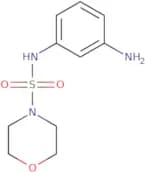
Formula:C9H12N2O4S2Purezza:Min. 95%Peso molecolare:276.3 g/molN-(3-Aminophenyl)morpholine-4-sulfonamide
CAS:Versatile small molecule scaffold
Formula:C10H15N3O3SPurezza:Min. 95%Peso molecolare:257.31 g/mol2-Bromo-3,3,3-trifluoro-1-propene
CAS:Prodotto controllato2-Bromo-3,3,3-trifluoro-1-propene is a chemical compound that has been synthesized in an asymmetric reaction. The reactant is bromopropane and the product is 2,2,2-trifluoropropene. The methylene group on the propene molecule is activated by the nucleophilic attack of a fluoride ion from hydrogen fluoride to form a cavity with a highly strained bond. The kinetic study of this reaction revealed that the activation energy for the reaction is 42 kJ/mol. Palladium-catalyzed coupling reactions are catalyzed by palladium and require nonpolar solvents such as toluene or dichloromethane. This type of reaction has been shown to be exothermic with an isolated yield of 1%.
Formula:C3H2BrF3Purezza:Min. 95%Colore e forma:Colorless PowderPeso molecolare:174.95 g/mol4,5-Dihydro-1H-imidazol-2-amine hydrochloride
CAS:Please enquire for more information about 4,5-Dihydro-1H-imidazol-2-amine hydrochloride including the price, delivery time and more detailed product information at the technical inquiry form on this page
Formula:C3H7N3•HClPurezza:Min. 95%Peso molecolare:121.57 g/mol8-Bromo-2-methylimidazo[1,2-a]pyridine
CAS:Versatile small molecule scaffold
Formula:C8H7N2BrPurezza:Min. 95%Peso molecolare:211.05 g/mol1-Hydroxycyclopentane-1-carbonitrile
CAS:1-Hydroxycyclopentane-1-carbonitrile is a monomer that is hydrolyzed to form benzoin and cyanohydrins. It can be used in the production of scifinder as a monomer or dimerizer.
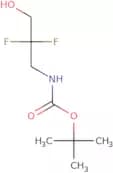
Formula:C6H9NOPurezza:Min. 95%Peso molecolare:111.14 g/moltert-Butyl (2,2-difluoro-3-hydroxypropyl)carbamate
CAS:Versatile small molecule scaffoldFormula:C10H13NO4Purezza:Min. 95%Peso molecolare:211.21 g/mol4-Chloro-2-hydroxy-6-methylphenylboronic acid
CAS:Versatile small molecule scaffoldFormula:C7H8BClO3Purezza:Min. 95%Peso molecolare:186.4 g/mol3-Hydroxy-5-methylpyridine
CAS:3-Hydroxy-5-methylpyridine (3HMP) is a chemical substance that has been classified as an amine. It is a product of the metabolism of purines, which are nitrogenous bases found in DNA and RNA. 3HMP is produced by aerogenic bacteria (such as Enterobacter), and can be used to estimate the number of these bacteria present in water samples. 3HMP has been shown to have antiviral properties against influenza virus, and can be used as a biomarker for the presence of other viruses in animals. 3HMP also has mineralization properties, which have been studied extensively, particularly with regards to pancreatic disease.
Formula:C6H7NOPurezza:Min. 95%Colore e forma:PowderPeso molecolare:109.13 g/molRef: 3D-FH16174
Prodotto fuori produzione4,5-Dihydroxy-2,3-Pentanedione
CAS:4,5-Dihydroxy-2,3-pentanedione is a carbonyl compound that is the product of the oxidation of ascorbic acid. It is used in wastewater treatment and has antimicrobial properties against infectious diseases. This compound has been shown to inhibit protein synthesis by binding to the ribosome and preventing the formation of peptide bonds between amino acids. 4,5-Dihydroxy-2,3-pentanedione has also been shown to bind to plasma proteins, which may be due to its acyl chain structure. 4,5-Dihydroxy-2,3-pentanedione can be synthesized in a catalytic mechanism that involves dehydroascorbic acid and molecular oxygen.
Formula:C5H8O4Purezza:Min. 95%Colore e forma:PowderPeso molecolare:132.11 g/molRef: 3D-FD180770
Prodotto fuori produzionePiperyline
CAS:Piperyline is an alkanoic acid that has shown to be effective against skin cancer. It also has antimicrobial properties, which may be due to its ability to bind metal ions and form polymeric compounds. Piperyline inhibits microbial growth by inhibiting the synthesis of proteins and nucleic acids. The antimicrobial activity is related to its cationic polymerization with hydroxyl groups, which forms a structure that can inhibit microbial enzymes and disrupt microbial cell membranes. This compound also interacts with the skin's natural lipids, making it difficult for microorganisms to attach and grow on the skin. Piperyline is synthesized in organic chemistry laboratories as an amide precursor of other pharmaceuticals such as penicillin.
Formula:C16H17NO3Purezza:Min. 95%Peso molecolare:271.31 g/mol
![5-[(Phenylthio)methyl]-2-furoic acid](/_next/image/?url=https%3A%2Fstatic.cymitquimica.com%2Fproducts%2F3D%2Fthumb-webp%2FEDA50496.webp&w=3840&q=75)

![7-Oxa-1-azaspiro[3.5]nonan-2-one](/_next/image/?url=https%3A%2Fstatic.cymitquimica.com%2Fproducts%2F3D%2Fthumb-webp%2FDHA24292.webp&w=3840&q=75)

![2-[Ethyl(propan-2-yl)amino]ethan-1-ol](/_next/image/?url=https%3A%2Fstatic.cymitquimica.com%2Fproducts%2F3D%2Fthumb-webp%2FCAA89361.webp&w=3840&q=75)
![1-[3-(Hydroxymethyl)phenyl]ethan-1-one](/_next/image/?url=https%3A%2Fstatic.cymitquimica.com%2Fproducts%2F3D%2Fthumb-webp%2FAFA60406.webp&w=3840&q=75)

![4-[(Methylsulfanyl)methyl]benzoic acid](/_next/image/?url=https%3A%2Fstatic.cymitquimica.com%2Fproducts%2F3D%2Fthumb-webp%2FSCA00348.webp&w=3840&q=75)
![1-[(3-Aminophenyl)methyl]piperidin-4-ol](/_next/image/?url=https%3A%2Fstatic.cymitquimica.com%2Fproducts%2F3D%2Fthumb-webp%2FRQB75784.webp&w=3840&q=75)
![[2-(Propan-2-yloxy)pyridin-4-yl]methanamine](/_next/image/?url=https%3A%2Fstatic.cymitquimica.com%2Fproducts%2F3D%2Fthumb-webp%2FRQB75274.webp&w=3840&q=75)

![5-{[(9H-Fluoren-9-ylmethoxy)carbonyl]amino}-2-fluorobenzoic acid](/_next/image/?url=https%3A%2Fstatic.cymitquimica.com%2Fproducts%2F3D%2Fthumb-webp%2FRDC82236.webp&w=3840&q=75)
![3-[(Trimethylsilyl)oxy]oxane-3-carbonitrile](/_next/image/?url=https%3A%2Fstatic.cymitquimica.com%2Fproducts%2F3D%2Fthumb-webp%2FRDC77065.webp&w=3840&q=75)

![1,3-Dioxo-2,3-dihydro-1H-isoindol-2-yl 2-[4-(2-methylpropyl)phenyl]propanoate](/_next/image/?url=https%3A%2Fstatic.cymitquimica.com%2Fproducts%2F3D%2Fthumb-webp%2FQKD88961.webp&w=3840&q=75)
![6-Chloro-3-methyl-[1,2,4]triazolo[3,4-a]-phthalazine](/_next/image/?url=https%3A%2Fstatic.cymitquimica.com%2Fproducts%2F3D%2Fthumb-webp%2FSCA45838.webp&w=3840&q=75)

![{4-[(2-Methylpropyl)amino]piperidin-4-yl}methanol dihydrochloride](/_next/image/?url=https%3A%2Fstatic.cymitquimica.com%2Fproducts%2F3D%2Fthumb-webp%2FPZC06111.webp&w=3840&q=75)
![tert-Butyl N-({8-oxa-2-azaspiro[4.5]decan-4-yl}methyl)carbamate](/_next/image/?url=https%3A%2Fstatic.cymitquimica.com%2Fproducts%2F3D%2Fthumb-webp%2FPZC05858.webp&w=3840&q=75)
![tert-Butyl N-{4-[1-(4-bromophenoxy)ethyl]phenyl}carbamate](/_next/image/?url=https%3A%2Fstatic.cymitquimica.com%2Fproducts%2F3D%2Fthumb-webp%2FPZC05838.webp&w=3840&q=75)


![1-Methyl-3-[(propan-2-yl)carbamoyl]-1H-pyrazole-5-carboxylic acid](/_next/image/?url=https%3A%2Fstatic.cymitquimica.com%2Fproducts%2F3D%2Fthumb-webp%2FPVA81813.webp&w=3840&q=75)
![8-Oxa-1-azaspiro[5.5]undecane](/_next/image/?url=https%3A%2Fstatic.cymitquimica.com%2Fproducts%2F3D%2Fthumb-webp%2FSJB17817.webp&w=3840&q=75)
![N-(2-{[(2,4-Dichlorophenyl)methyl]amino}ethyl)acetamide](/_next/image/?url=https%3A%2Fstatic.cymitquimica.com%2Fproducts%2F3D%2Fthumb-webp%2FSRB62406.webp&w=3840&q=75)
![1-Methyl-1,7-diazaspiro[4.5]decane dihydrochloride](/_next/image/?url=https%3A%2Fstatic.cymitquimica.com%2Fproducts%2F3D%2Fthumb-webp%2FNKD10054.webp&w=3840&q=75)
![2-{[(9H-Fluoren-9-yl)methoxy]carbonyl}-2-azabicyclo[2.2.2]oct-7-ene-6-carboxylic acid](/_next/image/?url=https%3A%2Fstatic.cymitquimica.com%2Fproducts%2F3D%2Fthumb-webp%2FNKD00993.webp&w=3840&q=75)


![8-Bromo-2-methylimidazo[1,2-a]pyridine](/_next/image/?url=https%3A%2Fstatic.cymitquimica.com%2Fproducts%2F3D%2Fthumb-webp%2FUXB37475.webp&w=3840&q=75)