Building Blocks
Sottocategorie di "Building Blocks"
- Acidi boronici e derivati dell'acido boronico(5.778 prodotti)
- Building Blocks Chirali(1.243 prodotti)
- Building Blocks Idrocarburici(6.098 prodotti)
- Building Blocks organici(61.036 prodotti)
Trovati 205240 prodotti di "Building Blocks"
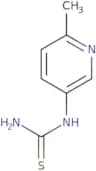
(6-Methylpyridin-3-yl)thiourea
CAS:Versatile small molecule scaffold
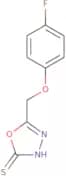
Formula:C7H9N3SPurezza:Min. 95%Peso molecolare:167.23 g/mol5-(4-Fluorophenoxymethyl)-1,3,4-oxadiazole-2-thiol
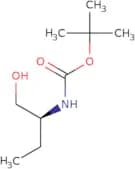
CAS:Versatile small molecule scaffoldFormula:C9H7FN2O2SPurezza:Min. 95%Peso molecolare:226.23 g/molN-Boc-(S)-(ˆ’)-2-amino-1-butanol
CAS:Versatile small molecule scaffold
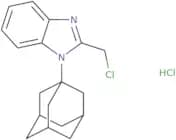
Formula:C9H19NO3Purezza:Min. 95%Peso molecolare:189.25 g/mol1-(Adamantan-1-yl)-2-(chloromethyl)-1H-1,3-benzodiazole hydrochloride
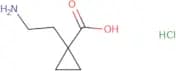
CAS:Versatile small molecule scaffoldFormula:C18H22Cl2N2Purezza:Min. 95%Peso molecolare:337.3 g/mol1-(2-aminoethyl)cyclopropane-1-carboxylic acid hydrochloride
CAS:Versatile small molecule scaffold
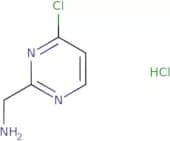
Formula:C6H12ClNO2Purezza:Min. 95%Peso molecolare:165.62 g/mol2-(Aminomethyl)-4-chloropyrimidine HCl
CAS:Versatile small molecule scaffold
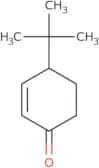
Formula:C5H7Cl2N3Purezza:Min. 95%Peso molecolare:180.04 g/mol4-tert-Butylcyclohex-2-en-1-one
CAS:Versatile small molecule scaffold
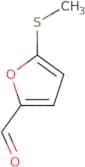
Formula:C10H16OPurezza:Min. 95%Peso molecolare:152.23 g/mol5-(Methylsulfanyl)furan-2-carbaldehyde
CAS:Versatile small molecule scaffold
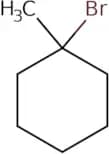
Formula:C6H6O2SPurezza:Min. 95%Peso molecolare:142.18 g/mol1-Bromo-1-methylcyclohexane
CAS:1-Bromo-1-methylcyclohexane is a monomolecular gas that is used as an intermediate in organic synthesis. It reacts with halides to form cyclopentyl derivatives. This reaction has been shown to be faster than the corresponding reaction of 1-bromocyclohexane with chlorides or bromides. The rate of this reaction may be due to the polarizability and conformational changes of the molecule upon substitution by a methyl group. 1-Bromo-1-methylcyclohexane is also an ionizing reagent, which means it can cause electrophilic reactions to occur on other molecules. It has been found that the solvent effect on this product can affect its reactivity, with solvents such as water having more of an effect than solvents such as benzene. 1-Bromo-1-methylcyclohexane has been shown to interact with other compounds in both transfer and complex
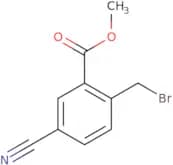
Formula:C7H13BrPurezza:Min. 95%Peso molecolare:177.08 g/molMethyl 2-(bromomethyl)-5-cyanobenzoate
CAS:Versatile small molecule scaffold
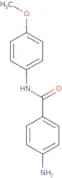
Formula:C10H8BrNO2Purezza:Min. 95%Peso molecolare:254.08 g/mol4-Amino-n-(4-methoxyphenyl)benzamide
CAS:4-Amino-N-(4-methoxyphenyl)benzamide is a catalytic sulfamate that has been optimized for use in the synthesis of benzimidazole derivatives. 4-Amino-N-(4-methoxyphenyl)benzamide is used as a reagent for the preparation of aldehydes from sulfamic acid and various types of carboxylic acids. The reaction mechanism involves nucleophilic attack by the hydroxyl group from the sulfamate on the carbonyl carbon atom to form an intermediate, which then reacts with water to release hydrogen sulfate and form a new double bond.
Formula:C14H14N2O2Purezza:Min. 95%Peso molecolare:242.27 g/molAzacycloundecane
CAS:Azacycloundecane is a cycloalkane that is used as a solvent. The use of this compound in vivo models has been demonstrated to be useful in the study of drug uptake and distribution, as well as having clinical applications. Azacycloundecane is often used in detergent compositions due to its ability to solubilize fatty acids and inhibit their oxidation. This chemical has also been shown to have low energy, which makes it a suitable candidate for use in osmosis experiments. Azacycloundecane does not react with hydrogen chloride or carbonyl groups. It can be found naturally in fatty acids, amines, benzofuran derivatives, and aliphatic hydrocarbons.
Formula:C10H21NPurezza:Min. 95%Peso molecolare:155.28 g/mol1-Phenyl-2-(trifluoromethoxy)ethan-1-ol
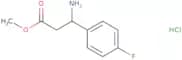
CAS:Versatile small molecule scaffoldFormula:C9H9F3O2Purezza:Min. 95%Peso molecolare:206.16 g/molMethyl (S)-3-amino-3-(4-fluorophenyl)propanoate hydrochloride
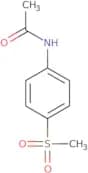
CAS:Versatile small molecule scaffoldFormula:C10H13ClFNO2Purezza:Min. 95%Peso molecolare:233.67 g/mol4'-(Methylsulfonyl)acetanilide
CAS:4'-(Methylsulfonyl)acetanilide is an organic compound that has been shown to have antibacterial and antiviral activity. It targets the benzene nucleus, and inhibits the synthesis of nucleic acids by inhibiting the enzyme ribonucleotide reductase. 4'-(Methylsulfonyl)acetanilide also inhibits viral replication, by binding to the active site of a viral protein (a DNA polymerase), which blocks the incorporation of nucleotides into the virus's DNA. In addition, 4'-(methylsulfonyl)acetanilide is an anti-helminthic agent, as it can inhibit worm motility and kill larvae in vitro. The structure-activity relationships between this molecule and other benzimidazole derivatives were analysed in order to identify new potential drugs for treating diseases caused by viruses or parasites.
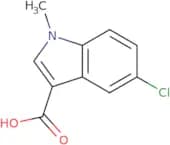
Formula:C9H11NO3SPurezza:Min. 95%Peso molecolare:213.26 g/mol5-Chloro-1-methyl-1H-indole-3-carboxylic acid
CAS:Prodotto controllatoVersatile small molecule scaffoldFormula:C10H8ClNO2Purezza:Min. 95%Peso molecolare:209.63 g/mol4-Methyl-1,2-oxazolidin-4-ol hydrochloride
CAS:Versatile small molecule scaffold
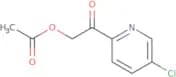
Formula:C4H10ClNO2Purezza:Min. 95%Peso molecolare:139.6 g/mol2-(5-Chloropyridin-2-yl)-2-oxoethyl acetate
CAS:Versatile small molecule scaffold
Formula:C9H8ClNO3Purezza:Min. 95%Peso molecolare:213.62 g/molJMS-17-2
CAS:JMS-17-2 is a small molecule that was shown to have a potent and selective inhibitory effect on the production of chemokines in cancer cells. It blocks the interaction between CXCL12 and its receptor, CXCR4. This interaction is important for normal bone tissue development and function, as well as for chemotaxis and metastasis of cancer cells. JMS-17-2 has been shown to prevent tumor growth in animal models by inhibiting angiogenesis, or the formation of new blood vessels to supply nutrients to tumors. The drug also inhibits tumor growth by decreasing the number of primary tumors, reducing bone lesions, and inhibiting the progression of pancreatic cancer. Clinical trials are currently being conducted to assess the efficacy of JMS-17-2 in humans with advanced solid tumors.
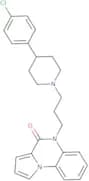
Formula:C25H26ClN3OPurezza:Min. 95%Peso molecolare:419.95 g/mol2-(Benzylamino)-1-[3-(difluoromethoxy)phenyl]ethan-1-ol
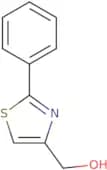
CAS:Versatile small molecule scaffoldFormula:C16H17F2NO2Purezza:Min. 95%Peso molecolare:293.31 g/mol4-(Hydroxymethyl)-2-phenyl-1,3-thiazole
CAS:4-(Hydroxymethyl)-2-phenyl-1,3-thiazole is a versatile compound that has various applications in research and chemical synthesis. It is commonly used as a building block for the synthesis of organic compounds, including antibodies and research chemicals. This compound has been found to exhibit potent antiangiogenic properties, making it valuable in the field of cancer research. Additionally, 4-(Hydroxymethyl)-2-phenyl-1,3-thiazole can be used as a precursor in the synthesis of important pharmaceuticals such as cephalosporins and taxol. Its unique structure allows for diverse chemical reactions, making it an essential tool for chemists and researchers alike. Whether you're working on developing new drugs or exploring novel chemical reactions, 4-(Hydroxymethyl)-2-phenyl-1,3-thiazole is an indispensable compound that will help drive your scientific endeavors forward.
Formula:C10H9NOSPurezza:Min. 95%Peso molecolare:191.25 g/mol3-(Hydroxymethyl)-1,2,3,4-tetrahydroquinoxalin-2-one
CAS:Versatile small molecule scaffold
Formula:C9H10N2O2Purezza:Min. 95%Peso molecolare:178.19 g/mol1-(1-Methylpiperidin-4-yl)-1H-pyrazol-4-amine hydrochloride
CAS:Versatile small molecule scaffold
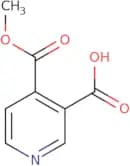
Formula:C9H17ClN4Purezza:Min. 95%Peso molecolare:216.71 g/mol4-(Methoxycarbonyl)nicotinic acid
CAS:Versatile small molecule scaffold
Formula:C8H7NO4Purezza:Min. 95%Peso molecolare:181.15 g/mol4-oxo-2-spiro(N-Boc-piperidine-4-yl)-benzopyran
CAS:Versatile small molecule scaffold
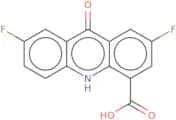
Formula:C18H23NO4Purezza:Min. 95%Peso molecolare:317.39 g/mol2,7-Difluoro-9-oxo-9,10-dihydroacridine-4-carboxylic acid
CAS:Versatile small molecule scaffold
Formula:C14H7F2NO3Purezza:Min. 95%Peso molecolare:275.2 g/moltert-Butyl 4-methoxy-3,10-diazabicyclo[4.3.1]dec-3-ene-10-carboxylate
CAS:Versatile small molecule scaffoldFormula:C14H24N2O3Purezza:Min. 95%Peso molecolare:268.4 g/mol5-Methylquinoline
CAS:5-Methylquinoline is a quinoline derivative that is used in the synthesis of other quinoline derivatives. It can be synthesized from cinnamaldehyde, which can be obtained from cinnamic acid or benzaldehyde. 5-Methylquinoline has been shown to have antioxidant properties and inhibit colorectal carcinoma cells in vitro. The compound also inhibits the growth of caco-2 cells. One isomer of 5-methylquinoline, ethenyl, has been shown to cause a shift in the spectrum of light absorbed by caco-2 cells.
Formula:C10H9NPurezza:Min. 95%Peso molecolare:143.18 g/molrac-(1R,5S)-4-Oxaspiro[bicyclo[3.2.0]heptane-6,1'-cyclopentane]-7-one, cis
CAS:Versatile small molecule scaffold
Formula:C10H14O2Purezza:Min. 95%Peso molecolare:166.2 g/mol2-Chloropyridine-4-sulfonamide
CAS:Versatile small molecule scaffold
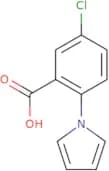
Formula:C5H5ClN2O2SPurezza:Min. 95%Peso molecolare:192.62 g/mol5-Chloro-2-(1H-pyrrol-1-yl)benzoic acid
CAS:Versatile small molecule scaffoldFormula:C11H8ClNO2Purezza:Min. 95%Colore e forma:PowderPeso molecolare:221.64 g/mol2-(2,6-Dimethylphenyl)ethan-1-ol
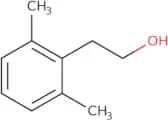
CAS:2-(2,6-Dimethylphenyl)ethan-1-ol is a racemic mixture of two compounds with the same molecular formula. The two enantiomers have different chemical properties and can be separated by specific techniques such as chromatography. 2-(2,6-Dimethylphenyl)ethan-1-ol is an ether that is made from methylmalonic acid and ethylene oxide. It is hydrolysed to release methylmalonyl chloride or demethylated to produce methyl ether acetate. This compound has been used in the synthesis of various esters and sesquiterpenoids.
Formula:C10H14OPurezza:Min. 95%Peso molecolare:150.22 g/mol6-Methoxy-1H-indole-2-carbaldehyde
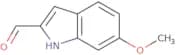
CAS:Versatile small molecule scaffold
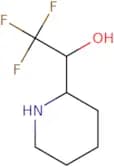
Formula:C10H9NO2Purezza:Min. 95%Peso molecolare:175.18 g/mol2,2,2-Trifluoro-1-(piperidin-2-yl)ethan-1-ol
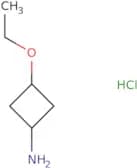
CAS:Versatile small molecule scaffoldFormula:C7H12F3NOPurezza:Min. 95%Peso molecolare:183.17 g/molrac-(1R,3R)-3-Ethoxycyclobutan-1-amine hydrochloride
CAS:Versatile small molecule scaffoldFormula:C6H14ClNOPurezza:Min. 95%Peso molecolare:151.63 g/mol2-Bromo-3,3,3-trifluoro-1-propene
CAS:Prodotto controllato2-Bromo-3,3,3-trifluoro-1-propene is a chemical compound that has been synthesized in an asymmetric reaction. The reactant is bromopropane and the product is 2,2,2-trifluoropropene. The methylene group on the propene molecule is activated by the nucleophilic attack of a fluoride ion from hydrogen fluoride to form a cavity with a highly strained bond. The kinetic study of this reaction revealed that the activation energy for the reaction is 42 kJ/mol. Palladium-catalyzed coupling reactions are catalyzed by palladium and require nonpolar solvents such as toluene or dichloromethane. This type of reaction has been shown to be exothermic with an isolated yield of 1%.
Formula:C3H2BrF3Purezza:Min. 95%Colore e forma:Colorless PowderPeso molecolare:174.95 g/mol4-Chloro-2-hydroxy-6-methylphenylboronic acid
CAS:Versatile small molecule scaffoldFormula:C7H8BClO3Purezza:Min. 95%Peso molecolare:186.4 g/mol3-Hydroxy-5-methylpyridine
CAS:3-Hydroxy-5-methylpyridine (3HMP) is a chemical substance that has been classified as an amine. It is a product of the metabolism of purines, which are nitrogenous bases found in DNA and RNA. 3HMP is produced by aerogenic bacteria (such as Enterobacter), and can be used to estimate the number of these bacteria present in water samples. 3HMP has been shown to have antiviral properties against influenza virus, and can be used as a biomarker for the presence of other viruses in animals. 3HMP also has mineralization properties, which have been studied extensively, particularly with regards to pancreatic disease.
Formula:C6H7NOPurezza:Min. 95%Colore e forma:PowderPeso molecolare:109.13 g/molRef: 3D-FH16174
Prodotto fuori produzione4,5-Dihydroxy-2,3-Pentanedione
CAS:4,5-Dihydroxy-2,3-pentanedione is a carbonyl compound that is the product of the oxidation of ascorbic acid. It is used in wastewater treatment and has antimicrobial properties against infectious diseases. This compound has been shown to inhibit protein synthesis by binding to the ribosome and preventing the formation of peptide bonds between amino acids. 4,5-Dihydroxy-2,3-pentanedione has also been shown to bind to plasma proteins, which may be due to its acyl chain structure. 4,5-Dihydroxy-2,3-pentanedione can be synthesized in a catalytic mechanism that involves dehydroascorbic acid and molecular oxygen.
Formula:C5H8O4Purezza:Min. 95%Colore e forma:PowderPeso molecolare:132.11 g/molRef: 3D-FD180770
Prodotto fuori produzionePiperyline
CAS:Piperyline is an alkanoic acid that has shown to be effective against skin cancer. It also has antimicrobial properties, which may be due to its ability to bind metal ions and form polymeric compounds. Piperyline inhibits microbial growth by inhibiting the synthesis of proteins and nucleic acids. The antimicrobial activity is related to its cationic polymerization with hydroxyl groups, which forms a structure that can inhibit microbial enzymes and disrupt microbial cell membranes. This compound also interacts with the skin's natural lipids, making it difficult for microorganisms to attach and grow on the skin. Piperyline is synthesized in organic chemistry laboratories as an amide precursor of other pharmaceuticals such as penicillin.
Formula:C16H17NO3Purezza:Min. 95%Peso molecolare:271.31 g/mol




![2-(Benzylamino)-1-[3-(difluoromethoxy)phenyl]ethan-1-ol](/_next/image/?url=https%3A%2Fstatic.cymitquimica.com%2Fproducts%2F3D%2Fthumb-webp%2FXWC80204.webp&w=3840&q=75)
![tert-Butyl 4-methoxy-3,10-diazabicyclo[4.3.1]dec-3-ene-10-carboxylate](/_next/image/?url=https%3A%2Fstatic.cymitquimica.com%2Fproducts%2F3D%2Fthumb-webp%2FFSD25605.webp&w=3840&q=75)

![rac-(1R,5S)-4-Oxaspiro[bicyclo[3.2.0]heptane-6,1'-cyclopentane]-7-one, cis](/_next/image/?url=https%3A%2Fstatic.cymitquimica.com%2Fproducts%2F3D%2Fthumb-webp%2FHCD80674.webp&w=3840&q=75)