Building Blocks
Sottocategorie di "Building Blocks"
- Acidi boronici e derivati dell'acido boronico(5.778 prodotti)
- Building Blocks Chirali(1.243 prodotti)
- Building Blocks Idrocarburici(6.099 prodotti)
- Building Blocks organici(61.038 prodotti)
Trovati 205376 prodotti di "Building Blocks"
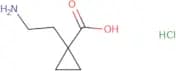
1-(2-aminoethyl)cyclopropane-1-carboxylic acid hydrochloride
CAS:Versatile small molecule scaffold
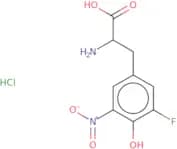
Formula:C6H12ClNO2Purezza:Min. 95%Peso molecolare:165.62 g/mol2-Amino-3-(3-fluoro-4-hydroxy-5-nitrophenyl)propanoic acid hydrochloride
CAS:Versatile small molecule scaffold
Formula:C9H10ClFN2O5Purezza:Min. 95%Peso molecolare:280.6 g/mol(3,4-Dihydro-2H-chromen-6-ylmethyl)ae hydrochloride
CAS:Versatile small molecule scaffold
Formula:C10H14ClNOPurezza:Min. 95%Peso molecolare:199.68 g/mol2'-[(tert-Butoxy)carbonyl]-2',3'-dihydro-1'H-spiro[cyclopropane-1,4'-isoquinoline]-1'-carboxylic acid
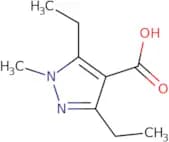
CAS:Versatile small molecule scaffoldFormula:C17H21NO4Purezza:Min. 95%Peso molecolare:303.4 g/mol3,5-Diethyl-1-methyl-1H-pyrazole-4-carboxylic acid
CAS:Versatile small molecule scaffoldFormula:C9H14N2O2Purezza:Min. 95%Peso molecolare:182.22 g/mol1-(2-Methylphenyl)propan-2-amine
CAS:Prodotto controllato1-(2-Methylphenyl)propan-2-amine is a fatty acid ester that is used as an excipient in pharmaceutical dosage forms. It is used to increase the viscosity of drug solutions and suspensions, and to provide a protective coating for tablets. 1-(2-Methylphenyl)propan-2-amine is insoluble in water, but soluble in organic solvents such as alcohols and acetone. It can be prepared by reacting a primary amine with a fatty acid chloride or anhydride. The compound has been shown to have high affinity for 5HT2A receptors in vitro, which may account for its psychoactive effects.
Formula:C10H15NPurezza:Min. 95%Peso molecolare:149.23 g/mol2-(1,3-Benzothiazol-2-yl)-3-[(2,5-dimethylphenyl)amino]-3-sulfanylprop-2-enenitrile
CAS:Versatile small molecule scaffold
Formula:C18H15N3S2Purezza:Min. 95%Peso molecolare:337.5 g/mol4-({3-Oxo-2-azatricyclo[6.3.1.0,4,12]dodeca-1(11),4(12),5,7,9-pentaen-2-yl}methyl)benzohydrazide
CAS:Versatile small molecule scaffoldFormula:C19H15N3O2Purezza:Min. 95%Peso molecolare:317.3 g/mol2-[1-(Difluoromethyl)-3,5-dimethyl-1H-pyrazol-4-yl]acetic acid
CAS:Prodotto controllato2-[1-(Difluoromethyl)-3,5-dimethyl-1H-pyrazol-4-yl]acetic acid is a potent inhibitor of peptide binding to the receptor. It has a Kd value of 0.2 μM and a Ki value of 1.6 μM in the inhibition of insulin binding to its receptor. 2-[1-(Difluoromethyl)-3,5-dimethyl-1H-pyrazol-4-yl]acetic acid is also an activator of protein interactions and ligand for research tools used for studying ion channels and other receptors. This chemical can be used as high purity reagent for life sciences, including cell biology and pharmacology.
Formula:C8H10F2N2O2Purezza:Min. 95%Peso molecolare:204.17 g/mol2-{[4-({[(9H-Fluoren-9-yl)methoxy]carbonyl}amino)phenyl]methyl}butanoic acid
CAS:Versatile small molecule scaffold
Formula:C26H25NO4Purezza:Min. 95%Peso molecolare:415.5 g/mol1-(1H-1,2,3,4-Tetrazol-5-yl)propan-2-ol
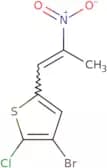
CAS:Versatile small molecule scaffoldFormula:C4H8N4OPurezza:Min. 95%Peso molecolare:128.1 g/mol3-Bromo-2-chloro-5-(2-nitroprop-1-en-1-yl)thiophene
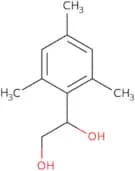
CAS:Versatile small molecule scaffoldFormula:C7H5BrClNO2SPurezza:Min. 95%Peso molecolare:282.54 g/mol1-(2,4,6-Trimethylphenyl)ethane-1,2-diol
CAS:Versatile small molecule scaffoldFormula:C11H16O2Purezza:Min. 95%Peso molecolare:180.24 g/molrac-(2R,3S)-1-{[(9H-Fluoren-9-yl)methoxy]carbonyl}-3-phenylpyrrolidine-2-carboxylic acid
CAS:Rac-1-{[(9H-fluoren-9-yl)methoxy]carbonyl}-3-phenylpyrrolidine-2-carboxylic acid is a chiral, stereospecific, cyclic sulfate that is synthetized by the reaction of glycol with lactam. It has been found to be effective against various types of cancer cells. Rac-1-{[(9H-fluoren-9-yl)methoxy]carbonyl}-3-phenylpyrrolidine 2 carboxylic acid is an enantiopure compound that can be used as an intermediate in the synthesis of antiinflammatory drugs such as kainic acid.
Formula:C26H23NO4Purezza:Min. 95%Peso molecolare:413.5 g/mol1-[(3-Bromothiophen-2-yl)methyl]piperazine
CAS:Versatile small molecule scaffold
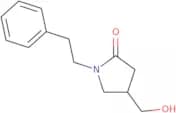
Formula:C9H13BrN2SPurezza:Min. 95%Peso molecolare:261.18 g/mol4-(Hydroxymethyl)-1-(2-phenylethyl)pyrrolidin-2-one
CAS:Versatile small molecule scaffold
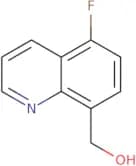
Formula:C13H17NO2Purezza:Min. 95%Peso molecolare:219.28 g/mol(5-Fluoroquinolin-8-yl)methanol
CAS:Versatile small molecule scaffold
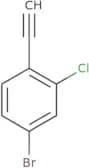
Formula:C10H8FNOPurezza:Min. 95%Peso molecolare:177.17 g/mol4-Bromo-2-chloro-1-ethynylbenzene
CAS:Versatile small molecule scaffold
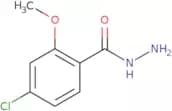
Formula:C8H4BrClPurezza:Min. 95%Peso molecolare:215.47 g/mol4-Chloro-2-methoxybenzohydrazide
CAS:Versatile small molecule scaffold
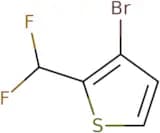
Formula:C8H9ClN2O2Purezza:Min. 95%Peso molecolare:200.62 g/mol3-Bromo-2-(difluoromethyl)thiophene
CAS:Versatile small molecule scaffold
Formula:C5H3BrF2SPurezza:Min. 95%Peso molecolare:213.04 g/molrac-(1S,3R)-3-Butylcyclobutan-1-ol
CAS:Versatile small molecule scaffold
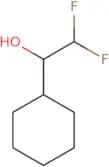
Formula:C8H16OPurezza:Min. 95%Peso molecolare:128.2 g/mol1-Cyclohexyl-2,2-difluoroethan-1-ol
CAS:Versatile small molecule scaffold
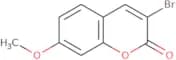
Formula:C8H14F2OPurezza:Min. 95%Peso molecolare:164.19 g/mol3-Bromo-7-methoxy-2H-1-benzopyran-2-one
CAS:3-Bromo-7-methoxy-2H-1-benzopyran-2-one is a coumarin derivative that has been shown to cause liver lesions in rats. The compound can also inhibit locomotor activity, as well as have a significant effect on the levels of serum prolactin. 3-Bromo-7-methoxy-2H-1-benzopyran-2-one is a ligand for the 5HT2 receptor, and it has been suggested that this may be due to its coordination geometry. In addition, 3BMOP binds to DNA with high affinity and specificity, which suggests that it could be used as an antitumor agent.
Formula:C10H7BrO3Purezza:Min. 95%Peso molecolare:255.06 g/molN-[(4-Chlorophenyl)methyl]-4,5-dihydro-1,3-thiazol-2-amine
CAS:Versatile small molecule scaffold
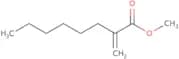
Formula:C10H11ClN2SPurezza:Min. 95%Peso molecolare:226.73 g/molMethyl 2-methylideneoctanoate
CAS:Versatile small molecule scaffold
Formula:C10H18O2Purezza:Min. 95%Peso molecolare:170.25 g/mol3-(5-Methyl-[1,3,4]oxadiazol-2-yl)-phenylamine
CAS:Versatile small molecule scaffold
Formula:C9H9N3OPurezza:Min. 95%Peso molecolare:175.19 g/mol1,8-Dioxa-4-azaspiro[4.5]decane
CAS:Versatile small molecule scaffold
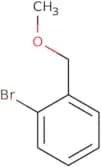
Formula:C7H13NO2Purezza:Min. 95%Peso molecolare:143.18 g/mol1-Bromo-2-(methoxymethyl)benzene
CAS:1-Bromo-2-(methoxymethyl)benzene is a boronic acid that is used in the synthesis of palladium complexes. It is synthesized by reacting 1-bromobenzene with methanol and methoxymethyl chloride. The 1-bromo-2-(methoxymethyl)benzene has been used as a ligand for palladium complexes, which are often used to catalyze organic reactions, such as the metathesis reaction. Synthetic methods have been developed to produce the compound and NMR spectra have been obtained to provide kinetic data on these reactions.
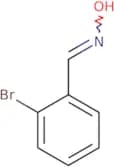
Formula:C8H9BrOPurezza:Min. 95%Peso molecolare:201.06 g/mol2-Bromobenzaldoxime
CAS:2-Bromobenzaldoxime is a biologically active molecule that has been shown to have significant physiological activities. It is an aldehyde, which is metabolized by the liver or kidneys into the corresponding alcohol, 2-bromoethanol. 2-Bromobenzaldoxime has been shown to be synthesized from diethyl ether and potassium phosphate in the presence of amino acids. The reaction proceeds with dehydration of the intermediate bromohydrin to form an aldoxime. This molecule can be used as a pharmaceutical drug for various diseases such as diabetes mellitus, hypertension, and inflammation.
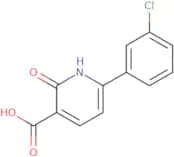
Formula:C7H6BrNOPurezza:Min. 95%Peso molecolare:200.03 g/mol6-(3-Chlorophenyl)-2-oxo-1,2-dihydropyridine-3-carboxylic Acid
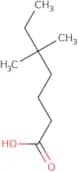
CAS:Versatile small molecule scaffoldFormula:C12H8ClNO3Purezza:Min. 95%Peso molecolare:249.65 g/mol5,5-Dimethylheptanoic acid
CAS:Versatile small molecule scaffold
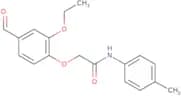
Formula:C9H18O2Purezza:Min. 95%Peso molecolare:158.24 g/mol2-(2-Ethoxy-4-formylphenoxy)-N-(p-tolyl)acetamide
CAS:Versatile small molecule scaffold
Formula:C18H19NO4Purezza:Min. 95%Peso molecolare:313.35 g/mol2-[Ethyl(propan-2-yl)amino]ethan-1-ol
CAS:Prodotto controllatoVersatile small molecule scaffold
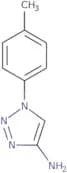
Formula:C7H17NOPurezza:Min. 95%Peso molecolare:131.22 g/mol1-(4-Methylphenyl)-1H-1,2,3-triazol-4-amine
CAS:Versatile small molecule scaffoldFormula:C9H10N4Purezza:Min. 95%Peso molecolare:174.2 g/mol2-(2-Methyl-1,3-thiazol-4-yl)-2-oxoacetic acid
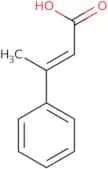
CAS:Versatile small molecule scaffoldFormula:C6H5NO3SPurezza:Min. 95%Peso molecolare:171.2 g/mol3-Phenylbut-2-enoic acid
CAS:3-Phenylbut-2-enoic acid is a prochiral, carbonyl compound that can be used in the synthesis of chiral pharmaceuticals. Mechanistic studies have shown that 3-phenylbut-2-enoic acid is a catalytic hydrogenation reagent that converts prochiral substrates to their corresponding chiral products. When combined with binap and butenoic acid, 3-phenylbut-2-enoic acid can catalyze the asymmetric synthesis of butenoate. The reaction yields high enantiomeric excesses and good yields.
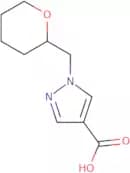
Formula:C10H10O2Purezza:Min. 95%Peso molecolare:162.19 g/mol1-((Tetrahydro-2H-pyran-2-yl)methyl)-1H-pyrazole-4-carboxylic acid
CAS:Versatile small molecule scaffold
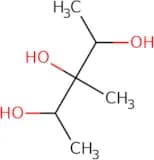
Formula:C10H14N2O3Purezza:Min. 95%Peso molecolare:210.23 g/mol3-Methylpentane-2,3,4-triol
CAS:Versatile small molecule scaffold
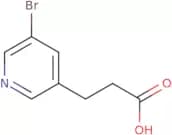
Formula:C6H14O3Purezza:Min. 95%Peso molecolare:134.17 g/mol3-(5-Bromopyridin-3-yl)propanoic acid
CAS:Versatile small molecule scaffold
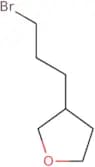
Formula:C8H8BrNO2Purezza:Min. 95%Peso molecolare:230.06 g/mol3-(3-Bromopropyl)oxolane
CAS:Versatile small molecule scaffold
Formula:C7H13BrOPurezza:Min. 95%Peso molecolare:193.08 g/mol5-Fluoropyridine-3-sulfonamide
CAS:Versatile small molecule scaffold
Formula:C5H5FN2O2SPurezza:Min. 95%Peso molecolare:176.17 g/mol1-[4-Methyl-2-(4-methylphenyl)-1,3-thiazol-5-yl]ethan-1-ol
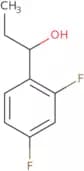
CAS:Versatile small molecule scaffoldFormula:C13H15NOSPurezza:Min. 95%Peso molecolare:233.33 g/mol1-(2,4-Difluorophenyl)propan-1-ol
CAS:Versatile small molecule scaffold
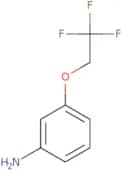
Formula:C9H10F2OPurezza:Min. 95%Peso molecolare:172.17 g/mol3-(2,2,2-Trifluoroethoxy)aniline
CAS:Versatile small molecule scaffold
Formula:C8H8F3NOPurezza:Min. 95%Peso molecolare:191.15 g/molrac-(2R,4S)-1-[(tert-Butoxy)carbonyl]-4-ethylpiperidine-2-carboxylic acid
CAS:Versatile small molecule scaffoldFormula:C13H23NO4Purezza:Min. 95%Peso molecolare:257.33 g/mol1-(4-{[4-(Ethylamino)pyridin-2-yl]methyl}piperazin-1-yl)ethan-1-one
CAS:Versatile small molecule scaffold
Formula:C14H22N4OPurezza:Min. 95%Peso molecolare:262.35 g/mol4-(4H-1,2,4-Triazol-3-ylmethyl)benzoic acid
CAS:Versatile small molecule scaffold
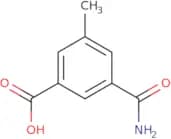
Formula:C10H9N3O2Purezza:Min. 95%Peso molecolare:203.2 g/mol3-Carbamoyl-5-methylbenzoic acid
CAS:Versatile small molecule scaffold
Formula:C9H9NO3Purezza:Min. 95%Peso molecolare:179.17 g/mol4-oxo-2-spiro(N-Boc-piperidine-4-yl)-benzopyran
CAS:Versatile small molecule scaffold
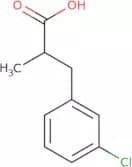
Formula:C18H23NO4Purezza:Min. 95%Peso molecolare:317.39 g/mol3-(3-Chlorophenyl)-2-methylpropanoic acid
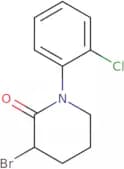
CAS:Versatile small molecule scaffoldFormula:C10H11ClO2Purezza:Min. 95%Peso molecolare:198.64 g/mol3-Bromo-1-(2-chlorophenyl)piperidin-2-one
CAS:Versatile small molecule scaffold
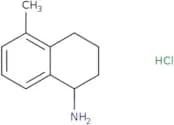
Formula:C11H11BrClNOPurezza:Min. 95%Peso molecolare:288.57 g/mol5-Methyl-1,2,3,4-tetrahydronaphthalen-1-amine hydrochloride
CAS:Versatile small molecule scaffold
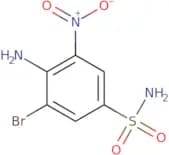
Formula:C11H16ClNPurezza:Min. 95%Peso molecolare:197.7 g/mol4-Amino-3-bromo-5-nitro-benzenesulfonamide
CAS:Versatile small molecule scaffold
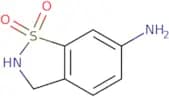
Formula:C6H6BrN3O4SPurezza:Min. 95%Peso molecolare:296.1 g/mol1,1-Dioxo-2,3-dihydro-1,2-benzothiazol-6-amine
CAS:Versatile small molecule scaffold
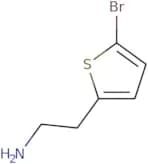
Formula:C7H8N2O2SPurezza:Min. 95%Peso molecolare:184.22 g/mol2-(5-Bromothiophen-2-yl)ethan-1-amine
CAS:Versatile small molecule scaffold
Formula:C6H8BrNSPurezza:Min. 95%Peso molecolare:206.11 g/molN-(Cyclohexylmethyl)-4-methylbenzene-1-sulfonamide
CAS:Versatile small molecule scaffold
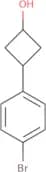
Formula:C14H21NO2SPurezza:Min. 95%Peso molecolare:267.39 g/mol3-(4-Bromophenyl)cyclobutan-1-ol
CAS:Versatile small molecule scaffold
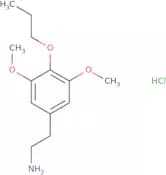
Formula:C10H11BrOPurezza:Min. 95%Peso molecolare:227.1 g/mol2-(3,5-Dimethoxy-4-propoxyphenyl)ethan-1-amine hydrochloride
CAS:Prodotto controllatoVersatile small molecule scaffold
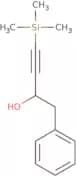
Formula:C13H22ClNO3Purezza:Min. 95%Peso molecolare:275.77 g/mol1-Phenyl-4-(trimethylsilyl)but-3-yn-2-ol
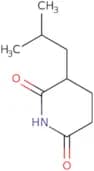
CAS:Versatile small molecule scaffoldFormula:C13H18OSiPurezza:Min. 95%Peso molecolare:218.37 g/molPregabalin Impurity 13 (4-Isobutyl-2,6-piperidinedione)
CAS:Pregabalin Impurity 13 is a stereoselective, synthetic compound that has been shown to be an inhibitor of gamma-aminobutyric acid (GABA) receptors. It can be synthesized by reacting 4-isobutyl-2,6-piperidinedione with hydrochloric acid and xylene. Pregabalin Impurity 13 binds to the amino acid sequence of GABA receptors in such a way as to prevent them from opening. This prevents the binding of GABA molecules to the receptor and reduces the duration of inhibition of these receptors. Pregabalin Impurity 13 has been shown to have antimicrobial activity against faecalis, which is found in human intestines and can cause infection. The environmental pollution caused by this impurity is due to its xylene content.
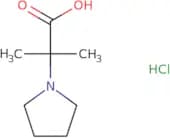
Formula:C9H15NO2Purezza:Min. 95%Peso molecolare:169.22 g/mol2-Methyl-2-(pyrrolidin-1-yl)propanoic acid hydrochloride
CAS:Versatile small molecule scaffold
Formula:C8H16ClNO2Purezza:Min. 95%Peso molecolare:193.67 g/mol6-Bromo-1,4-dihydro-2H-pyrido-[2,3-d][1,3]oxazin-2-one
CAS:Versatile small molecule scaffold
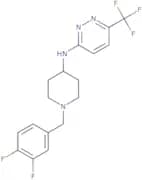
Formula:C7H5BrN2O2Purezza:Min. 95%Peso molecolare:229.04 g/molJNJ 37822681 dihydrochloride
CAS:JNJ 37822681 is a novel, potent, and selective small molecule inhibitor of the enzyme fatty acid amide hydrolase (FAAH), which is involved in the degradation of anandamide, a cannabinoid receptor ligand. The compound has been shown to be efficacious in animal models predictive of antipsychotic activity.
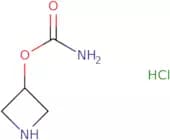
Formula:C17H17F5N4Purezza:Min. 95%Peso molecolare:372.34 g/molAzetidin-3-yl carbamate hydrochloride
CAS:Versatile small molecule scaffold
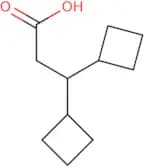
Formula:C4H9ClN2O2Purezza:Min. 95%Peso molecolare:152.58 g/mol3,3-Dicyclobutylpropanoic acid
CAS:Versatile small molecule scaffold
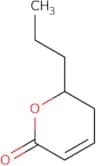
Formula:C11H18O2Purezza:Min. 95%Peso molecolare:182.26 g/mol6-Propyl-5,6-dihydro-2H-pyran-2-one
CAS:6-Propyl-5,6-dihydro-2H-pyran-2-one belongs to the class of isoquinoline alkaloids. It is found in leguminosae plants and has a strong spectrum of activity against bacteria, viruses and fungi. This compound is also used for the treatment of malaria and as an antihelminthic agent. The index of this substance is unknown, but it has been shown to have a mass spectrum that corresponds with that of prosopis. 6-Propyl-5,6-dihydro-2H-pyran-2-one is semiarid and indehiscent, with volatile fruit.
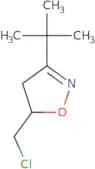
Formula:C8H12O2Purezza:Min. 95%Peso molecolare:140.18 g/mol3-tert-Butyl-5-(chloromethyl)-4,5-dihydro-1,2-oxazole
CAS:Versatile small molecule scaffoldFormula:C8H14ClNOPurezza:Min. 95%Peso molecolare:175.65 g/mol1-Hydroxycyclopentane-1-carbonitrile
CAS:1-Hydroxycyclopentane-1-carbonitrile is a monomer that is hydrolyzed to form benzoin and cyanohydrins. It can be used in the production of scifinder as a monomer or dimerizer.
Formula:C6H9NOPurezza:Min. 95%Peso molecolare:111.14 g/mol4-Chloro-2-hydroxy-6-methylphenylboronic acid
CAS:Versatile small molecule scaffoldFormula:C7H8BClO3Purezza:Min. 95%Peso molecolare:186.4 g/mol8-Bromo-2-methylimidazo[1,2-a]pyridine
CAS:Versatile small molecule scaffold
Formula:C8H7N2BrPurezza:Min. 95%Peso molecolare:211.05 g/mol4,5-Dihydro-1H-imidazol-2-amine hydrochloride
CAS:Please enquire for more information about 4,5-Dihydro-1H-imidazol-2-amine hydrochloride including the price, delivery time and more detailed product information at the technical inquiry form on this page
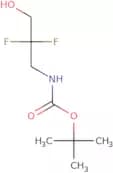
Formula:C3H7N3•HClPurezza:Min. 95%Peso molecolare:121.57 g/moltert-Butyl (2,2-difluoro-3-hydroxypropyl)carbamate
CAS:Versatile small molecule scaffoldFormula:C10H13NO4Purezza:Min. 95%Peso molecolare:211.21 g/mol3-Hydroxy-5-methylpyridine
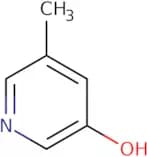
CAS:3-Hydroxy-5-methylpyridine (3HMP) is a chemical substance that has been classified as an amine. It is a product of the metabolism of purines, which are nitrogenous bases found in DNA and RNA. 3HMP is produced by aerogenic bacteria (such as Enterobacter), and can be used to estimate the number of these bacteria present in water samples. 3HMP has been shown to have antiviral properties against influenza virus, and can be used as a biomarker for the presence of other viruses in animals. 3HMP also has mineralization properties, which have been studied extensively, particularly with regards to pancreatic disease.
Formula:C6H7NOPurezza:Min. 95%Colore e forma:PowderPeso molecolare:109.13 g/molRef: 3D-FH16174
Prodotto fuori produzione2-Bromo-3,3,3-trifluoro-1-propene
CAS:Prodotto controllato2-Bromo-3,3,3-trifluoro-1-propene is a chemical compound that has been synthesized in an asymmetric reaction. The reactant is bromopropane and the product is 2,2,2-trifluoropropene. The methylene group on the propene molecule is activated by the nucleophilic attack of a fluoride ion from hydrogen fluoride to form a cavity with a highly strained bond. The kinetic study of this reaction revealed that the activation energy for the reaction is 42 kJ/mol. Palladium-catalyzed coupling reactions are catalyzed by palladium and require nonpolar solvents such as toluene or dichloromethane. This type of reaction has been shown to be exothermic with an isolated yield of 1%.
Formula:C3H2BrF3Purezza:Min. 95%Colore e forma:Colorless PowderPeso molecolare:174.95 g/mol4,5-Dihydroxy-2,3-Pentanedione
CAS:4,5-Dihydroxy-2,3-pentanedione is a carbonyl compound that is the product of the oxidation of ascorbic acid. It is used in wastewater treatment and has antimicrobial properties against infectious diseases. This compound has been shown to inhibit protein synthesis by binding to the ribosome and preventing the formation of peptide bonds between amino acids. 4,5-Dihydroxy-2,3-pentanedione has also been shown to bind to plasma proteins, which may be due to its acyl chain structure. 4,5-Dihydroxy-2,3-pentanedione can be synthesized in a catalytic mechanism that involves dehydroascorbic acid and molecular oxygen.
Formula:C5H8O4Purezza:Min. 95%Colore e forma:PowderPeso molecolare:132.11 g/molRef: 3D-FD180770
Prodotto fuori produzionePiperyline
CAS:Piperyline is an alkanoic acid that has shown to be effective against skin cancer. It also has antimicrobial properties, which may be due to its ability to bind metal ions and form polymeric compounds. Piperyline inhibits microbial growth by inhibiting the synthesis of proteins and nucleic acids. The antimicrobial activity is related to its cationic polymerization with hydroxyl groups, which forms a structure that can inhibit microbial enzymes and disrupt microbial cell membranes. This compound also interacts with the skin's natural lipids, making it difficult for microorganisms to attach and grow on the skin. Piperyline is synthesized in organic chemistry laboratories as an amide precursor of other pharmaceuticals such as penicillin.
Formula:C16H17NO3Purezza:Min. 95%Peso molecolare:271.31 g/mol


![2'-[(tert-Butoxy)carbonyl]-2',3'-dihydro-1'H-spiro[cyclopropane-1,4'-isoquinoline]-1'-carboxylic a…](/_next/image/?url=https%3A%2Fstatic.cymitquimica.com%2Fproducts%2F3D%2Fthumb-webp%2FWLD79997.webp&w=3840&q=75)

![2-(1,3-Benzothiazol-2-yl)-3-[(2,5-dimethylphenyl)amino]-3-sulfanylprop-2-enenitrile](/_next/image/?url=https%3A%2Fstatic.cymitquimica.com%2Fproducts%2F3D%2Fthumb-webp%2FEQA25562.webp&w=3840&q=75)
![4-({3-Oxo-2-azatricyclo[6.3.1.0,4,12]dodeca-1(11),4(12),5,7,9-pentaen-2-yl}methyl)benzohydrazide](/_next/image/?url=https%3A%2Fstatic.cymitquimica.com%2Fproducts%2F3D%2Fthumb-webp%2FEQA25451.webp&w=3840&q=75)
![2-[1-(Difluoromethyl)-3,5-dimethyl-1H-pyrazol-4-yl]acetic acid](/_next/image/?url=https%3A%2Fstatic.cymitquimica.com%2Fproducts%2F3D%2Fthumb-webp%2FWYB72452.webp&w=3840&q=75)
![2-{[4-({[(9H-Fluoren-9-yl)methoxy]carbonyl}amino)phenyl]methyl}butanoic acid](/_next/image/?url=https%3A%2Fstatic.cymitquimica.com%2Fproducts%2F3D%2Fthumb-webp%2FEPD45030.webp&w=3840&q=75)
![rac-(2R,3S)-1-{[(9H-Fluoren-9-yl)methoxy]carbonyl}-3-phenylpyrrolidine-2-carboxylic acid](/_next/image/?url=https%3A%2Fstatic.cymitquimica.com%2Fproducts%2F3D%2Fthumb-webp%2FENC98387.webp&w=3840&q=75)
![1-[(3-Bromothiophen-2-yl)methyl]piperazine](/_next/image/?url=https%3A%2Fstatic.cymitquimica.com%2Fproducts%2F3D%2Fthumb-webp%2FWYB72635.webp&w=3840&q=75)
![N-[(4-Chlorophenyl)methyl]-4,5-dihydro-1,3-thiazol-2-amine](/_next/image/?url=https%3A%2Fstatic.cymitquimica.com%2Fproducts%2F3D%2Fthumb-webp%2FXCA23929.webp&w=3840&q=75)
![3-(5-Methyl-[1,3,4]oxadiazol-2-yl)-phenylamine](/_next/image/?url=https%3A%2Fstatic.cymitquimica.com%2Fproducts%2F3D%2Fthumb-webp%2FXEA73340.webp&w=3840&q=75)
![1,8-Dioxa-4-azaspiro[4.5]decane](/_next/image/?url=https%3A%2Fstatic.cymitquimica.com%2Fproducts%2F3D%2Fthumb-webp%2FXEA82412.webp&w=3840&q=75)
![2-[Ethyl(propan-2-yl)amino]ethan-1-ol](/_next/image/?url=https%3A%2Fstatic.cymitquimica.com%2Fproducts%2F3D%2Fthumb-webp%2FCAA89361.webp&w=3840&q=75)

![1-[4-Methyl-2-(4-methylphenyl)-1,3-thiazol-5-yl]ethan-1-ol](/_next/image/?url=https%3A%2Fstatic.cymitquimica.com%2Fproducts%2F3D%2Fthumb-webp%2FXZB72183.webp&w=3840&q=75)
![rac-(2R,4S)-1-[(tert-Butoxy)carbonyl]-4-ethylpiperidine-2-carboxylic acid](/_next/image/?url=https%3A%2Fstatic.cymitquimica.com%2Fproducts%2F3D%2Fthumb-webp%2FYEA81184.webp&w=3840&q=75)
![1-(4-{[4-(Ethylamino)pyridin-2-yl]methyl}piperazin-1-yl)ethan-1-one](/_next/image/?url=https%3A%2Fstatic.cymitquimica.com%2Fproducts%2F3D%2Fthumb-webp%2FYGC03202.webp&w=3840&q=75)


![6-Bromo-1,4-dihydro-2H-pyrido-[2,3-d][1,3]oxazin-2-one](/_next/image/?url=https%3A%2Fstatic.cymitquimica.com%2Fproducts%2F3D%2Fthumb-webp%2FKNA03238.webp&w=3840&q=75)


![8-Bromo-2-methylimidazo[1,2-a]pyridine](/_next/image/?url=https%3A%2Fstatic.cymitquimica.com%2Fproducts%2F3D%2Fthumb-webp%2FUXB37475.webp&w=3840&q=75)